Beach Podstrana Split Riviera: 6km Pebble Shore
Profile
Beach Podstrana, Split Riviera: Six Kilometres of Pebble Shore at the Foot of Perun Hill
Croatia | Podstrana | Split Riviera
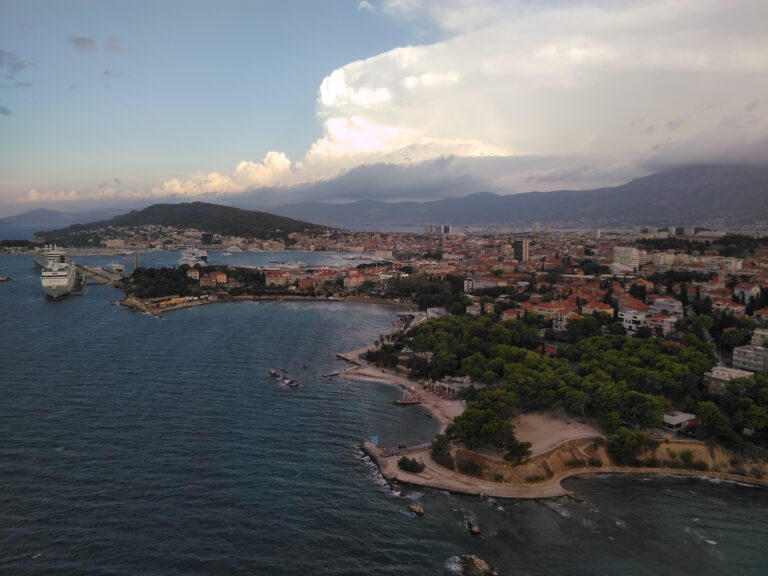
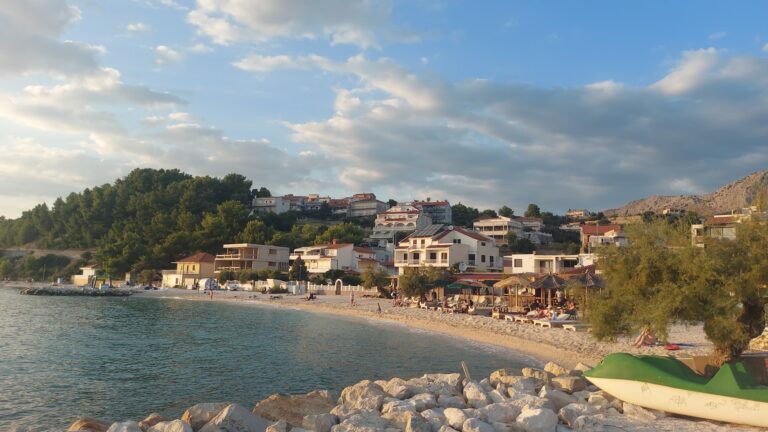
The Žrnovnica river meets the Adriatic just south of Podstrana, at the point where the Split coastal plain gives way to the steeper terrain of Perun Hill and the Mosor range behind it. The combination that the setting provides — sea-level pebble beach and mountain backdrop within the same view — is the specific visual quality that makes Podstrana feel different from the urban beaches of Split seven kilometres to the northwest, and it is the quality that the Visit Croatia description reaches for when it calls the place where “mountain Perun and the river Žrnovnica touch the pebble beaches and the blue Adriatic” a “magical” setting. The description is not wrong.
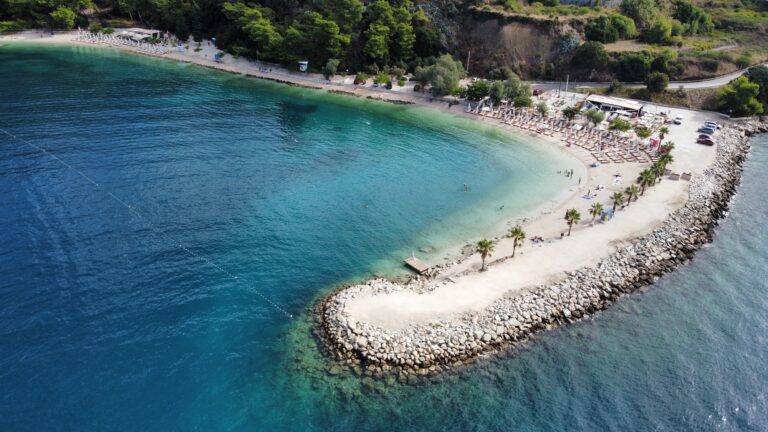
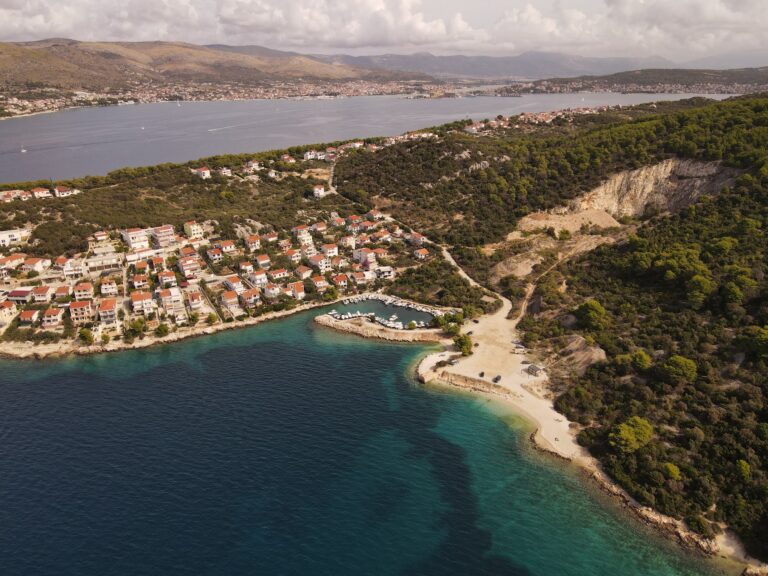
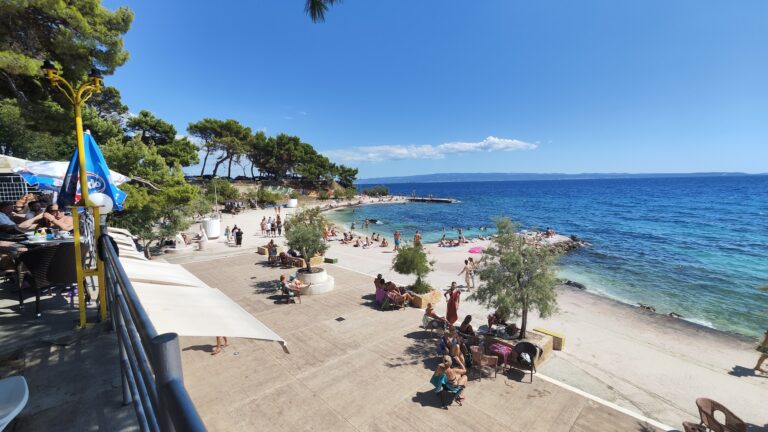
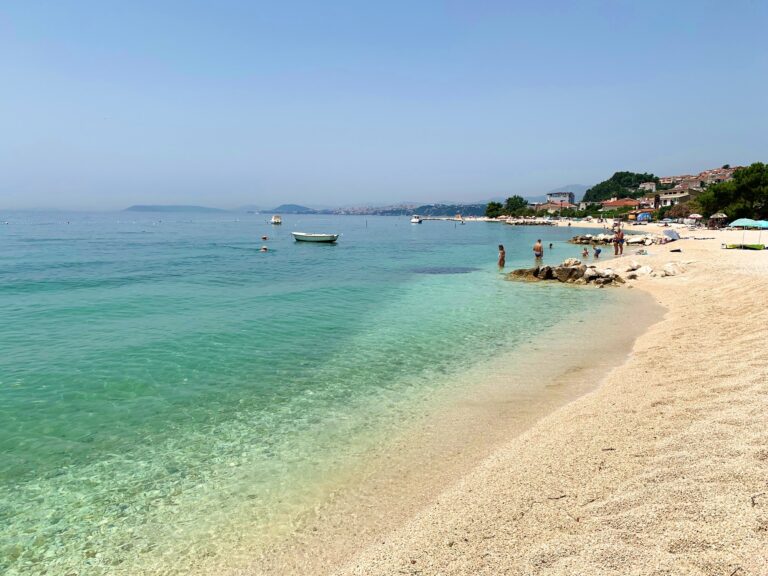
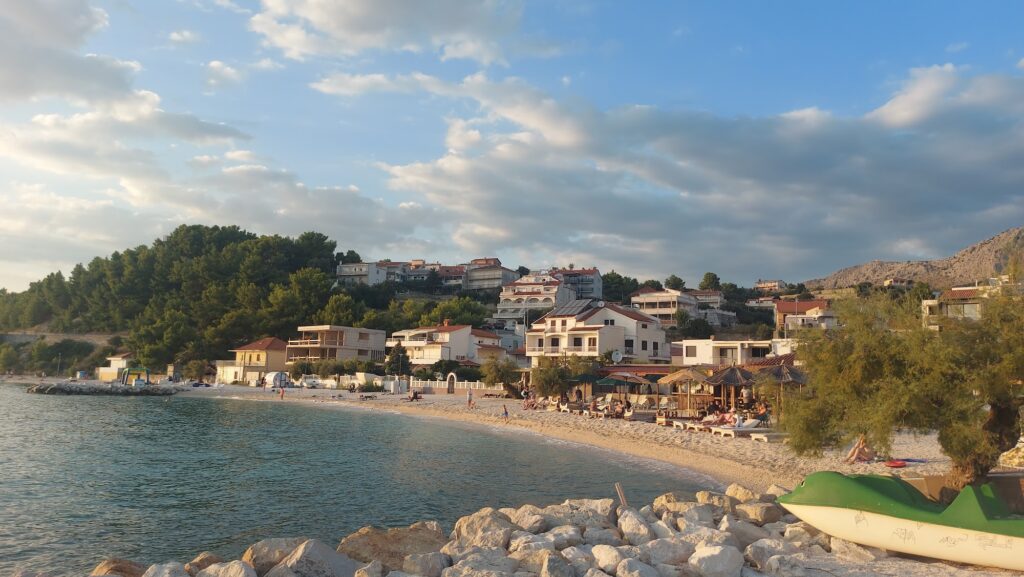
Beach Podstrana — or more accurately, the beaches of Podstrana — stretch approximately 6 kilometres along the coastline of the five villages that comprise the municipality: Old Podstrana, Stožanac, St. Martin, Grljevac, and Mutogras. Each section has its own character, from the marina-adjacent Strožanac beach in the north to the quieter Mutogras section in the south. The whole stretch is pebble and fine gravel throughout, with the Le Méridien Lav five-star resort anchoring the mid-section and providing the most recognised specific beach address on the riviera. The 6 kilometres of connected pebble shore make Podstrana the longest continuous beach system in the immediate Split area.
Getting There: Bus Line 60 from Split, by Car, or Uber
From Split city centre, Bus Line 60 runs every 20 to 30 minutes to Podstrana, with a journey time of approximately 15 to 20 minutes. The bus stops at multiple points along the coastal road, giving access to different sections of the beach. For visitors staying in Split who want a day at Podstrana without the stress of parking, the bus is the practical choice — and the advice is consistent across visitor accounts: leave the car in Split and take the bus, because the D8 coastal road between Split and Podstrana experiences significant traffic congestion during peak summer hours, particularly in July and August, when the journey by car can take several times longer than the 15-minute baseline.
By car, the drive south from Split along the D8 takes approximately 10 minutes outside peak hours. Parking is available at the local hotels and in public lots along the coastal road, though spaces fill quickly from mid-morning onward in the peak season. Uber from Split costs approximately €13 and takes around 20 minutes in normal conditions.
The coastal pedestrian and cycling path that connects Split’s beaches southward through Stobreč and into Podstrana is the most pleasant approach for visitors who want the arrival to be as good as the destination — a flat, sea-level path past the succession of small beaches and coves that precede the Podstrana riviera proper.
The Shore: Five Villages, Six Kilometres, and the Sections Worth Knowing
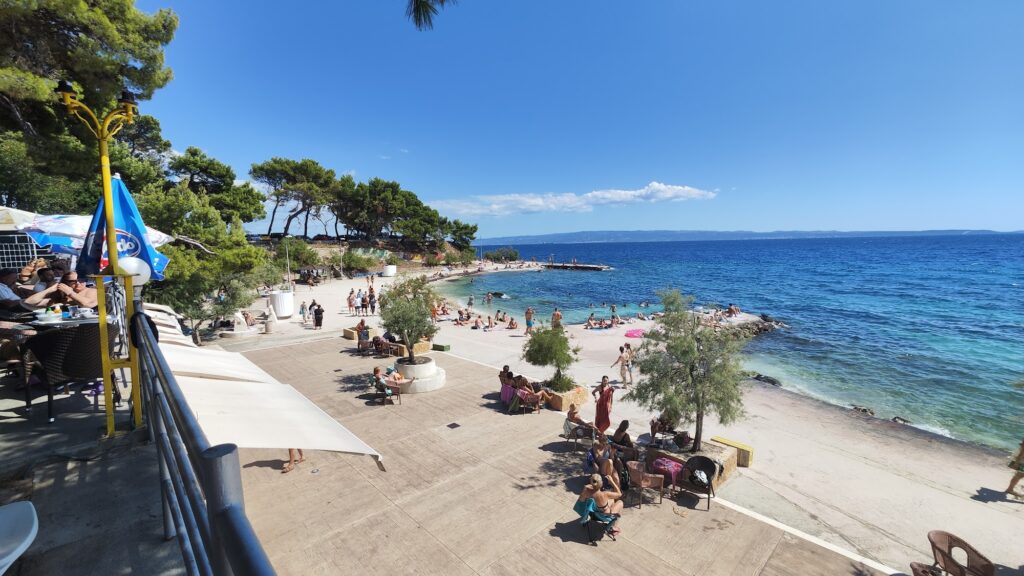
The 6-kilometre Podstrana pebble coastline divides naturally into sections that serve different visitor types. Plaža Strožanac in the north — adjacent to the small marina and backed by café bars and apartments — is the section most consistently described as the most beautiful bay in Podstrana, with fine pebbles and clear turquoise water in a sheltered position. It is the preferred local beach of the Podstrana resident population and the most manageable section for visitors arriving by bus from Split.
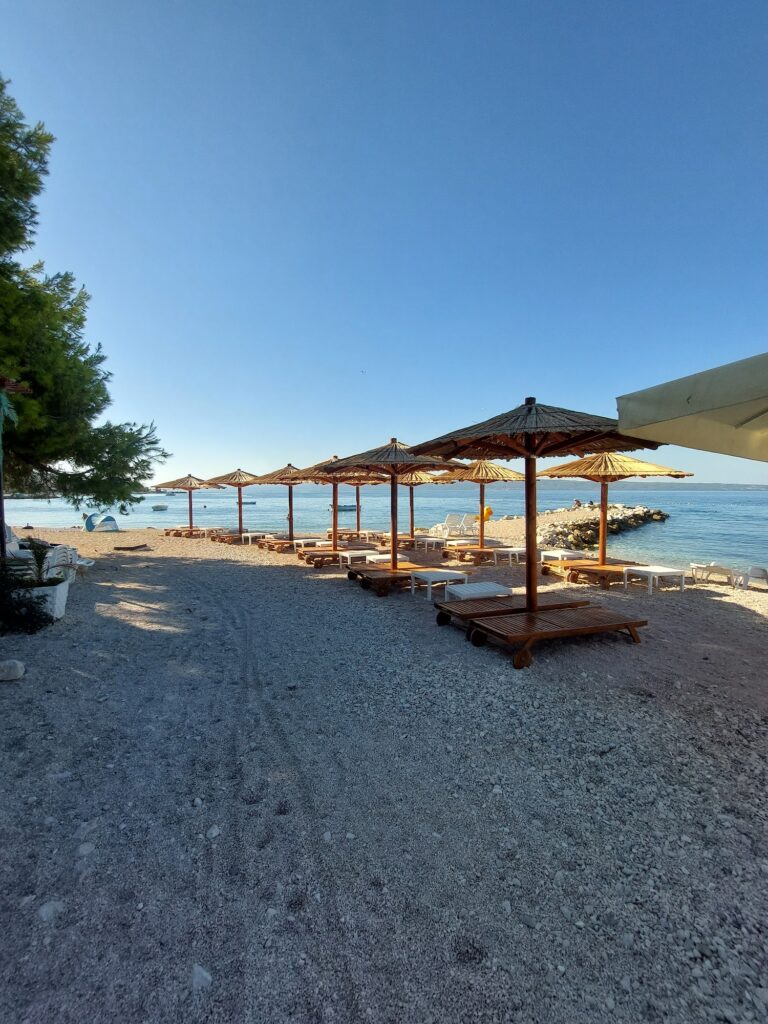
The Grljevac section mid-riviera is the longest and busiest stretch — a continuous pebble beach with the highest concentration of beach bars, restaurants, and tourist infrastructure. The Le Méridien Lav hotel beach and the Gooshter Beach Club are the premium end of this section, with cabana hire and the water sports operation that the five-star property brings. The Gooshter club is accessible to non-hotel visitors for a day fee.
The Mutogras section at the southern end is the quietest part of the Podstrana riviera — fewer facilities, fewer visitors, and the specific reward for those willing to walk further or drive to the southern car parks. For visitors who want the Podstrana pebble and water quality without the peak-season concentration, Mutogras is the correct end of the riviera to head for.
Water Quality and the Pebble Seabed
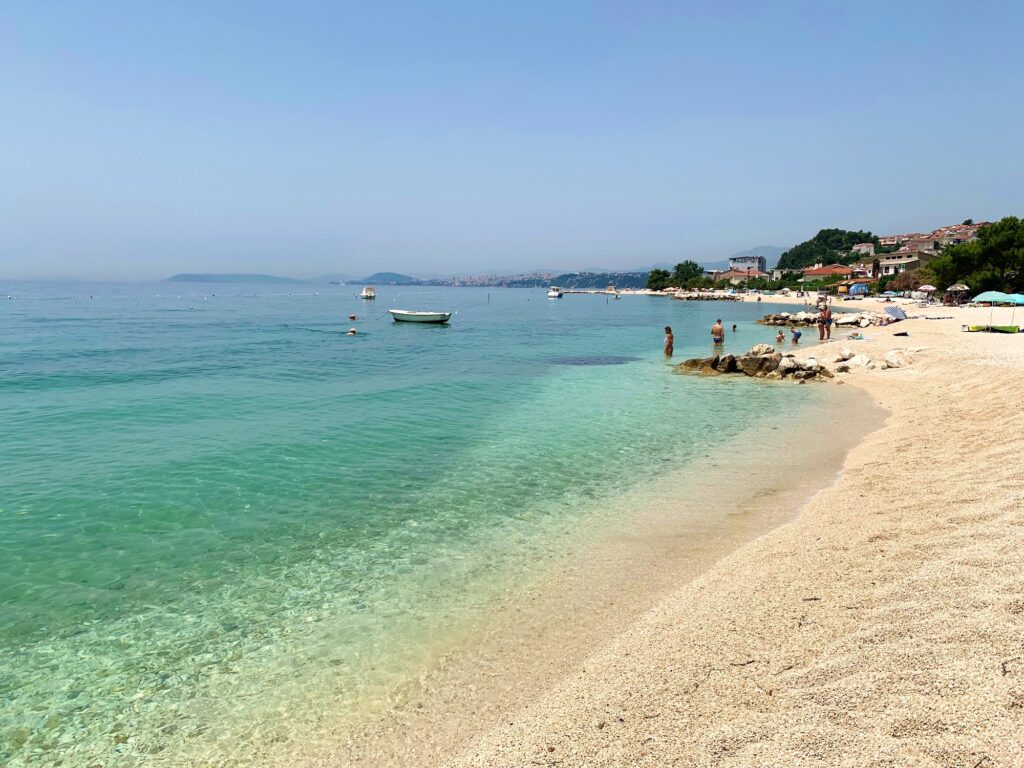
The water quality along the Podstrana riviera is consistently clear and well-rated — the open-sea position on the Brač channel without river silt inputs (the Žrnovnica is a small stream rather than a sediment-heavy river), and the pebble seabed that maintains visibility in a way sandy bottoms cannot. The turquoise-to-sapphire colour range over pebble in direct afternoon sun is the water quality that the beach’s photographs capture and that visitor accounts confirm as one of the riviera’s strongest assets.
Water shoes are recommended throughout the Podstrana coastline — the pebble and fine gravel entry is navigable without them but more comfortable and faster with them, particularly for children who spend time moving in and out of the water. The depth increases at a manageable gradient from the pebble shore, and the sea remains calm in typical summer conditions without significant swell or current.
Le Méridien Lav: The Resort Anchor of the Podstrana Riviera
The Le Méridien Lav is the only full five-star resort on the Split city beach coastline, and its position on the Podstrana riviera is what has given the area its luxury-adjacent reputation. The hotel’s beach is accessible to non-guests for a fee, and the Gooshter beach club operates from the property with a pool, beach volleyball, water sports, and the cabana hire system that makes a day there more comfortable than the public beach sections. Island tours and water excursions depart from the hotel marina.
For visitors who want the organised resort beach experience within range of Split — the combination of the city’s historical attractions and a properly serviced beach — Podstrana with the Le Méridien as the anchor is the correct base rather than staying in Split itself and commuting to beaches that lack the resort infrastructure.
Perun Hill, Mosor, and the Hiking From the Beachfront
Perun Hill rises immediately above the Podstrana coastal strip, and the hiking trails from the village access the summit and the connecting routes into the Mosor range within minutes of the shore. The contrast between a morning swim in the clear pebble water and an afternoon walk into the mountain terrain that frames the bay is the specific Podstrana experience that distinguishes a stay here from a purely coastal holiday. The Mosor mountain range is the karst massif that backs the Split riviera from Omiš northward, and its trails provide the elevated view over the Brač channel, the Dalmatian islands, and the coast that the beachfront position cannot.
The Cindro Mansion — a 17th-century house in Old Podstrana on the hillside above the coast — is the specific historical landmark of the municipality, with gardens that sometimes host cultural events. The churches of St. George on Perun Hill and St. Anthony and St. Rocco in the old village mark the settlement’s pre-tourism history as a farming and wine-producing community.
Podstrana in the Split Riviera Beach Context
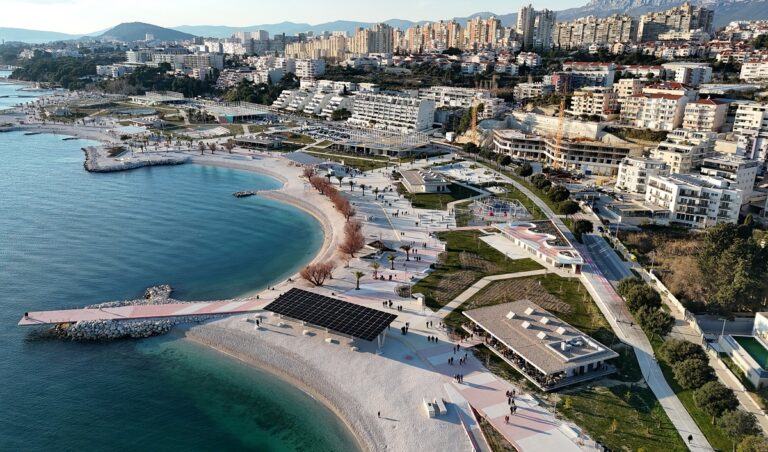
Podstrana occupies the section of the Split Riviera immediately south of the city’s own beaches — Bačvice, Firule, Trstenik, and Znjan — and immediately north of the Omiš Riviera that begins after Stobreč. For visitors comparing Podstrana with the Velika Plaža Omiš town beach 18 kilometres further south, the practical comparison is between a multi-section pebble riviera with resort infrastructure and five-star hotel access on one side, and a Blue Flag sandy town beach with the Cetina canyon behind it on the other. Both are accessible on the same D8 road from Split.
Within the Split area, the comparison most often made is between Podstrana and the city beaches closer to the centre — particularly Plaža Brzet Omiš being less relevant here, but the distinction between Podstrana’s organised riviera character and the wilder coves of Marjan Hill on the western side of Split is the useful local orientation. Podstrana is the right choice for visitors who want resort service and length of coast; Marjan is the right choice for those who want natural, unmanaged coves within the city itself.
Peak Season Practicalities: Traffic, Timing, and the Bus
The single most consistent complaint in visitor accounts of Podstrana is the D8 summer traffic — the coastal road between Split and Podstrana carries the combined load of residents, tourists, and the lorry traffic of the coast road at peak hours, and the gridlock that results in July and August is severe enough that a 7-kilometre journey can take 45 minutes to over an hour. This is not a theoretical concern: multiple visitor reviews specifically identify the traffic as the primary reason they would not return to Podstrana.
The practical response is already noted above — take the bus from Split, arrive at the beach before ten in the morning if driving, and avoid the coast road between Split and Podstrana in the 5pm to 7pm return window. The bus is frequent, fast outside peak traffic, and eliminates the parking stress entirely.
Beach Podstrana on the Split Riviera is the pebble coastline that stretches 6 kilometres at the foot of Perun Hill, seven kilometres from Split city centre, with five villages of small family hotels and apartments behind it, the Le Méridien at the mid-section, and the mountain trails above whenever the sea is enough.
Take Bus 60 from Split. Get off at Strožanac for the best bay, or stay on for Grljevac if you want the beach bars and the resort energy.
The pebbles and the Brač channel will be clear regardless of where you stop.
Map
Sorry, no records were found. Please adjust your search criteria and try again.
Sorry, unable to load the Maps API.
Near by places: