Kava Beach Okrug Donji: Westernmost Shore on Čiovo
Profile
Kava Beach, Okrug Donji, Čiovo Island: The Most Westerly Beach on the Island and the Quiet End of Trogir’s Riviera
Croatia | Okrug Donji | Čiovo Island | Central Dalmatia
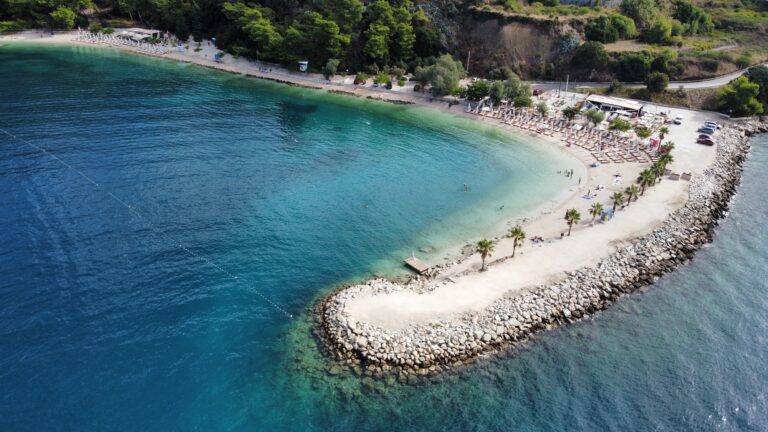
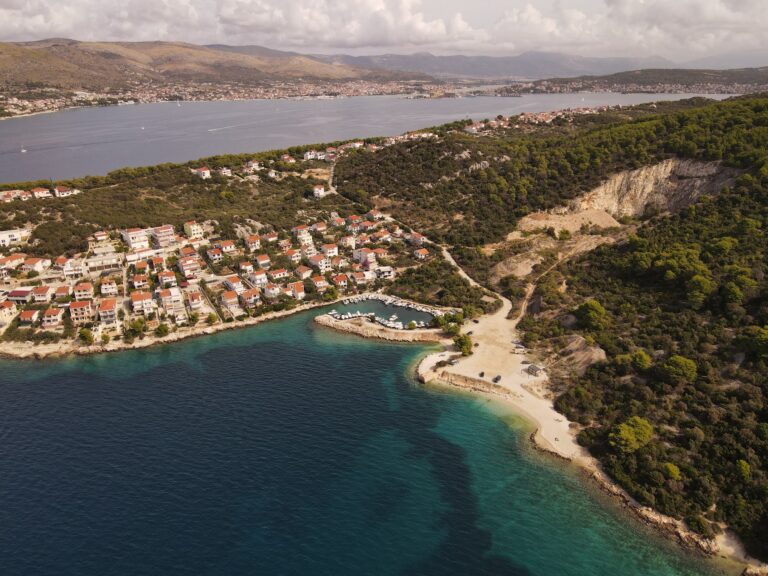
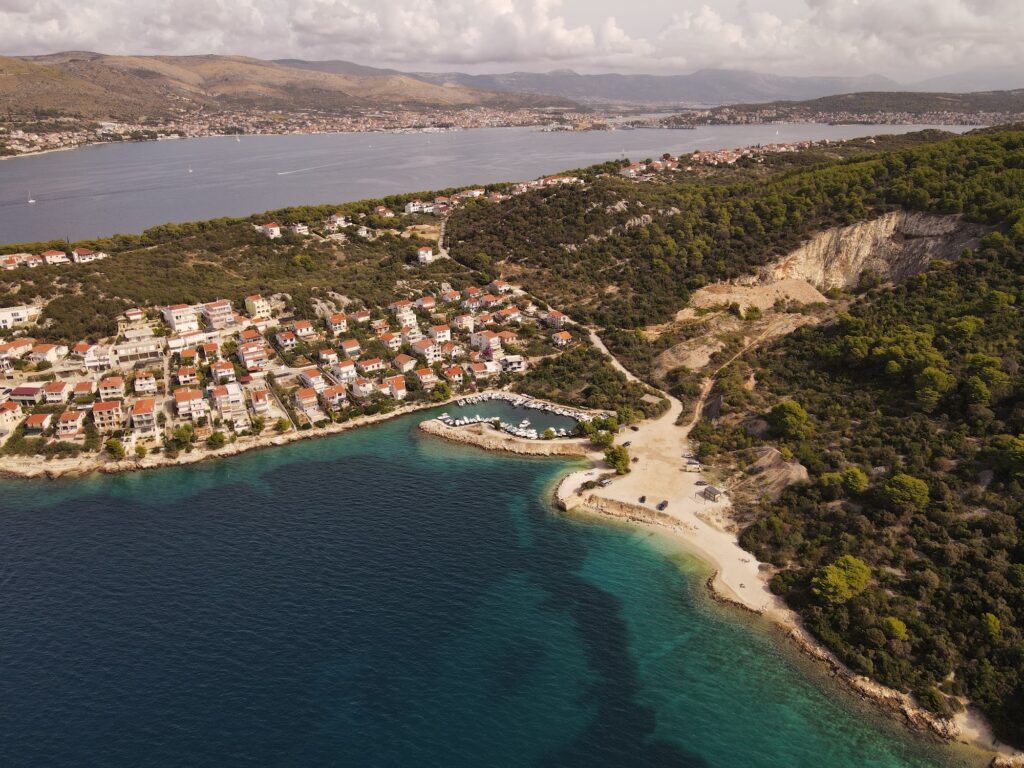
Čiovo Island has two beaches called Kava — one at each end of the island, separated by its full 15-kilometre length. The Kava at Okrug Donji is the most westerly beach on the island — a cape beach where small pebbles aid a smooth walk into the sea, with pine forest providing natural shade. The other Kava is at the eastern end near Slatine, facing Split’s Marjan Hill across the channel. That the same name appears at both extremes of the same island is the kind of coincidence that Dalmatian coastal geography occasionally produces — both names referring to a similar quality of cove rather than to any connected history.
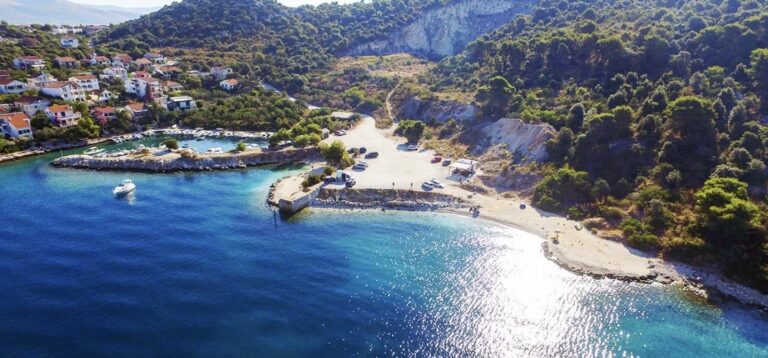
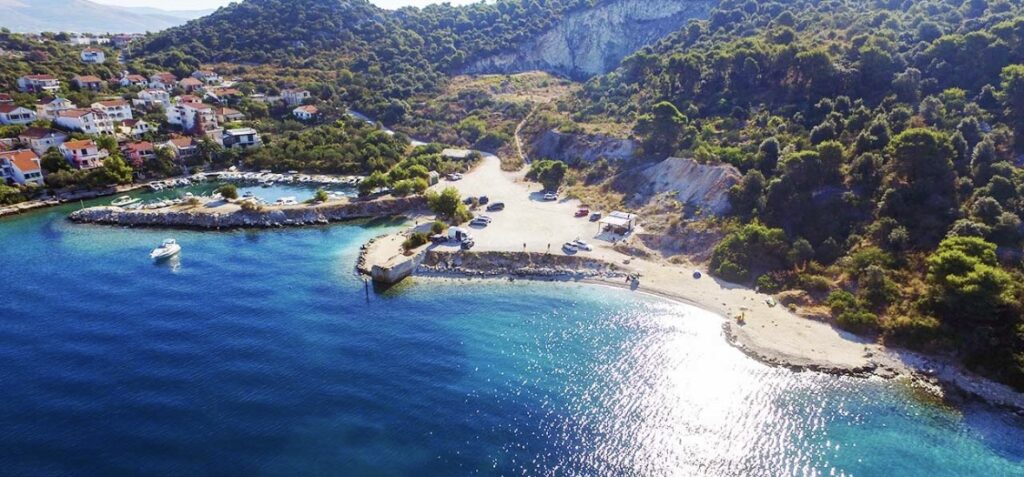
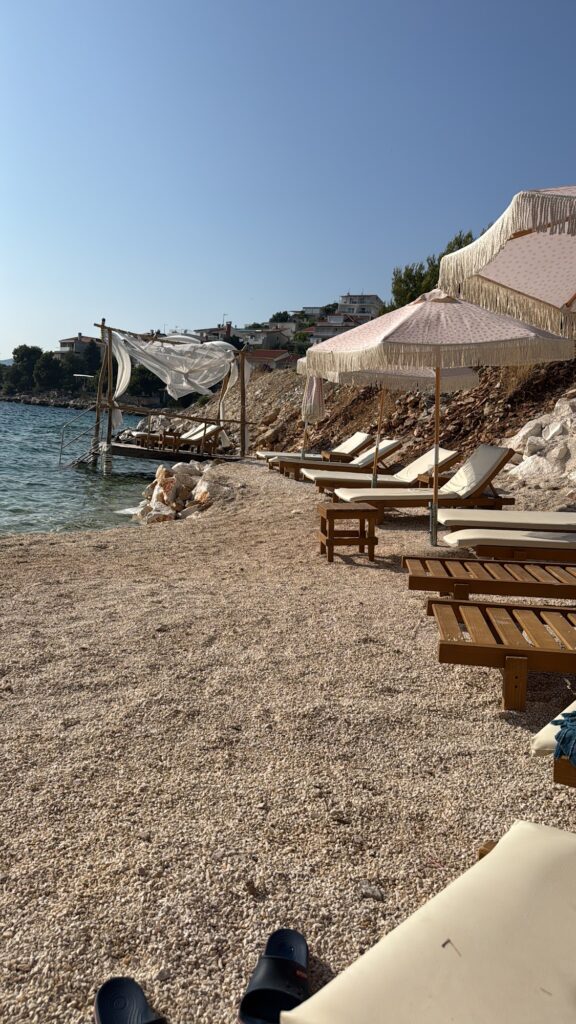
The Kava at Okrug Donji is the quieter of the two. Also known as Krusica Kava beach, it is located on the west side of Okrug Donji and is accessible by car. The beach consists of part fine gravel and another rocky and natural section. There are no food or drink facilities on the beach itself. The nearest cafés and restaurants are in the Okrug Donji village, approximately 1 kilometre back along the road. This absence of on-site catering is the specific practical quality that determines the visitor type the beach attracts: people who prepare for a self-sufficient beach day rather than those who expect to arrive empty-handed and buy everything on site. Bringing food, drink, and sun protection is the required preparation, not an optional enhancement.
Getting There: 8km from Trogir by Car on the Put Kave Road, or by Bicycle
From Trogir old town, the drive to Kava Beach at Okrug Donji covers approximately 8 kilometres — across the bridge to Čiovo, through Okrug Gornji, and then west through Okrug Donji to the cape. The final section of the road is the Put Kave — the road that leads specifically to the beach — and visitor accounts note that this final stretch is narrow and rough, requiring careful driving when passing oncoming traffic. The road’s difficulty is the effective filter that keeps the beach quieter than the accessible alternatives: visitors who navigate it successfully find a pebble cape with free parking, pine shade, and no commercial activity. Those who turn back have Okrug Gornji’s Copacabana as the obvious alternative.
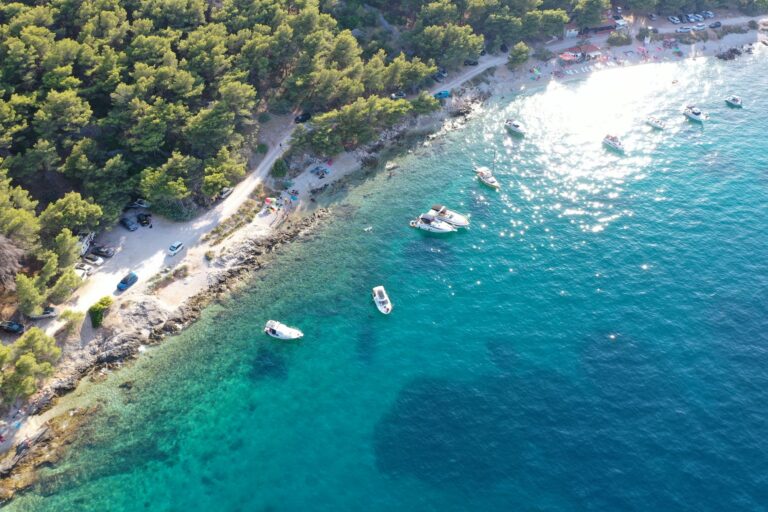
Free parking is available near the beach entrance — one of the specific qualities that visitor accounts praise, given the organised paid parking that the more popular Okrug Gornji beaches require in peak season.
By taxi boat from Trogir waterfront, the Bura Line and seasonal taxi boat services operate to Okrug Gornji and occasionally to the surrounding coves, though Kava Okrug Donji is not a standard taxi boat destination. The road and bicycle approaches are the practical options.
By bicycle, the island’s 70 kilometres of marked cycling trails include the Okrug Donji western cape route — a scenic ride through the residential Dalmatian village landscape of the western island before reaching the cape and the beach.
The Shore: Pebble, Rock, Pine Shade, and the Small Sandy Pockets
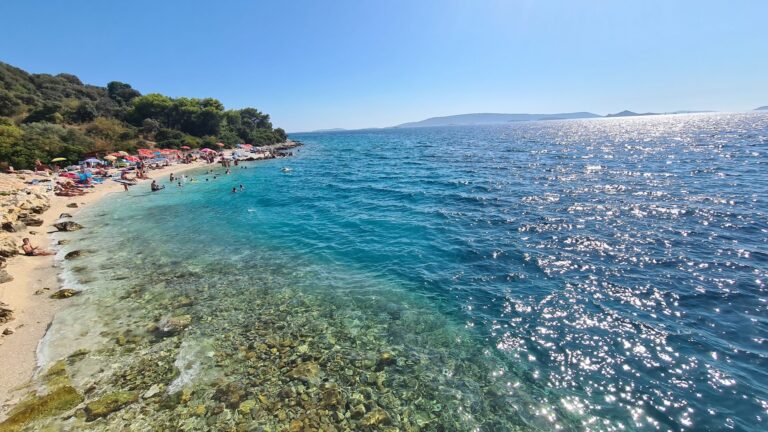
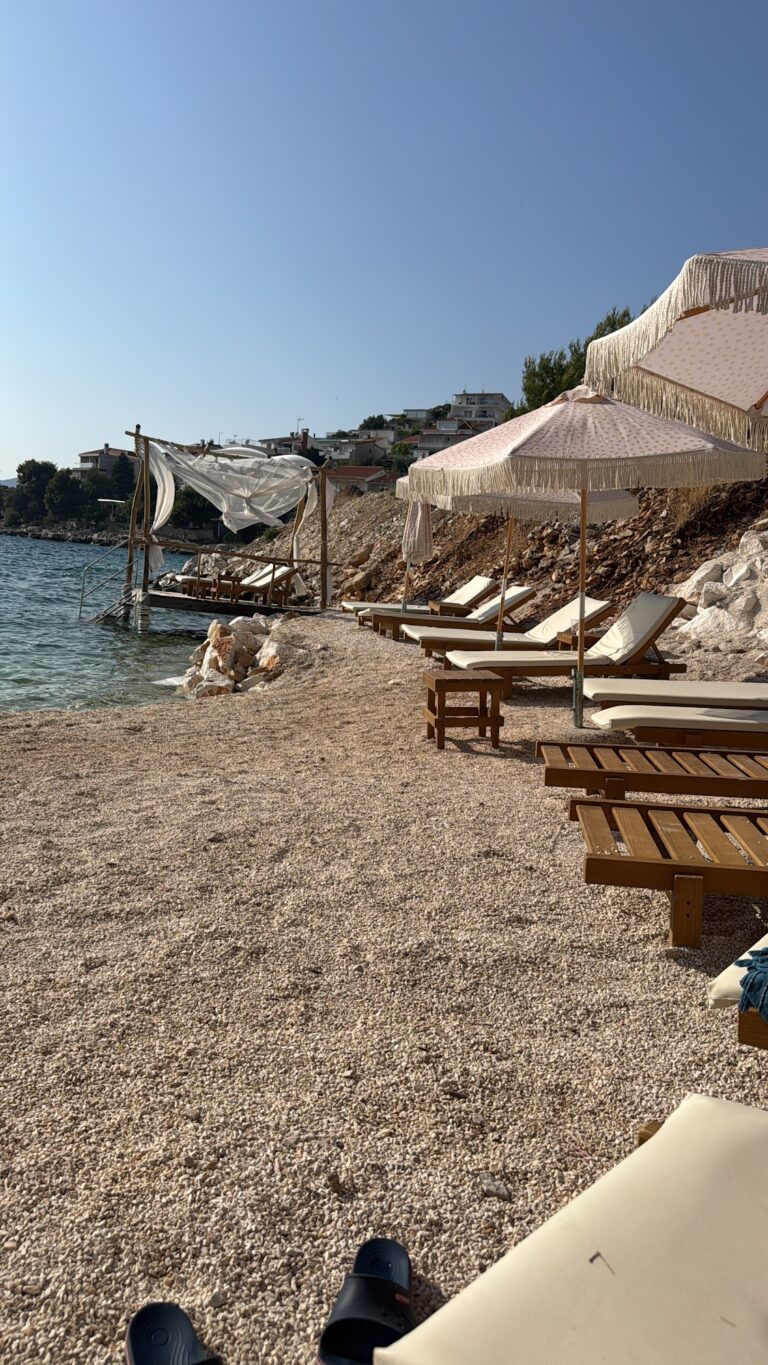
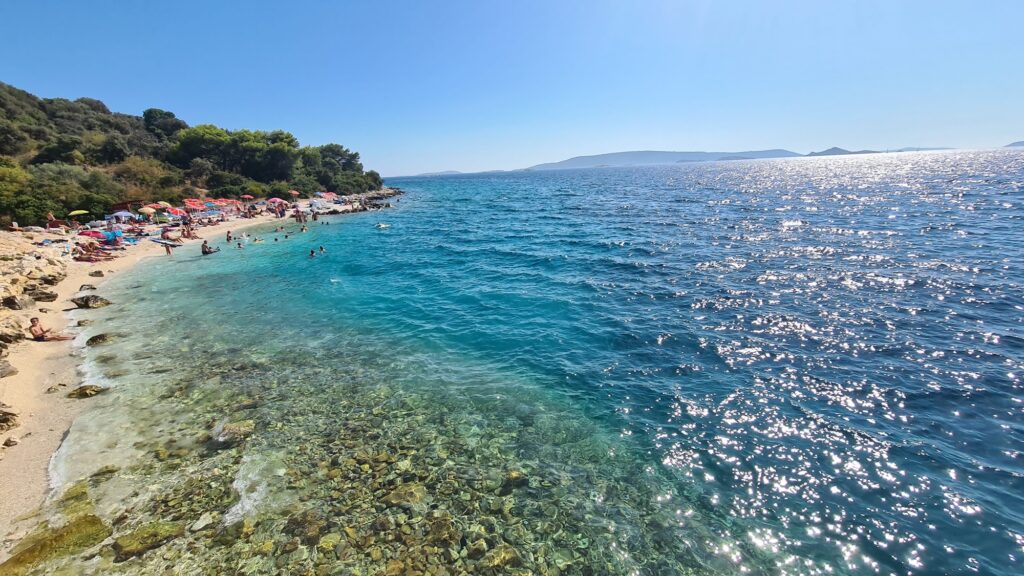
The Kava Okrug Donji cape beach is pebble and rock — the standard Čiovo surface — with the smooth, rounded pebble entry that the source article correctly identifies as comfortable for barefoot wading. The pine forest above the upper beach provides the full-day shade that makes the beach usable throughout the hottest midday hours without the sunburn exposure that the fully-exposed beach surfaces produce. In the rocky surrounds of the cape, small sandy patches appear between the limestone cracks, offering even more privacy for swimmers who want to settle away from the main pebble section.
The cape position on the western tip of the island gives the beach its specific orientation: open to the west, with the Adriatic sea view across to the island of Šolta visible from the water. The sunset view from the beach in the evening is the west-facing quality that eastward-facing Dalmatian beaches cannot provide — the sun going down over the open sea rather than behind hills or islands.
The water at the cape is clear and well-circulated — the exposed tip position maintaining the open-sea water quality rather than the enclosed-bay conditions that sheltered coves produce. The snorkelling at the rocky margins is productive: the limestone crevices, the sea urchins, the small fish populations that the undisturbed rocky cape sustains, all visible through water that the circulation keeps clear.
Okrug Donji: The Quieter West Side
Okrug Donji is located on the western side of Čiovo and is considered quieter and less crowded than its neighbour Okrug Gornji. It is more residential and appeals to those seeking a relaxed atmosphere away from large crowds. The distinction between the two Okrug settlements is the fundamental character difference within the western end of Čiovo: Okrug Gornji with its 2-kilometre Copacabana beach, its ferry from Trogir, its beach bars and active summer scene; Okrug Donji as the quieter residential extension, its westernmost point at the Kava cape offering the farthest point from the Copacabana’s activity while remaining within the same municipality.
For visitors based in Trogir who want a beach day without the Copacabana crowd and without the 45-minute drive to the Slatine end of the island, Kava Okrug Donji is the accessible compromise — 8 kilometres from the old town, no commercial beach infrastructure, pine shade, and the western horizon open.
Čiovo’s Two Kava Beaches: A Practical Distinction
The two Kava beaches on Čiovo require clear identification for visitors planning from outside the island. Kava Okrug Donji (this article) is on the western cape — accessible from Trogir via Okrug Gornji and Okrug Donji, approximately 8 kilometres. Kava Beach Čiovo Island at Slatine is on the eastern cape — accessible via the Slatine road, approximately 12 to 15 kilometres from Trogir, and facing Split’s Marjan Hill across the channel. The eastern Kava is larger (800 metres), wilder, and reachable by ferry from Split; the western Kava is smaller, more accessible from Trogir, and at the quiet end of the Okrug municipality.
The Copacabana beach at Okrug Gornji — the most visited beach on the island, 2 kilometres long, with full resort facilities — is the reference point for both: Copacabana Beach Okrug Gornji is approximately 1.5 kilometres east of the western Kava by road, and the contrast between the organised resort beach and the no-facilities cape provides the clearest possible summary of what makes Kava Okrug Donji worth the extra 8 minutes of narrow road.
The Western Cape and the Trogir Archipelago
From the Kava Okrug Donji cape, the Trogir Archipelago extends westward — the islands of Drvenik Veli and Drvenik Mali visible from the water on clear days, the Šolta island profile on the horizon. The cape is the westernmost point of Čiovo, which makes it the furthest point on the island from the Trogir bridges and from the UNESCO heritage crowds that the old town and the immediate bridge approaches generate in peak season.
The quality of the western cape swimming — the exposed position, the clear water, the west-facing sunset view, the pine shade immediately behind — captures the specific character of Čiovo island away from its most visited sections. Čiovo is, as the travel writing on it consistently notes, one of the most underrated islands in Central Dalmatia — better than its proximity to Trogir and its airport access suggest to visitors who assume that proximity to a tourist destination means sharing its crowds.
Kava Beach at Okrug Donji is the westernmost beach on Čiovo Island — pebble and rock cape, pine shade, no on-site catering, free parking, 8 kilometres from Trogir, and the Adriatic sunset over Šolta on a clear evening.
Drive the Put Kave road carefully. Park free. Bring your own food and water.
The pine shade will last through the afternoon.
Map
Sorry, no records were found. Please adjust your search criteria and try again.
Sorry, unable to load the Maps API.
Near by places: