Kupalište Trstenik Split: Quiet Pebble Beach East of Bačvice
Profile
Kupalište Trstenik, Split: The Quiet Man-Made Pebble Beach East of Bačvice
Croatia | Split | Split-Dalmatia County
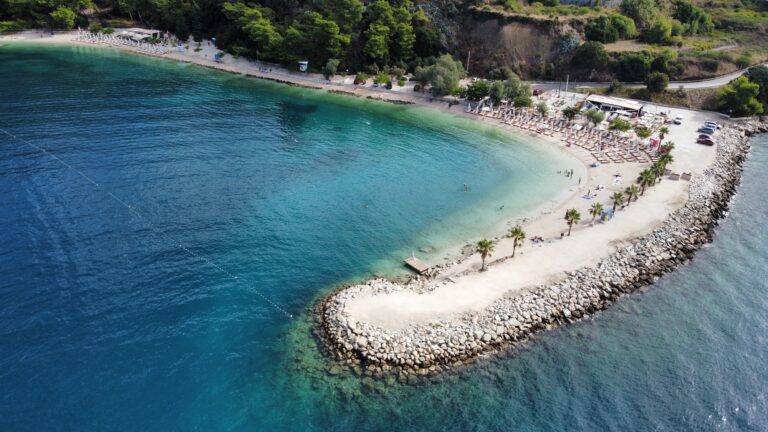
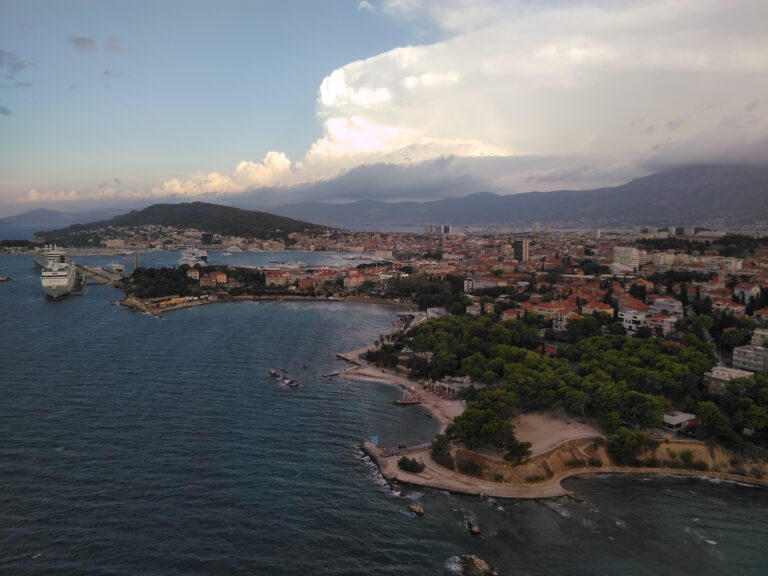
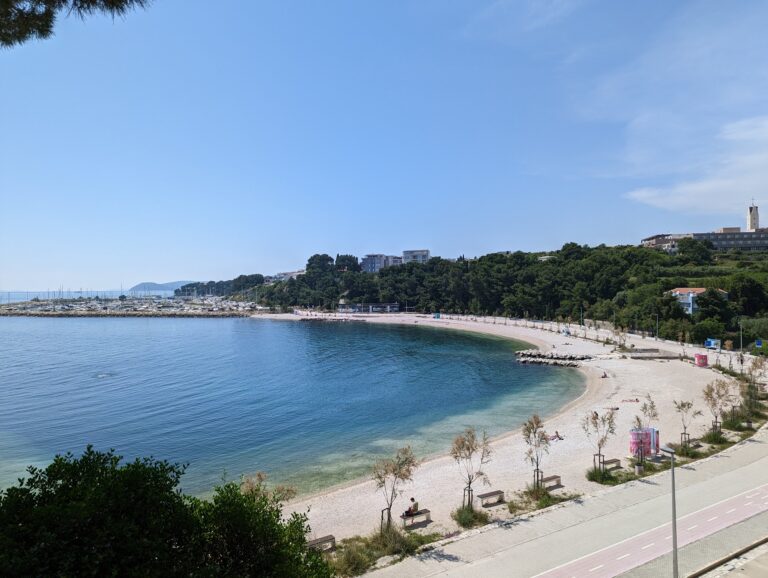
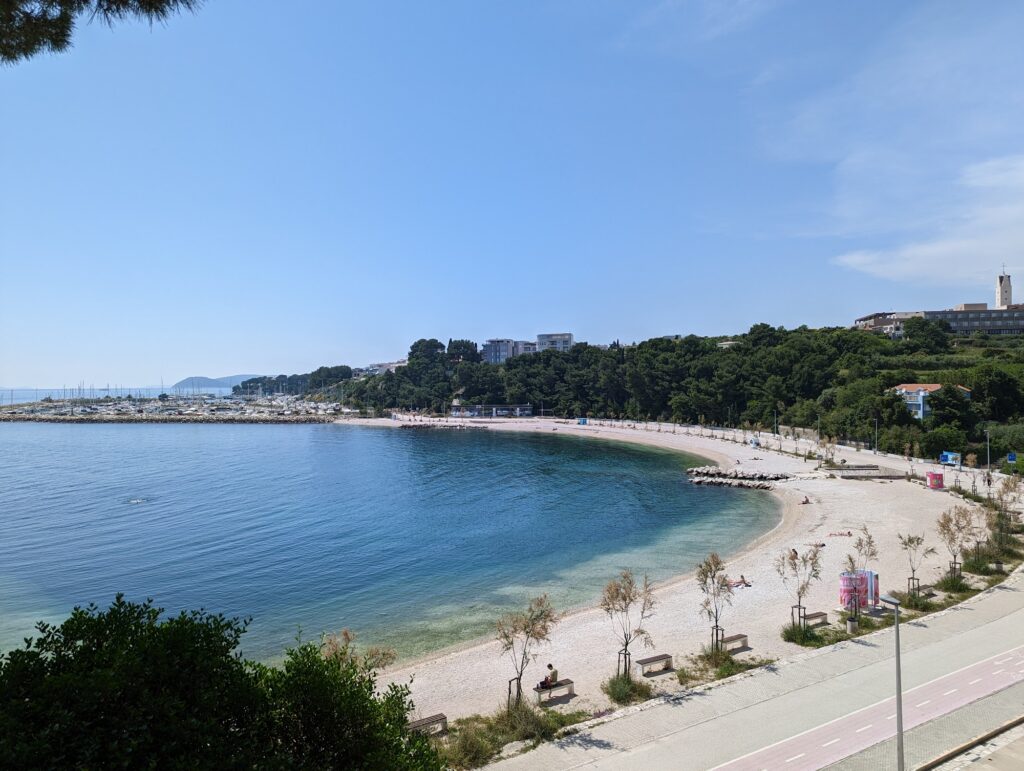
Kupalište Trstenik is the beach in Split that visitor accounts most consistently describe with the same word: quiet. It sits on the eastern arc of the city’s coastline, between Žnjan and Zenta, flanked by the larger and more organised Žnjan city beach to the east and the historically significant sandy Bačvice to the west. The Split Tourist Board lists it as a pebble beach with easy sea entry, ideal for families with children, adjacent to the Radisson Blu Resort & Spa’s recently renewed beach section. That official description is accurate in its outline, but the visitor experience has some specific qualities and some specific limitations that the official listing does not address.
Trstenik is man-made — the pebble surface was installed and shaped, the beach is maintained as a managed public facility, and its cleanliness and organisation reflect that care. The sea entry transitions from small stones near the shore to larger rocks and then a rocky seabed as depth increases, and sea urchins are present near the larger stones. Water shoes are not optional here — they are necessary. The beach cannot be reached by car; the nearest public parking is approximately 500 metres away. There is almost no shade on the beach itself. Food and drink provision along the immediate stretch is limited to a very small number of options. The Mistral Beach Club at the Radisson Blu is the nearest organised food and drink provision, and it is the premium rather than the casual end of the beach service on this stretch.
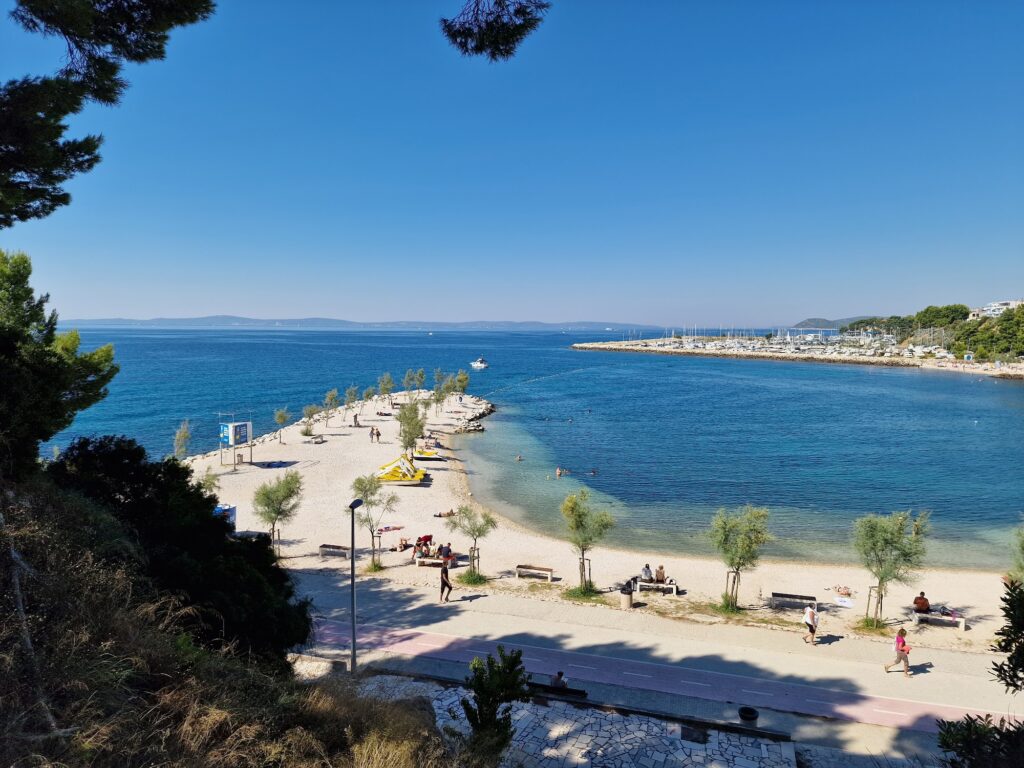
These limitations noted, the beach has clear, calm water, is genuinely less crowded than Bačvice and Žnjan, has showers and changing rooms, and sits directly on the promenade that connects the eastern Split beach sequence — a bicycle-accessible, stroller-friendly path behind the waterfront.
Getting There: Bus Lines 7, 8, or 15, on Foot from Bačvice, or Park 500m Away
From Split city centre, bus lines 7, 8, and 15 serve the Trstenik district — a five-minute walk from the closest stop to the beach. The journey from the city centre takes approximately 20 minutes. For visitors arriving from the western city beaches, the promenade walk east from Bačvice through Zenta to Trstenik takes approximately 20 to 25 minutes and passes the continuous succession of small beaches and swimming areas that define Split’s eastern coastal city front.
By car, the beach itself is not accessible — no vehicle access to the shore and no parking within immediate walking distance. The nearest public parking area is approximately 500 metres from the beach on the inland side of the promenade. That distance is walkable but worth knowing in advance for visitors arriving with beach equipment, young children, or anyone with mobility limitations. For visitors staying at the Radisson Blu, the hotel’s 100-step staircase down to its beach section is the specific access note — guests are forewarned in multiple reviews that the stairs are a significant factor in the ease of beach use.
The Beach: Man-Made, Small Pebble, Clear Water, No Shade
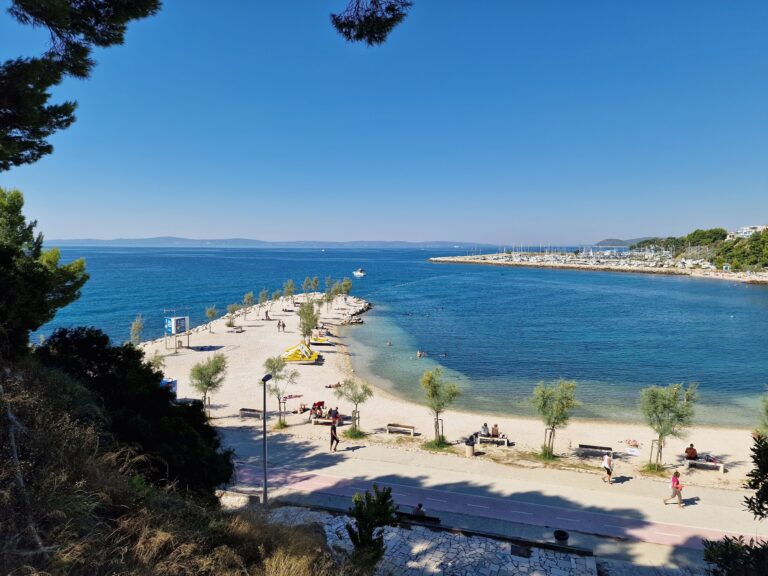
Kupalište Trstenik is a man-made pebble beach — the stones were laid, the waterfront shaped, and the beach is maintained as a city facility. The surface quality reflects that care: visitor accounts consistently describe it as clean, neatly arranged, and well-maintained. The small pebbles on the main surface are comfortable to sit on with a towel or mat, though a beach mat is advisable over the bare stone.
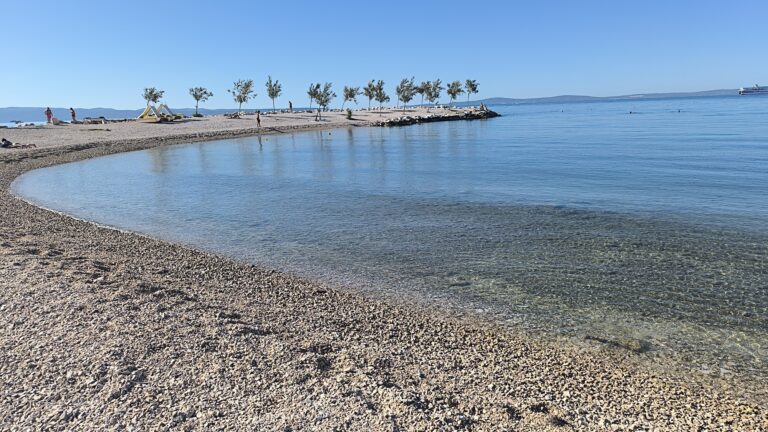
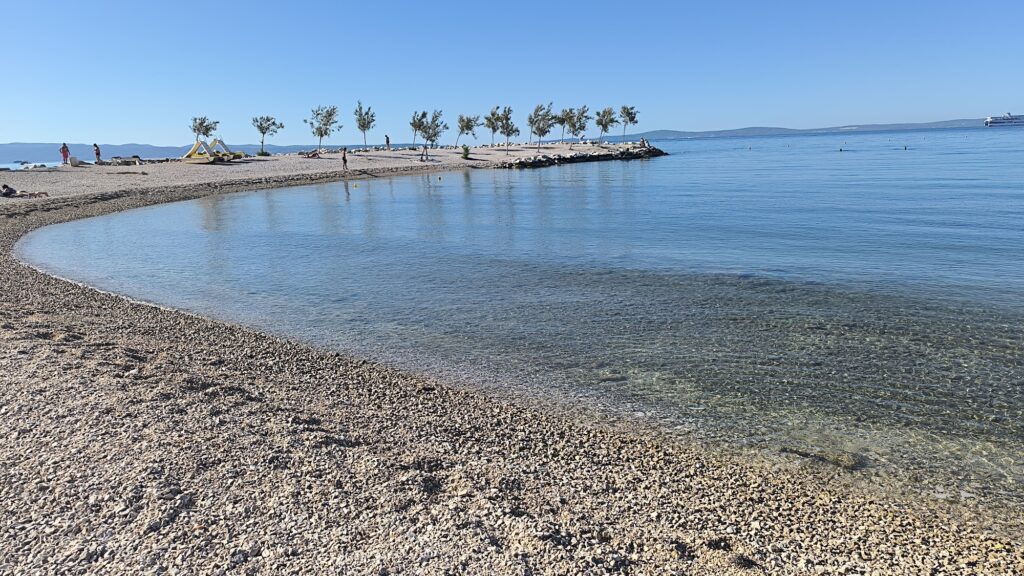
The sea entry transitions from small stones at the waterline to larger stones and then quickly to a rocky seabed as depth increases — the gradient is not the gradual sandy slope that families with very young children find accessible. Sea urchins are present near the larger stones, which makes water shoes essential rather than merely comfortable to have. This is the most important practical detail for first-time visitors, and it is the detail most consistently noted in visitor reviews: the entry is rocky, it quickens into depth faster than expected, and bare feet are a genuine risk at the transition to larger stones.
There is no shade on the beach itself. The promenade behind the beach has some shade from structures and trees, but the beach surface is fully exposed. In July and August midday conditions this is a significant consideration — a hat, umbrella, or the willingness to rotate between sun and the shaded promenade are the practical responses. The Mistral Beach Club at the Radisson Blu, accessible from the beach area, provides the shaded lounge alternative for those willing to pay the lounger fee.
Water Quality at Trstenik
The water quality at Trstenik is the beach’s strongest asset and the quality most consistently praised in visitor accounts. The sea is clear and transparent throughout the water column — the rocky seabed contributing to the visibility that sandy bottoms cannot maintain in disturbed conditions, and the relatively low watercraft traffic in this section of the city coastline keeping the surface clean and undisturbed. Fish are visible through the water from the surface in good conditions, and snorkelling along the rocky margins is productive given the marine life that undisturbed rocky seabeds support.
The water is calm in typical summer conditions — the Trstenik bay position provides shelter from the main Bora and Jugo wind exposures that affect the more open city beaches — and the temperature is warm from June through September. The sea in the morning hours, before the afternoon sun has worked on the surface, is the specific pleasure of Trstenik for the local early swimmers who use the beach as part of a daily routine rather than as a destination visit.
The Radisson Blu, the Mistral Beach Club, and the VIP Section
The Radisson Blu Resort & Spa on Put Trstenika is the landmark property adjacent to Trstenik beach, and its Mistral Beach Club is the organised beach service associated with this stretch of the coastline. The club offers the sun lounger and umbrella hire, the food and drink service, the resident DJ sessions, and the poolside bar that the public beach itself does not provide. The beach facilities are technically free of charge for non-guests, but the sun lounger hire is at hotel rates — visitor accounts note prices in the range of €20 to €25 per lounger.
The Mistral Beach Club is the answer to the question of what to do when the public beach’s lack of shade and limited food provision becomes a constraint. It provides the comfortable, organised beach experience alongside the same clear water that the public section offers, at a cost that reflects its hotel context. For visitors who want the premium version of the Trstenik beach day rather than the local, facilities-light public beach experience, the Mistral is the appropriate choice.
The Radisson Blu beach is accessible via a 100-step staircase from the hotel — a detail worth knowing for guests booking the property expecting flat beach access, and a practical consideration for visits with young children or mobility challenges.
The Promenade and the Eastern Beach Sequence
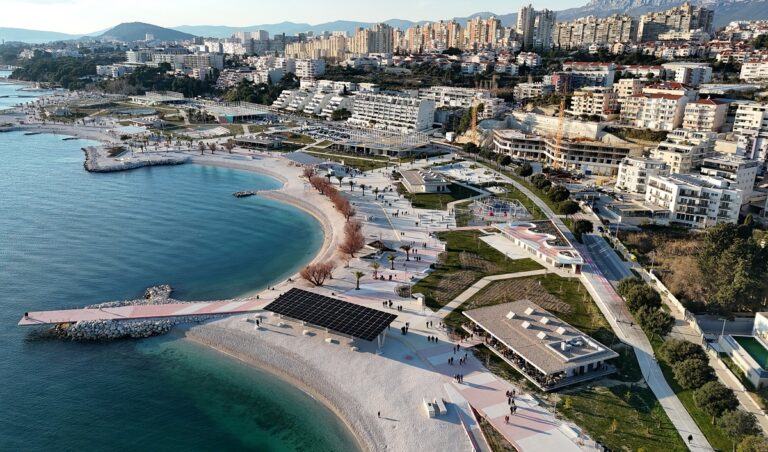
The promenade immediately behind Trstenik beach is one of the more pleasant cycling and walking paths on the eastern Split city coast — accessible by wheelchair and stroller, bicycle-friendly, and running along the waterfront behind the succession of beaches from Bačvice through Zenta, Trstenik, and east toward Žnjan. The path provides the specific pleasure of being at sea level along a city coast without the road traffic and fumes that most city promenades involve.
Kupalište Hidrobaza Pula is a different model of the same city-adjacent managed swimming facility — the comparison is not directly relevant geographically, but the man-made, managed character and the urban-residential beach atmosphere are shared qualities across Trstenik and the organised city kupalište beaches of Istrian and Dalmatian coastal towns. The Split beach sequence from Bačvice east through Trstenik to Žnjan represents the city’s most continuous managed waterfront, and Trstenik’s quiet positioning within that sequence is its defining quality.
Trstenik in the Split Beach Context
Kupalište Trstenik is the correct beach for visitors to Split who have spent a hot afternoon at Bačvice and want a morning swim in something quieter and clearer, or for visitors staying in the eastern city accommodation who want access to the sea without the Bačvice crowd and the picigin noise. It is not the beach for families with toddlers who need the shallow sandy entry that Bačvice and Firule provide, and it is not the beach for visitors who want the fully organised resort service that Beach Podstrana Split Riviera south of the city delivers. It is the beach for those who want clean, transparent, quiet water on a managed pebble shore within the city limits.
Kupalište Trstenik in Split is a quiet man-made pebble beach on the city’s eastern coast — clear water, a bicycle promenade behind it, water shoes essential, no shade, limited food nearby, and the Mistral Beach Club for when the public facilities are not enough.
Take bus 8 or 15. Walk east from the stop. Find the promenade.
Bring water shoes, a hat, and your own lunch.
Map
Sorry, no records were found. Please adjust your search criteria and try again.
Sorry, unable to load the Maps API.
Near by places: