Kašjuni Beach Split: Sunset Cove Below the Marjan Cliffs
Profile
Kašjuni Beach, Split: The Southwest-Facing Sunset Cove Below the Marjan Cliffs
Croatia | Split | Central Dalmatia
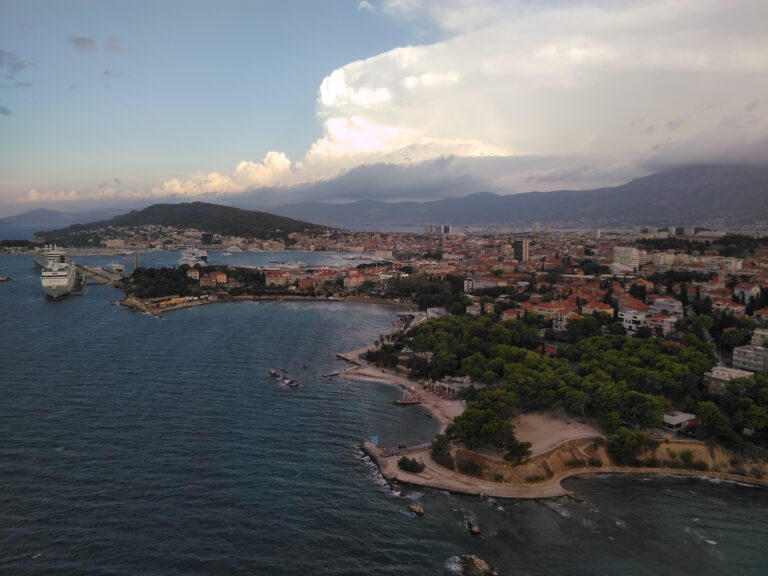
Kašjuni faces southwest. This single orientation fact explains the beach’s specific claim among Split’s beaches: it is the best sunset beach in the city. The bay opens toward the southwest and the open sea, with the cliffs of Marjan Hill behind and the profile of Čiovo Island visible across the water in that direction. At 7pm on a clear summer evening, when the sun reaches the angle at which it lights the Marjan pine slopes from below and begins to descend toward the horizon over the open Adriatic, Kašjuni is where to be.
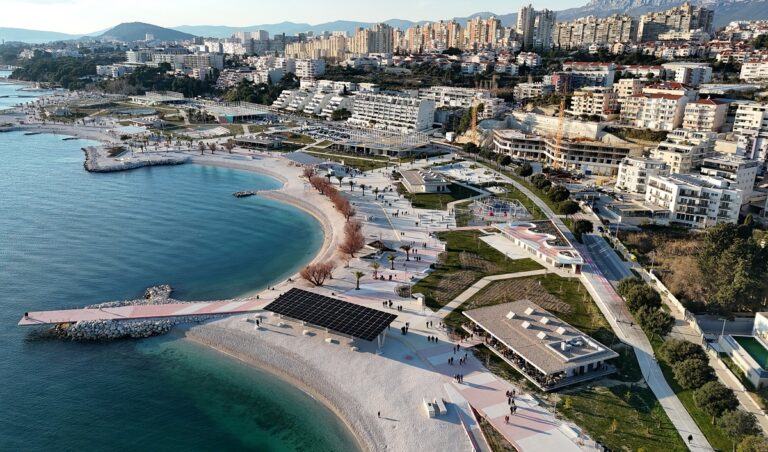
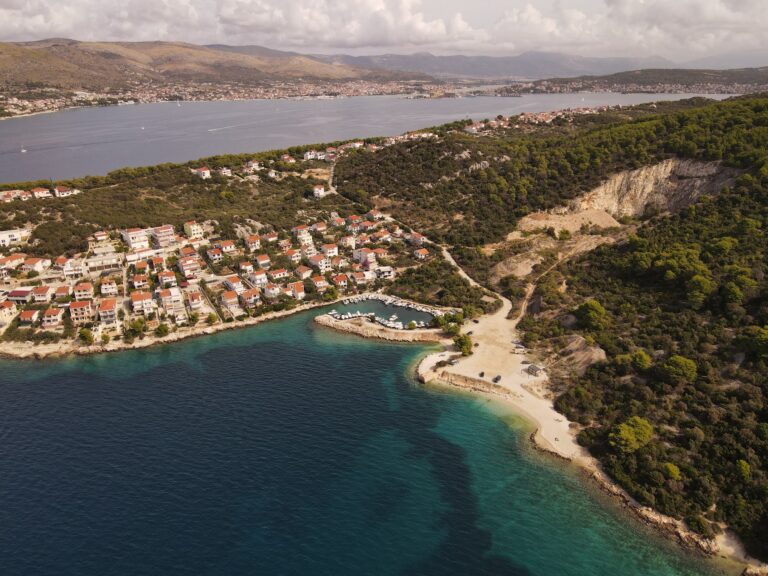
The beach is 3 kilometres west of Split old town, accessible by bus line 12 from Sv. Frane at the end of the Riva promenade. The bay is sheltered and surrounded by greenery, so it feels much more like an “escape from the city” than Split’s most famous beaches. Activities include swimming, snorkelling along the rocky edges, SUP or kayaking, and short walks on Marjan Hill. Water shoes are recommended due to pebbles and possible sea urchins. In peak summer arrive early — parking and the best spots fill up quickly.
The view from the beach toward the hill above is the specific reason that visitor descriptions of Kašjuni consistently use the word “breathtaking” as a descriptor rather than a superlative — the Church of St. Jerome carved into the cliff face, the Renaissance Karepić family tower on the ridge, the dense pine canopy of Marjan Forest Park descending to the water’s edge. The landscape framing the beach is the best of any city beach in Split.
Getting There: Bus Line 12 from the Riva, by Car with Limited Parking, or on Foot Through Marjan Park
Bus line 12 runs from Sv. Frane at the western end of the Split Riva — the last point of the old town promenade before the road turns toward the western peninsula — through the Marjan hill route to the beach stop. The ride takes approximately 10 minutes. The bus is the most straightforward approach and the one most visitor guides recommend specifically because parking at Kašjuni is limited, fills early in peak season, and the road down to the parking area creates a congestion problem when the beach is at capacity.
By car, the road descends from the Marjan hill road to a gravel parking lot adjacent to the beach — the lot fills by mid-morning in July and August, and some visitor accounts recommend parking higher on the hill and walking the remaining section. The walk down from the parking to the beach takes approximately 5 minutes.
On foot from the Split old town, the walk through Marjan Forest Park is the most scenic approach — approximately 45 to 60 minutes through the park trails, passing the viewpoints and the St. Jerome’s Church cut into the cliff face, descending to the beach from the Marjan hill side. The walk in the early morning before the beach has filled is the specific programme that regular visitors to Kašjuni recommend as the best version of the day.
By taxi or Bolt from the city centre, the ride costs approximately €10 to €15 and takes 10 minutes — the practical option for groups or for visitors who want to avoid both the bus wait and the parking difficulty.
The Beach: Crescent Pebble, No Shade Without an Umbrella, Three Sections, Sea Urchins
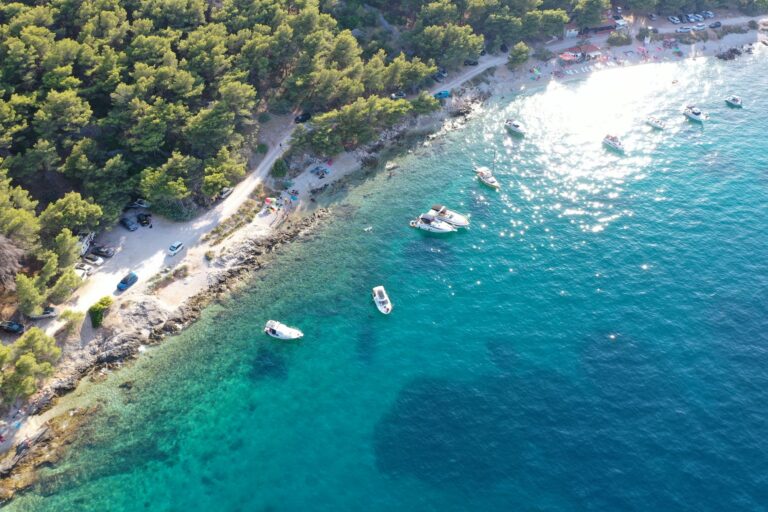
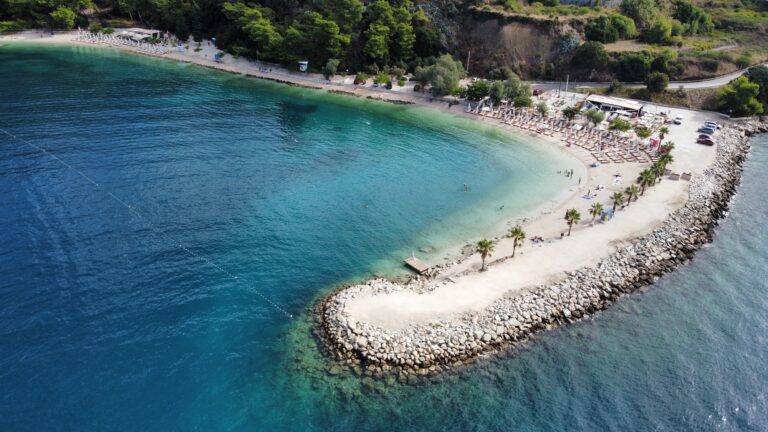
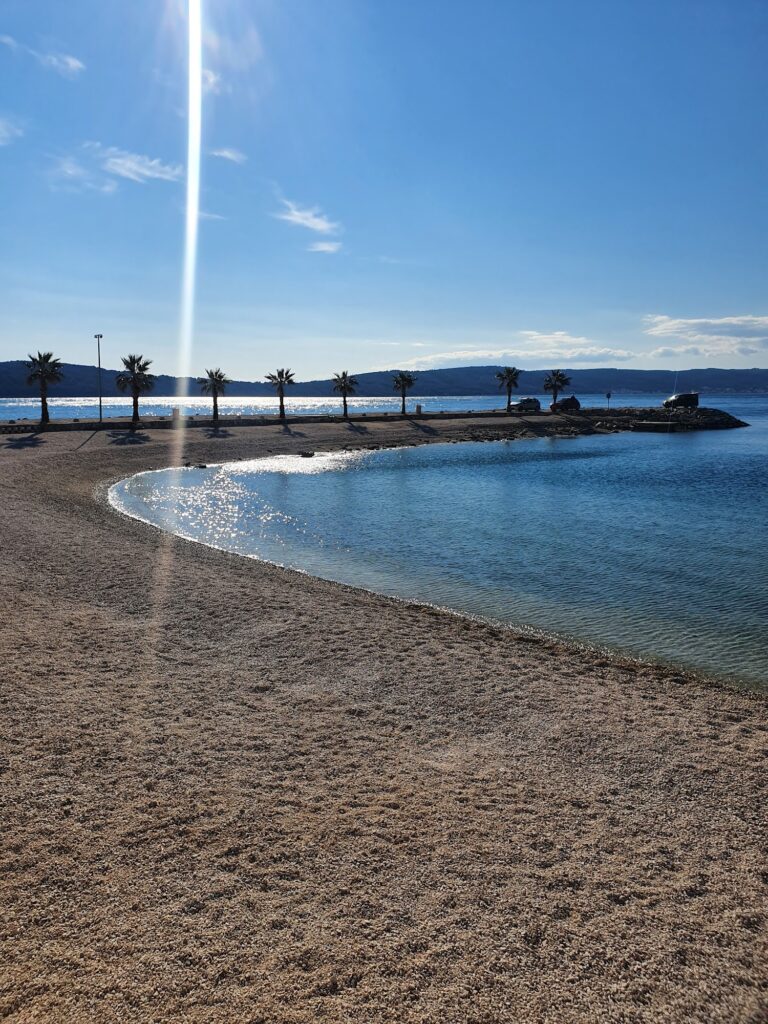
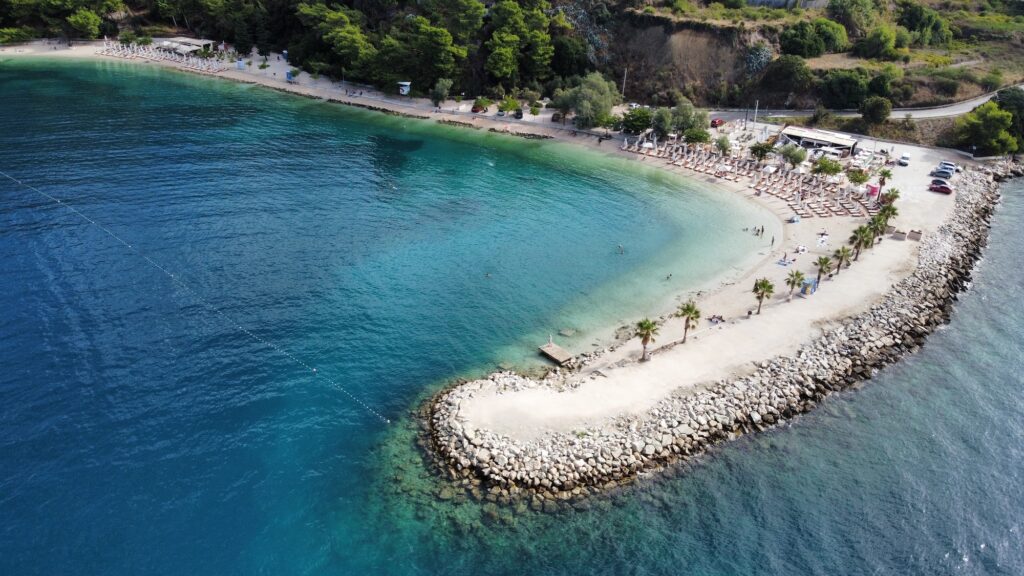
Kašjuni is a crescent-shaped pebble cove — small and smooth stones in the water, larger on the upper shore, with the rocky cliff margins at the ends of the crescent. The bay is naturally sheltered by the cliff geometry rather than by a breakwater — the source article’s claim of a “long breakwater” is inaccurate; the protection comes from the surrounding headlands.
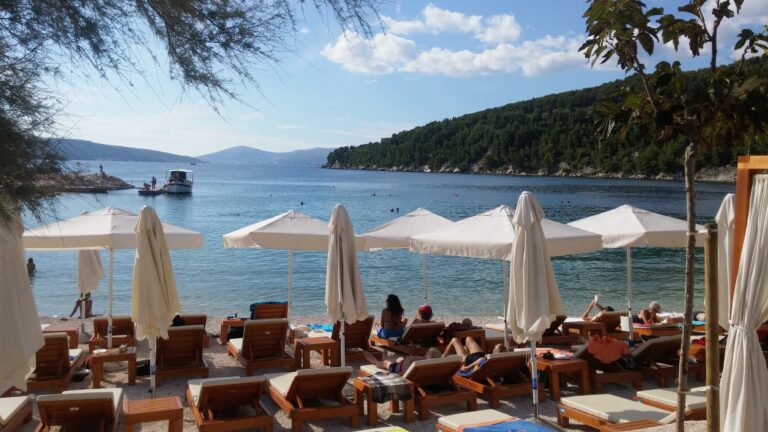
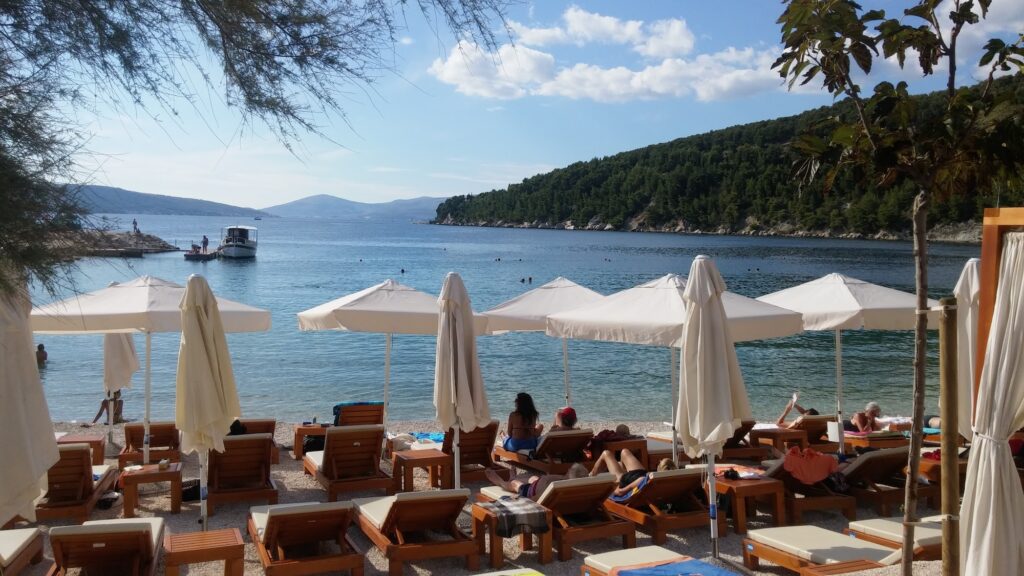
The beach is divided into sections by natural rocks: the centre is the beach bar area with music, cocktails, and sunbeds; the left side (facing the sea) is the quieter families and locals section; the far right, past the rocks, is the dog beach and FKK naturist section. The three sections coexist without formal separation beyond the natural rock divisions, and the characterisation of each section — louder and more commercial in the centre, quieter toward the family left end, wild and clothing-optional beyond the rocks to the right — is consistent across visitor accounts.
There is no natural shade on the beach. Unless a sunbed umbrella is rented or the few pine trees at the beach edge are found (which are taken by 9am), there is zero natural shade. The pine trees are on the cliff slope rather than on the beach surface itself, providing limited and sought-after shade that fills before mid-morning. Sunscreen and personal sun protection are the requirements for a full beach day.
Sea urchins are present in the rocky sections of the beach and along the cliff margins — a consistent visitor warning that water shoes are necessary for movement among the rocks and for snorkelling. The central pebble section is generally clear of urchins; the rocky edges are not.
Joe’s Beach Bar & Lounge: €35 Sunbeds, Cabanas, Massages, Cash Preference
Joe’s Beach Lounge & Bar is the commercial centre of Kašjuni — the cabana and sunbed operation that dominates the centre section of the beach and that the beach’s international reputation is substantially built on. Visitor accounts are consistent on three points: the sunbeds cost approximately €35 per person or €70 to €100 per pair with umbrella; the bar and food quality is adequate; and the cash-preference policy (the minimum for card transactions is €70 at the restaurant, creating effective cash pressure for smaller purchases) is a consistent visitor irritation.
The beach is public — no charge for bringing your own towel and using the unorganised sections of the pebble. The sunbed fee is for the organised Joe’s section only. Most visitor accounts suggest bringing your own food and drink if using the public sections of the beach, given the pricing structure at the bar.
Joe’s also offers beach massages — a specific provision within the beach bar concept that positions it closer to a resort beach club than a typical Croatian public beach bar, consistent with the beach’s overall identity as the most cosmopolitan beach in Split.
The Marjan Hill Context: St. Jerome, the Karepić Tower, and the Walking Trails
Above the beach, Marjan Forest Park offers the specific dimension of Kašjuni that the beach day extends into: the walking trails through the pine forest, the viewpoints over Split and the islands, the Church of St. Jerome carved directly into the cliff face at the base of the hill, and the Karepić tower — the Renaissance-period family tower of the Karepić (Caripeo) family visible on the hill ridge above the beach. The combination of the morning walk through the park and the afternoon on the beach is the specific Marjan peninsula programme that the bus line 12 route makes available as a circuit from the city centre.
Bene Beach — on the northern side of the Marjan peninsula, the longest and most pine-shaded beach in the park, accessible only on foot from the bus stop — is the contrast beach to Kašjuni’s southern-facing glamour: pine shade throughout, gentle slopes, family atmosphere, less commercial infrastructure, cooler and more forested in character.
Ježinac and Kaštelet: The Nearby Alternatives
Between Kašjuni and the Split Riva, the Marjan southern slopes produce two further small beaches: Ježinac (the most popular with year-round local swimmers, a pebble beach 25 minutes’ walk from the Riva with a beach bar) and Kaštelet (also known as Obojena Svjetlost — the smallest, quietest, and most local of the three). For visitors who want the Marjan southern coast experience without the Joe’s pricing and the Kašjuni summer crowd, Ježinac is the practical alternative — similar water quality, similar setting, and the population of regular swimmers who use it as their neighbourhood beach throughout the year.
Kašjuni Beach in Split is the southwest-facing crescent cove 3 kilometres west of the old town — the best sunset beach in Split, Joe’s Beach Lounge dominating the centre with €35 sunbeds, a dog beach and FKK section to the right past the rocks, the Church of St. Jerome and the Karepić tower visible on the cliff above, sea urchins at the rocky margins, no natural shade.
Take bus 12 from Sv. Frane. Arrive before 10am in July and August. Bring water shoes and your own food and drink for the public section.
Stay for the sunset. That is what the orientation of the beach makes possible.
Map
Sorry, no records were found. Please adjust your search criteria and try again.
Sorry, unable to load the Maps API.
Near by places: