Žnjan City Beach Split: The 2025 €45M Reopening
Profile
Žnjan City Beach, Split: The €45.77 Million Reopening, the Pope John Paul II Plateau, and Split’s New Coastal Living Room
Croatia | Split | Central Dalmatia
The plateau at Žnjan was first created in 1998 for a specific purpose: to provide a gathering space large enough for the visit of Pope John Paul II to Split. The artificial platform, built out over the sea at the eastern end of Split’s city beach zone, served that single ceremonial purpose and then became what large pieces of concrete often become when their original purpose has passed — a sprawling, somewhat neglected public space whose potential was consistently noted and consistently unaddressed for twenty-five years.
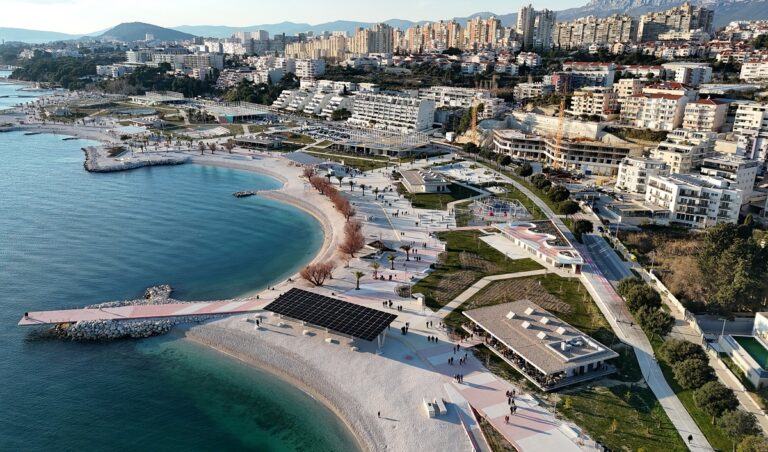
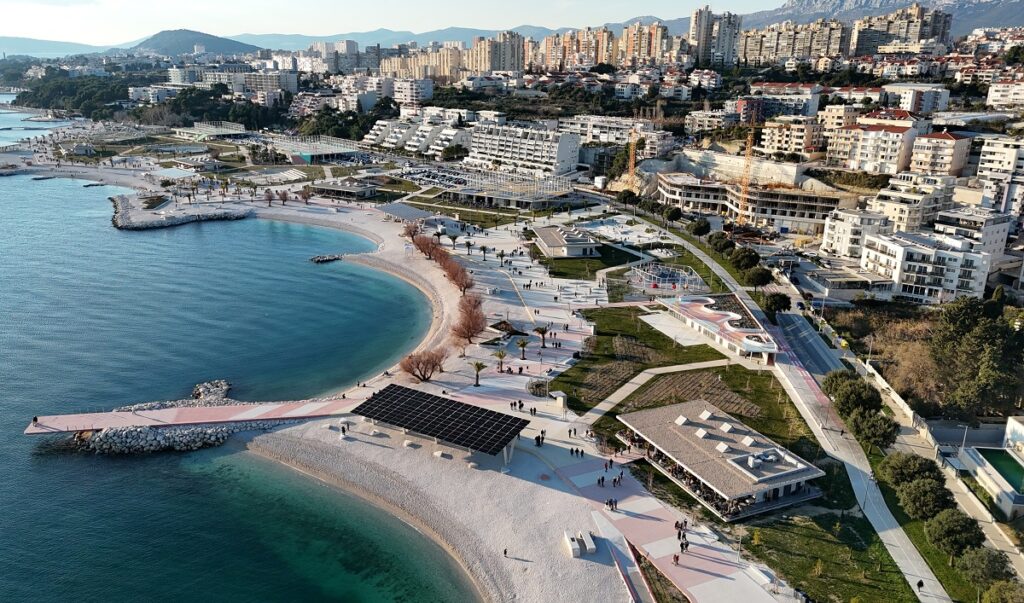
On 21 June 2025, the opening ceremony for the transformed Žnjan plateau featured classical ballet, multimedia presentations, and live music. The €45.77 million project — including €13.94 million in EU funding — was designed by architect Ante Kuzmanić and built by Lavčević d.d. The transformation includes 11 new pavilion buildings, a two-level underground garage with 530 spaces and 451 outdoor spaces, a 2+ kilometre promenade, an amphitheatre with a steel dome, approximately 48,000 square metres of green space with 730 trees and 12,815 native shrubs, and full accessibility features including a hydraulic sea-access elevator. The opening followed an 18-month construction period, transforming the plateau into a modern, well-organised public space envisioned as a vibrant gathering spot for cultural events, sports activities, and public celebrations.
Getting There: Bus Lines 8 or 15 from Split Centre, by Car with Underground Parking, or on Foot from Bačvice
From Split city centre, Žnjan is approximately 15 to 20 minutes by bus — bus lines 8 and 15 serve the beach directly. The underground garage accepts cars from July 2025 at €1 per hour, with 530 underground spaces and 451 outdoor spaces. Ten spaces are reserved for disabled drivers. Visitor accounts and the beach authority both advise arriving early in peak season as both the garage and the surface lots fill by mid-morning on summer weekends.
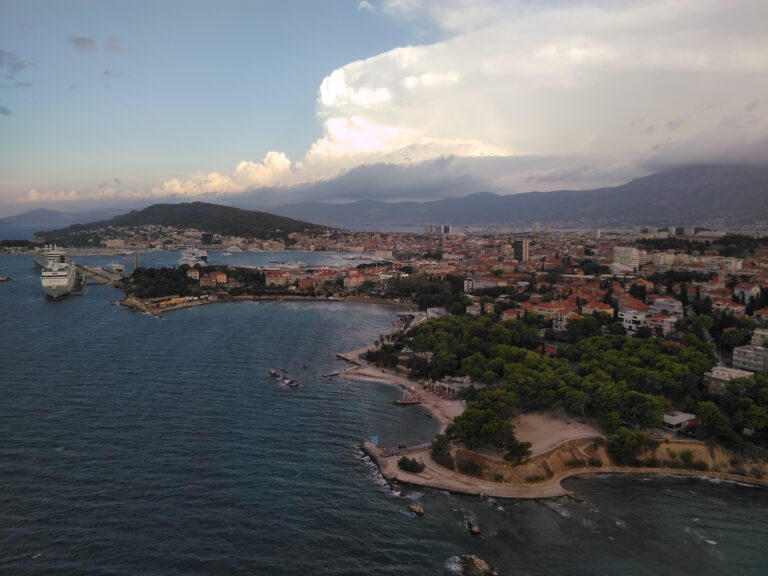
On foot from Bačvice Beach — Split’s most famous sandy city beach, approximately 1.5 kilometres west of Žnjan — the coastal promenade walk takes approximately 35 to 40 minutes and passes through the residential Firule and Trstenik beach zones before reaching the Žnjan plateau. The promenade is the specific walking infrastructure that the renovation extended and connected, making the full eastern coastal sequence from Bačvice to Žnjan walkable continuously for the first time.
The beach complex is a pedestrian-only zone — cars go to the garage and surface parking above, and visitors walk down into the beach zone on foot. This separation of traffic from the beach surface is the design quality that the previous Žnjan lacked and that the renovation specifically addressed.
The Transformation: What the €45.77 Million Built
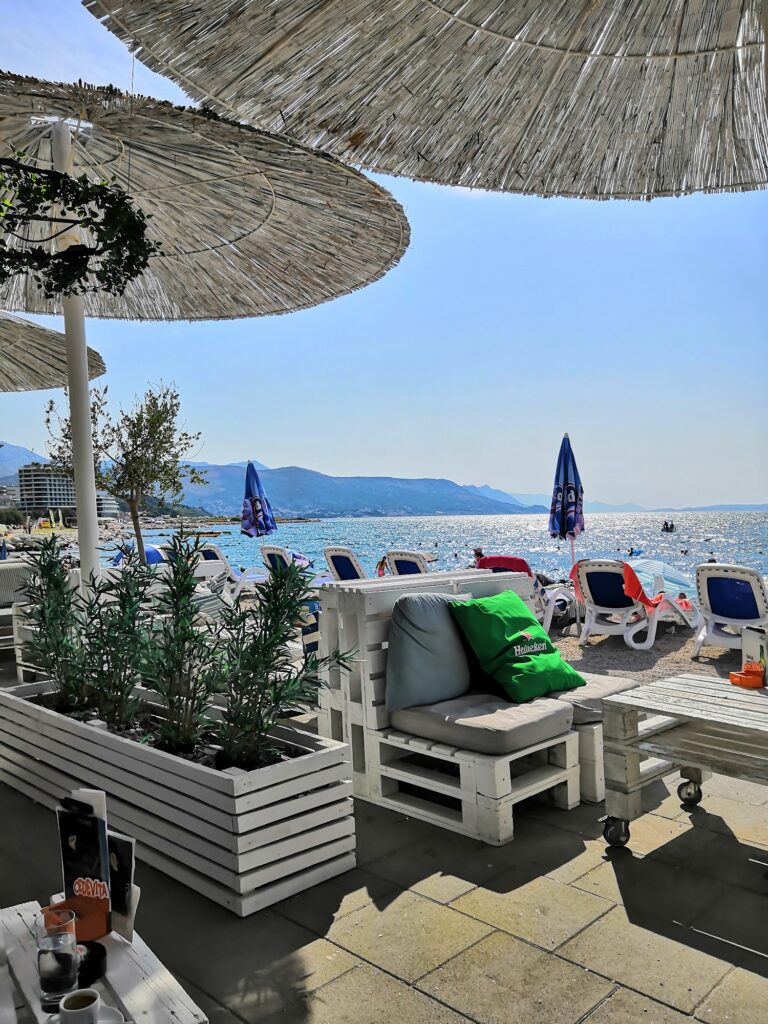
The specifics of what the renovation produced are worth stating precisely because the scale of the investment is significant enough to warrant accuracy rather than paraphrase. The 11 pavilion buildings house restaurants, cafés, and bars along the 2+ kilometre promenade. The amphitheatre with its steel dome is the cultural events venue that Split’s city government has been planning as a complement to the Diocletian’s Palace and Peristyle concert spaces in the old town — a large-capacity outdoor venue for summer concerts, festivals, and municipal events. The hydraulic sea-access elevator is the disability provision that makes the sea genuinely accessible for wheelchair users and visitors with limited mobility, rather than nominally accessible by ramp alone.
The 48,000 square metres of green space is the number that gives the transformation its civic identity: after Marjan, Žnjan will be the second largest green area in Split, with 730 trees and palms and 12,815 autochthonous shrubs and perennials planted. The project’s insistence on native species is the ecological dimension — plants suited to the Dalmatian coastal climate rather than ornamental imports that require intensive maintenance. The stated goal of the green space was to reduce the urban heat island effect in the Žnjan district, which the previous concrete plateau actively generated.
The solar canopy above part of the garage produces electricity for the beach complex’s own use — the sustainability dimension of the project that the EU funding requirement mandated and that the architect incorporated into the covered parking structure.
The Beach: Pebble, 1.5 Kilometres, Hydraulic Lift, and the Open Adriatic View
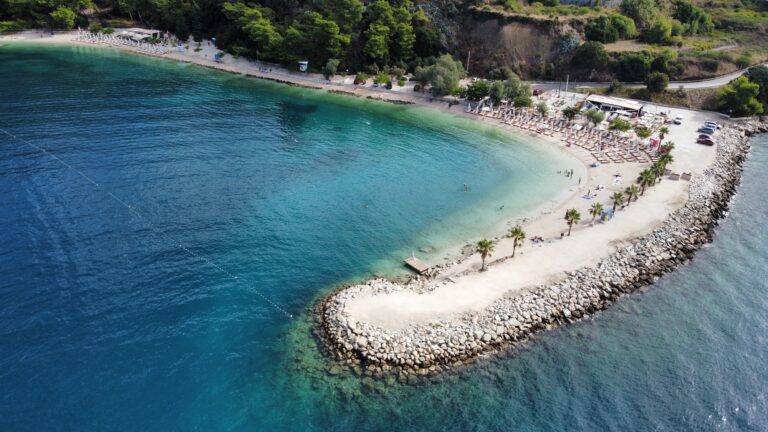
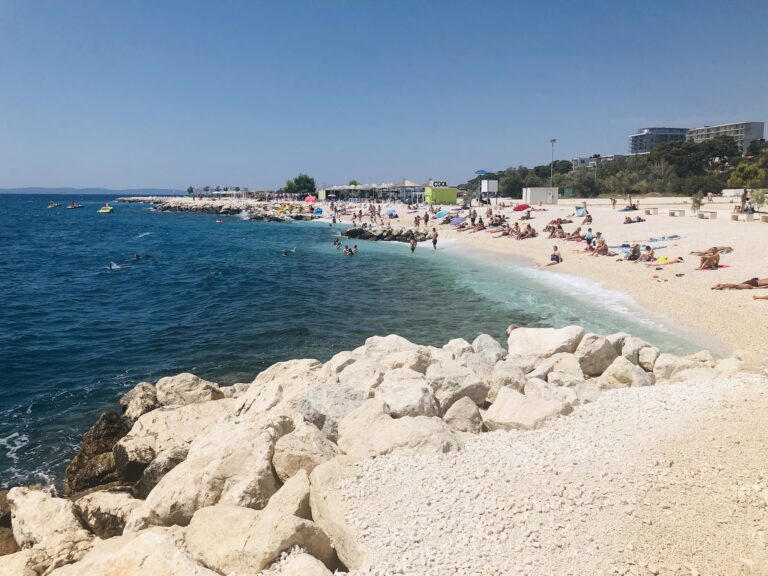
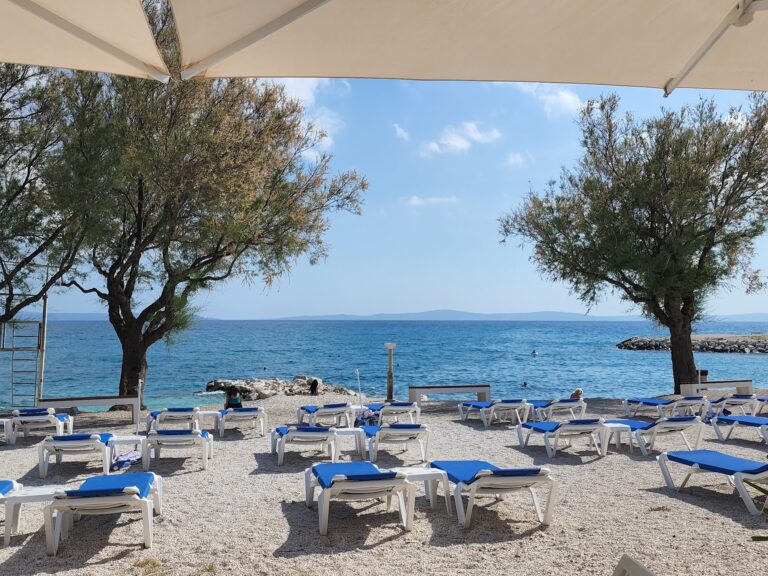
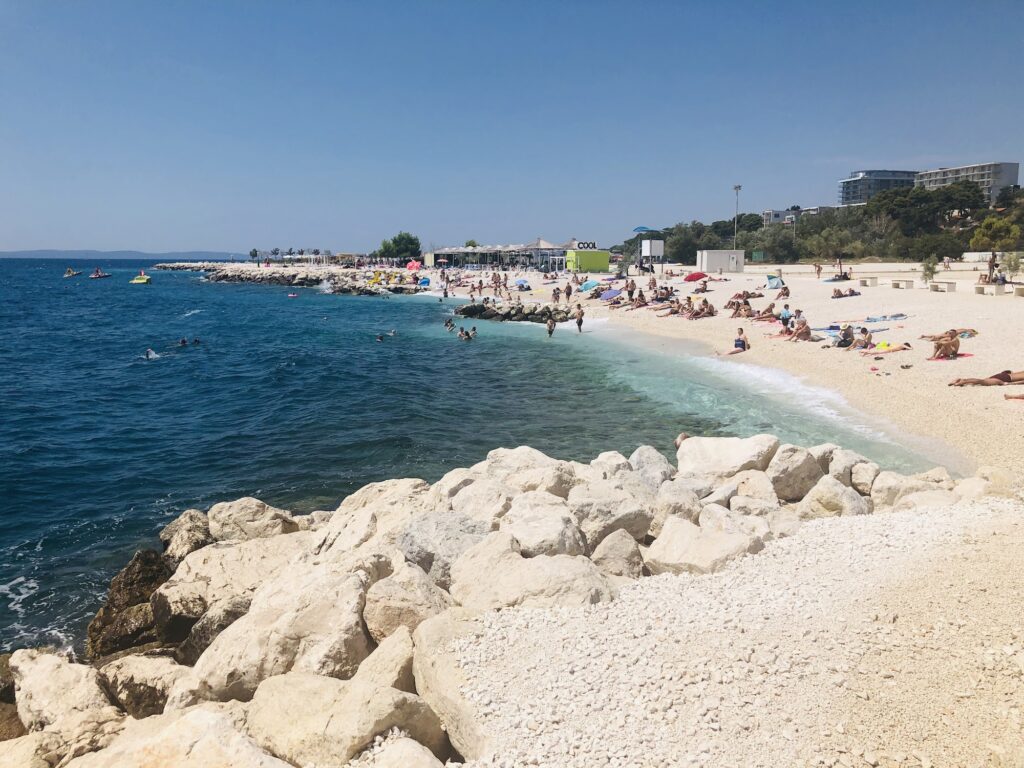
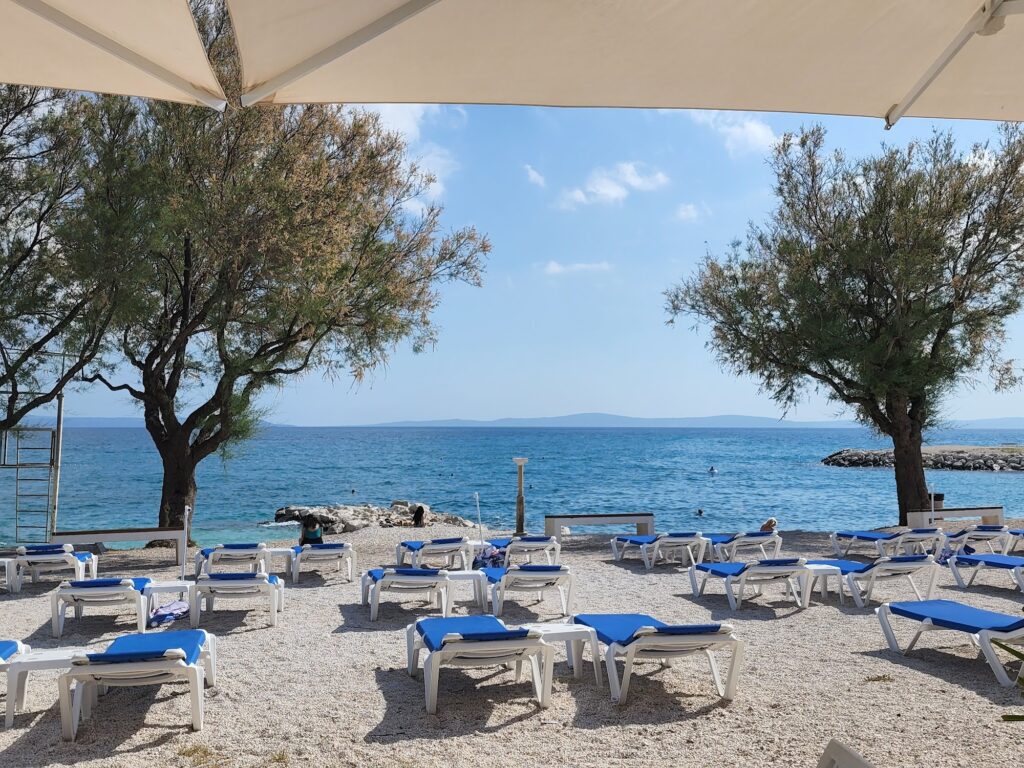
Žnjan Beach is the largest beach in Split — approximately 1.5 kilometres of pebble shore at the base of the plateau, open to the eastern Adriatic with the islands of Brač and Šolta visible from the water. The pebble surface and the moderate seabed gradient make the swimming accessible for a range of abilities, and the lifeguard towers during the summer season provide the safety supervision that the beach’s length and visitor volume require.
The hydraulic sea-access elevator is positioned for wheelchair users and for visitors who cannot manage the standard staircase and ramp entry to the water — a specific provision that distinguishes the renovated Žnjan from most Dalmatian city beaches, which are nominally accessible but practically difficult for visitors with significant mobility limitations.
Water shoes are recommended for the pebble entry, as at all Dalmatian pebble beaches. The water quality in the Žnjan zone is consistently clean — the eastern Split bay position, away from the heavy port traffic of the western harbour, maintains the sea clarity that the Adriatic’s general water quality standard supports in this zone.
The Amphitheatre and the Cultural Programme
The Žnjan amphitheatre — the steel-domed outdoor venue at the centre of the plateau — is the specific addition that positions the beach complex as a year-round cultural destination rather than a purely seasonal beach facility. The summer programme of concerts, performances, and events uses the amphitheatre as the stage, with the beach and the sea as the backdrop. The opening ceremony’s use of classical ballet and multimedia projection against the Adriatic evening sky was the demonstration of what the venue is designed to achieve: a cultural setting that no other city beach venue in Croatia currently provides at this scale and design level.
For visitors combining the beach with the cultural programme, the summer evening concert followed by dinner at one of the 11 pavilion restaurants is the specific Žnjan programme that the renovation was designed to make possible — the beach day transitioning into the evening event without leaving the complex.
Žnjan in the Split Beach Sequence
Split’s city beach sequence runs east from the old town along the coastal promenade: Bačvice (the famous sandy beach with the traditional picigin water polo), then Firule and Trstenik (the intermediate residential beach zones with their own smaller pebble coves), and then Žnjan at the eastern end — the largest in scale, the most recently transformed, and the most formally equipped.
Kupalište Trstenik Split — the man-made pebble beach midway along this sequence — is the comparison point for the difference between the renovated Žnjan scale and infrastructure and the smaller, more minimal beach provision of the intermediate zones. Trstenik has no shade, no bar with this quality, no garage, no amphitheatre; it is the local swimming spot of the residential district rather than the civic beach destination that Žnjan now represents.
Žnjan City Beach in Split is the plateau that Pope John Paul II stood on in 1998, now transformed with €45.77 million into Split’s largest city beach complex — 11 pavilion restaurants, a steel-domed amphitheatre, 730 trees, a hydraulic sea-access elevator, 980 parking spaces, and a 2-kilometre promenade connecting the whole.
Take bus 8 or 15 from the city centre. Arrive before 10am in July and August.
The amphitheatre programme starts in the evening.
Map
Sorry, no records were found. Please adjust your search criteria and try again.
Sorry, unable to load the Maps API.
Near by places: