Beach Đardin Kaštel Stari: Pine Park Beach Near Split
Profile
Beach Đardin, Kaštel Stari: The Park Beach That Makes the Kaštela Riviera Worth the Drive from Split
Croatia | Dalmatia | Split Region
The Kaštela Riviera runs along the northern shore of Kaštela Bay between Split and Trogir — a stretch of coastline that most visitors to the region pass through on the way to somewhere else without stopping long enough to understand what it offers. The seven Kaštela settlements that give the riviera its name are each built around a medieval fortified tower — the kaštel from which the area takes its designation — and the coastline between them is a sequence of small beaches and park waterfonts that the local population has been using for generations while the tourist infrastructure of Split and Trogir has absorbed the attention of most visitors.
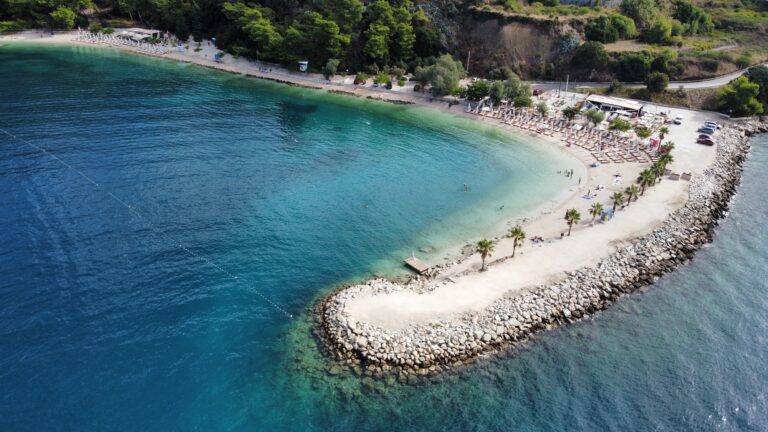
Beach Đardin in Kaštel Stari is the specific destination on this stretch of coast that most fully rewards the decision to stop. The name reflects what the beach actually is — đardin is the local Dalmatian dialect word derived from the Italian giardino, meaning garden — and the beach is integrated into a park in the literal and functional sense: the pine trees and the green space of the public park border the pebble shore directly, the shade extending onto the beach in a way that gives the waterfront a character entirely distinct from the exposed resort beaches of the broader Split area.
I arrived by bus from Split — the Promet line 37 toward Trogir stopping at Kaštel Stari within a short walk of the beach — on a Thursday morning in mid-July, and spent the full day there. The park was busy with local families by mid-morning. The water was the colour of the protected bay water in Kaštela. The pine shade was exactly as effective as the name of the beach suggests it would be.
Getting There: Bus Line 37 and the Kaštela Road
How to get to Beach Đardin from Split is straightforward by both public transport and car.
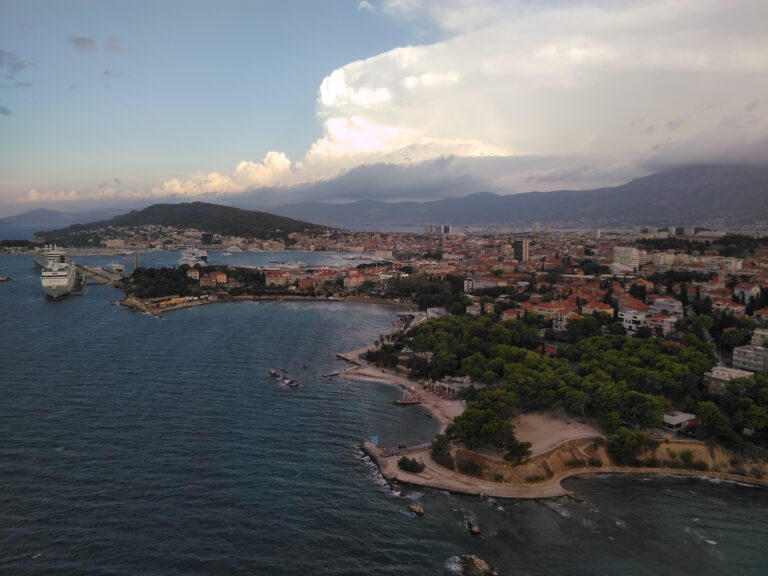
Promet bus line 37 — the Split to Trogir service — runs frequently throughout the day and stops at Kaštel Stari, from which the beach is a short and pleasant walk. This is the most practical option for visitors staying in Split without a car, and the frequency of the service makes the return journey flexible rather than timetable-dependent. The bus follows the old Kaštela coastal road rather than the motorway, which means the journey itself offers intermittent views of the bay and the Mosor mountain range above the coast.
By car, the drive north from Split along the Kaštela road takes approximately twenty minutes, with organised parking areas within walking distance of the park and beach. The route passes through several of the Kaštela settlements in sequence — Kaštel Sućurac, Kaštel Gomilica, Kaštel Kambelovac — before reaching Kaštel Stari, the settlement at the beach.
By bicycle, the coastal cycling path connecting the various Kaštela settlements provides a direct and scenic route from Split that is worth taking for its own quality — the Kaštela Bay visible throughout and the medieval towers visible at intervals along the route giving the ride a historical dimension that the road approach does not provide.
The Park and Its Beach: What Đardin Actually Means
The name of the beach is functional rather than aspirational. Đardin — from the Dalmatian dialect version of the Italian word for garden — describes a beach that is genuinely integrated into a park rather than merely adjacent to one. The towering pine trees that give the park its character extend their canopy over the pebble shoreline directly, the shade they cast reaching far enough onto the beach to make the midday hours comfortable without the umbrella management that exposed beaches require.
The park is a public space in the fully realised sense — benches, paved walkways, green space for children to run, the infrastructure of a community outdoor area that has been maintained and used for generations rather than developed specifically for tourism. The beach at its edge functions as the park’s waterfront, and the transition between the two is seamless rather than demarcated.
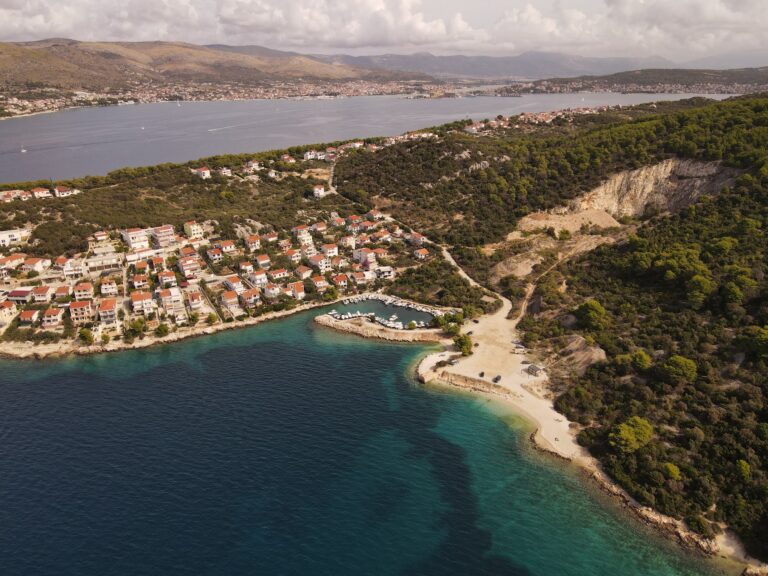
Kaštela Bay is a protected inlet between the Kaštela coast and the island of Čiovo — the same island that contains Slatine Beach and Copacabana Beach Okrug Gornji on its southern shore. The bay’s enclosed geometry keeps the water calm through most conditions, and the protection from the open Adriatic swell means that Kaštela Bay beaches consistently offer the still, warm water conditions that the more exposed beaches south of Split do not always provide. The water at Beach Đardin reflects that bay protection directly — calm, warm, and transparent in the characteristic manner of well-maintained Dalmatian bay water.
The Shore and Water Quality
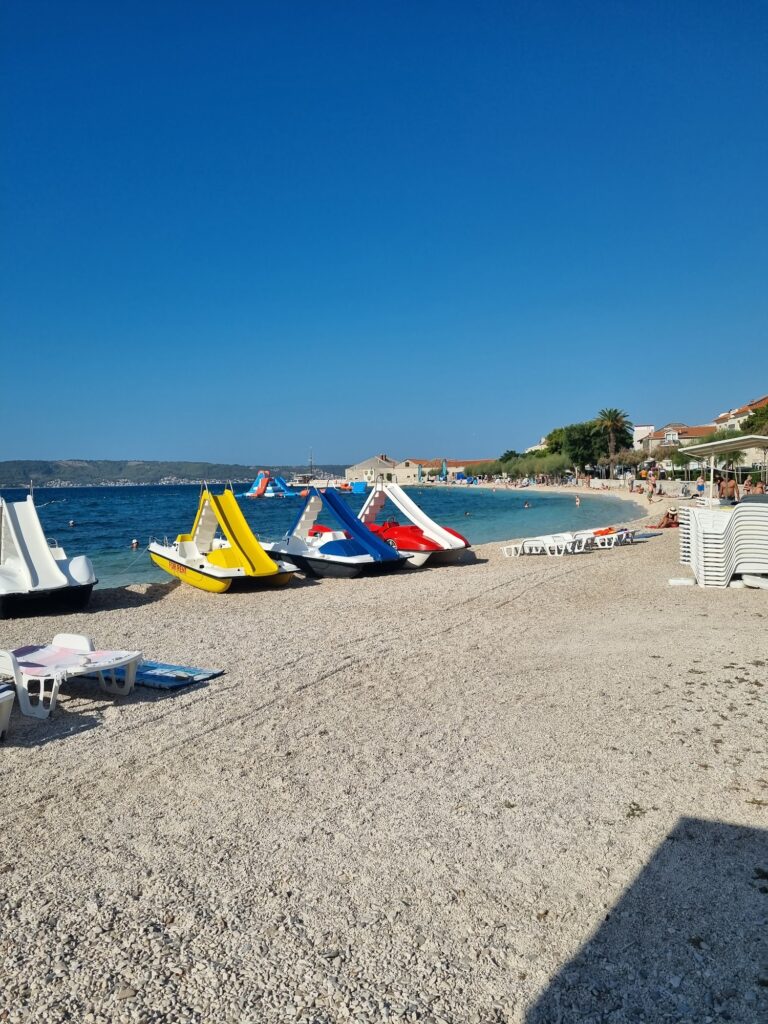
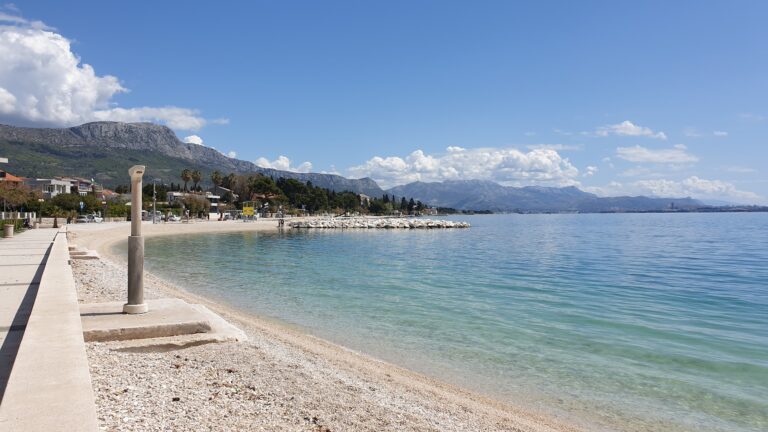
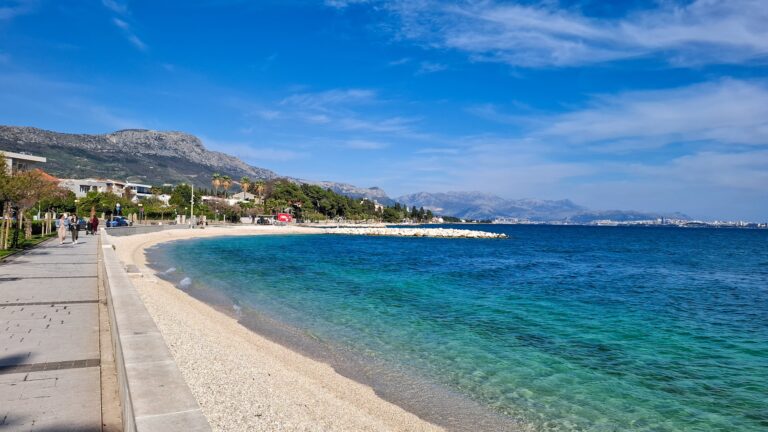
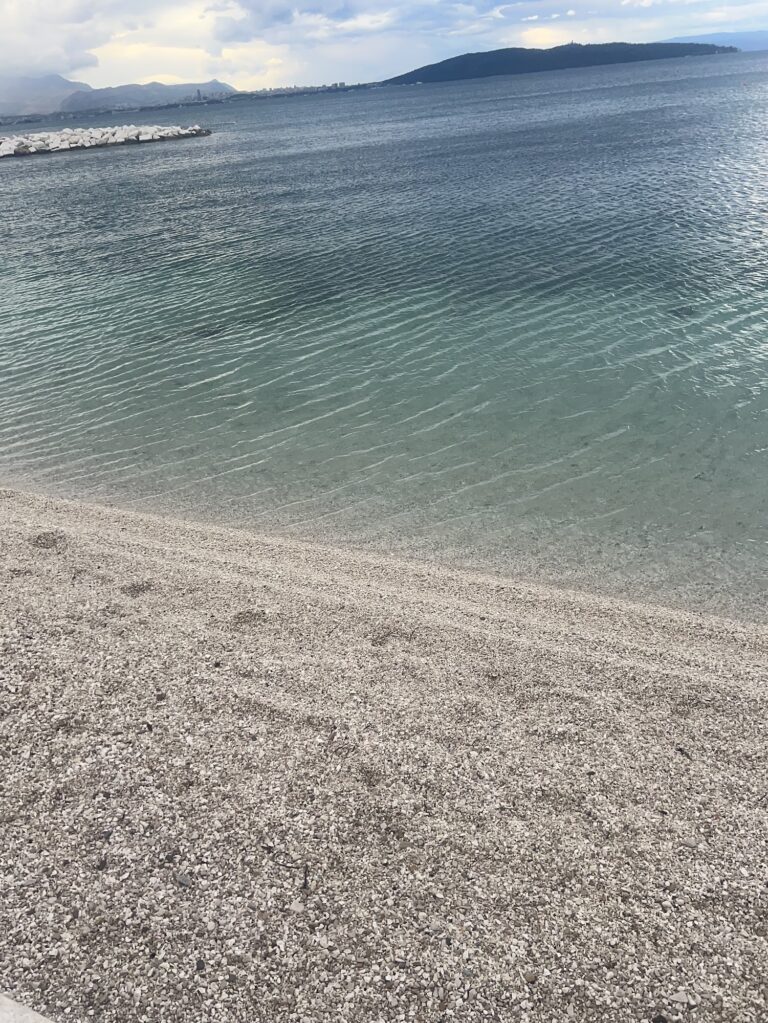
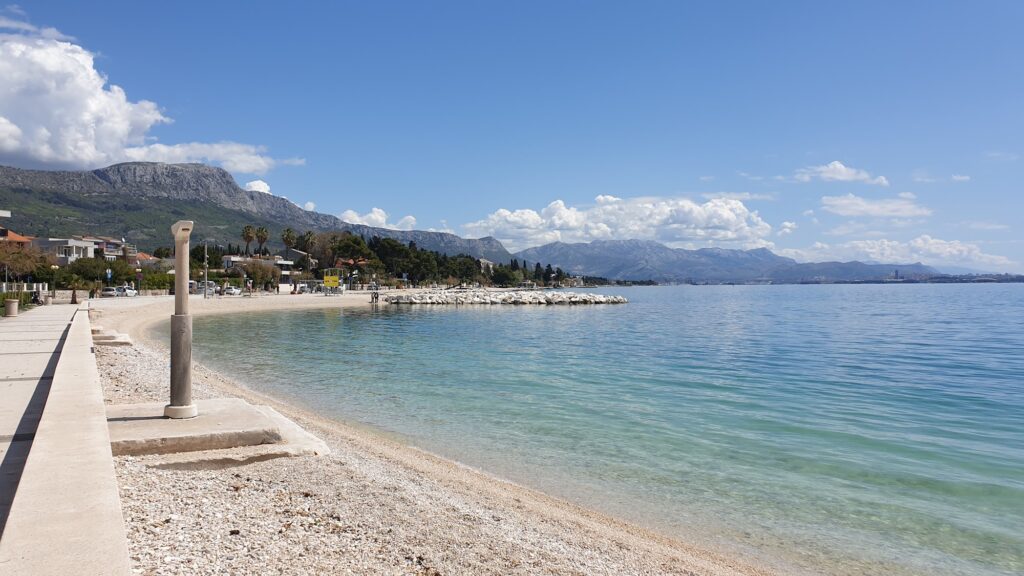
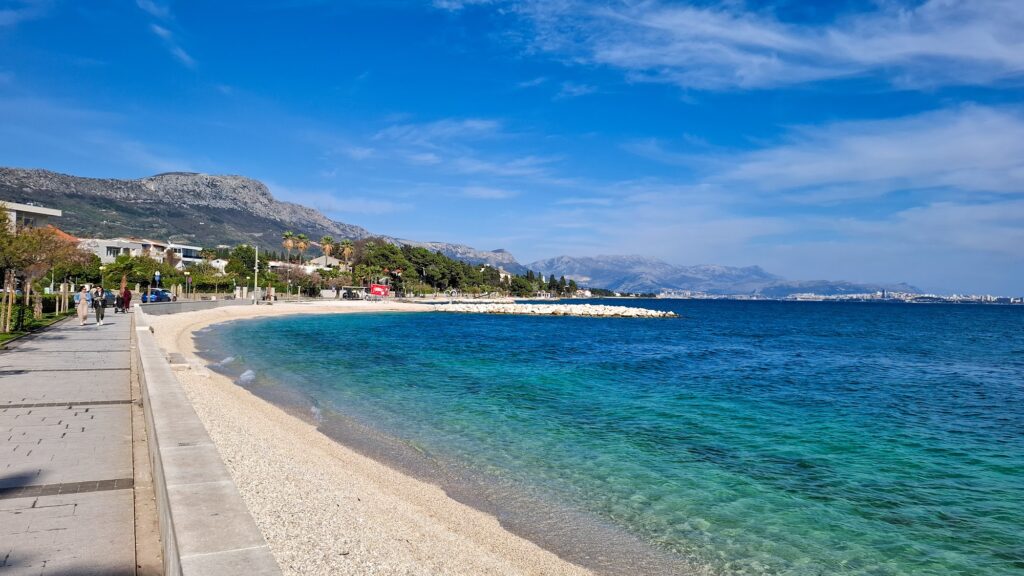
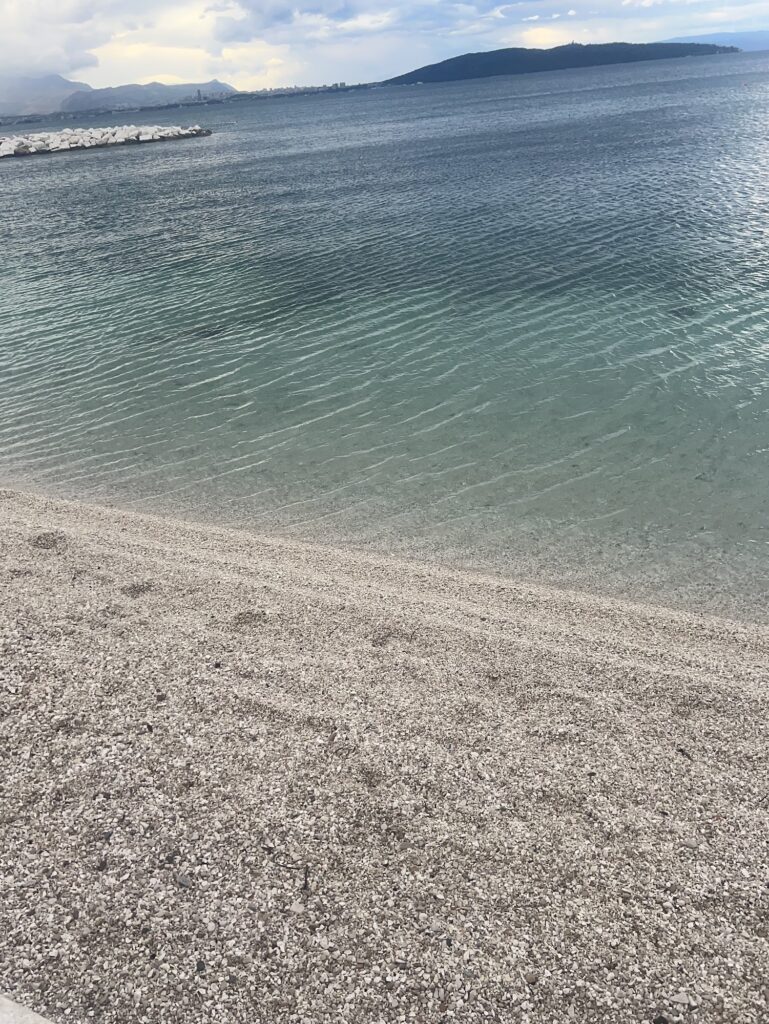
The shoreline at Beach Đardin is fine, smooth pebbles and gravel — the characteristic surface of the Kaštela coast, comfortable for lounging and warm to the touch through the afternoon. The integration of the park greenery with the pebble line — the grass and the trees pressing close to the shore’s upper edge — gives the beach a specific visual character that urban pebble beaches adjacent to promenades and road infrastructure do not produce.
The water quality at Beach Đardin is consistently good within the Kaštela Bay context — clean, transparent, and maintained at the standard that a bay serving a residential community with active municipal management tends to produce when that management is genuine rather than nominal. The water is calm throughout most summer conditions, the enclosed bay geometry eliminating the wave energy that the open Adriatic south of Split periodically generates. The entry is very gradual — the depth increasing slowly from the shoreline through the shallow zone that makes the beach accessible for young children and less confident swimmers.
Snorkeling at Beach Đardin near the stone breakwaters is the most productive underwater activity the beach offers — the breakwater structure providing the substrate complexity that the flat pebble seabed of the central beach does not, and the fish populations that gather around those structures being visible in the transparent water with the clarity that the bay’s consistently clean conditions support.
The aqua park anchored in the bay during the summer season provides the active entertainment for older children and teenagers that makes the difference between a beach day that fills itself and one that requires supplementary planning.
Facilities
Beach Đardin facilities reflect the character of a well-maintained municipal beach park rather than a commercial resort destination.
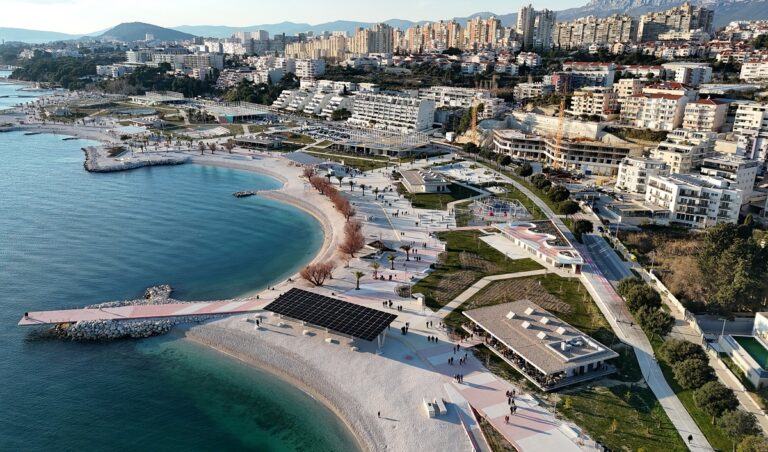
Freshwater showers and changing cabins are positioned along the shore for public access. Sunbeds and umbrellas are available for hire for visitors who prefer organised comfort to the pine shade, though the natural canopy is both more effective and more pleasant than any rented umbrella arrangement. Certified lifeguards monitor the swimming zones from elevated towers during the peak summer season. The park’s paved walkways and the flat, accessible promenade make the beach straightforwardly navigable for visitors with pushchairs and for those with mobility requirements.
The playground in the adjacent park provides the supplementary land-based activity for children that extends the useful hours of a beach day beyond the water. The cafes and ice cream shops within easy walking distance of the park edge provide the practical supply backup that a full family day at the beach requires.
For Families
Beach Đardin with children is the strongest family beach on the Kaštela Riviera and one of the more practically suited to families with young children in the broader Split area — a direct consequence of the pine shade, the calm bay water, the gradual entry, and the park infrastructure that surrounds the beach on its landward side.
The pine shade eliminates the midday sun problem without umbrella logistics. The calm, warm, gradual-entry bay water provides safe swimming conditions for toddlers. The playground in the park provides supplementary land-based activity. The lifeguard coverage provides formal supervision. The bus connection from Split means no car is required.
For families based in Split looking for a beach day that does not involve the crowds of the city’s own beaches — Bačvice, the urban waterfront — the twenty-minute bus journey to Kaštel Stari and Beach Đardin provides a categorically different experience that the pine shade and the park atmosphere make distinctively more restful. Families who have visited Slatine Beach on Čiovo Island — the authentic village shore accessible by ferry from the Split Riva — will find Đardin comparable in its emphasis on calm water, local atmosphere, and the absence of commercial resort density, though the park integration at Đardin gives it a specific shaded character that the Slatine waterfront does not share.
Food and Drink: The Park Edge Cafes
The cafes and bistros along the park edge at Kaštel Stari serve the beach’s social rhythm with the specific character of establishments that serve a regular local clientele alongside summer visitors — the prices reflecting a neighbourhood rather than a resort location, the food reflecting the Dalmatian coastal tradition rather than a generic tourist menu.
Coffee at a park-edge table in the morning, with the pine canopy above and the bay visible between the trees, is the beginning to a day at Đardin that the setting makes naturally satisfying rather than incidentally pleasant. The konobas in the immediate area serve the Dalmatian coastal cooking that the region does with consistent quality — fresh seafood, local pastries, the food of a community with a direct relationship with both the sea and the agricultural hinterland of the Kaštela area.
The drive or bus journey back to Split along the old Kaštela road in the early evening — the bay still visible to the right and the Mosor mountain above the left — is the appropriate conclusion to a day that the park beach has made as restorative as a day significantly further from the city could manage.
The Kaštela Riviera as a Day Trip from Split
Beach Đardin is the specific beach on the Kaštela Riviera that most fully justifies the bus journey from Split, but the riviera itself — the sequence of medieval towers, the small harbours, the coastal cycling path — rewards more time than a single beach day typically allocates to the transit.
Kaštel Stari has a well-preserved medieval tower directly on the waterfront, and the old town lanes behind the beach are worth the brief exploration that the park proximity makes natural between morning and afternoon swimming sessions. The other Kaštela settlements accessible along the coastal road or cycling path each have their own tower and their own waterfront character, and combining a day at Đardin with a bike ride or a slow drive through the Kaštela sequence provides a substantially richer encounter with this stretch of coast than the beach alone delivers.
For visitors to the broader Split area who have already spent time at Copacabana Beach Okrug Gornji on the Trogir side of Čiovo Island — the busy, fully-serviced resort beach at the other end of the same bay — Beach Đardin provides the contrasting and more locally embedded version of a Kaštela Bay beach day that the region offers at both ends of its waterfront.
Beach Đardin in Kaštel Stari is the beach that the Kaštela Riviera has been quietly offering to anyone willing to take bus line 37 twenty minutes north of Split and walk from the stop to the park. The pine shade is genuine and consistent. The bay water is calm and transparent. The lifeguard is present. The playground is in the park. The konoba is nearby.
None of those qualities are exceptional individually. Together, in a pine-shaded park on a protected bay twenty minutes from one of the Adriatic’s most visited cities, they constitute a beach day that the city’s own beaches — however good — do not replicate on these specific terms.
Bus line 37 from Split. Exit at Kaštel Stari. Walk to the park.
The shade will already be there.
Map
Sorry, no records were found. Please adjust your search criteria and try again.
Sorry, unable to load the Maps API.
Near by places: