Copacabana Beach Okrug Gornji: Trogir's Liveliest Shore
Profile
Copacabana Beach Okrug Gornji: The Liveliest Shore on the Trogir Riviera
Croatia | Dalmatia | Trogir Region
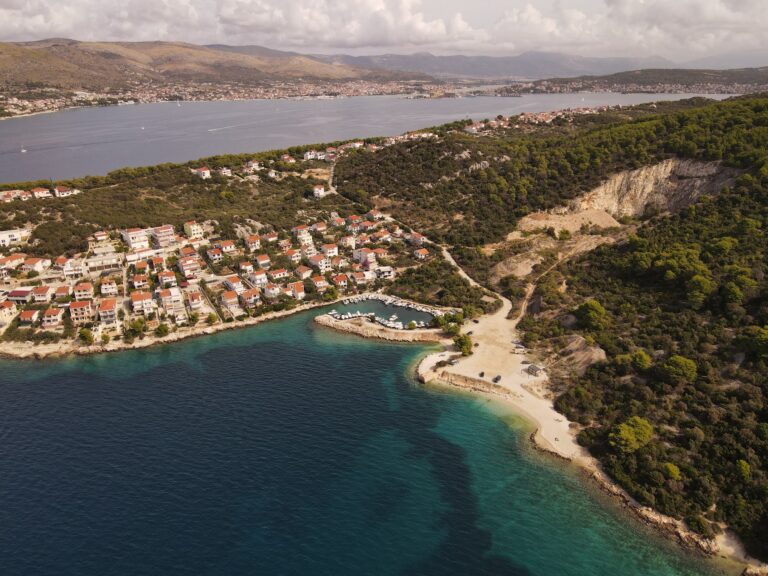
The name was given by locals, and it was not given modestly. Calling a beach after Rio de Janeiro’s most famous stretch of coastline sets an expectation that most places would struggle to meet. Copacabana Beach in Okrug Gornji, on the southern shore of Čiovo Island a short boat ride from the UNESCO-protected city of Trogir, does not meet that expectation in the sense of matching the scale of its Brazilian namesake. What it does instead is deliver, with considerable and consistent success, the quality that the name is really reaching for — energy, colour, the particular social intensity of a beach that has become the natural gathering point for an entire stretch of coastline.
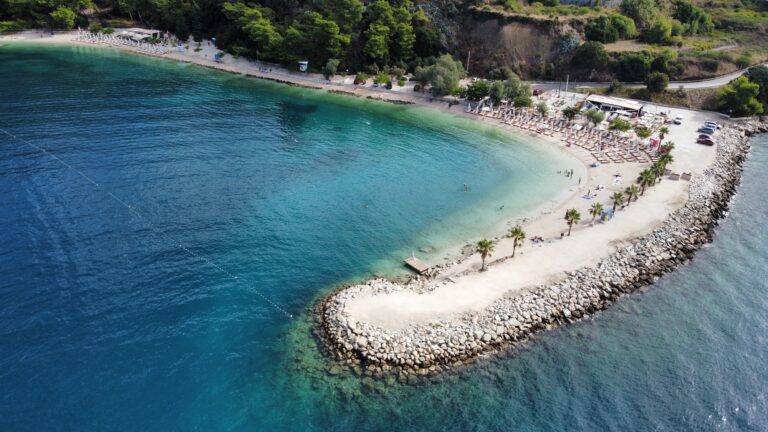
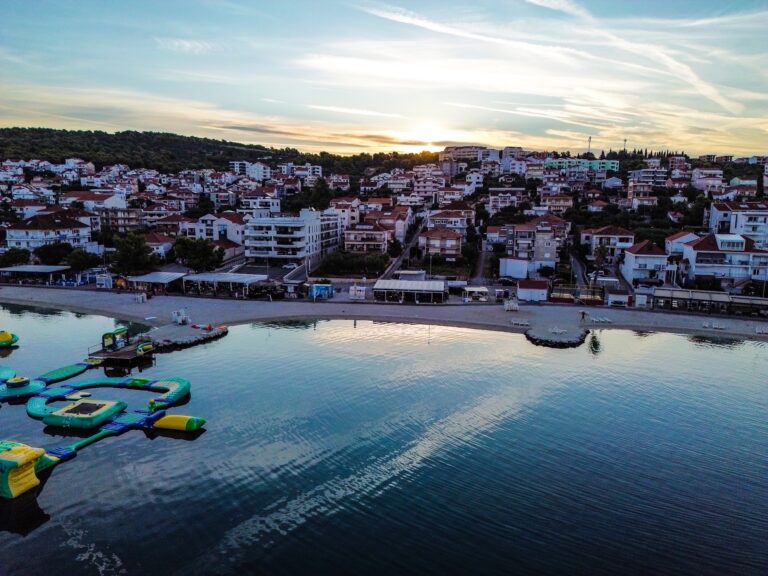
I arrived on a Thursday morning in mid-July, crossing from Trogir waterfront on the taxi boat that makes the short run to the beach every thirty minutes throughout the summer. The approach by water is the right one — you see the full arc of the crescent shore as you approach, the white pebbles catching the light, the water in front of them already showing the turquoise that the name implies, the promenade behind busy with the morning activity of a beach that starts early and runs late. By the time I stepped onto the shore, I had a clear sense of what kind of day was ahead. It turned out to be a long and thoroughly satisfying one.
Getting There: Three Routes, One Destination
Getting to Copacabana Beach Okrug Gornji is straightforward from both Trogir and Split, and the choice of transport shapes the first impression of the beach in ways worth considering.
The taxi boat from Trogir waterfront runs every thirty minutes during the summer season and takes perhaps ten minutes to cross the bay. It is the approach I would recommend for a first visit — arriving at the beach from the sea gives you the full picture of the crescent shore and the promenade behind it before you set foot on the pebbles, and the boat journey itself is a pleasant and appropriately Dalmatian way to begin a beach day. The crossing costs little and takes less time than parking anywhere near the beach on a busy July morning.
By car from Split, the drive toward Trogir followed by the bridge crossing to Čiovo Island takes approximately thirty to thirty-five minutes depending on conditions. Several large public parking areas sit behind the beach zone and are well-signposted from the island road. Arriving before mid-morning on peak summer days is the only meaningful piece of parking advice — the lots fill steadily as the morning progresses and the difference between an eight o’clock arrival and a ten o’clock one, in terms of parking stress, is considerable.
By public transport, bus line 37 from Split connects to Trogir, from which local line 44 runs directly to Okrug Gornji. For visitors staying in either city without a car, this combination makes Copacabana Beach entirely accessible without private transport.
The Shore and Water Quality
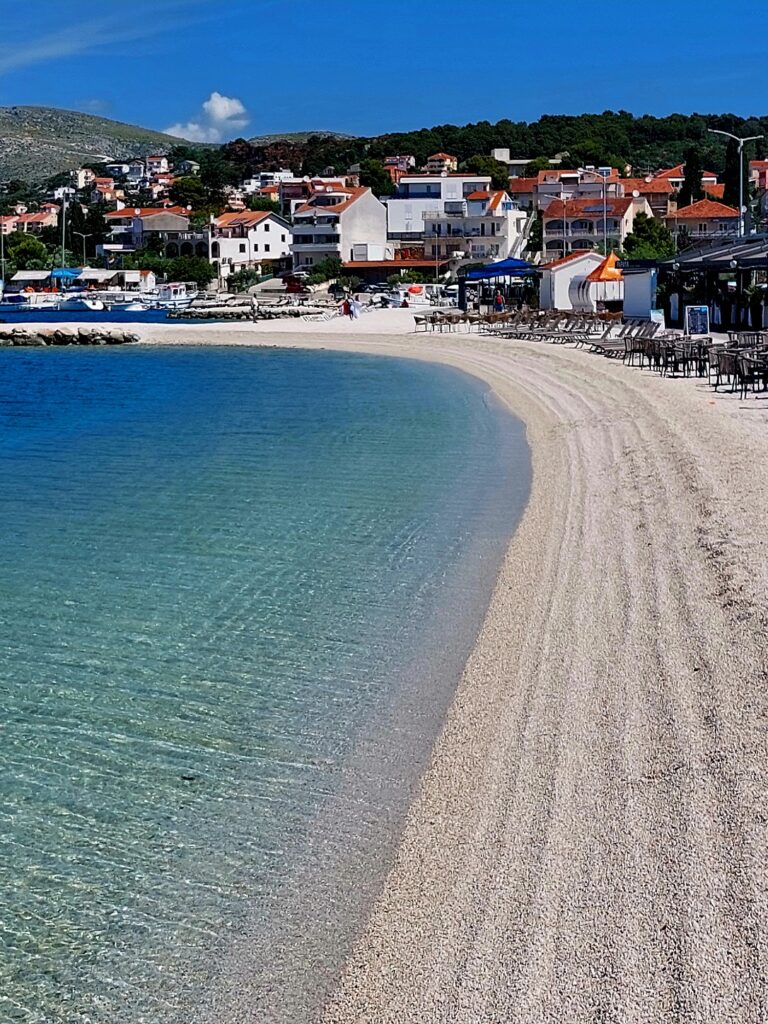
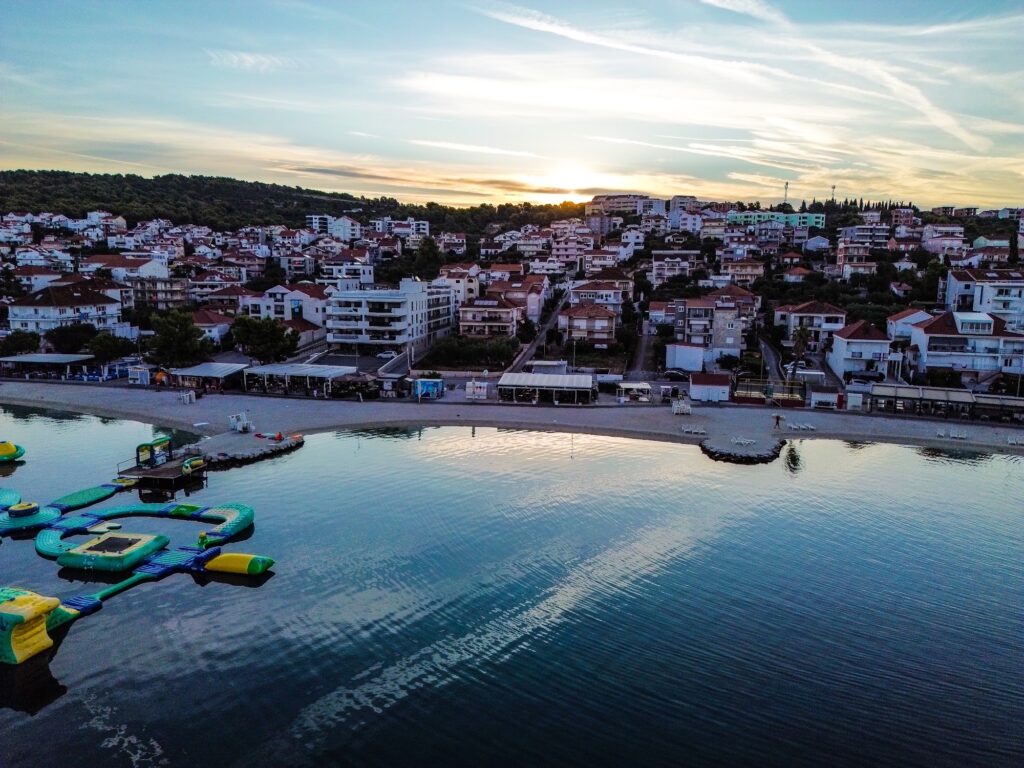
The shoreline at Copacabana Beach Okrug Gornji is a long, sweeping crescent of fine white pebbles — smooth, well-maintained, and giving the water in front of them that particular quality of reflected brightness that white pebble shores produce at their best. The beach is broad enough to accommodate the considerable numbers it attracts at peak season without generating the sense of compression that shorter, narrower beaches produce under similar visitor loads. There is room here, even on a busy day, to find a position that feels comfortable.
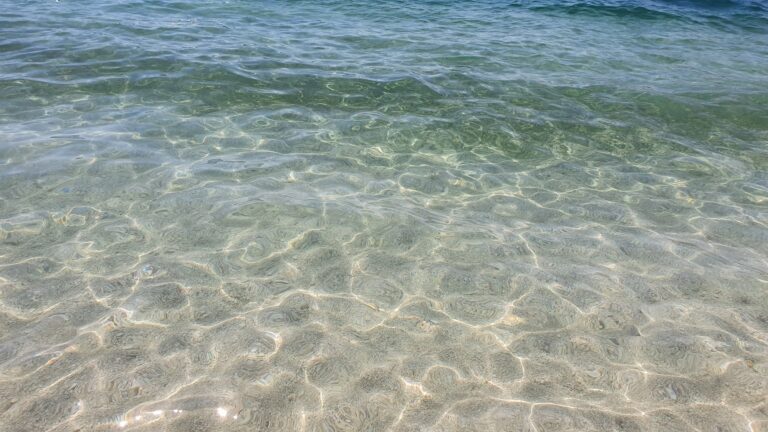
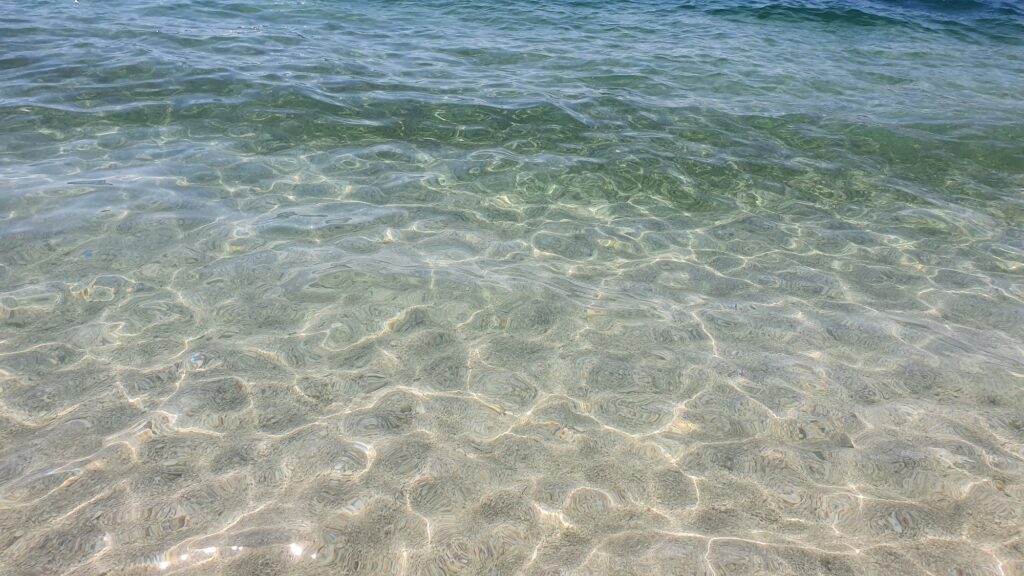
The water faces the open expanse of the bay, and the gentle currents that move through this section of the Dalmatian coast keep it consistently fresh and oxygenated. The water quality at Copacabana Beach is excellent — transparent in the characteristic Adriatic way, the seabed clearly visible from the surface, the colour shifting from pale turquoise over the shallow pebbled bottom to a deeper blue as the depth increases. On the morning of my visit I snorkeled along the northern edge of the beach for the better part of an hour, following the rocky margin where the pebble bottom gives way to limestone formations and the fish populations that congregate around them. The visibility was consistently sharp and the underwater activity — small silver fish moving through the rocks, sea urchins occupying the shaded crevices — was sufficient to hold my attention through the full session.
The gradual slope of the seabed from the shoreline is one of the more practically valuable qualities of the beach, extending the shallow zone far enough from the shore to make the entry comfortable for young children and to provide a long and relatively safe play area in the warm, shallow water.
Facilities and Water Sports
Copacabana Beach facilities are the most comprehensive of any beach I have visited in the immediate Split and Trogir region, and they are organised with the efficiency of a destination that handles large visitor numbers on a daily basis and has refined its infrastructure accordingly.
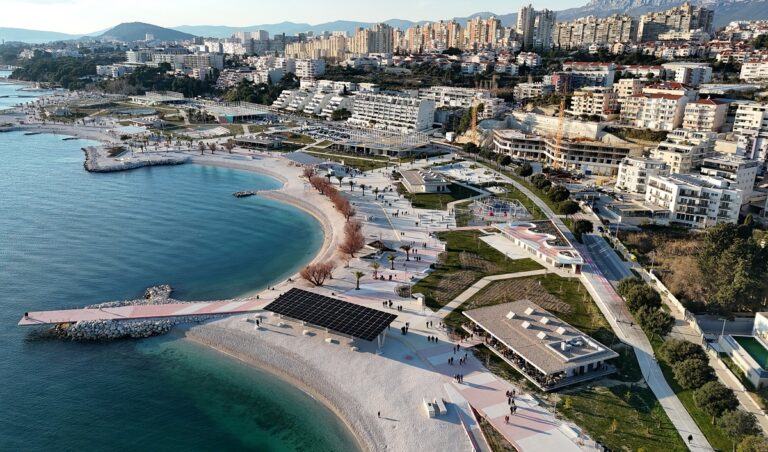
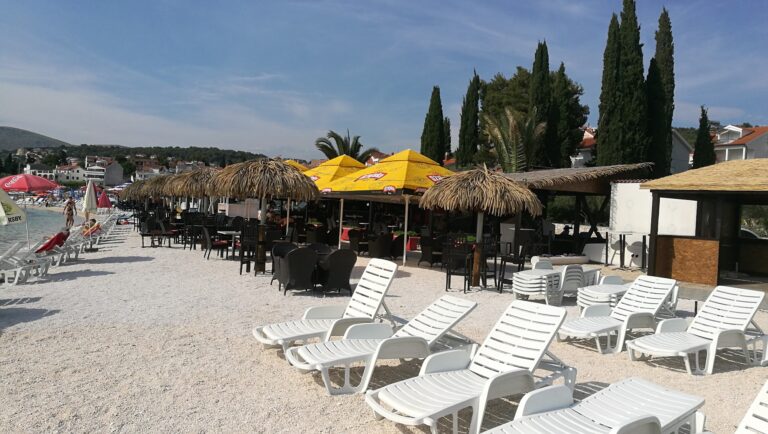
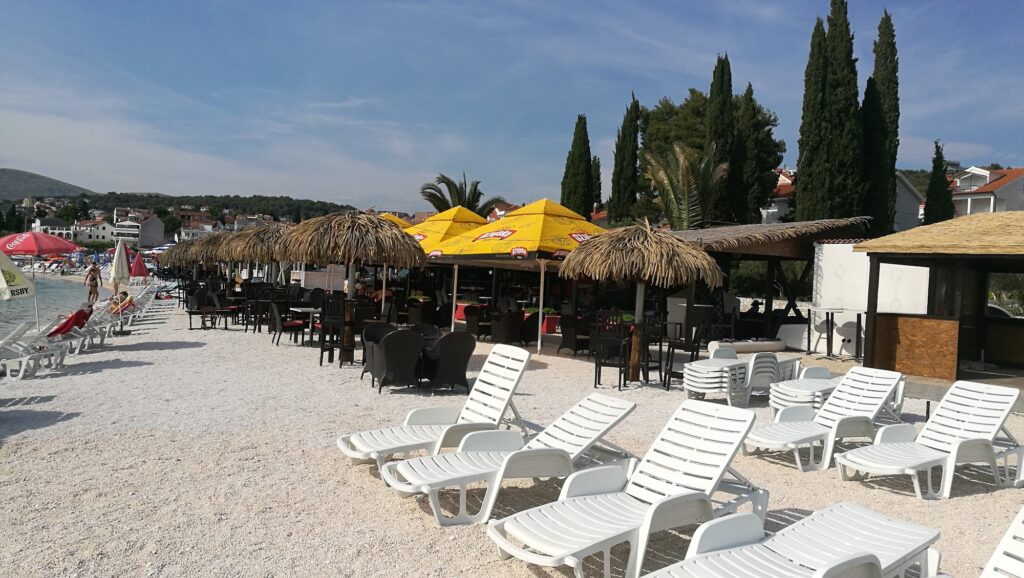
Freshwater showers and changing cabins are distributed at regular intervals along the promenade — close enough together that returning to one after a swim never involves more than a short walk. Sunbeds and umbrellas are available across multiple rental zones, though there is also ample space for visitors who prefer to lay their own towel directly on the pebbles. The entire promenade is paved and level, making Copacabana Beach accessibility genuinely good for visitors with mobility challenges, families with pushchairs, and anyone arriving with significant luggage or equipment. Certified lifeguards monitor the swimming zones from elevated towers throughout peak season, with the buoy-marked swimming area providing clear delineation between swimmer and boat traffic zones.
Water sports at Copacabana Beach Okrug Gornji cover the full active range that a well-equipped resort beach on this coast offers. Jet ski rental, parasailing, banana boat rides, and sea kayaking all operate from the beach during the summer months, giving the shoreline an animated, energetic character during the middle of the day that is genuine rather than performed. The aqua park at Copacabana — a large inflatable structure anchored in the bay — is the centrepiece of the family-oriented active offer and operates with the organised enthusiasm of something that has clearly been doing excellent business for several seasons.
The Atmosphere: Energy as a Feature
The atmosphere at Copacabana Beach is the quality that most clearly distinguishes it from the quieter, more contemplative beaches elsewhere on the Croatian coast, and it is worth being direct about what that atmosphere actually is before you arrive.
This is a lively beach. The promenade behind the shore is active from early morning, the beach bars are busy through the afternoon, the water sports operate with considerable noise and momentum, and the overall social register of the place is several notches higher than a pine-shaded cove on the Kvarner Gulf or a remote island bay accessible only by boat. If that energy is what you are looking for — and on a warm July day, surrounded by the particular excitement of a well-run summer beach at peak capacity, it frequently is — Copacabana delivers it with a generosity and consistency that few beaches in the region match.
If it is not what you are looking for, Čiovo Island and the surrounding area offer quieter alternatives within easy reach. But understanding that the energy is a feature rather than a flaw is the key to arriving at Copacabana with accurate expectations — and accurate expectations are, at any beach, most of what determines whether the day succeeds.
The beach bars along the promenade manage the day’s transitions well — relaxed morning coffee culture giving way to a more animated lunchtime atmosphere, shifting again in the afternoon toward the laid-back but social energy of a waterfront lounge, and eventually toward the sunset cocktail crowd as the light over the bay deepens. It is a sequence that the hospitality along Okrug Gornji promenade has clearly been refined over many seasons.
For Families
Copacabana Beach with children works across a wider age range than almost any other beach in the Trogir area, and the reasons are practical rather than merely theoretical.
For very young children, the gradual seabed slope and the calm, shallow water close to the shore provide a safe and comfortable play environment that parents of toddlers will find immediately reassuring. For older children and teenagers, the aqua park, the jet skis visible from the shore, the banana boats, and the general high-energy character of the beach provide the kind of sustained entertainment that keeps the question of what to do next from arising with any frequency.
The abundance of ice cream, snacks, and cold drinks along the promenade means that the practical logistics of keeping young visitors fed and hydrated through a long beach day are handled without effort. The paved, level promenade makes pushchair navigation straightforward throughout. The lifeguard coverage during peak hours provides formal supervision of the swimming zones.
The absence of significant pine shade — Copacabana lacks the deep forest canopy that defines beaches like Plaža Dražice in Biograd or Kacjak near Crikvenica — is the one practical limitation for families with very young children during the peak midday hours. Umbrellas, available for hire, are the pragmatic solution, and the range of shaded terrace options along the promenade means that a retreat from direct sun never requires leaving the beach environment entirely.
Food and Drink
The dining and drinking options along the Okrug Gornji promenade are among the more varied and consistently good of any beach destination in the broader Trogir region. The selection runs from traditional Dalmatian konobas serving the regional cooking that this part of the coast does with genuine authority to contemporary beach bar lounges with the kind of cocktail menu and ambient music programming that the beach’s energy level invites.
I ate at one of the konobas midway along the promenade on my first afternoon — fresh Adriatic calamari prepared with the straightforward confidence of a kitchen that has been cooking it for years, alongside a glass of local Pošip white wine from the nearby island of Korčula. The combination of honest, ingredient-led cooking and a terrace facing the boats moving across the bay in the afternoon light is one that the Dalmatian coast produces reliably and that never quite loses its appeal regardless of how many times you encounter it.
The beach bars handle the bookend hours of the day well — coffee and morning calm at one end, sunset cocktails and a livelier social atmosphere at the other. The transition between those registers happens naturally along the promenade through the course of a day, and following that arc from first coffee to final drink is one of the more satisfying ways to use the full length of a summer day at Copacabana.
Trogir and the Beach: A Natural Pairing
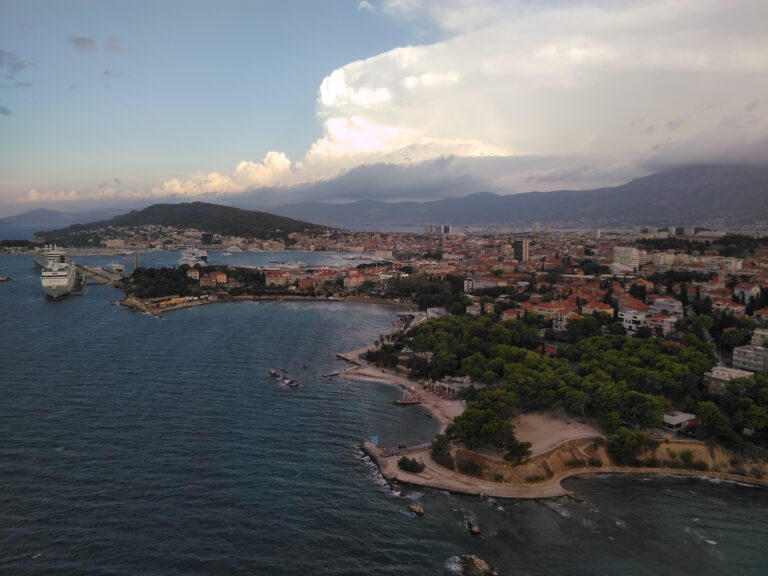
One of the specific and genuine advantages of Copacabana Beach Okrug Gornji is its proximity to Trogir — the UNESCO World Heritage city whose medieval old town, built on a small island between the mainland and Čiovo, is one of the most architecturally concentrated and historically rich urban environments on the entire Dalmatian coast.
The taxi boat connection between the Trogir waterfront and the beach means that the two destinations can be combined within a single day without difficulty — a morning exploring the cathedral, the Kamerlengo fortress, and the stone lanes of the old town, followed by an afternoon at the beach, or the reverse sequence for visitors who prefer to end the day in the water rather than in the town. Few beach destinations on this coast offer a UNESCO World Heritage site as a walking-distance companion, and the pairing of Copacabana’s resort energy with Trogir’s historical density produces a day of unusual range and variety.
Copacabana Beach Okrug Gornji earns its borrowed name not by matching the scale of its Brazilian reference but by delivering what that name is actually reaching for — the particular kind of lively, social, fully-equipped beach day that makes a summer holiday feel like a summer holiday in the most complete and recognisable sense.
The white pebbles, the turquoise water, the aqua park, the jet skis, the konoba lunch, the sunset cocktail on the promenade — none of these elements is individually extraordinary by the standards of the broader Croatian coast. What Copacabana does is assemble them with a consistency and energy that makes the full day feel more than the sum of its parts.
If you are based in Split or Trogir and you want a beach day that combines excellent water quality with maximum activity options and a promenade worth spending time on, the taxi boat from the Trogir waterfront is the most enjoyable thirty minutes of transport investment this part of the coast offers.
Take it in the morning. Stay until the sun goes behind the hills.
Map
Sorry, no records were found. Please adjust your search criteria and try again.
Sorry, unable to load the Maps API.
Near by places: