Milos Beach Lefkada: Wild Bay, Few Facilities
Profile
Milos Beach: Named for a Windmill That No Longer Grinds Anything
Greece | Lefkada | Ionian Islands | Aegean Coast
Milos takes its name from an old windmill that once stood at the edge of the beach, and though the structure itself has mostly faded from what I could see, the name has outlasted it by a considerable margin. I hadn’t expected a beach known mainly for its inaccessibility to carry such a mundane, practical origin, something as ordinary as a grain mill rather than a saint or a myth. It felt oddly fitting for a place that resists being dressed up in any way, wild sand and cliffs standing in for anything a windmill might once have ground into flour.
Reaching Milos requires either committing to a hike over the hill from Agios Nikitas or catching one of the small water taxis that cross the short distance by sea, and that requirement shapes everything about who ends up here and how they treat the place once they arrive.
Clear Water With a Quick Drop-Off
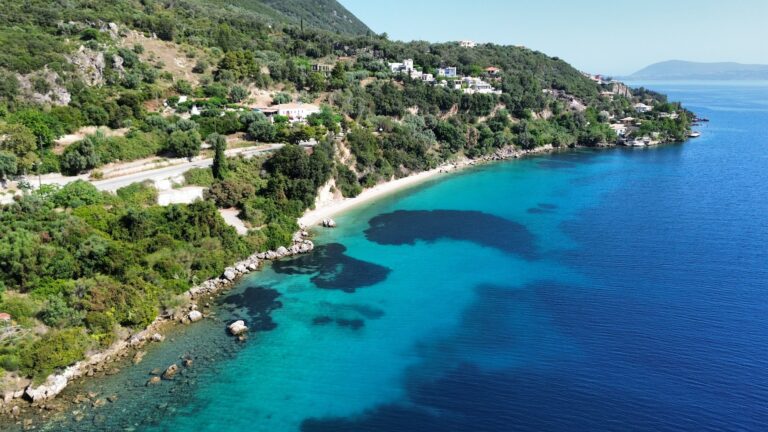
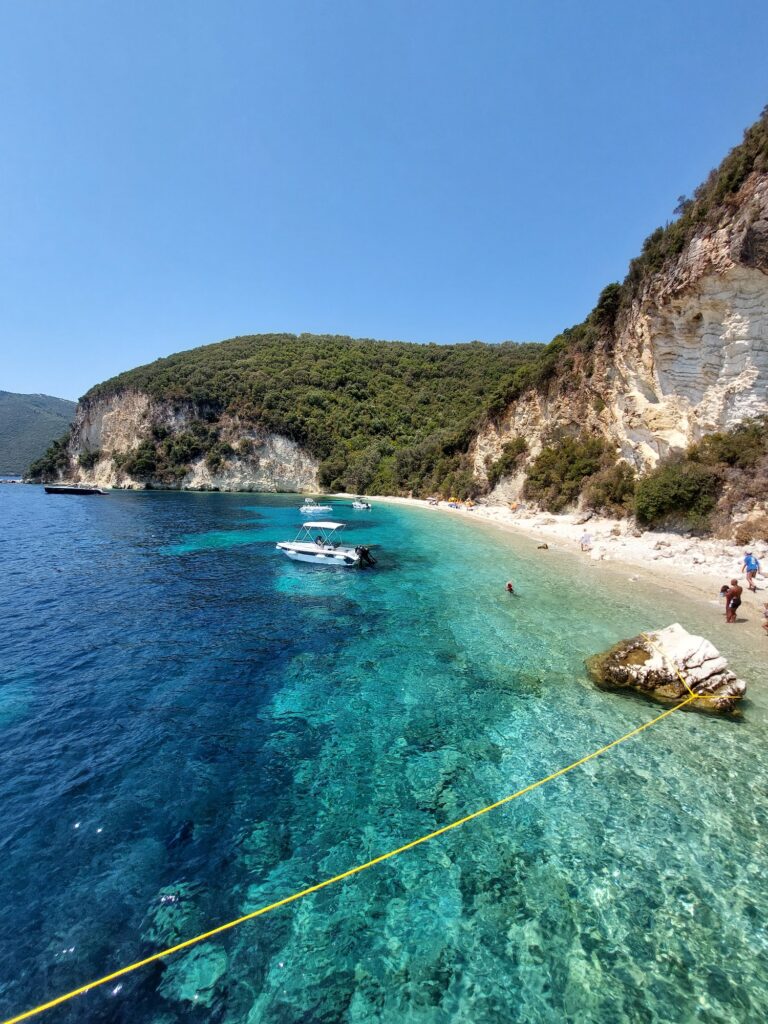
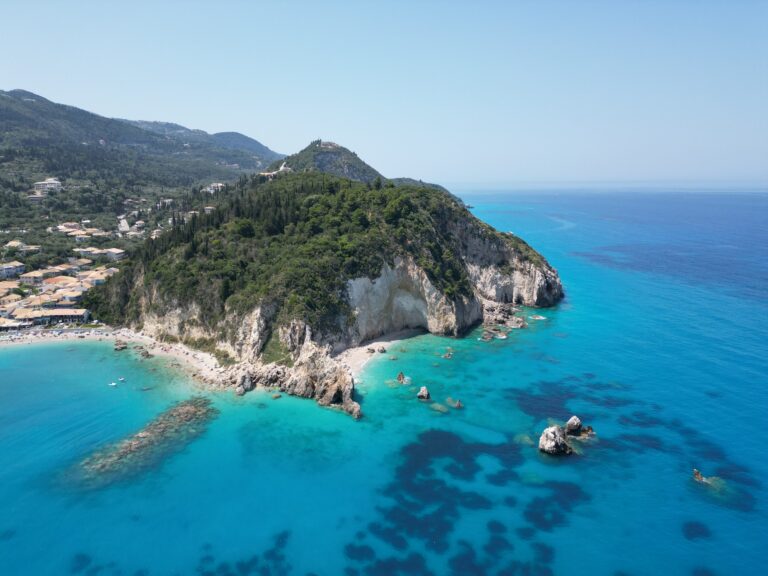
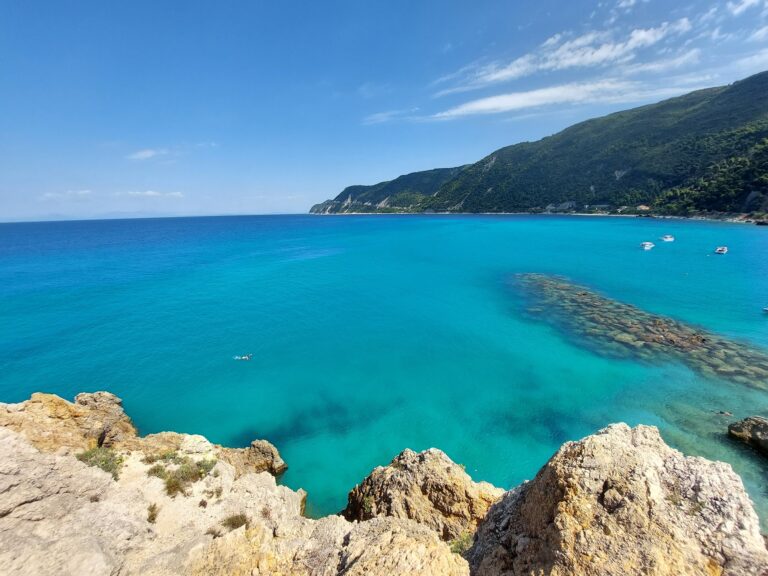
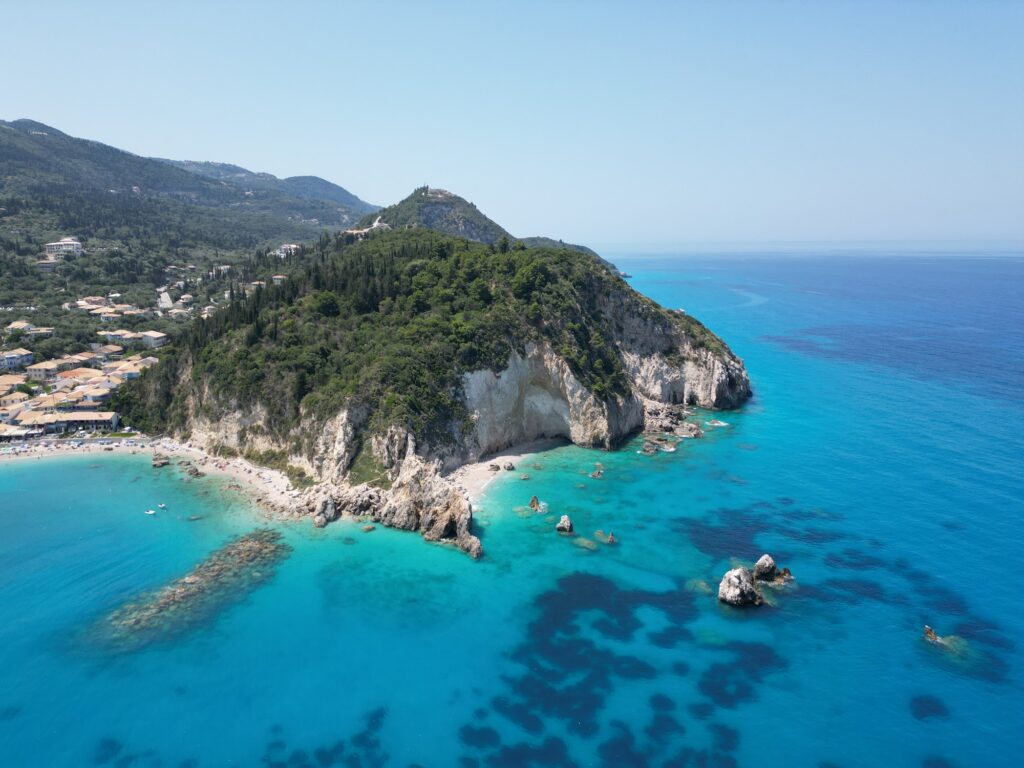
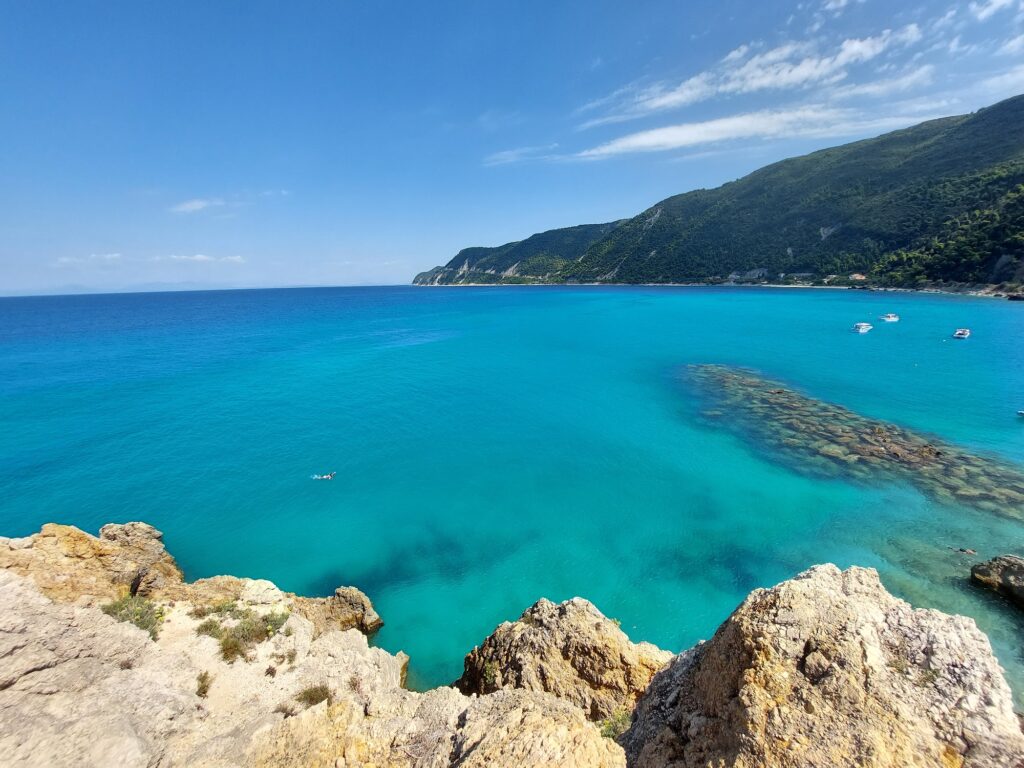
The water at Milos runs a genuinely striking aquamarine near the shore, deepening into indigo within a few meters, clear enough on calm days that I could see well past where I’d normally lose the seabed. Most days I visited, the sea sat calm enough for an easy, unhurried swim, though the depth drops away quickly once you’re past the first few steps in, faster than at the gentler, gradual-entry beaches I’ve found elsewhere on this coast. Lefkada’s west coast faces the open Ionian directly, and on windier days the water taxis here suspend service altogether rather than risk the crossing, a useful signal of how much conditions can shift depending on the day.
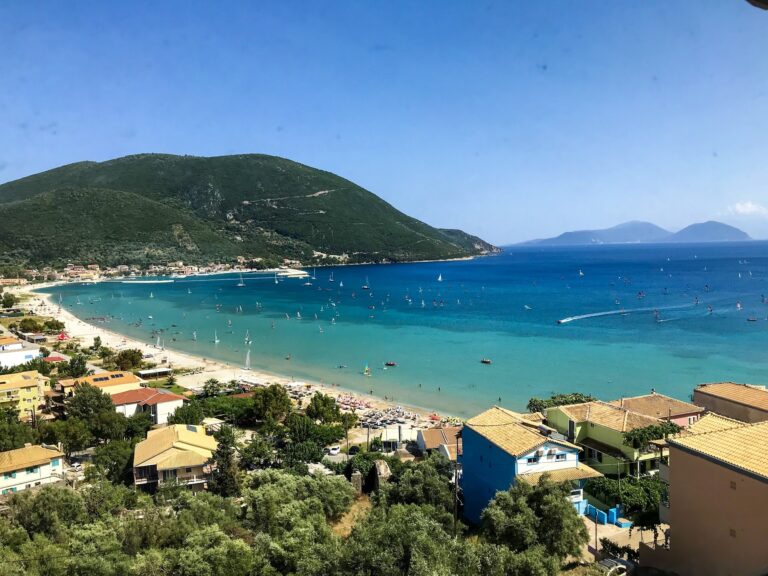
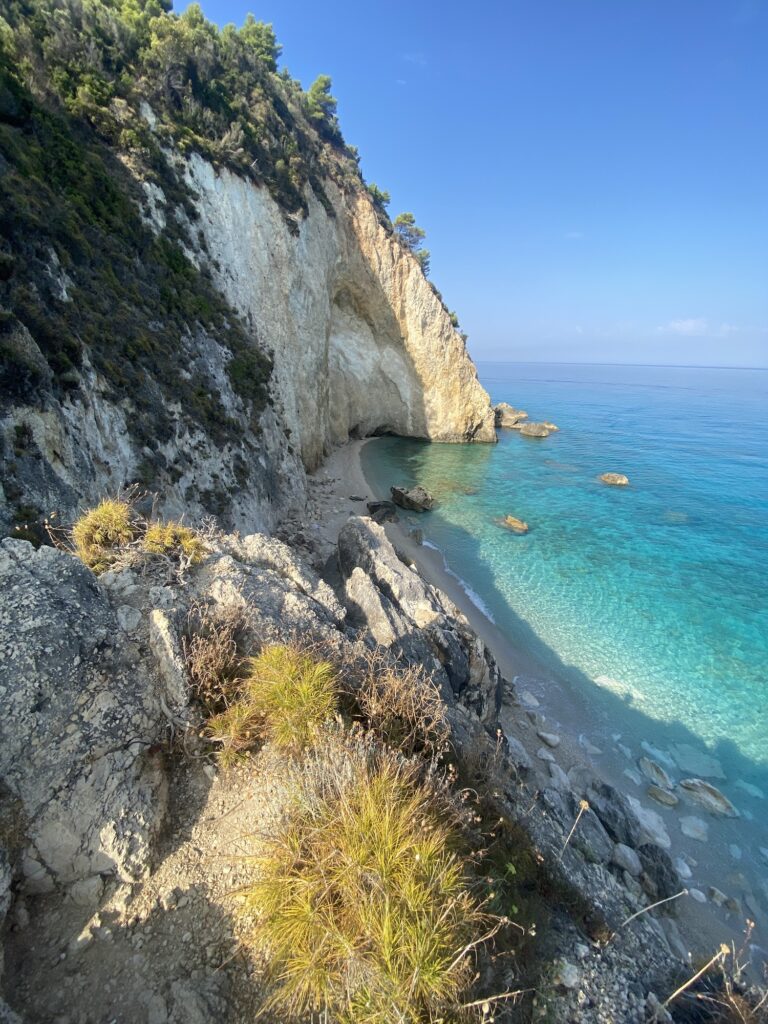
Water shoes are worth packing given how quickly the seabed deepens and the mix of smooth pebbles underfoot, and I’d say Milos suits confident swimmers and closely supervised children better than very young kids left to wade in unassisted, simply because of that drop-off rather than any consistent rough water. The shore itself blends fine white sand with small pebbles, a composition that contributes directly to the water’s clarity even on the busiest days, and I found the beach considerably wider and more open than the tight coves scattered elsewhere along this coast, framed by high, green-covered limestone cliffs that block any view of development beyond the sand itself.
No Bars, No Rentals, and Exactly the Point
What Milos offers instead of infrastructure is close to nothing at all. There are no permanent beach bars, no long rows of rented sunbeds, only a small canteen roughly at the midpoint of the beach where a handful of umbrellas and loungers can be rented for the day. I arrived my first time without one and regretted it, since shade beyond that canteen means whatever natural rock formation you can find rather than anything guaranteed. Visitors bring their own food and water as a rule, and the resulting atmosphere felt noticeably more considerate than at beaches with a full commercial setup, everyone around me clearly having made a deliberate choice to be here rather than simply following the path of least resistance from a hotel pool.
Worth knowing before settling in: the far end of the beach, which also happens to hold the best natural shade, is informally clothing-optional, a detail no sign announces but that longtime visitors mentioned to me directly. It’s easy enough to avoid if that’s not what you’re after, simply by staying closer to the canteen end of the bay.
That same lack of organization means dogs face no particular restriction here beyond the general Greek rule for unorganized beaches, a leash required once out of the water, and I saw more than one dog accompanying its owner across the hiking trail during my visits, seemingly as at home with the effort as the swimmers themselves.
The Hike Over the Hill From Agios Nikitas
From the center of Agios Nikitas, a marked pedestrian path leads over the hill toward Milos, roughly 700 meters that took me between fifteen and twenty minutes each way across well-worn but genuinely uneven limestone terrain, mixed with sections of packed earth and tree roots. I wore proper shoes rather than sandals on my first attempt and was glad of the decision, since the ground underfoot demands more attention than a casual beach walk usually requires, particularly on the return climb. The path rewards the effort with steadily opening views of the cove below, the water’s color becoming more vivid the closer the trail descends toward the sand.
The Water Taxi From the Main Beach
For anyone unwilling or unable to manage the hike, small taxi boats run frequently from the main beach at Agios Nikitas, covering the short distance to Milos in five to ten minutes for a modest per-person fare. I used this option once, mostly out of curiosity, and found it a genuinely comfortable alternative for arriving with an umbrella, cooler, or young children in tow, too cumbersome to carry over the hill on foot. Worth noting that the boats stop running when the sea turns rough, at which point the trail becomes the only way in or out.
A Village Built Around a Found Icon
Agios Nikitas itself carries its own understated history. Fear of pirates kept any real settlement from forming directly on this stretch of coast for centuries, and the area only took its current name from a small church built around 1716, after a local reportedly found an icon of the then-unknown saint in a deserted spot nearby. According to the tradition passed down in the village, the icon itself effectively chose where the church would eventually stand. By around 1900, the settlement had grown into a modest seaside trading post, boats carrying local wine out toward Corfu and Italy, a considerably more commercial identity than the quiet fishing village character it holds today.
Tavernas and Cafés Just Over the Hill
Everything resembling a proper meal or a cold drink waits back in Agios Nikitas rather than at Milos itself, and I made a habit of timing my hikes back over the hill around when the village’s tavernas were filling for lunch or dinner. Lefkadian seafood features heavily on most menus, and I found the standard consistently good across the small cluster of restaurants lining the village’s pedestrian street, worth the walk back even after a full day spent doing very little at the beach itself.
Getting There: Twenty Minutes West From Lefkada Town
Agios Nikitas sits roughly 13 kilometers from Lefkada Town, a drive of about twenty to thirty minutes along the island’s western route. I found the road itself straightforward, though the village center is closed to cars entirely, meaning any visit here starts with parking outside and continuing on foot regardless of how you plan to reach Milos afterward.
Parking Before the Village Fills
Parking in Agios Nikitas is genuinely limited, and I found arriving before ten in the morning made a real difference in claiming a spot in the municipal lots or along the main road, well ahead of both the day’s beachgoers and the hikers setting out toward Milos. Later arrivals often end up parking considerably further out and walking in, adding time to a day that already involves a hike on the other end.
Comparing Milos to Other Undeveloped Greek Beaches
Milos shares its commitment to remaining undeveloped with beaches I’ve visited much further east in the Aegean. Vitali Beach Andros demands a similarly deliberate journey, though its final stretch is a bumpy dirt road rather than a hillside trail, and its water stays consistently calmer than the more variable conditions here on Lefkada’s Ionian coast. For a comparable pairing of dramatic cliffs and shifting sea conditions, Kipos Beach Samothraki offers a useful parallel too, another beach where the mountain drops close to the sea and the water can change character with the wind.
For beaches carrying their own quieter historical undercurrent tied to a found religious object, Petra Beach Patmos makes for an interesting comparison, though its Rock of Kalikatsou trades Milos’ practical windmill namesake for a considerably older, pre-Christian layer of history.
Walking Back Over the Hill as the Light Drops
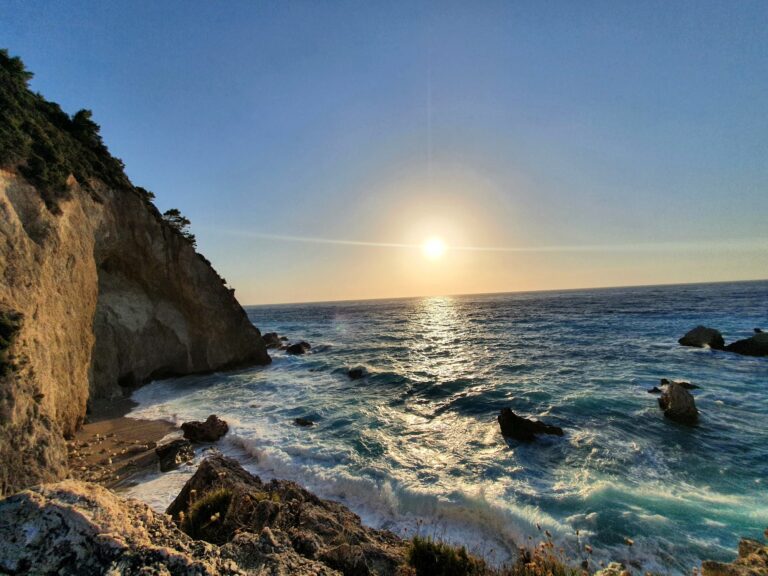
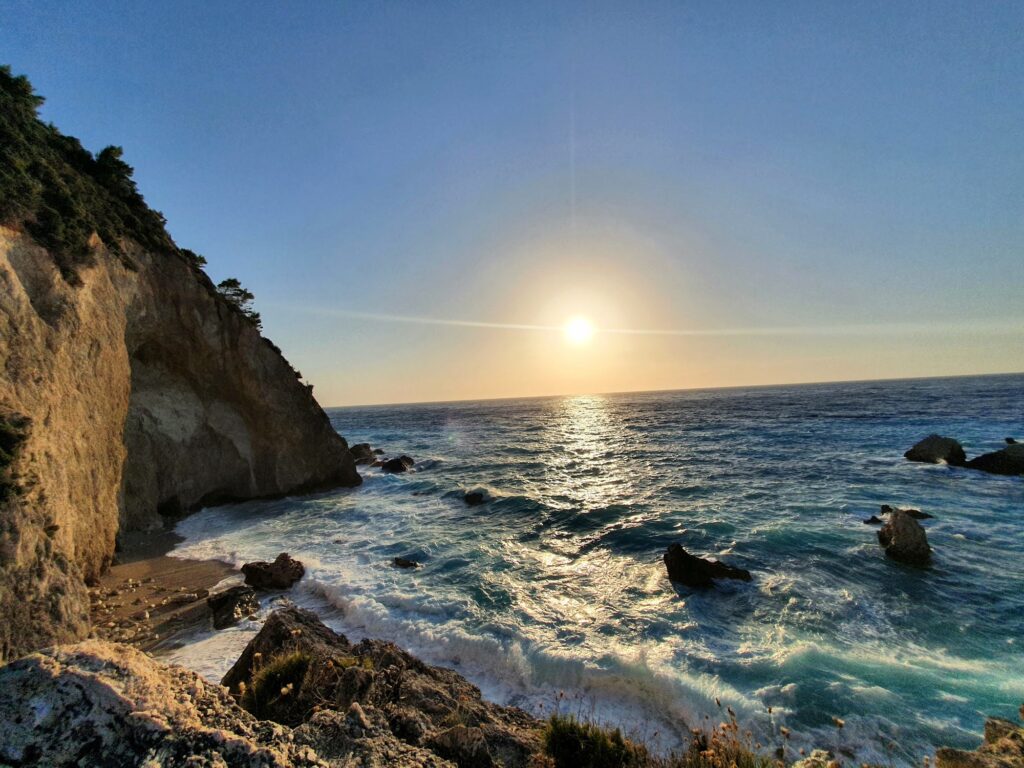
By the time I made my last hike back toward Agios Nikitas, the sun had dropped low enough to catch the limestone cliffs at an angle that turned them nearly gold, the water still moving steadily against the sand below, exactly the kind of unpolished, unhurried scene that a place named after a long-vanished windmill seems suited to hold onto.
Map
Sorry, no records were found. Please adjust your search criteria and try again.
Sorry, unable to load the Maps API.
Near by places: