Lygia Beach Lefkada: Fishing Village Shore, Water Shoes
Profile
Lygiá Beach, Lefkada: The Pebble Shore of the Fishing Village 5km South of Lefkada Town, Where the Fishermen Go Out Before Dawn and the St George Fortress Looks Back From the Mainland
Greece | Lygiá | Lefkada, Ionian Islands
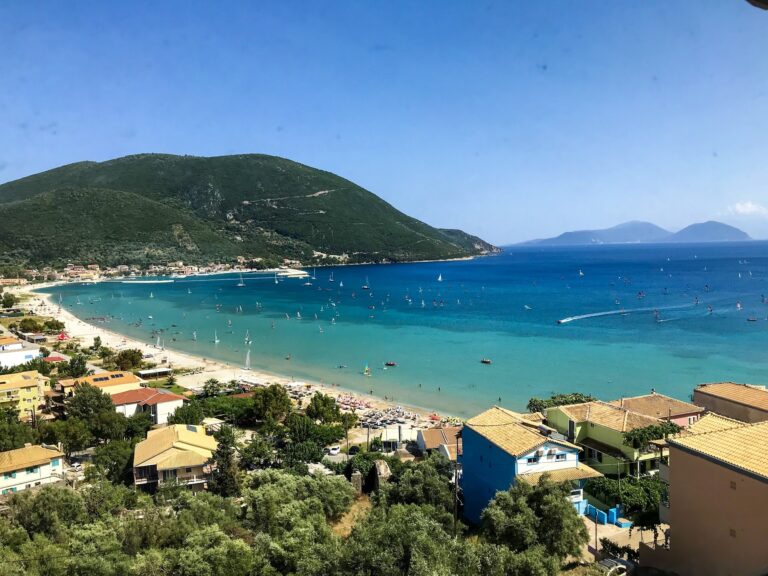
Every morning at Lygiá, the light comes from behind the mountains of the Aetolian mainland and turns the water red, then pink, then orange before settling into the emerald green that characterises this stretch of the east Lefkada coast all day. The strait between Lefkada and the mainland is narrow here — narrow enough that the outline of the St George fortress on the other side is clearly visible from any point on the beach. The fortress has been watching this crossing for centuries. The fishermen at Lygiá harbour go out before it gets light and come back with what the strait produces.
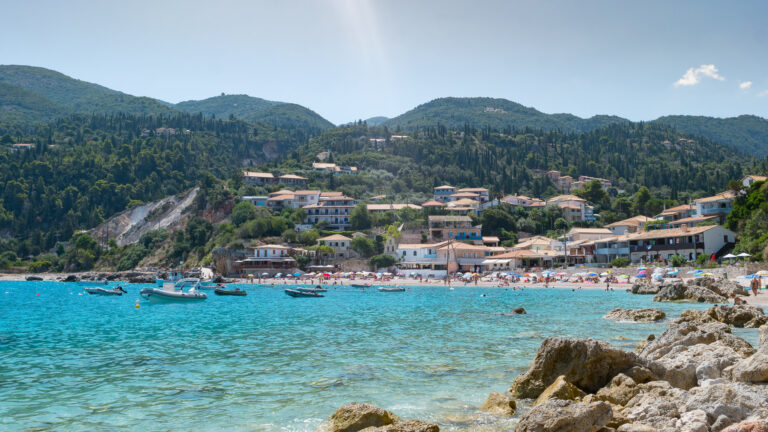
Lygiá — also written Ligiá or Ligia — is a small fishing village on the eastern coast of Lefkada, 5 to 6 kilometres south of Lefkada Town on the main road connecting the capital to Nydri and Vasiliki. It has a working harbour with colourful wooden fishing boats, a promenade lined with fish tavernas and cafes, a small beach to the south of the harbour, and the specific unhurried character of a place where the resident population outnumbers the tourist population for most of the year.
The village historically produced sea salt as well as fish. The salt marsh area south of the harbour still exists, and a small church sits on the pebble beach within it — a quiet piece of local heritage that most visitors who stay for a meal and a swim will notice if they walk in that direction.
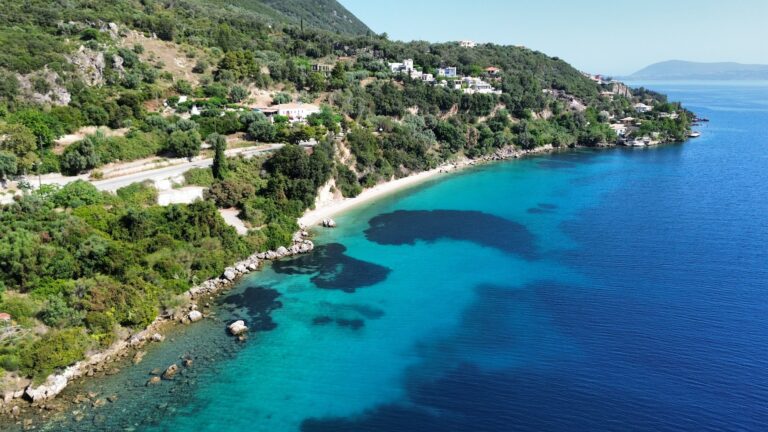
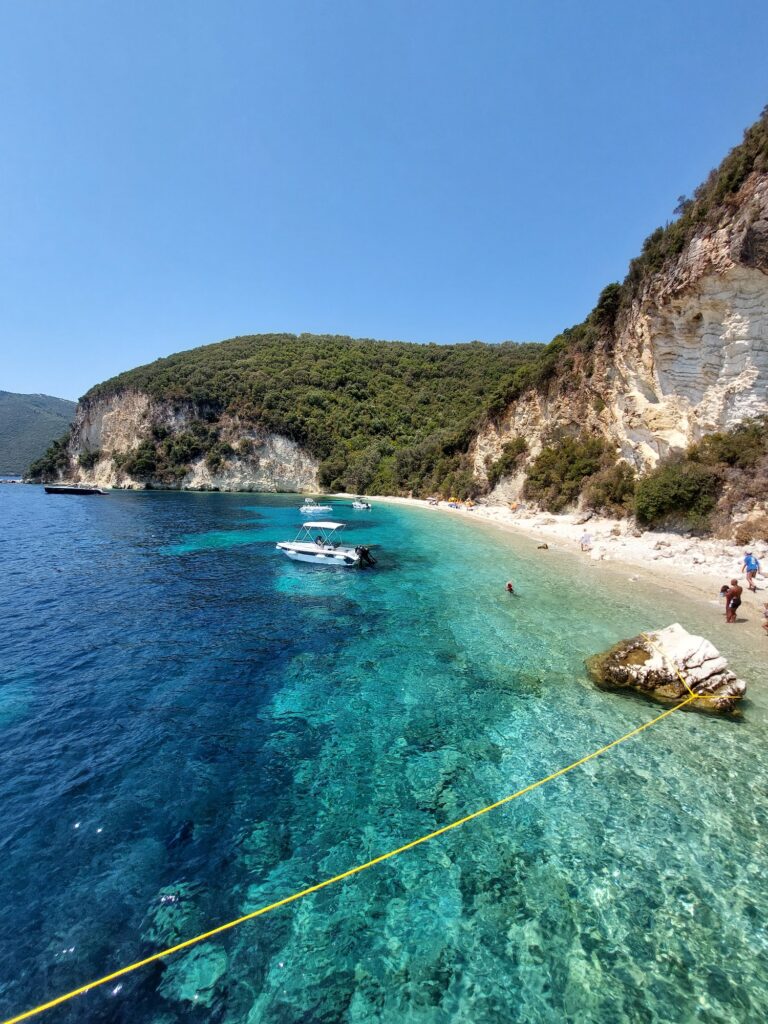
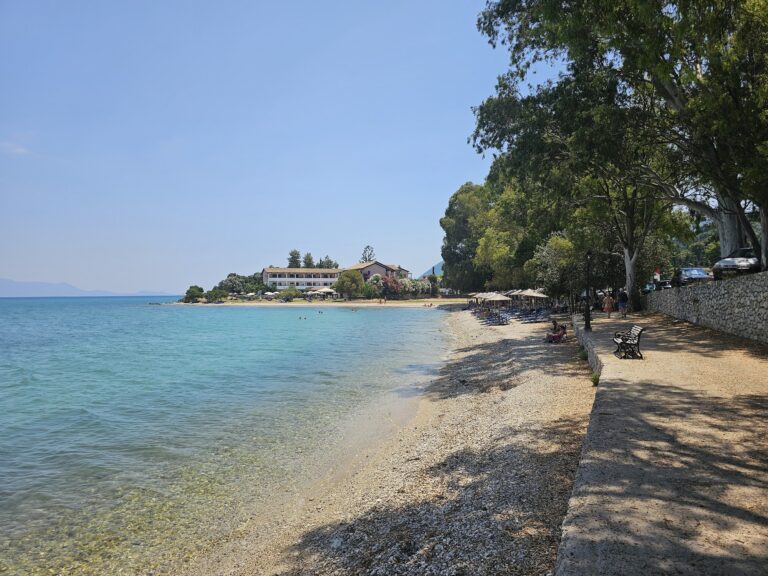
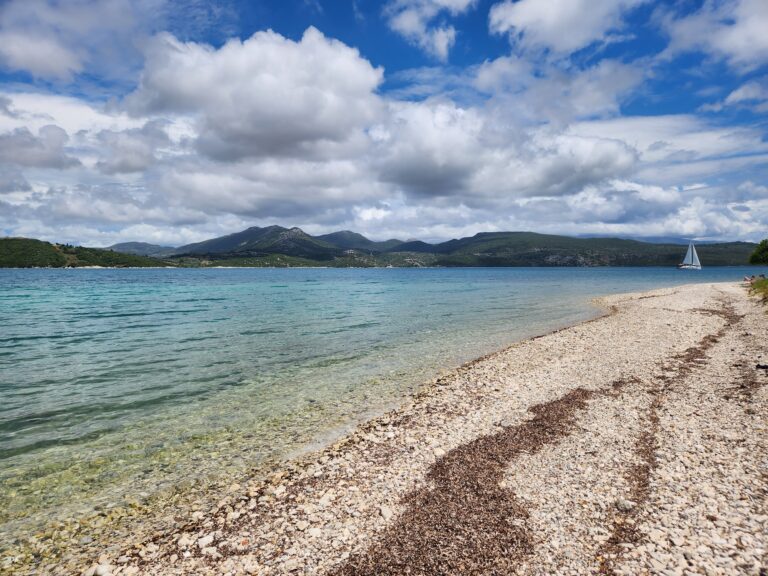
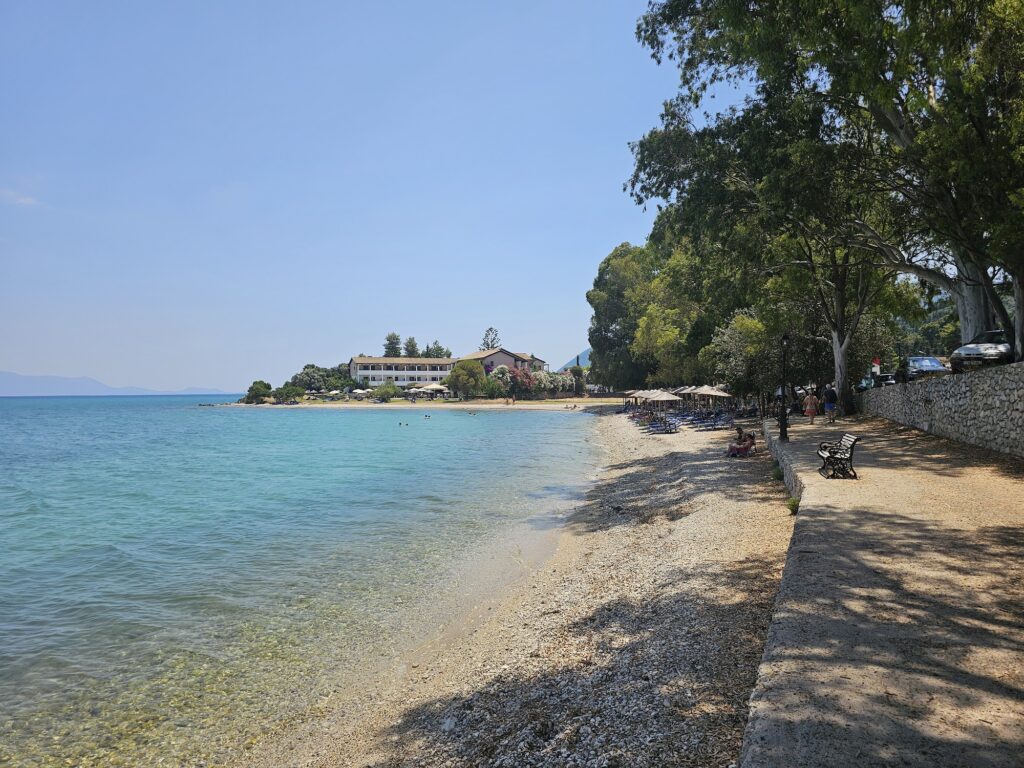
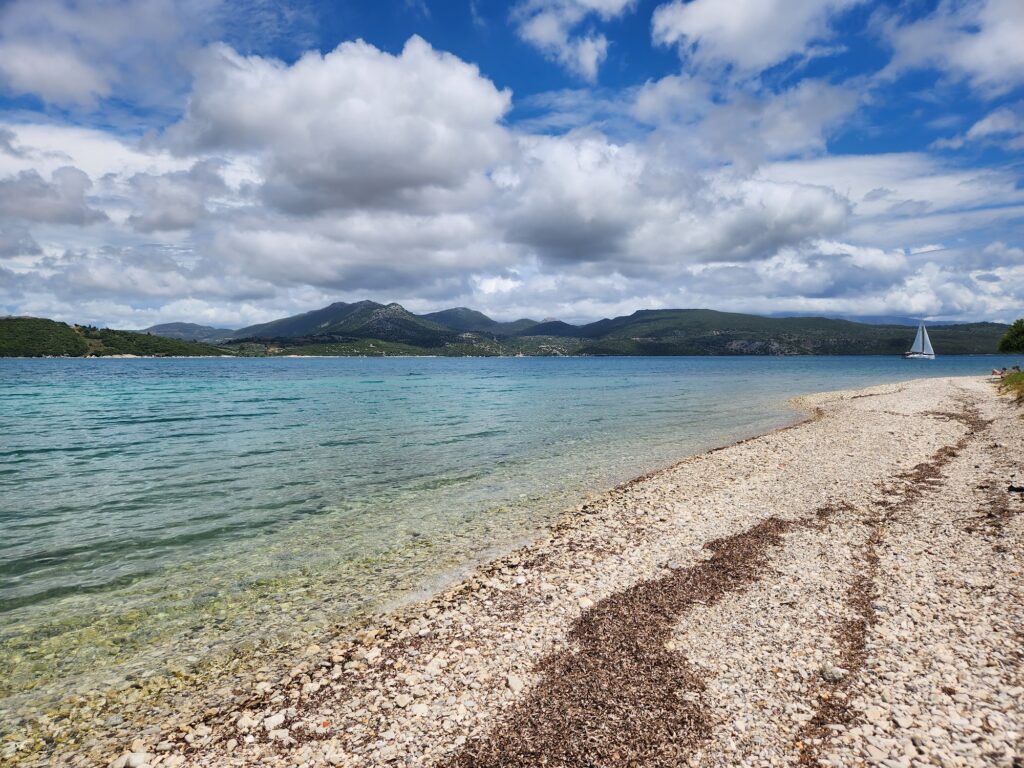
The beach itself is primarily pebble and stone. The seabed is the same, which is the honest point that makes the practical difference. Water shoes are recommended — not optional — at Lygiá. The water is clear and shallow, the temperatures run 23 to 25 degrees Celsius from June to September, and the east coast character of Lefkada means there are no significant waves. The Ionian Sea in this strait is consistently described as mirror-like. Young children paddle safely here in conditions that more closely resemble a lake than an open sea.
Getting There: 5km South of Lefkada Town on the Nydri Road, Bus Service, No ATM in the Village
From Lefkada Town, drive south on the main east coast road toward Nydri. After Kariotes, the next settlement is Lygiá — approximately 5 to 6 kilometres, about 10 minutes. The village is directly on the coastal highway; no turn-off is required. Parking is along the coastal road and near the fishing harbour, though spaces fill early in peak season.
Bus services running between Lefkada Town and Nydri and Vasiliki stop in the village. The frequency is reasonable in summer. The bus is the most convenient approach for visitors staying in Lefkada Town without a hire car.
One important practical note: there is no ATM in Lygiá. The nearest is in Lefkada Town to the north or Nydri to the south. If you are planning to pay for meals and sunbeds in cash, carry enough before arriving.
Preveza-Aktion International Airport is approximately 30 minutes away. A taxi costs €45 to €50.
The Beach: Narrow Pebble Shore, Water Shoes Recommended, Mostly Unorganised, Pine and Eucalyptus Shade
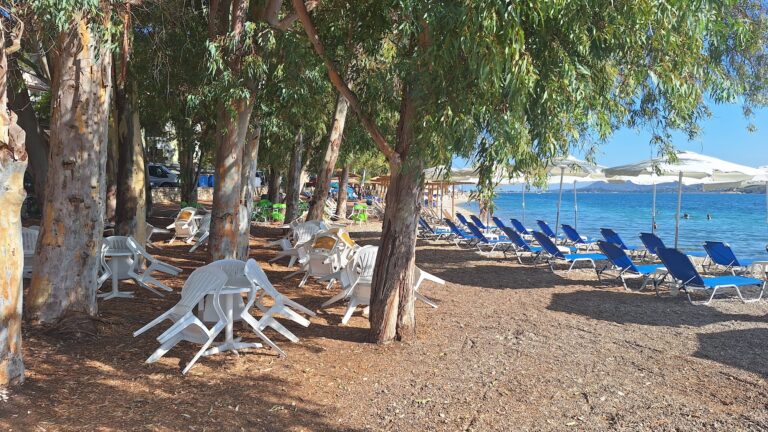
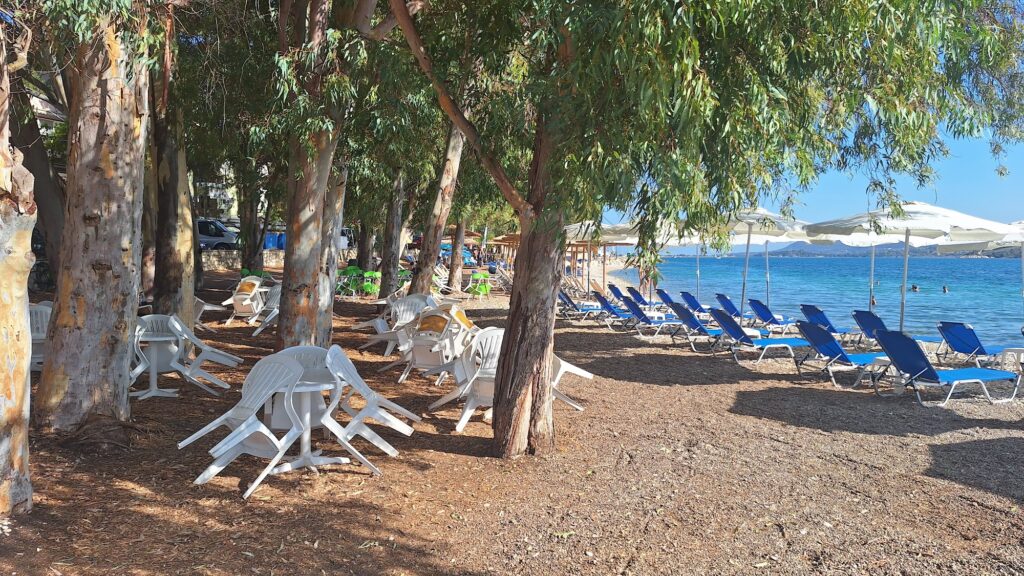
The main beach at Lygiá sits south of the harbour, connected to it by the waterfront promenade. It is narrow — this is not a beach for sunbeds from horizon to horizon. The pebbles are smooth and clean, and the tall pine and eucalyptus trees directly on the beach provide afternoon shade that, combined with the tree canopy, makes Lygiá one of the more comfortable east coast beaches to spend a full hot afternoon on.
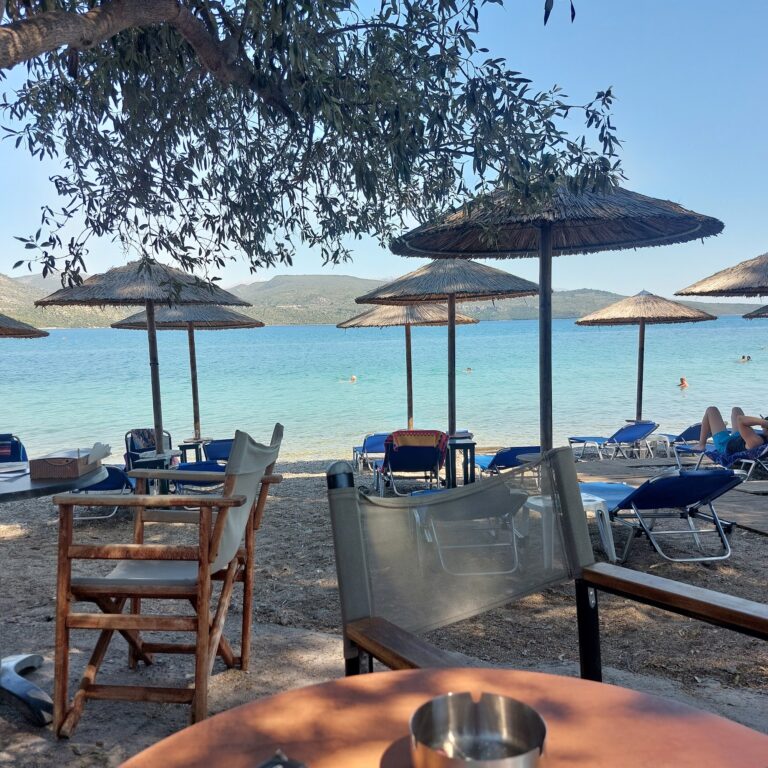
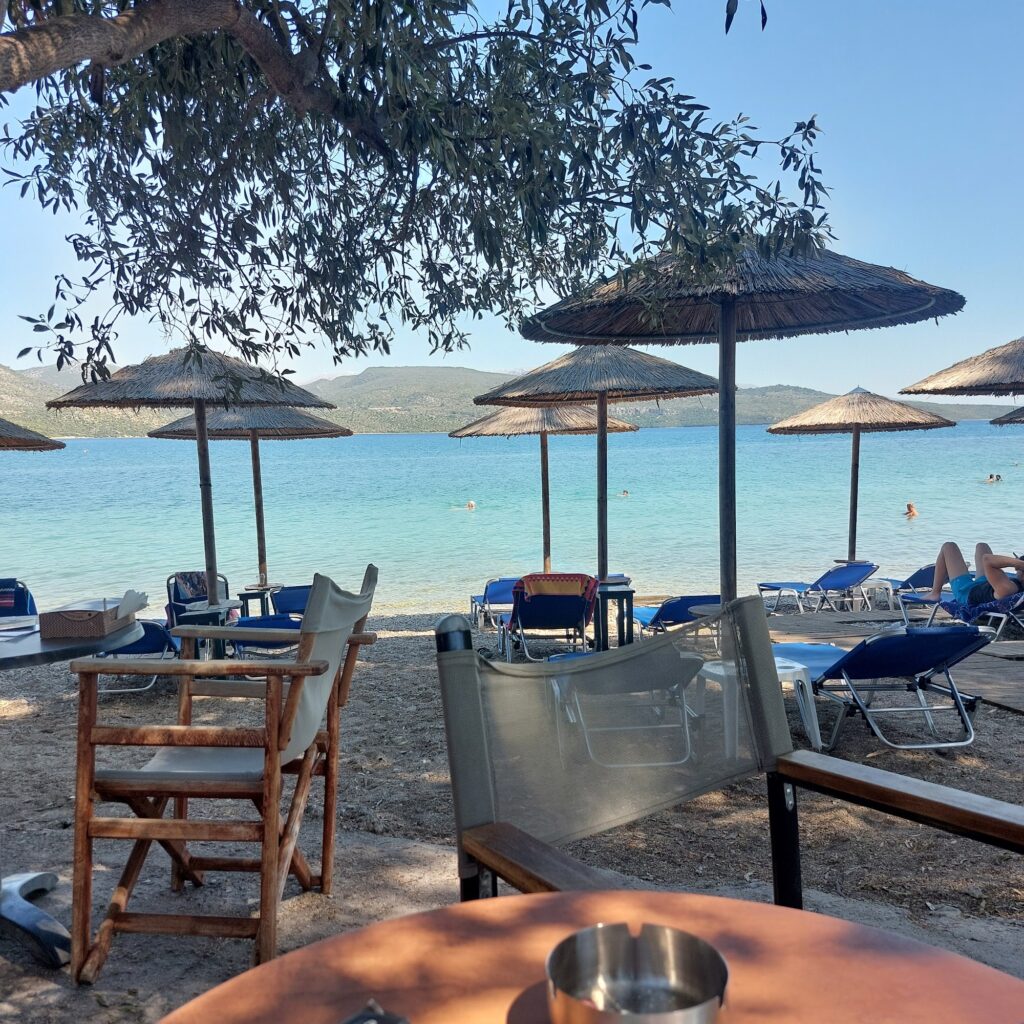
Some sections have sunbeds and parasols for hire — a set of two sunbeds and an umbrella is the standard rental unit here, with a bar and snack bar nearby. Most of the beach, however, is unorganised. Visitors lay towels between the trees or find a spot on the pebbles close to the water. The specific structure of the Lygiá beach day is quieter and more informal than the organised south coast equivalent at Pasha Beach Lefkada Greece, which is the unorganised sandy bay 16 kilometres further south near Nydri.
There is a small water park at the south edge of the village — Panos Water Sports & Fun Park — operating June to September for families with young children.
The Fishing Harbour and the Tavernas: The Real Centre of the Village
The harbour at Lygiá is the reason to stay for lunch rather than just swim and leave. Boat rental is available from the harbour for visitors who want to explore the coastline independently. The catch comes in before most visitors have had breakfast, which is why the fish at the harbour-front tavernas is caught that morning. Grilled sardines, octopus, and fresh fish with local olive oil from small island farms are the dishes that the tavernas are known for. The harbour atmosphere in the evening — the boats back, the lights coming on, the mainland mountains darkening behind the St George fortress — is a specific Lefkada moment.
The St George Fortress: Visible From the Beach, 5km Across the Strait on the Mainland
The fortress of Agios Georgios (St George) on the mainland across the strait from Lygiá is a Venetian construction built in 1807, later used by the French and the British during successive periods of occupation of the Ionian Islands. It is visible from the beach as a stone structure on the hillside across the water. The proximity — the strait here is only a few kilometres wide — is the specific geographical quality that makes the view from Lygiá different from any other Lefkada east coast beach: the sense of looking at Greece proper from an island that only became definitively Greek in 1864.
Episkopos Beach: The Wooded Pebble Beach Immediately South
The next beach south of Lygiá is Episkopos — described consistently as a lovely wooded pebble cove. It is essentially the continuation of the same east coast character: pebbles, trees, calm water, no organised infrastructure. The drive from Lygiá to Episkopos takes a few minutes. For visitors using Lygiá as a base and wanting more beach options on the same road, Episkopos is the immediate alternative.
Faneromeni Monastery: 9km North, Worth the Detour
Faneromeni Monastery — the most important monastery on Lefkada, perched on a hillside above Lefkada Town with panoramic views over the island and the strait — is 9 kilometres north of Lygiá by road. It is a mandatory stop listed in virtually every Lefkada travel guide, and the combination of a Lygiá beach morning and a Faneromeni afternoon is a natural programme from a village base.
The famous west coast beaches — Porto Katsiki, Egremni, and Kathisma — are 15 to 25 kilometres from Lygiá on the other side of the island. They are accessible in 30 to 40 minutes by car, which makes Lygiá a viable base for exploring both coasts. Lakka Beach Lefkada Greece is 30 kilometres south on the same road to Nydri, accessible from the same base.
The East Coast Character: Why Lygiá Is Different From the West Coast Beaches
Lefkada‘s west coast — Porto Katsiki, Egremni, Gialos — is the dramatic, photograph-famous version of the island: white limestone cliffs, turquoise water, waves, and the open Ionian. The east coast is its daily life: fishing villages, calm water, working harbours, and the specific intimacy of a strait where you can see the other side clearly.
Lygiá is the best-positioned of the east coast villages for a visitor who wants to experience both. Drive west in the morning for the famous cliff beaches, return east for lunch at the harbour and an afternoon swim in still water. The village has enough restaurant and accommodation infrastructure to support a week-long stay without feeling under-resourced.
Lygiá Beach on Lefkada is the pebble shore of the fishing village 5 to 6 kilometres south of Lefkada Town — water shoes needed (pebble and stone seabed throughout), mostly unorganised with some sunbeds, pine and eucalyptus tree shade, water mirror-still and 23–25°C from June to September, working harbour with morning catch, fish tavernas on the promenade, no ATM in the village, the St George fortress visible on the mainland across the strait, the salt marsh church at the southern edge, Episkopos wooded pebble beach immediately south, Faneromeni Monastery 9 kilometres north, and Panos Water Sports & Fun Park at the village’s southern end for children.
Drive south from Lefkada Town. Bring water shoes and cash. Stay for the fish at the harbour.
Map
Sorry, no records were found. Please adjust your search criteria and try again.
Sorry, unable to load the Maps API.
Near by places: