Kipos Beach Samothraki: Mountain Meets Sea
Profile
Kipos Beach: Where a Mountain Ends and the Aegean Begins
Greece | Samothraki | North Aegean | Volcanic Coast
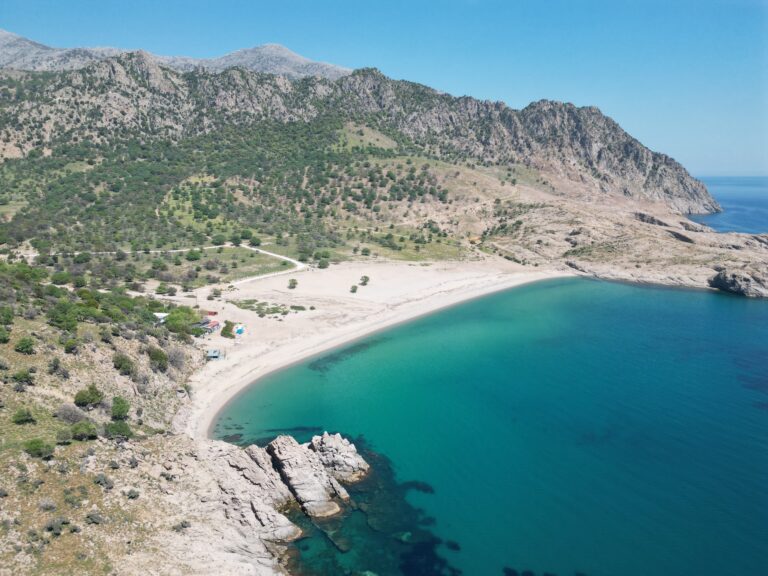
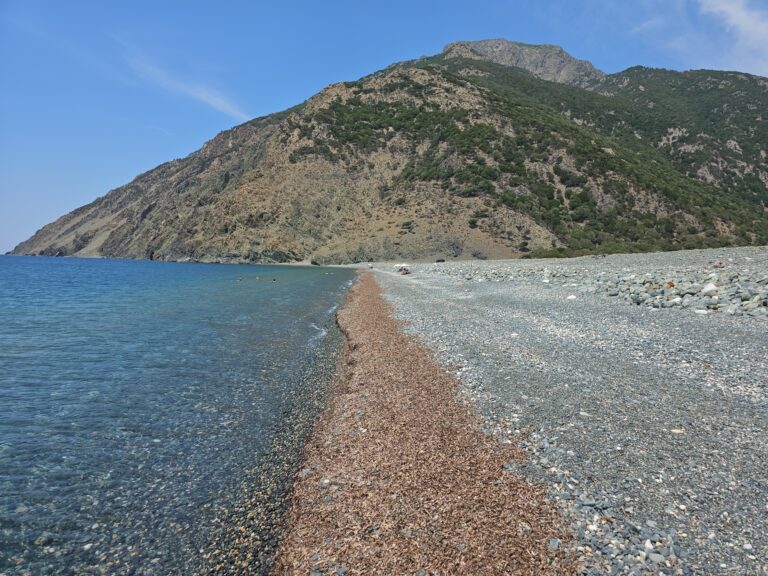
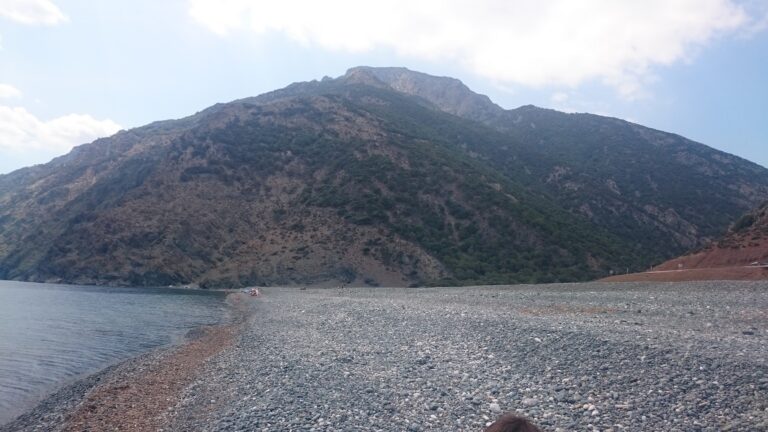
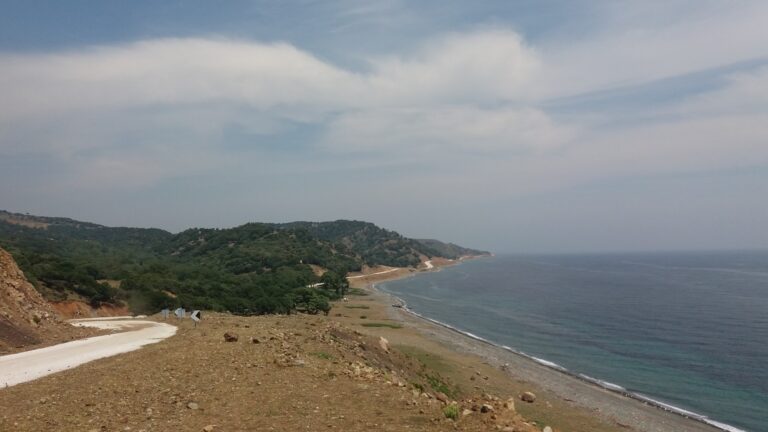
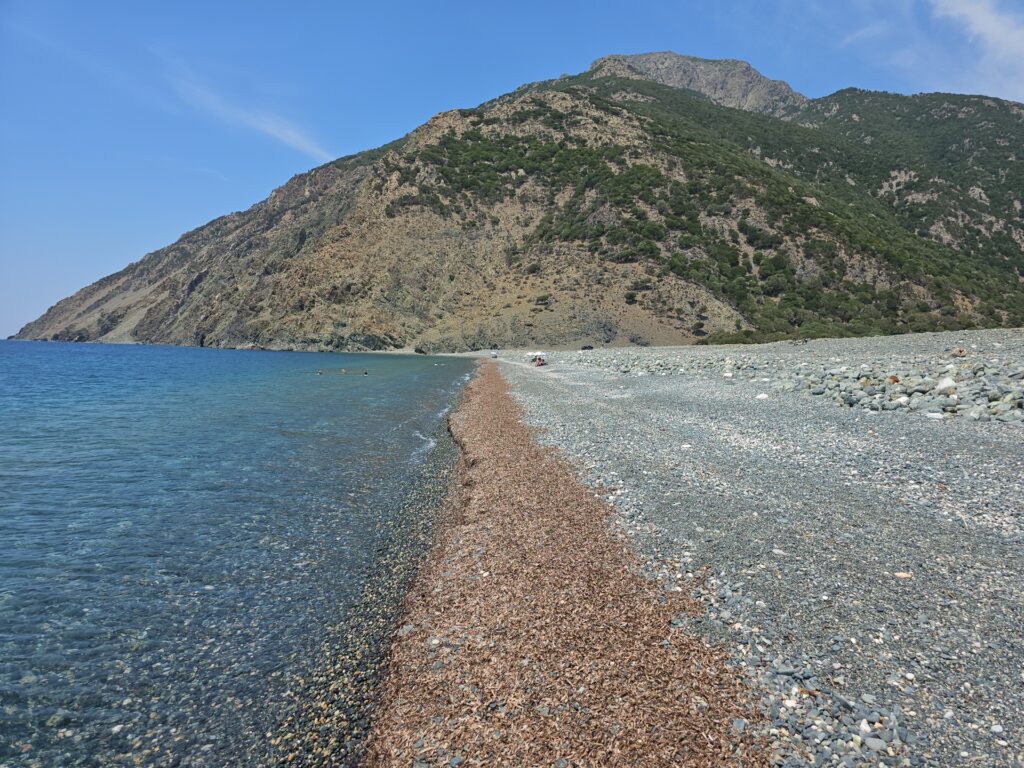
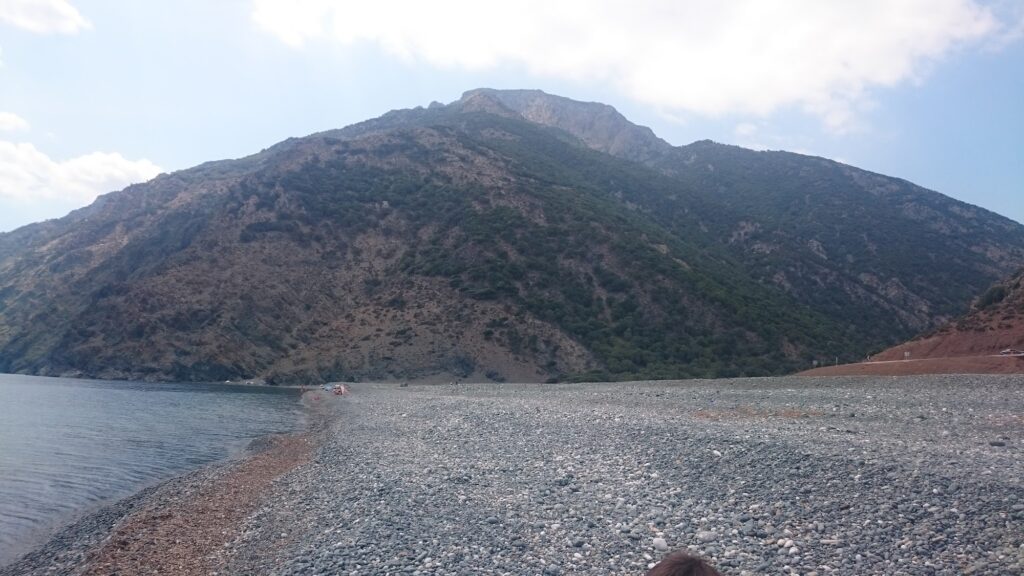
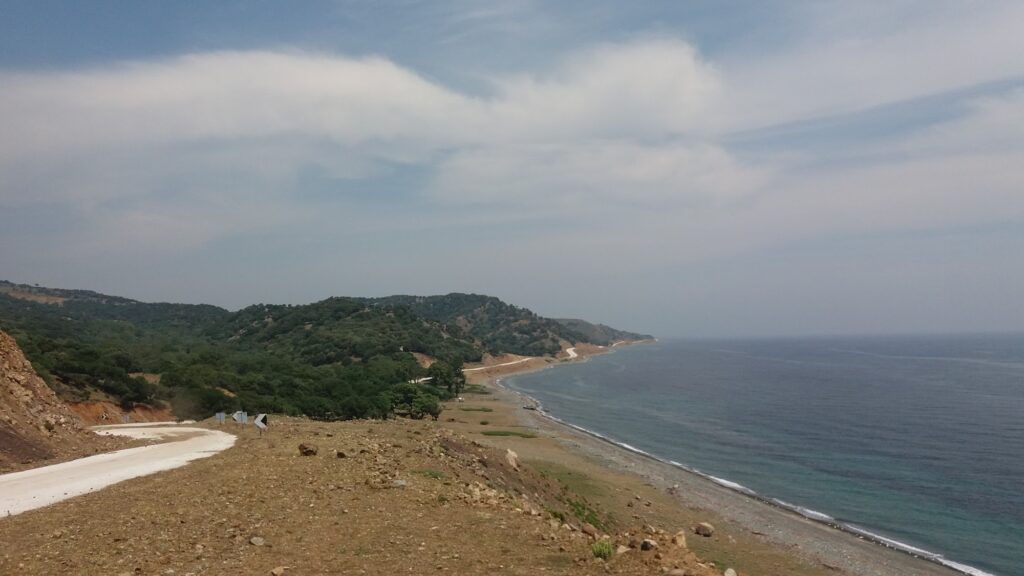
Most Greek islands I’ve visited ease you into the water, a gentle run of sand or a shallow shelf of pebbles that lets you wade in slowly. Kipos Beach does no such thing. The mountain behind it, Mount Saos, simply stops, granite cliffs dropping straight into water that goes from turquoise to a deep indigo within a few strokes of the shore, and I stood at the edge of the black pebbles for a while before committing to that first cold shock of a swim.
Samothraki sits far enough north in the Aegean, close to the Dardanelles and the Thracian coast, that it draws a different crowd than the islands further south, hikers and campers more than beach-club regulars, and Kipos, at the island’s easternmost point, felt like the place where that particular character of the island reaches its most extreme version.
Black Volcanic Pebbles and Water That Stays Clear in Any Wind
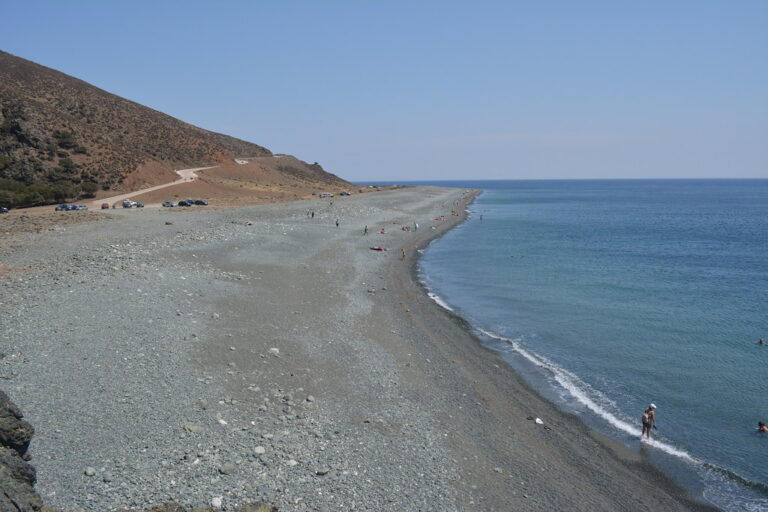
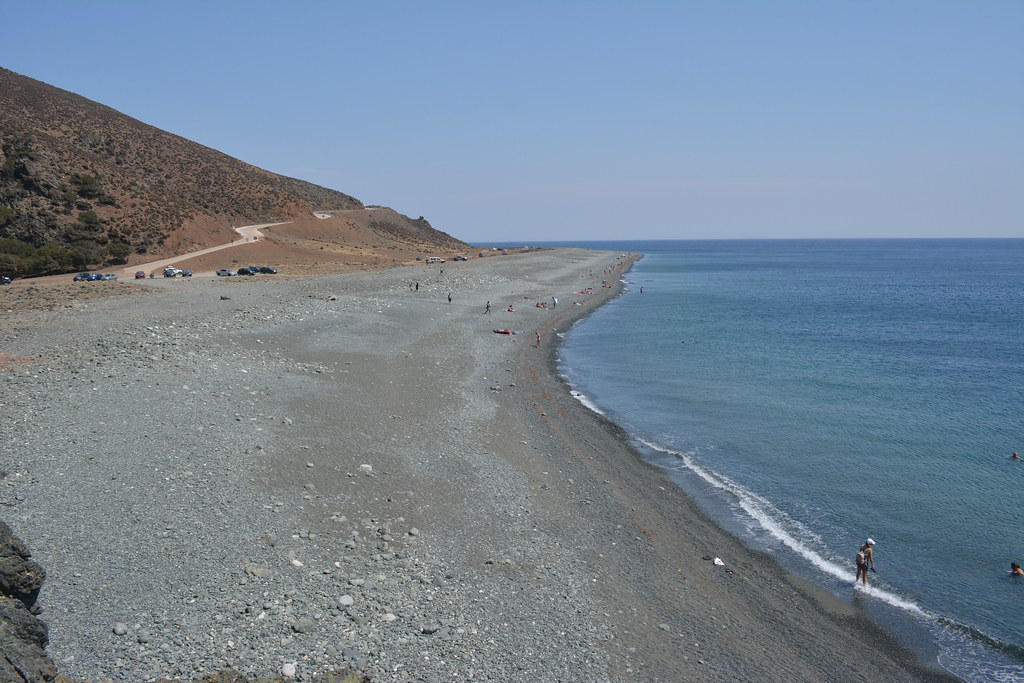
The beach itself is made up of smooth, dark volcanic pebbles, worn round by a sea that clearly doesn’t let up often. I noticed the water stayed remarkably clear even on a breezier afternoon, a quality locals told me comes from the pebble composition itself rather than any particular shelter from wind, since Kipos sits fully exposed toward the open sea and the Dardanelles beyond it. That exposure keeps the water constantly moving, cold and invigorating in a way I hadn’t quite experienced at the calmer, more enclosed coves further south in the Aegean.
Driving Past the Sanctuary of the Great Gods
The coastal road from Kamariotissa to Kipos passes directly by the archaeological site of the Great Gods at Palaiopolis, and I stopped there on my way to the beach mostly out of curiosity about a name I didn’t recognize. What I found was considerably weightier than a passing roadside ruin. This sanctuary once hosted one of the ancient world’s most secretive mystery cults, its rites so closely guarded that even Herodotus, who wrote about nearly everything else, left only fragments of description behind. It was here, in 1863, that a French archaeologist uncovered the fragments of the Winged Victory of Samothrace, the headless, armless marble figure that now stands at the top of the main staircase in the Louvre. Standing at the site itself, looking down through the valley where the statue once presided over a theater carved into the hillside, gave the rest of my drive to Kipos an entirely different weight than I’d expected from a simple coastal road.
The Snorkeling Center Near Cape Aggistros
Kipos has developed a genuine reputation among snorkelers, and the rocky seafloor along the vertical walls flanking the beach explained why almost immediately once I got in the water. A dive center operates nearby, between the Agia Paraskevi church and the beach itself, running snorkeling trips along the island’s southeastern coast that reach spots inaccessible by any road. I didn’t book a formal trip myself, but snorkeling directly off the beach was rewarding enough on its own, the rock walls dropping away into deeper water thick with marine life I hadn’t expected from a beach this exposed.
Boat Trips to Kremastos Waterfall
What makes Kipos more than simply a swimming stop is its role as a departure point for boat trips to Kremastos Waterfall, one of the most unusual sights I’ve encountered on any Greek coastline. The waterfall drops nearly a hundred meters directly into the sea along Samothraki’s rugged southern coast, reachable only by boat since no road extends anywhere near it. I joined a small tour departing from near Kipos, and the ride itself, tracing cliffs and sea caves along a stretch of coast with no visible settlement anywhere, felt like a genuinely different Greece than the one most travelers picture. Swimming beneath the waterfall itself, cold freshwater mixing with the sea, was worth the trip on its own.
A Mobile Canteen and the View Toward Imbros
During peak season, a canteen operates near the beach’s entrance, and I ordered a coffee there one morning simply to have an excuse to sit and look out toward Imbros, the neighboring island visible across the water on a clear day. There’s no restaurant infrastructure beyond this at Kipos, which suited the beach’s generally unorganized character, closer to a wild stretch of coast than a developed swimming spot.
Getting There: The Northern Coastal Road From Kamariotissa
Kipos sits roughly 18 kilometers from Kamariotissa, the island’s main port, a drive of about twenty-five minutes along a fully paved road tracing the northern coast. Beyond the Sanctuary of the Great Gods, the drive also passes through Therma, known for its thermal springs, and I’d recommend building in time to stop there as well if the schedule allows, since the northern coast road offers a genuinely varied sequence of landscapes for a relatively short drive.
Buses and Taxis During the Summer Season
Local buses and taxis run between the port, Therma, and Kipos during the high season, and I used the bus once when I hadn’t arranged a rental car, finding the schedule manageable enough for a single round trip in a day. For anyone planning to combine Kipos with a stop at Therma or the Sanctuary along the way, though, a rental car gives considerably more flexibility than working around bus timing.
Arriving Early for the Softest Light on the Pebbles
Parking is available in a large open lot at the end of the road, and arriving before eleven gave me the added benefit of catching the morning light against the dark pebbles, a softer contrast than the harsher midday sun produces later. The lot itself never felt crowded during my visits, in keeping with how remote this end of the island generally feels compared to the busier beaches near Kamariotissa.
Comparing Kipos to Other Volcanic and Ancient Coastlines
Of the beaches I’ve visited across the Aegean, Kipos shares its volcanic character most closely with Mandraki Beach Nisyros, another shore built from dark stone shaped by the region’s geological history, though Mandraki sits beside a working monastery rather than an ancient mystery cult. For beaches carrying serious pre-Christian weight, Petra Beach Patmos offers a genuine parallel too, its Rock of Kalikatsou tied to a Bronze Age sanctuary in much the way Kipos sits within reach of the Sanctuary of the Great Gods, though Patmos trades Samothraki’s snorkeling reputation for a single dominant rock formation rather than a full stretch of underwater cliff.
For the snorkeling itself, I’d put Kipos alongside Vromolithos Beach Leros, both beaches where a rocky seabed rewards anyone willing to bring a mask rather than simply swim laps along the shore.
Leaving Kipos as the Boats Head Back
By the time the afternoon boat trips to Kremastos started returning toward Kamariotissa, I was still sitting on the dark pebbles, salt drying on my skin, watching Mount Saos hold onto the last of the direct sun while the water in front of me had already slipped into shadow, the whole coastline behind me feeling, as it had all day, like the edge of somewhere considerably older than the beach itself.
Map
Sorry, no records were found. Please adjust your search criteria and try again.
Sorry, unable to load the Maps API.
Near by places: