Vromolithos Beach Leros: Snorkeling and a Chapel Islet
Profile
Vromolithos Beach: The Bay That Watches a Chapel Across the Water
Greece | Leros | Dodecanese | Aegean Coast
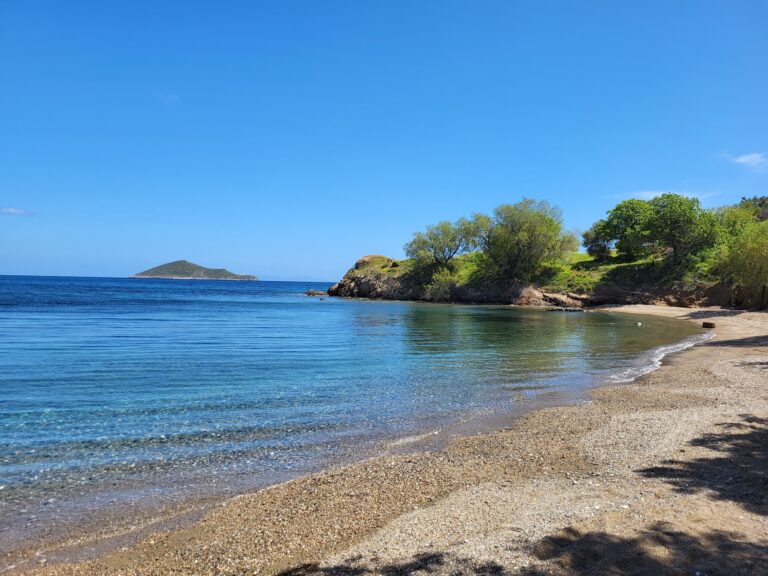
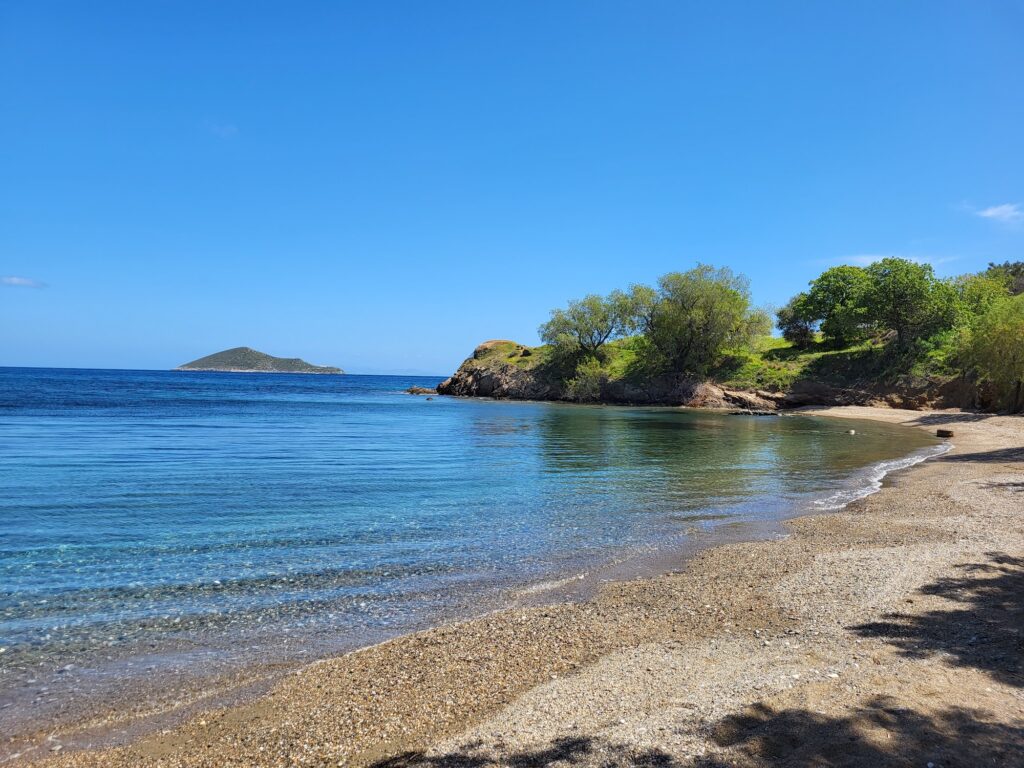
Every beach I’ve written about on Leros so far has something else in its line of sight, and Vromolithos is no exception, though what it offers is smaller and quieter than a castle or a row of windmills. Directly across the bay sits Agia Kyriaki, a tiny islet with a blue-domed chapel perched on top of it, close enough that I spent a good part of one afternoon just watching how the light changed on its white walls as the sun moved.
I’d walked down from Pandeli expecting Vromolithos to feel like an extension of its more famous neighbor, another stretch of sand serving the same fishing-village atmosphere I’d already spent days enjoying. It doesn’t. Vromolithos has its own rhythm, wider, quieter, and built around a completely different kind of view.
An Open Bay With Room to Actually Spread Out
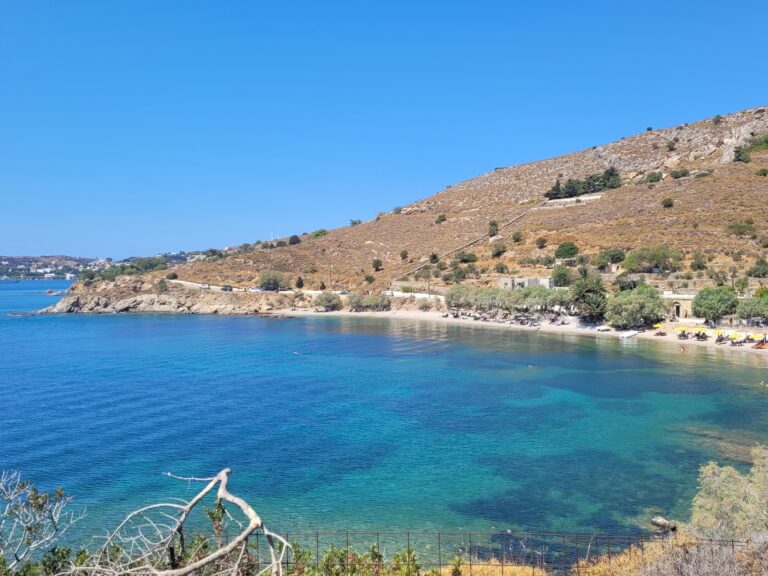
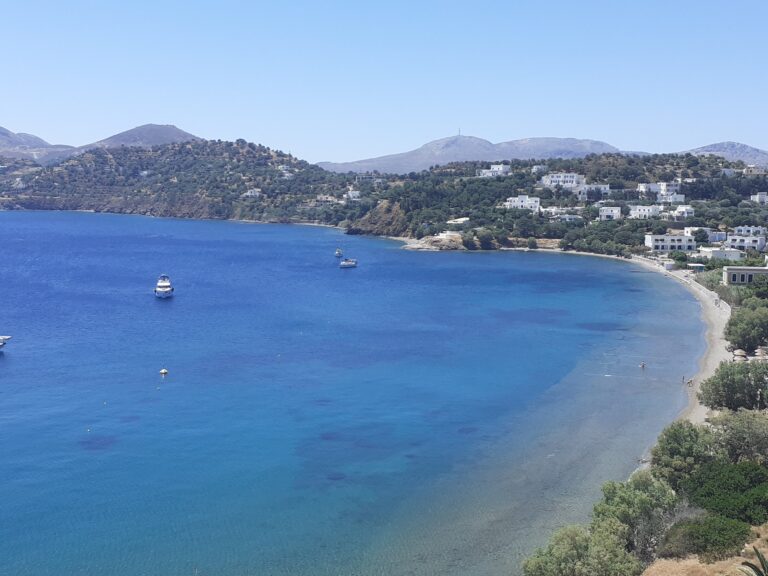
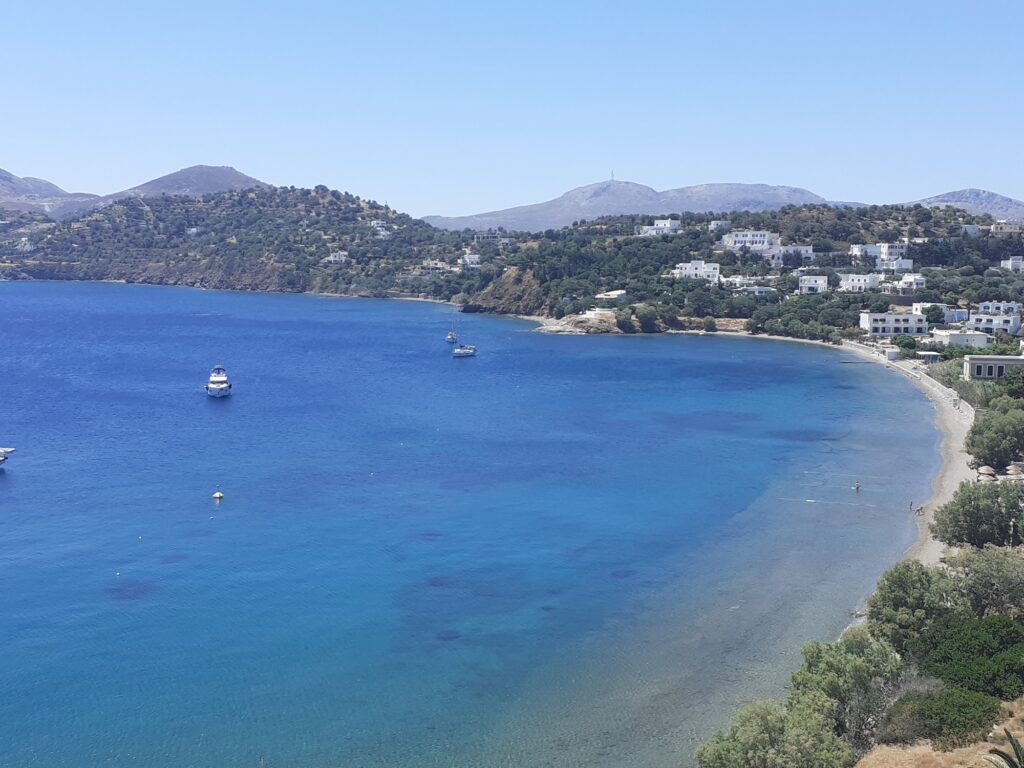
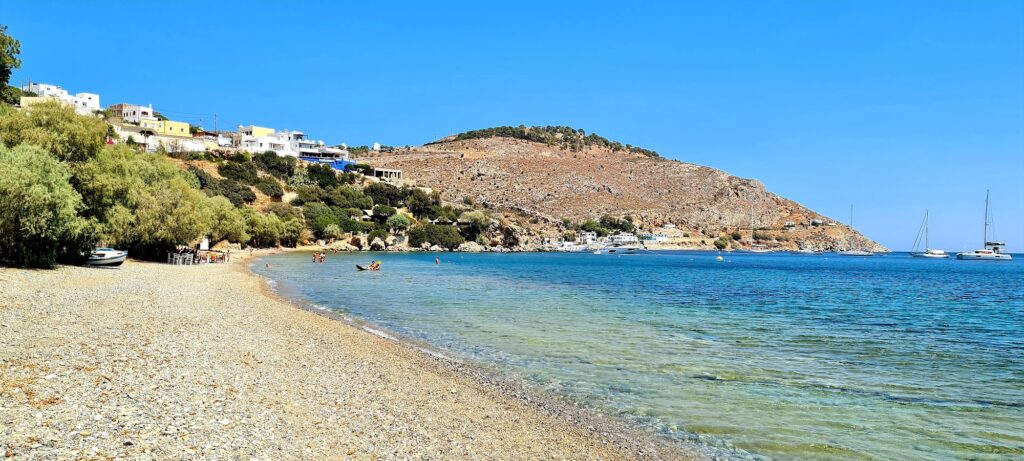
Where Panteli’s beach felt intimate almost to the point of crowding, Vromolithos opens into a considerably wider bay, and I noticed the difference the moment I arrived. The shoreline runs long enough that I never felt squeezed between sunbeds and tavern tables, and the extra space changes the entire pace of a day here. I spent one full afternoon without ever hearing another conversation clearly, something that hadn’t been possible during my time at the more compact beach up the coast.
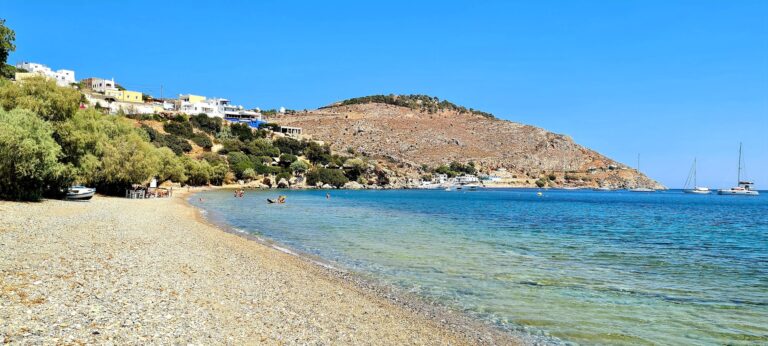
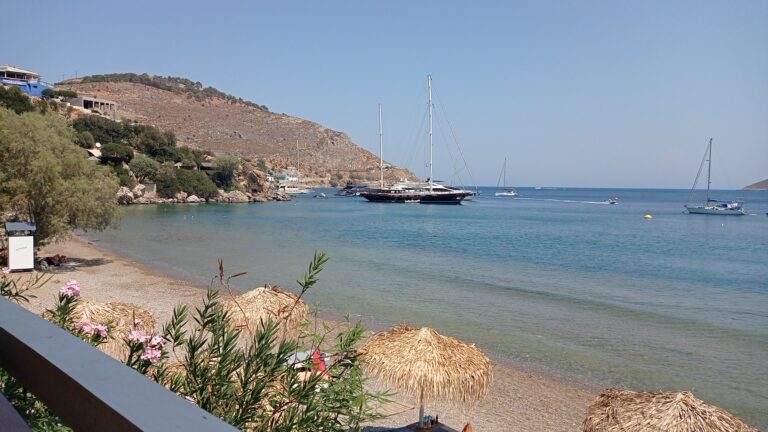
The shore itself combines coarse golden sand with small, smooth pebbles, shifting texture as you move along its length, and the seabed stays clean enough that I could see my own feet in the shallows well past where the water reached my waist.
The Rocky Seabed That Makes This Leros’ Snorkeling Beach
What I hadn’t expected was how good the snorkeling would be. The seabed at Vromolithos turns rocky in patches, particularly toward the edges of the bay, and that rock cover supports considerably more marine life than the sandy stretches I’d swum over elsewhere on the island. I spent close to an hour with a mask on one morning, tracking small fish moving between the rocks, and came away thinking this was the best underwater visibility I’d found anywhere on Leros.
The water itself carries a gradient from pale turquoise near the shore to a deeper indigo further out, and because the bay circulates well, it stayed noticeably fresh even by mid-afternoon, when still, shallow water elsewhere tends to warm up and lose some of its clarity.
Agia Kyriaki: The Islet Leros Visits Once a Year
The islet across the bay, Agia Kyriaki, is small enough that I could see the whole thing from shore without needing to swim toward it, its blue-domed chapel sitting almost like a punctuation mark on the water. What I only learned after asking around in Pandeli is that this isn’t simply a scenic backdrop. Once a year, in July, locals from across Leros travel out to the islet to celebrate the saint’s name day, a tradition that turns an otherwise quiet, uninhabited outcrop into a brief gathering point for the whole island.
I wasn’t there in July myself, so I can’t describe the celebration firsthand, but knowing it happens changed how I looked at the chapel for the rest of my stay. It stopped being purely decorative and started feeling like a small, active part of how Leros marks its calendar, even from a distance.
Tavernas and Rooms Built Into the Hillside Behind the Beach
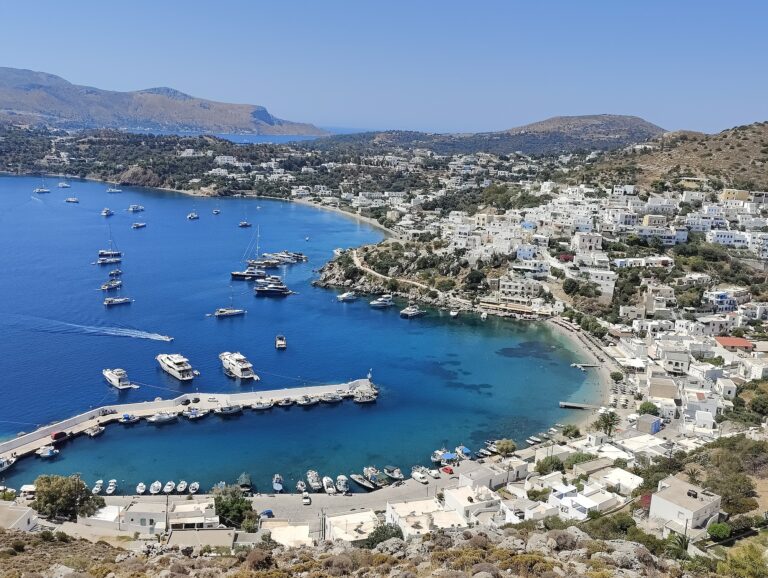
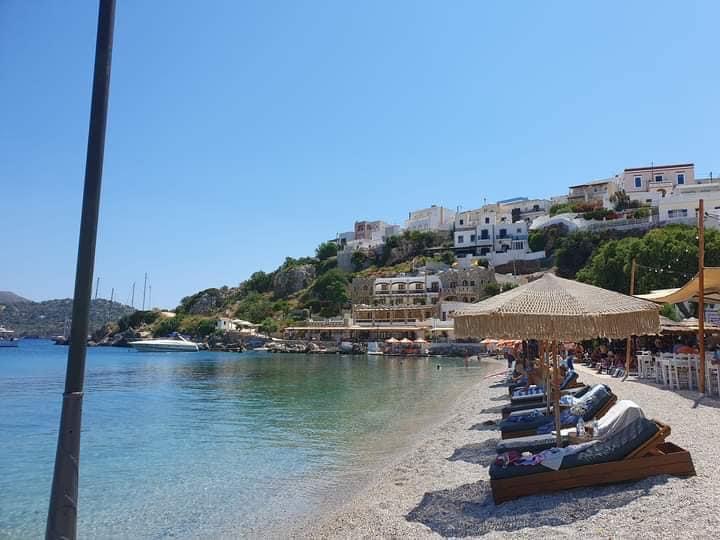
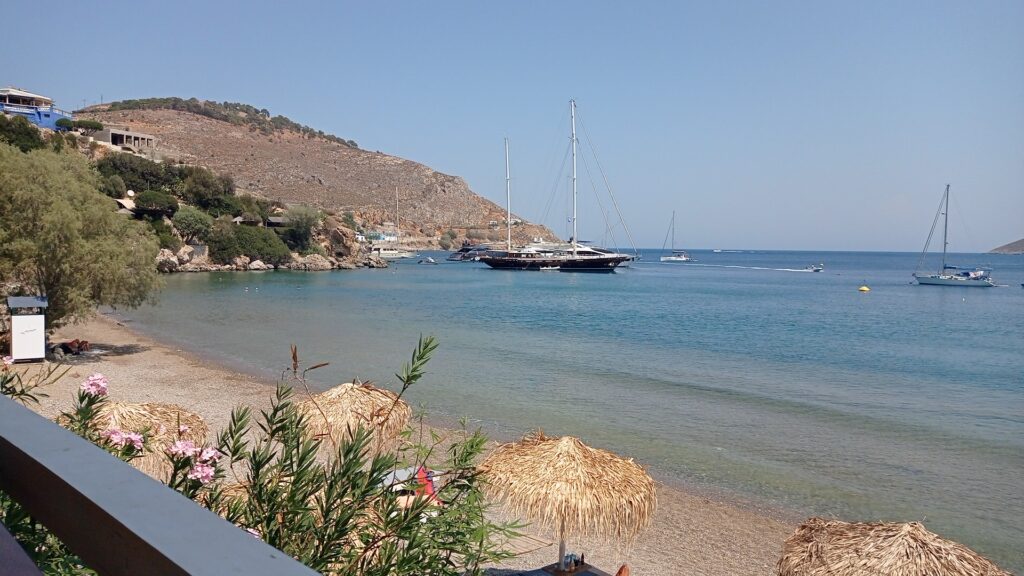
Vromolithos has its own cluster of small hotels and seaside villas set into the slope behind the beach, and I noticed a quieter, more residential feel here than at the more concentrated village center further north. The tavernas overlooking the sand serve much the same Dodecanese seafood and Lerian pougi I’d already come to expect on this island, though I found the pace at the tables here slower, less about turnover and more about lingering.
Compared to Panteli Beach Leros, a short walk north, where the tavernas crowd close together and compete for the same evening crowd, Vromolithos felt more spread out and considerably less rushed, which suited the kind of long, unhurried lunch I ended up having more than once.
Getting There: The Coastal Walk South From Pandeli
The most straightforward way to reach Vromolithos, if you’re already staying near Pandeli, is on foot, a walk of ten to fifteen minutes south along a path that offers a steadily changing view of both the castle behind you and the bay ahead. I made this walk at different times of day and found the late-afternoon version, with the light beginning to soften, the most rewarding.
By car or scooter, the drive from Lakki, the island’s main port, takes roughly ten minutes along a well-paved road running through Platanos before reaching Vromolithos. I used this route on the one day I’d rented a scooter to cover more ground on the island, but for anything centered purely on the beach itself, the walk from Pandeli made more sense.
Taxis, Buses, and the Practical Way In From the Airport
Taxis from either Leros’ main port or its small airport are easy to arrange, and during summer months local buses also run along the main road connecting the island’s coastal villages, though I found the frequency less reliable than I’d have liked when I tried timing a return trip around it. For a beach this close to Pandeli, I’d lean toward walking or a short taxi ride over waiting on a bus schedule.
Parking in the Shade Before Late Morning
Open parking lots sit directly behind the beach and near the tavernas, and unlike some of the more constrained beaches I’d visited earlier in the trip, I never struggled to find a spot even without arriving especially early. That said, arriving before eleven still had its advantages, mainly in claiming one of the parking spots shaded by the natural trees fringing the lot, which made a noticeable difference by early afternoon when the sun was at its strongest.
How Vromolithos Compares Across the Dodecanese
Vromolithos belongs to a particular category of Dodecanese beach I’ve come to recognize over this trip: quieter, more residential stretches that sit just far enough from a village center to avoid its crowds while still benefiting from everything nearby. Vlychadia Beach Kalymnos fits a similar mold on the neighboring island, another bay defined as much by what surrounds it, in that case a working pier and a sponge-diving museum, as by the water itself.
What sets Vromolithos apart within that category is the sheer specificity of its view. Most beaches I’ve visited offer a general sense of the Aegean stretching out in front of you. Vromolithos offers one fixed, particular point to look at, a chapel on a rock that the whole island still bothers to visit once a year, and that specificity is what I kept coming back to during my time here.
Settling Into a Slow Afternoon at Vromolithos
By late afternoon, the light drops low enough that Agia Kyriaki’s blue dome catches the sun before the rest of the bay does, glowing for a few minutes while the beach around it stays in ordinary daylight. I sat through that exact window on my last day here, watching the chapel hold the light a little longer than everything around it, and left before it faded, which felt like the right way to leave.
Map
Sorry, no records were found. Please adjust your search criteria and try again.
Sorry, unable to load the Maps API.
Near by places: