
Mandraki Beach Nisyros: Volcanic Stones, Old Monastery
Profile
Mandraki Beach: The Volcanic Shore Beneath the Monastery Rock
Greece | Nisyros | Dodecanese | Aegean Coast
Nisyros sells itself almost entirely on its volcano, and I arrived expecting the beach at Mandraki to feel like an afterthought squeezed in beside the main attraction. It doesn’t. The dark stones underfoot here are themselves a product of the same volcanic history that draws people up to the crater, and I spent longer than planned just turning a few of them over in my hand, smooth and heavy in a way that sand never manages to be.
What actually held my attention longest wasn’t the water or the stones, though. It was looking up from the shoreline toward the white monastery perched on the rock above the harbor, a building that’s been watching this stretch of coast for roughly four centuries.
Dark Volcanic Stones Instead of Sand
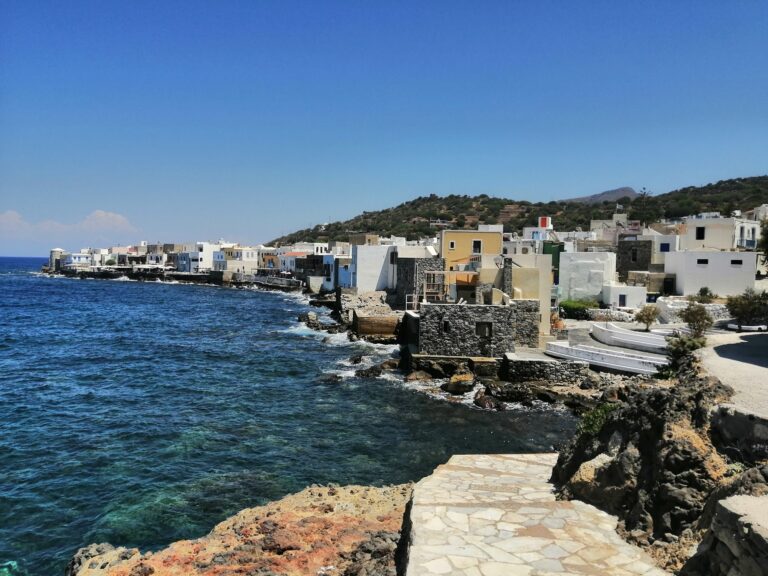
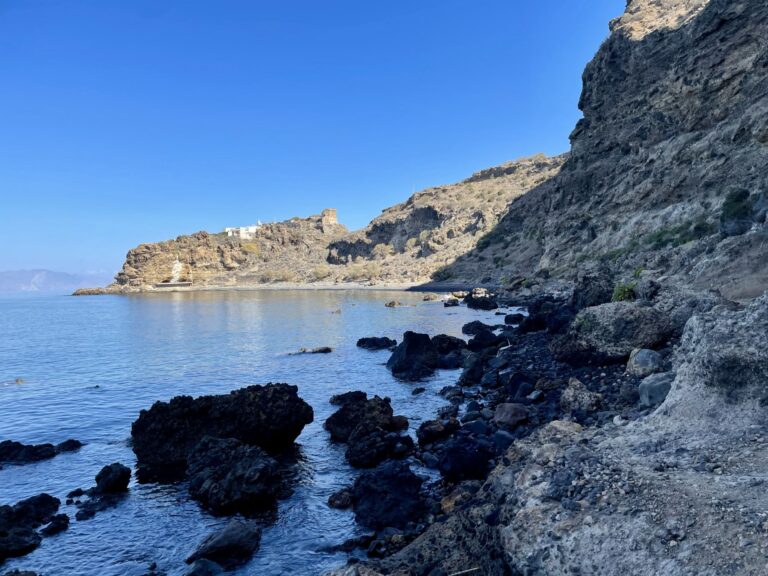
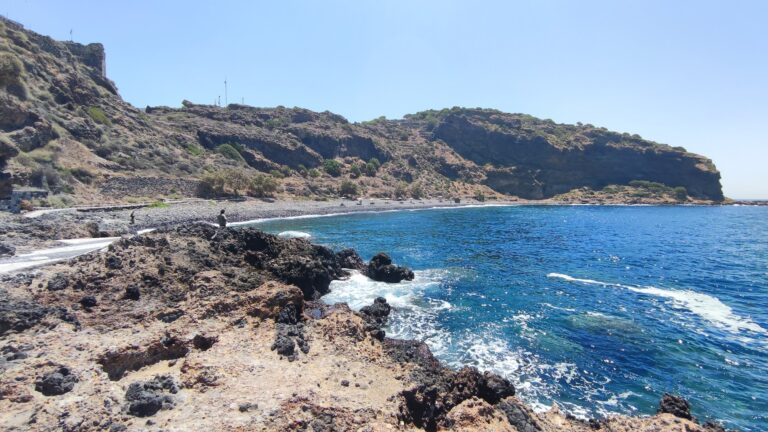
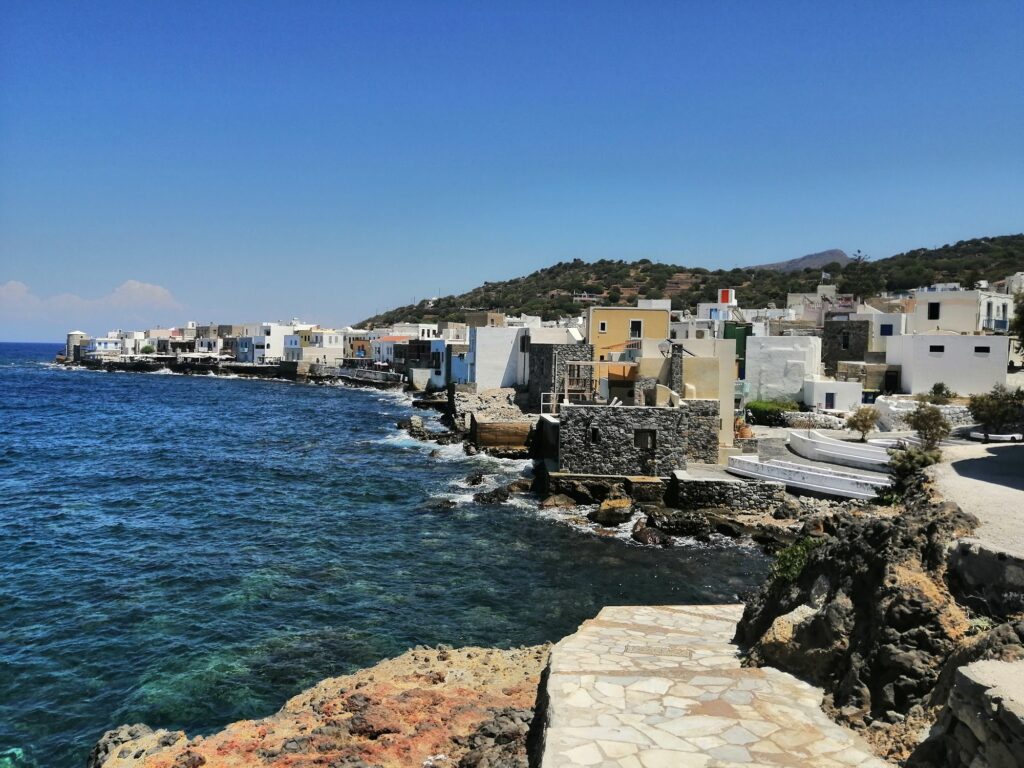
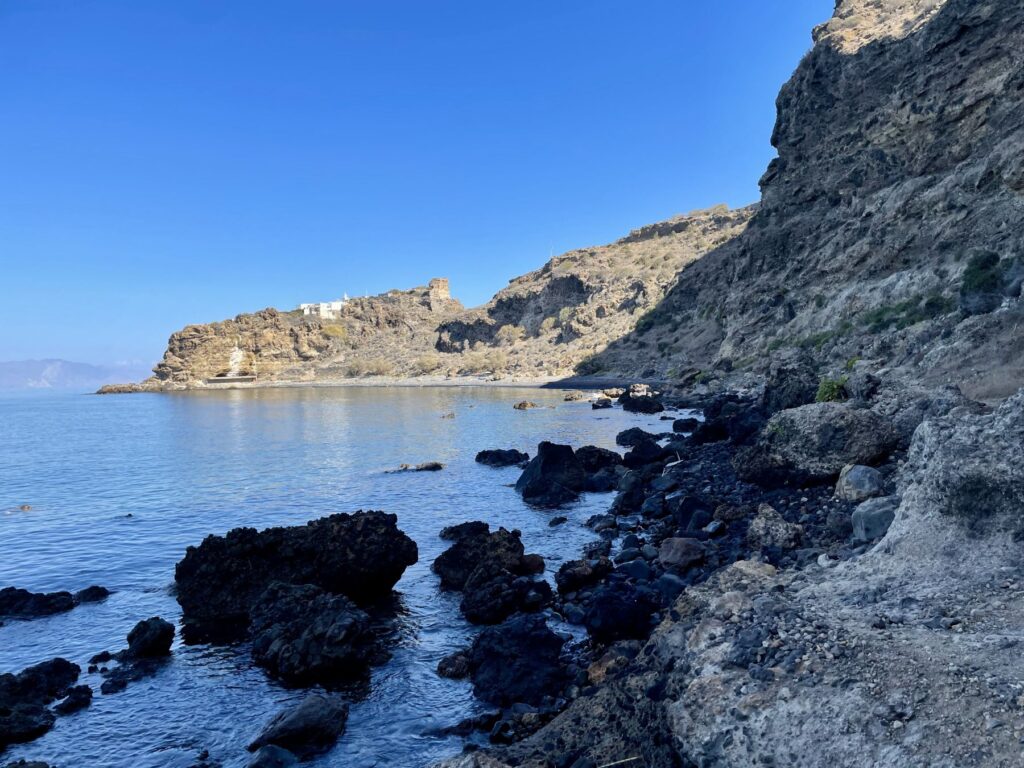
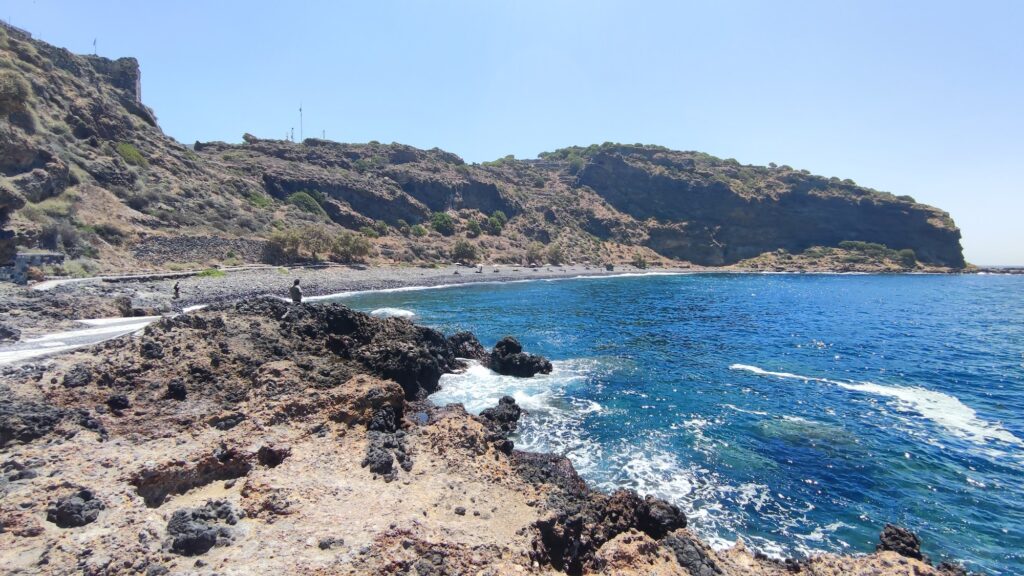
Mandraki Beach, sometimes called Koklakia after the local word for these smooth dark stones, sits on the northwestern edge of the town, and it announces its geology immediately. Rather than sand, the shore is made up of large, rounded volcanic pebbles, worn glassy-smooth by the sea over what must be centuries. I found bare feet took some adjusting to at first, and I ended up wearing sandals into the water more often than I would at a typical sandy beach.
That volcanic composition does something useful to the water, though. It stays remarkably clear, and because Mandraki faces open sea to the north and west, the water gets refreshed constantly rather than sitting still and warming in a closed bay. I found the swimming here more invigorating than relaxing, a wide-awake kind of cold that suited an early morning swim more than a lazy afternoon float.
The Monastery of Panagia Spiliani, Built Into the Rock Above
The monastery looming over Mandraki’s shoreline is Panagia Spiliani, and I climbed the steps up to it on my second morning, mostly out of curiosity about the building I’d been looking at from the beach the day before. What I found was considerably older and stranger than I expected. The monastery itself dates to around 1600, built on a thirty-meter rock beside the remains of a Knights of Saint John fortress, but the cave church inside it is older still, with local tradition placing the discovery of its icon around 1400.
The story goes that a farmer found a small icon of the Virgin Mary in a cave near Mandraki’s hot springs and carried it to a church elsewhere on the island. The icon disappeared overnight and was later found back in the same cave on the rock. This happened, according to the tradition passed down on Nisyros, three separate times, until the locals gave up moving it and built a church around the cave instead. That cave church became Panagia Spiliani, and it’s remained the island’s most important religious site since at least the eighteenth century. Every August 15th, pilgrims arrive from across the Dodecanese for a festival marking the Dormition of the Virgin, and boats entering the harbor still sound their horns passing beneath the monastery, a gesture locals describe as asking for its blessing.
Chickpea Fritters and Sea-View Tables Along the Shore
The tavernas lining Mandraki’s shore lean on Dodecanese seafood, unsurprisingly, but the dish I kept ordering was pithia, local chickpea fritters that showed up on nearly every menu along this stretch. I’d usually pair them with whatever fresh catch the kitchen was pushing that day, eaten at a table close enough to the water that the volcanic stones were visible just past my feet.
For something in between meals, the small cafés along the sea wall serve soumada, a local almond drink, alongside the usual coffee options, and I found myself sitting on the stone wall itself more than once with a glass in hand, watching the harbor traffic rather than committing to a full sit-down meal.
Walking the Sunset Promenade Toward Giali
A paved coastal walkway connects to the beach and runs along the water, and I made a habit of walking it in the evening, timed to catch the sun setting behind Giali, the smaller island visible just offshore. The light does something particular here that I hadn’t anticipated, catching the pale pumice quarried from Giali’s slopes and turning the whole silhouette a pale gold before the color deepens. It’s a short walk, easily done in under half an hour round trip, but I’d build at least one evening around it if you’re staying in Mandraki town.
Getting There: The Walk West From the Port
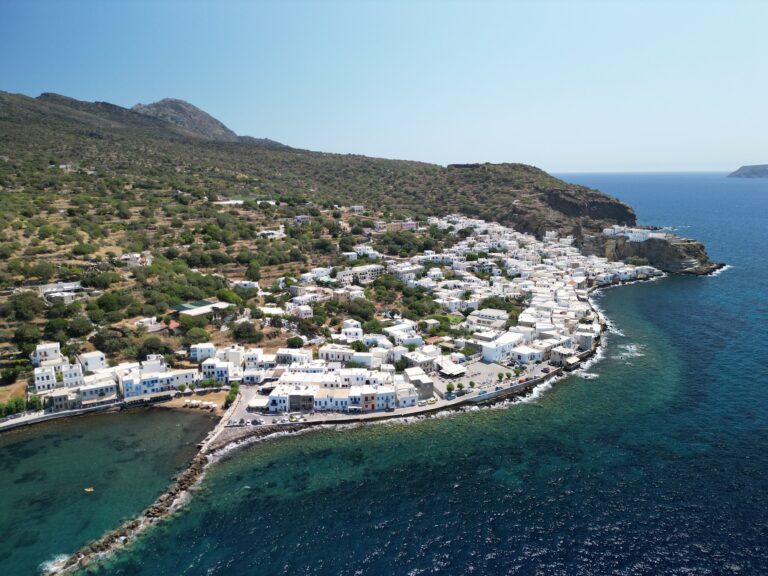
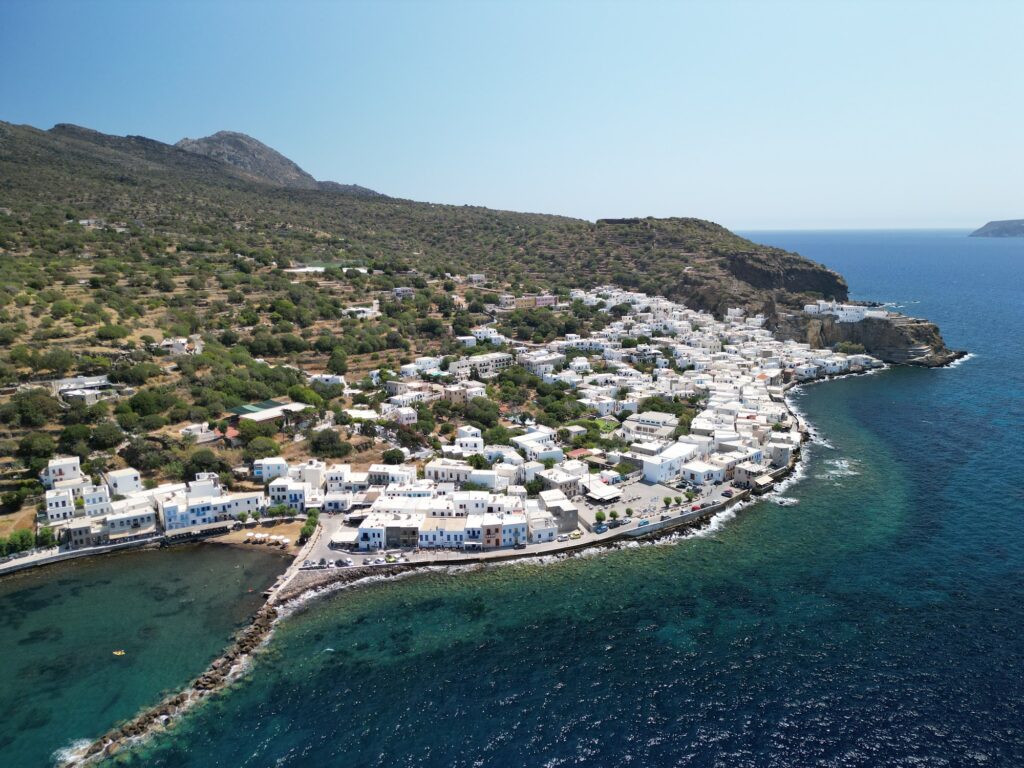
If you’re arriving by ferry, Mandraki Beach is genuinely close, a walk of ten to fifteen minutes from the port heading west along the coastal road through the town’s narrow alleys. I made this walk with luggage in hand on arrival day and didn’t find it difficult, though the alleys narrow enough in places that anyone with a large suitcase might prefer the short taxi option instead.
For visitors based in the mountain villages of Nikia or Emporios, the beach is reachable by the main island road, and I used a rented scooter for this route more than once, parking in the public lot near the town entrance without any trouble finding space.
Why Kos Day-Trippers Treat This as a Warm-Up Swim
Nisyros gets a steady flow of day-trip visitors arriving by excursion boat from Kardamena and Kefalos on Kos, most of them here primarily for the volcano rather than the coastline. I watched several of these groups use Mandraki as a quick swim before heading up to the crater, treating the beach as a warm-up rather than a destination in its own right. If you’re one of the day-trippers rather than staying overnight, arriving before eleven gives you the calmest water and the best chance of a swim before the crowd off the boats fills the shoreline.
Compared to Lambi Beach Kos, one of the busier beaches on the neighboring island, Mandraki has a noticeably rawer, less commercial feel, shaped as much by volcanic rock as by any deliberate resort development.
Parking, Timing, and the Best Light for Photographs
Parking near the town entrance is plentiful and free, and I never had trouble finding space even arriving by scooter during the middle of the day. For timing, the advice I heard repeatedly from locals matched my own experience: arrive before eleven for the calmest swimming conditions, and come back in the final hour before sunset if photographs of the volcanic stones and the monastery above are the goal. The golden hour light here does something to the dark pebbles that flat midday sun simply doesn’t.
Comparing Mandraki to the Rest of the Dodecanese Coast
Nisyros doesn’t offer the beach density of larger neighbors like Kos or Rhodes, and Mandraki stands somewhat alone as the island’s primary swimming spot close to town. Its closest cousin in character, in my experience across this part of the Aegean, might be Vlychadia Beach Kalymnos, another beach defined as much by what sits just behind it, in that case a working pier and a sponge-diving museum, as by the water itself. Where Vlychadia splits into two distinct shores, Mandraki commits fully to its volcanic stone identity, offering nothing resembling a sandy alternative anywhere along its length.
For anyone splitting time between Nisyros and Kos, Therma Beach Kos offers a useful contrast too, another beach shaped by geothermal activity, though its draw is warm spring water rather than dark volcanic stone underfoot.
An Evening Swim Before the Crater Climb
By the time I’d settled into a rhythm on Nisyros, my mornings belonged to Mandraki and my afternoons to the volcano, and that split felt like the right way to use this island. On my last evening, I came back down from the crater dusty and warm, and went straight into the water at Mandraki rather than back to my room, the cold, clear sea doing more in ten minutes than a shower would have, the monastery lit gold above me the whole time.
Map
Sorry, no records were found. Please adjust your search criteria and try again.
Sorry, unable to load the Maps API.