Pachia Ammos Samothraki: Sand, Sea, and a Cliff Chapel
Profile
Pachia Ammos: The Only Sand Samothraki Has
Greece | Samothraki | North Aegean | Volcanic Coast
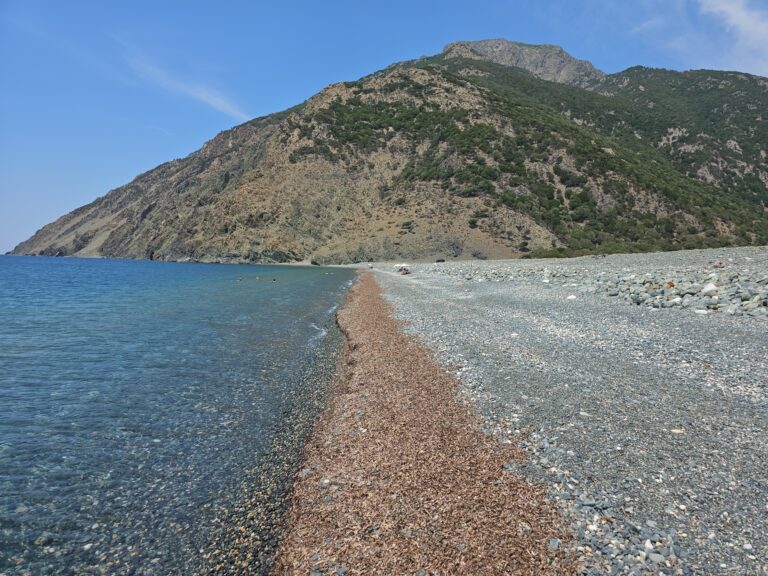
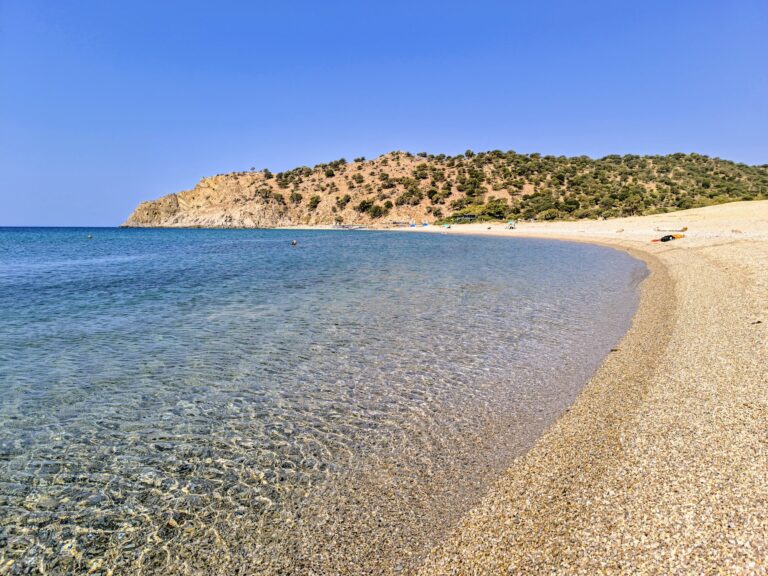
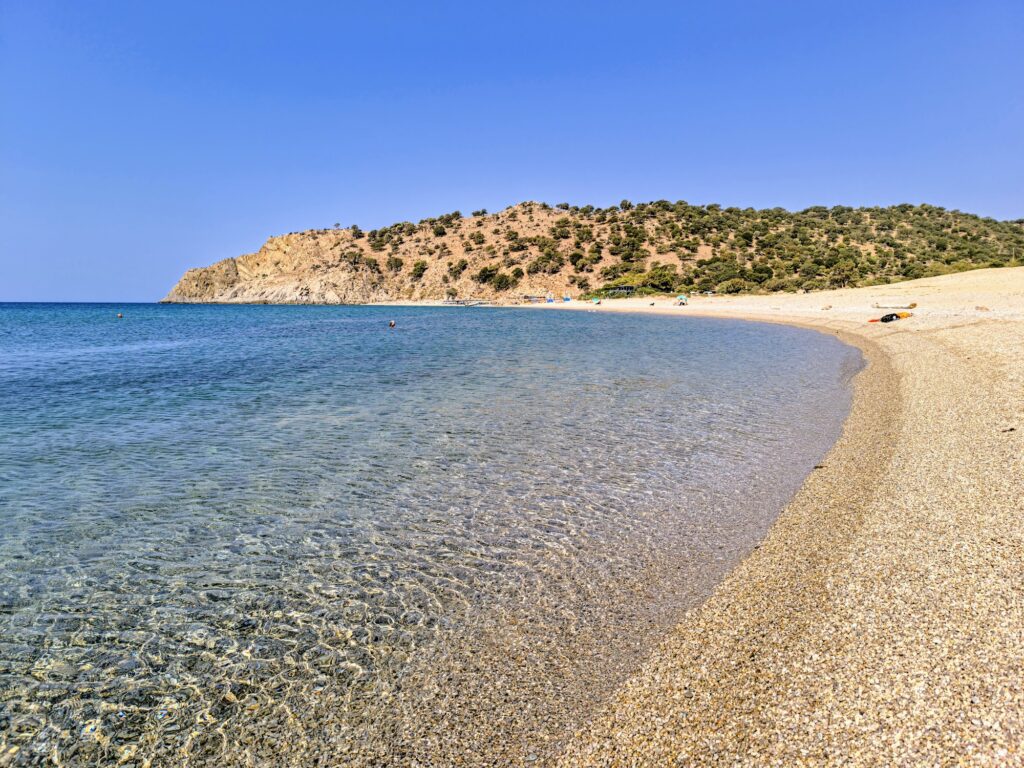
Samothraki doesn’t do sand. I’d learned that at Kipos, further along the coast, where black volcanic pebbles gave way straight to deep water, and I’d assumed by that point the whole island worked the same way. Pachia Ammos proved me wrong within a few steps of arriving. The name translates roughly to “thick sand,” and for once a beach name on this island turned out to be exactly literal, a wide, genuinely sandy stretch that stands alone against everything else Samothraki’s coastline offers.
What pulled my attention upward almost as quickly as the sand pulled it down, though, was the small white chapel perched on the cliff high above the bay, visible from nearly anywhere on the beach, sitting in a position that made we wonder how anyone ever decided to build there in the first place.
Sand Between Two Rocky Ridges
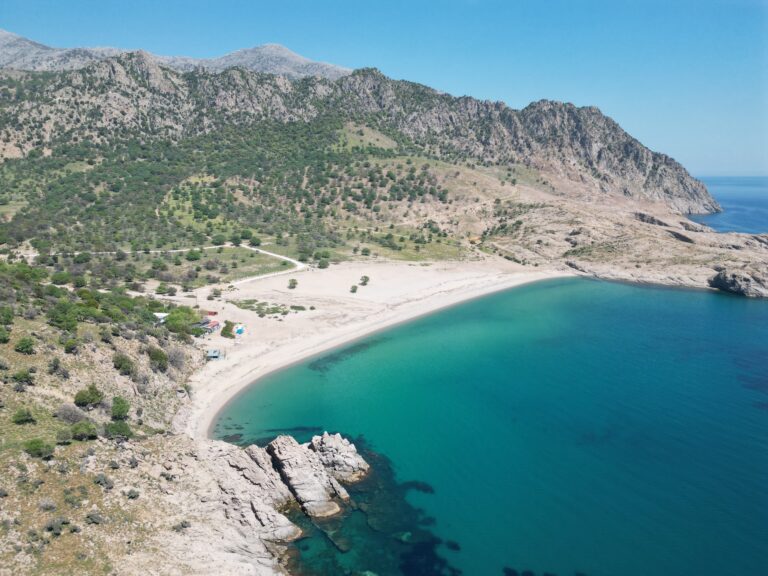
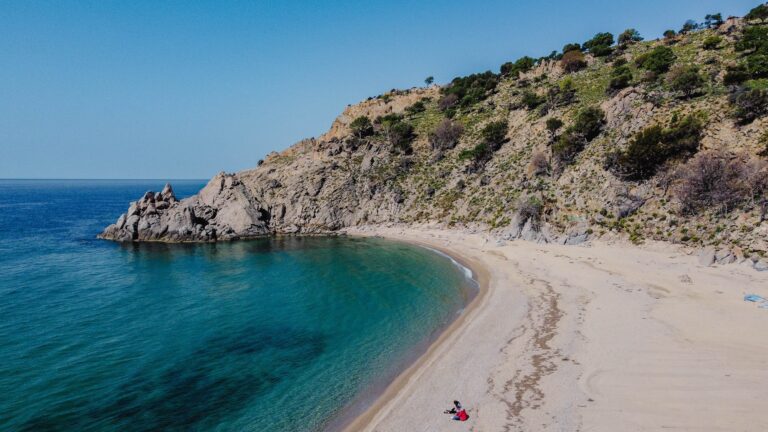
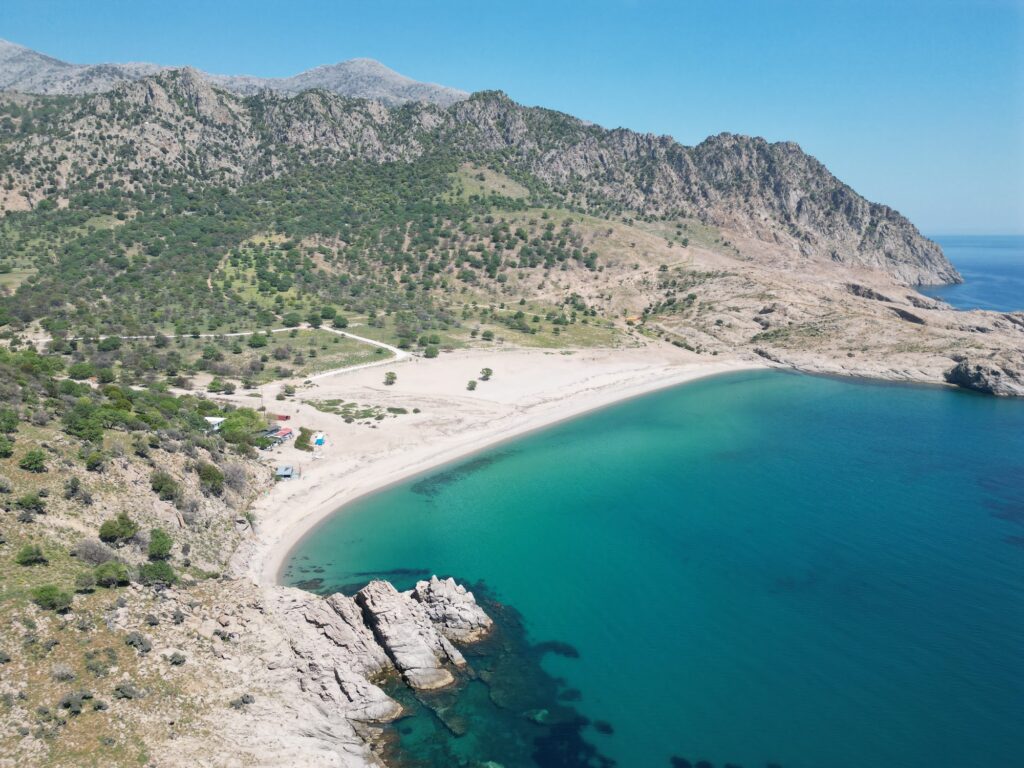
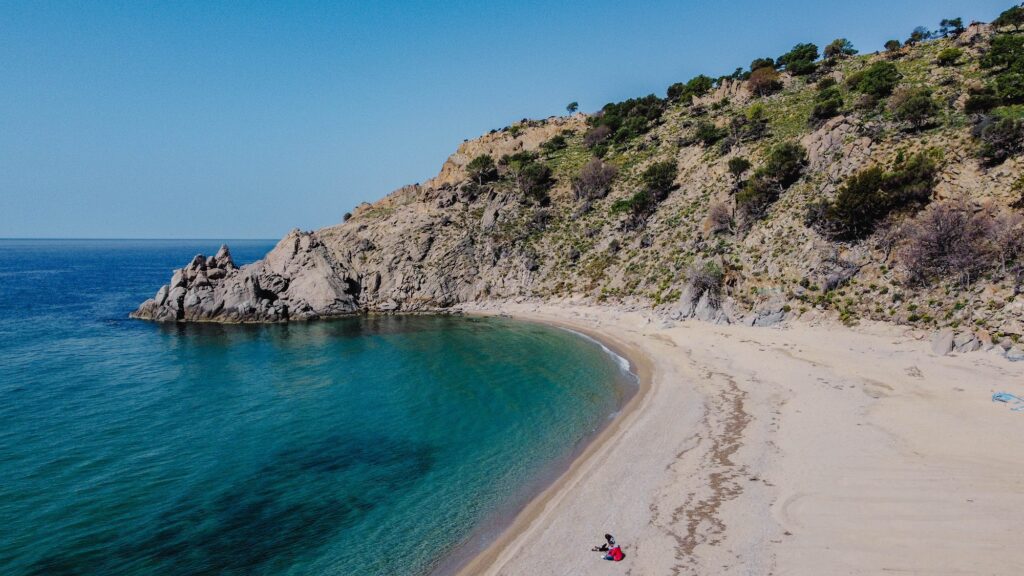
Pachia Ammos sits tucked between two high rocky ridges on Samothraki’s southern coast, and that framing does real work in making the beach feel more enclosed and sheltered than its actual size would suggest. The sand runs fine and golden, genuinely soft underfoot in a way I hadn’t experienced anywhere else on this island, and I found myself walking barefoot along its full length simply because I could, something I hadn’t managed at any of the pebble beaches further north.
The water deepens quickly here rather than offering the shallow entry I’d found at gentler beaches elsewhere in the Aegean, and I’d recommend this one for confident swimmers rather than families with very young children. The color runs from a bright turquoise near shore into a deeper indigo within a short distance, and the open exposure toward the sea kept the water moving and cold enough to wake me up properly on an early swim.
The Chapel That Kept Choosing Its Own Location
The chapel above Pachia Ammos, Panagia Krimniotissa, carries a story I found more compelling than most religious legends I’ve come across on Greek islands, mostly because of how specific and repetitive the tradition insists on being. According to the account passed down locally, an icon of the Virgin Mary was thrown into the sea by Christians in Asia Minor during the Byzantine Iconoclastic period, seeking to protect it from destruction. Centuries later, a ship’s captain sailing near Samothraki during a storm spotted the icon in the water, pulled it aboard, and watched the storm subside almost immediately. That night, the Virgin is said to have appeared to him in a dream, asking to be brought to the island.
The captain did as asked, and the icon was placed in a church, only to vanish overnight and reappear on the exposed rock high above Pachia Ammos. This happened repeatedly, according to the tradition, until the islanders understood the message and built a chapel exactly where the icon kept returning. Fifty stone steps still lead up to it today, and I climbed them on a clear afternoon mostly for the view, only to leave more struck by the story behind the building itself.
Climbing to the Chapel for the View Toward Imbros
The climb up to Panagia Krimniotissa isn’t difficult, though the steps demand some care given how directly they follow the edge of the cliff. From the top, the view stretches back down over the full curve of Pachia Ammos, and on a clear day I could make out the silhouette of Imbros sitting on the horizon across open water. A small taverna operates near the base of the steps, run in recent years by the priest’s wife from the nearby village of Lakkoma, and I stopped there both before and after the climb, drawn back mainly by traditional products I hadn’t seen served quite the same way elsewhere on the island.
Samothracian Kid Goat and a Taverna Behind the Sand
Directly behind the beach sits another taverna, this one specializing in caprito, Samothracian kid goat, alongside fresh Aegean seafood and organic salads grown locally. I ordered the goat on my second visit, having been steered toward it by a local who described it as the dish this particular stretch of coast is known for, and found it worth the recommendation, slow-cooked enough that it fell apart easily and paired with simple sides that didn’t compete with the meat itself.
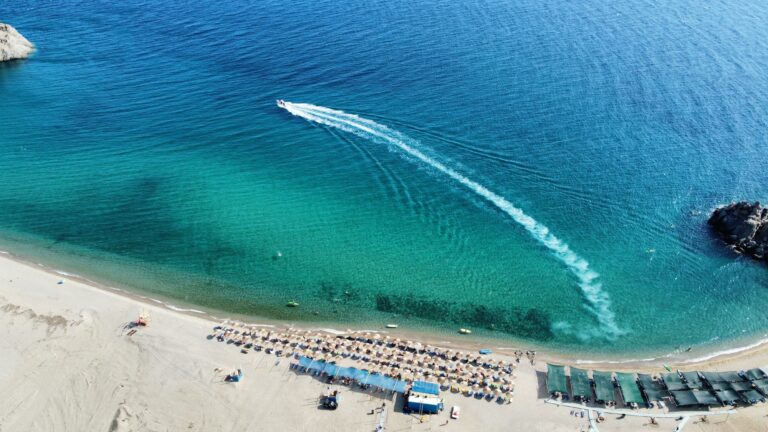
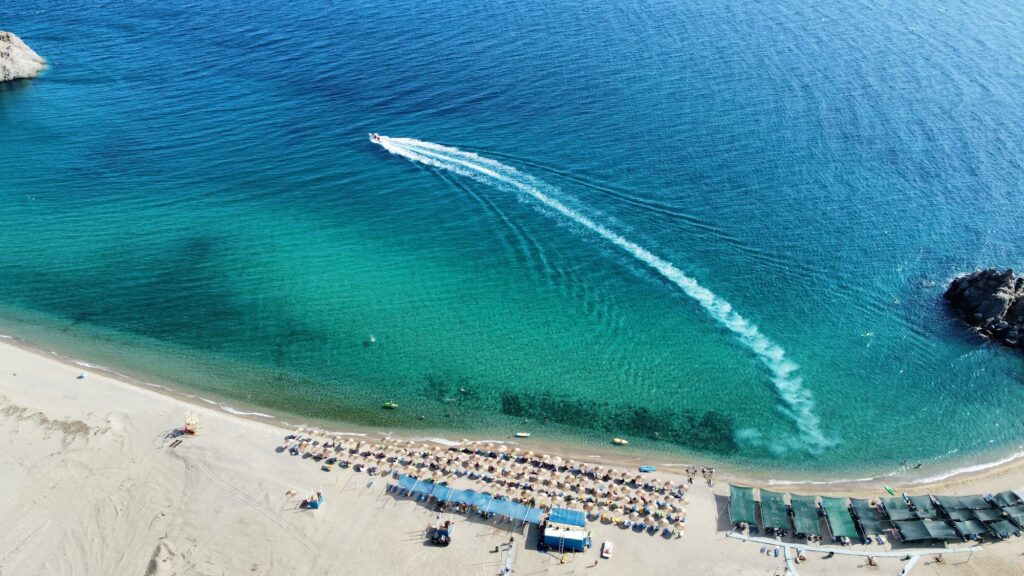
Sunbeds and umbrellas managed by a beach bar cover a portion of the sand during peak summer months, though I found the atmosphere here noticeably lower key than what I’d expect from an equivalent setup on a busier island further south.
Getting There: The Mountain Road Through Lakkoma
Pachia Ammos sits roughly 15 kilometers from Kamariotissa, a drive of about twenty-five minutes along a fully paved road that winds through some of the island’s more dramatic coastal terrain. The route passes through Lakkoma, a small village I stopped in briefly on my way back, and the final descent toward the beach opens into the kind of panoramic view that made me glad I hadn’t rushed the drive.
Buses, Taxis, and Boats From Kamariotissa
During the high season, local buses and taxis run the route between the port and Pachia Ammos, and I used the bus once, finding the schedule workable enough for a single day trip without a rental car. Boats also run from Kamariotissa during summer, often continuing on to nearby sea caves along the coast, and I’d recommend this option for anyone interested in seeing more of Samothraki’s southern shoreline than the road alone reveals.
Parking in the Shade of the Coastal Bushes
Open parking lots sit directly behind the beach bar and taverna, and arriving before eleven gave me the advantage of claiming a spot shaded by the coastal bushes lining the lot, useful given how quickly the sun heats up an exposed parking area on this part of the island. The beach itself never felt crowded during my visits, in keeping with the generally unhurried character I found across Samothraki’s southern coast.
Comparing Pachia Ammos to Other Beaches Watched Over by a Landmark
Elsewhere on this same coastline, Kipos Beach Samothraki offers a useful contrast, trading Pachia Ammos’s sand and cliffside chapel for black volcanic pebbles and proximity to an ancient sanctuary rather than a Byzantine one. Both beaches carry real historical weight above them, but the character of that history couldn’t be more different, one rooted in a centuries-old naval legend, the other in a mystery cult that predates Christianity on the island entirely.
Further south in the Aegean, Mandraki Beach Nisyros follows a similar pattern, a beach watched over by a religious structure with its own icon story, and Panteli Beach Leros shares the same basic idea too, a castle and windmills standing guard above the sand rather than a lone chapel on a cliff. What sets Pachia Ammos apart within that group is the specificity of its legend, an icon that seemingly refused every location except the one where visitors now climb fifty steps to reach it.
Sitting on the Only Sand This Island Offers
By the time I left Pachia Ammos on my last afternoon, the light had shifted enough that the chapel above caught the sun a little longer than the beach below it, exactly the way it must have looked to whoever first noticed the icon sitting on that rock and decided, finally, to stop moving it.
Map
Sorry, no records were found. Please adjust your search criteria and try again.
Sorry, unable to load the Maps API.
Near by places: