Ragia Beach Poros Kefalonia: Ithaca in the Frame
Profile
Ragia Beach Poros Kefalonia Greece: The Rocks Off This Shore Were Thrown by the Cyclops, and the Town Behind It Is Older Than History
Greece | Poros | Kefalonia, Ionian Islands
The large rocks sitting just offshore between Poros and Skala have their own story, which the people of this coast have been repeating long enough that it made it into the travel literature: the Cyclops threw them at pirates attacking the island. The particular quality of the legend is its specificity — not a vague mythological claim but a precise local identification of actual physical features that still sit in the water today, visible from Ragia Beach on a clear day. That kind of layered attribution, where prehistoric rocks accumulate centuries of explanatory mythology before anyone starts writing things down, is one of the specific pleasures of a coast this old.
Poros itself, the small town whose coastal road leads directly to Ragia, was inhabited from at least 5,700 BC. The Drakaina Cave in the Poros Gorge, excavated in recent decades, yielded tools of stone and bone, figurines, and pottery spanning from that prehistoric date through the Classical period, when the cave was associated with the cult of the Nymphs. A Mycenaean tholos tomb at nearby Tzanata, discovered in 1991, produced golden bull horns, a golden double axe, and engraved seals of precious stone — the largest and most significant Mycenaean burial yet found on Kefalonia or Ithaca, pointing to an important town in this southeastern corner of the island during the period when Mycenae was dominant. In antiquity, Poros — then known as Pronnoi — was one of the four most significant cities of Kefalonia. The ferry from the harbour connects to Kyllini on the Peloponnese year-round. The medieval population of the town, despite those ancient roots, could be modest enough that the Atros Monastery above the gorge, the oldest on the island at 800 AD, had more institutional weight than the settlement below.
Getting to Ragia Beach Poros Kefalonia Greece: 40 Kilometres From Argostoli, East of the Port
The drive from Argostoli covers 40 kilometres and takes 50 to 60 minutes, the route heading southeast through the mountainous interior of the island and the Omala valley, the road that passes the vineyards producing Robola, the island’s most distinctive white wine, before the final descent into Poros with the Ionian opening ahead. From Sami, the route is shorter at around 27 kilometres. The Poros bus service from Argostoli is infrequent rather than reliable, and a car is the practical option for anyone staying elsewhere on the island and wanting a day at the beach.
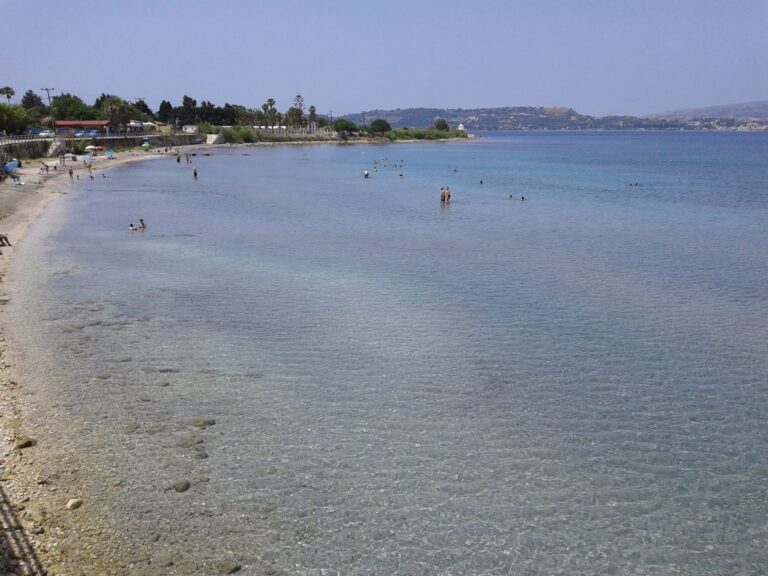
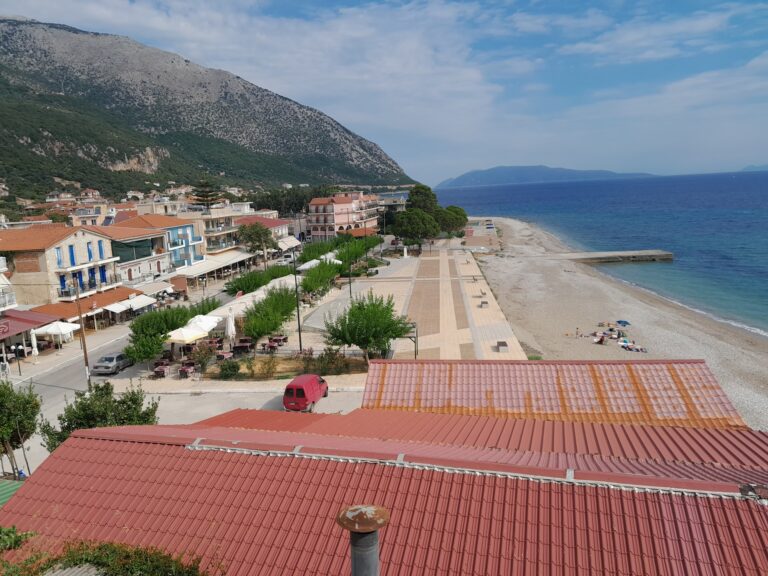
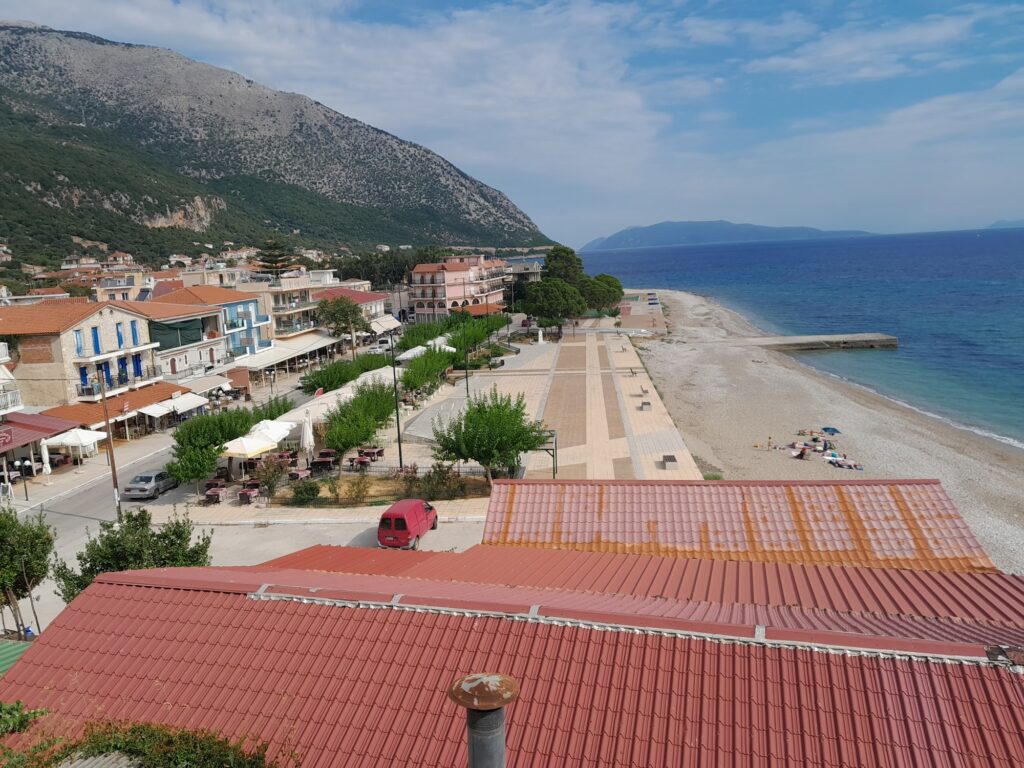
Ragia Beach lies east of the Poros harbour on the coastal road heading toward Ithaca — the road that runs along the northeastern shoreline of the island rather than back toward Skala to the southwest. A short walk from the main square, the beach is close enough to town that it functions as the settlement’s own swimming beach rather than a separate destination requiring a drive. The road leading to it is flat and straightforward.
Ragia Beach Poros Kefalonia Greece: Pebble and Stone, Blue Flag Water, Ithaca Across the Strait
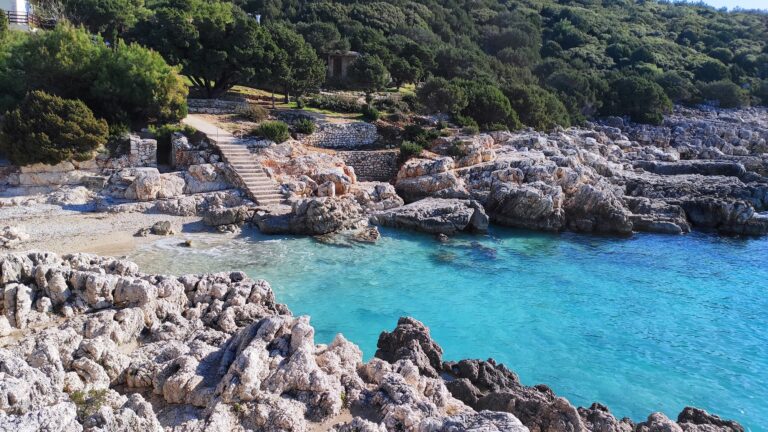
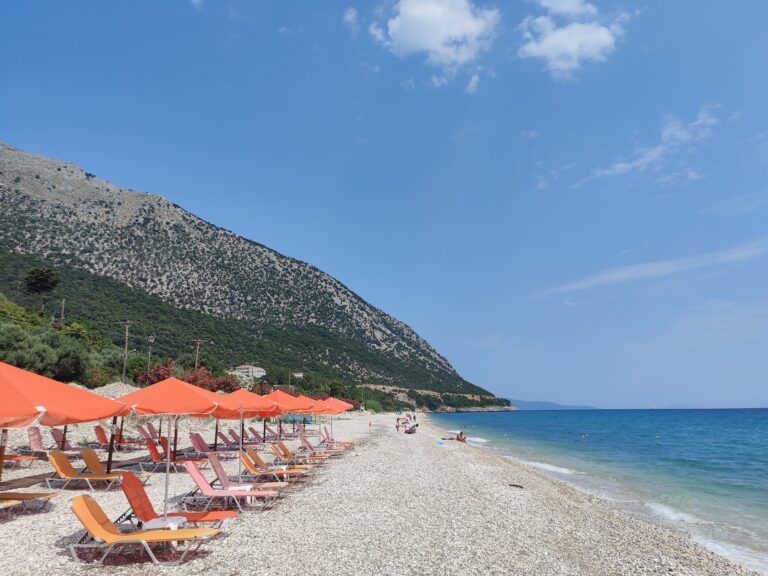
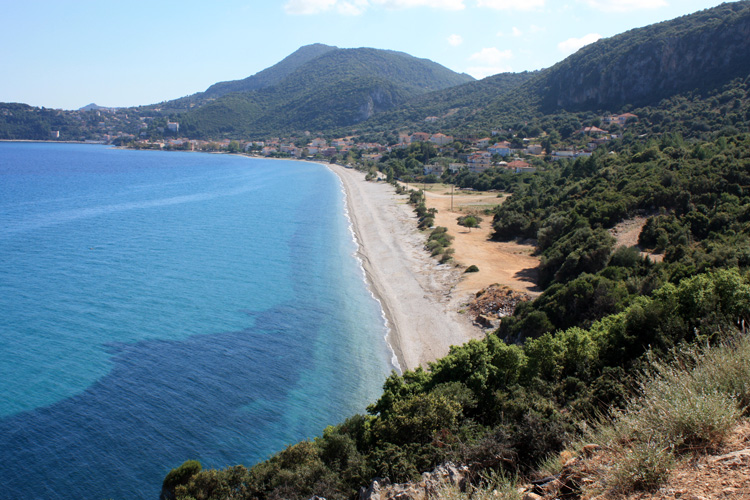
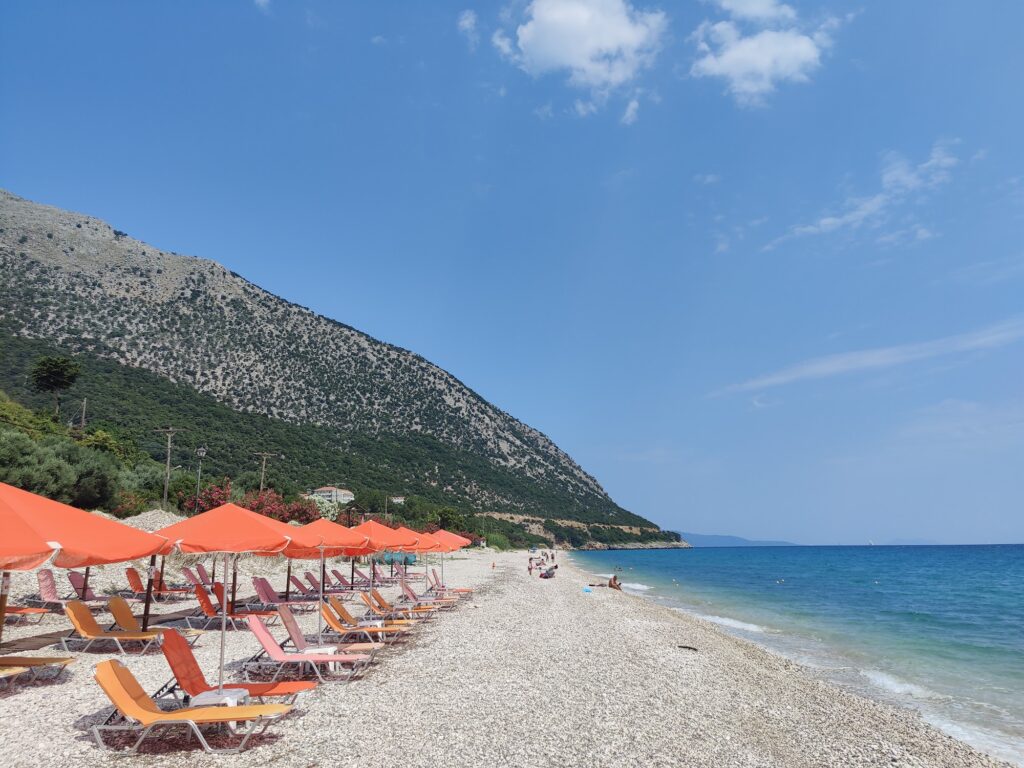
The beach is pebble and stone rather than sand — a character the source text softens toward “fine sand mixed with small smooth pebbles” that does not quite match the more consistent description in first-hand accounts, which tend toward “rocky” and note that proper footwear is advisable for navigating the entry. The water compensates for whatever underfoot comfort the surface lacks: it holds its Blue Flag certification reliably, is described as among the saltiest swimming experiences on the island — and notably so, in a way that one long-term visitor attributes specifically to something in the conditions of the northeastern coast — and is clear enough to make snorkelling along the reef edges worthwhile even without particular ambition about what you are looking for.
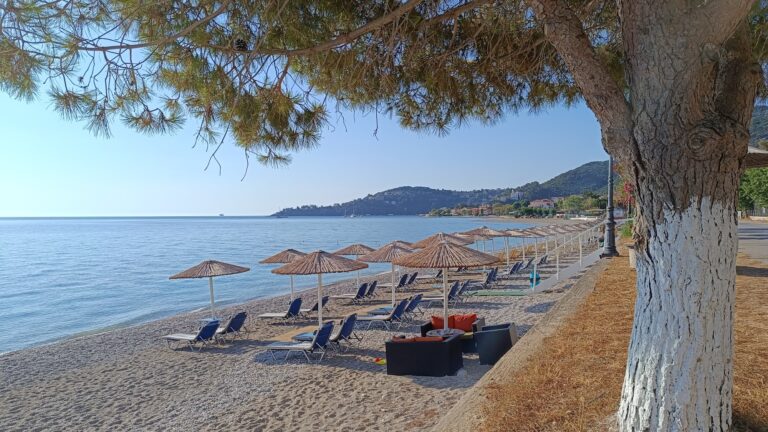
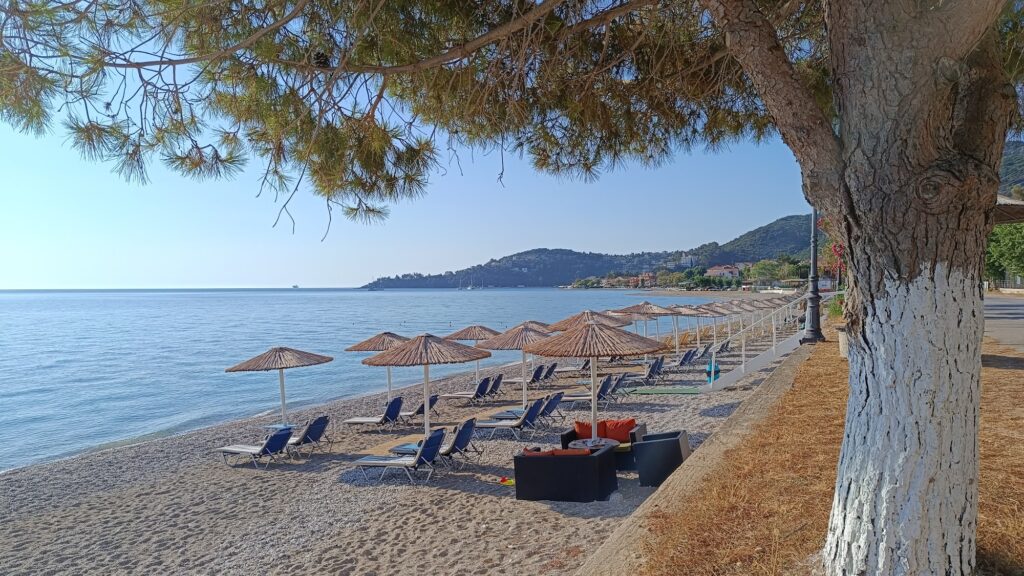
Sunbeds and umbrellas are available from the Tzortzia beach bar, which also provides drinks, snacks, and basic toilet facilities, making a full day at the beach possible without needing to return to town. The Blue Flag applies to the water quality throughout the season rather than representing a condition that varies. The beach receives less traffic than the more accessible beaches of the southern coast, and the quiet is described by those who come regularly as one of its primary qualities.
The view from the waterline looks directly toward Ithaca, the island visible across the strait as a clear mountain profile rising from the Ionian. That the legendary home of Odysseus is the feature on the horizon from a beach on the coast of a town inhabited since the age of the Nymphs’ Cave and the Mycenaean tomb is a particular combination of the mythological and the archaeological that the Ionian islands manage in a way that the more touristically developed stretches of the Aegean rarely offer.
The Coastline Beyond Ragia and What It Shelters
The coastline between Poros and Fiskardo on the northeastern side of Kefalonia — the shoreline that faces Ithaca — is described as one of the last refuges on the island of the Mediterranean Monk Seal. The sea caves that the species uses for breeding and shelter are found along this coast, and their presence is taken locally as a reliable measure of the water and environmental quality of the beaches along it. The same caves are part of what makes snorkelling along the reef margins rewarding at Ragia itself, the underwater topography irregular enough to sustain the kind of marine life that the Monk Seal requires.
The Poros Gorge, which begins just above the town, leads to the Atros Monastery via a rough track and offers what is described as among the most dramatic landscape access on Kefalonia. The monastery, founded at 800 AD on a mountain ledge above the gorge, carries the title of the island’s oldest and has impressive views across the Poros bay and toward Ithaca. For anyone with a day in Poros and energy beyond the beach, the gorge and the monastery represent a very different view of the same geography.
Ragia Beach Poros Kefalonia Greece and the Surrounding Beaches
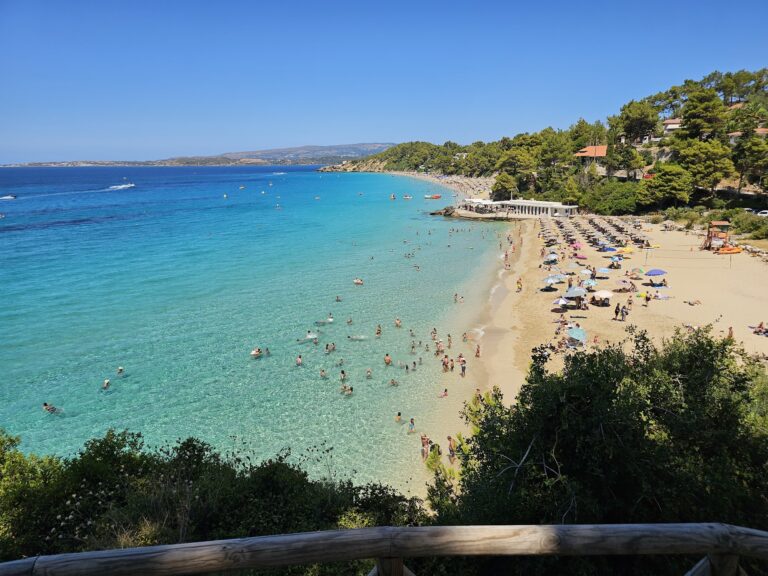
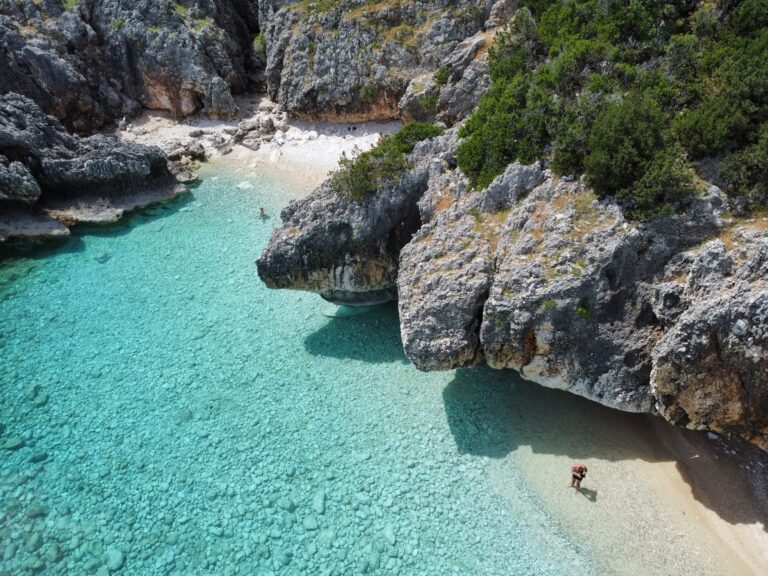
The southeastern coast of Kefalonia holds several beaches worth knowing in relation to Ragia. Platis Gialos Beach Kefalonia Greece, further south toward Skala, has a different character — longer, sandier, and more organised than Ragia — and is within reasonable driving distance for anyone staying in or around Poros. Emplisi Beach Fiskardo Kefalonia Greece, on the northeastern coast near Fiskardo, shares the same facing direction toward the northeastern Ionian but offers an enclosed cove of pebble and turquoise that is more sheltered than the open shoreline at Ragia. The connection between the two is the northeastern coast’s consistent quality of water and the specific light quality that comes from facing across toward Lefkada and Ithaca rather than the open sea.
Go at sunrise, which the beach faces directly. The Ithaca profile across the water, the clarity of the water, the stillness before the breeze develops — these are the conditions that the people who return to Ragia specifically, rather than the more famous beaches of the island, tend to describe as the reason they come back.
Map
Sorry, no records were found. Please adjust your search criteria and try again.
Sorry, unable to load the Maps API.
Near by places: