Fanari Beach: A Lighthouse Rebuilt From Ruin
Profile
Fanari Beach: The Lighthouse Rebuilt After an Earthquake Erased It
Greece | Kefalonia | Ionian Islands | Gulf of Argostoli
The Lighthouse of Saint Theodore standing beside Fanari Beach dates to 1828, built during the period of British rule over the Ionian Islands, a circular colonnade and lantern tower designed with the kind of neoclassical confidence the British brought to several of their public works across Kefalonia. The devastating 1953 earthquake that reshaped so much of this island destroyed the original structure entirely, and what stands today is a faithful reconstruction, rebuilt in the same style rather than replaced with anything more modern. I found something genuinely moving about that choice, an island that lost so much in 1953 deciding this particular landmark was worth recreating exactly as it had been rather than starting fresh.
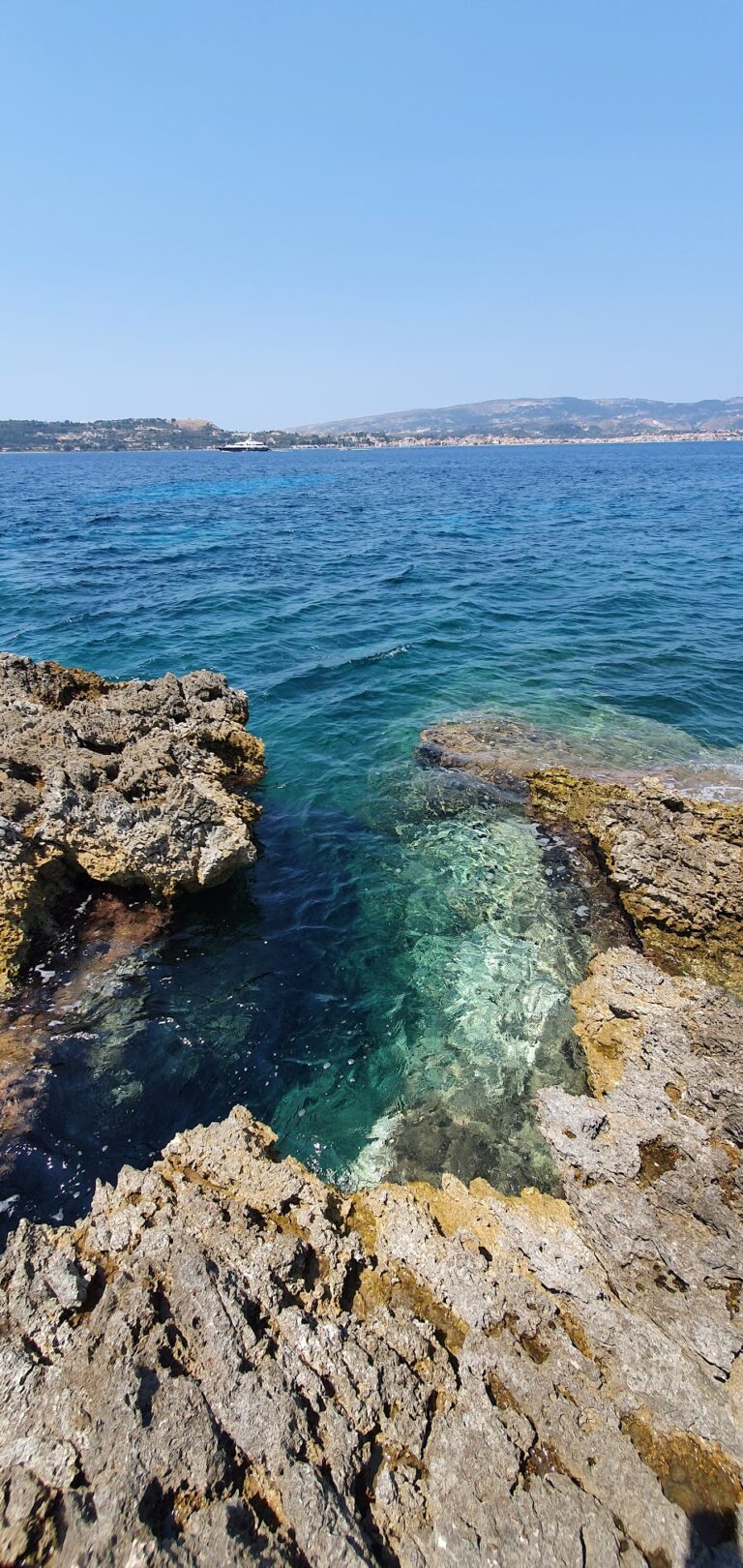
Fanari itself, the beach and the surrounding peninsula both, takes its name directly from that lighthouse, fanari simply meaning lighthouse in Greek, and the whole stretch of coast west of Argostoli has come to be known by that name regardless of which specific cove you’re actually standing on.
Shallow, Grey-Gold Sand a Short Walk From the Capital
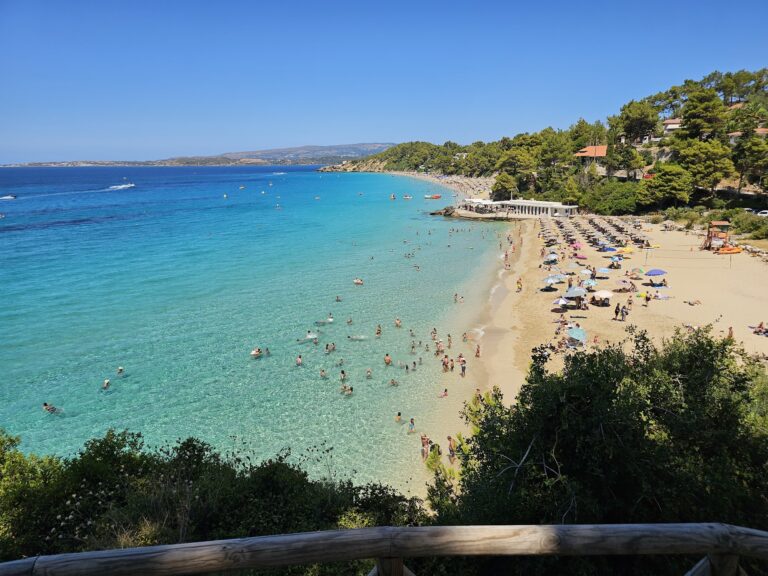
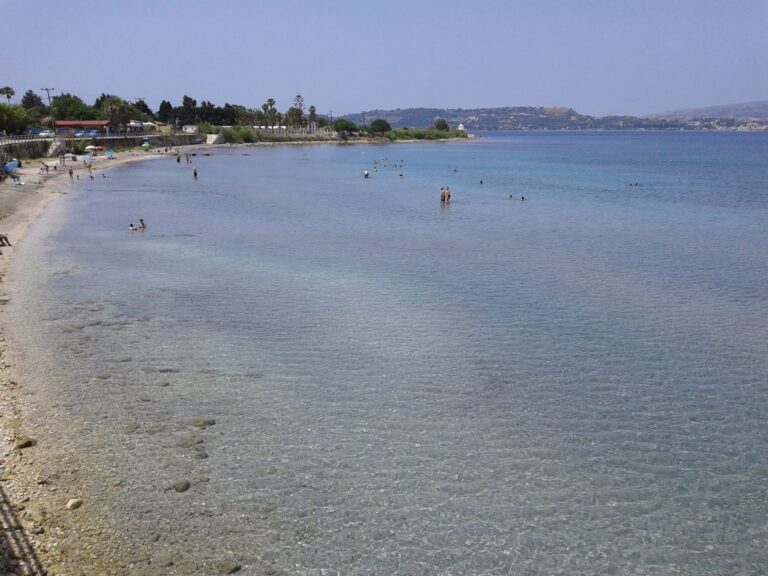
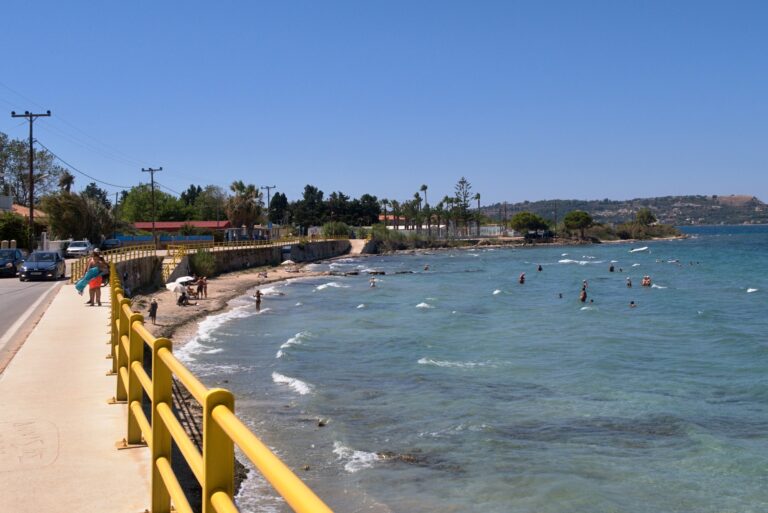
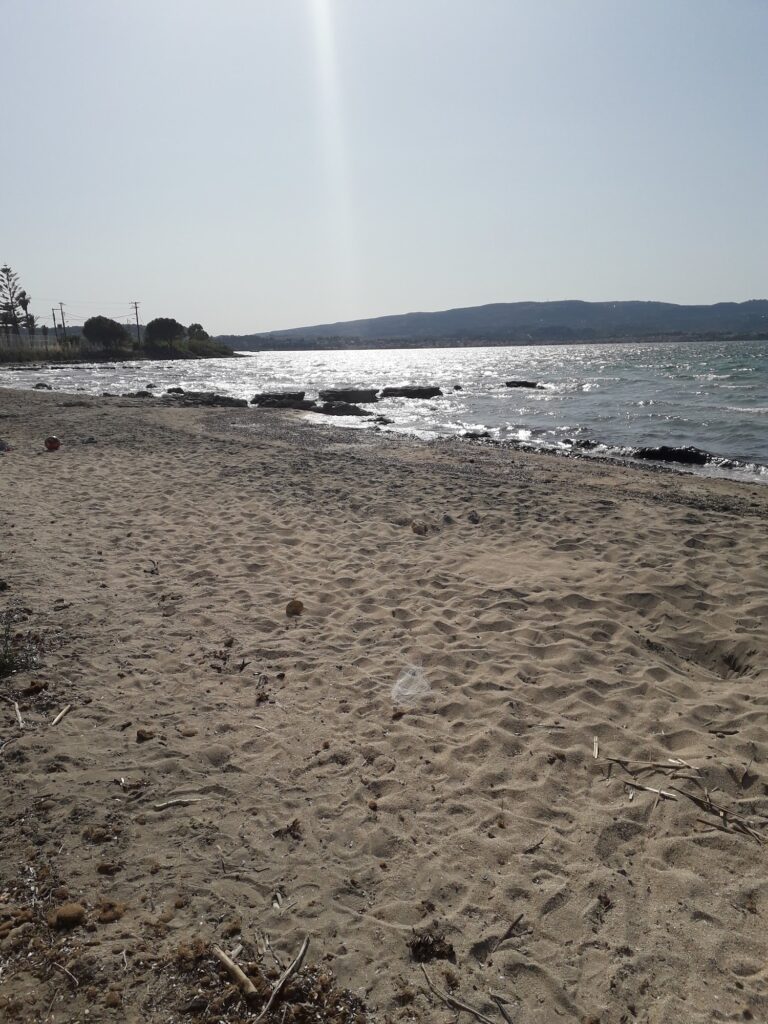
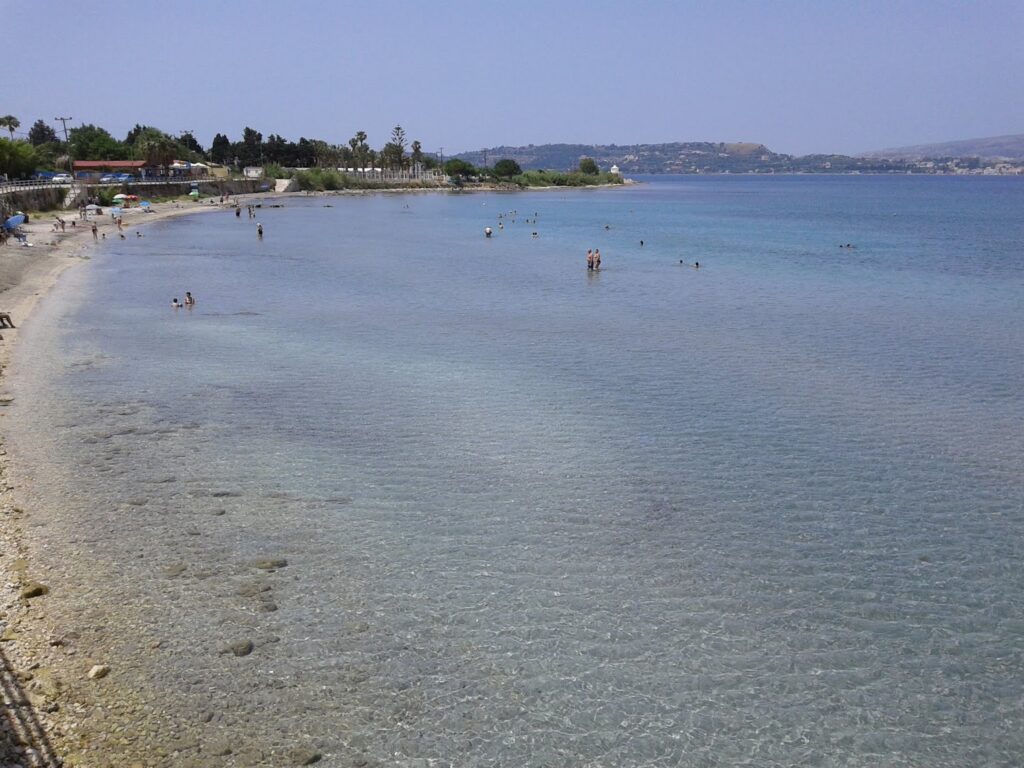
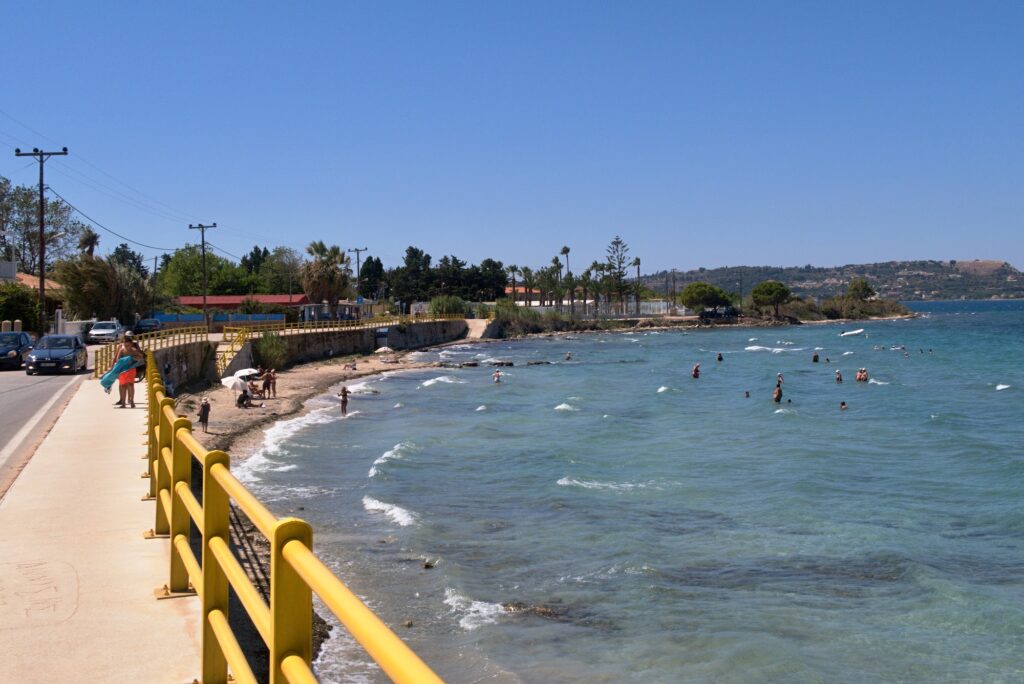
The beach itself runs narrow, a mix of grey and golden sand between the Katavothres water mills and the lighthouse, shallow enough for a considerable distance from shore that I found this one of the more genuinely reassuring beaches on the island for families with young children, the gentle, gradual entry giving toddlers room to splash without any real depth to worry about. The water stayed clear and warm throughout my visits, and because the beach sits fully exposed to the afternoon breeze coming off the gulf, I watched a steady rotation of windsurfers and kitesurfers making use of conditions that suited them considerably better than the calmer coves further along the coast.
Loggerhead Turtles in the Shallows
Fanari’s waters see regular visits from Caretta caretta, the loggerhead sea turtle, and I spent one quiet morning simply watching from the shoreline as one surfaced repeatedly a short distance out, unbothered by the handful of swimmers nearby. I hadn’t expected this stretch of coast, so close to the island’s capital, to double as a genuine wildlife viewing spot, and I found myself returning early on subsequent mornings specifically hoping for another sighting.
An Unorganized Beach With a Camping Site Behind It
Fanari remains largely unorganized, no rows of rented sunbeds dominating the sand, and Camping Argostoli sits directly behind the beach, its olive trees providing genuine shade for anyone staying nearby. Given how lightly managed this beach remains, dogs would likely be fine here on a leash following the standard rule for Greek beaches, and I found the atmosphere suited a relaxed, unhurried visit rather than anything resembling a resort day.
Walking Fanari Road From Argostoli’s Main Square
What makes Fanari genuinely convenient is its proximity to the capital, a flat twenty-five-to-thirty-minute walk from Argostoli’s main square along the sea wall, shaded in places by pine trees and passing both the Katavothres water mills and an Italian War Memorial commemorating the Acqui Division massacre of the Second World War along the way. Locals use this same stretch, known simply as the Fanari Run, for their morning exercise, the road well paved and offering steady views across the bay the entire route. Driving from central Argostoli takes under five minutes via the coastal road looping around the Lassi Peninsula, and free parking runs in several designated areas along the road and directly behind the beach clubs, rarely difficult to find even during peak July and August.
Standing Where a Storm Once Took Everything and Locals Built It Back
By the time I made my last walk out to Fanari, the lighthouse had caught the last of the evening light, and I thought about the earthquake that once leveled it entirely, and about whoever decided, in the aftermath of losing so much across the island, that this particular white column facing the Lixouri peninsula was worth rebuilding stone for stone rather than simply letting go.
Map
Sorry, no records were found. Please adjust your search criteria and try again.
Sorry, unable to load the Maps API.
Near by places: