Emplisi Beach Fiskardo: Whale Skeleton, White Pebbles
Profile
Emplisi Beach, Fiskardo: Where a Whale Skeleton Ran Aground in 1995, Now Displayed at the Village Museum, Near the Only Town the 1953 Earthquake Spared
Greece | Fiskardo | Erisos, Kefalonia, Ionian Islands
In 1995, a whale ran aground at Emplisi beach and died there. Its skeleton was recovered and is now on permanent display at Fiskardo’s Environmental Museum, alongside the remains of other marine mammals, turtles, and seals native to these waters — a specific, slightly startling fact that connects this small, quiet pebble cove to one of the more unusual exhibits on the entire island. Visitors who walk the short distance from Fiskardo to swim at Emplisi rarely know, unless they’ve also stopped at the museum, that the beach beneath their towel was the final resting place of a whale three decades ago.
Fiskardo itself, the harbour village a short walk or drive from Emplisi, holds a different kind of distinction: it is one of the only settlements on Kefalonia that the catastrophic 1953 Ionian earthquake did not destroy. While Argostoli, the island’s capital, and most other towns were levelled — the devastation later depicted in Captain Corelli’s Mandolin — Fiskardo emerged essentially untouched, its Venetian-era buildings (constructed during the Republic of Venice’s rule of the island from 1500 to 1797) intact in their original pastel ochres, pinks, and greens. The Greek parliament subsequently declared Fiskardo a place of natural beauty and granted it protected status specifically to preserve what the earthquake had left standing.
The village’s history runs deeper still: prehistoric graves indicate human habitation stretching back 40,000 years, and the settlement was known in antiquity as Panormos, a significant Roman-era port. A Roman cemetery with 47 tombs, discovered in 1993 and dating to the 2nd through 4th centuries AD, sits just behind the harbour. Two lighthouses — a 16th-century Venetian structure and an 1892 Victorian addition — stand on the headland, and the poet and writer Nikos Kavvadias, one of Greece’s most distinctive literary voices, lived in the village.
Getting There: 1.5–5km From Fiskardo Harbour (3–5 Minutes by Car, 15–25 Minutes on Foot), Around 1 Hour From Argostoli
Sources describe the distance from Fiskardo to Emplisi in a range — some citing as little as 1.5 kilometres and a 3-minute drive or 15-minute walk, others describing a 5-minute drive or 25-minute walk — the discrepancy likely reflecting different starting points within the village itself. Either way, the route follows a shaded road lined with traditional stone walls and wildflowers, a pleasant approach in either direction.
From Argostoli, the island’s capital, the drive takes approximately 1 hour and covers 50 kilometres along the scenic western coastal road, passing the village of Assos along the way. Free parking sits directly behind the beach, though the small lot fills by midday in July and August — arriving before 10:30am is the sensible target for securing a spot close to the entrance.
The Beach: White Pebbles, Flat Rock Slabs, Deep Clear Water, Olive and Cypress Shade, Semi-Organised
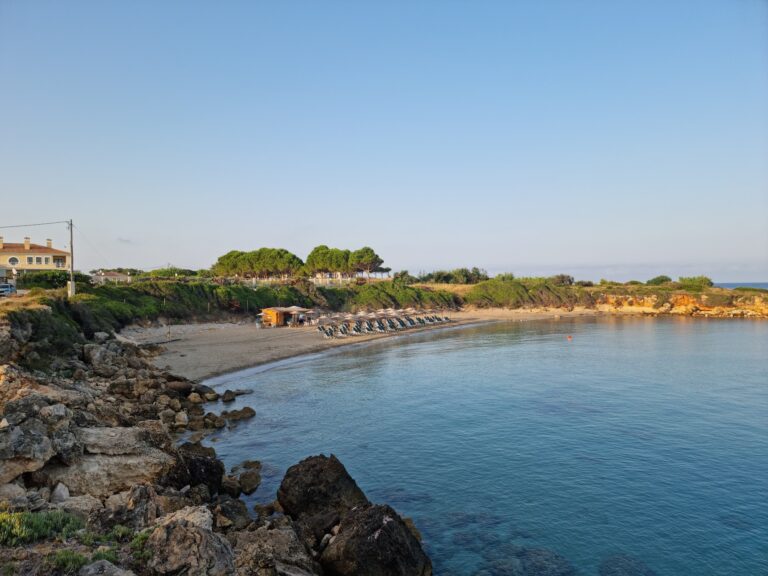
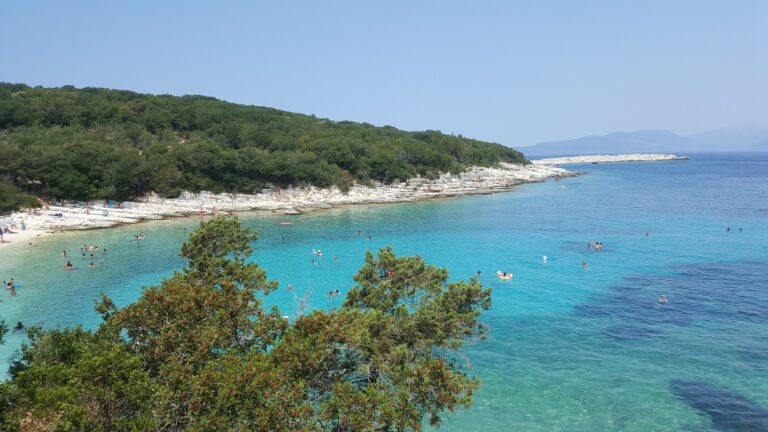
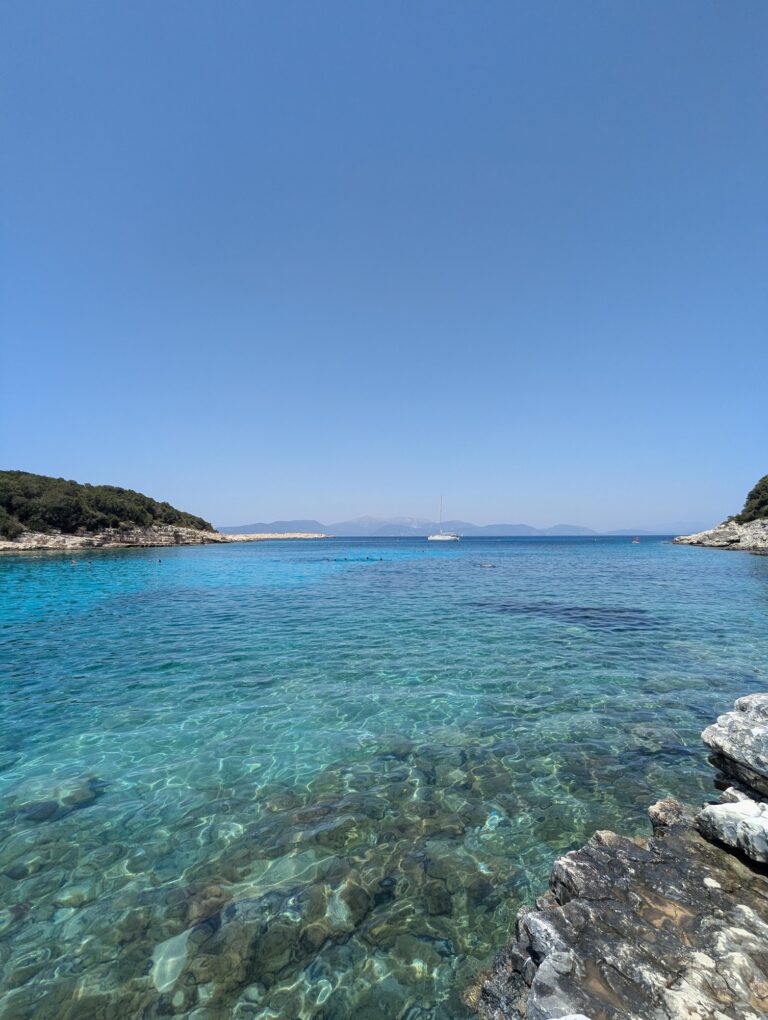
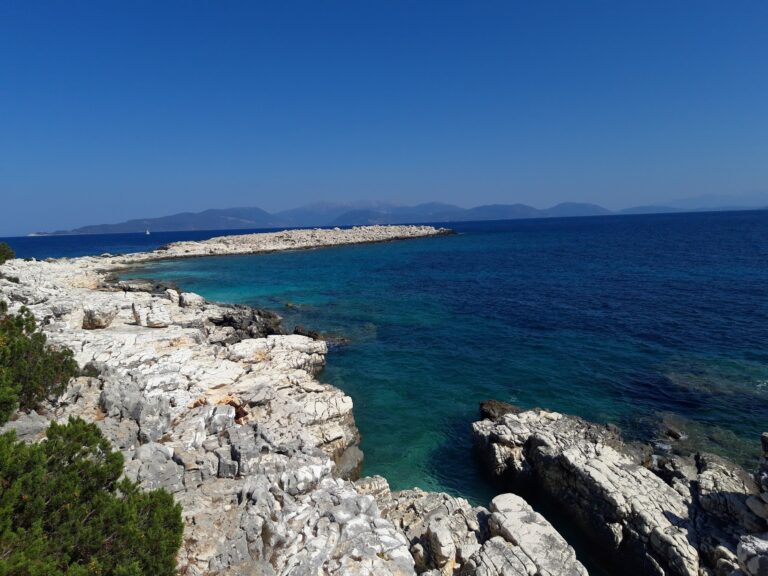
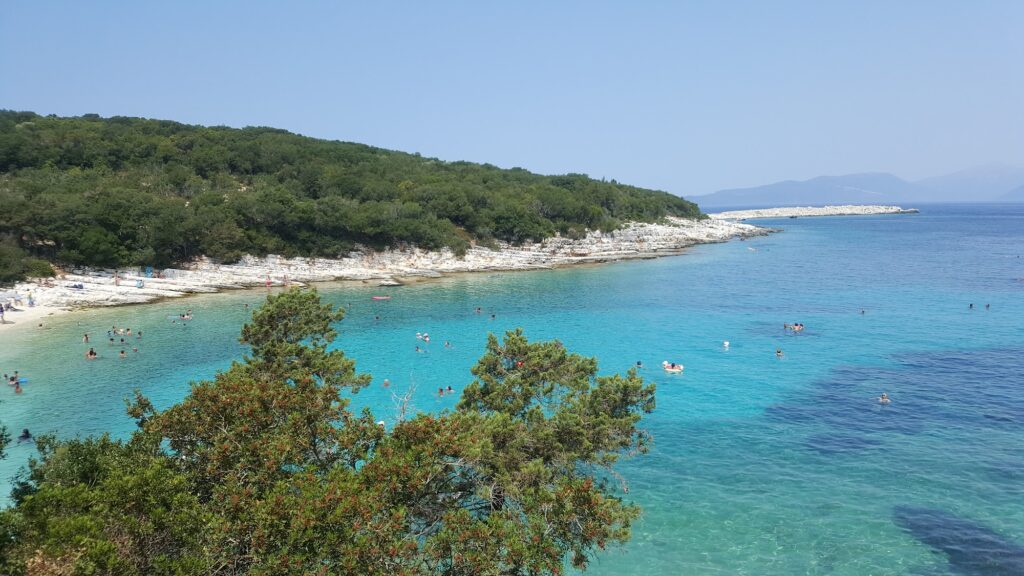
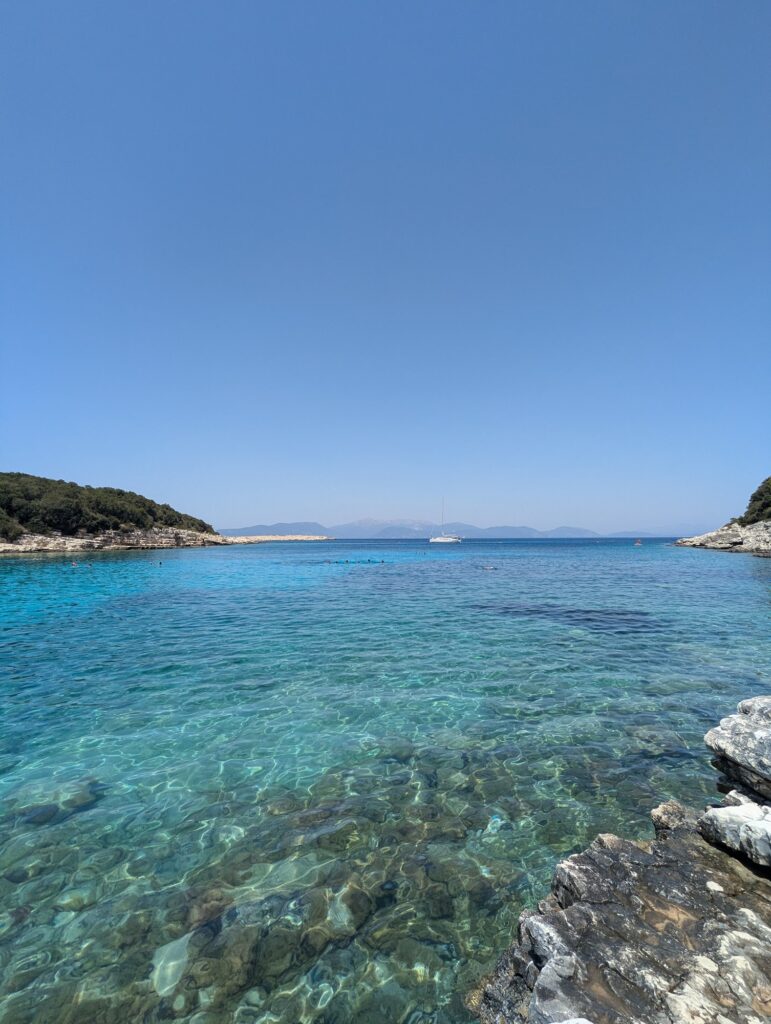
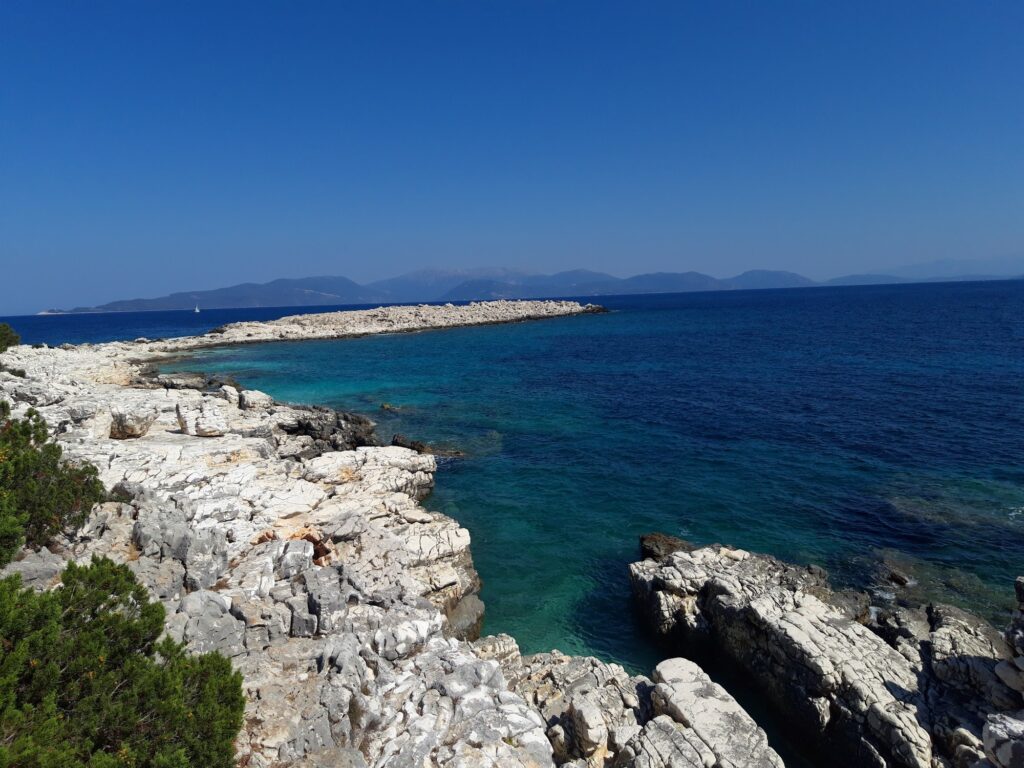
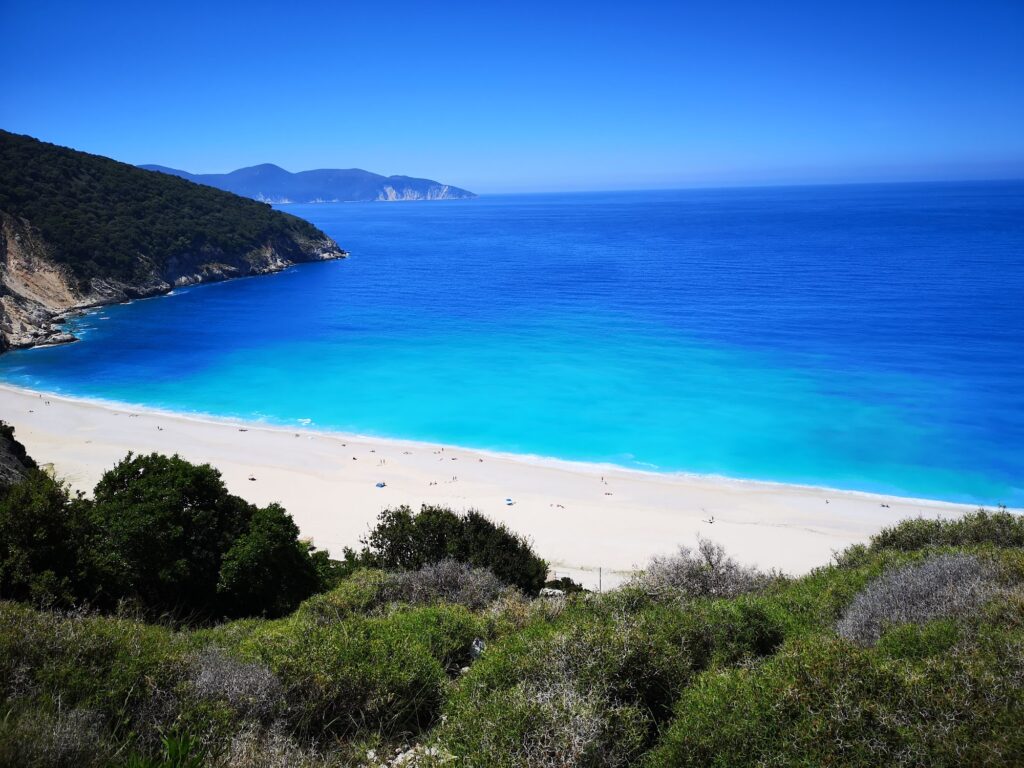
Emplisi’s shore is smooth, marble-like white pebbles, transitioning on either side of the small bay into flat horizontal rock slabs that function as natural sunbathing platforms for visitors who prefer solid stone to loose pebbles underfoot. The bay is well protected from the open Ionian wind, keeping the water close to mirror-calm on most days, and the depth — combined with the white pebble seabed rather than sand — produces the consistently praised, almost glowing turquoise clarity the beach is known for.
Dense olive and cypress trees grow right to the edge of the pebbles, providing the natural shade that visitors who arrive early can claim before the sun moves overhead. A seasonal mobile canteen offers basic refreshments in summer, but the beach deliberately avoids rows of pre-set commercial umbrellas, preserving a more natural aesthetic than busier resort beaches elsewhere on the island. Showers and changing cabins are available, and a lifeguard typically supervises during peak season.
Foki Beach and the Wider Fiskardo Sequence
Foki, the other well-known beach near Fiskardo, sits roughly a kilometre from the village in the opposite direction — a similarly small bay of very white pebbles mixed with sand, named for the Mediterranean monk seal (Monachus monachus, foki in Greek) that occasionally shelters in an old abandoned mine nearby. An excellent unequipped taverna behind Foki offers sea views to match. Together, Emplisi and Foki give visitors based in Fiskardo two genuinely distinct small-cove options within easy walking or short driving distance of the harbour.
Emplisi Beach near Fiskardo is the white pebble cove where a whale ran aground in 1995, its skeleton now displayed at the village’s Environmental Museum — Fiskardo itself one of the only Kefalonian settlements the catastrophic 1953 earthquake spared, preserving its Venetian architecture (1500–1797), with a Roman cemetery, two lighthouses, and 40,000 years of documented habitation under the name Panormos. White marble-like pebbles and flat rock sunbathing slabs, deep clear protected water, olive and cypress shade, a seasonal canteen rather than commercial sunbed rows, 1.5 to 5km from the harbour depending on the route, around 1 hour from Argostoli, Foki beach (named for the monk seal) a short distance away as the natural pairing.
Walk the shaded road from Fiskardo. Arrive early for shade and parking. Visit the Environmental Museum afterward to see what the beach gave up in 1995.
Map
Sorry, no records were found. Please adjust your search criteria and try again.
Sorry, unable to load the Maps API.
Near by places: