Kupalište Hidrobaza Pula: Modern Beach Park Istria
Profile
Kupalište Hidrobaza, Pula: The Former Seaplane Base That Became Istria’s Most Ambitious Beach Park
Croatia | Istria | Pula
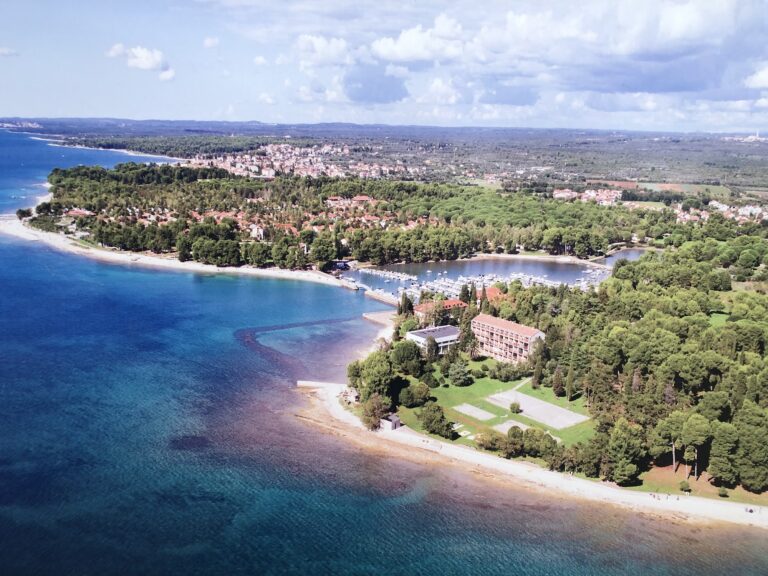
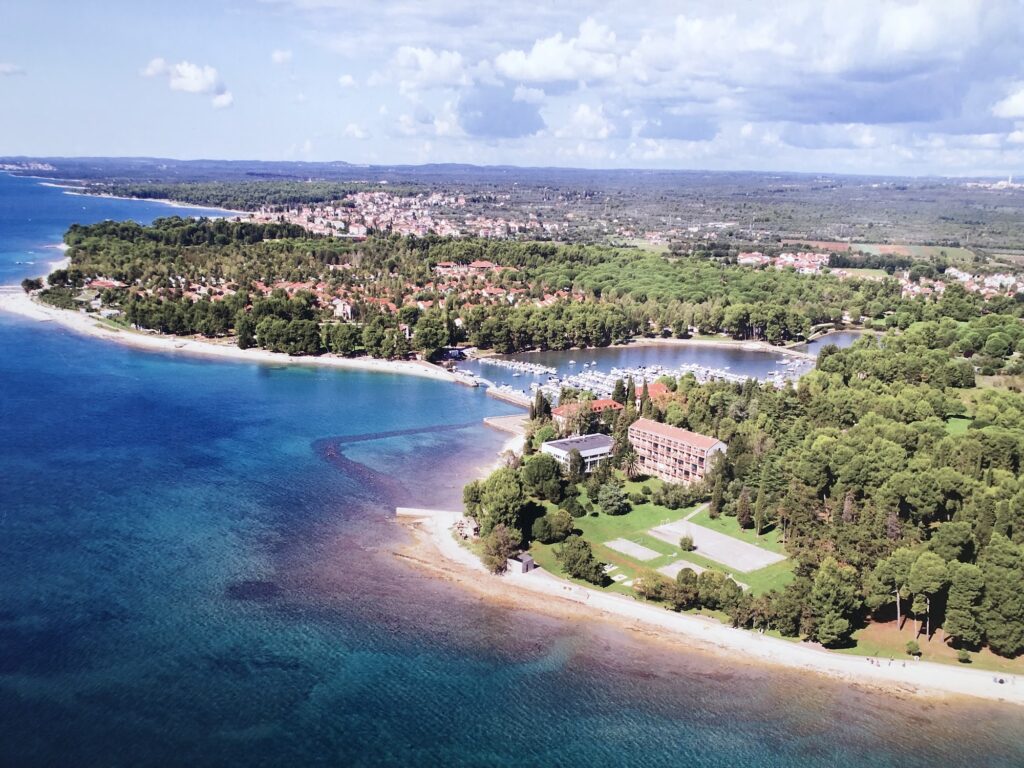
There are places whose history is legible in the landscape even after the activity that created them has completely ceased. Kupalište Hidrobaza — the beach park on the edge of Pula near the village of Štinjan — occupies the grounds of a former seaplane base, and the scale of the space, the width of the shore, and the particular openness of the waterfront all reflect the operational requirements of the facility that preceded the beach. Seaplane bases need room. The approach to the water needs to be unobstructed. The infrastructure needs to be substantial. Hidrobaza, even after its complete transformation into a contemporary public beach park, carries those requirements in its dimensions — and the result is a beach that operates at a spatial register that the more conventional coves and village waterfronts of the surrounding Istrian coast do not approach.
I visited Hidrobaza for the first time two summers after its transformation had been completed, having heard it described by several people in Pula with the particular enthusiasm that locals reserve for improvements to their own city that have exceeded expectations. What I found on arrival was a beach park that justified the enthusiasm — not because it is the most beautiful or the most ecologically pristine location on the Istrian coast, but because it does something that most Croatian beaches do not attempt: it functions as a complete public outdoor space rather than simply a strip of shore with some amenities attached.
The Brijuni Islands are directly across the channel. The water is the colour it is supposed to be. The skate park is full by mid-morning.
Getting There: Close to Pula, Easy to Reach
How to get to Kupalište Hidrobaza from Pula is one of the more straightforward logistics in this part of Istria.
By car, the road from central Pula toward Štinjan follows clear signage for Hidrobaza, reaching the beach park in approximately ten minutes. An enormous organised parking lot sits at the entrance — the scale of it reflecting the ambition of the facility and the visitor numbers the park is designed to accommodate. The size of the parking is one of those details that signals, before you have seen anything else, that the park is thinking at a different scale from a conventional beach.
Pula Promet bus line 5 stops within short walking distance of the main promenade — a practical option for visitors without a car and entirely viable for a full day at the park. The frequency of the service through the summer season makes the return journey flexible.
The cycling path from Pula to the Fažana coastline passes through or near Hidrobaza, making the park a natural inclusion in a cycling day that might also take in Beach Fažana and Bi Village Beach along the same stretch of coast. The three beach destinations share the same general waterfront orientation and the same view of the Brijuni Islands across the channel, and visiting all three by bicycle in a single day — each with its distinct character — is one of the more satisfying ways to understand what this stretch of the western Istrian coast actually offers.
The Site: Scale, History, and the Seaplane Base Legacy
The physical dimensions of Hidrobaza are the quality that most immediately distinguishes it from every other beach in the Pula area and from most beaches on the western Istrian coast.
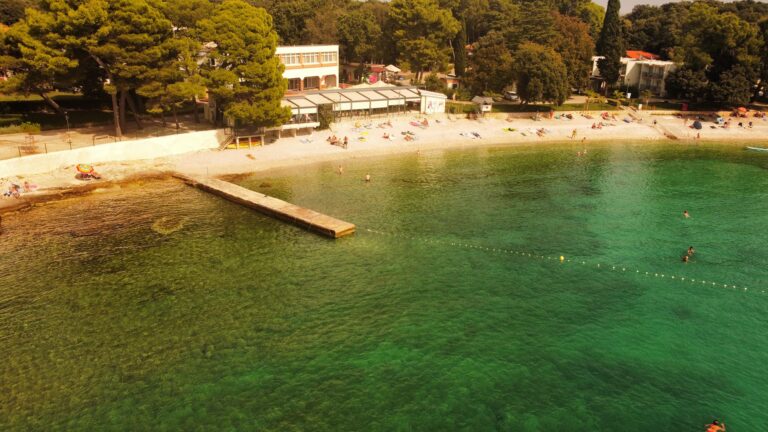
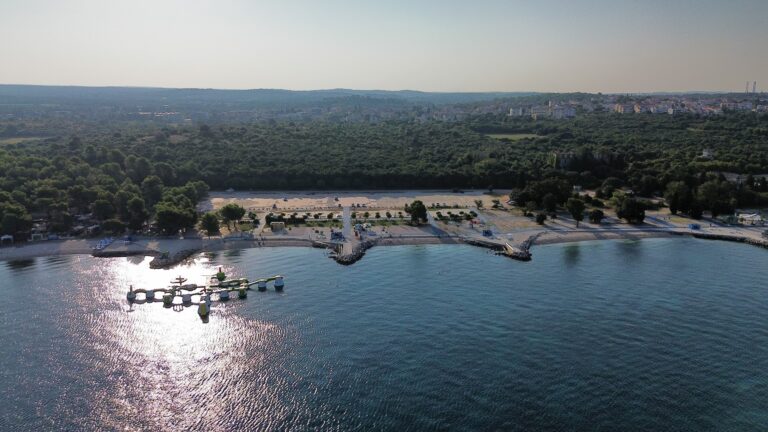
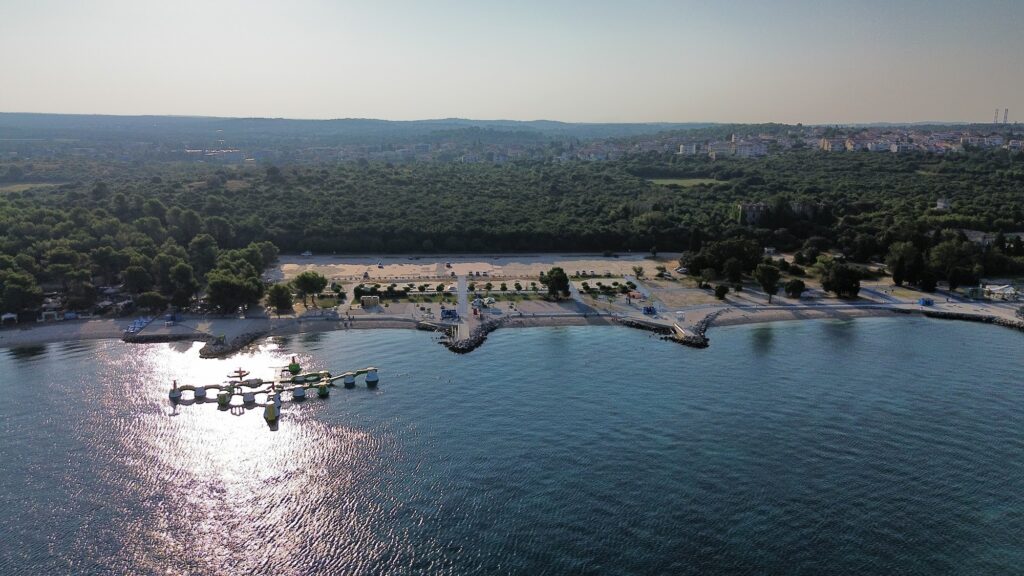
The site is vast. The shore extends for a length that the village beaches and resort coves of the surrounding coast do not match, and the width of the landscaped park behind the shoreline — the grassy areas, the sports courts, the skate park, the playgrounds — gives the whole facility a spatial generosity that reflects its seaplane base origins. The approach to the water is open and unobstructed in the way that a facility designed for aircraft rather than swimmers requires, and the legacy of that requirement is a beach that feels expansive even on busy summer days when the visitor numbers are high.
The Fažana Channel — the same body of water that faces Beach Fažana and Bi Village Beach a short distance to the north — provides the view across to the Brijuni Islands that the western Istrian waterfront produces with such consistent quality. From Hidrobaza, the islands are visible from every point on the beach, and the sunset behind them — which the western orientation of the coast delivers with particular directness — is the specific daily event that the park’s bars and terraces are positioned to face.
The historical dimension of the site — the seaplane base heritage, the industrial architecture of the original facility that has been incorporated into or referenced by the contemporary design — gives Hidrobaza a character that purely natural beach sites and conventional resort beaches do not possess. It is a beach with a specific past, and the transformation has been designed to acknowledge rather than erase that past, which makes the experience of being there richer than the physical quality of the water and the shore alone would produce.
The Shore and Water Quality
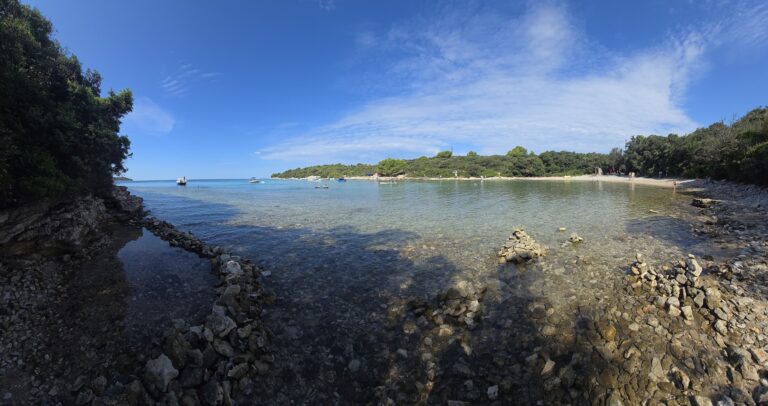
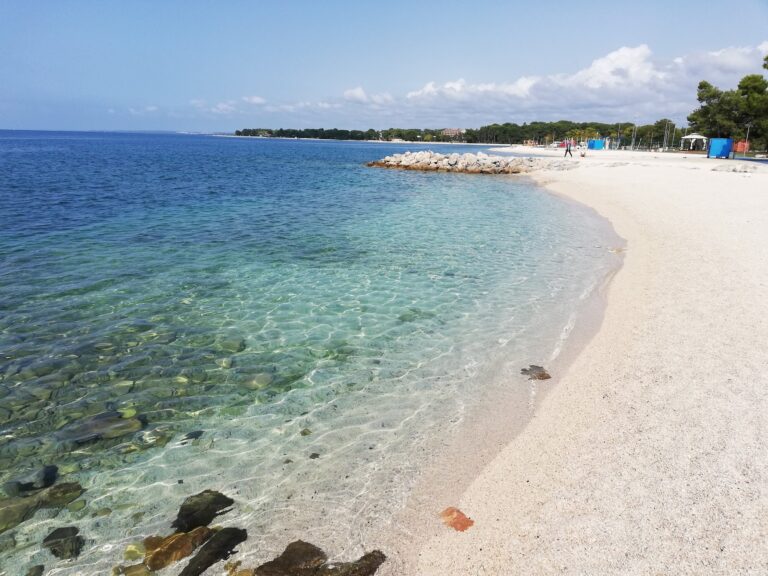
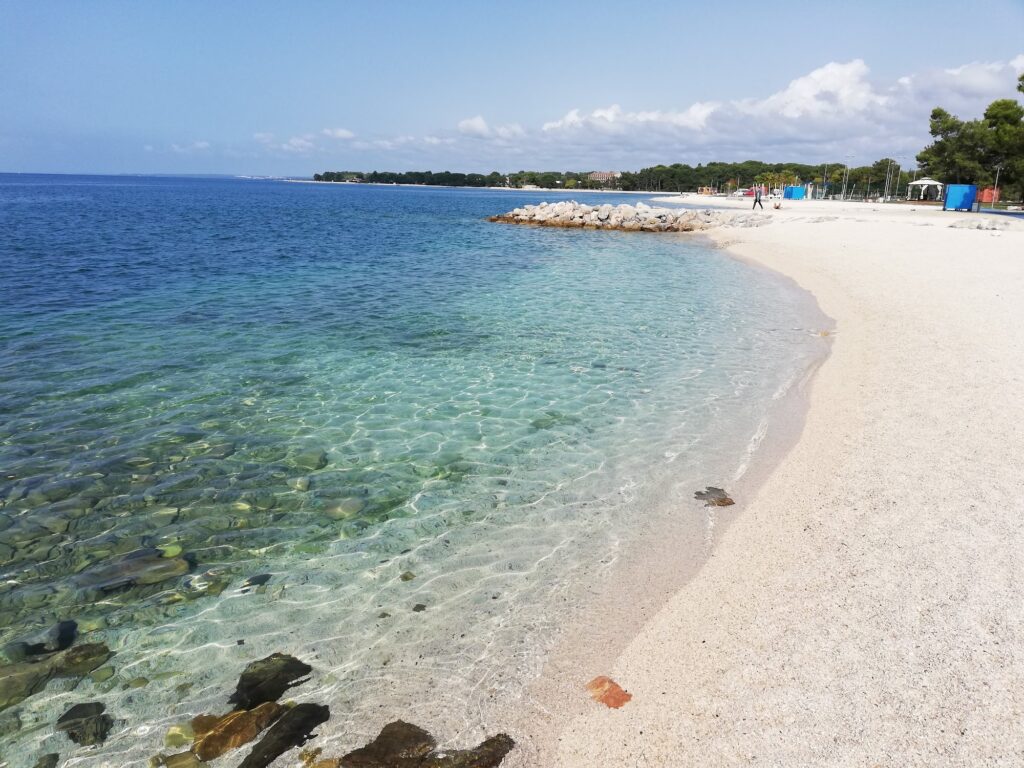
The shoreline at Hidrobaza is fine, sun-bleached pebbles — meticulously maintained and landscaped with the care of a facility that understands its physical environment as a designed rather than purely occurring space. The transition from the park’s grassy and paved areas to the pebble shore is smooth and considered, and the overall aesthetic of the waterfront reflects the same level of design attention as the rest of the facility.
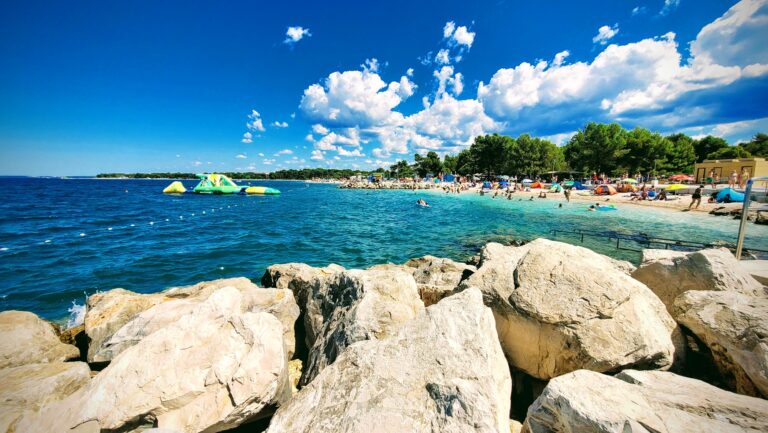
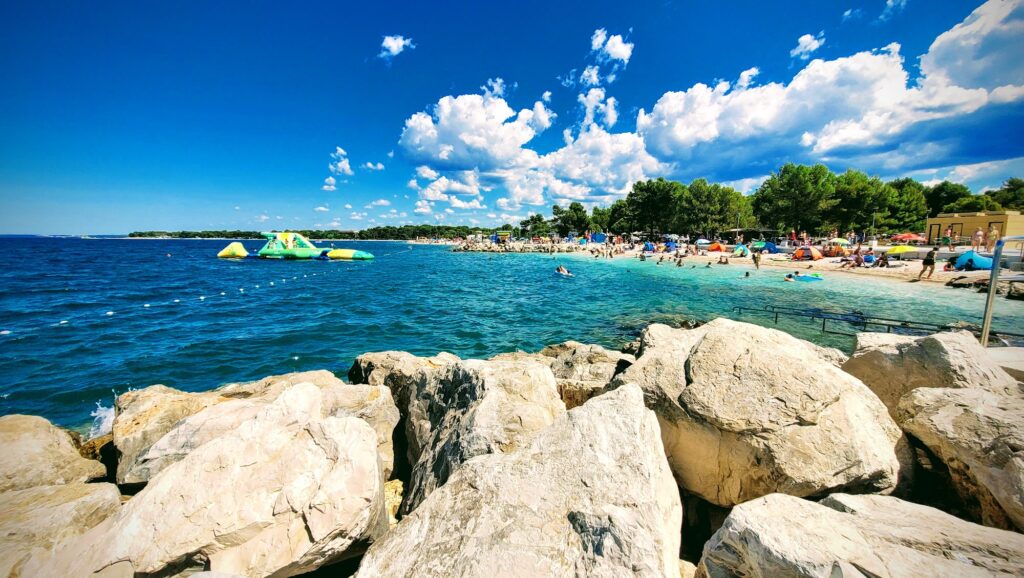
The water quality at Kupalište Hidrobaza is exceptional and benefits from the same Fažana Channel circulation that makes the waters in front of Beach Fažana and Bi Village Beach so consistently clear. The open-channel position keeps the sea clean and oxygenated — the transparency immediate and consistent, the seabed clearly readable from the surface, the colour shifting from pale neon turquoise in the shallows to a deep cobalt further out. The visibility is the kind that makes the underwater detail of the seabed legible in a way that invites snorkeling even at a beach whose primary identity is active recreation rather than marine exploration.
The entry into the water is gentle and gradual along the main beach sections — the seabed slope predictable and shallow enough through a wide zone to make swimming safe and accessible for children and less confident swimmers. The bay’s width and the channel’s calm conditions keep the surface generally settled, and the overall swimming environment is one of the more comfortable on the western Istrian coast given the scale of the facility.
Sea kayaking and SUP at Hidrobaza are available from independent vendors operating on the shore, and the Fažana Channel conditions — generally calm through the morning hours — make paddling south along the coast toward Beach Fažana or north toward Štinjan a straightforward and rewarding excursion. The channel view of the Brijuni Islands from the water is, as at every beach on this stretch of coast, the specific and consistently excellent quality that the kayak perspective makes more immersive than the shore view alone provides.
Facilities: The Urban Beach Park Model
Kupalište Hidrobaza facilities are the most deliberately modern and the most comprehensively designed of any public beach in the Pula area — a reflection of the transformation project’s ambition and of the municipal investment that the facility represents.
Modern freshwater showers, digital-access lockers, and sleek changing cabins are positioned throughout the park — the locker system in particular reflecting a design philosophy oriented toward urban beach users who arrive without a car and need secure storage for valuables. Sunbeds and umbrellas are available for hire across the beach area. Certified lifeguards monitor the swimming zones from dedicated towers during peak summer months. Accessibility ramps and specialised wheelchair and stroller access throughout make Hidrobaza one of the most genuinely inclusive public beach facilities in Istria.
The sports infrastructure at Hidrobaza is the quality that most clearly distinguishes the park from conventional beach destinations in the region. Professional-grade basketball courts, beach volleyball sand pits, and a skate park sit behind the beach line — the range of land-based activity creating a facility that functions equally well for visitors whose primary interest is sport, for families with children who exhaust their interest in the water before the adults are ready to leave, and for the early morning regulars who use the courts and the skate park before the beach fills.
On my first morning at Hidrobaza, arriving at eight o’clock before the main beach crowd, the skate park was already occupied by a group of teenagers working specific tricks with the systematic persistence of people for whom this is not a holiday activity but a daily practice. The basketball court had a game underway. The cycling path had its morning commuters. The beach itself was quiet. It was, in the most straightforward sense, a public space doing what public spaces should — being used by the community that surrounds it in the ways that community has found useful.
For Families
Kupalište Hidrobaza with children is the most spatially generous family beach experience in the Pula area and the one that most completely removes the spatial anxiety of a beach day with young children in a crowded summer environment.
The sheer scale of the park means that even on the busiest summer days, there is room — the beach is wide enough, the park behind it extensive enough, the grassy and paved areas large enough to accommodate high visitor numbers without the compressed, towel-to-towel density that narrower beaches suffer at equivalent capacity. Children have room to move without constantly navigating other people’s space, which is a quality that parents who have spent time on genuinely crowded Croatian beaches will recognise as more valuable than it sounds in the abstract.
The playgrounds with professional-standard safety flooring and modern climbing equipment provide the best-equipped land-based play infrastructure of any beach in the Pula region. The gentle seabed entry and calm channel water provide safe swimming conditions for very young children. The accessibility ramps and stroller-friendly design throughout make navigation with pushchairs practical rather than effortful. The sports courts give older children and teenagers activity options that extend the day’s range beyond the water.
For families staying in or near Pula who want a beach day that combines swimming with genuine active variety — sport, skate park, playground, kayaking, all within the same facility — Hidrobaza is the only beach in the area that provides all of those options simultaneously.
Food and Drink: The Urban Beach Bar Register
The beach bars and casual eateries at Hidrobaza operate in a register that reflects the park’s contemporary urban beach identity rather than the traditional konoba or fishing village promenade character that the nearby village beaches offer.
The aesthetic is stylised wooden structures, a curated summer playlist at an ambient rather than dominant volume, and a menu that covers the range from quality coffee and cold drinks through to burgers, fresh salads, and the kind of casual food that a beach park serving a mixed demographic — families, athletes, couples, solo visitors — assembles from the options that work across all of those groups simultaneously.
The cocktail and cold drink offer as the afternoon progresses toward the evening sunset is the specific social event that the park’s western orientation makes available daily — the Brijuni Islands darkening against the western sky as the drinks are cold and the temperature eases, the day’s physical activity producing the appetite and the relaxation that makes the transition from active beach park to evening terrace feel entirely natural.
For a full Istrian meal — the sardines of Fažana, the truffle pasta of the Istrian interior, the local Malvazija wine — the short drive or walk along the promenade to Fažana village provides the traditional culinary alternative that the park’s contemporary food offer does not attempt. The two are naturally complementary: Hidrobaza for the day, Fažana promenade for the evening.
Hidrobaza in the Fažana Coastline Landscape
With three beaches on the same stretch of western Istrian coastline now covered — Beach Fažana, Bi Village Beach, and Kupalište Hidrobaza — the distinct position each occupies is worth making clear for visitors deciding how to allocate their time on this stretch of coast.
Beach Fažana is the village beach — public, embedded in the fishing community, the sardines and the harbour the specific and irreplaceable qualities that the other two do not replicate.
Bi Village Beach is the resort beach — fully serviced, comprehensively programmed for families, the windsurfing school and animation team the active distinguishing features, the Brijuni view shared with the others.
Kupalište Hidrobaza is the urban beach park — the skate park, the basketball courts, the digital lockers, the scale, the seaplane base history — a facility that operates at a different spatial and conceptual register from either of the others and that suits a specific and different kind of beach day.
All three face the same Brijuni Islands view. All three share the same quality of Fažana Channel water. The choice between them is about what kind of day you want to have rather than which beach is best.
Kupalište Hidrobaza near Pula is the most ambitious and the most thoroughly reimagined public beach facility in Istria — a former seaplane base transformed into a contemporary urban beach park that serves its community in the full breadth of ways that a well-designed public space should.
The water is exceptional. The scale is generous. The sports infrastructure is serious. The Brijuni Islands are across the channel. The skate park is occupied by eight in the morning.
Drive toward Štinjan. Follow the signs. Park in the enormous car park.
The beach will be larger than you expected. That is the point.
Map
Sorry, no records were found. Please adjust your search criteria and try again.
Sorry, unable to load the Maps API.
Near by places: