Verudela Canyon Pula: Cliff Jumping and the Sea Cave
Profile
Verudela Canyon, Pula: Cliff Jumping, Kayak Exploration, and the Grotta di Quarzo
Croatia | Pula | Istrian Peninsula
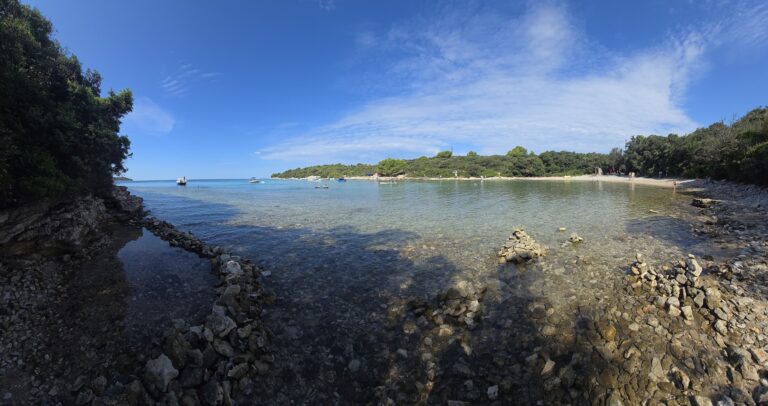
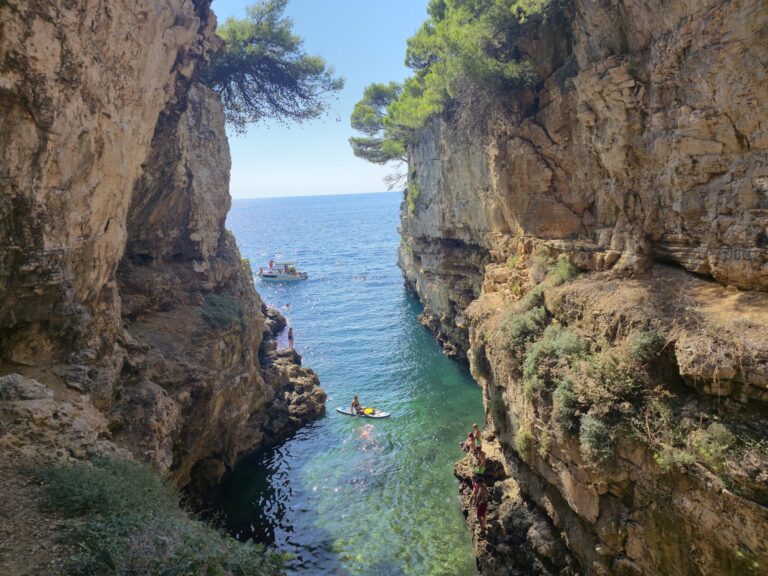
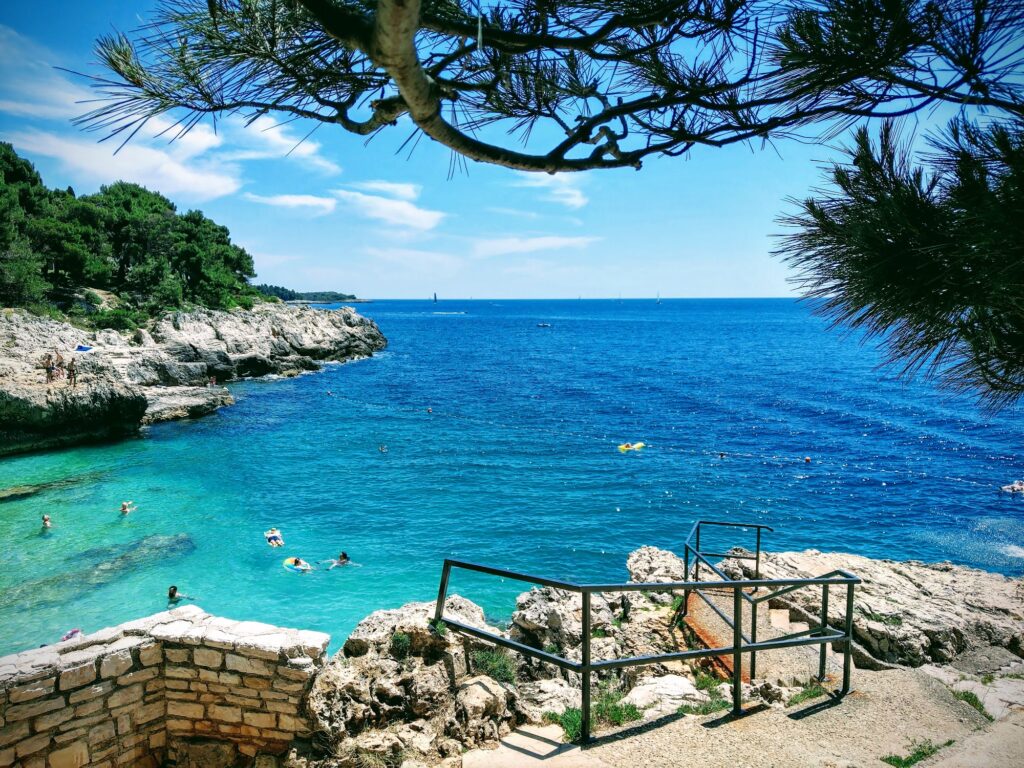
Verudela Canyon is not a beach in the conventional sense. There is no sand, no gradual pebble entry, no sunbed rental, and no designated swimming zone with safety buoys. What there is — and what the cliff faces rising 18 metres from the water and the sea cave cut into the limestone at water level make available — is a specific category of coastal experience that the organised beaches of the Verudela peninsula do not provide and that the wilder coastline of the Muzil peninsula to the northwest shares only in character rather than in form.
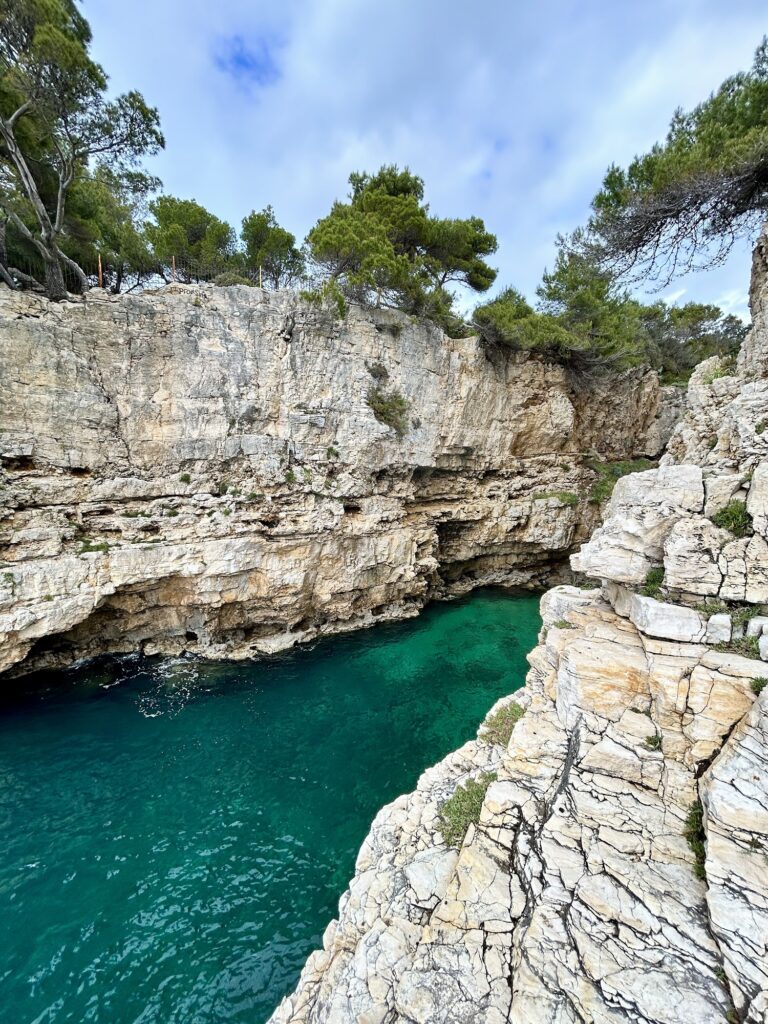
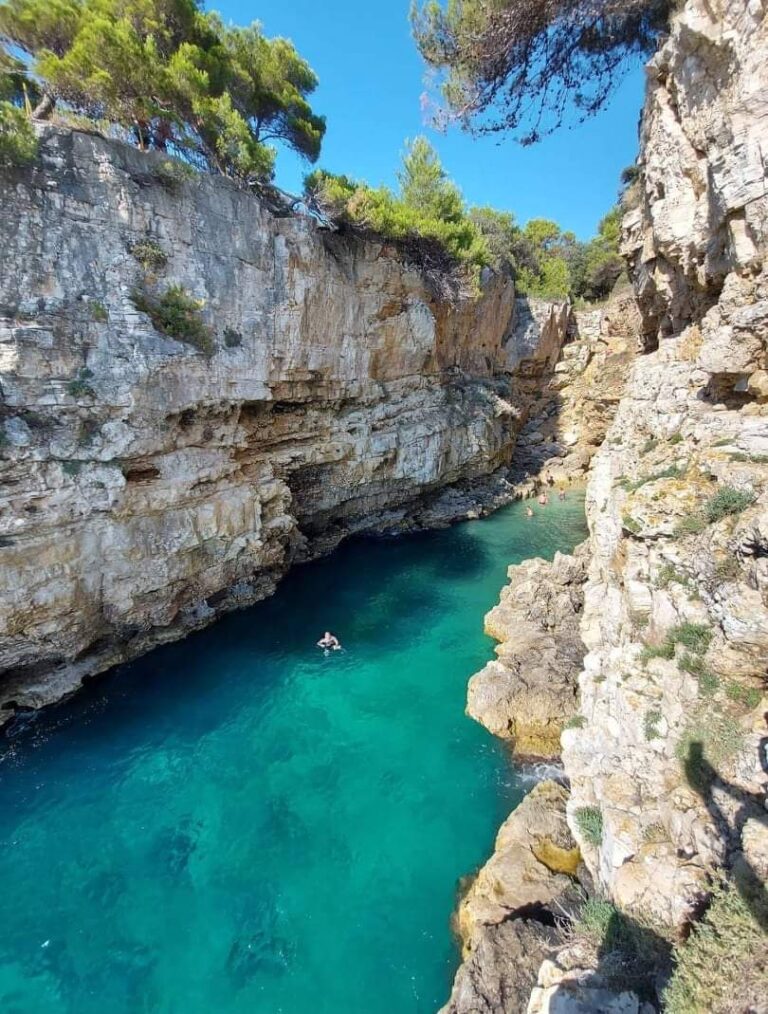
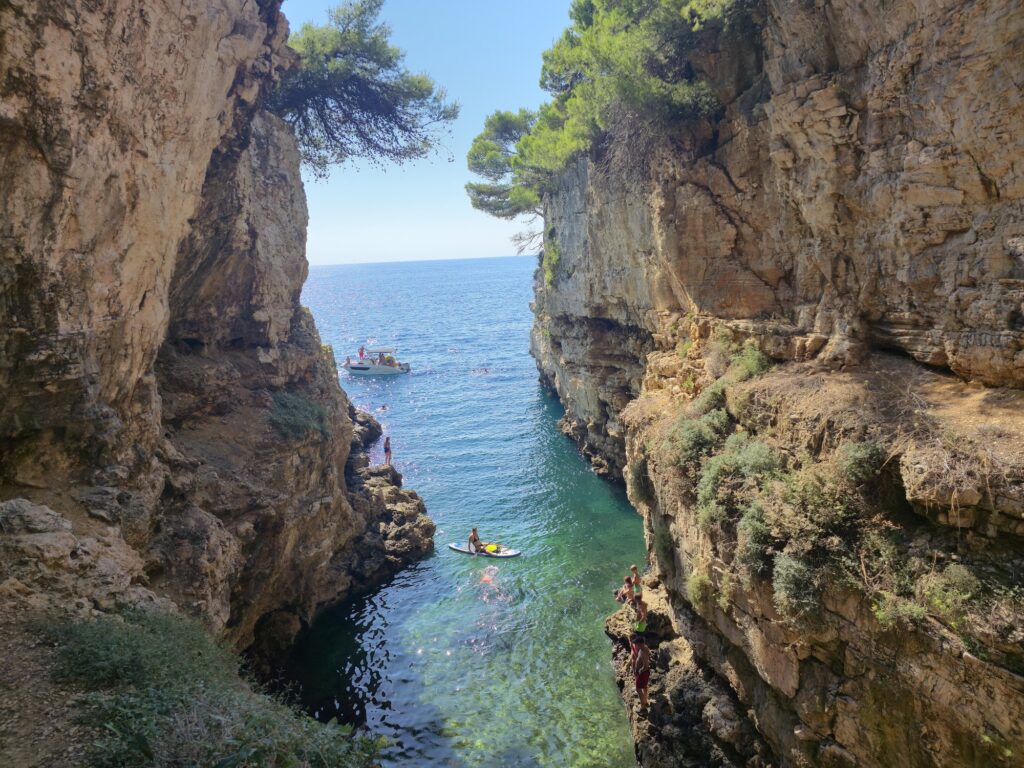
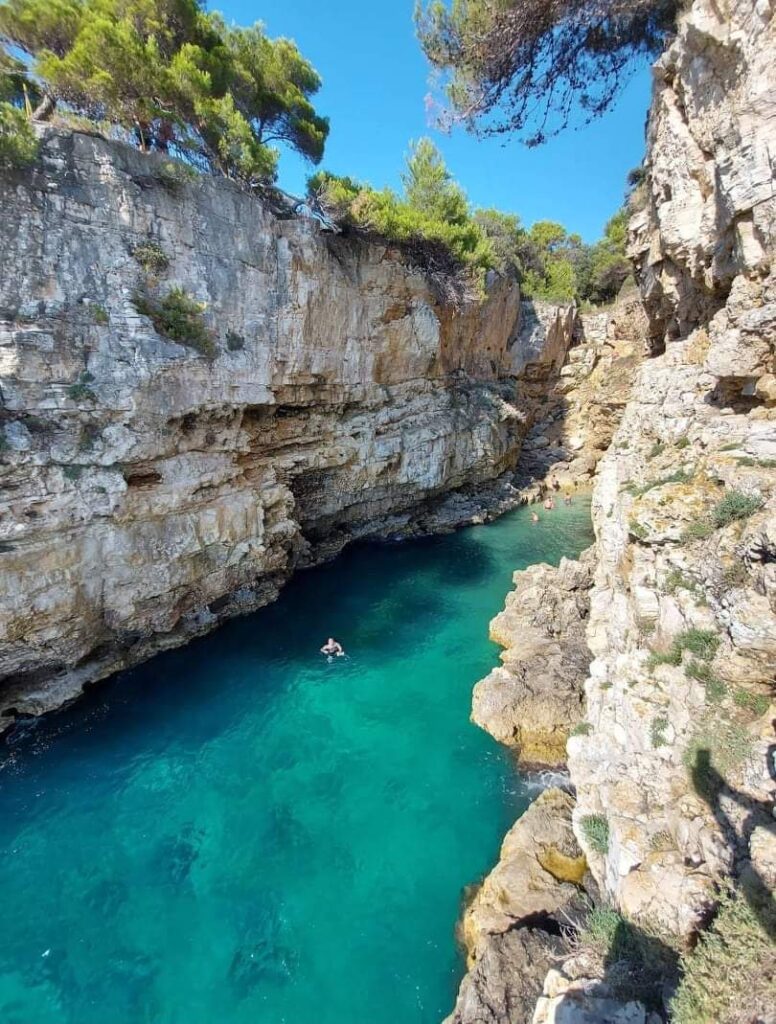
The canyon is a narrow waterway cut into the Verudela limestone by the Adriatic over geological time, flanked by cliff walls that rise directly from the water and that provide the jumping positions, the snorkelling terrain at depth, and the acoustic quality — the natural echo that paddlers inside the canyon describe as unexpectedly striking — that distinguishes the site from the open-water swimming locations of the nearby peninsula beaches. The Grotta di Quarzo sea cave is accessible directly from the canyon by swimming or kayak, its interior walls described consistently as shimmering in the filtered light that enters through the submerged entrance.
The canyon is the destination around which multiple kayak tour operators have built their Pula coastal programmes — arguably the most concentrated source of organised outdoor activity in the immediate Pula area, with tours departing from Ambrela Beach and Verudela Beach multiple times daily through the summer season. That tour economy is the most accurate indicator of the canyon’s status as a natural attraction: it draws enough sustained commercial interest to support multiple operators, transparent kayak rentals, guided cave tours, and cliff jumping programmes simultaneously.
Getting There: On Foot from the Verudela Path, or by Kayak from Ambrela Beach
Verudela Canyon is accessible on foot from the coastal path that runs around the Verudela peninsula — a walk south from Hawaii Beach Pula along the cliff-top path that follows the western edge of the peninsula to the canyon viewpoints above the water. The walk from the Verudela bus terminus takes approximately 10 to 15 minutes through the pine forest and along the cliff path. No entry fee applies for the land approach.
By kayak, tours depart from Plaža Ambrela Pula and from Verudela Beach — the starting point is signposted at the beach volleyball courts and aquapark area at Verudela Beach, where the Kayak Centar is based. The kayak route from Ambrela to the canyon takes approximately 20 to 30 minutes of paddling along the cliff line, and the guided tours include the canyon, the Grotta di Quarzo cave, cliff jumping at designated positions, and snorkelling stops at the hidden beaches accessible only from the water.
By car from Pula city centre, the Verudela peninsula is approximately 10 minutes south, with bus lines 2 and 3 running to the terminus and free parking available in the resort area. The Pula Aquarium in Fort Verudela — housed in the nineteenth-century Austro-Hungarian fortress at the peninsula’s tip — is directly adjacent to the canyon approach and is a natural companion visit for anyone spending the afternoon in the area.
The Canyon: 18-Metre Cliffs, Limestone Walls, and the Grotta di Quarzo
The defining physical feature of Verudela Canyon is the scale of the cliff walls relative to the width of the water corridor between them — the narrowness of the passage and the height of the limestone faces creating the enclosed, dramatic geometry that the source article describes with reasonable accuracy. The cliffs rise 18 metres from the water at their highest point, and the quality of the rock — white Istrian limestone worn smooth by the sea at the waterline and sharp-edged higher up — is the typical material of this section of the Pula coast.
The Grotta di Quarzo — the cave accessible from within or adjacent to the canyon — is the specific attraction that most kayak tour descriptions emphasise. The shimmering walls of the cave are caused by quartz and mineral formations in the limestone that reflect light in an unusually distinctive way. Entry to the cave by kayak requires paddling through the low entrance beneath the cliff face; entry by swimming requires comfort with the narrow, dark passage and the use of a waterproof torch or head lamp to see the interior fully. The cave contains a small hidden pebble beach accessible only by swimming or kayak — the specific feature that distinguishes it from caves accessible by walking.
The canyon and cave are adjacent to the Muzil peninsula military zone, the former Yugoslav naval base whose decommissioning has allowed the surrounding coastline to be accessed and whose fortifications and underground tunnels form part of the historical context that guided tours incorporate into the programme.
Cliff Jumping at Verudela Canyon
The cliff jumping at Verudela Canyon is the activity most consistently described in visitor accounts of the guided tours, and it operates at the positions that the canyon’s limestone geometry makes available — primarily at the lower cliff edges accessible without technical climbing, with the higher positions used by more experienced jumpers. Tour operators describe jumping options from 1 to 10 metres, calibrated to visitor confidence levels by the guides on the day.
The standard safety briefing provided by tour guides covers the entry position, the depth confirmation below each jumping point, and the requirement that no swimmers be in the water below the landing zone before any jump. This organised safety context is what makes the cliff jumping at the canyon more structured than the independent jumping at Galebove Stijene Pula on the Muzil peninsula — at the canyon, the guide manages the sequence and confirms safety at each position; at Galebove stijene, independent visitors self-manage.
For visitors who want to cliff jump at the canyon without a guided tour, the access by foot along the cliff path provides viewpoints and entry points at the lower positions. The same independent caution applies as at any unmanaged cliff jumping location: depth confirmation, clearance below, and no jumping above personal comfort level.
Kayak Tours from Verudela: What the Programmes Include
The kayak tour ecosystem operating from Verudela Beach and Ambrela Beach is the primary organised access to the canyon, and the programmes are broadly consistent across operators: a boat transfer to the launch point or a paddle along the coast from the beach, the canyon approach and interior navigation, the Grotta di Quarzo cave entry by kayak, cliff jumping at designated positions, snorkelling stops at the hidden beaches accessible only from the water, and a return paddle or boat transfer back to the departure point. Duration is typically two to three hours.
Tours operate in small groups — most operators limit to 10 to 18 kayakers — which gives the canyon experience a manageable scale given the narrowness of the water corridor. Transparent kayaks are available from several rental operators for independent exploration of the canyon and surrounding coastline, which is the self-guided alternative for visitors who want the visibility of the kayak hull in clear water without a guided programme.
The tours are reviewed consistently as suitable for first-time kayakers and families with older children — the guided nature of the programme removes the navigation decisions, and the physical demand is moderate rather than challenging. Children must be at least 7 years old to join as passengers in tandem kayaks, and 12 to 13 years to paddle independently depending on the operator.
The Pula Aquarium and Fort Verudela
The Pula Aquarium occupies Fort Verudela — the Austro-Hungarian coastal battery built in the nineteenth century at the tip of the Verudela peninsula — and is directly adjacent to the canyon approach. The fort’s architecture, its conversion from military to marine life exhibition, and the specific Istrian species displayed in its tanks make it a worthwhile companion to the canyon visit — the marine context of what visitors see underwater in the canyon is explained in the aquarium’s exhibits, and the fort’s coastal fortification history connects to the Muzil military zone visible across the water.
The Marine Turtle Rescue Centre within the aquarium — dedicated to rehabilitating turtles recovered from fishing nets and plastic entanglement — is the specific operation that has generated the most sustained public attention for the facility, and the live turtles in treatment are visible to visitors during the summer operating season.
Verudela Canyon in the Pula Coastal Context
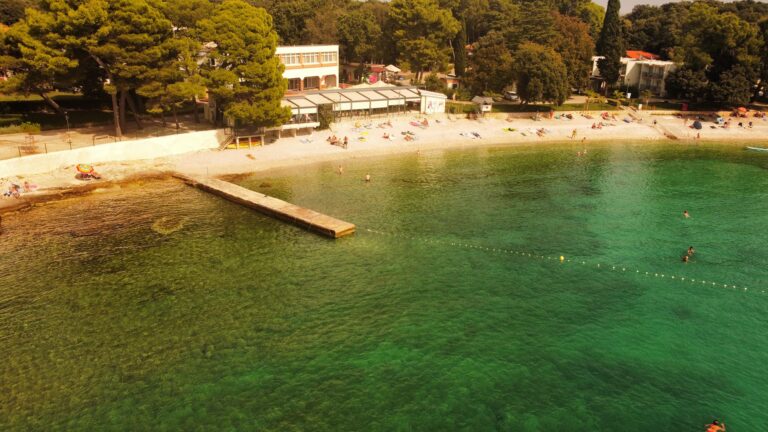
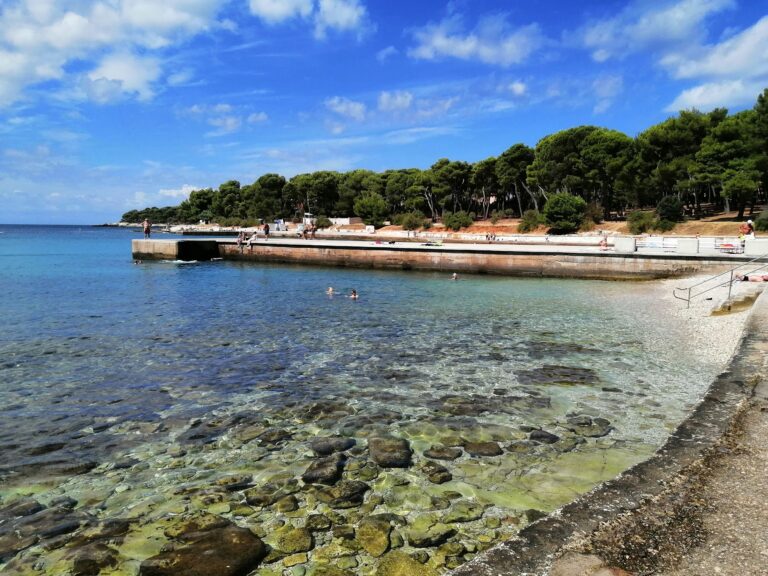
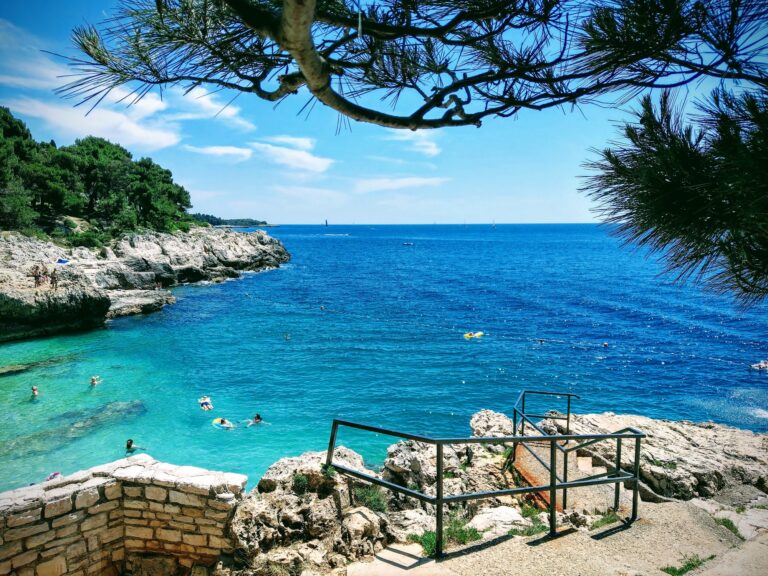
Verudela Canyon occupies a specific position in the Pula coastal offer — between the organised resort beaches of the Verudela peninsula with their Blue Flag certifications and full infrastructure, and the wild, unmanaged cliff sites of the Muzil peninsula that require complete self-sufficiency. The canyon is wild in character but served by a significant commercial tour infrastructure, which means first-time visitors can experience it with guided support rather than having to navigate it independently.
For visitors comparing the canyon with Galebove Stijene Pula on the Muzil peninsula — the other major cliff and cave destination near Pula — the distinction is primarily one of access and organisation: Galebove stijene is accessed independently on foot or by organised tour from the harbour, with the Galebijana cave as the specific protected feature; Verudela Canyon is primarily accessed by kayak through multiple operators, with the Grotta di Quarzo as the cave destination. Both offer cliff jumping and cave exploration; Verudela is more commercially developed and more guided, Galebove stijene is more independently visited and more crowded at peak season.
Verudela Canyon on Pula’s Verudela peninsula is the site where the organised tour infrastructure of the Adriatic kayak tourism industry meets limestone cliffs, a shimmering sea cave, and jumping positions above clear deep water — accessible on foot from the peninsula path or by kayak from Ambrela Beach, with the Pula Aquarium in the adjacent fort as the cultural anchor.
Book a tour from Ambrela Beach in the morning. Paddle in before the sun is overhead.
The cave walls will do the rest.
Map
Sorry, no records were found. Please adjust your search criteria and try again.
Sorry, unable to load the Maps API.
Near by places: