Beach Fažana Istria: Brijuni View Fishing Village Shore
Profile
Beach Fažana, Istria: The Fishing Village Shore with a National Park on the Horizon
Croatia | Istria | Pula Region
Most beaches derive their character from what they face — the open sea, a sheltered bay, a cliff wall, a town. Beach Fažana in the small Istrian fishing village of the same name derives its character from something more specific and more unusual: it faces a national park. The Brijuni Islands — fourteen islands and islets comprising one of Croatia’s most protected natural and historical landscapes — sit directly across the channel from the Fažana waterfront, visible from every point on the beach with a clarity and closeness that makes them feel less like a distant view and more like an inhabited foreground.
I arrived at Fažana on a clear morning in late June, having driven north from Pula along the coastal road — a fifteen-minute journey through the flat, vineyard-covered landscape of the western Istrian peninsula. The village announced itself through its promenade rather than through any dramatic geographical feature: a long, palm-and-pine-lined waterfront curving gently along the channel facing the islands, the smell of the sea and grilled fish arriving simultaneously and indistinguishably, the fishing boats visible in the harbour at the southern end of the bay.
I spent the full day there. I ate two meals on the promenade. I watched the Brijuni ferry depart and return. I came back the following morning for coffee before continuing north.
Fažana is one of those places that works on you gradually rather than immediately, and that rewards staying longer than the initial impression suggests is necessary.
Getting There: Three Routes Worth Considering
How to get to Beach Fažana from Pula presents three options that vary in pace and experience in ways that affect the day meaningfully.
By car, the road north from Pula toward Vodnjan and Fažana takes approximately fifteen minutes under normal conditions. Several organised parking areas sit within walking distance of the shore — sufficient for most days but filling progressively on peak summer weekends, making an early arrival the standard practical advice. The drive is unremarkable but the arrival at the promenade is immediate — the car parked, the waterfront a short walk, the Brijuni Islands visible across the channel before you reach the beach.
Pula Promet bus line 21 runs frequently from Pula main station directly to the centre of Fažana — the most practical option for visitors without a car and entirely viable for a full beach day, the bus depositing you at the start of the promenade from which the beach is visible ahead. The frequency of the service makes the return journey flexible rather than timetable-dependent.
The coastal cycling path connecting Pula with Fažana is the approach I would recommend to anyone with a bicycle and a morning with no fixed deadline. The route follows the western Istrian coastline northward, offering the kind of gradual engagement with the landscape — the limestone scrub, the channel visible intermittently through the vegetation, the Brijuni profile becoming progressively more defined as you approach — that a car window does not provide. The journey takes approximately forty-five minutes at a comfortable pace and arrives at the village with an appetite that the promenade’s sardine restaurants are excellently positioned to satisfy.
The Brijuni View: The Quality That Defines Everything Else
Before the beach, the shore, the water, or the facilities — the Brijuni Islands view deserves its own attention because it is the quality that most fundamentally shapes the experience of being at Fažana and that distinguishes it from every other Istrian beach of comparable quality and accessibility.
The Brijuni National Park archipelago sits approximately two kilometres from the Fažana waterfront — close enough that the vegetation on the islands is clearly visible from the beach, close enough to see the outline of the old Austrian fortress on Veli Brijun and the coastline detail of the nearest islets, far enough to retain the quality of a view rather than collapsing into the intimacy of a cove. The ferry that departs regularly from the Fažana harbour for the national park is visible from the beach throughout the day — a useful and unexpectedly pleasant detail that gives the waterfront a sense of purposeful activity in the middle distance.
The light on the Brijuni channel changes significantly through the day — pale and slightly hazy in the morning heat, sharpening in the mid-afternoon as the sea breeze develops, and taking on the warm amber quality in the late afternoon that the western Adriatic coast produces with the consistency of a natural performance. Sitting on the Fažana promenade as the sun descends toward the islands — the Brijuni profile darkening against the western sky — is one of those experiences that the Istrian coast offers with a generosity that its relative obscurity in comparison to the Dalmatian south does not yet reflect.
The Shore and Water Quality
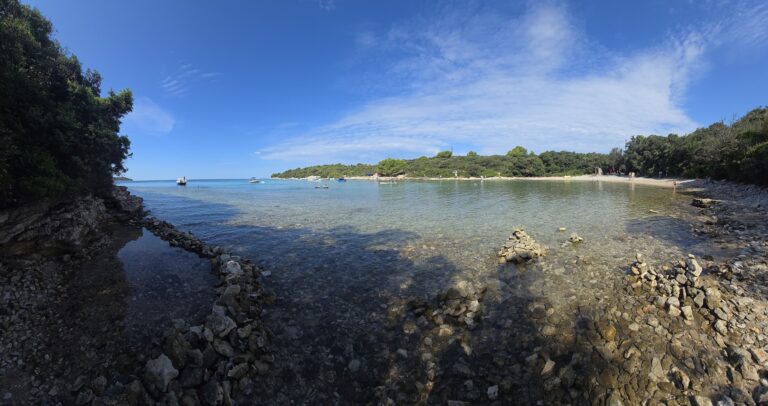
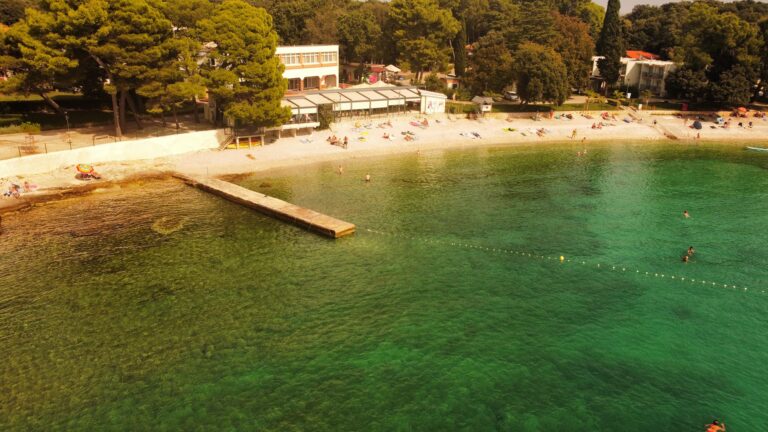
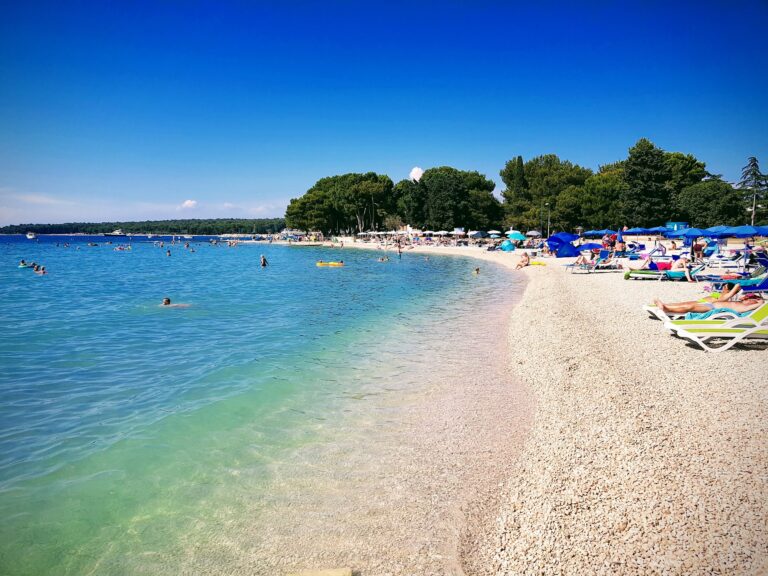
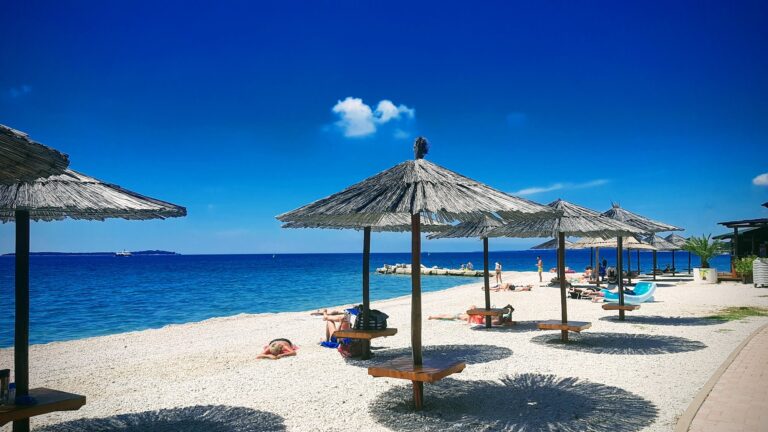
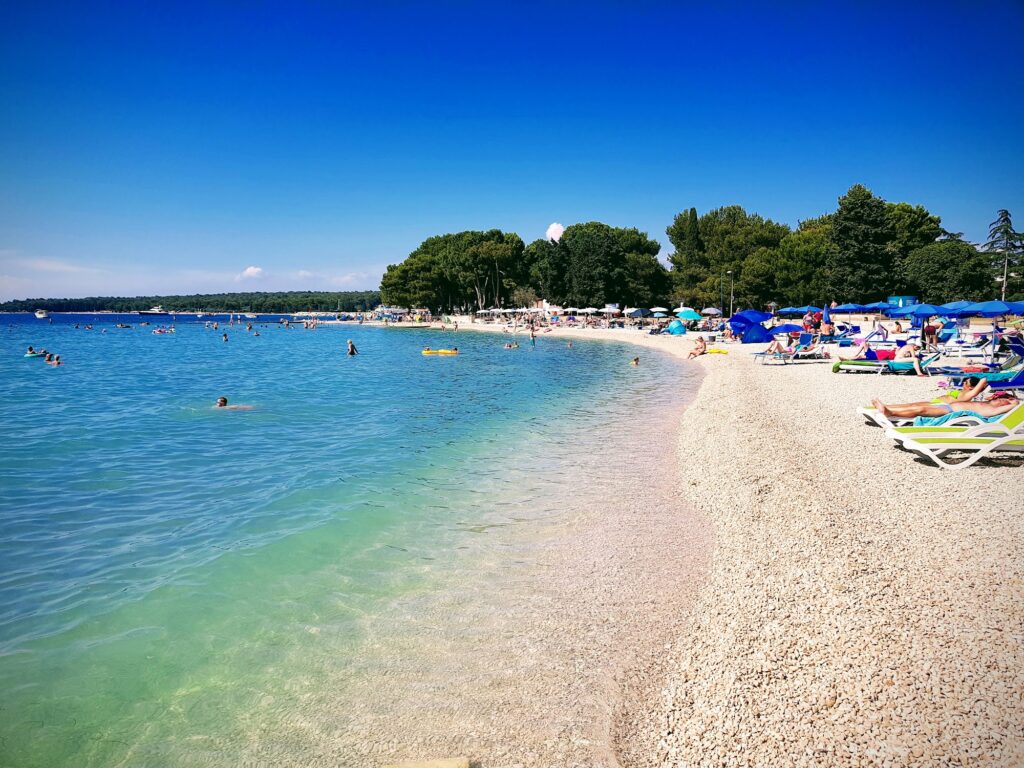
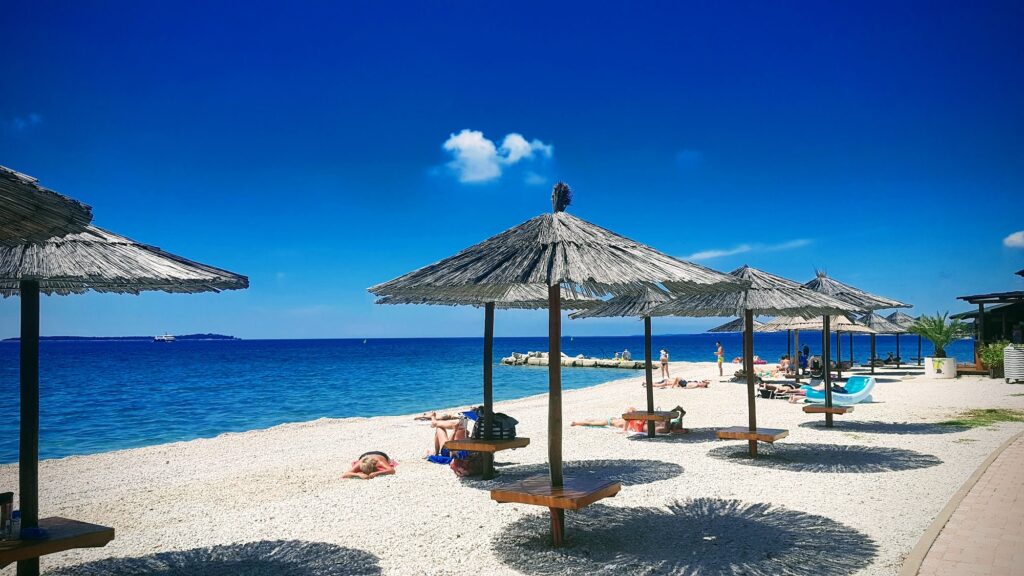
The shoreline at Beach Fažana is fine pebbles and smooth gravel — well-maintained and clean along its full length, giving the water in front of it the reflected brightness that pale pebble shores produce at their consistent best. The beach runs along the channel-facing side of the village, broad enough for the summer visitors it attracts without generating the overcrowding that the village’s modest scale might suggest as a risk on peak days.
The water quality at Beach Fažana is consistently excellent — the channel position between the mainland coast and the Brijuni Islands providing the circulation that keeps the sea clean and oxygenated, and the ecological protection of the national park across the channel creating an environmental context that the beach directly benefits from. The transparency is characteristic of the northern Adriatic at its clearest — the seabed visible from the surface in detail, the colour shifting from pale turquoise over the shallow pebble bottom to a deeper emerald further out.
The channel sheltering effect of the Brijuni Islands is the practical quality that makes Fažana particularly suitable for families and less experienced swimmers. The islands reduce the wave energy reaching the beach to a fraction of what an open-sea shore experiences, and the result is a swimming environment that is consistently calm and safe through most summer conditions. The entry is very gradual, the water remaining shallow for a meaningful distance from the shore, and the overall character of the bay is closer to a large, gently circulating pool than to an open coastal beach.
Snorkeling at Beach Fažana around the small breakwaters and rocky sections at the edges of the bay is more productive than the central pebble beach suggests from the surface — the breakwater structure providing the substrate complexity that supports varied marine life, and the water quality delivering the visibility that makes exploring it genuinely rewarding. The national park across the channel has no direct effect on the marine environment immediately at Fažana, but the general ecological standard of the channel contributes to a water quality that the beach visibly benefits from.
Facilities: Village Scale, Full Provision
Beach Fažana facilities reflect the scale of a well-maintained village beach rather than a major resort destination — comprehensive without the commercial density of the Dalmatian coast’s most developed locations, and all the more comfortable for it.
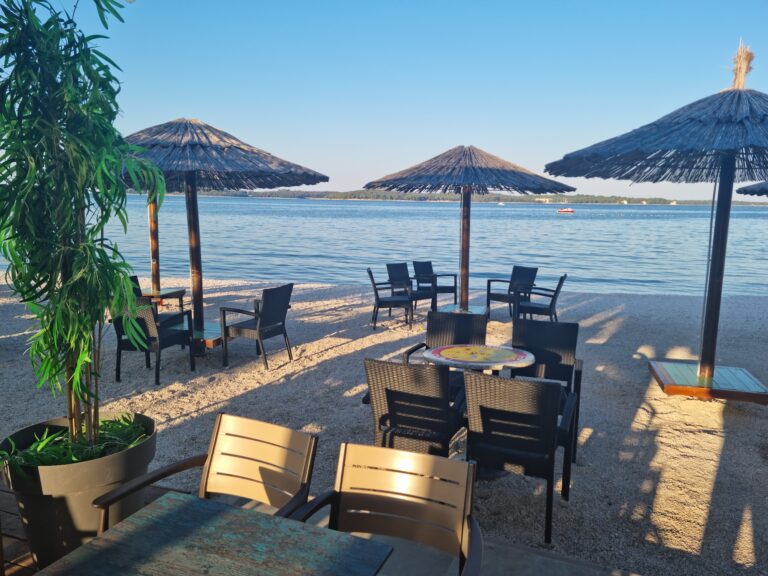
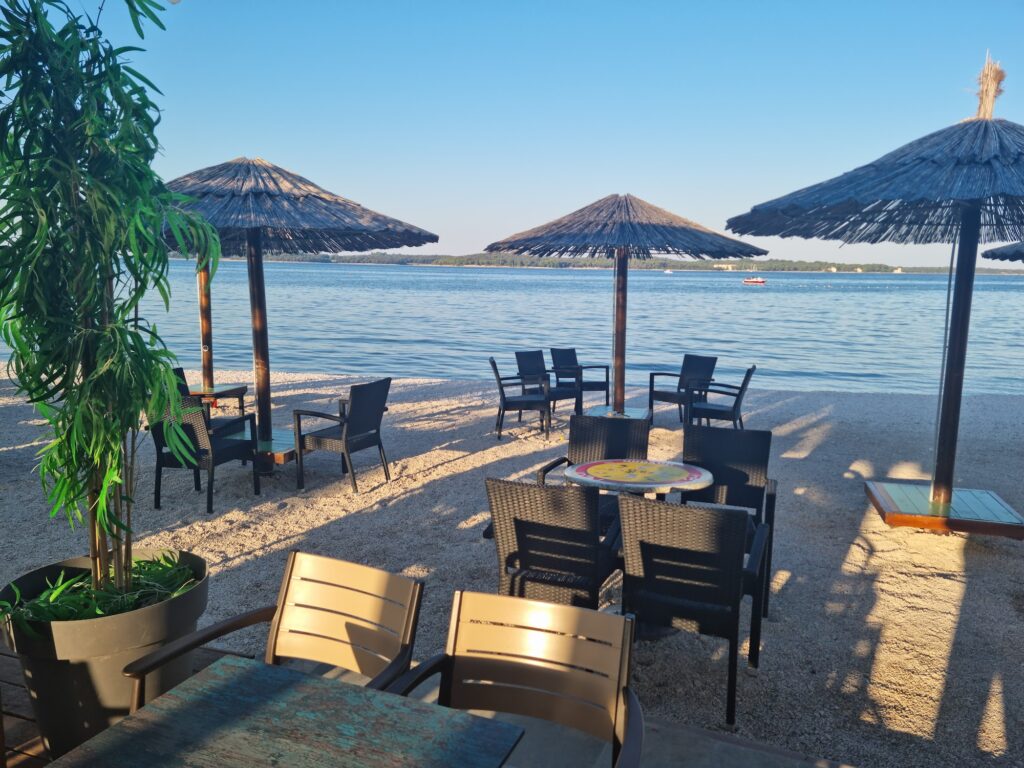
Freshwater showers and changing cabins are positioned along the pebble line at sensible intervals. Sunbeds and umbrellas are available for hire along the beach, though the pine trees bordering sections of the shore provide natural shade that is the preferred alternative for a significant portion of visitors. Certified lifeguards monitor the swimming zones during the peak season. The flat paved promenade bordering the beach is stroller-navigable throughout, making Beach Fažana accessible for families with pushchairs and for visitors with mobility requirements.
Pedalo rentals, sea kayaking and SUP at Fažana are available for those who want to engage actively with the channel — the calm conditions making paddling toward the Brijuni archipelago a genuine possibility for confident kayakers, and providing a perspective on the islands from the water that the shore view does not replicate. The Brijuni day excursion ferry departing from the Fažana harbour is the organised version of the same impulse, offering a guided exploration of the national park that a kayak trip to the islands themselves — which enter protected waters — does not.
The park area adjacent to the promenade includes playgrounds and shaded areas under the pines, extending the range of activities available for families beyond the water and providing the supplementary infrastructure that makes a full day at Fažana manageable for children of all ages.
For Families
Beach Fažana with children is, in my experience, one of the finest family beach experiences in Istria — and the case rests on the specific combination of qualities the village and its beach provide together rather than on any single outstanding feature.
The channel-calmed, shallow water provides the safest and most accessible swimming environment for very young children that the western Istrian coast offers at this standard of natural quality. The gradual entry eliminates the sharp entry anxiety that steeper beaches produce for toddlers. The promenade’s car-free character gives the entire waterfront a safety quality that traffic-adjacent promenades cannot match. The playgrounds and pine-shaded park areas provide supplementary activity for the hours when the water’s appeal has temporarily been exhausted.
The Brijuni ferry visible from the beach throughout the day provides the kind of sustained visual interest for children — the boat departing, crossing, returning, the islands across the channel presenting the question of what is over there — that purely natural beach settings rarely generate as consistently. For families who want to combine a beach day with the Brijuni National Park excursion, Fažana provides the most natural and most practically convenient base for doing both within a single day.
Food and Drink: Sardines, Truffles, and the Promenade
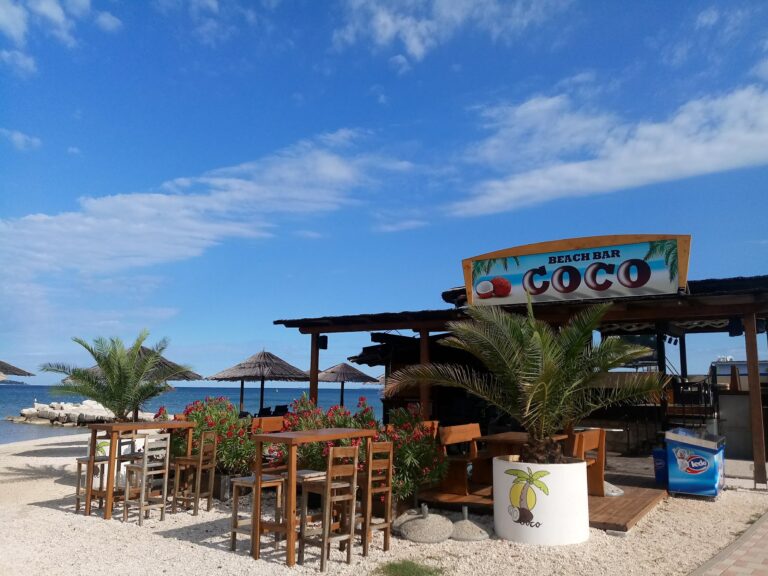
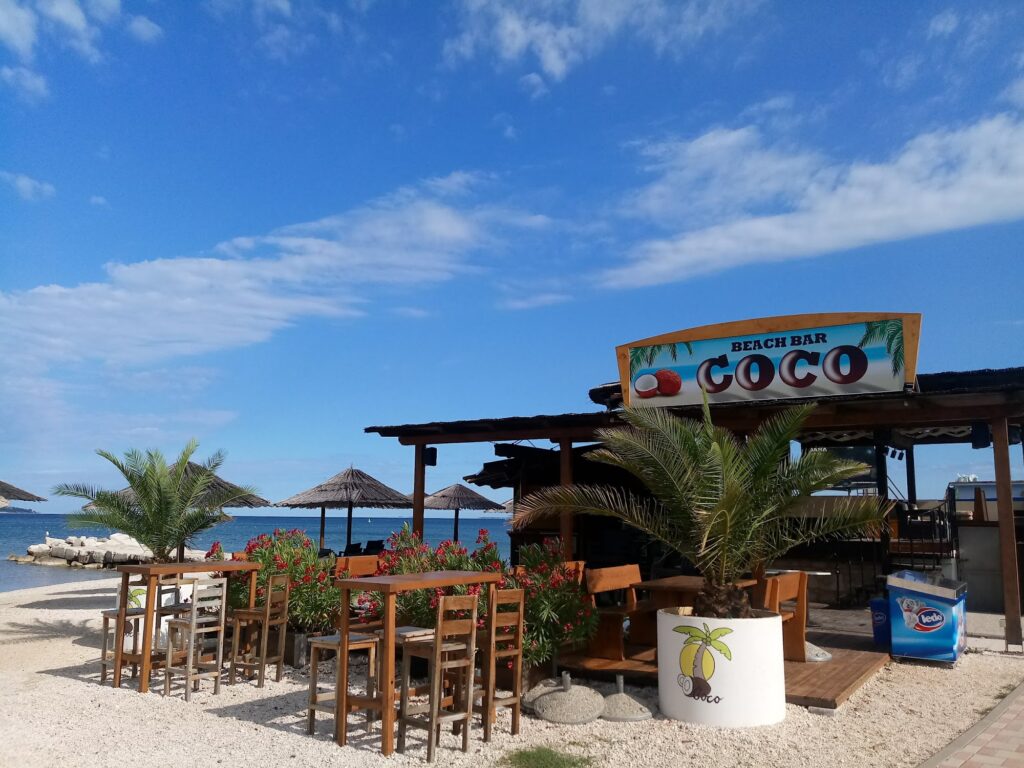
The Fažana waterfront is one of the more specifically characterised dining environments on the Istrian coast — not in the sense of being the most prestigious or the most expensive, but in the sense of having a culinary identity that is specific to the village and that reflects the intersection of its fishing heritage and the broader Istrian gastronomic tradition.
The pilchards — the small, oily fish that have been the basis of the village’s fishing economy for centuries and that give the promenade its specific and immediately recognisable smell in the evening grilling hours — are the thing to order before anything else. They are prepared simply, finished with local olive oil and served with bread, and they taste with the specific intensity of fish eaten within a short distance of where they were caught. The Istrian black truffle pasta that appears on most promenade restaurant menus — the truffles from the oak forests of the Istrian interior, the pasta made to the local tradition — provides the inland counterpart to the fishing village’s coastal identity and is the combination that the best Fažana restaurants assemble into a meal that is entirely specific to this part of Croatia.
Coffee on the promenade in the early morning, with the Brijuni profile across the channel in the quality of light that the northern Adriatic morning produces and the fishing boats visible in the harbour, is the beginning to a day in Fažana that the village’s pace and the view make entirely satisfying before the beach has even been reached.
The Brijuni Connection
The Brijuni National Park ferry service departing from Fažana harbour is worth addressing directly for visitors planning their time in the village, because the relationship between the beach and the islands is more practically useful than a view from the shore might suggest.
The park is accessible only by authorised boat, which means the Fažana ferry is the standard access point for day visitors. The park contains an extraordinary range of attractions — Roman ruins, a safari park with animals brought to the islands by Tito during the Yugoslav period, the intact landscapes of islands that have been protected from development for over a century — and a day divided between a morning at the beach and an afternoon on the islands, or the reverse, produces a combination of experiences that neither location alone provides.
For visitors whose Istrian itinerary includes Brijuni, spending at least one night in Fažana rather than driving in from Pula is the arrangement that makes the most of what the village and its waterfront offer — the morning beach before the ferry, the evening return to the promenade, the sardines as the harbour lights come on.
Beach Fažana in Istria earns its place among the notable beaches of the northern Adriatic not through dramatic geology or exceptional remoteness but through the specific and coherent quality of the whole experience the village provides — the calm channel water, the Brijuni view, the fishing heritage in the food and the harbour atmosphere, the family-friendly facilities on the promenade, and the cycling path that makes the journey from Pula an activity rather than merely a means of transit.
It is, in the most honest sense, a beach that is inseparable from the village that surrounds it — and a village that is inseparable from the islands across the channel that define its entire facing direction. To visit one without the awareness of the others is to miss the specific character that makes Fažana worth the fifteen minutes from Pula and the full day it rewards.
The ferry departs throughout the morning. The sardines are ready from midday. The light on the Brijuni channel improves steadily toward evening.
Plan accordingly.
Map
Sorry, no records were found. Please adjust your search criteria and try again.
Sorry, unable to load the Maps API.
Near by places: