Lost Beach Štinjan Pula: The Eco-Restored Cove
Profile
Lost Beach, Štinjan: The Eco-Restored Cove and Lost Bay Beach Bar Near Pula
Croatia | Štinjan | Pula Area
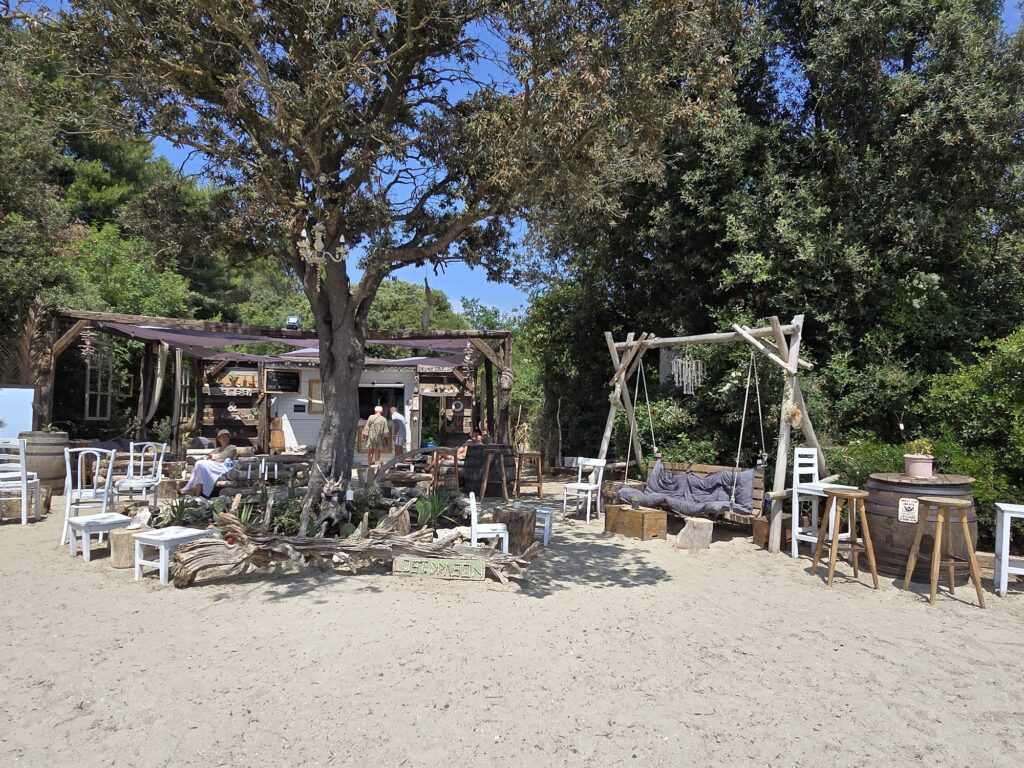
The story of Lost Beach in Štinjan begins with a walk and a rubbish dump. In 2016, Mario Krekman and his wife were walking their dog along the coves of the Štinjan peninsula when they found a small bay that had been used as an illegal dumping ground for years — plastic, waste, and debris where a natural pebble shore should have been. They contacted the local council. The council cleared the minimum. Then Mario decided to do the rest himself. He designed an eco-friendly bar suited to the setting, got council approval, and spent six months transforming the beach — making the furniture and bar interior from wood found on the beach and in the surrounding forest, repurposing waste materials into the structure and fittings, and naming the whole initiative Lost Bay under the motto “No Plastic Is Fantastic.”
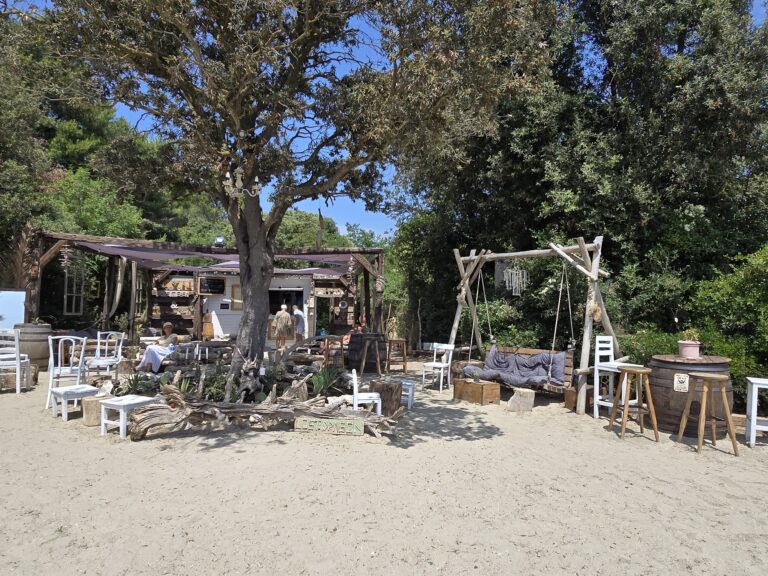
The result is one of the more genuinely distinctive beach destinations in the Pula area: a small pebble cove in Štinjan with a handbuilt driftwood beach bar, recycled cup service, self-service food and drinks, a swing hung over the water, chill-out music, and the specific atmospheric quality that comes from a place that was designed by someone who loved a particular patch of coast enough to spend six months cleaning it by hand. The bar is cash only. Food availability varies by the day. The views across the bay toward the Brijuni islands are unobstructed. The vibe is the closest thing the immediate Pula area has to the Dalmatian island-bar tradition of the slow afternoon, the local wine, and the sea.
Getting There: Northwest from Pula to Štinjan by Car, Bus, Bike, or Foot
Štinjan is approximately 10 to 15 minutes northwest of Pula city centre by car — a drive that follows the coastal road past Fort Punta Christo and through the Štinjan settlement to the parking area near the old quarry above the cove. Free parking is available in the forest above the beach, within a short walk of the shore. The approach through the pine forest to the cove, descending toward the sound of the sea, is the correct preparation for a beach that was designed to feel like a discovery rather than a destination.
Pulapromet bus line 5 runs from outside Pula Arena to Štinjan, costing approximately €1.50 per person one way and running regularly through the day. From the Štinjan stop, the walk to the beach along the coastal trail takes approximately 10 minutes and passes through terrain that provides the first views of the Brijuni islands offshore.
By bicycle, the coastal paths from Štinjan and Valbandon connect to the beach through terrain that rewards the cycling approach — the Štinjan peninsula’s combination of pine forest, coastal cliff views, and the nearby Punta Christo fortress make the route worth taking slowly. The Punta Christo Lighthouse at the western tip of the peninsula and the bridge formations connecting the cliffs on that side are landmarks visible from the approach paths and worth extending the ride to reach.
The Cove: Pebble, Natural Stone, Pine, and the Brijuni View
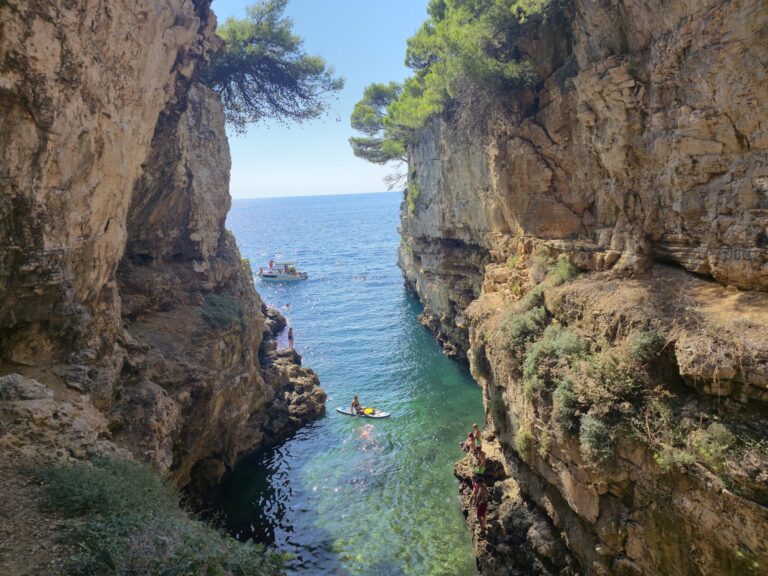
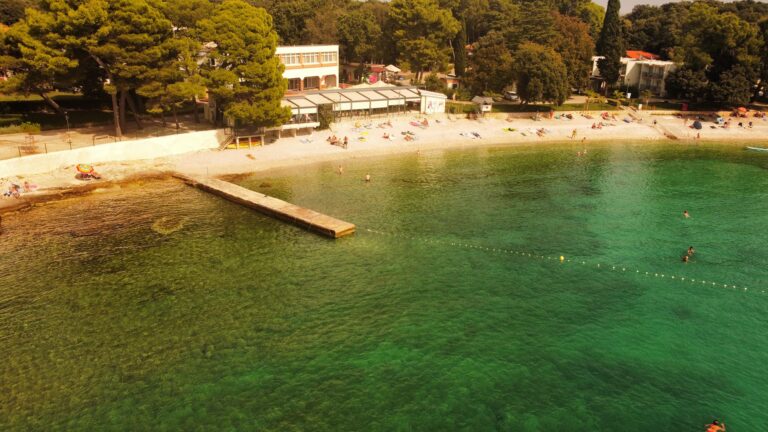
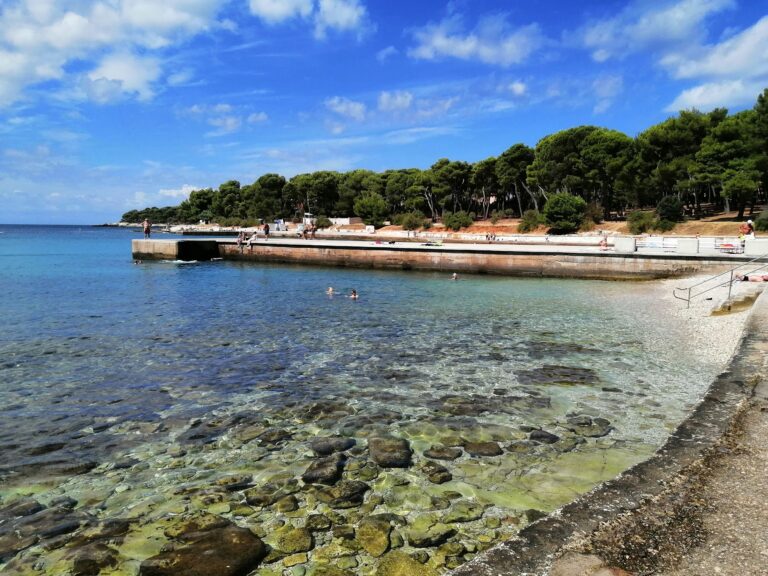
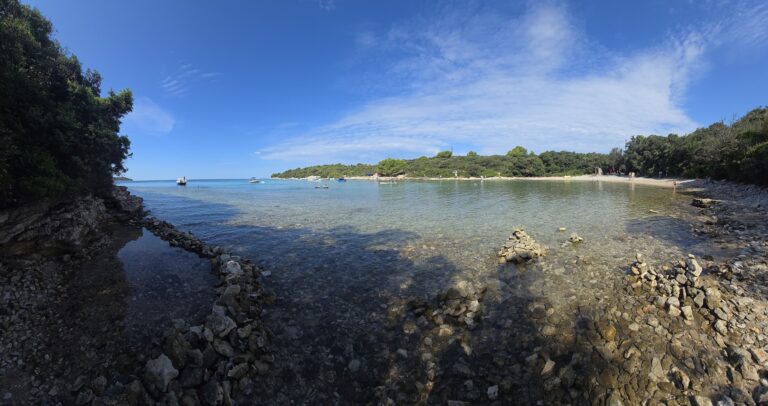
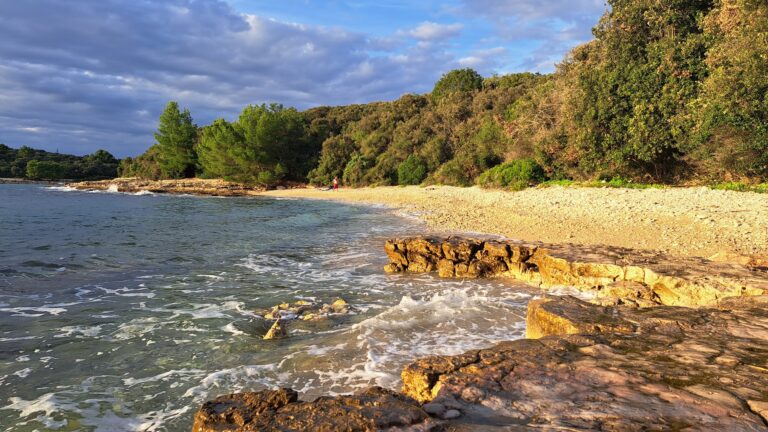
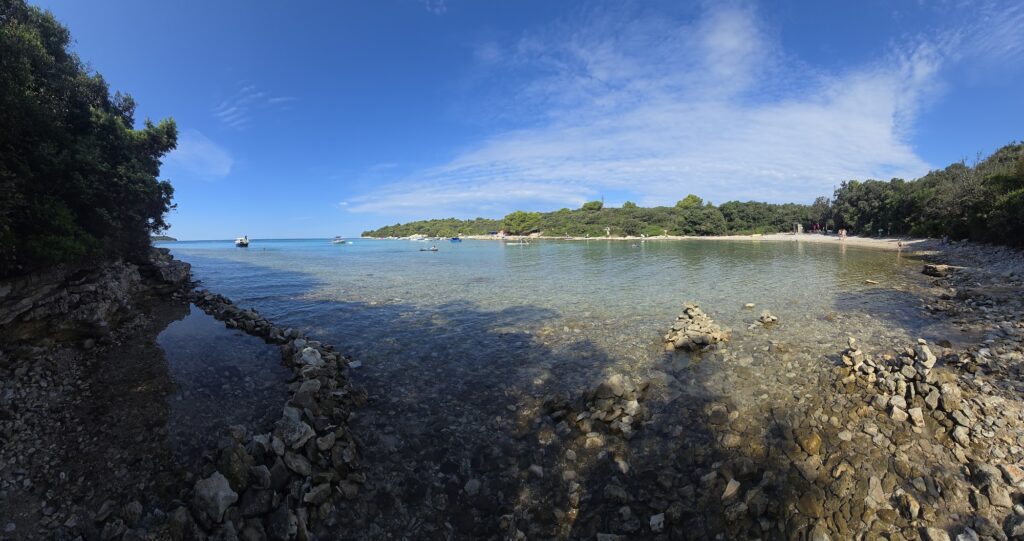
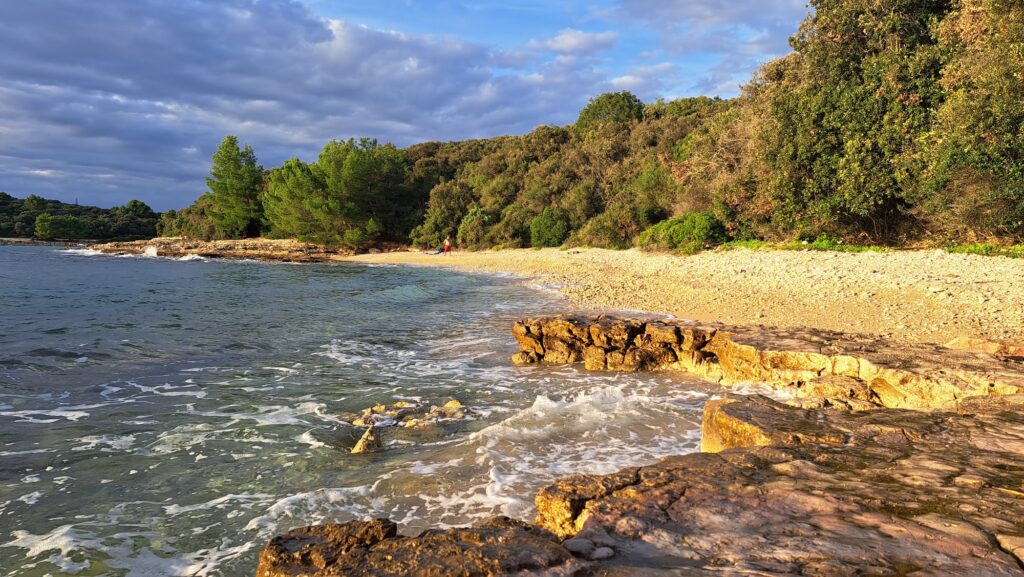
Lost Beach is a pebble cove framed by natural stone on its margins and pine trees above, facing west across the Istrian channel toward the Brijuni island archipelago. The pebble and stone beach surface requires water shoes for comfortable navigation — visitor accounts note that the beach is rocky and the entry involves stones — and the depth increases at a moderate rather than gradual pace from the waterline. The swing hung over the water is the specific visual detail that distinguishes the cove’s appearance from other Pula area beaches and that accounts for a disproportionate number of the photographs taken there.
The water is clear and warm — the Štinjan coves sharing the clean western Pula coastline character that the more visited beaches of Verudela and Stoja also benefit from. The sheltered position of the cove provides the calm, wave-free conditions that make the beach accessible for wading and swimming without the surface disturbance that the open coastline sections carry in southerly wind conditions. Boats pass in the bay outside the cove, which is worth knowing for swimmers who move away from the immediate shoreline.
The Brijuni national park islands are directly visible on the western horizon — the island group accessible from the Fažana harbour by regular park boats, whose pine-covered profile and the specific light quality over the water between the Štinjan coast and the islands makes the westward view from Lost Beach one of the better island views from the Pula mainland coast.
The Lost Bay Beach Bar: Handbuilt, Cash Only, No Plastic
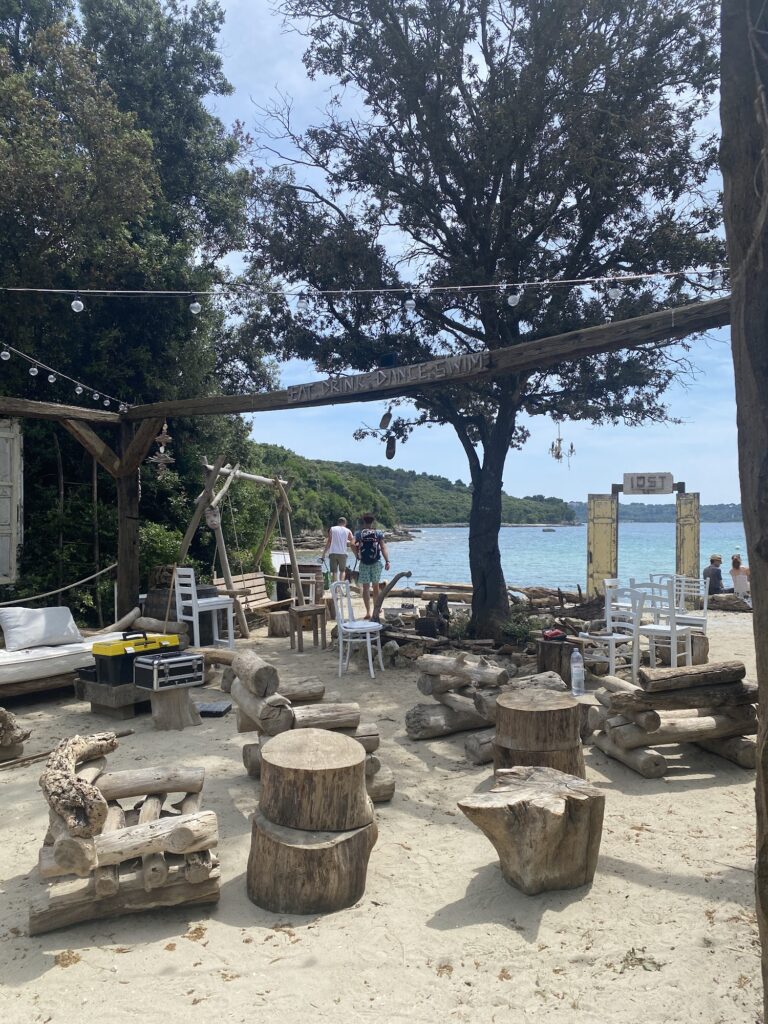
The Lost Bay beach bar is the reason most visitors come to Lost Beach specifically rather than to the neighbouring coves of the Štinjan area. It is open-air, built from reclaimed wood and waste materials found on the beach and in the surrounding forest, furnished with handmade seating that visitor accounts consistently describe as designed with a level of care and detail unusual for a beach bar in any price bracket. Recycled cups are used throughout. No single-use plastic appears in the operation. Cash is the only payment method.
The bar is self-service — visitors order at the counter rather than having table service — which contributes to the unhurried atmosphere the place generates. The cocktail menu uses local flavours and changes with what is available. Homemade ice cream is a consistent offering. Food availability varies by day, and the practical advice from visitor accounts is to check what is available on arrival and to consider bringing a picnic as a supplement on days when the food provision is limited. The evening programme — warm lighting, chill-out music, occasional DJ sets — transforms the cove’s atmosphere after dark in a way that the daytime bar does not fully anticipate, and visitor accounts of night visits are consistently more enthusiastic than accounts of afternoon visits alone.
The “No Plastic Is Fantastic” motto is not a marketing tagline but an operational commitment. Mario’s original clean-up motivation remains the bar’s founding identity, and the environmental consistency of the operation — the materials, the cups, the approach to waste — is maintained as a matter of principle rather than as positioning.
Water Quality and Swimming at Lost Beach
The water quality at Lost Beach reflects the clean western Pula coastline character that the Štinjan coves share — clear, warm in the sheltered positions, and free from the boat traffic density that affects the harbour-adjacent beaches of the city. The visibility is consistent with the broader Pula western coast: good snorkelling at the rocky margins of the cove, clear enough to see the stone seabed through the water column in the shallows.
The beach is wave-sheltered in the enclosed cove position, but water shoes are necessary for the rocky entry and recommended for movement between the different sections of the shore. The depth increase is described as moderate rather than gradual, which makes the beach better suited to swimmers than to toddlers wading. For families with very young children who need the extended gradual shallows, the more organised beaches of the Verudela peninsula — particularly Plaža Ambrela Pula — provide that condition with full lifeguard supervision and disability access.
Fort Punta Christo and the Štinjan Peninsula
Fort Punta Christo — the Austro-Hungarian coastal fortification on the Štinjan peninsula — is the most significant historical feature of the area around Lost Beach. The fort is abandoned and accessible on foot from the coastal trails, with walking routes around the peninsula that connect the fort, the Punta Christo Lighthouse, and the cliff bridge formations at the western tip. The fort has been used as an outdoor concert venue — hosting the Outlook and Dimensions music festivals in previous years — and its stone architecture and coastal position make it one of the more visually interesting abandoned military structures on the Istrian coast.
The broader Štinjan peninsula is less visited than the Verudela and Stoja beaches that most Pula area visitors prioritise, which means the coastal walking on this side of the city retains a quieter character than the more developed southern peninsula coastlines. For visitors who want to extend a Lost Beach visit into a broader half-day coastal walk, the fort and the lighthouse on the western tip provide destinations that the Verudela and Stoja trails do not have.
Lost Beach in the Pula Area Context
Lost Beach occupies a specific and unusual position in the Pula beach offer — it is the one beach in the immediate city area whose identity is defined not by its natural geography or its resort infrastructure but by the act of restoration that created it and the design philosophy that maintains it. That origin story — the 2016 clean-up, the six months of handbuilding, the council approval — is the genuine foundation of what the beach is, and it gives the place a character that no amount of subsequent commercial development has diluted because the commercial development at Lost Beach is still done by the same person with the same materials and the same motto.
For visitors comparing Lost Beach with the organised resort beaches of Verudela — Plaža Ambrela Pula and Valkane Beach Pula — the comparison is between a professionally managed Blue Flag beach with lifeguards, disability access, and certified water quality monitoring on one side, and a handbuilt eco-bar in a restored cove with cash-only service and variable food provision on the other. Both are legitimate and worthwhile. They serve different purposes within the same afternoon.
Lost Beach in Štinjan is one person’s response to a rubbish dump — a six-month handbuilding project that became a beach bar and then a destination, maintained by the same commitment to the place that generated it, and viewed across the bay toward the Brijuni islands every evening as the light changes.
Take bus 5 from the arena. Walk from the Štinjan stop through the pines.
Bring cash. Check the food board. Stay for the sunset.
Map
Sorry, no records were found. Please adjust your search criteria and try again.
Sorry, unable to load the Maps API.
Near by places: