Kalochori Lagoon Thessaloniki: Flamingos, Port Cranes
Profile
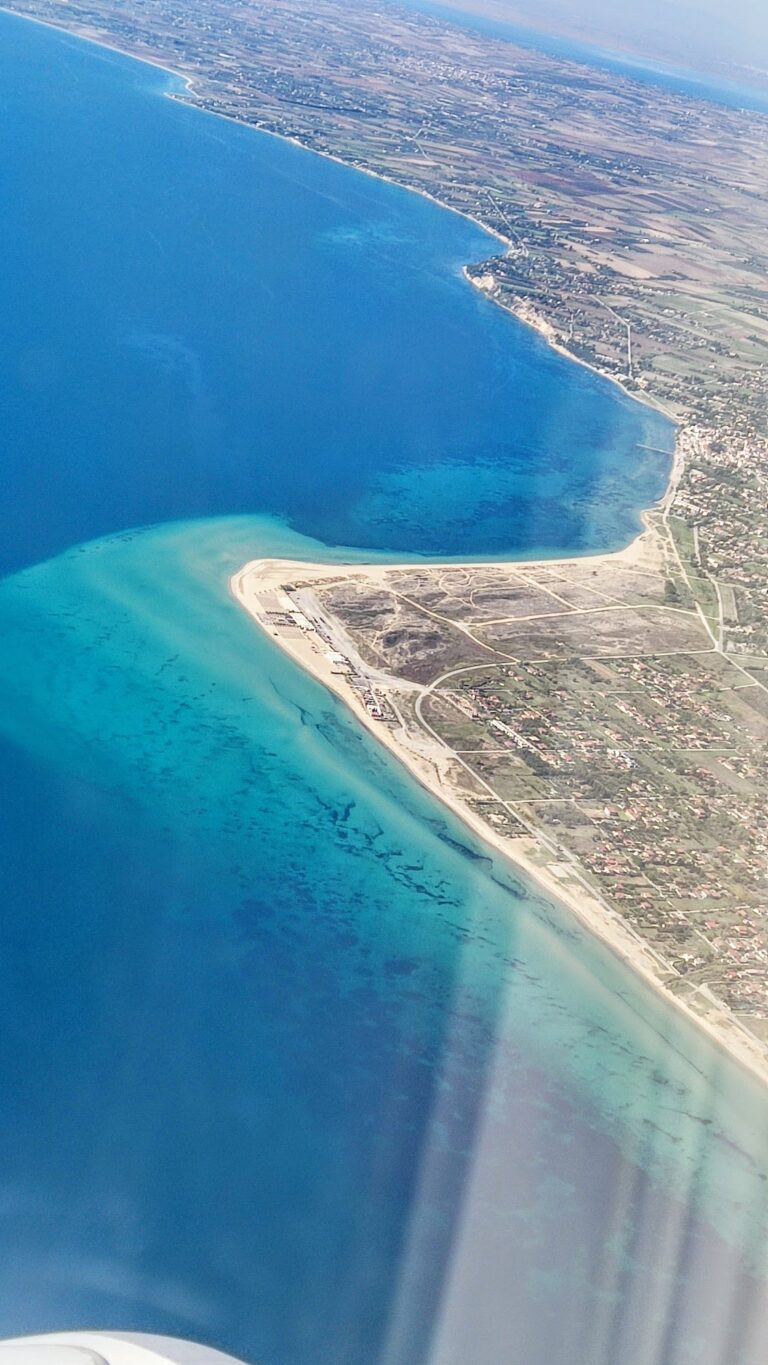
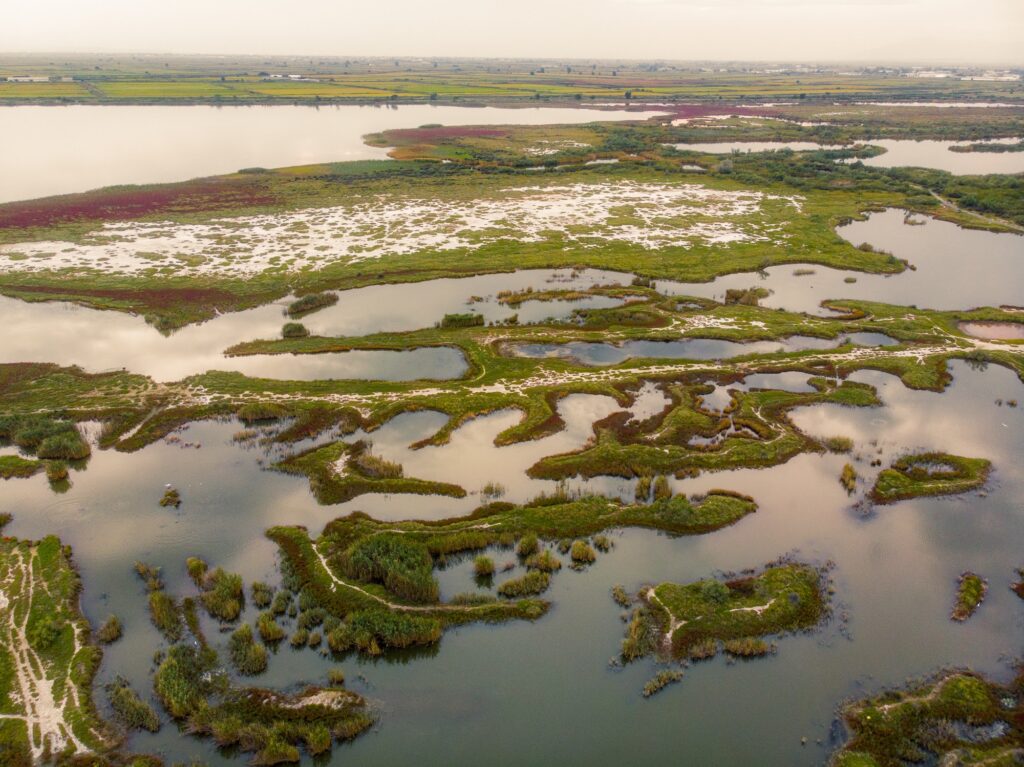
Kalochori Lagoon, Thessaloniki: The 226-Hectare Wetland That Did Not Exist in 1960, Created by the Subsidence of Land That Was Pumped Too Hard for Water, Where Flamingos Feed With the Port Cranes of Greece’s Second City Behind Them
Greece | Kalochori | Thessaloniki, Central Macedonia
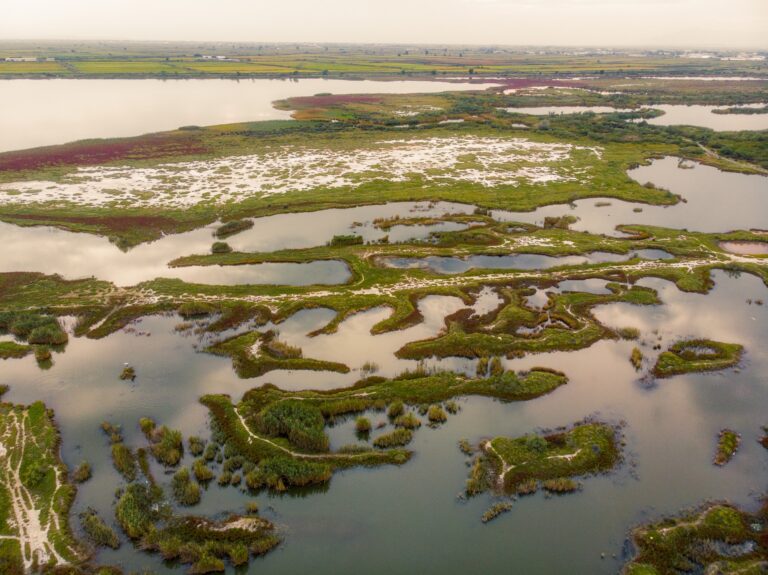
The lagoon did not exist in 1960. The land it now occupies was pasture and farmland — fields that families worked and telephone poles that carried lines. The process that created Kalochori was not a natural hydrological event but an industrial consequence: the Thessaloniki Water Supply Company drilled extensively in the Gallikos river area between 1955 and 1980, extracting groundwater from the underlying aquifers at rates that exceeded the natural recharge. The loose alluvial soil of the area, deprived of the water pressure that had kept it consolidated, began to compact. The surface subsided. By the mid-1960s, the lowest areas had sunk below sea level — 0.5 to 1 metre below. The sea entered.
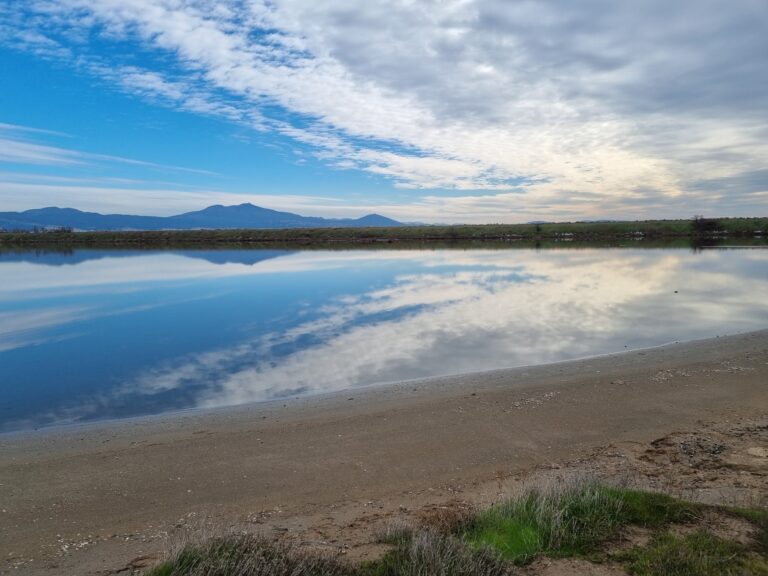
The telephone poles that once carried lines across the pasture still stand in the lagoon. Visible from the embankment path, they are the most specific piece of evidence that the water is new and the land beneath it is recent memory. The lagoon covers 226 hectares today; its bed lies below the level of the Thermaic Gulf beyond it.
What happened next was ecological opportunism at its most productive. Birds arrived immediately. The shallow brackish conditions — the mix of groundwater and seawater that entered through the subsided coastal margin — created exactly the food-rich environment that wading birds require. Flamingos came and stayed. So did Dalmatian pelicans, great white pelicans, herons, avocets, black-winged stilts, ospreys, sea eagles, little terns, and 291 other species. The area was designated under the Ramsar Convention in 1971 — one of the earliest Ramsar designations in Greece — before the lagoon was even a decade old in its current form.
Kalochori is now the northern gateway of the Axios-Loudias-Aliakmonas National Park, one of the most biologically diverse wetlands in Europe. It contains two-thirds of all bird species recorded in Greece across its various sections.
Getting There: 8km From Central Thessaloniki, Bus #40 From the City Centre, 15-Minute Walk From the Bus Stop in Kalochori Village
From Aristotelous Square in central Thessaloniki, drive west on the coastal road toward the industrial zone and Kalochori village — approximately 15 minutes. In the village, follow signs for Limnothalassa (lagoon). The parking area at the lagoon entrance is unpaved and free.
Bus #40 from central Thessaloniki reaches Kalochori village and the journey takes approximately 20 minutes. From the bus stop, walk 10 to 15 minutes through the edge of the village to the lagoon paths.
Arriving at golden hour — the hour before sunset — is the specific recommendation for flamingo observation and photography. The birds are most active, the light is ideal, and the Thessaloniki port cranes and skyline form the background in the fading light.
The Contrast: Flamingos in Front, Port Cranes and City Behind
The Kalochori lagoon offers a visual juxtaposition that no other birdwatching site in Greece can replicate: flamingos feeding in shallow water, with the industrial port cranes and urban skyline of Thessaloniki — Greece’s second city of 1 million people — directly on the horizon behind them. The contrast is not incidental; it is the defining photographic quality of the site, documented by wildlife photographers and specifically described by every ecological guide.
The flamingos at Kalochori are present year-round but largest in winter — great flocks that find ample food in the shallow, nutrient-rich water. The number varies by season and year; hundreds is the consistent minimum; thousands occur in productive winters. They are Greater Flamingos (Phoenicopterus roseus), the species that turns pink from the carotenoids in the brine shrimp and algae they filter from the water.
The Red Salicornia: The Autumn Transformation
In late summer and autumn, the specific botanical phenomenon that the Kalochori wetland margins produce is one of the most unusual in Greece. Salicornia — glasswort, a salt-tolerant succulent — turns deep crimson red as it senesces in the autumn. The salt flats along the lagoon edge become a blood-red landscape that contrasts with the blue water and the grey port infrastructure behind. This botanical phenomenon is not unique to Kalochori but is specific enough that the lagoon’s autumn appearance is categorically different from its summer appearance — a different destination in the same location.
The Telephone Pillars: The Specific Evidence of Subsidence
The telephone poles standing in the lagoon water are not a deliberate art installation or an accidental oversight. They are the original infrastructure of the farmland that subsided and were not removed because their removal would have required dredging operations in what had by then become a protected wetland. They stand as the physical marker of the ground level before the subsidence — the top of each pole indicating roughly where the surface was, the waterline on the pole indicating roughly how far it has dropped.
The Full National Park: 295 Bird Species, 38,800 Hectares, Ramsar 1971
The Axios-Loudias-Aliakmonas National Park extends from Kalochori in the north to the Aliakmonas river delta and the Alyki Kitrous lagoon near Pieria in the south — 38,800 hectares of the most biologically productive wetland in Greece. The park contains 295 bird species (two-thirds of all Greek species), 40 mammals, 18 reptiles, 9 amphibians, 7 invertebrates, and 350 plant species and subspecies. Water buffalo have been introduced to the park’s management programme in recent years, grazing the wetland margins in a restoration practice that supports the reed bed ecology.
What to Do: The Red Path, the Birdwatching Tower, Cycling, the Eco-Festival
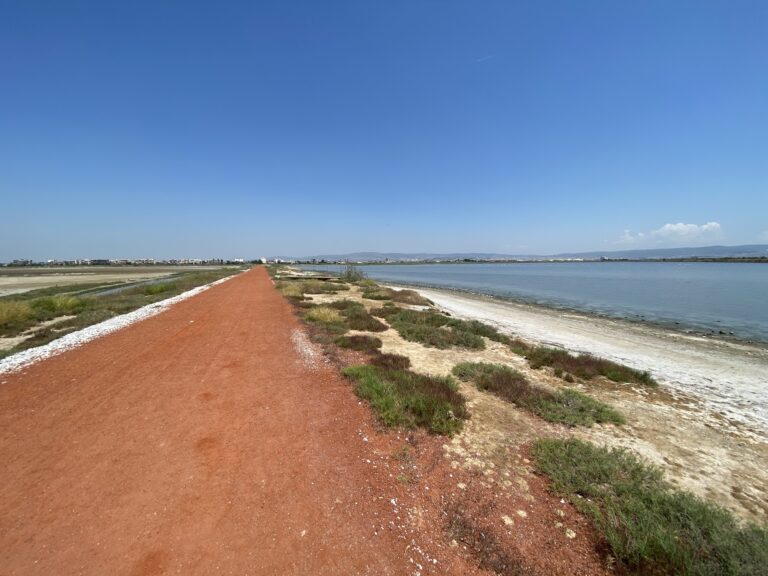
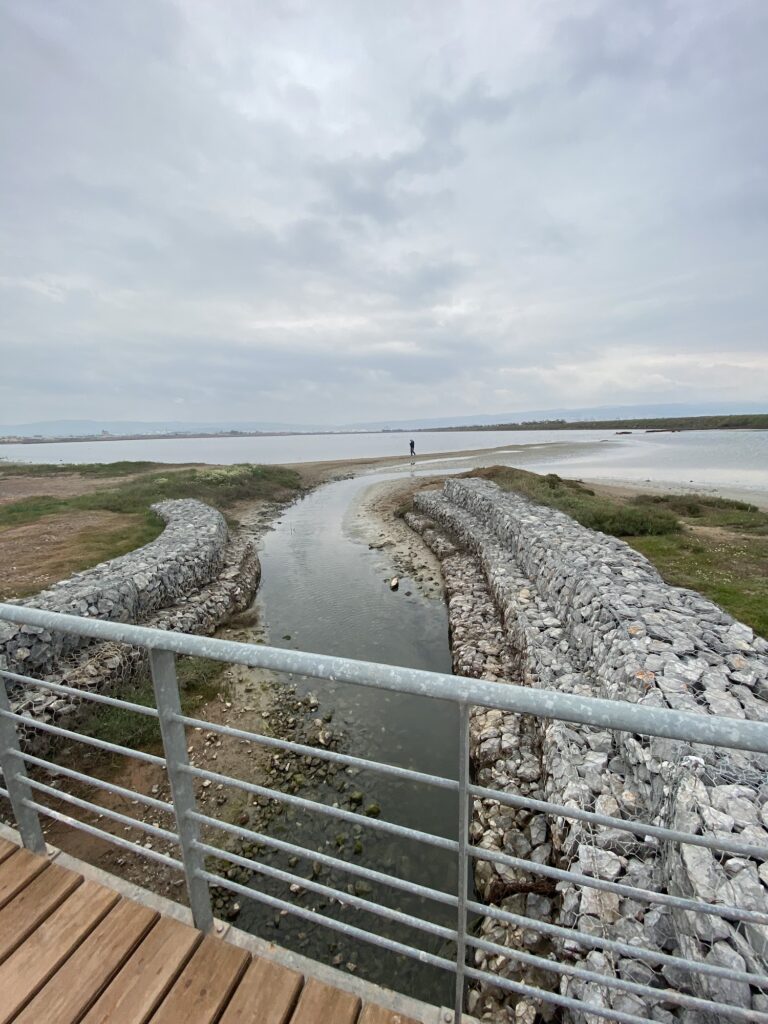
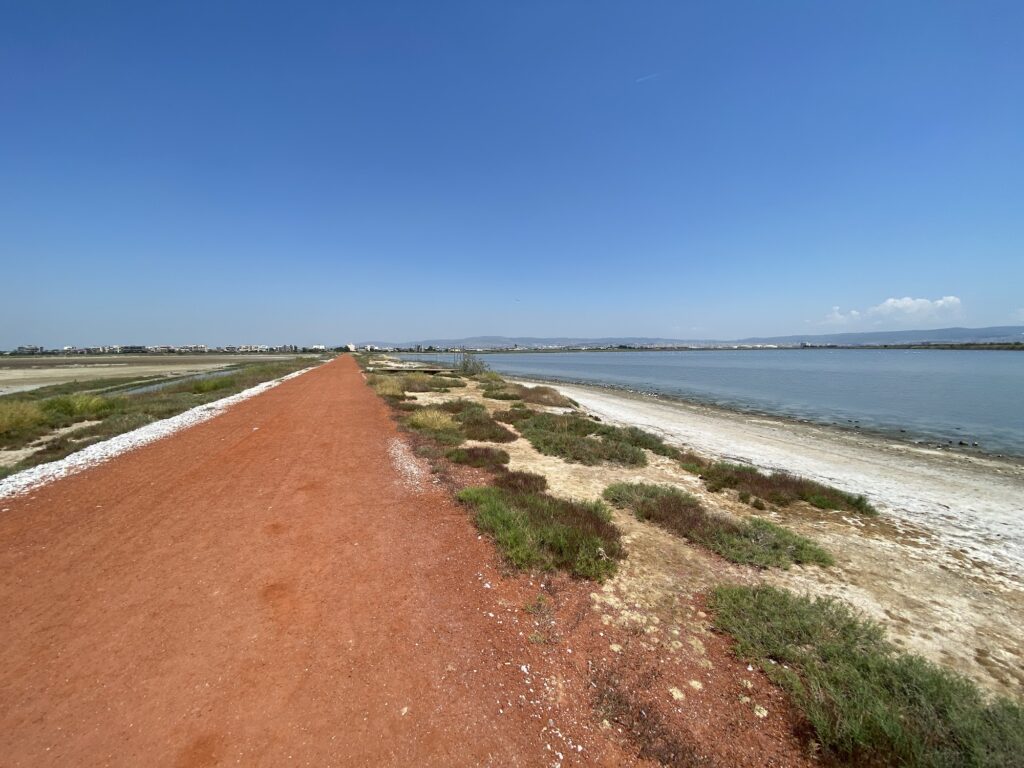
The “red path” — the embankment road that crosses the lagoon from end to end — is the primary visitor route. It is suitable for cycling and walking, with the lagoon on one side and the open Thermaic Gulf on the other at its furthest extension. A birdwatching tower at the lagoon provides the elevated viewing position.
The annual Eco-Festival of the Gallikos River takes place at the lagoon, organised by the Axios-Loudias-Aliakmonas management authority — workshops, traditional music, birdwatching, children’s activities, and biological food producers.
The series has covered Paralia Katerinis Beach Greece to the south, near the Axios delta’s southern end. Perea Beach Thessaloniki Greece and Neoi Epivates Beach Thessaloniki Greece are the closest organised swimming beaches to Thessaloniki — directly south of the city on the Thermaic Gulf coast.
Kalochori Lagoon at Thessaloniki is the 226-hectare wetland that did not exist in 1960 — created by land subsidence from groundwater over-pumping, the lagoon bed now 0.5 to 1 metre below sea level, the telephone pillars of the old pasture still standing in the water as the specific evidence. Flamingos year-round (largest in winter), Dalmatian and great white pelicans, ospreys, sea eagles, avocets, 295 species total. The red salicornia autumn. The flamingos-and-port-cranes contrast photograph. The “red path” embankment for walking and cycling. Bus #40 from Aristotelous Square (20 minutes). Ramsar Convention since 1971. Arrive at golden hour.
Take bus #40 from Aristotelous Square. Walk to the red path. Arrive one hour before sunset.
Map
Sorry, no records were found. Please adjust your search criteria and try again.
Sorry, unable to load the Maps API.
Near by places: