Neoi Epivates Beach Thessaloniki: Quieter Than Perea
Profile
Neoi Epivates Beach, Thessaloniki: The 2km Blue Flag Shore Founded by Istanbul Refugees in 1923, Quieter and Wider Than Perea
Greece | Neoi Epivates | Thessaloniki Region
In 1923, 159 refugee families — 631 people — arrived at a coastal strip of the Thermaic Gulf that had until recently been the summer estate of a Turkish Pasha. They came from the town of Epivates, a suburb of Istanbul, displaced by the catastrophic population exchange that ended the Greco-Turkish War. They named their new settlement Neoi Epivates — New Epivates — after the town they had left behind. They then immediately built a wooden pier, because they knew how to use the sea: as early as 1928, Neoi Epivates was a centre of attraction for the people of Thessaloniki. The refugees made sure to build a wooden port immediately after their settlement, and regular communication with boats. From Neoi Epivates, during the interwar period, 5 ships set off every day, carrying a large number of people from Thessaloniki to take a walk and bathe.
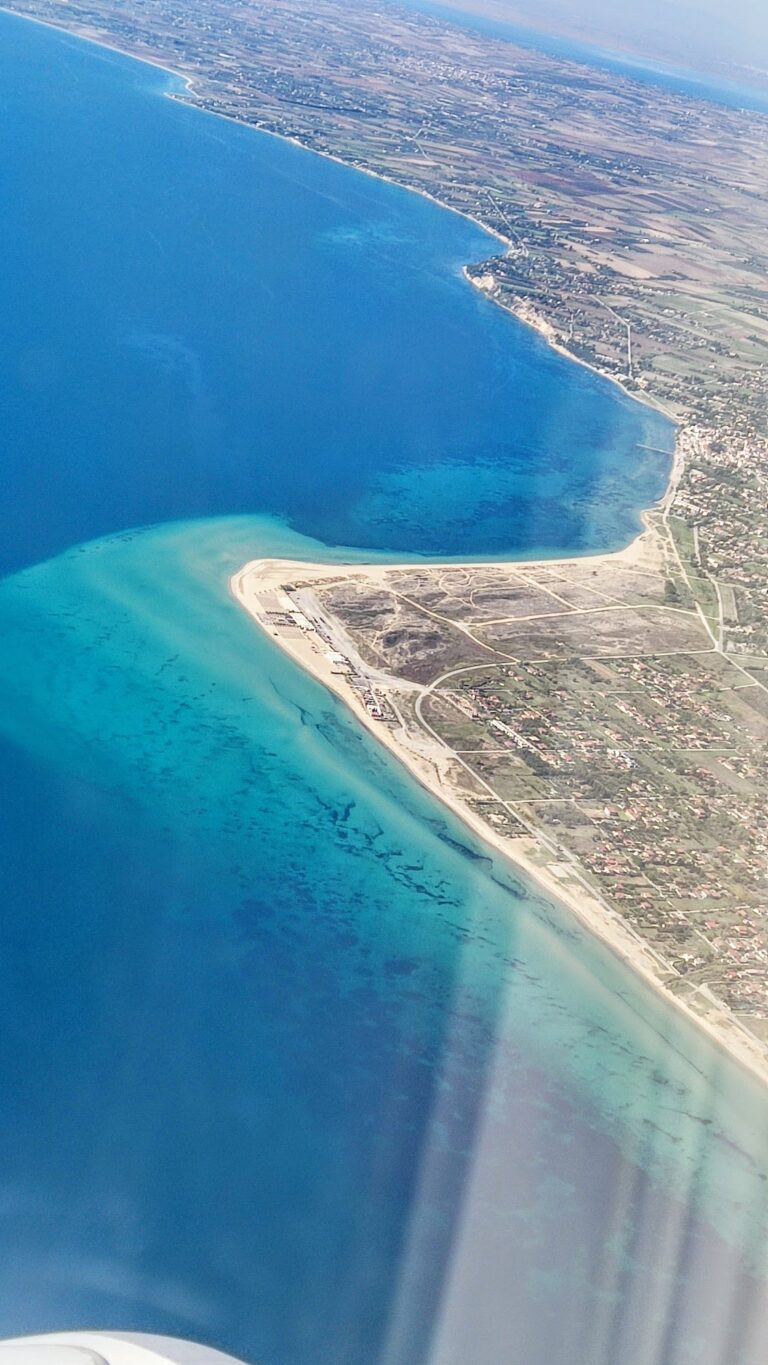
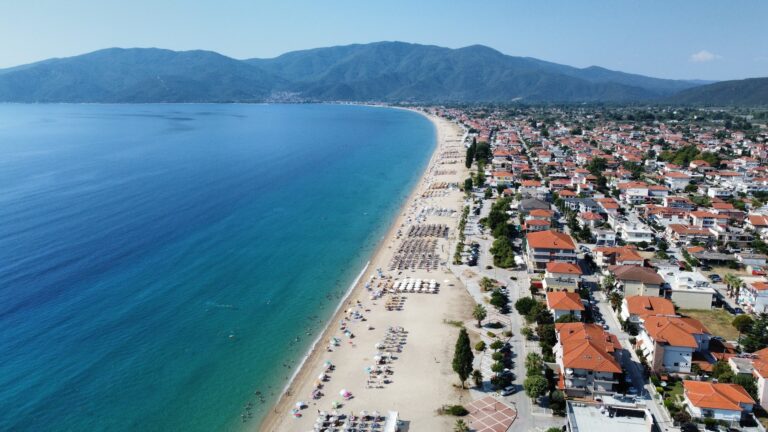
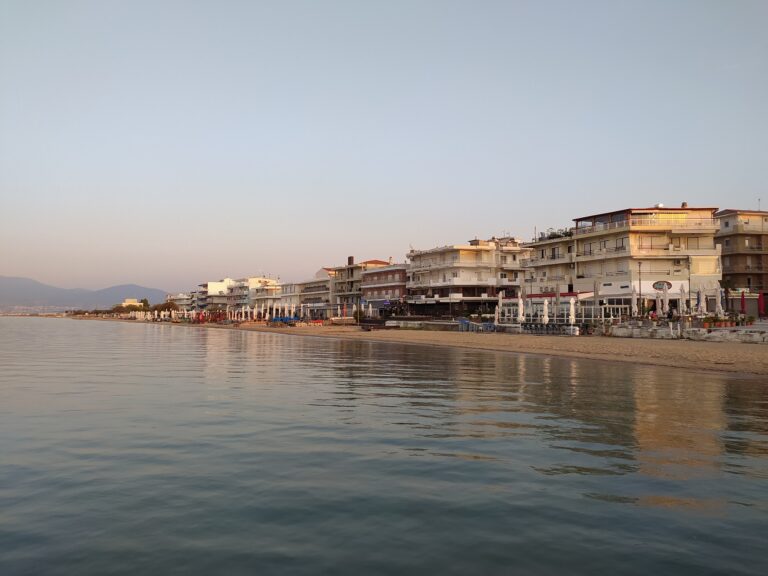
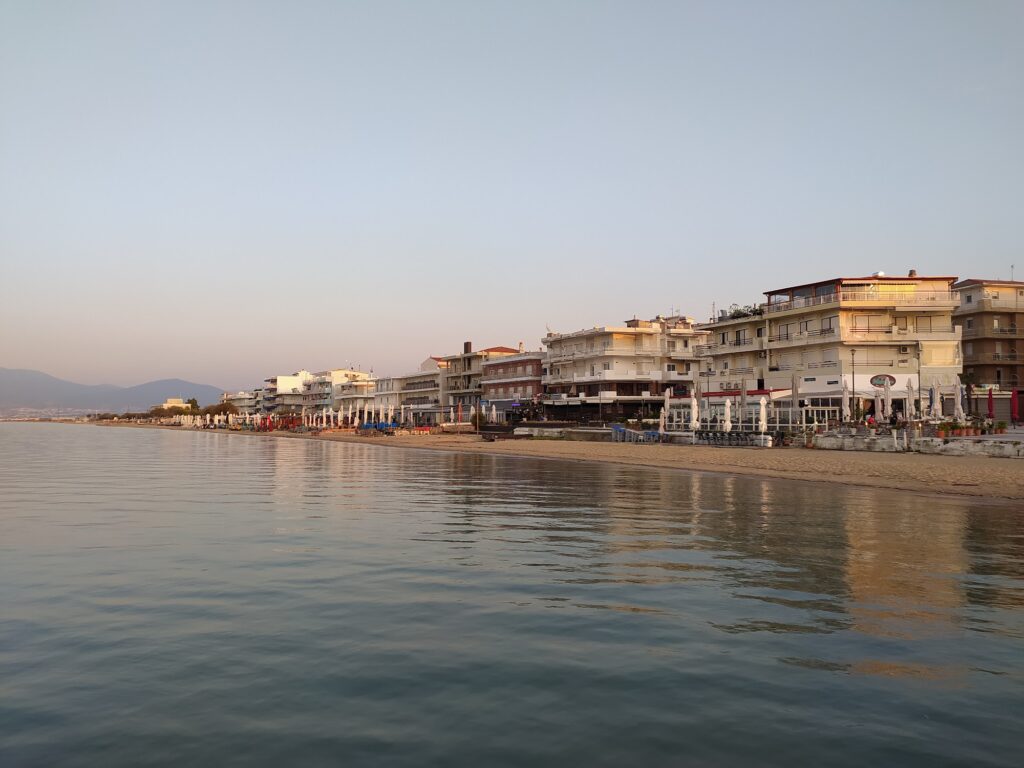
Neoi Epivates Beach is a 2-kilometre Blue Flag shore 22 kilometres southeast of Thessaloniki on the Thermaic Gulf, connected by a 2-kilometre promenade to neighbouring Perea. It is far wider, far cleaner, and far less crowded than nearby Peraia. The water is not bad for being so close to the city, but not the quality of Halkidiki, another hour down the road, or the Greek islands. Its best selling point is that it is the closest place to the city you can swim, so it gets a lot of day-trippers from Thessaloniki.
Getting There: Karavakia Waterbus €7 from the White Tower, Bus #72 from IKEA for €1.20, or Car 25 Minutes
The Karavakia waterbus — a fleet of three passenger vessels — sails daily from the port of Thessaloniki (pier A’) with a stop at the White Tower, and covers the route to Neoi Epivates in 50 minutes. The fare is approximately €7 one way. Services run from early morning to late evening in summer. Tickets can be bought at the dock or online in advance.
By bus, take city lines 2, 3, or 8 from central Thessaloniki to IKEA (approximately 45 minutes), then bus #72 to Neoi Epivates — 25 minutes, approximately €1.20. Buses run every 30 minutes in summer.
By car from Thessaloniki centre, follow the road southeast toward the airport and continue toward Perea and Michaniona — approximately 25 minutes. Free parking is available along the beach roads, though it fills early on summer weekends.
The Karavakia boat is not just the transport option — it is a specific experience. Dolphins can sometimes be spotted from the deck. Every trip is fascinating, no matter the month of the summer or the time of day, whether you sit in the comfortable saloon of the boat or on the open deck.
The Beach: 2km, Blue Flag, Tree Shade the Full Length, Seaweed Warning, Dog-Friendly
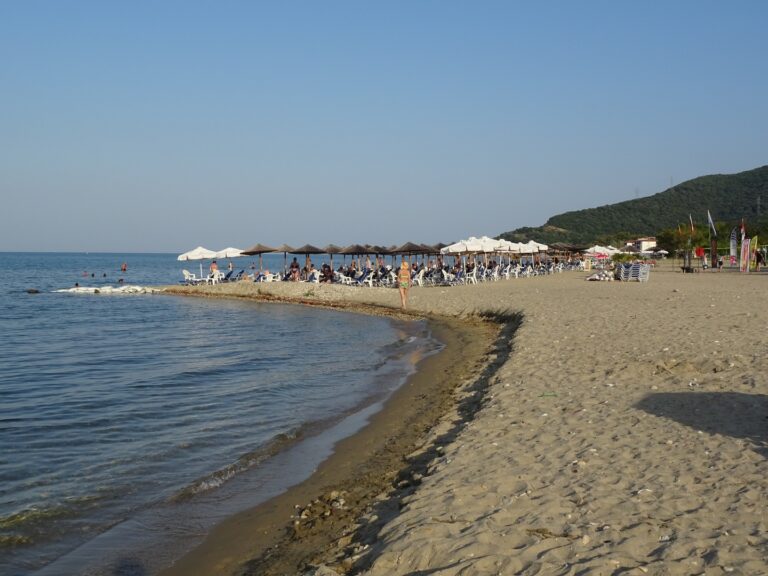
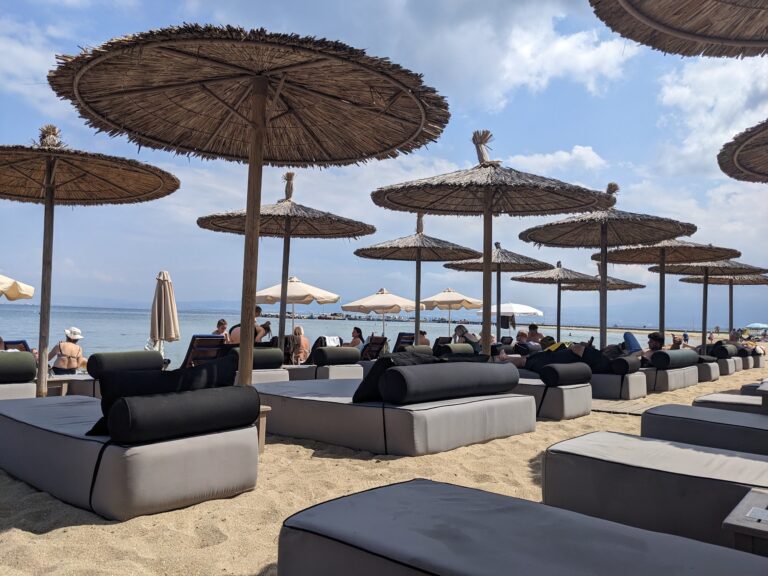
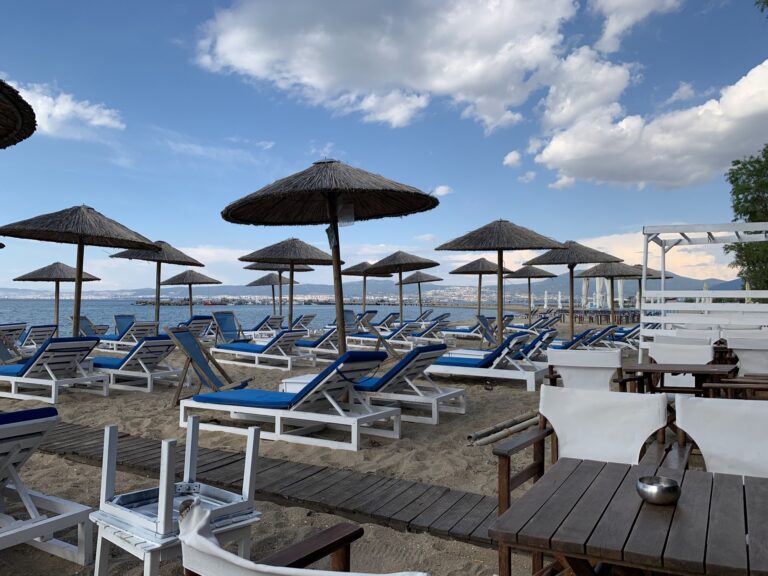
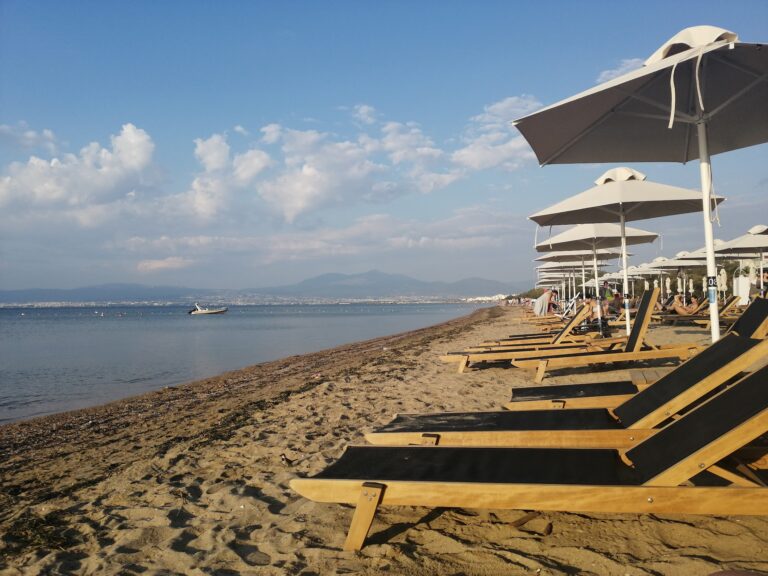
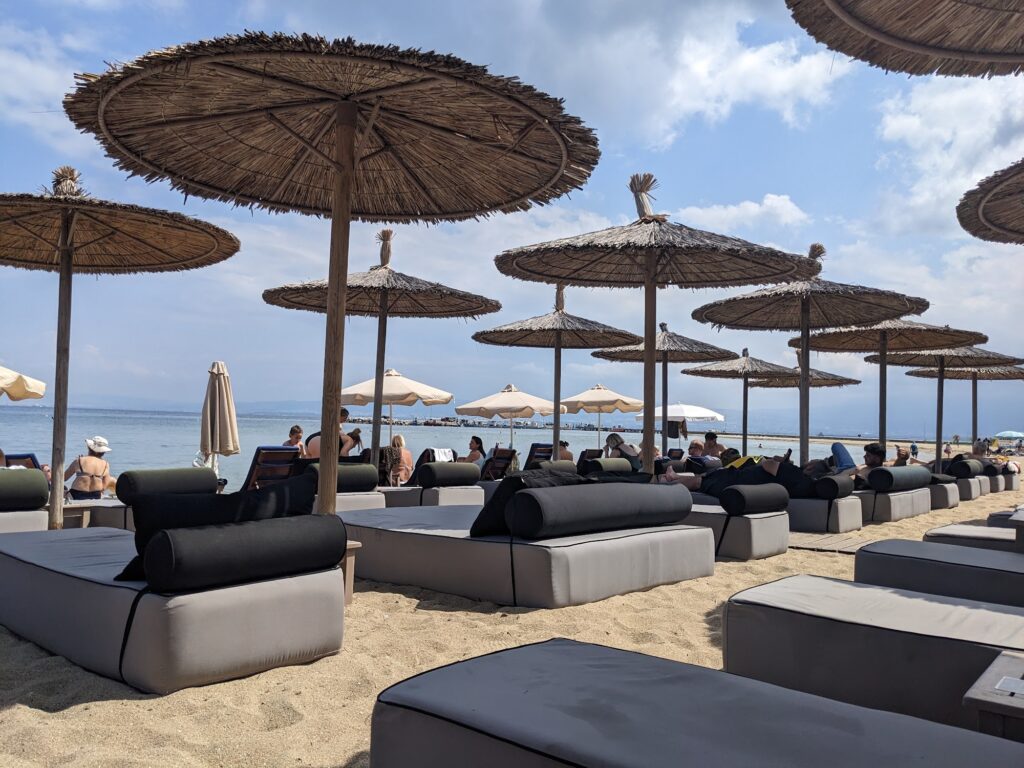
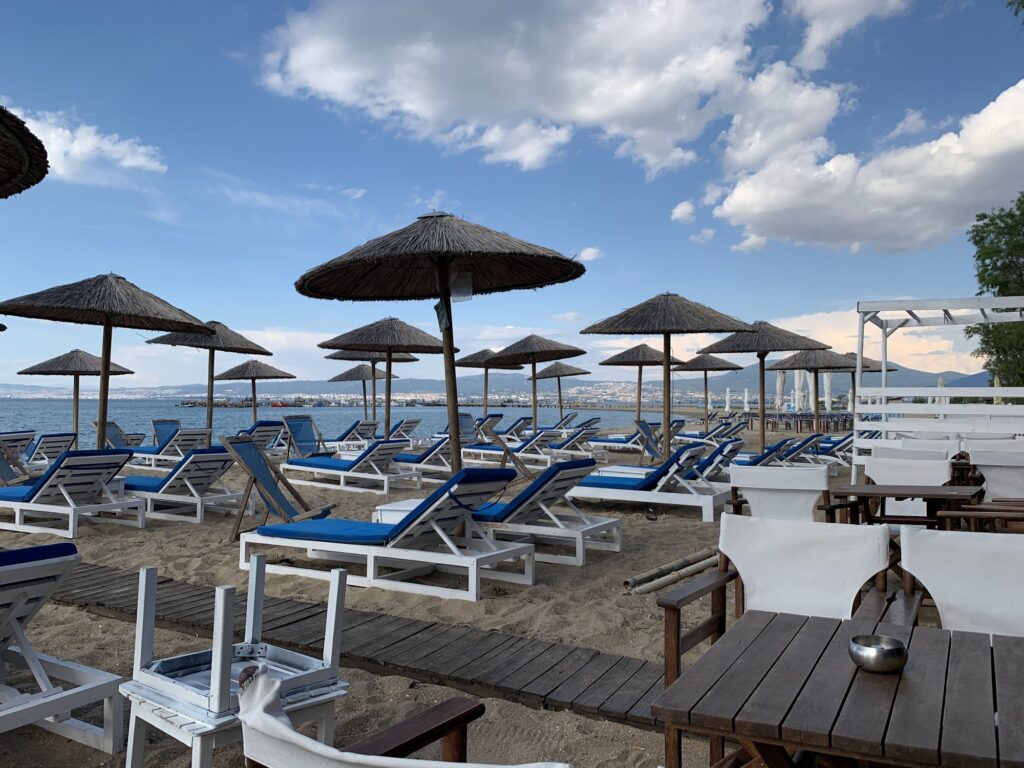
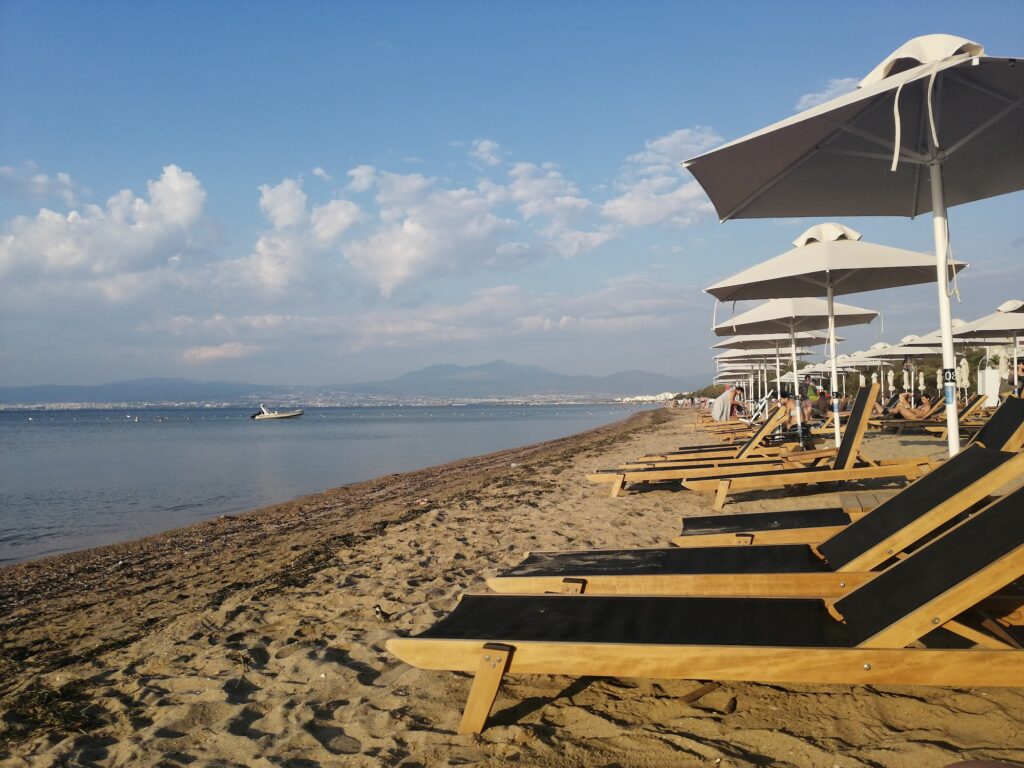
The sandy beach is the bearer of the Blue Flag, and along the entire length are huge trees whose crowns provide natural shade and coolness. There are lifeguards on the beach. The sea in this part of Greece is not as turquoise as in Halkidiki, but it is clean and calm.
The tree shade along the full 2-kilometre beach is the specific quality that distinguishes Neoi Epivates from neighbouring Perea. The large trees — predominantly tamarisk and other coastal species planted in the decades after 1923 — provide natural shade throughout the day on a beach that is otherwise fully south-facing under the Macedonian summer sun. Visitors without a beach umbrella can find shade at any point along the beach length.
On good days, there is barely any seaweed and the water is crystal clear. One of the best things is that you can walk really far out before it gets deep, making it great for swimming or just relaxing in the water. The water is relatively warm. However, some areas may have seaweed, which can affect water clarity during the summer. The Thermaic Gulf’s shallow, enclosed character produces seasonal seaweed accumulation along the shore during calm, windless periods. Arriving in the morning before wind picks up is the practical approach to finding the clearest conditions.
The disability access infrastructure at the beach includes a seatrac machine for sea access and accessible toilet facilities — one of the more comprehensively equipped beaches on the Thessaloniki suburban coast for visitors with mobility limitations.
The beach is dog-friendly, allowing visitors to bring their pets.
Neoi Epivates vs Perea: The Settled Local Debate
If you are in doubt about choosing a place near Thessaloniki: Neoi Epivates is recommended for those who want a quieter vacation, while neighbouring Perea is for those who like livelier and louder places.
The practical distinction: Perea has more beach bars, louder music, and slightly more commercial intensity. Neoi Epivates has the tree shade, the Blue Flag water, the wider beach, and the quieter atmosphere. Both share the same Thermaic Gulf water and the same view of the Thessaloniki skyline across the gulf. The 2-kilometre promenade connecting them means choosing one as the accommodation or beach base and walking to the other for the evening does not require a taxi.
This was the place to come to in the 1960s when the water was cleaner and before the road to Halkidiki opened up. When that happened, a lot of Thessalonians built summer homes in Halkidiki and left the Neoi Epivates–Perea area. The coast’s peak era was before Halkidiki became accessible; it has operated since as the close, reliable, year-round beach for the city rather than the destination summer retreat.
The Baxe Tsifliki Name and the Tsitsanis Song
Until the liberation of Macedonia in 1912, the area was a fief of a Turkish Pasha and was called Baxe Çiftlik — “garden farm” in Turkish — a name by which the area is still known to this day. Hence the song of the same name by the well-known Greek composer Vassilis Tsitsanis, who maintained relations with the region.
Vassilis Tsitsanis (1915–1984) is one of the most celebrated composers of rebetiko and laïko music in Greek cultural history — the composer of Συννεφιασμένη Κυριακή (Cloudy Sunday), written under German occupation, and dozens of canonical popular songs. His connection to this specific coastal estate and its Ottoman name gives Neoi Epivates an unusual cultural footnote in Greek musical history.
The full name archaeology of the location — Baxe Çiftlik (Ottoman estate) → Neoi Epivates (named by Istanbul refugees) → beach resort for Thessaloniki — is 100 years of Greek Macedonian coastal history compressed into one 2-kilometre stretch of sand.
The Pier: Catamaran Hire, Sunset Photography, Amateur Fishermen
A picturesque pier offers rentals of catamarans, boats, and yachts. Vigilant lifeguards are stationed on watchtowers. At dusk, the twinkling lights of Thessaloniki begin to shine over the sea.
The pier is the specific architectural feature of Neoi Epivates that the source article correctly identifies as the photography destination. The view from the pier end — the Thermaic Gulf in front, the Thessaloniki waterfront visible across the water to the northwest, and Mount Olympus at 2,919 metres on the western horizon on clear days — is the specific panorama that the beach promenade level cannot achieve.
Amateur fishing from the pier is a consistent local evening activity. The pier has been the social and fishing gathering point of the settlement since the refugees built the first wooden one in 1923.
Watching the Planes: The Airport Directly Adjacent
It is interesting to relax in the water or on the lounge and watch the planes take off from the airport of Thessaloniki, which is right there.
Thessaloniki International Airport Makedonia (SKG) sits immediately adjacent to the Neoi Epivates coast. Commercial aircraft on approach and departure fly at low altitude directly above the beach. This is the specific unexpected feature that distinguishes the experience — watching a full-size commercial jet at close range from a beach sunbed is not available at any other significant Greek beach.
Neoi Epivates Beach near Thessaloniki is the 2-kilometre Blue Flag shore where 159 refugee families from Istanbul rebuilt their community in 1923, ran 5 daily boat services to the city by 1928, and gave the beach the tree shade, the quiet character, and the pier that distinguish it from neighbouring Perea — plus the Tsitsanis song about the Ottoman estate name, the airport planes overhead, seaweed in calm weather, and the Karavakia waterbus for €7 still running the same route a century later.
Take the boat from the White Tower. Stay for the pier sunset.
Map
Sorry, no records were found. Please adjust your search criteria and try again.
Sorry, unable to load the Maps API.
Near by places: