Agia Triada Beach: Refugees, Ferries, Sand
Profile
Agia Triada Beach: The Village Ottomans Called White Faucet
Greece | Thessaloniki | Thermaikos | Thermaikos Gulf
Under Ottoman rule, the village now known as Agia Triada was called Aspri Vrisi, White Faucet, and it only took its current name after refugees from Exastero and Pontoirakleia in Asia Minor, along with families from Economeio, a town near Epivates now called Koumburgas, arrived in 1922 and rebuilt their lives on this stretch of the Thermaikos Gulf. A monument still stands on the beach here made partly from a column carried from the Church of the Economy of the Dormition of the Virgin, a physical fragment of a hometown these refugees never saw again, set into the ground of the one they built instead.
Through the 1960s and into the 1970s, this beach became something close to a Thessaloniki institution, ferry boats with names like Lefki, Hellas, Eudokia, and Nautilus running daily from the city’s White Tower, carrying thousands of bathers out to Agia Triada and its neighboring beaches at Perea Beach Thessaloniki Greece and Nea Michaniona Beach Thessaloniki Greece, the same three boats crossing back and forth all day while people swam, ate at seafood tavernas, and eventually caught a return trip home.
A Long Blue Flag Beach With a Gentle Slope
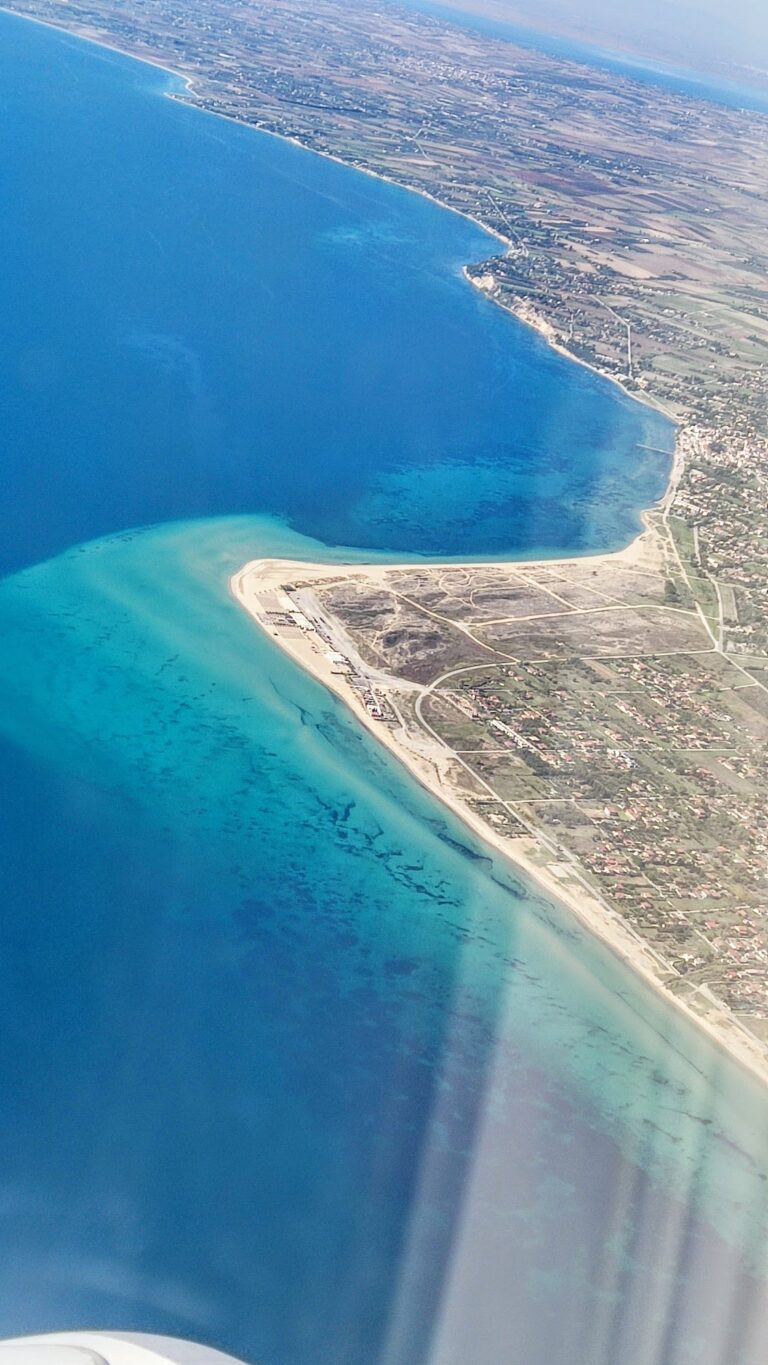
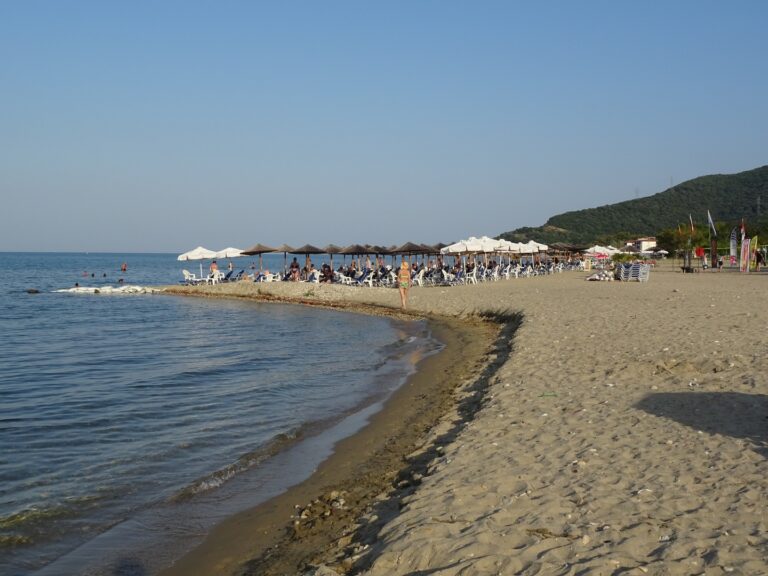
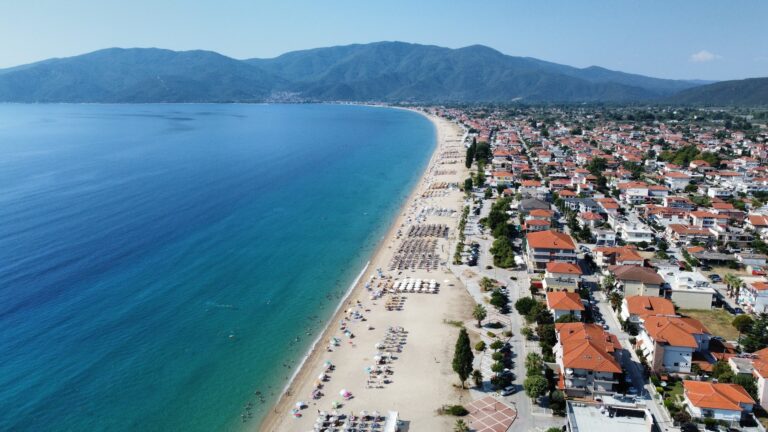
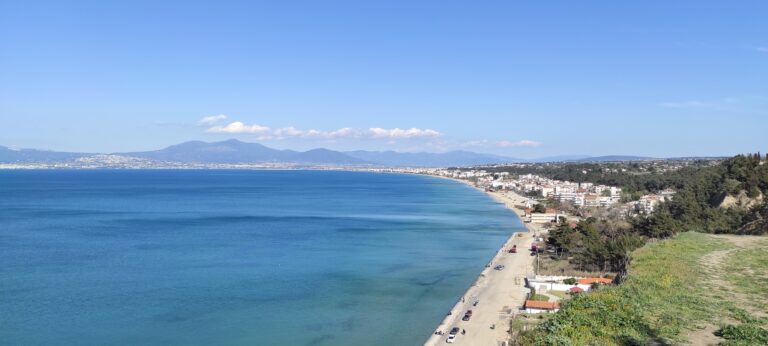
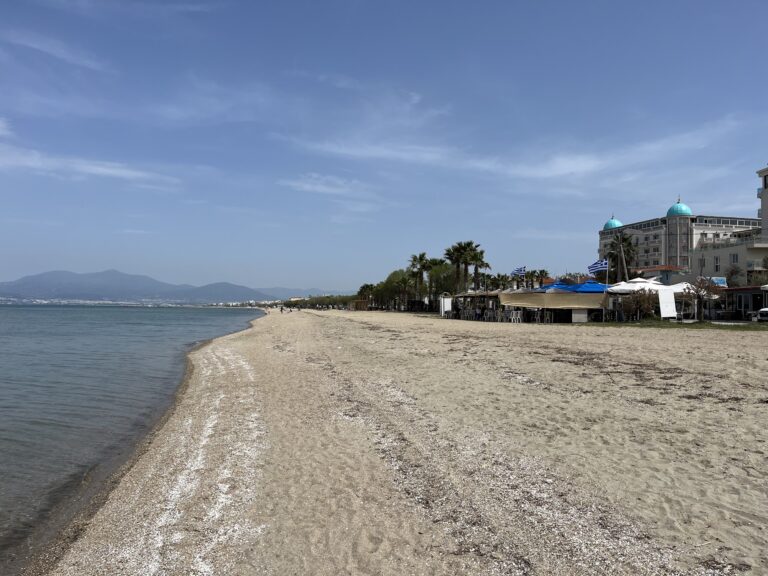
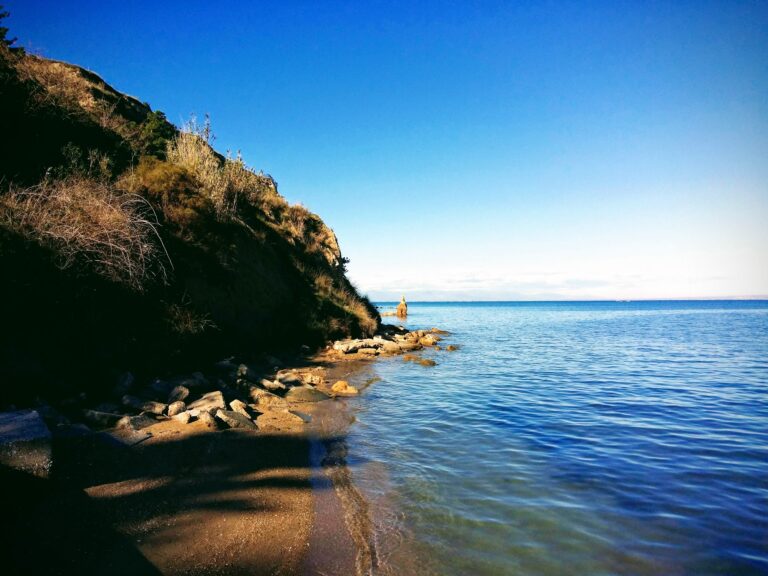
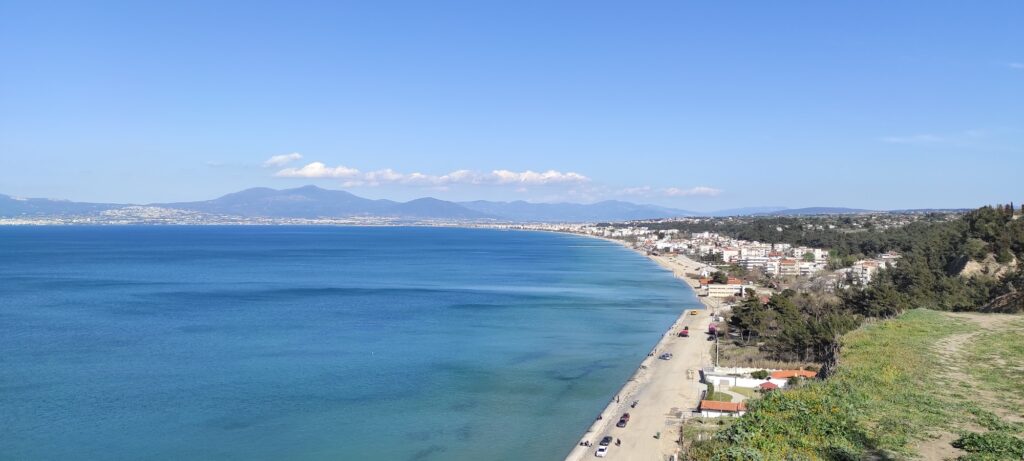
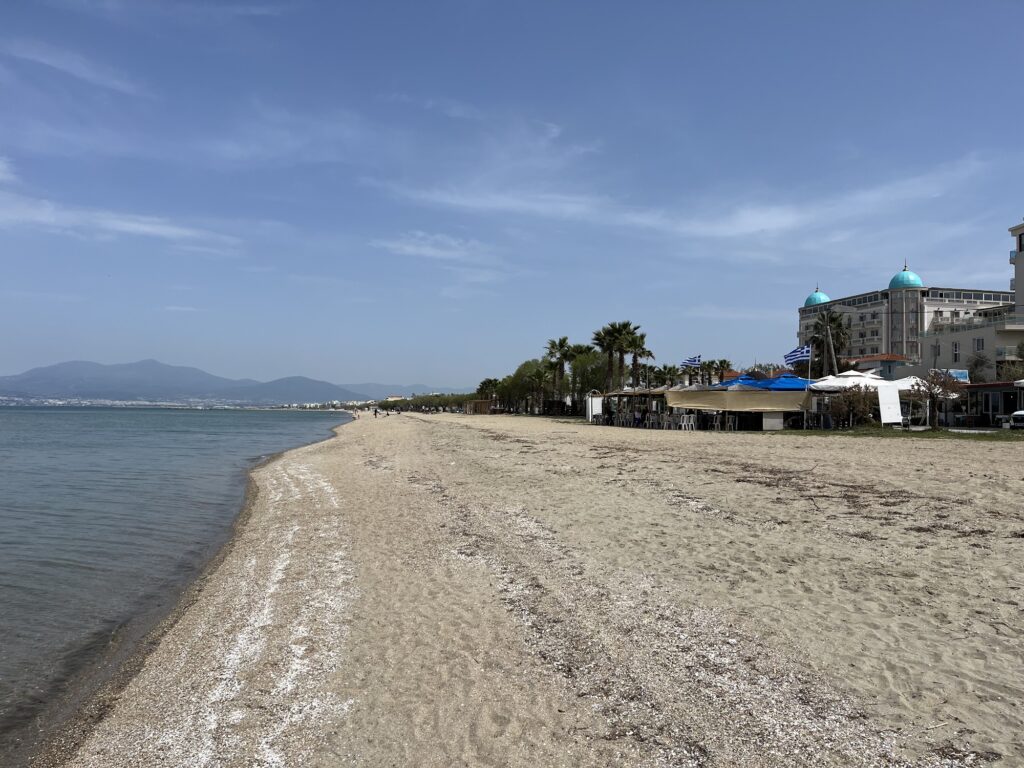
Agia Triada holds Blue Flag certification, and I found the water genuinely clear and calm on every visit, golden sand giving way to a shallow entry that stays gentle for a long stretch from shore, making this one of the more reassuring beaches on this coast for supervised swimming with young children. The gulf’s protected position keeps the water consistently still, and I found myself returning more than once simply for an easy, unhurried swim rather than anything demanding.
Beach Bars, Tavernas, and a Promenade Built for Evening Walks
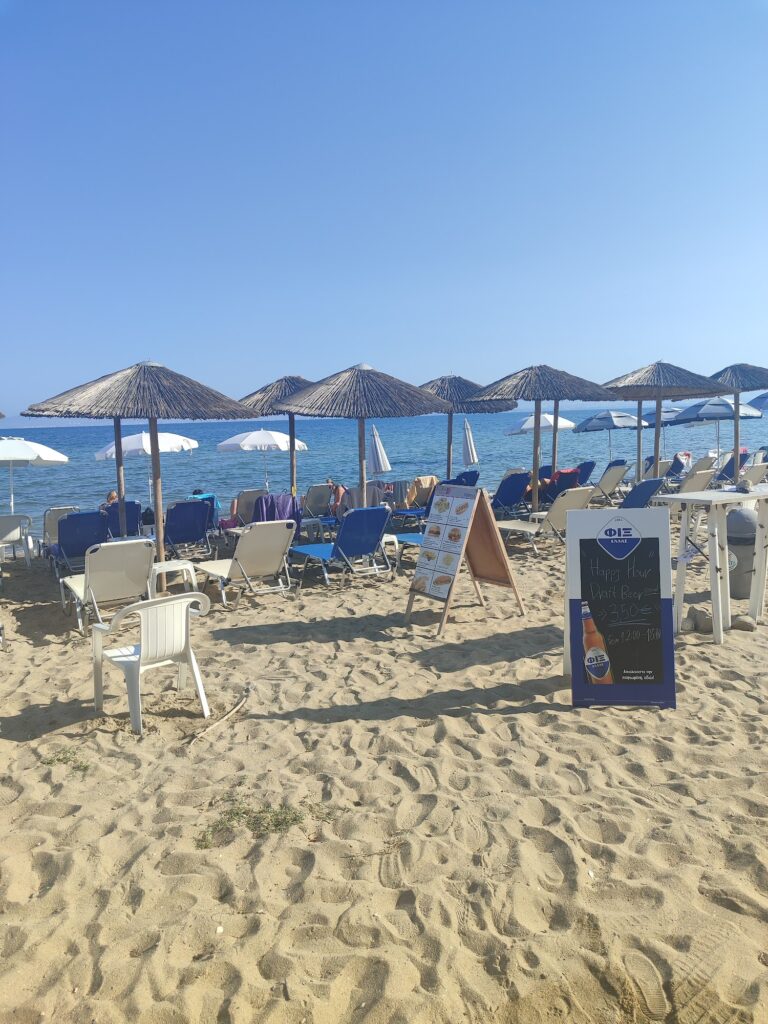
Organized beach bars line sections of the shore, sunbeds and umbrellas managed with attentive service, and fish tavernas and contemporary bistros sit just behind the sand serving fresh Macedonian seafood. A paved, lit promenade runs parallel to the beach, and I made a habit of walking it in the evening specifically for the view back toward Thessaloniki’s lights beginning to show across the gulf as the sky shifted through orange and violet. Given how organized the central beach-bar sections are, I’d expect dogs to need explicit permission there, following the pattern at similarly managed Greek beaches, though quieter stretches further from the main cluster likely allow leashed access without much trouble.
Where Thousands of Thessaloniki Bathers Once Disembarked Daily
Standing at the small pier where those ferry boats once unloaded passengers, I found it genuinely striking how thoroughly this beach functioned as a shared civic ritual for an entire generation of Thessaloniki residents, families making the same crossing week after week through decades before cars and coastal roads made the trip considerably less of an event. Summer cinemas and beach parties once filled these same evenings, and while the boats themselves are long gone, the karavakia still run seasonally from the port, a smaller echo of that earlier daily rhythm.
Getting There and Settling In
Agia Triada sits about 25 kilometers from central Thessaloniki, a drive of twenty-five to thirty minutes following the road toward the airport and continuing on toward Michaniona; OASTH Bus 72 runs from the IKEA terminal directly to a stop near the main beach entrance, and during summer months a water taxi service operates from the port and the White Tower straight to the Agia Triada pier, a genuinely scenic way to arrive that echoes, in a smaller way, the old ferry routine this beach was built around. Parking runs along the streets parallel to the sand, with an earlier arrival before eleven making a real difference in claiming a spot close to the water on peak summer weekends.
Standing at the Column That Came From Somewhere Else
By the time I left Agia Triada on my last evening, the lights of Thessaloniki had fully come on across the gulf, and I stood a while longer by the beach’s small refugee monument, thinking about a village once called White Faucet under one empire, rebuilt and renamed by people fleeing another, its identity now settled comfortably into something considerably quieter than either version, just a long stretch of Blue Flag sand where a column from a lost church still marks what it took to get here.
Map
Sorry, no records were found. Please adjust your search criteria and try again.
Sorry, unable to load the Maps API.
Near by places: