Paralia Katerinis Beach: The Olympic Riviera's Hub
Profile
Paralia Katerinis Beach, Olympic Riviera: The 1922 Refugee Village That Hosts 50,000 Guests Every Summer, Below the Home of the Gods
Greece | Paralia Katerinis | Pieria Region
Paralia Katerinis means “Katerini’s beach” in Greek — a direct, practical name for a seaside settlement 8 kilometres east of the city of Katerini that exists for exactly the purpose the name describes. The village was founded in 1922 to house refugees from Kios (Gemlik) in Turkey following the catastrophic population exchange that ended the Greco-Turkish War and displaced over one million Greeks from Anatolia. The founding community numbered approximately 1,500 people. The summer population now reaches 50,000. The distance between those two numbers is the history of Greek coastal tourism compressed into a single settlement.
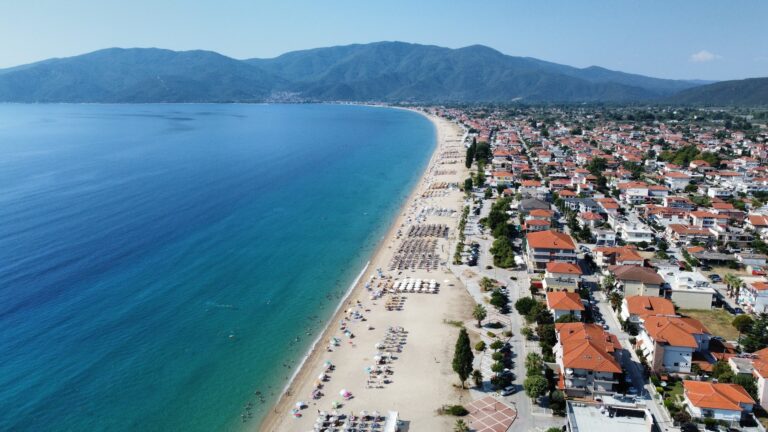
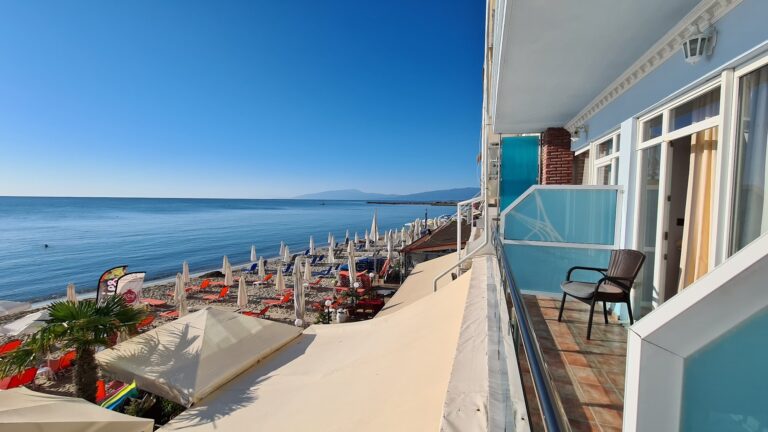
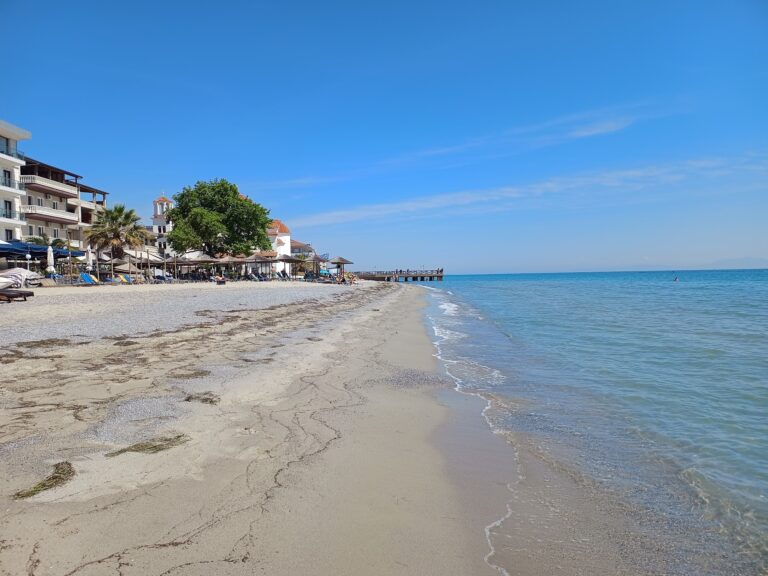
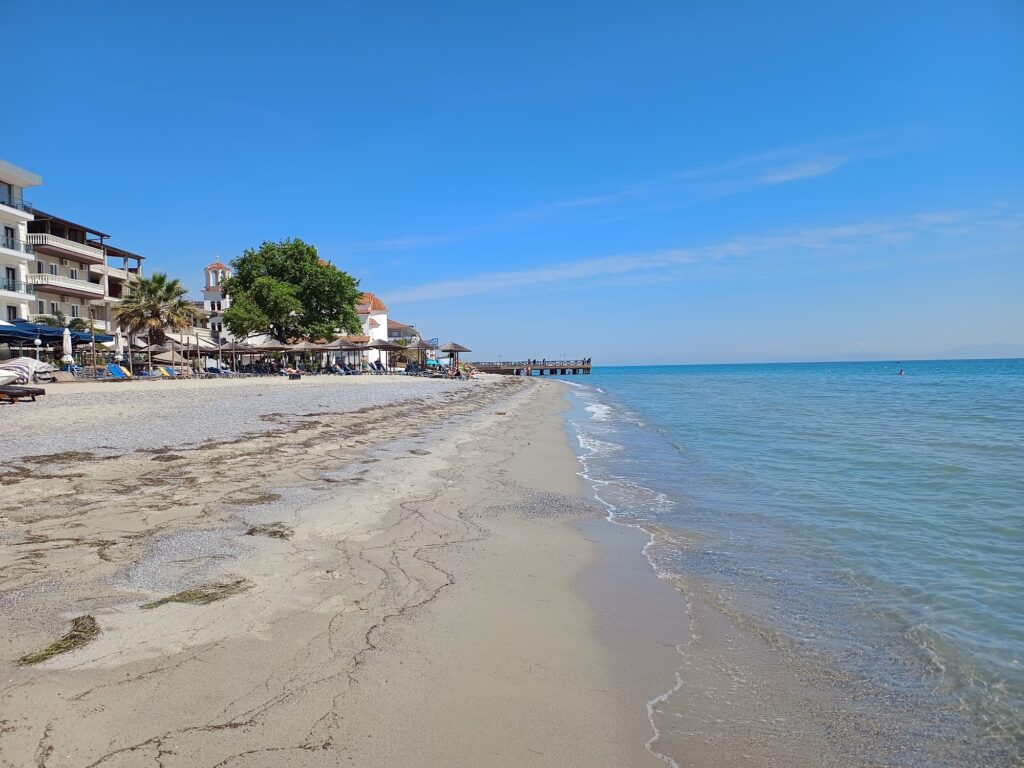
The beach at Paralia Katerinis is Blue Flag certified, several kilometres long, golden sand throughout, and the principal resort on the Olympic Riviera — the 70-kilometre coastal stretch from Neoi Pori in the south to Makrygialos in the north, named for the mountain that dominates its western horizon. Mount Olympus rises to 2,919 metres (Mitikas peak, the highest point in Greece) approximately 28 kilometres southwest of the beach. The specific quality of the Olympic Riviera that no other Greek beach destination provides in the same form is this: you swim in the Thermaic Gulf of the Aegean while looking directly at the mountain that the ancient Greeks called the home of the twelve Olympian gods.
Getting There: 70km from Thessaloniki by Car or KTEL Bus to Katerini, then Local Bus or Taxi 8km
From Thessaloniki, the drive south on the A1 National Road toward Athens takes approximately 45 minutes to the dedicated exit for Katerini/Paralia. The road is motorway-standard throughout and the exit is clearly signed.
By KTEL Macedonia bus from Thessaloniki, the service to Katerini city runs approximately every 30 minutes throughout the day, taking approximately one hour. From Katerini central bus station, a local KTEL bus to Paralia Katerinis runs every 15 to 20 minutes in summer, or a taxi covers the 8 kilometres in approximately 10 minutes.
By train, the Thessaloniki–Athens intercity line serves Katerini station. The 8-kilometre gap between the station and the beach still requires a taxi or the local bus.
Parking is available in large public lots at the entrance to the settlement and along the promenade perimeter. The consistent advice is arriving before 11am for central beach positions in July and August.
The Beach: Blue Flag, Sandy, Shallow, Organised and Free Sections, Sunbeds With a Drink
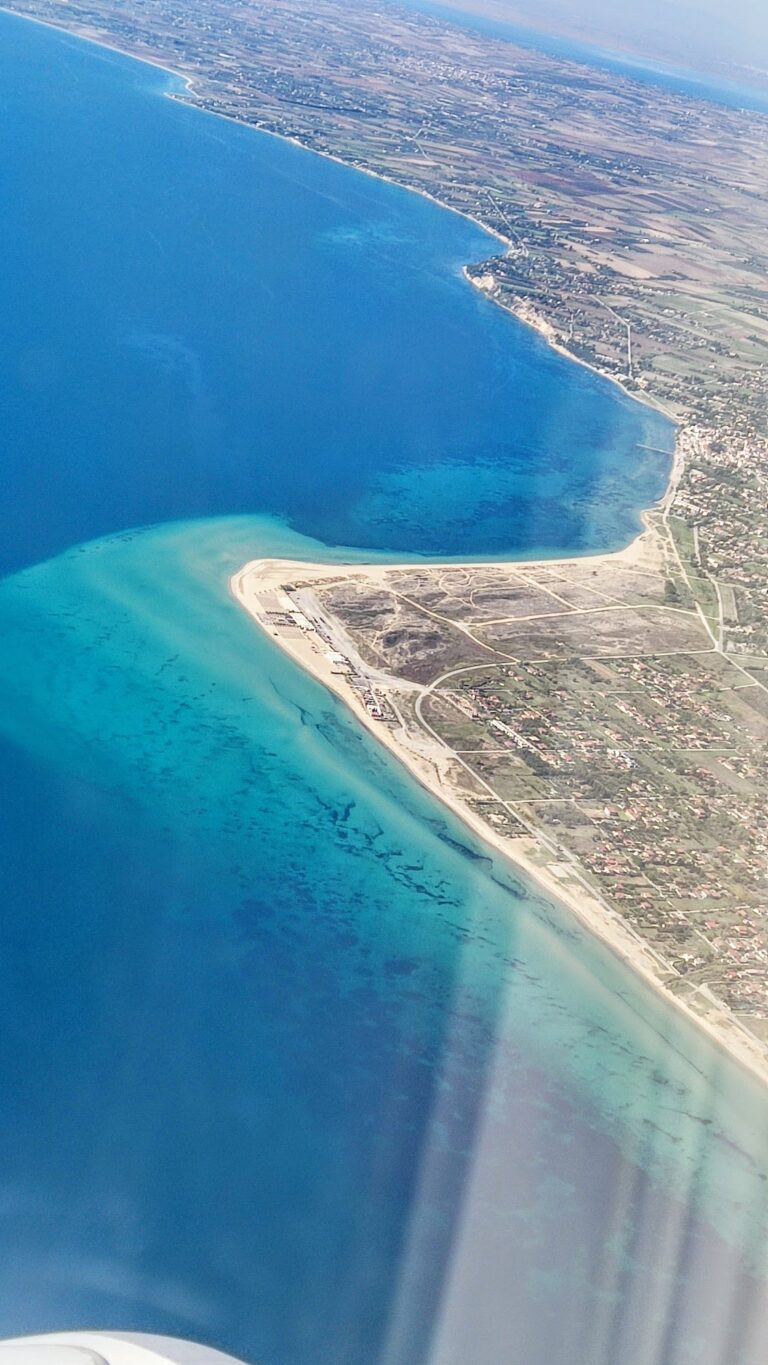
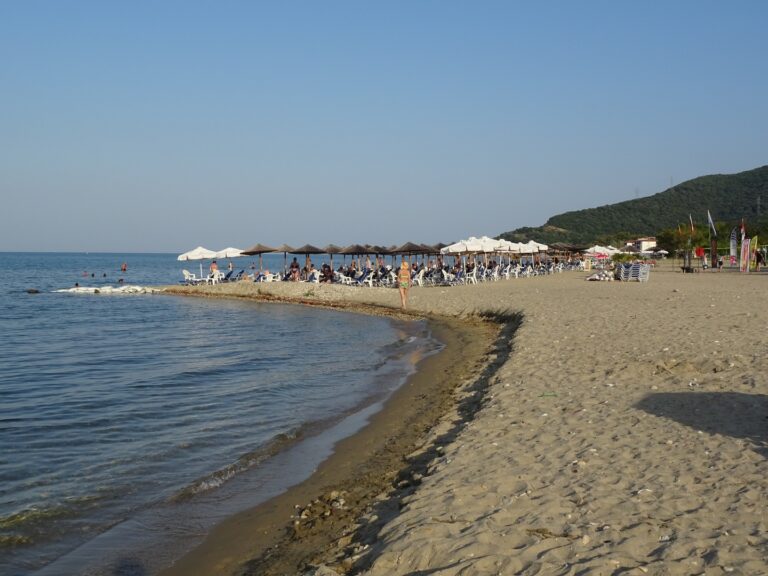
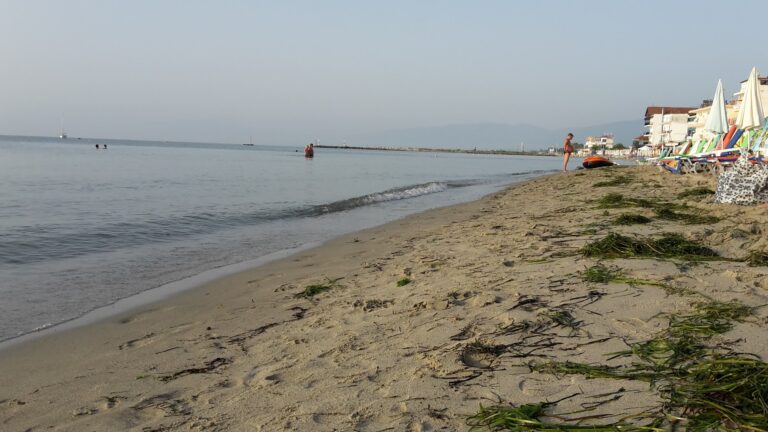
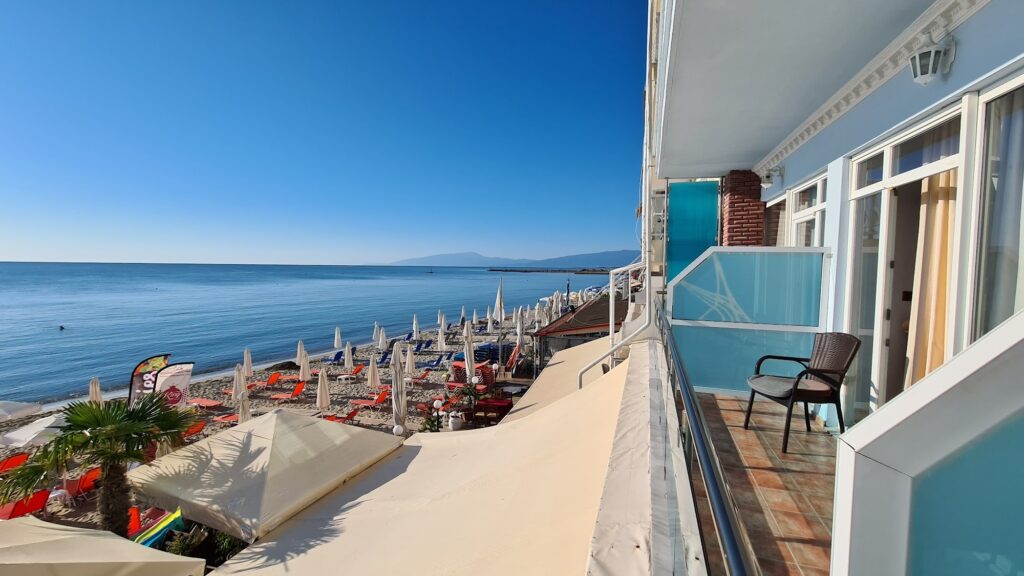
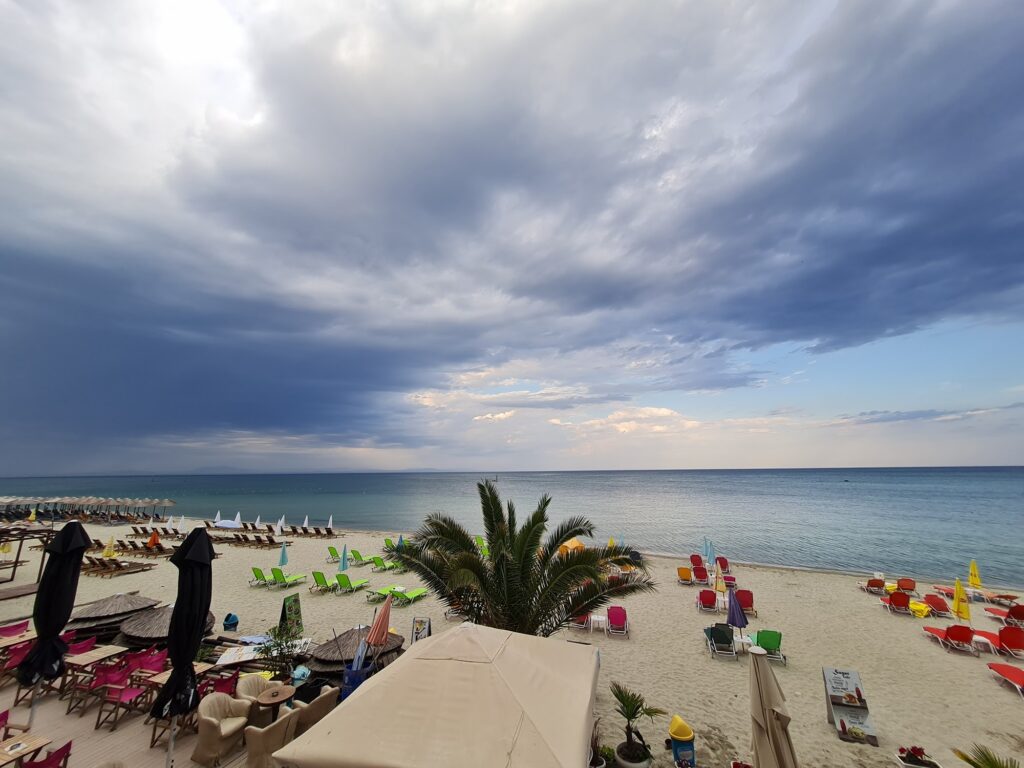
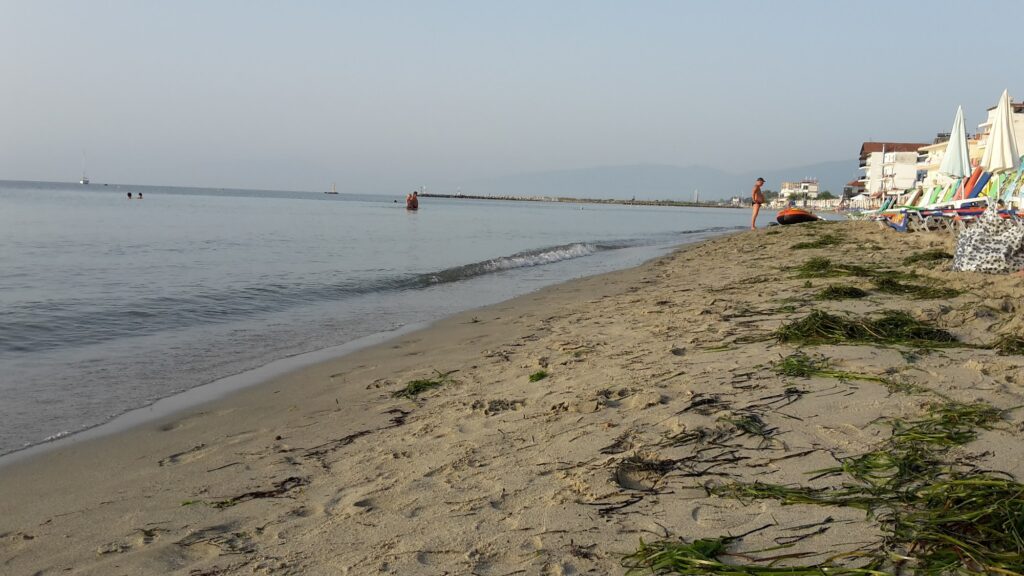
The Paralia Katerinis beach extends over several kilometres of fine golden sand along the Thermaic Gulf. The sea is notably shallow at the entry and calm — no significant wave action from the enclosed gulf — making it the specific shallow-water family beach environment that the Thessaloniki region uses for its summer recreation in the same way that Budva Riviera and Albanian Riviera serve the same function for their respective urban populations.
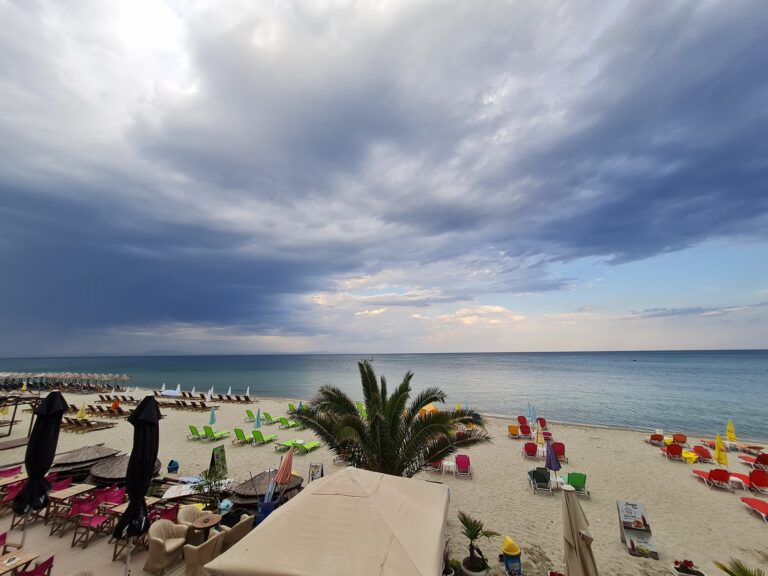
The organised sections of the beach are managed by the adjacent beach bars and cafés under the standard Greek beach bar convention: sunbeds and umbrellas are free for customers who order a drink or a snack — the same arrangement as Zephyros Beach in Rhodes and Lambi Beach in Kos. Free unorganised sections without sunbeds are available throughout the beach length. The northern section of the beach is the busiest and most amenity-complete; moving south toward Olympiaki Akti (3 kilometres away, connected by a coastal road with a bicycle and pedestrian path) the beach becomes progressively quieter.
The Olympic Riviera: 70km of Beach with the Highest Mountain in Greece as the Backdrop
The Olympic Riviera designation covers the full Pieria coast from Neoi Pori (the southern tip, near Platamonas castle) to Makrygialos (the northern end near the Axios Delta). The defining characteristic of the riviera is the mountain-and-sea combination that no other comparable beach destination in Greece offers: Mount Olympus and the Pierian Mountains rising from sea level to 2,919 metres within a horizontal distance of approximately 20 to 30 kilometres.
The uniqueness of the Olympic Riviera is that next to the beach is a national park and mountains that have become a mecca for hiking and camping enthusiasts from all over the world. The number of climbing routes to Olympus is quite large, so both beginners and experienced climbers have something to do.
The beach resort of Litochoro (28km south of Paralia), at the foot of Mount Olympus, is the principal gateway to the mountain — the starting point for the trail to Prionia refuge and the summit routes. The combination of a Paralia Katerinis beach day and a Litochoro evening, with the mountain visible from the beach and the beach visible from the mountain above the town, is the specific Olympic Riviera programme that the geography enables.
The Fur and Leather Shopping: The Reason Some Visitors Come to Pieria
The Pieria region is the main fur and leather production centre in Greece — a tradition connected to the farming communities of the interior that has made Kastoria and the surrounding area the dominant Greek centre for fur processing and retail. The coastal resort strip of Paralia Katerinis has capitalised on this proximity with boutique fur and leather shops along the promenade. The combination of beach tourism and specialist retail is specific to this part of the Greek coast and is part of the Paralia commercial identity that the source article accurately identifies.
The Ancient City of Dion: Alexander the Great’s Sacred City at the Foot of Olympus
The archaeological site of Dion is located at the very base of Mount Olympus, 28 kilometres south of Paralia Katerinis near Litochoro. Wandering through the partly-restored ruins of this ancient Macedonian town is one thing. The views of an imposing Mount Olympus is another.
Dion was the sacred city of the Macedonian kingdom — the place where Philip II and Alexander the Great made their sacrifices to Zeus and the Olympian gods before and after military campaigns. The site’s theatre, temples (including the celebrated temple of Isis with the only Greek or Macedonian goddess statue found in situ in the world), bathhouse, and the waterlogged lower city preserved in exceptional condition by the water table make it the most significant archaeological day trip from the Olympic Riviera beach.
The Archaeological Museum of Dion in the modern village holds the finds from the excavations, including the extraordinary musical instrument reconstruction of the hydraulis — the ancient water organ invented by Ctesibius of Alexandria in the 3rd century BC, of which a replica has been reconstructed from the Dion finds.
Platamonas Castle and Vergina: The Day Trips Beyond Dion
Platamonas Castle — the medieval fortress that dominates the landscape at the southern end of the riviera, set on the ruins of the ancient city of Herakleion — is 36 kilometres south of Paralia. It is not open to the public in full, but the exterior and the coastal view from its position are the reason to stop.
Vergina (ancient Aegae) — the original capital of the Macedonian kingdom, 60 kilometres west of Paralia — contains the Royal Tombs that yielded the gold larnax with the Star of Vergina believed to hold the remains of Philip II of Macedon, father of Alexander the Great. The tomb museum, built underground beneath the burial mound, is one of the most remarkable museum installations in Greece. The round trip from Paralia Katerinis to Vergina and back covers the full depth of the Macedonian historical landscape that the Olympic Riviera’s geographical position within ancient Macedonia enables.
Founded by 1922 Refugees: The Settlement’s Specific Historical Origin
The village was founded in 1922 to house refugees from Kios (Gemlik) — a town on the Sea of Marmara in what is now Turkey — following the Convention Concerning the Exchange of Greek and Turkish Populations agreed at the Treaty of Lausanne in 1923. Approximately 1.2 million Greeks were expelled from Anatolia and 400,000 Muslims from Greece in the exchange. The refugees from Kios who founded Paralia Katerinis were among the communities that the Greek state settled on the northern coast, where land was available and the fishing economy was familiar to Anatolian Greek coastal communities.
Paralia Katerinis Beach on the Olympic Riviera is the Blue Flag sandy resort 70 kilometres from Thessaloniki — founded by 1922 refugees from Kios, hosting 50,000 summer visitors, Mount Olympus on the western horizon, sunbeds free with a drink purchase, fur shops on the promenade, the Dion ruins 28 kilometres south, and Alexander the Great’s father’s tomb at Vergina 60 kilometres west.
Drive south from Thessaloniki on the A1. Take the Katerini/Paralia exit.
Look west from the beach. That is where the gods lived.
Map
Sorry, no records were found. Please adjust your search criteria and try again.
Sorry, unable to load the Maps API.
Near by places: