Nea Vrasna Beach Greece: Blue Flag Shore With Dolphins
Profile
Nea Vrasna Beach, Northern Greece: The Blue Flag Shore Where Dolphins Appear in the Afternoon and the Depth Begins One Metre from Shore
Greece | Nea Vrasna | Strymonikos Gulf, Central Macedonia
The Strymonian Gulf area is characterised by more frequent winds and waves in the afternoon. This applies especially to Asprovalta, Nea and Paralia Vrasna. The practical consequence: morning swimming is the optimal window — before the afternoon Meltemi effect reaches the open bay — and the wave character that the open exposure produces makes Nea Vrasna different from the sheltered bays of Halkidiki, where the sea is often mirror-flat.
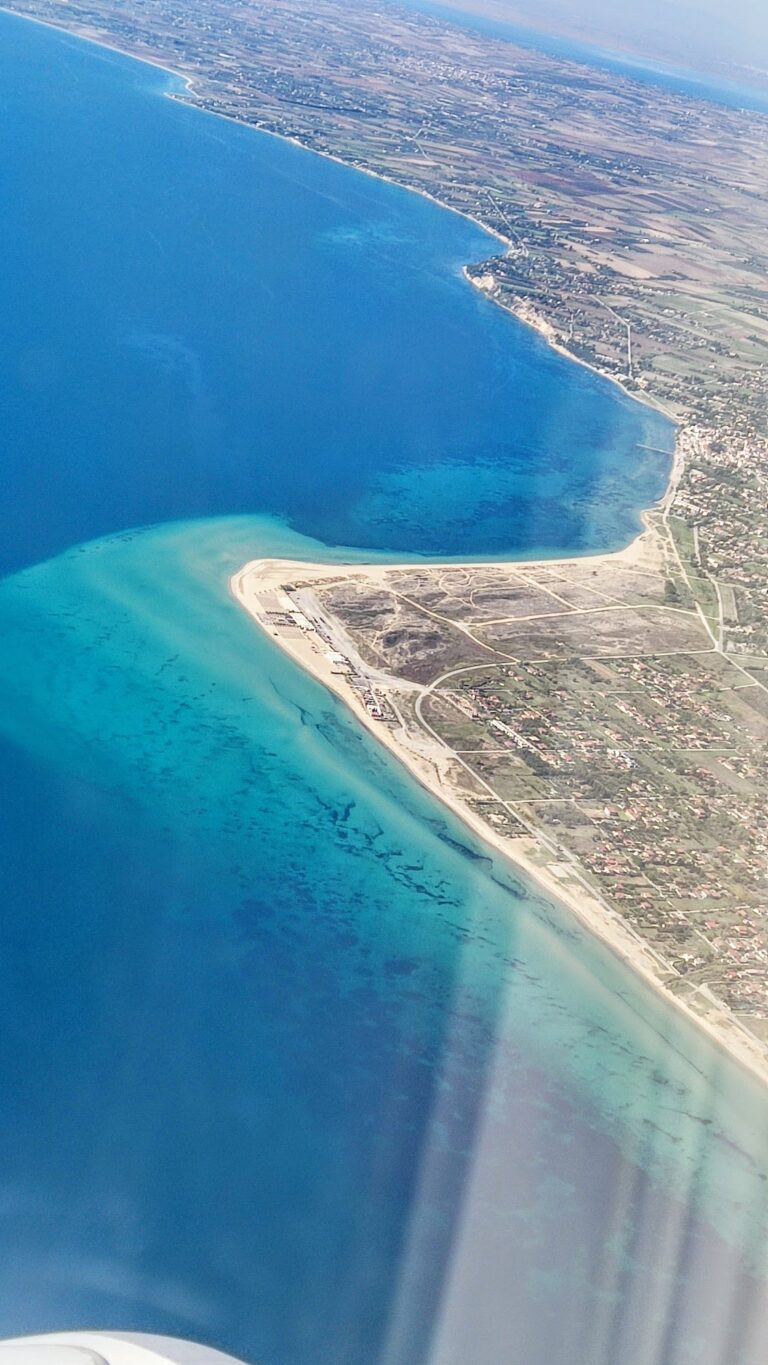
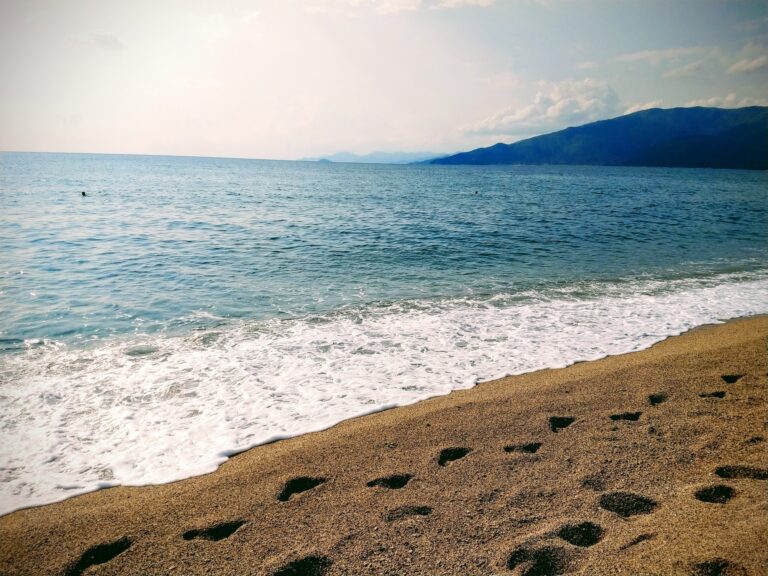
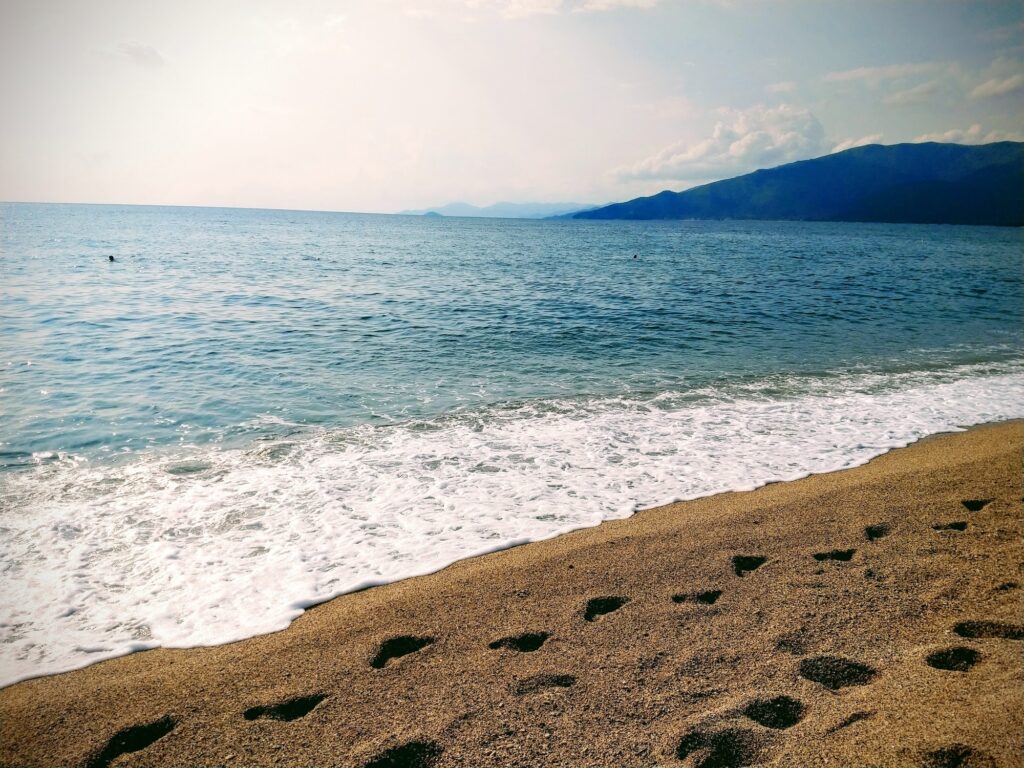
The colour of the sea is not turquoise due to the darker sand, but the sea is very clean here. The darker sandy seabed is the geological reality that the promotional photographs of northern Greek beaches sometimes obscure. The sea at Nea Vrasna is not the Caribbean turquoise of Ksamil or the Ionian; it is the deep blue of the open Aegean in its northern form — clear, clean, and cold at depth.
It is interesting that dolphins can be seen quite often in the Thessaloniki region, especially in the afternoon and very close to the coast. They are particularly frequent guests of the coast near Nea Vrasna. Dolphins spotted from a Blue Flag beach an hour from Thessaloniki — this is the specific quality that the combination of the open Strymonian Gulf position and the healthy Northern Aegean cetacean population delivers at Nea Vrasna specifically.
Getting There: 70km from Thessaloniki on the Egnatia Odos, KTEL Bus, 500m Walk from Asprovalta
Nea Vrasna is about 70km from Thessaloniki and Kavala. From Thessaloniki, follow the Egnatia Odos (A2) motorway east toward Kavala and take the exit for Vrasna/Asprovalta. The drive takes approximately 45 to 50 minutes.
By KTEL Macedonia bus from Thessaloniki, services run to Asprovalta and Nea Vrasna throughout the day. The KTEL inter-regional service is the practical transport for visitors without a car. The bus drops at the town centre, a short walk from the beach.
Asprovalta is at only 500m from Nea Vrasna, and you can take the evening walk to it if you want more tourist facilities. Stavros is only 6km away. The proximity to Asprovalta is the practical advantage: Nea Vrasna offers the quieter beach base, and Asprovalta’s 300 shops and 100 restaurants are a 500-metre walk for the evenings.
The Beach: 2km Village Section, Sandy and Pebble Mixed, Depth Begins 1 Metre from Shore, Blue Flag
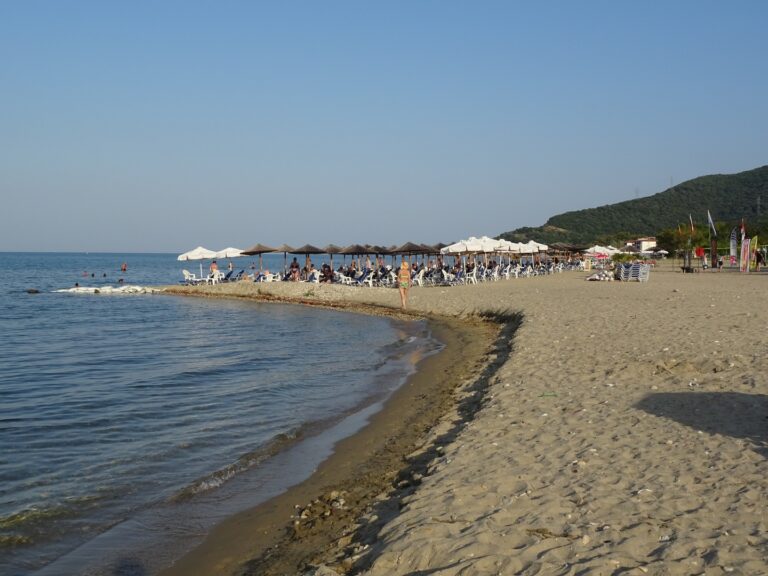
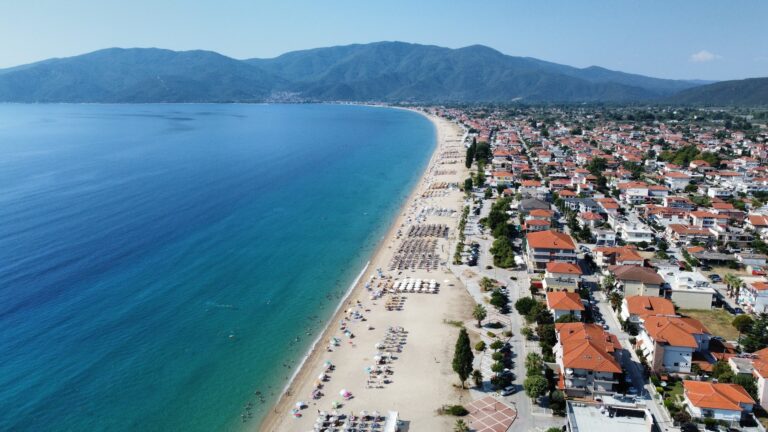
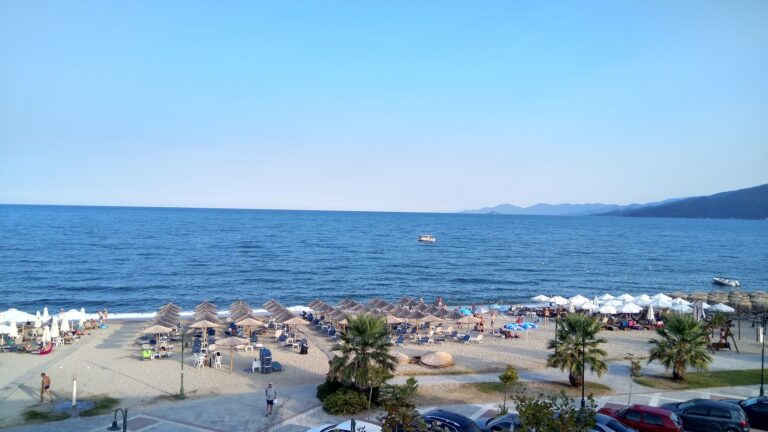
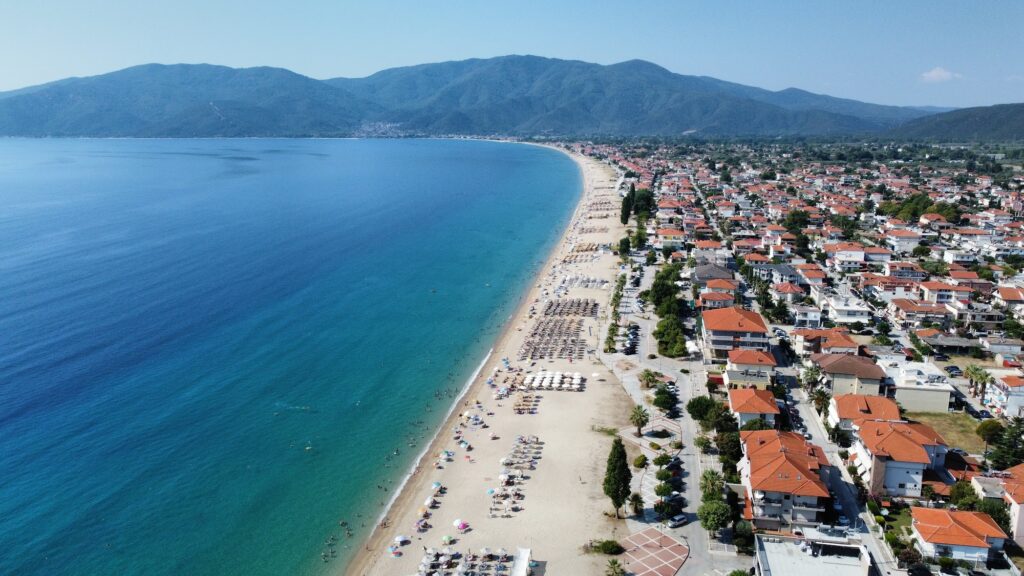
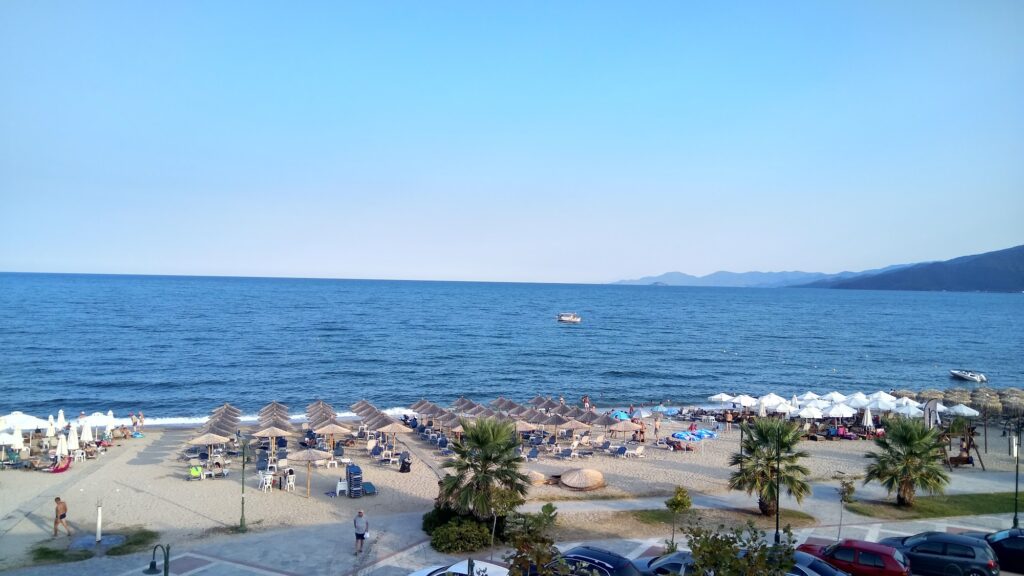
Although Nea Vrasna is not big, its coastline is about 2km long. The beach in Nea Vrasna is sandy, long and quite wide. It is arranged and clean, with umbrellas and sunbeds, but you can bring your own towel and umbrella. The shallow is not long, probably only 1m from the shore, and the depth starts immediately after it.
The 1-metre shallow zone is the specific honest note — the beach is not the extended wading paradise of the Thermaic Gulf resort beaches. The depth is reached quickly, which makes Nea Vrasna more appropriate for confident swimmers than for toddler paddling. The sandier sections are the safer entry points; the pebble patches require water shoes.
Nea Vrasna Beach is a laureate of the Blue Flag award. The beach features either sand or small pebble, depending on the spot. Turquoise waters are deep and perfectly clear, and you can see the bottom of the sea even if you swim 30 metres away from the beach. It is maintained every day and you can find showers along the beach. Certain parts feature umbrellas and sunbeds for rent, but you can choose to place your own on other sections of the beach.
Sunbeds and umbrellas are available in the organised sections at standard Greek beach rates. The free sections with personal equipment are available throughout the beach’s 2-kilometre length.
The Afternoon Wind Warning: Morning Swimming, Evening Promenade
The region is characterised by more frequent winds and waves in the afternoon. The sand is fine (not like flour) and the depth is gradual but with no shallow.
The wind pattern is the practical organiser of the day at Nea Vrasna: calm mornings suit swimming; the afternoon sea-breeze brings the waves that surfers at Paralia Vrasna (3km south) specifically seek. The morning-to-early-afternoon swimming window is the optimal use of the beach’s conditions.
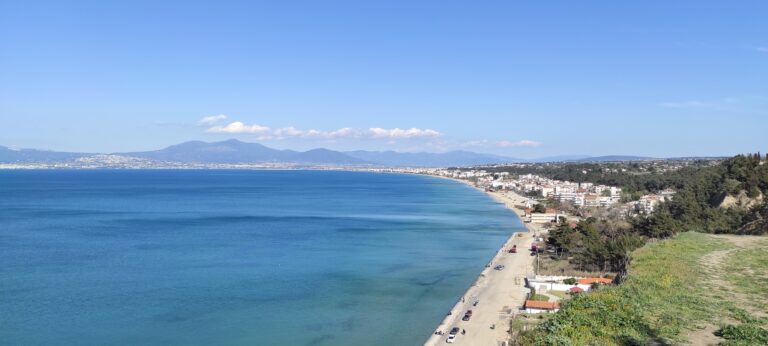
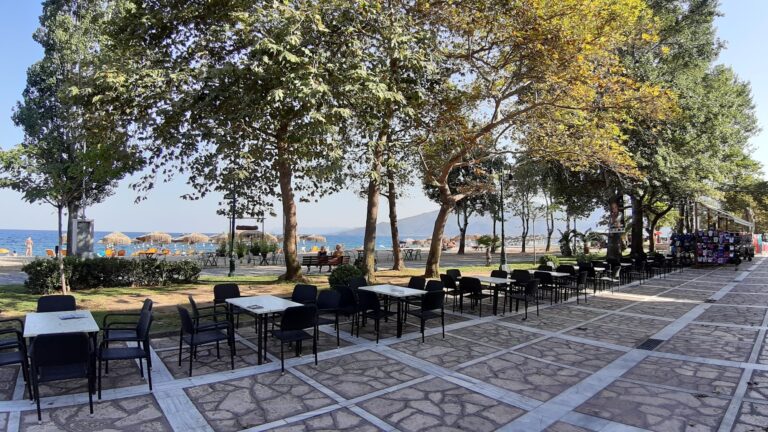
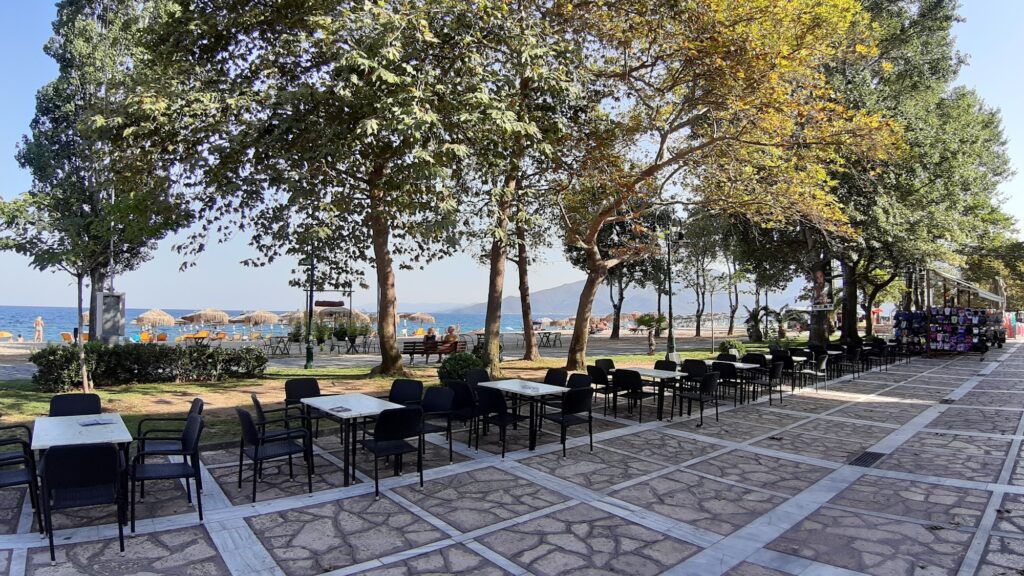
The promenade is nice and paved, long and wide, neat and clean, with paths, palm trees, flowers, restaurants and cafes with beautiful gardens along the coast. The evening promenade programme — after the afternoon wind has turned the beach less comfortable — is the transition that Nea Vrasna’s 2-kilometre paved walkway facilitates, and the 500-metre extension to Asprovalta is the evening extension for visitors who want more restaurant and entertainment options.
The Quiet Family Character: No Nightlife, Villa-Based Accommodation
Nea Vrasna is ideal for a quiet family vacation, as it offers no nightlife. There are quite a few shops, boutiques or gift shops.
The no-nightlife character is the specific quality statement — Nea Vrasna is the opposite of the party beach resort. The accommodation is primarily villas and apartments rather than hotels, and the summer population that fills the 6 to 7 residential streets of the village is the domestic Greek and Macedonian family market alongside the Serbian and Balkan visitors who make the Strymonian Gulf resorts their annual summer destination.
Nea Vrasna has real Greek appeal unlike some overdeveloped resorts. Traditional tavernas offering fresh seafood, friendly residents, and a laid-back pace of life that invites you to sit down and enjoy the moment.
The Strymonian Gulf Coastal Sequence: Stavros, Nea Vrasna, Asprovalta, Paralia Vrasna
The places in this region are Stavros, Nea Vrasna, Paralia Vrasna and Asprovalta. All these places are extremely close to each other and extend over the coast 12km long. This whole stretch is almost a continuous beach, quite wide and mostly sandy.
The 12-kilometre coastal stretch running from Stavros in the southwest to Asprovalta in the northeast is the full Strymonian Gulf resort sequence — the northern Greece beach corridor that Thessaloniki residents have used for summer since before the Halkidiki road existed. In Stavros, which is more sheltered, there is less wind and almost no waves at all. Stavros is the calmer alternative for families who want the shallower entry and the sheltered conditions; Nea Vrasna and Asprovalta are the open-bay, wider-beach, more organised resort section of the same strip.
The Alistrati Cave and the Philippi Ruins: Day Trips from the Base
From Asprovalta you can arrange a trip to the famous Alistrati Cave (45km away) full of stalagmites and stalactites. One of the most famous archaeological sites in Greece, Philippi, is situated 65km from Asprovalta.
Philippi — where St Paul preached his first sermon in Europe, the site of the Battle of Philippi in 42 BC where Octavian and Antony defeated Brutus and Cassius, and a UNESCO World Heritage Site — is the most significant historical day trip accessible from the Nea Vrasna base. Kavala — the coastal city with its magnificent Byzantine aqueduct, Ottoman old town, and the house where Mehmed Ali (the founder of modern Egypt) was born — is 70 kilometres east.
Nea Vrasna Beach on the Strymonian Gulf is the 2-kilometre Blue Flag shore 70 kilometres from Thessaloniki — quiet family resort with no nightlife, depth beginning 1 metre from shore, afternoon wind and waves, dolphins frequently spotted from the beach in the afternoon, the sea darker than turquoise due to the sandy seabed, Asprovalta 500 metres away for the evening restaurant scene, and Philippi and the Alistrati Cave accessible as day trips.
Drive east on the Egnatia for 50 minutes. Swim in the morning. Watch for dolphins in the afternoon.
Map
Sorry, no records were found. Please adjust your search criteria and try again.
Sorry, unable to load the Maps API.
Near by places: