Nea Kallikratia Beach: Sand, History, Nightlife
Profile
Nea Kallikratia Beach: A Girl and Her Pigeon, Carved Twenty-Four Centuries Ago
Greece | Halkidiki | Nea Propontida | Thermaikos Gulf
A burial stele found in Nea Kallikratia, dated to around 440 BC, shows a young woman holding a dove on her outstretched arm, carved with the kind of quiet tenderness that makes grave art from this period genuinely moving even without knowing anything about who she was. The original sits in the Archaeological Museum of Thessaloniki now, but a copy stands in the town’s main square, a small marker of just how long people have been living and dying on this particular stretch of coast before anyone thought to build a beach resort here. Refugees from Kallikrateia, a town in Eastern Thrace now called Mimarsinan and sitting barely thirty kilometers from Istanbul, arrived in 1922 and settled this land, which had belonged to the Xenophontos Monastery of Mount Athos under the name Stomion, and named their new home after the one they’d been forced to leave. Nea Plagia Beach Halkidiki, further along this same coast, shares Nea Kallikratia’s Eastern Thrace origins almost exactly, its own founders arriving from a village also called Plagia.
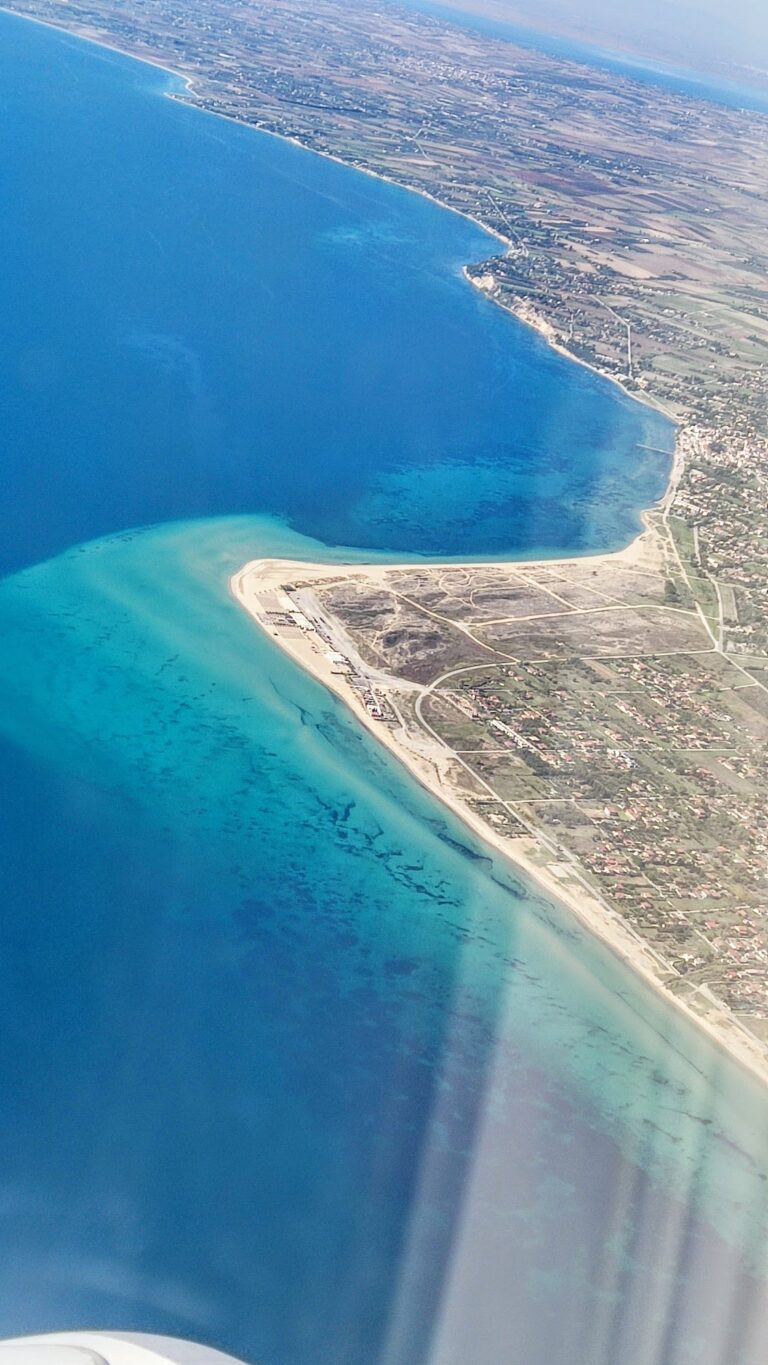
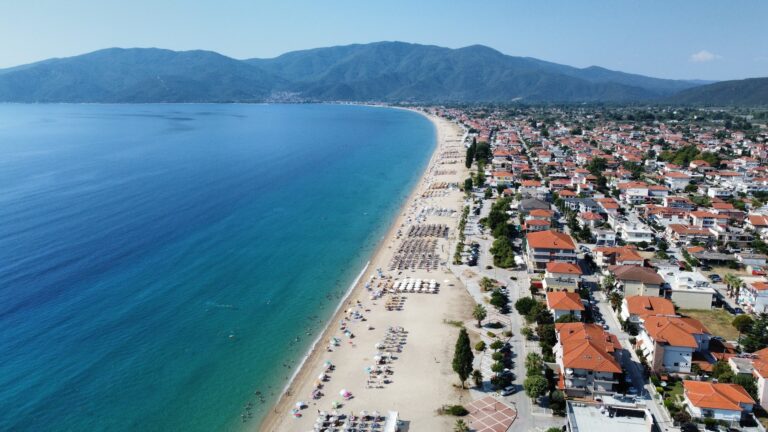
Nea Kallikratia sits close enough to Thessaloniki that it functions almost as a coastal extension of the city itself, and its beach, running for more than six kilometers in total, has become one of the most popular day-trip destinations for residents of the regional capital.
Golden Sand and Water Shallow Enough for a Long Wade
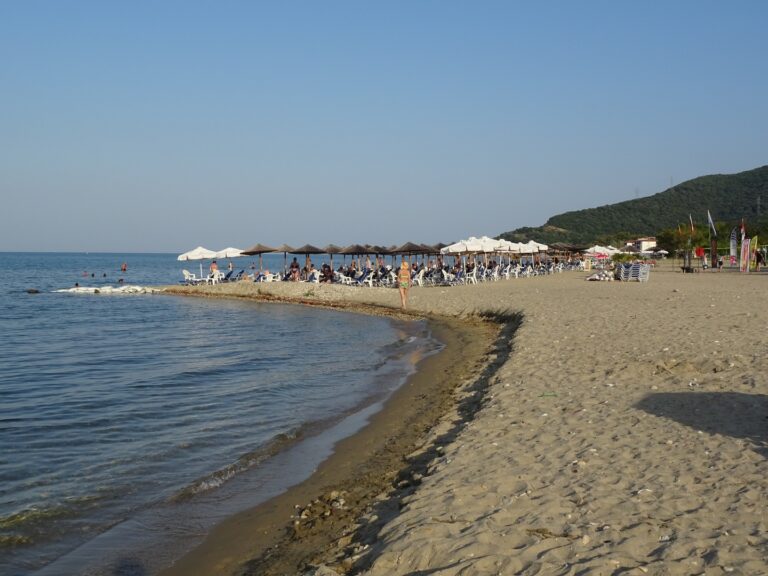
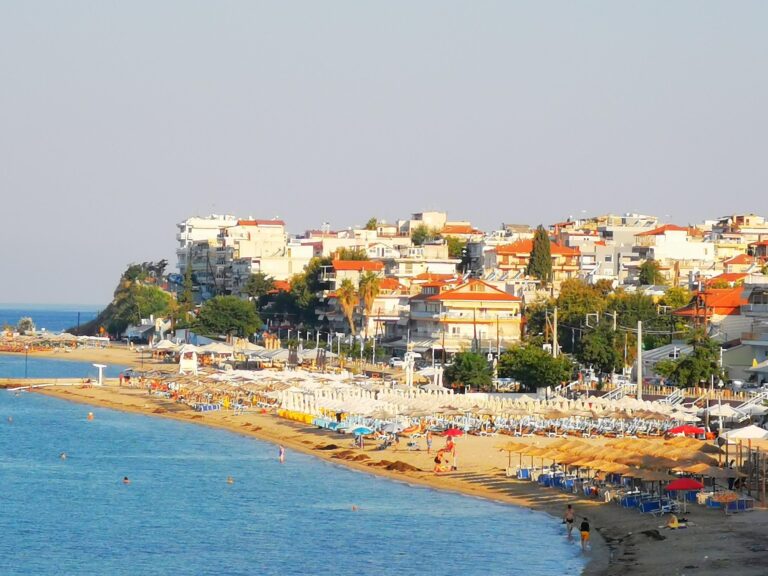
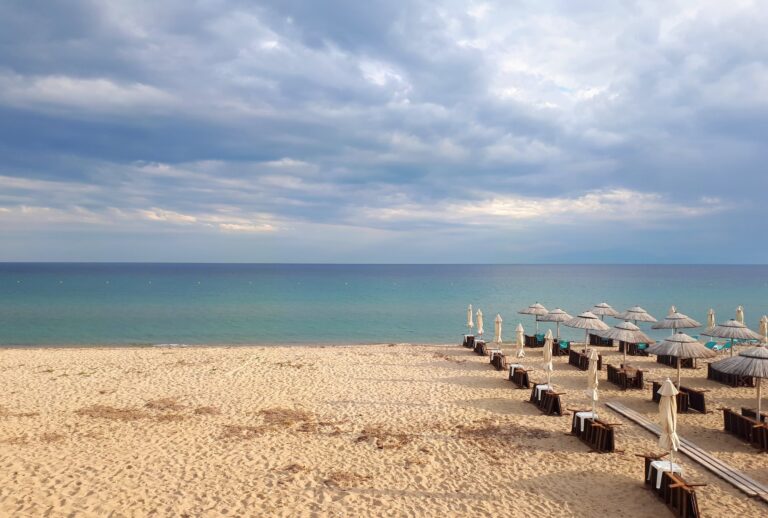
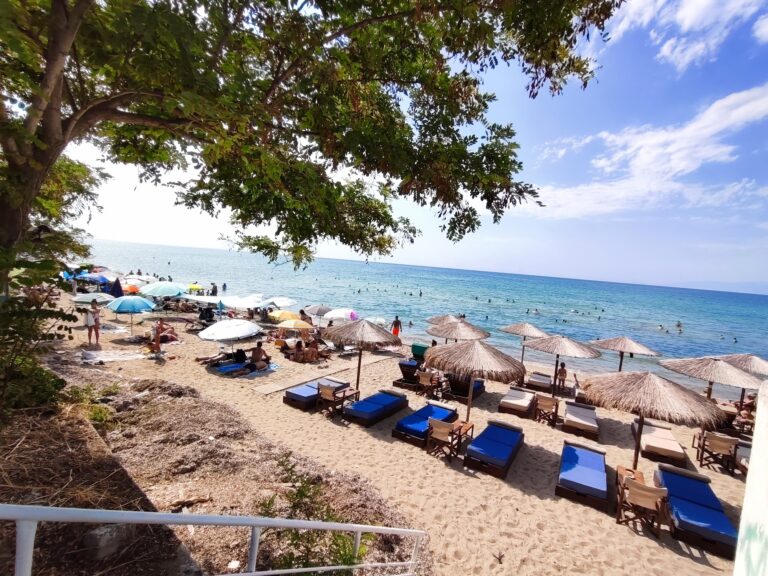
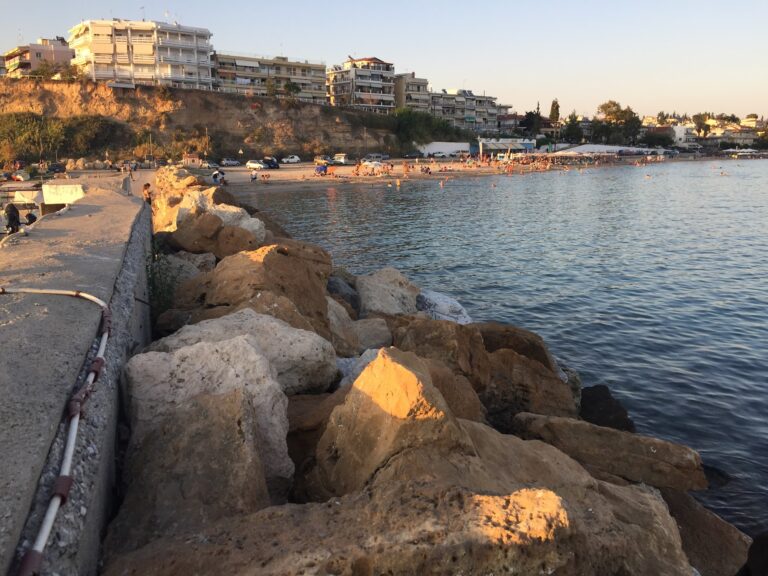
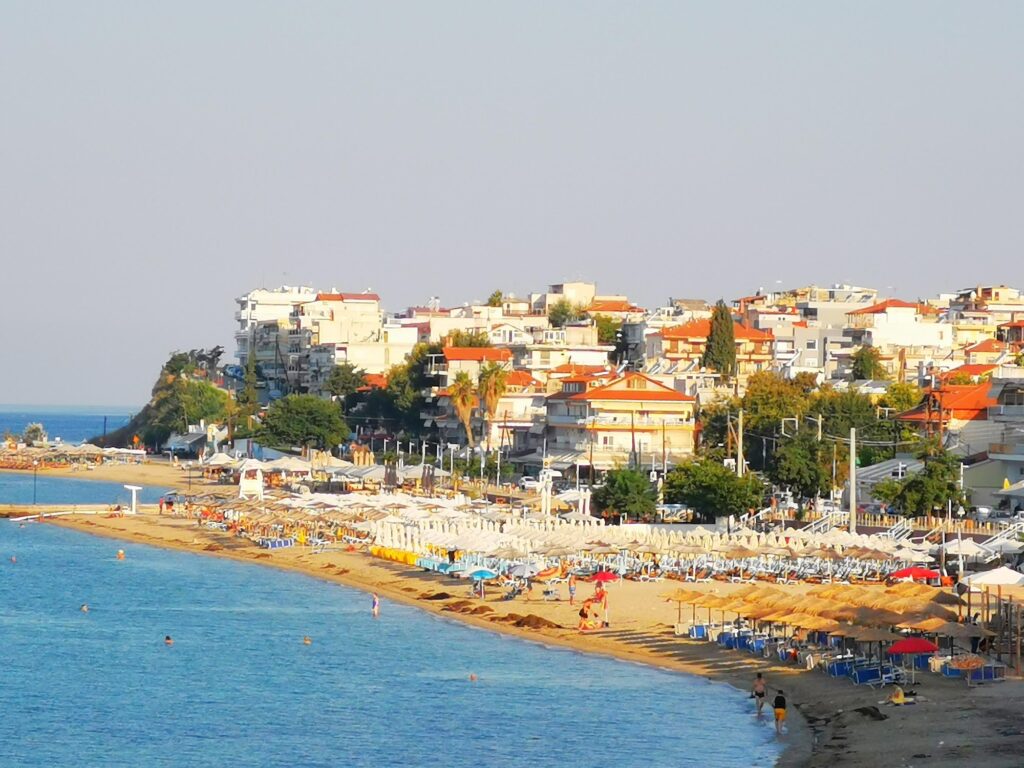
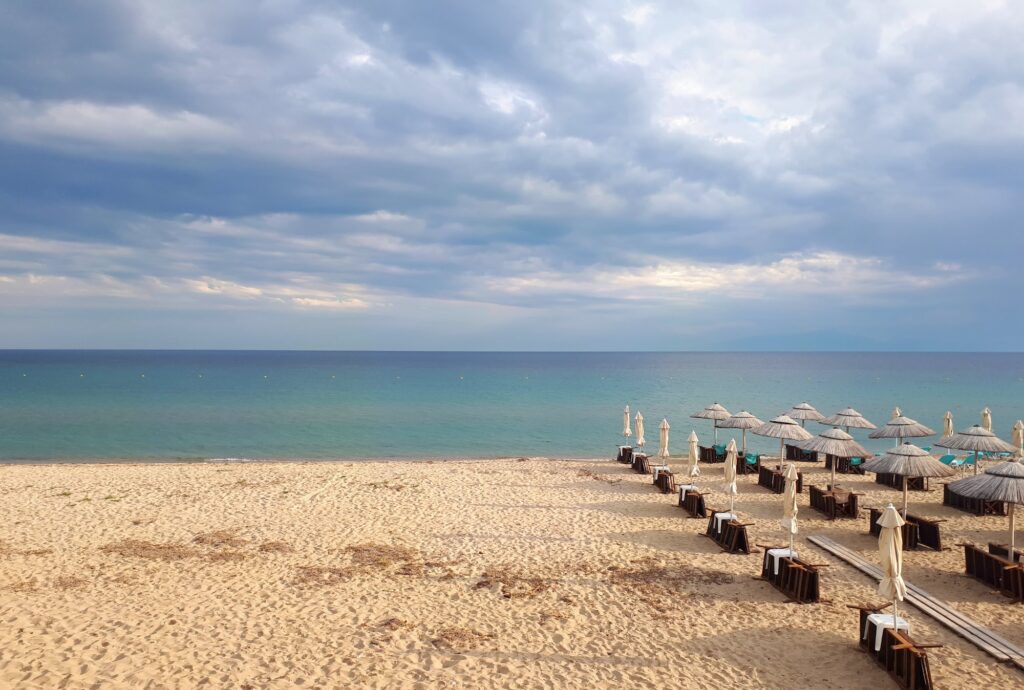
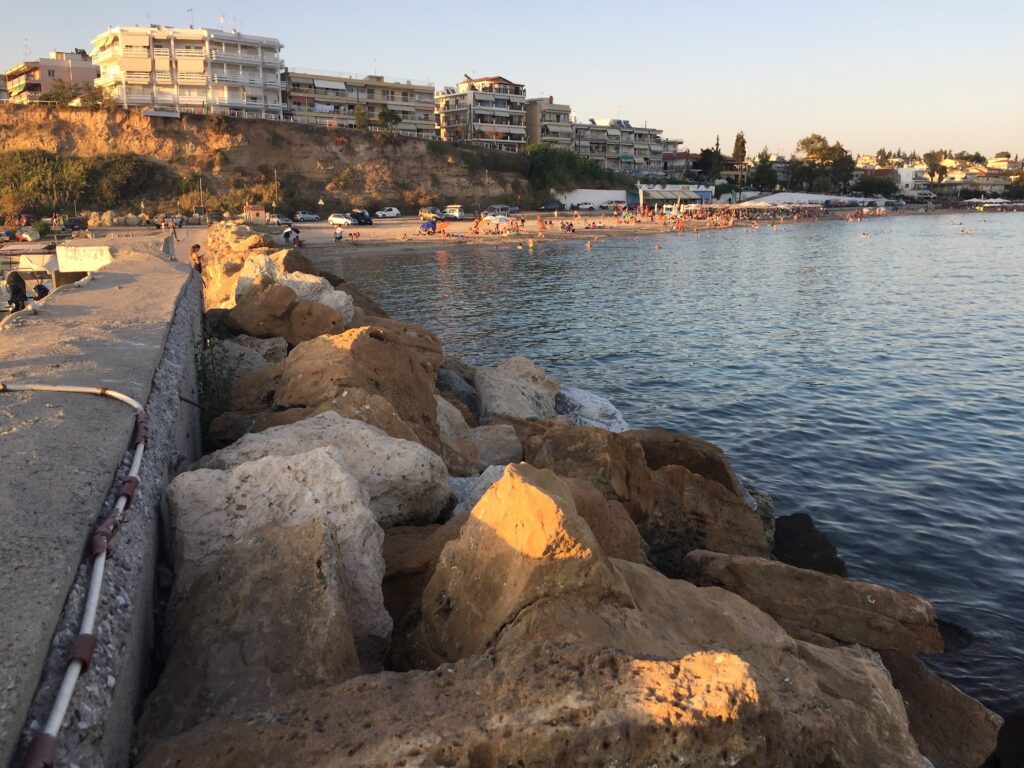
The beach runs wide and genuinely long, fine golden sand meticulously maintained, and I found the water clarity consistently good, the shallow gradient extending a real distance from shore before any serious depth begins. This makes Nea Kallikratia one of the more reassuring beaches on this coast for supervised swimming with young children, and I watched families spend entire afternoons in water that never rose much past waist height even a good distance out. Small ochre-colored cliffs rise at either edge of the main beach, and I found these particularly striking at sunset, the rock catching color in a way that gave an otherwise flat, open stretch of coast some genuine visual drama.
A Town Built for Accessibility Before It Was Fashionable
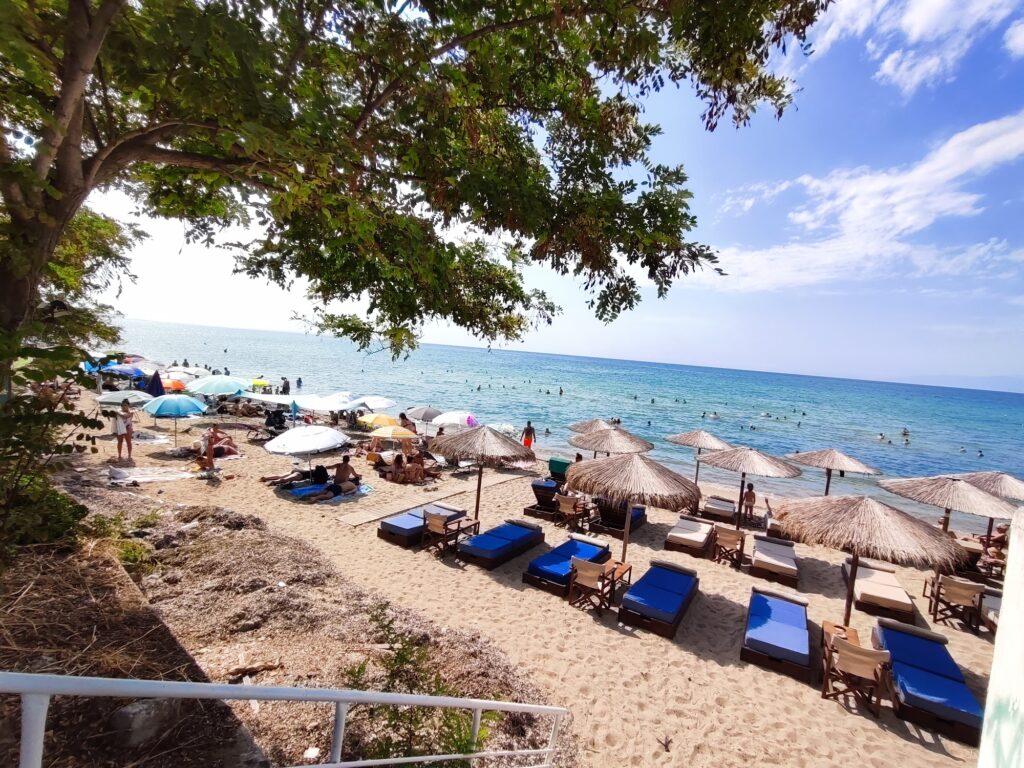
What struck me most about Nea Kallikratia’s practical setup was its early commitment to accessibility, specialized ramps and equipment making sections of the beach genuinely usable for visitors with reduced mobility well before this became a standard consideration at Greek beaches generally. Organized beach bars line the central stretch, sunbeds and umbrellas managed with attentive service, and I found the overall standard consistently professional across multiple visits, considerably more polished than the livelier, less structured beach-bar strip I found at Flogita Beach Halkidiki further along the coast. Given how commercially organized most of this beachfront is, dogs would likely need explicit permission at the managed sunbed sections, following the pattern I’ve found at similarly organized beaches across this coast, though quieter, unclaimed stretches further from the center probably allow leashed access without much fuss.
The Ancient Acropolis Just Down the Road
A short drive from the beach, the acropolis of ancient Antigoneia sits near the village of Nea Gonia, built by the Macedonian king Gonatas around 280 BC on a naturally defensible site, its name surviving through Byzantine records of two later villages, Ano and Kato Antigoneia. I made the detour on a quiet morning and found the ruins considerably less visited than the beach itself, a genuinely worthwhile stop for anyone curious how far back this stretch of Halkidiki’s history actually extends, though anyone wanting ruins with more scale should instead make time for the ancient city and canal at Nea Potidea Beach Halkidiki, whose own history stretches more than two thousand years further back than Antigoneia does.
Seafood, Nightlife, and a Town That Never Really Slows Down
Fish tavernas and contemporary restaurants line the beachfront, serving fresh local seafood on shaded terraces, and I ate well at more than one during my stay. As evening arrives, Nea Kallikratia shifts into a genuinely lively nightlife scene, cocktail bars and nightclubs drawing both locals and the steady flow of Thessaloniki day-trippers who’ve stayed on past sunset. Lifeguards patrol through the summer season, and changing cabins, showers, and restrooms cover the essentials along the organized stretch.
Getting There and Around
Nea Kallikratia sits roughly 40 kilometers from Thessaloniki, a drive of about thirty-five minutes along the A24 motorway toward Nea Moudania, and it holds the distinction of being one of the closest major beaches to Thessaloniki International Airport, just twenty minutes away, which makes it a genuinely practical first or last stop for anyone flying in or out; frequent KTEL Chalkidikis buses connect directly from Thessaloniki’s terminal, dropping passengers a five-minute walk from the beachfront, and ample public parking runs along the streets parallel to the sand, though arriving before eleven made a real difference in claiming a spot close to the water during peak summer weekends.
A Copy in the Square, an Original in the City
By the time I left Nea Kallikratia on my last afternoon, I walked back through the town square to look once more at the copy of the Girl with the Pigeon, standing quietly among the cafés and souvenir shops, a small reminder that this stretch of golden sand and beach bars sits on ground people have been calling home, in one form or another, for roughly twenty-four centuries before the refugees who built the modern town ever arrived to make it theirs again.
Map
Sorry, no records were found. Please adjust your search criteria and try again.
Sorry, unable to load the Maps API.
Near by places: