Nea Plagia Beach: Sand, Bridge, and History
Profile
Nea Plagia Beach: The Bridge the Monks Built Between Two Refugee Villages
Greece | Halkidiki | Nea Moudania | Thermaikos Gulf
An eighteenth-century stone bridge still spans the stream running through Nea Plagia, built by monks representing three different monastic estates at once, the Vatopedi share from nearby Triglia, the Russian share from what’s now Flogita, and the Zografou monastery’s own holding in a village of the same name. Flooding largely destroyed it a decade ago, and restoration work has continued since, a small, unglamorous project trying to save a piece of infrastructure that predates the village itself by more than a century. I hadn’t expected a beach town founded by refugees in 1922 to sit this close to something monks had already built and maintained for generations before any of those refugees ever arrived.
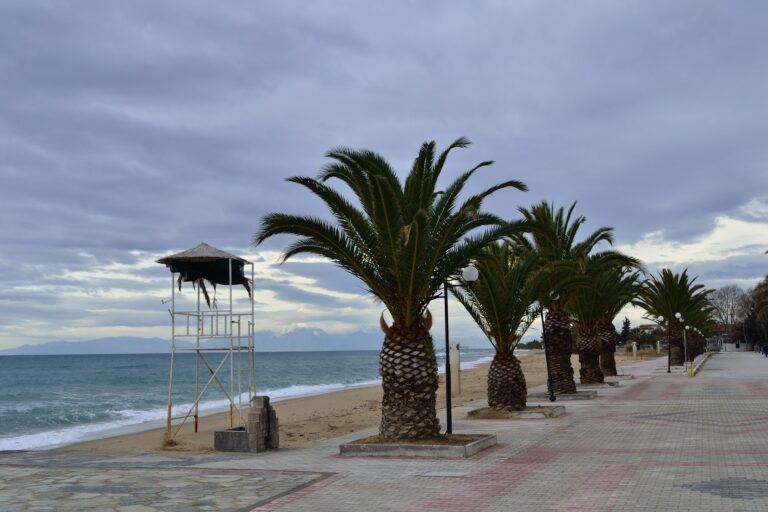
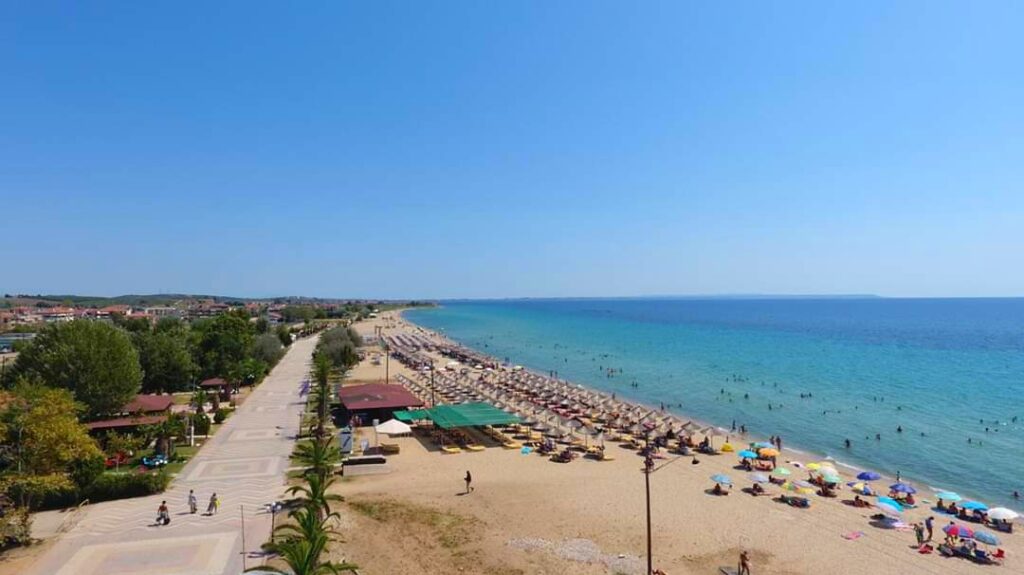
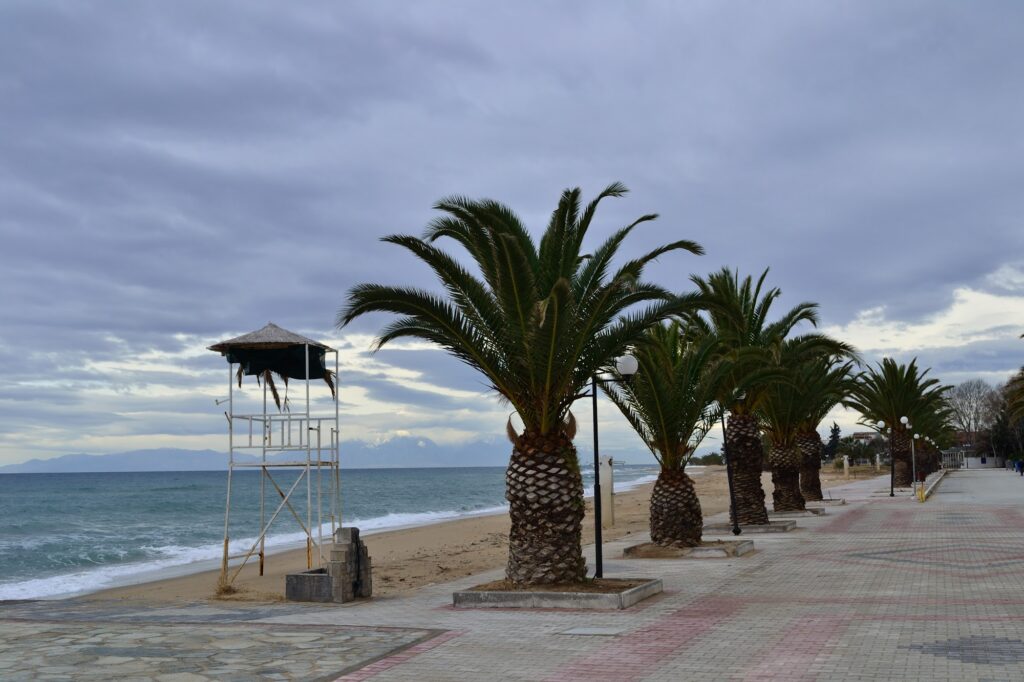
Nea Plagia’s own founders came from a village called Plagia in Eastern Thrace, arriving in 1922 and naming their new settlement to keep the memory of the old one alive, building their first houses on marshland near a monastery with the monks’ own help. Today the beach here runs directly into neighboring Flogita’s, the two towns’ shorelines merged so thoroughly along a shared palm-lined promenade that locals describe it as only a matter of time before the villages themselves formally combine.
Golden Sand and a Gentle, Family-Friendly Slope
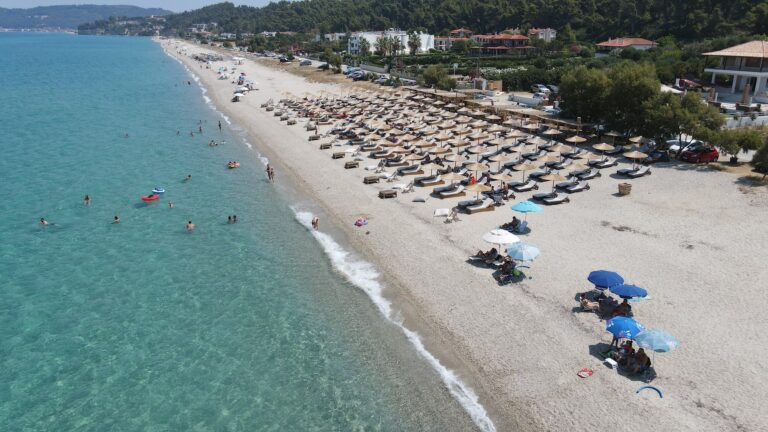
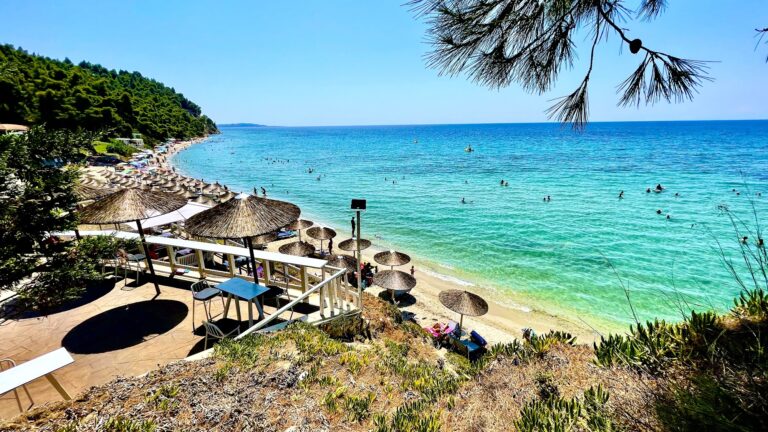
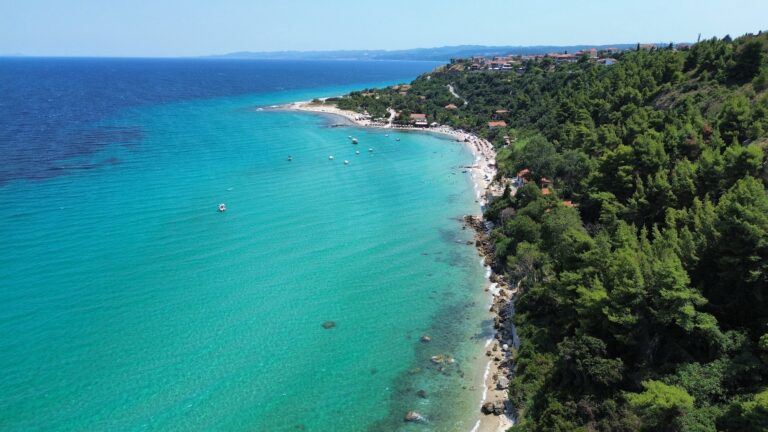
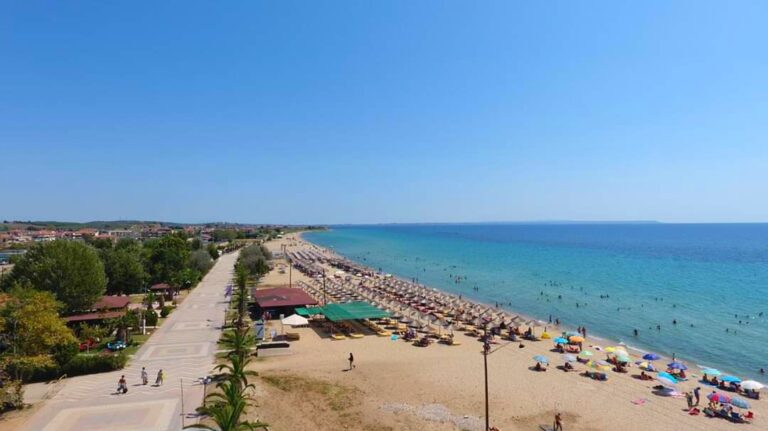
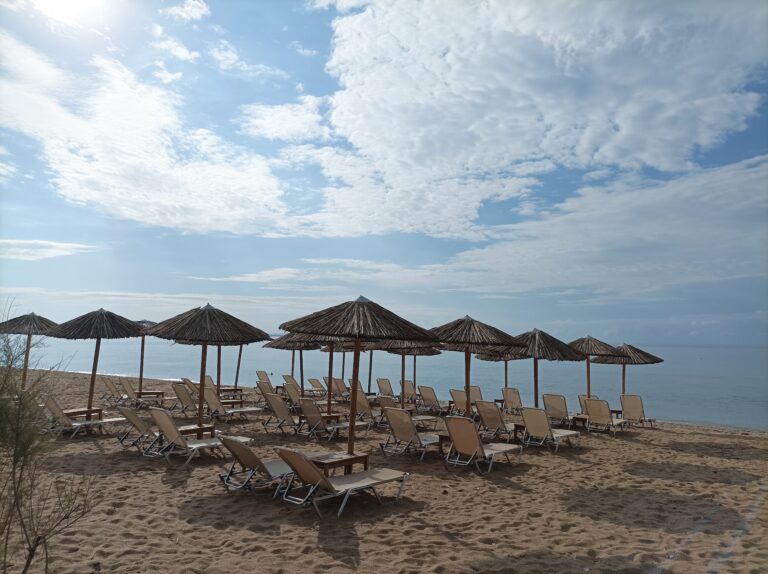
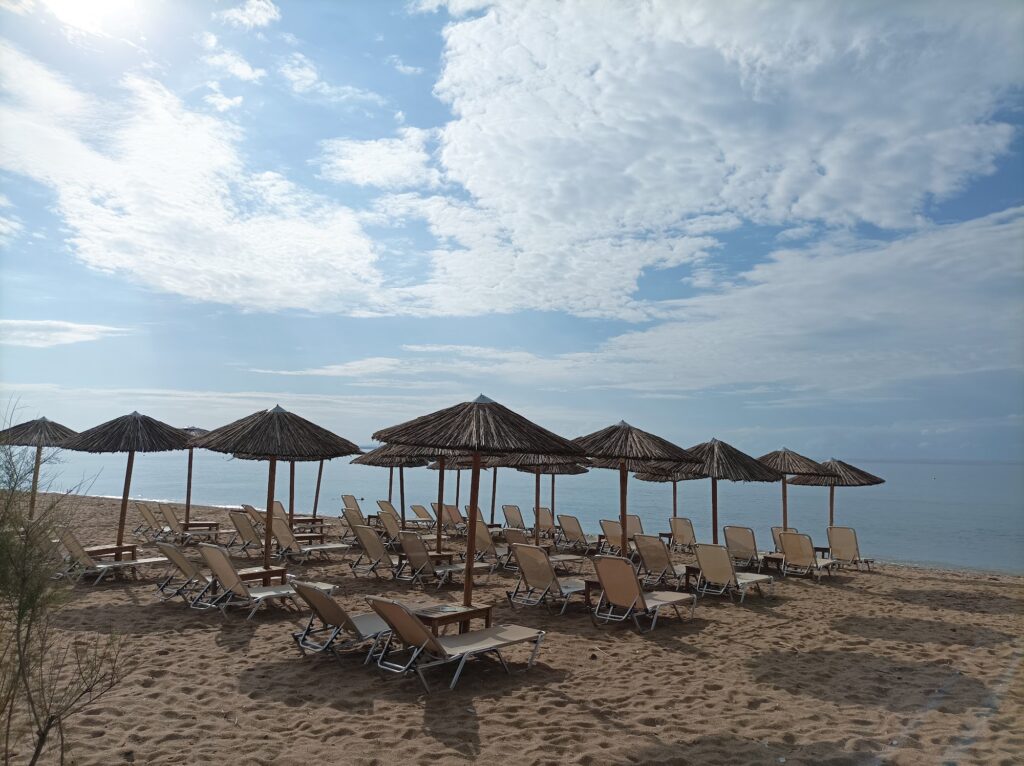
The beach itself runs wide and soft, fine golden sand maintained to a high environmental standard, and both Nea Plagia and Flogita hold Blue Flag status, a genuine mark of water quality I found consistently justified across multiple visits. The seabed slopes gradually, and I’d call this one of the more reassuring beaches in western Halkidiki for supervised swimming with young children, the shallow water extending a real distance from shore before any serious depth begins.
A Prehistoric Mound Sitting Between the Two Villages
Between Nea Plagia and Flogita, an oval earthwork roughly two hundred meters long and a hundred meters wide rises from the flat farmland, a toumba that locals and archaeologists alike recognize as evidence of settlement here going back to prehistory, long before anyone had heard of Eastern Thrace or Cappadocia. I walked partway around it on a quiet morning, struck by how casually it sits among the surrounding fields, a genuinely ancient mound treated more as scenery than monument by the people who live beside it every day.
The Promenade Shared With Flogita’s Nightlife
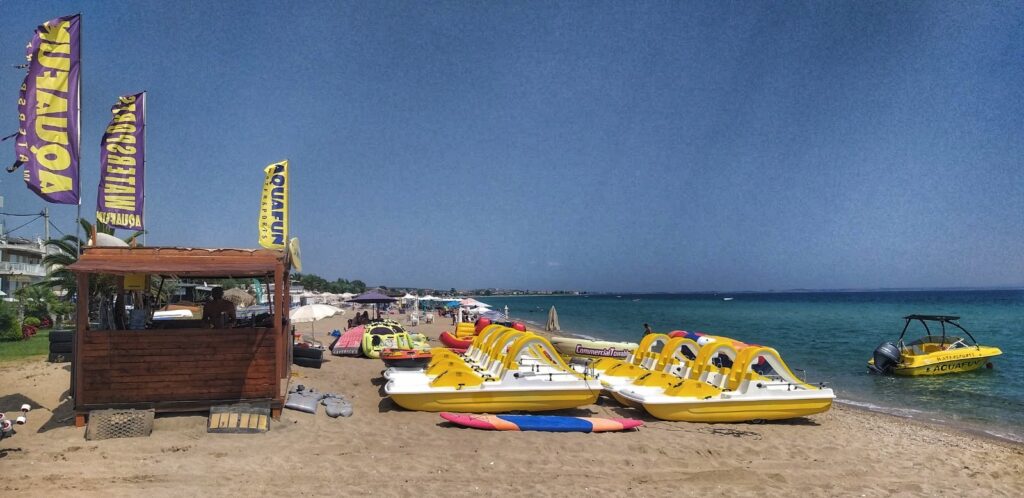
The palm-lined walkway connecting Nea Plagia to Flogita has effectively merged the two beaches into one continuous social strip, and I found the beach bars and clubs along this stretch running live music well into the night during peak season, the same party energy locals in both villages point to when describing summer here. Given how organized and commercially managed this shared beachfront is, I’d expect dogs to require explicit permission at any managed beach bar section, consistent with organized Greek beaches generally.
Tavernas, Playgrounds, and a Working Village Behind the Sand
Traditional fish tavernas, pizzerias, and ouzerias line the beachfront, and I ate well at more than one, fresh seafood served on shaded terraces facing the water. Several modern playgrounds sit directly along the promenade, and I noticed families treating the walk between them and the water as a natural, ongoing part of the day rather than a separate errand.
Getting There: Forty-Five Minutes From Thessaloniki
Nea Plagia sits along the A24 motorway, roughly 46 to 50 kilometers from Thessaloniki depending on the exact route, a drive of thirty-five to forty-five minutes taking the exit signed for Nea Plagia and Nea Flogita together. I found the route simple and well-signed the entire way.
The KTEL Bus From Thessaloniki
Regular KTEL Chalkidikis buses run from Thessaloniki’s terminal to Nea Plagia roughly every forty-five minutes, stopping centrally within a five-minute walk of the beachfront. I used this option once and found it a straightforward, low-effort way to reach the beach without needing a rental car.
Parking Before the Weekend Crowd Arrives
Large public lots and street parking run parallel to the beach, and I found arriving before eleven made a genuine difference in claiming a spot close to the water, particularly given how thoroughly Nea Plagia and Flogita’s combined beachfront fills during peak summer weekends.
Comparing Nea Plagia to Its Neighboring Refugee Villages
Flogita Beach Halkidiki sits directly adjacent, its own refugee founders arriving from Cappadocia rather than Eastern Thrace, and the two beaches now function almost as one continuous stretch of sand and nightlife. Nea Potidea Beach Halkidiki, a little further along the coast, carries a considerably older layer of history beneath its own refugee-era founding, ancient ruins spanning over two thousand years rather than a single eighteenth-century bridge. For a quieter alternative nearby, Sahara Beach Nea Kallikratia offers a comparable family-friendly stretch without the nightlife intensity that defines the Nea Plagia-Flogita strip.
Standing at the Old Bridge as the Evening Cools
By the time I made my way back from the beach on my last evening, I stopped again at the old stone bridge, water running low beneath it after a dry summer, and thought about how strange it is that a structure built by monks representing three separate monasteries has outlasted the empire that once granted them that land, quietly holding on at the edge of a beach town that didn’t exist yet when the first stone was laid.
Map
Sorry, no records were found. Please adjust your search criteria and try again.
Sorry, unable to load the Maps API.
Near by places: