Nea Potidea Beach: Canal, Ruins, Ancient Siege
Profile
Nea Potidea Beach: Where Socrates Once Saved Alcibiades’ Life
Greece | Halkidiki | Nea Moudania | Thermaikos Gulf
Socrates fought at Potidaea in 432 BC, a young Athenian soldier serving in a siege that historians count among the sparks of the Peloponnesian War, and according to Plato’s own account, he saved the life of a wounded Alcibiades in the fighting here, a debt Alcibiades would later repay on a different battlefield. I hadn’t expected to find myself standing at the edge of a beach thinking about one of philosophy’s founding figures, but the narrow canal separating Nea Potidea from the rest of the Kassandra peninsula sits almost exactly where that siege took place, layered under roughly twenty-six centuries of continuous occupation that few beaches anywhere can genuinely claim.
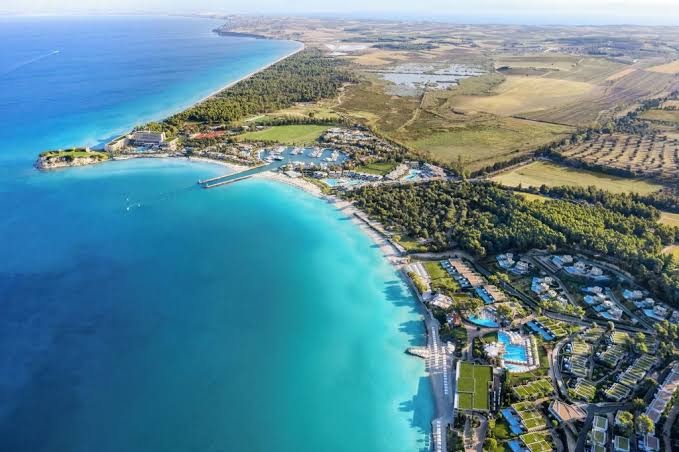
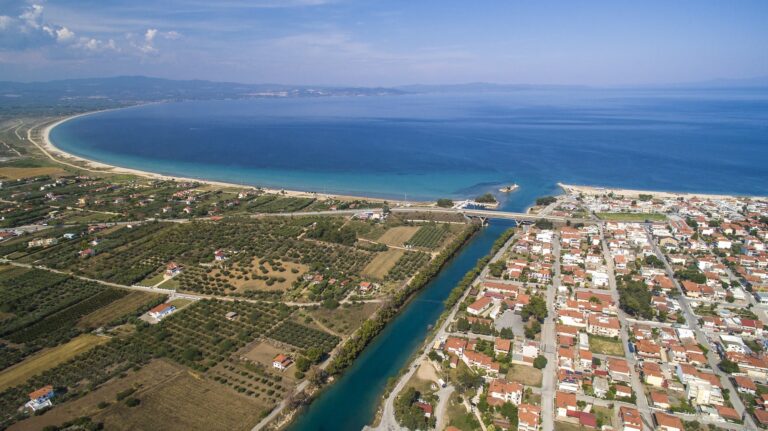
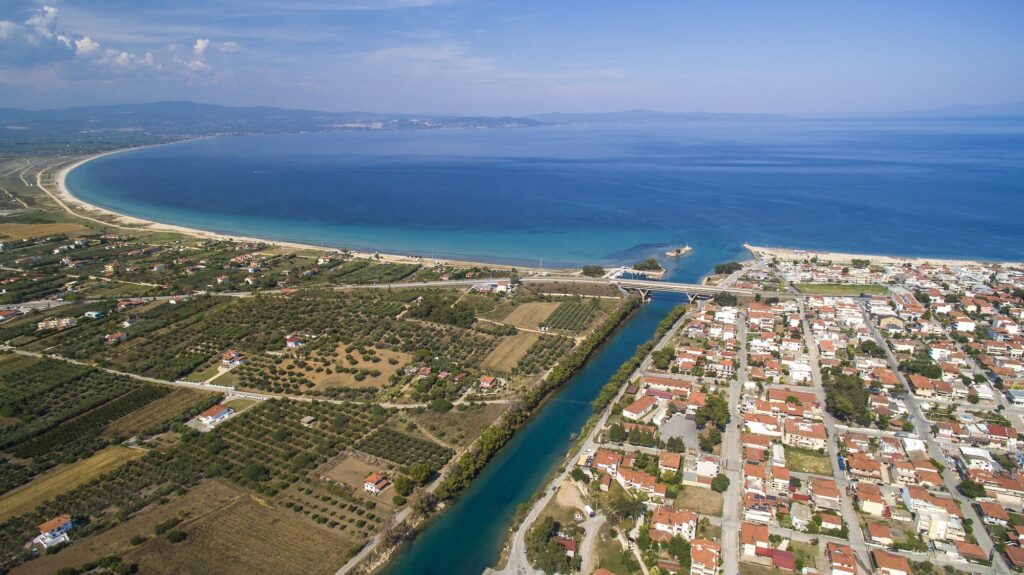
Nea Potidea functions as the sole land gateway onto Kassandra, the westernmost of Halkidiki’s three peninsular “fingers,” and the beach itself sits directly beside the canal that has defined this narrow strip of land since antiquity.
A Wide, Gradual Shore With Views Across Two Gulfs
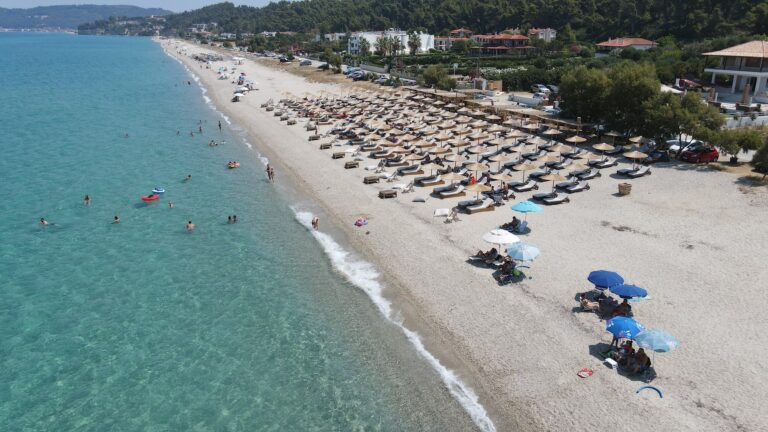
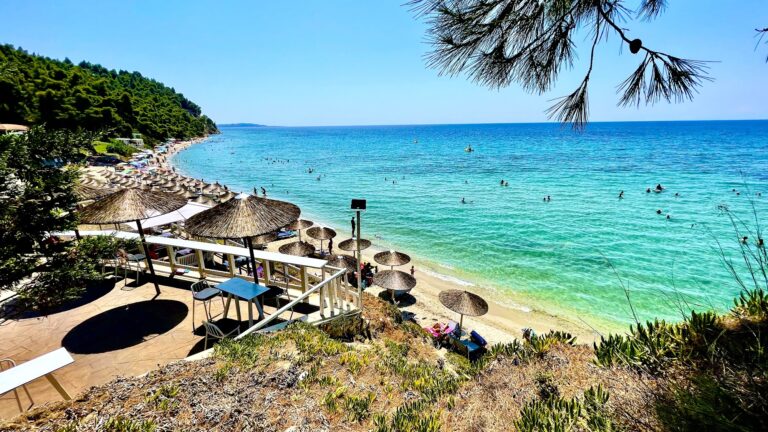
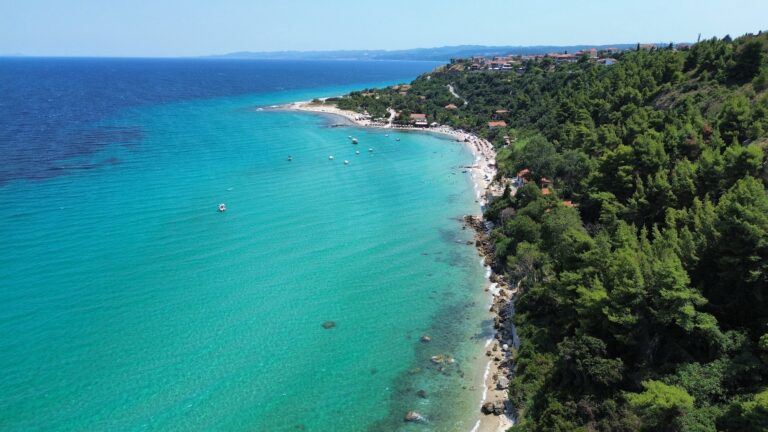
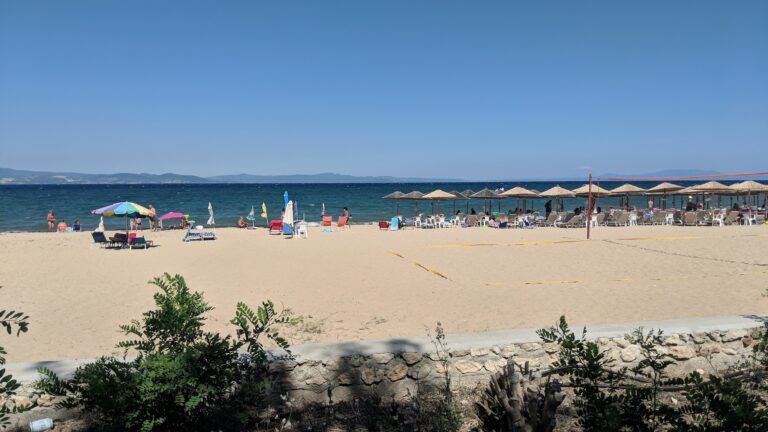
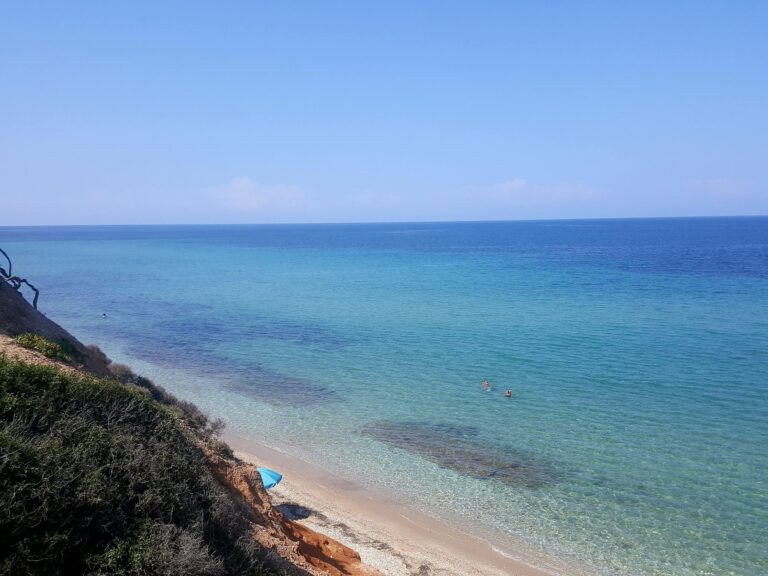
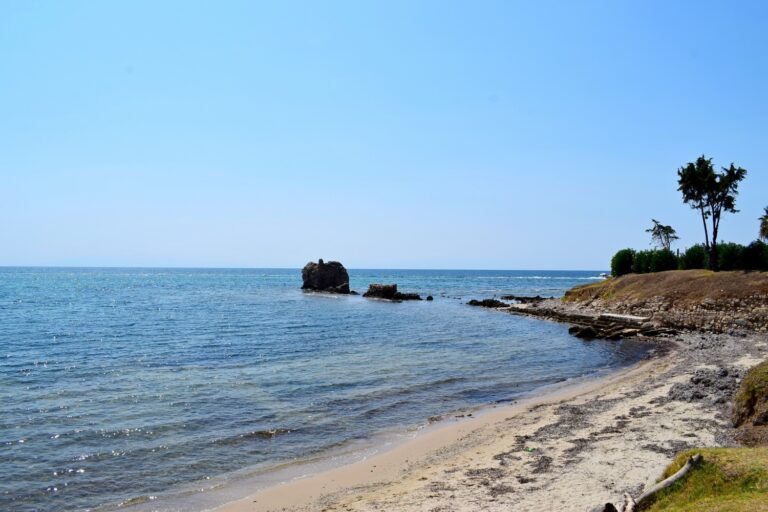
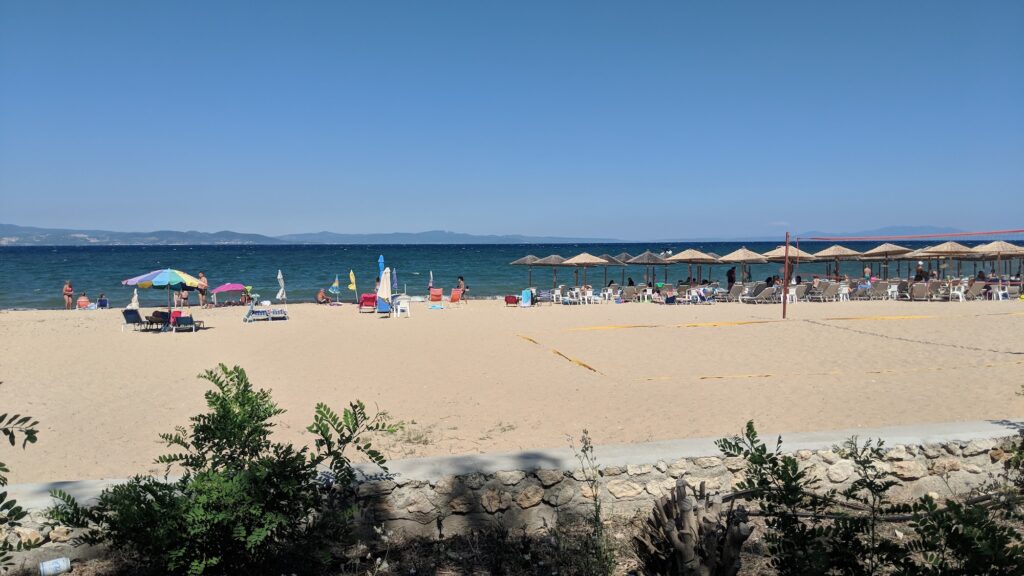
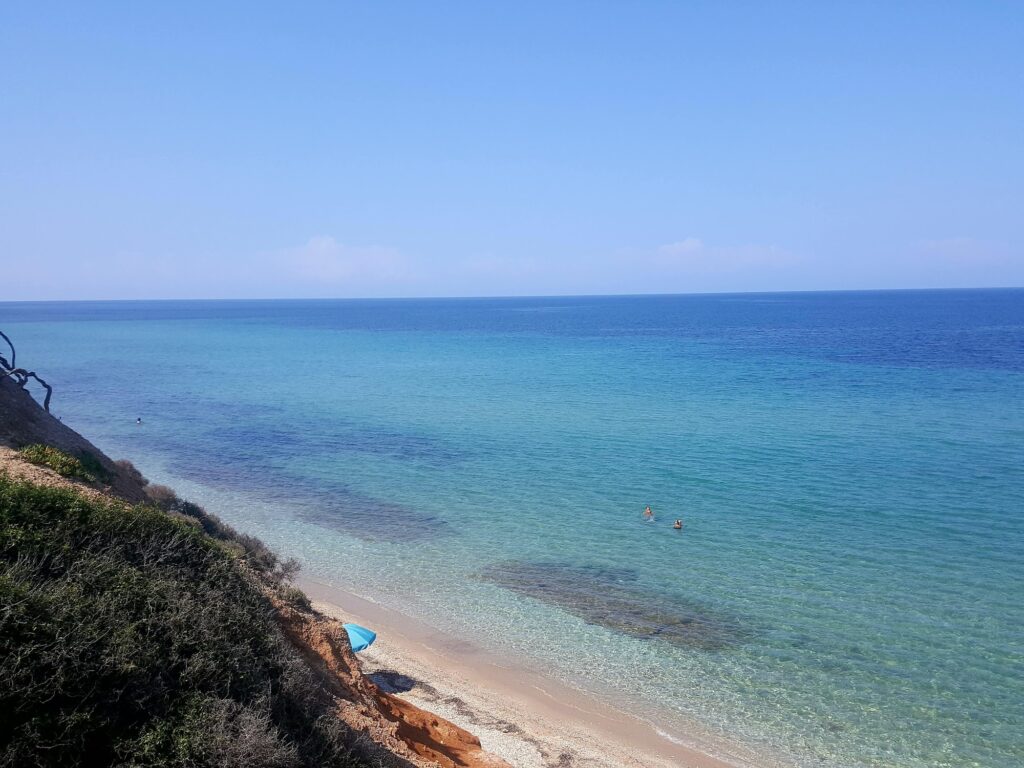
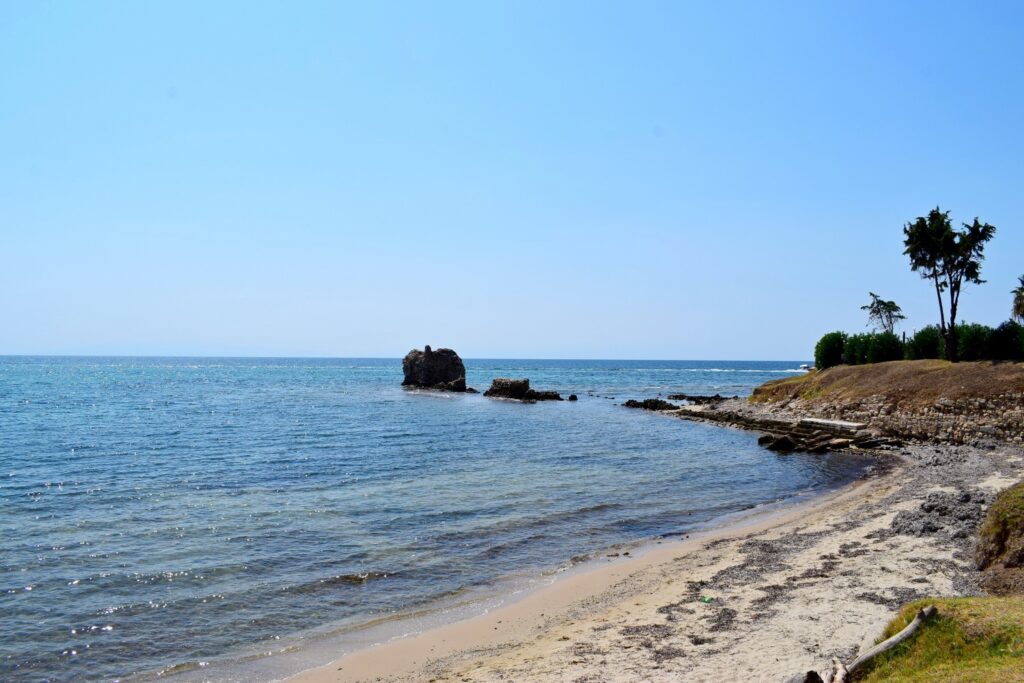
The beach runs long, fine sand mixed with tiny pebbles, and I found the water clarity consistently excellent, the seabed sloping gradually enough that I’d call this one of the more reassuring beaches in western Halkidiki for supervised swimming with children. What sets Nea Potidea apart geographically is its dual exposure, the beach offering views across both the Thermaikos and Toroneos Gulfs depending on which direction you’re facing, a genuinely unusual vantage point for a single stretch of sand.
The Canal That’s Been Cut Through This Isthmus Since Antiquity
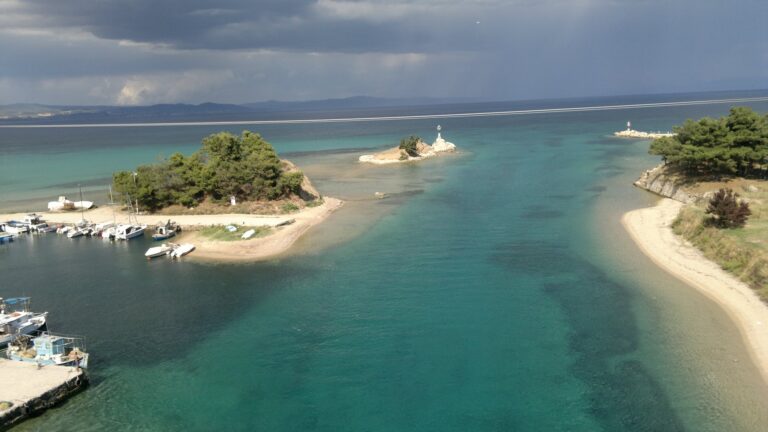
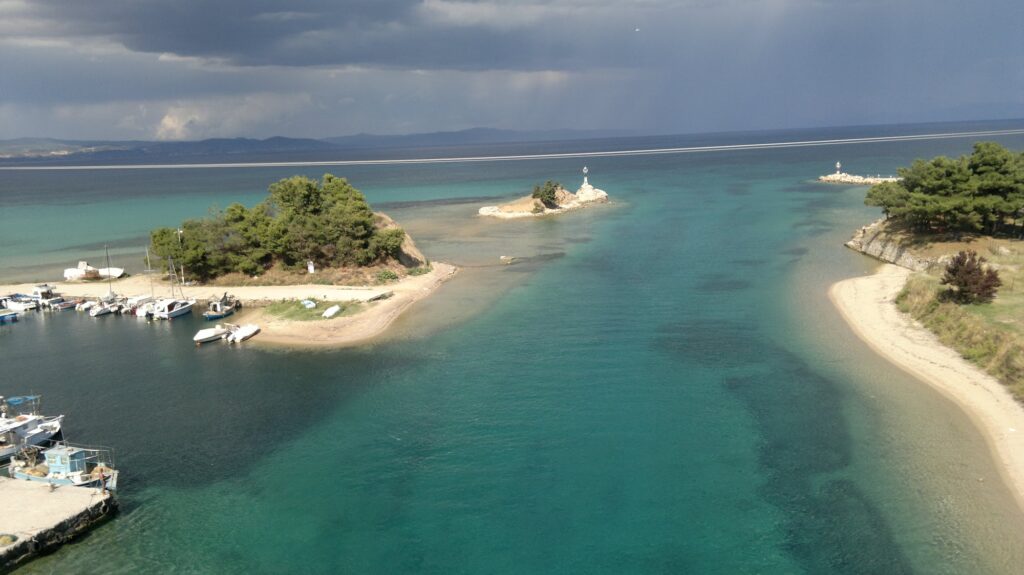
A short walk from the sand, the Potidea Canal cuts through the narrowest point of the peninsula, and I made a point of watching small fishing boats pass through the channel at sunset, exactly the kind of scene locals told me has repeated here, in some form, for well over two thousand years. Archaeologists believe the canal was first opened sometime after 316 BC, when the Macedonian king Cassander rebuilt the ancient city on this site and renamed it Cassandreia, likely digging the channel to strengthen the settlement’s role as a naval base. The canal was reopened again after the Greek War of Independence, and what I watched passing through it on an ordinary summer evening was, in a real sense, the same engineering solution reused across multiple empires.
A City Destroyed and Rebuilt Across Twenty-Six Centuries
Corinthian colonists founded Potidaea around 600 BC, and the city survived a Persian siege during Xerxes’ invasion, a brutal Athenian blockade during the Peloponnesian War that reportedly drove residents to cannibalism before surrender, destruction under Philip II of Macedon, reconstruction under Cassander, incorporation into the Roman Empire, and eventual abandonment following Hunnic invasions in the sixth century AD. In 1960, archaeologists working the site uncovered skeletal remains of a young girl estimated at nearly 700,000 years old, the oldest human remains ever found in Greece, a detail that pushes this narrow strip of land’s human history back considerably further than even its ancient Greek founders could have known.
The “Holocaust of Kassandra” and a Canal That Ran Red
The castle guarding this isthmus played a grim role during the 1821 Greek War of Independence, when Halkidiki’s revolutionaries barricaded themselves inside during what’s still remembered locally as the “turmoil of Kassandra,” an event commemorated every November 14th with official ceremonies. Local accounts describe the canal itself running red during the fighting, a detail that added real weight to what had otherwise felt, standing on the beach, like a purely scenic stretch of water.
Beach Bars, Tavernas, and Family Playgrounds
Organized beach bars line the central section of sand, sunbeds and umbrellas managed with attentive, professional service, and traditional tavernas behind the beach serve fresh local seafood on shaded terraces. Given the organized, commercially managed nature of most of this beachfront, I’d expect dogs to require the operator’s explicit permission on the main sections, consistent with organized Greek beaches generally. Several modern playgrounds sit near the village center, and I noticed families treating a Nea Potidea day as a genuine mix of beach time and structured play rather than sand alone.
Getting There: Forty-Five Minutes From Thessaloniki
Nea Potidea sits along the A24 motorway, the first village travelers reach once the highway narrows toward the peninsula, a drive of forty-five to fifty minutes from Thessaloniki. I found the route simple, well-signed the entire way.
The KTEL Bus Direct to the Canal
Regular KTEL Chalkidikis buses run from Thessaloniki’s terminal to Nea Potidea, stopping centrally within a five-minute walk of both the beach and the canal itself. I used this option once and found it a straightforward way to reach the beach without needing a rental car.
Parking Before the Weekend Crowd
Large public lots and street parking run parallel to the beach, and arriving before eleven gave me an easier choice of spot closest to the water, particularly important during peak summer weekends when day-trippers heading onto Kassandra pass directly through this village.
Comparing Nea Potidea to Its Neighboring Refugee Villages
Like several beaches in this immediate area, Nea Potidea was refounded in 1922 by refugees, in this case from Eastern Thrace and the island of Kalolimnos. Flogita Beach Halkidiki, a short drive north, shares this same refugee-settlement history, though its founders arrived from Cappadocia rather than Thrace, and its identity leans more on beach-bar nightlife than ancient ruins. For a quieter, more family-paced alternative nearby, Sahara Beach Nea Kallikratia Greece offers a comparable gradual entry without the historical density layered beneath Nea Potidea’s sand.
Watching the Boats Pass Through at Dusk
By the time I left on my last evening, the fishing boats had finished their run through the canal, and I stood a while longer at the water’s edge, thinking about a young Athenian soldier who once fought and nearly died on this exact strip of land, long before anyone imagined he’d become one of the most discussed thinkers in human history, the canal beside me still doing, more or less, exactly what it was cut to do more than two thousand years ago.
Map
Sorry, no records were found. Please adjust your search criteria and try again.
Sorry, unable to load the Maps API.
Near by places: