Sv. Katarina, Ankaran: A Beach on Roman Ruins
Profile
Sv. Katarina, Ankaran: A Beach Built on the Bones of a Roman Villa
Slovenia | Ankaran | Slovenian Istria
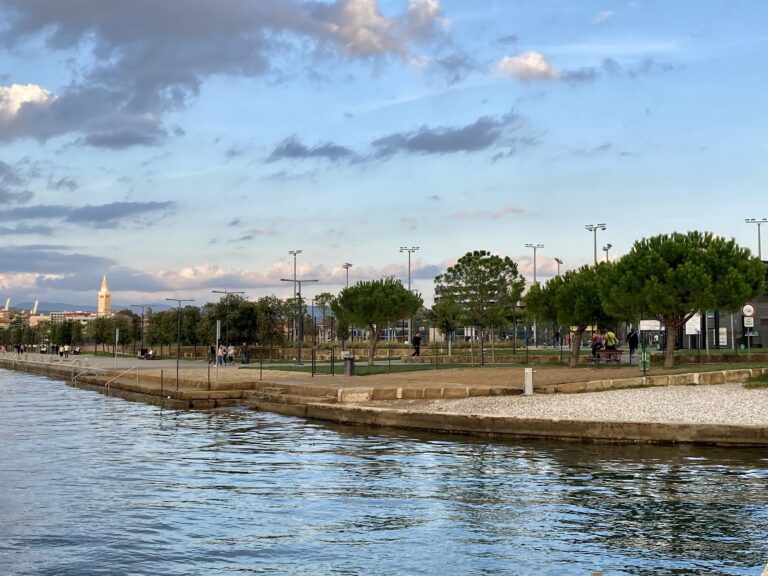
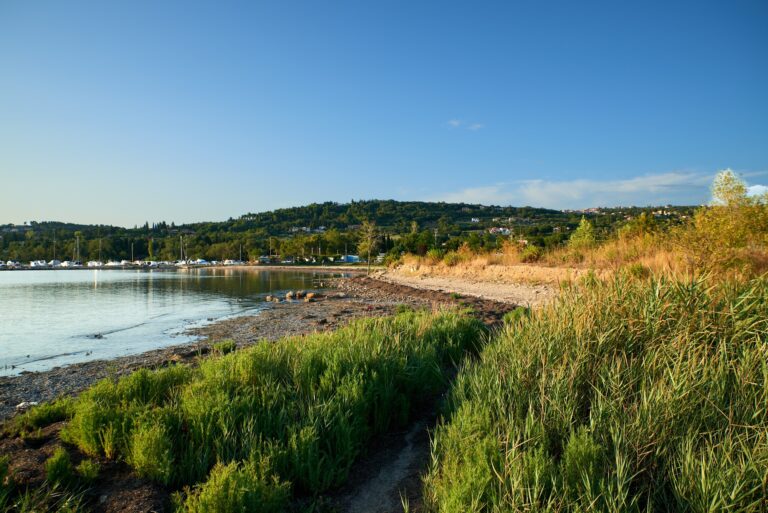
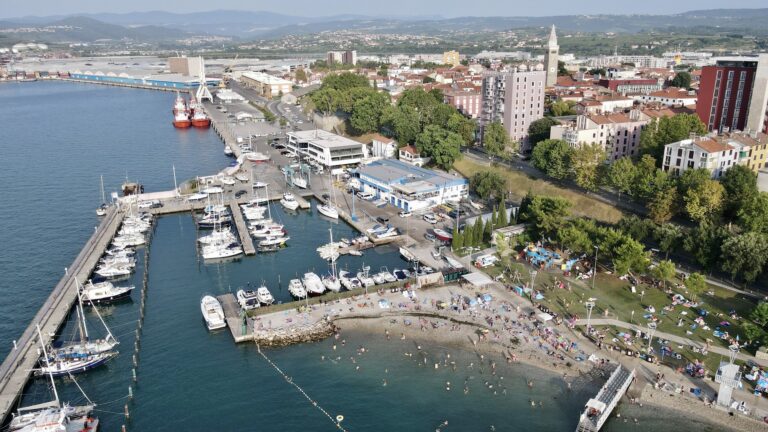
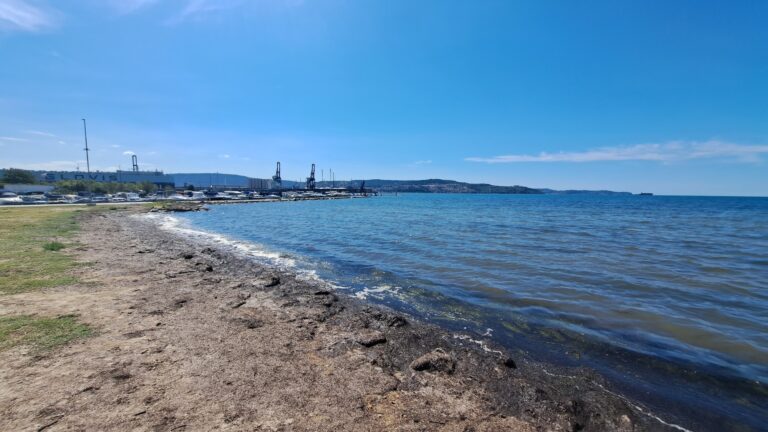
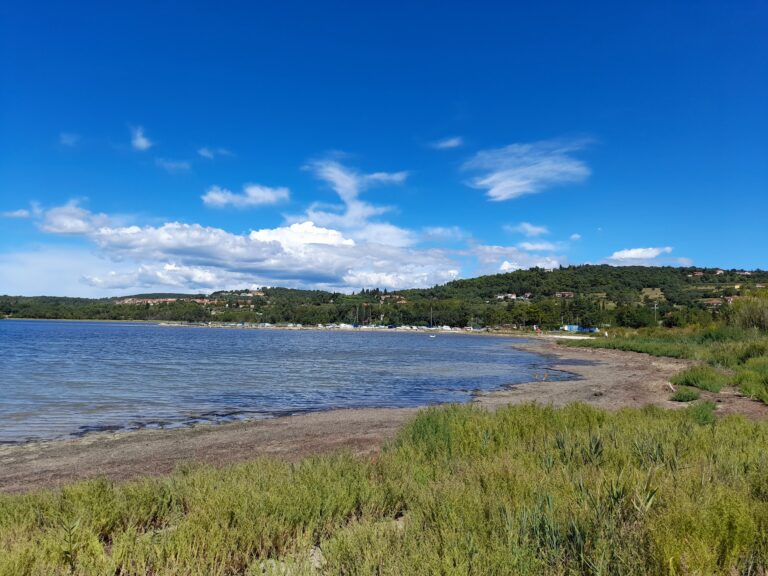
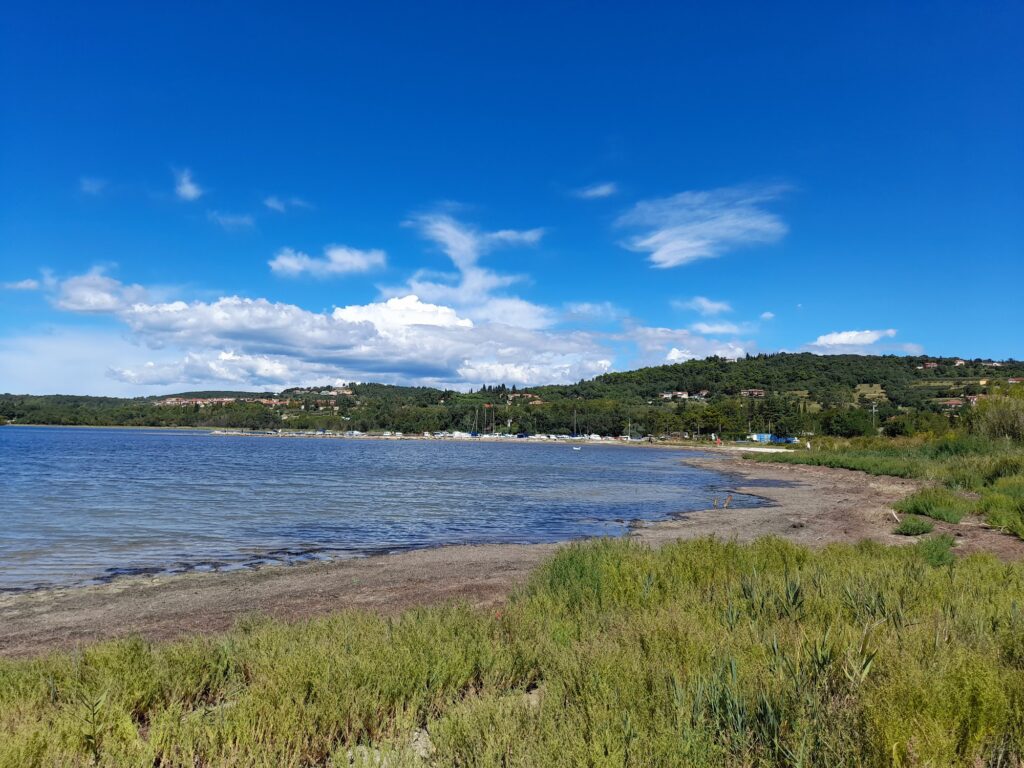
I’d walked Pokopalisce skoljk Shell Cemetery Ankaran Slovenia first and came to Sv. Katarina afterward, and it took me a few minutes standing on the sand to realise these two places I’d read about separately are actually the same stretch of coast — Polje Bay, the locals call it, and Sv. Katarina is the proper name for the beach that includes the shell dune, not a separate hideaway with its own marina the way I’d been picturing beforehand. Once I understood that, the rest of the visit made a lot more sense, and I’d save anyone else the same confusion by saying it plainly up front.
What I didn’t expect was the archaeology. This exact spot was once the site of a Roman villa complete with its own harbour, and excavations here have turned up roof tiles, fragments of painted wall plaster, and even a coin — modest finds individually, but enough together to confirm that wealthy Romans built and lived directly on this same shoreline centuries before anyone was laying out a beach towel here. I stood for a while just trying to picture it: a villa with a working harbour, right where I was standing barefoot in shell-sand.
The more recent history is almost as layered. A monastery once stood nearby, founded by monks as far back as the 11th century, later passing into the hands of a noble Koper family in the 18th century, and at one point pressed into service as a military hospital during Napoleon’s brief control of the region under the Illyrian Provinces. The beach itself sits within what’s now described as the grounds of a health resort run by the Slovenian Red Cross, though I want to be clear that it’s open to everyone, not just guests of that facility — nobody stopped me or asked any questions when I walked straight onto the sand.
Getting There: A Short Drive North of Koper, Following the Coastal Signs
I drove out from Koper along the main road toward Ankaran, watching for the secondary signs pointing toward Sv. Katarina as the road started curving onto the peninsula. A paved lane brought me down through olive groves to a parking area right behind the beach — nothing fancy, but it did the job, and I didn’t have the same trouble finding a space here that I’d had at some of the smaller town beaches further along this coast.
By bus, the journey from Koper to the Ankaran terminal runs a similar route to what I’d take to most beaches on this peninsula, and from the bus stop it’s roughly a fifteen-minute walk down toward the water. Ankaran also runs a free summer bus connecting its various beaches, which I’d genuinely recommend over driving if you’re planning to see more than one stretch of this coast in a single day — it’s the same route that would also take you back to the Shell Cemetery if you wanted to walk both in one visit, and it saved me the parking hunt entirely on my second trip out here.
The Beach: Shell-Sand, a Gentle Slope, Water Shoes Recommended
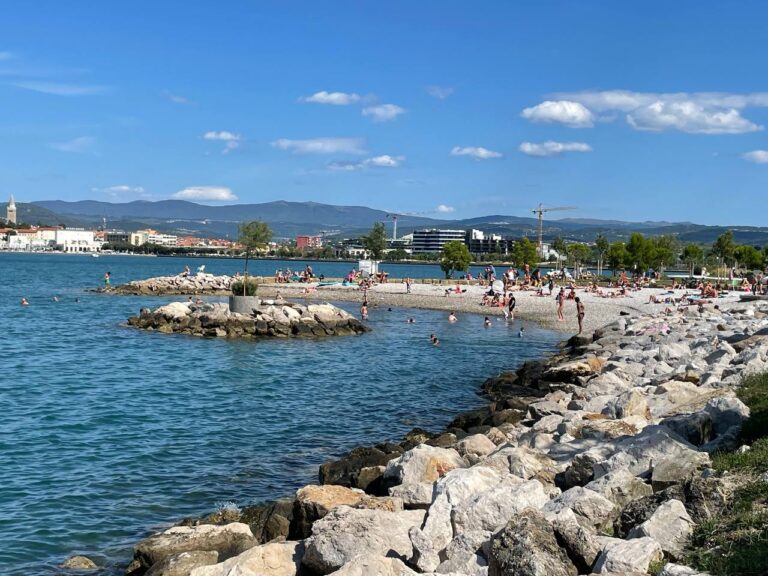
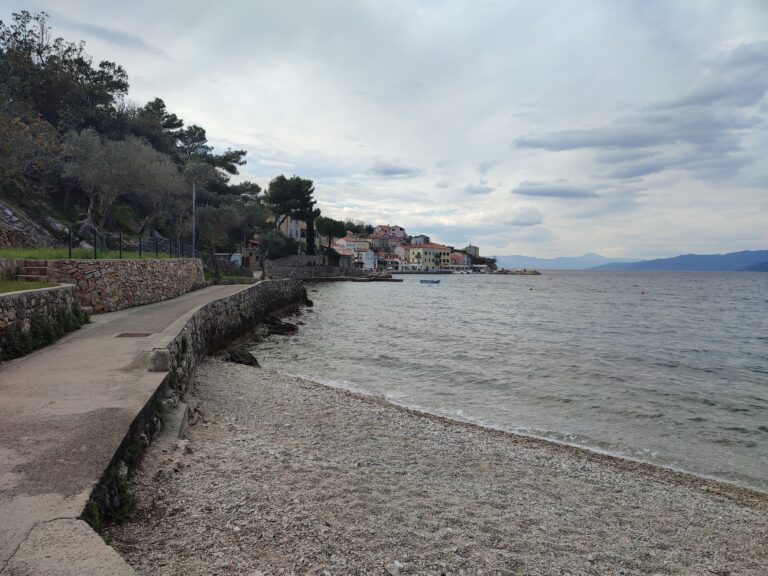
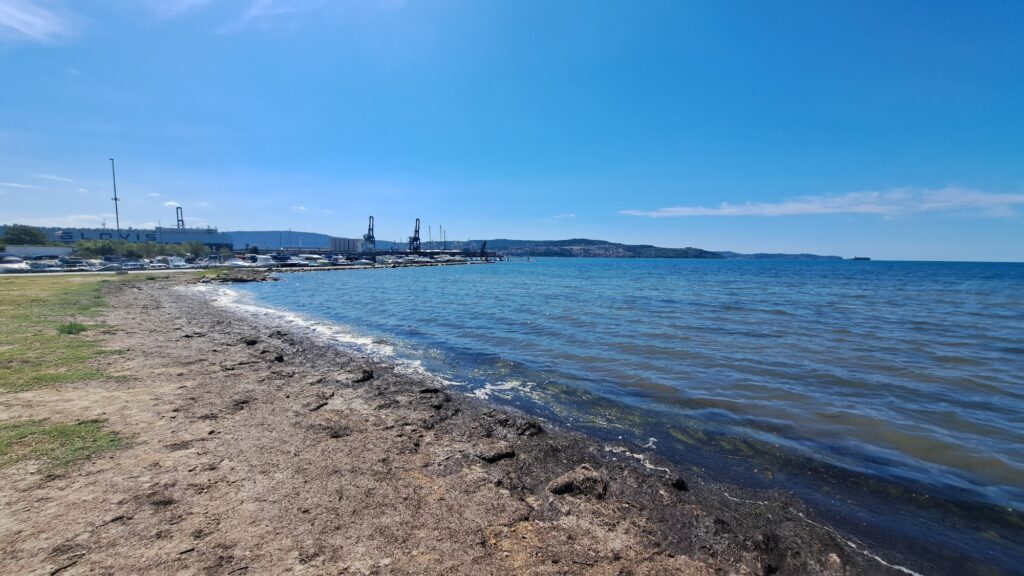
The beach runs a little over 600 metres, and the ground underfoot is shell-sand rather than the soft golden stuff some descriptions promise — a direct continuation of the same shell dune I’d walked through earlier in the day, just less concentrated here than at the dedicated cemetery itself further along the bay. The slope into the water is genuinely gentle, which I appreciated, but I’d still bring water shoes rather than go in barefoot; there’s enough broken shell mixed into the sand that bare feet found a few sharp moments I could have avoided.
Facilities are basic rather than lavish — showers, changing cabins, a toilet block, and a couple of small beach bars, with a proper café, Ribičeva kantina, a short walk away if you want a real meal rather than a snack. I noticed plenty of dogs running around off-lead near the water, and more than one local told me this is specifically known as one of the more relaxed, pet-friendly beaches on this stretch of coast. There’s no lifeguard on duty, so I kept half an eye on the open water myself rather than assuming anyone else was watching for me.
Beach volleyball nets sit just behind the sand, and the wider area connects to walking trails through the Debeli Rtič landscape park if you want to extend the day beyond just swimming. I spent part of an afternoon here just sitting with my feet in the shallow water, watching small fishing boats move along the bay, and didn’t feel the need to rush off anywhere else.
The Salt Meadow Next Door
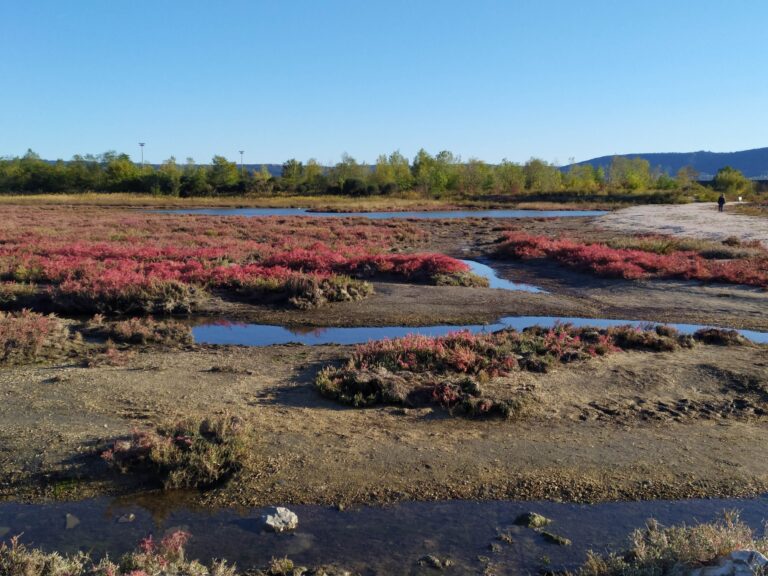
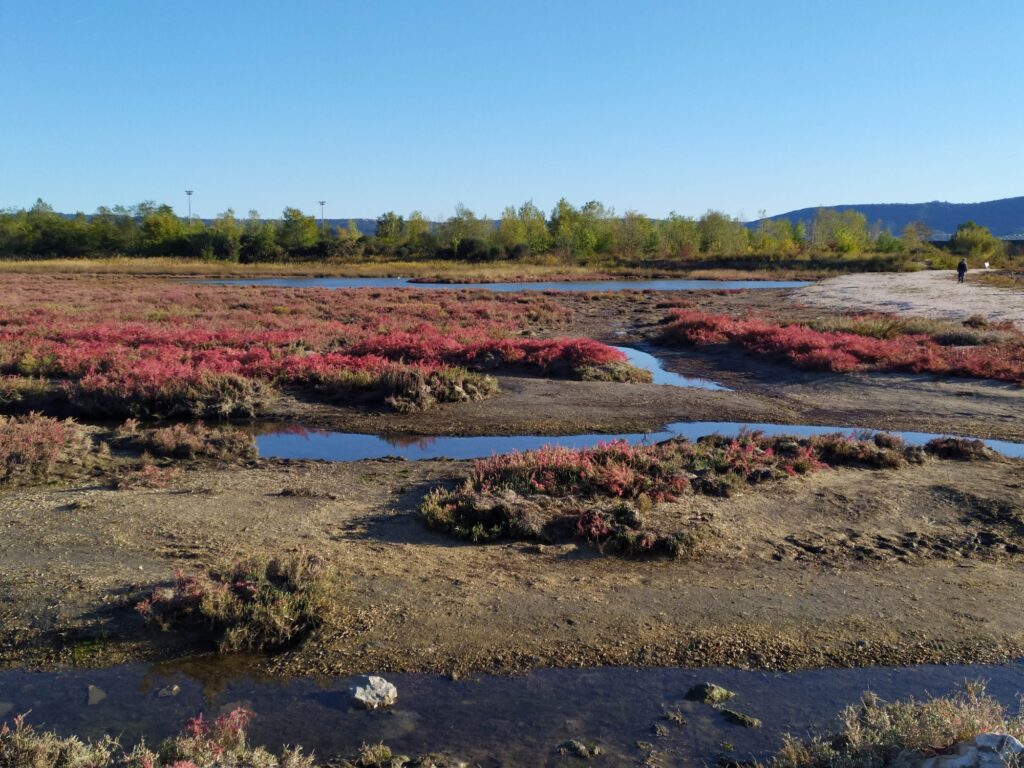
A short walk from the beach, a raised wooden boardwalk leads through what’s described as the only Mediterranean salt meadow left in Slovenia — a strange, slightly otherworldly stretch of silty, salty ground that supports plants you won’t find growing just a few hundred metres away on ordinary soil. I walked the boardwalk slowly, reading the small information panels along the way, and came away with a much better sense of why this whole bay, beach and shell dune both, gets treated as somewhere worth protecting rather than developing further.
Sv. Katarina, in Ankaran’s Polje Bay, is the same stretch of coast that holds the Shell Cemetery, built directly on the site of a former Roman villa with its own harbour, where painted plaster and a coin have both turned up in excavations. The beach itself runs a little over 600 metres of shell-sand, gentle but better walked in water shoes, with basic facilities, a relaxed dog-friendly atmosphere, and no lifeguard on duty. A salt meadow boardwalk sits a short walk away if you want to extend the visit. A short drive or a free summer bus ride from Koper, with parking that’s manageable by this coast’s usual standards.
Drive or catch the free summer bus from Koper. Bring water shoes for the shell-sand entry. Walk the salt meadow boardwalk afterward, and combine the visit with the Shell Cemetery if you haven’t already — they’re closer together than the names suggest.
Map
Sorry, no records were found. Please adjust your search criteria and try again.
Sorry, unable to load the Maps API.
Near by places: