Mestna Plaza, Koper: Everyone Calls It "Wet Cat"
Profile
Mestna Plaža, Koper: Locals Call It “Wet Cat”
Slovenia | Koper | Slovenian Istria
Everyone in Koper calls this beach Mokra Mačka — Wet Cat — far more often than its proper name, Mestna Plaža, which simply means city beach in Slovenian. I asked more than one local where the nickname came from and got a shrug each time. Nobody seemed to know, or care much, and after a while I stopped asking. The name has just attached itself to the place the way nicknames do, and it suits it better than the formal version anyway.
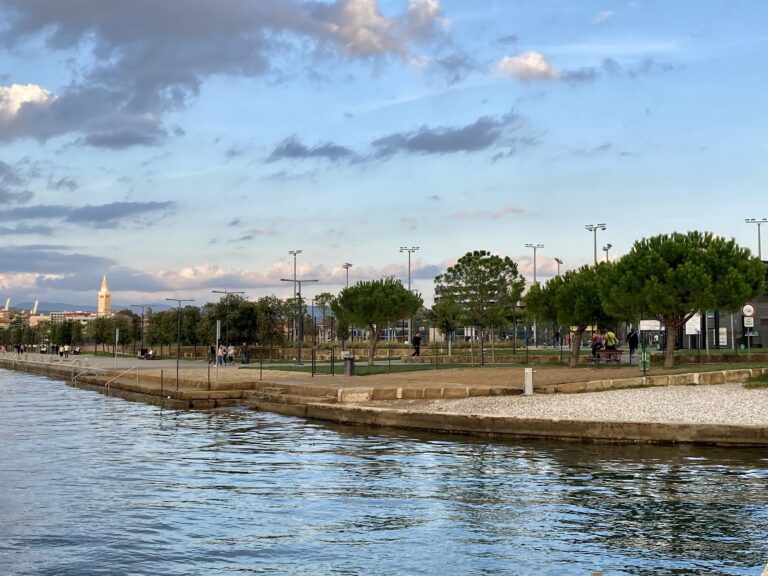
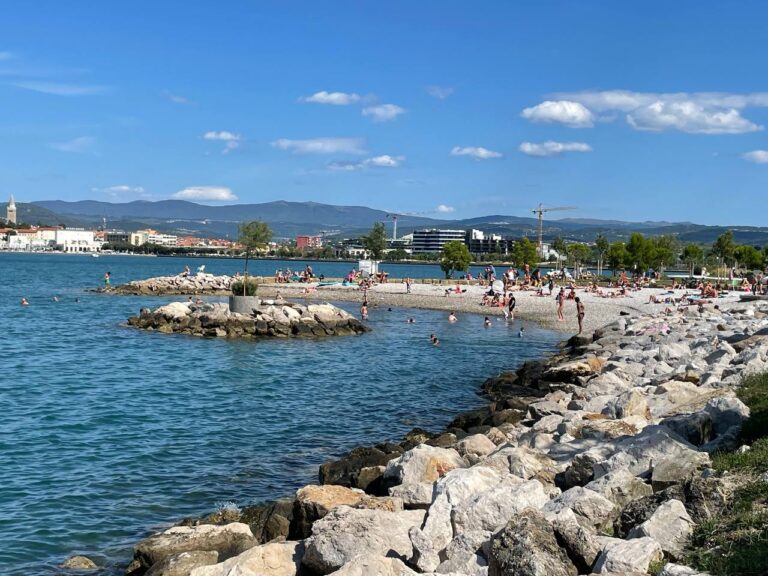
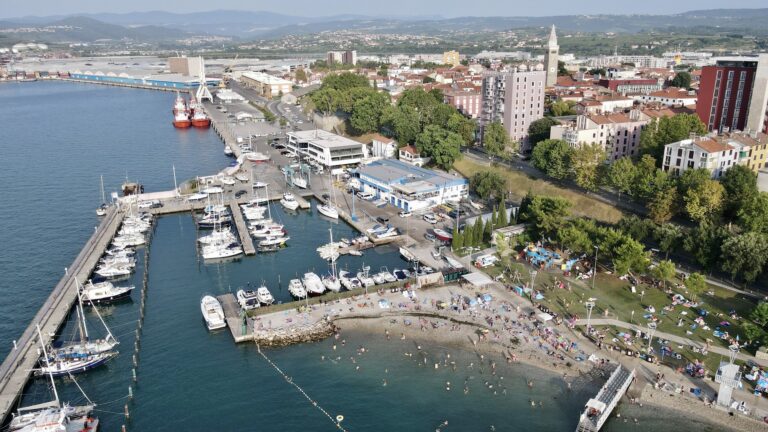
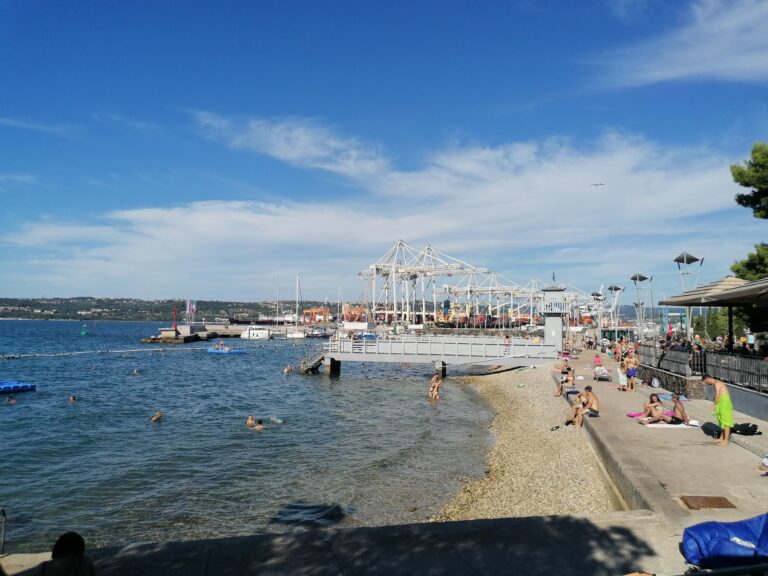
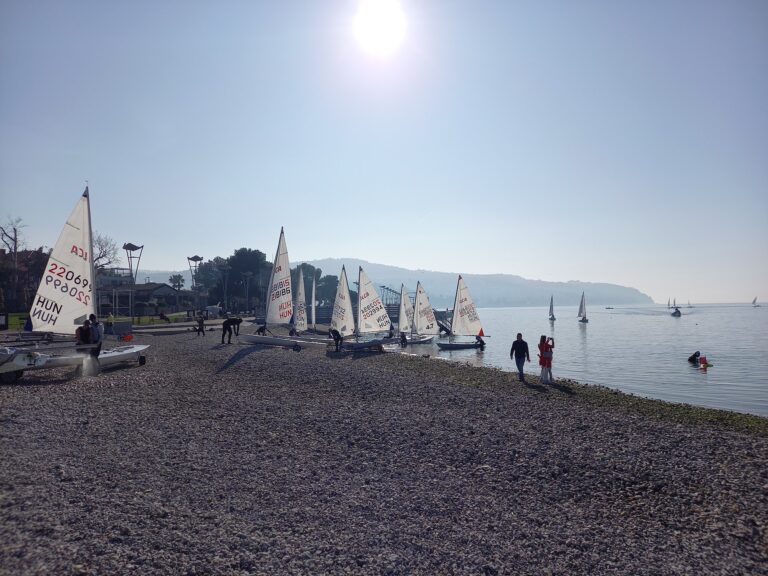
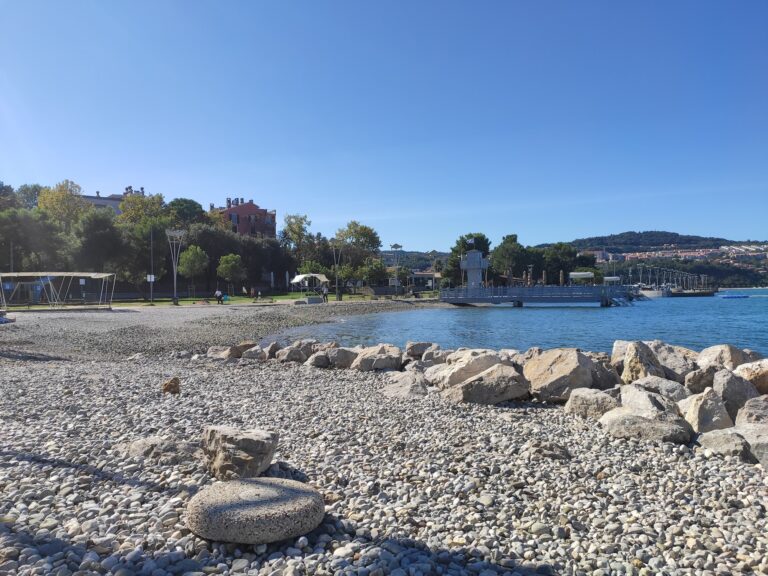
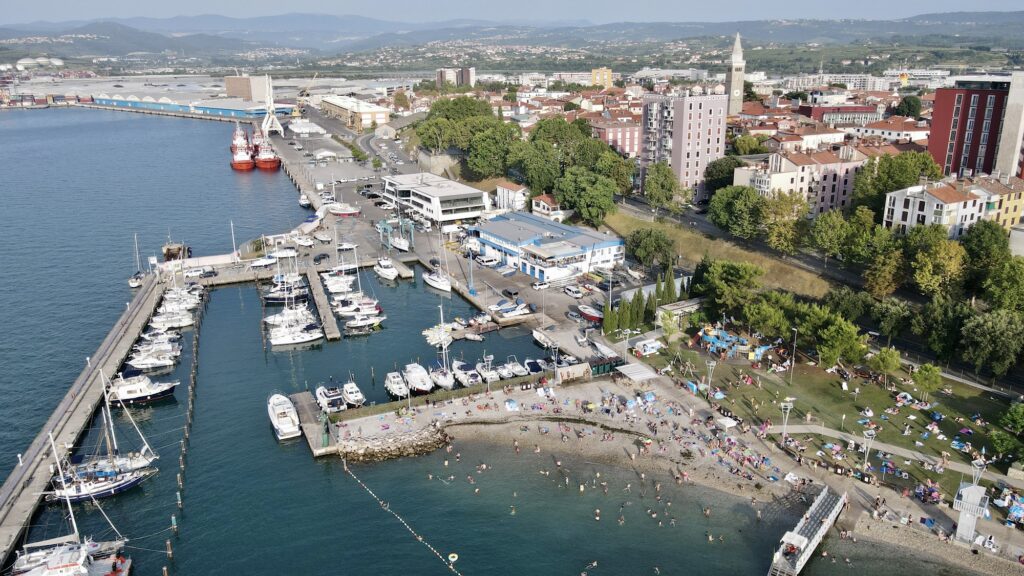
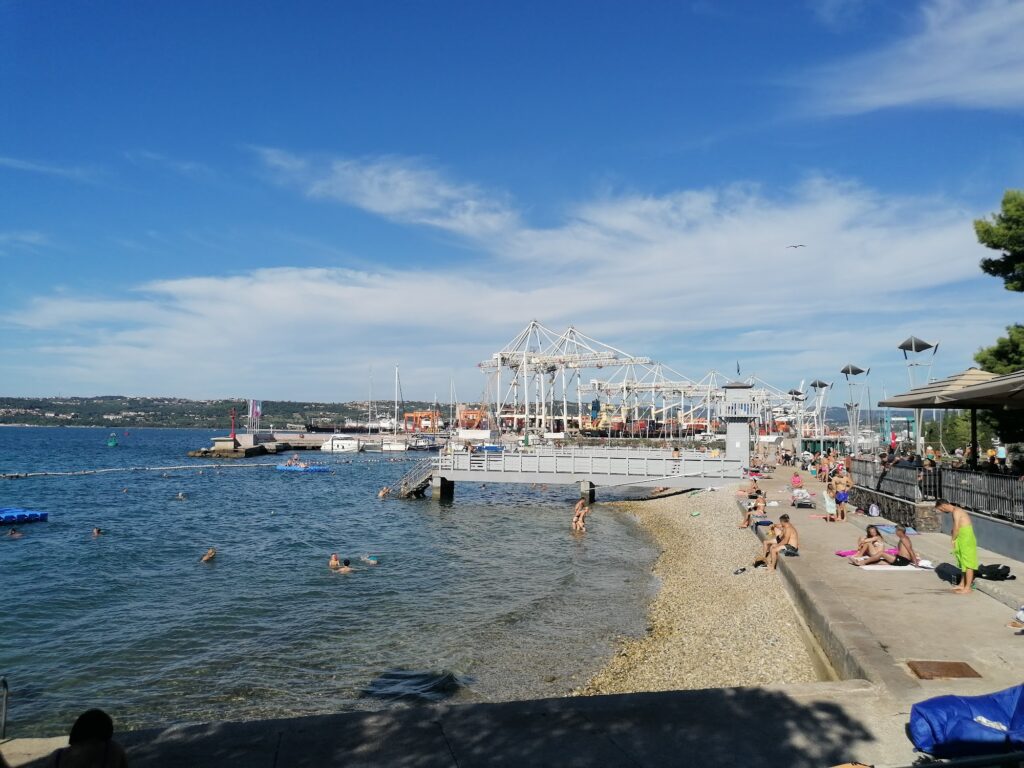
What’s actually there is modest, and I’d rather say that plainly than oversell it. Stone steps and a stretch of paved promenade lead straight down into the sea, a patch of pebble and gravel runs along the water’s edge, and a small lawn behind it fills up with sunbathers once the weather turns properly warm in June. There’s a café on the promenade with a decent outlook over the bay, and that’s close to the full inventory of what’s here. No rows of rental sunbeds, no real shade beyond whatever shadow the buildings throw in the late afternoon, nothing that would make this the centrepiece of a beach holiday. I came expecting a proper town beach and found something closer to a convenient access point to the sea — which, once I adjusted my expectations, I actually appreciated for exactly what it was.
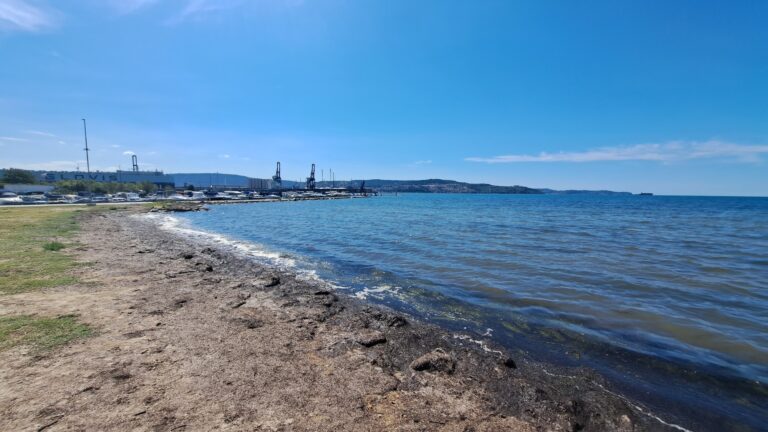
The water itself surprised me a little, given how close this stretch sits to Koper’s working port. I’d half expected something murky or oily near the cranes and cargo ships visible just along the coast, but the sea here stayed genuinely clear, a deep, slightly green-tinted blue that looked better than the industrial backdrop had any right to produce. I went in for ten minutes between two stops on a walking tour of the old town, climbed back out on the same worn stone steps, and dried off in the sun on the lawn rather than bothering with a towel I hadn’t really planned to need.
If a full beach day with proper facilities is actually what you’re after, I wouldn’t pretend Mokra Mačka is the right choice. Plaza Zusterna Koper Slovenia, a short walk or drive further along the coast, gives you sunbeds, shade, water sports rental, and a separate ticketed pool if you want it — everything this little city beach deliberately doesn’t try to be. I think of Mokra Mačka as the beach you use because you’re already in Koper for other reasons and want to cool off without leaving the centre, not as a destination in its own right.
Getting There: Five to Ten Minutes From Ukmar Square
I walked it from Ukmar Square, past the passenger terminal where the bigger cruise ships occasionally dock, and the whole stretch took maybe eight minutes at an unhurried pace. The promenade itself, Semedelska cesta, runs flat the whole way, easy enough that I saw people pushing prams and elderly couples making the same walk without any trouble.
Driving in, I’ll be honest that parking gave me more grief than the beach itself. There’s no dedicated lot right at the water, and the streets nearby fill up fast in season. I ended up circling for a few minutes before finding a paid space a few streets back and walking the rest of the way — I’d budget extra time for this rather than assume you’ll roll straight up to the sand the way you might at a bigger resort.
By bus, Koper’s main terminal connects to Piran, Izola, and inland towns including Ljubljana, and from the terminal it’s an easy walk into both the old town and down to the beach. I didn’t time it exactly, but it felt like roughly ten to fifteen minutes covering both the walk from the bus stop and the wander through town before reaching the water.
The Beach: Steps Into the Water, a Patch of Grass, a Café
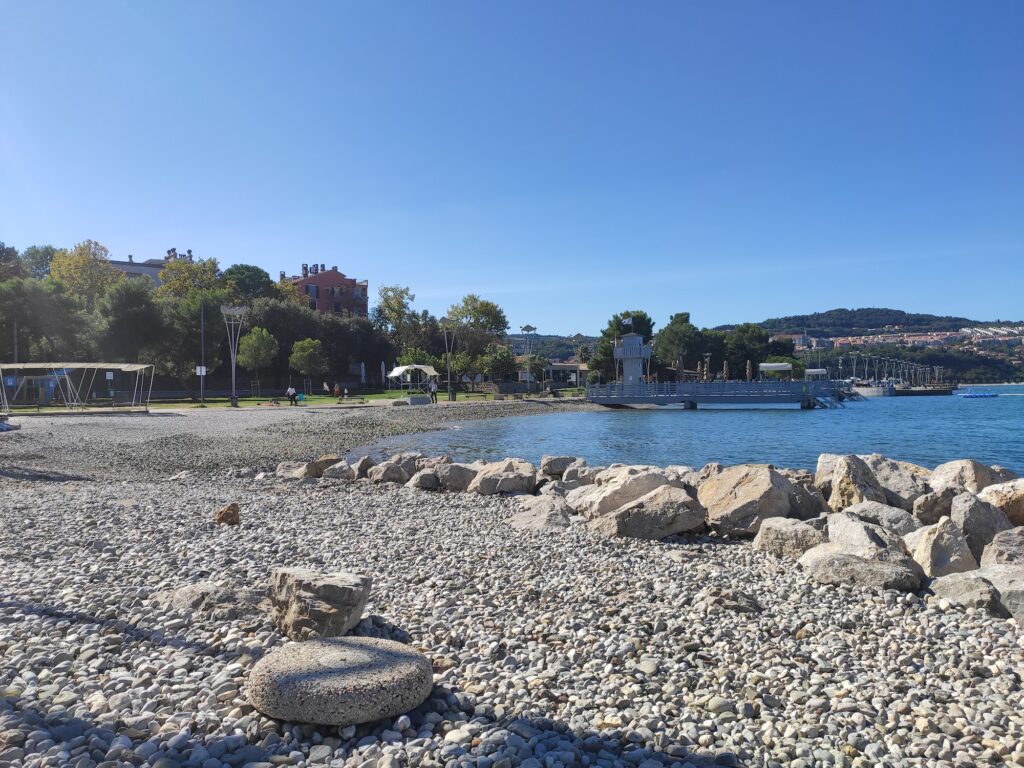
There isn’t much more to say about the layout than what I’ve already described, but I’ll add the practical details that would have helped me on the day. The stone steps down into the water are a little slick in places — nothing dangerous, but I went down carefully rather than confidently, especially since I hadn’t brought water shoes and didn’t expect to need them. The pebbles underfoot at the edge of the water are smooth enough that I didn’t mind walking on them barefoot, though anyone with sensitive feet might want sandals for the entry.
The grass behind the pebbles is the real social hub of the place in summer — that’s where I saw groups spread out towels, share food, and genuinely treat the spot as a proper local hangout rather than a tourist stop. It told me something that the crowd skewed heavily local rather than visiting; this isn’t a beach that’s been built or marketed for tourists at all, and I think that’s part of its appeal if you’re the kind of traveller who likes finding the places locals actually use.
The café on the promenade was where I ended up spending more time than I expected, honestly. I ordered a coffee, sat on the terrace, and watched the harbour traffic — fishing boats, the occasional yacht, a slow tanker on the horizon — for longer than I’d planned. It’s a genuinely pleasant spot to sit even if you never go near the water at all.
Tito Square and the Old Town
I’d recommend treating the swim as a short break in the middle of exploring the rest of Koper, because the old town is where the real substance of a visit here lies. Tito Square, a short walk inland, has remained the city’s central gathering point through every change of name and government it’s lived through — and there have been several. The Cathedral of the Assumption dominates one side of the square, its bell tower climbable for anyone willing to manage the stairs, with the Praetorian Palace and its arched loggia sitting close by, now home to the tourist office.
Koper itself has a history considerably stranger than its current quiet character suggests. It was genuinely an island once, joined to the mainland only by a narrow causeway before later landfill closed the gap for good — which means the ground I was walking on near the old town was, at some point centuries ago, simply water. The name has shifted just as many times as the geography: Aegis under the earliest Greco-Thracian settlers, Capris under the Romans, Insula Capraria — Goat Island — and then Justinopolis under Byzantine rule, before the Venetians, who left the deepest mark on the town’s architecture, renamed it Capo d’Istria, Head of Istria. That’s where the modern name Koper ultimately comes from, shortened and adapted over the centuries since.
Walking the streets off Kidričeva, I noticed the upper floors of several old houses leaning out slightly over the lane, supported on wooden beams in a style locals told me reflects a mix of Venetian and older local building traditions. The Taverna, a squat stone building near the harbour, was once a salt warehouse — a quiet reminder that this town’s wealth, long before tourism, came from salt production along this same stretch of coast.
Mestna Plaža, known to nearly everyone in Koper as Mokra Mačka — Wet Cat — is a small, free, genuinely local beach: stone steps into clear water, a patch of grass, a café with a good view, and not much else. I’d use it exactly the way the locals around me did — as a quick, convenient swim slotted into a day spent mostly in the old town, not as a destination beach in its own right. For that, Žusterna is the better choice nearby. Koper itself rewards the extra time, a town that was once an actual island and has carried more names than most cities manage in twice its history. Five to ten minutes on foot from Ukmar Square, with parking a little harder to come by than the swim itself.
Walk down from Ukmar Square. Don’t expect facilities beyond the basics. Spend the rest of your day in the old town, and save Žusterna for when you actually want a proper beach.
Map
Sorry, no records were found. Please adjust your search criteria and try again.
Sorry, unable to load the Maps API.
Near by places: