Archea Pydna Beach: History Meets Calm Water
Profile
Archea Pydna Beach: Swimming Where an Empire Ended
Greece | Pieria | Olympic Riviera | Thermaic Gulf
In a single afternoon in June of 168 BC, a Roman army destroyed the Macedonian phalanx on the plain near Pydna, ending the Antigonid dynasty that traced its lineage back to one of Alexander the Great’s own generals. The battle lasted barely two hours, and by evening Macedonia’s centuries of independent rule were effectively finished, the kingdom soon carved into republics under Roman oversight. I hadn’t expected to find myself thinking about phalanx formations and Roman legions while wading into shallow, calm water on a family beach, but the Byzantine walls standing above this stretch of sand mark the same ground where that empire quietly ran out of road.
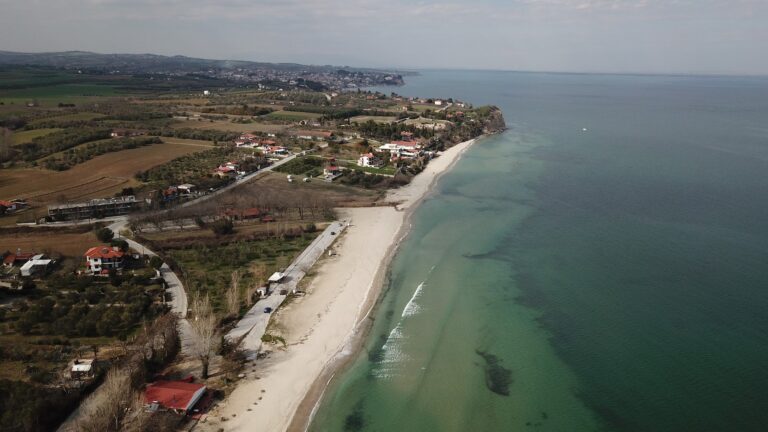
Archea Pydna Beach takes its name directly from the ancient city whose ruins sit at its edge, and the combination of serious history and genuinely gentle swimming conditions makes it one of the more unusual pairings I’ve encountered on this coast.
Shallow Water Protected by the Curve of the Coast
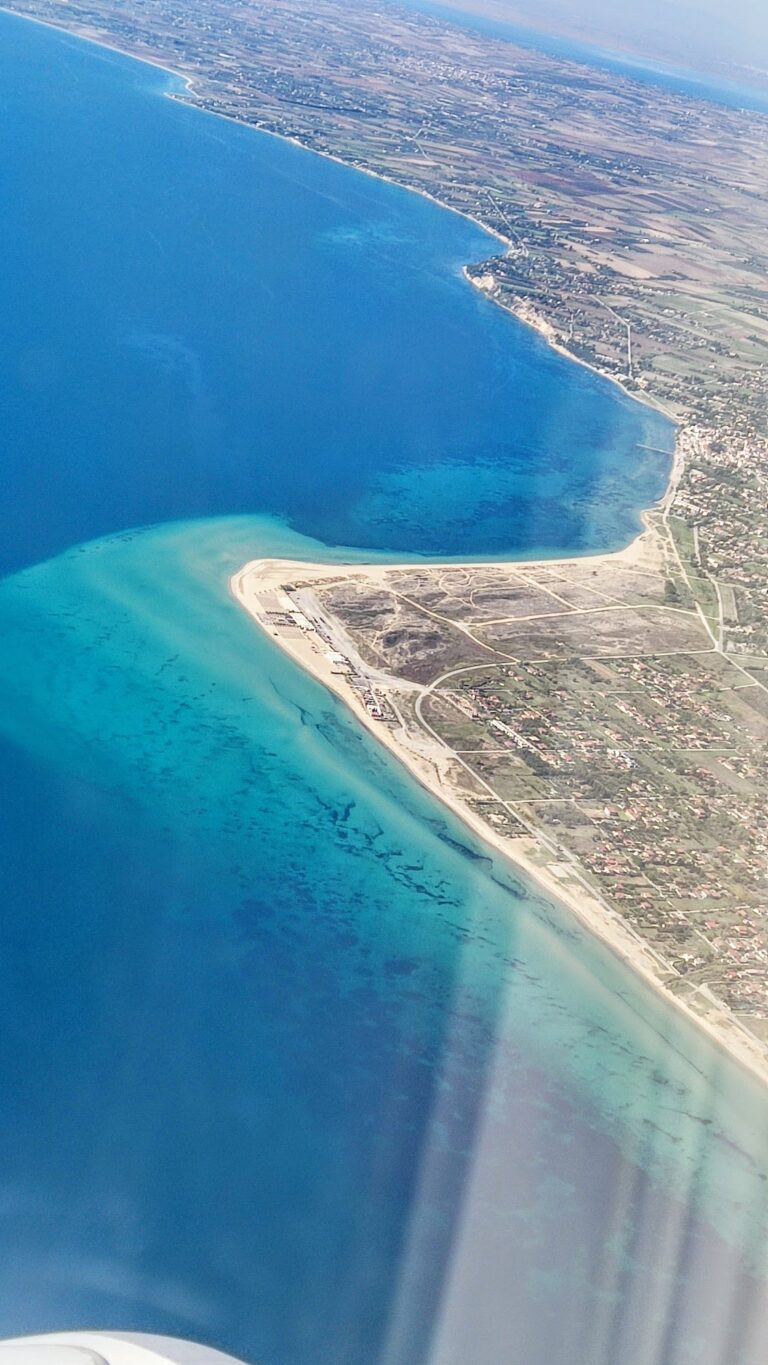
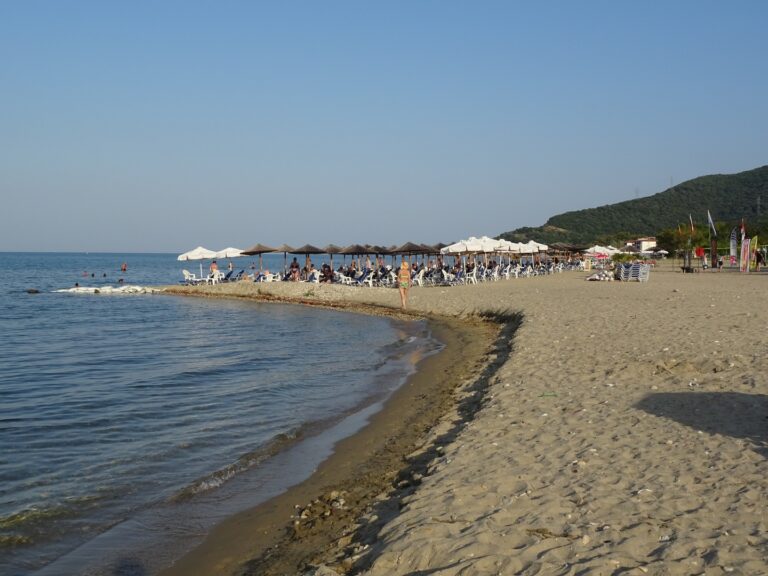
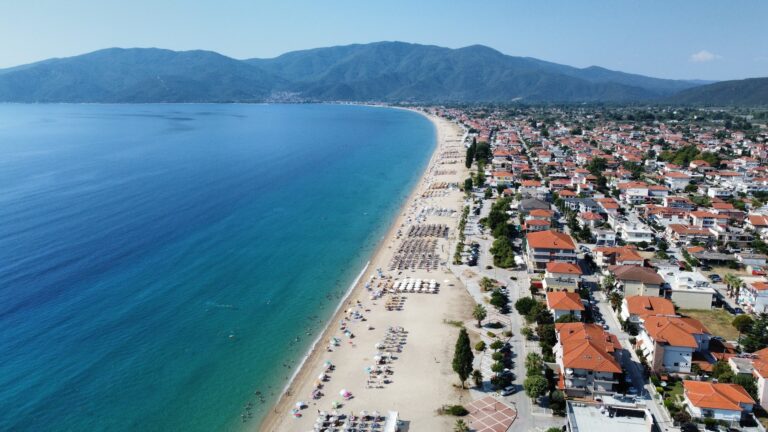
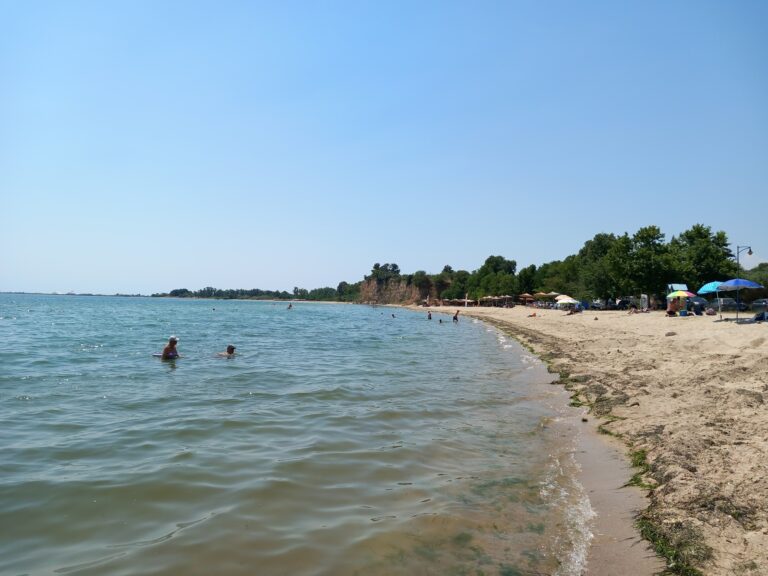
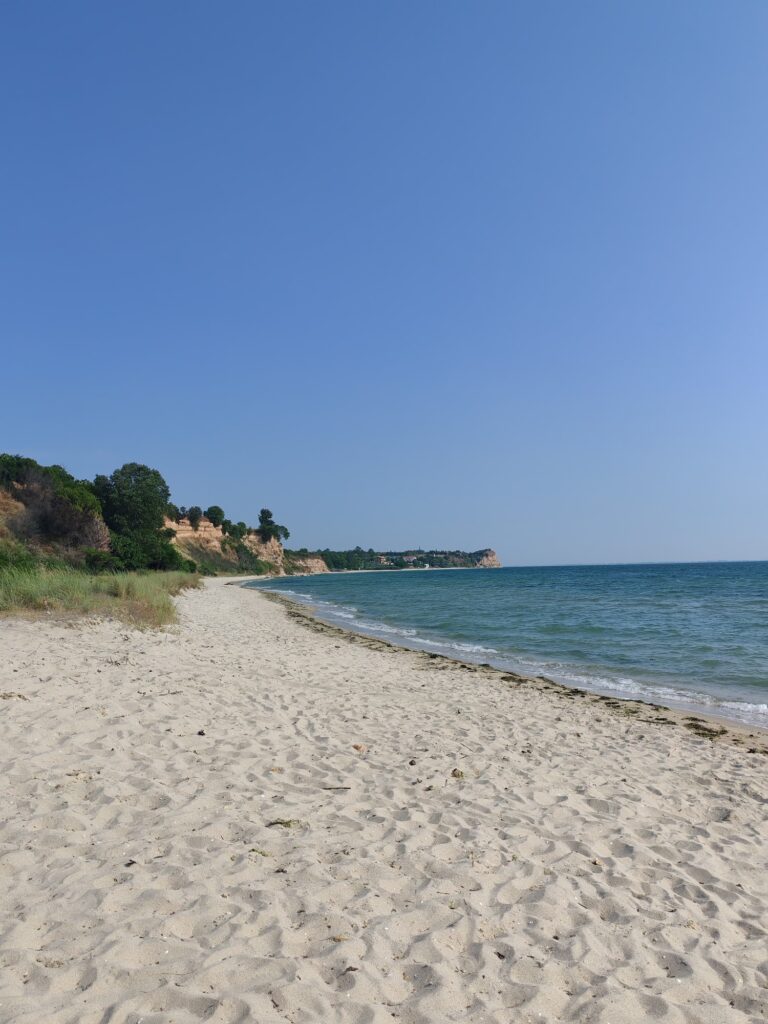
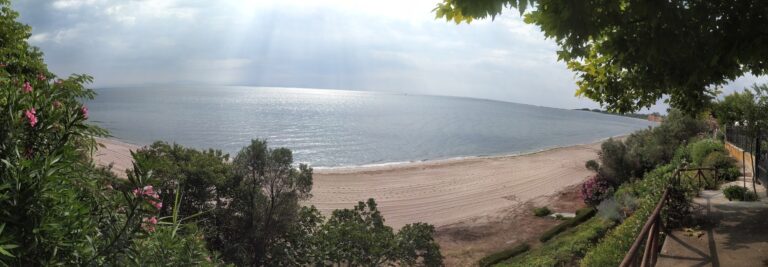
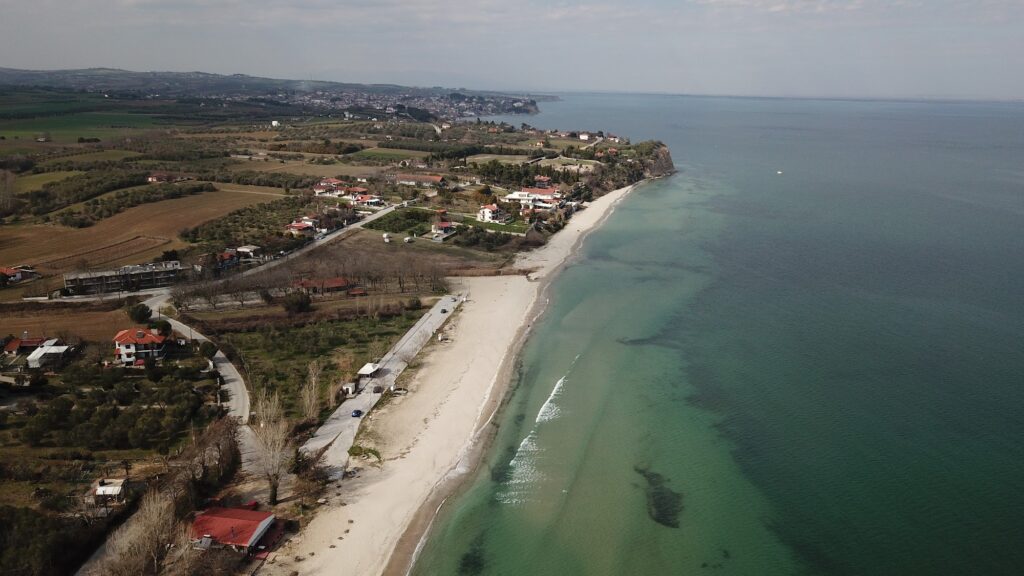
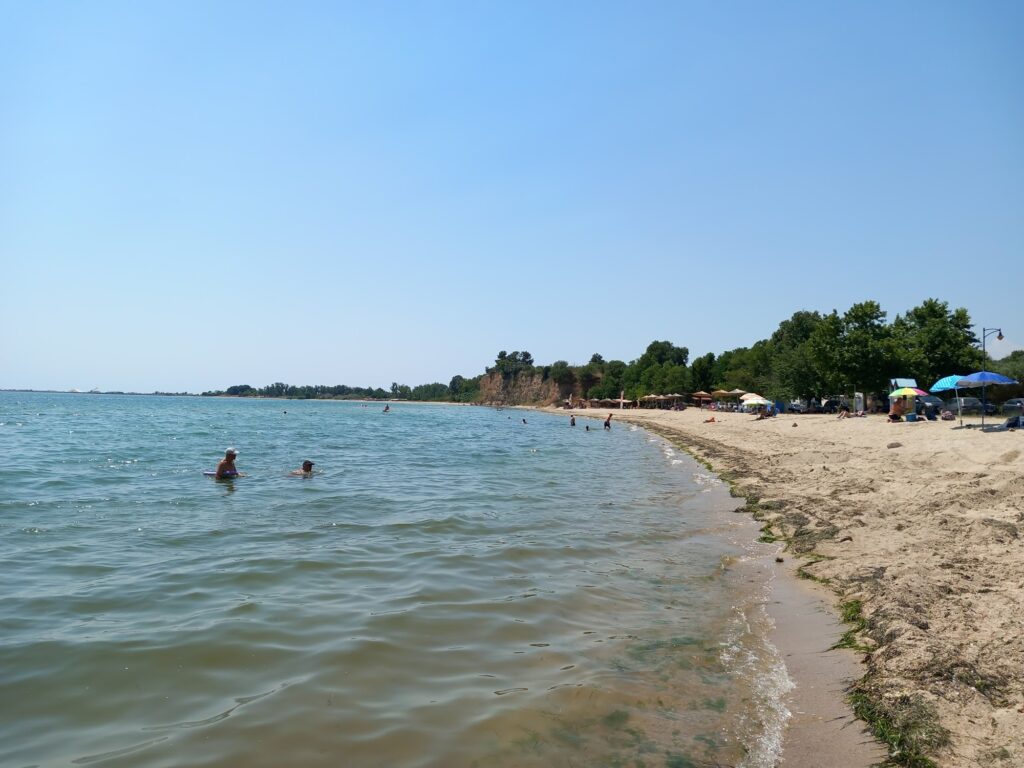
The sea at Archea Pydna stays notably shallow for a considerable distance from shore, a product of the natural curve of the coastline and the elevated cliffs of the archaeological site providing shelter from open water. I found this one of the more reassuring beaches for supervised swimming with young children that I’ve come across in Pieria, the gradual slope giving plenty of room to wade without any sudden drop-off catching anyone by surprise. The shoreline itself blends fine sand with small, sun-bleached pebbles, and the water stayed clear enough on every visit that snorkeling around the submerged remnants of the old harbor felt like a genuine extension of the beach day rather than a separate activity requiring special planning.
Snorkeling Around a Harbor Rome Once Used
The submerged ruins visible beneath the water near Archea Pydna are remnants of the ancient harbor that once served this coastal city, and swimming out with a mask to trace the old stonework gave me a much more physical sense of the site’s history than simply walking the ruins on land. Visibility held up well across multiple visits, and I’d recommend water shoes given the mix of sand and pebble underfoot, particularly near the rockier sections closer to the old harbor structures.
Beach Bars and Tavernas Near the Castle Entrance
A portion of Archea Pydna Beach carries an organized section, sunbeds and umbrellas managed by local beach bars, service attentive without being intrusive, and I found the freddo espresso here as reliably good as anywhere else along this coast. Directly behind the sand, near the entrance to the archaeological site, traditional tavernas specialize in the region’s well-regarded mussels alongside fresh-caught seafood, and I ate well at more than one table with a clear view back toward the castle walls. Given the organized nature of this central section, I’d expect dogs to require the operator’s explicit permission here, though the beach’s quieter, unorganized stretches further from the main facilities likely fall under the standard Greek rule allowing leashed dogs outside the water.
Clean changing cabins and outdoor showers cover the basics, with restroom facilities available through the beach bars and tavernas rather than as a separate municipal amenity.
Byzantine Walls Turning Ochre at Sunset
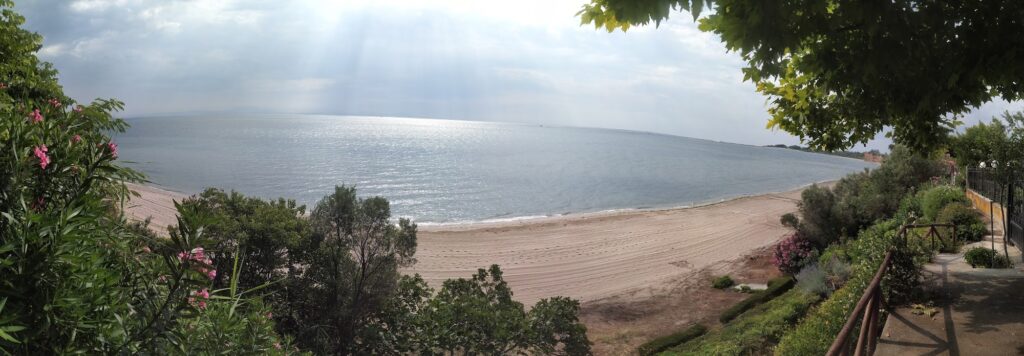
The ruins overlooking Archea Pydna Beach include the remains of a Byzantine castle built atop the earlier ancient city, and I made a point of staying through sunset on more than one evening specifically to watch the stone shift from its daytime pale color into a deep ochre as the light dropped. The combination of that changing color and the water calm enough to reflect it gave this beach one of the more striking evening views I found anywhere on the Thermaic Gulf.
Walking Straight From the Beach Into the Ruins
What sets Archea Pydna apart from most beach-and-ruins pairings I’ve encountered is how directly the two connect. A swim here transitions almost immediately into a walk through the ancient city’s foundations and the Byzantine fortifications above, no significant drive or separate ticketed entrance breaking up the day. I found myself doing exactly this on a warm afternoon, drying off on the sand before wandering up into the ruins while my clothes were still slightly damp, something the site’s layout makes entirely practical rather than awkward.
Getting There: Twenty Minutes North of Katerini
Archea Pydna Beach sits roughly 20 kilometers north of Katerini, a drive of twenty to twenty-five minutes following the road toward Makrygialos, with clear signs directing traffic toward Ancient Pydna along the way. I found the route simple enough to navigate without much local knowledge, the signage consistent for the final approach.
A Day Trip From Thessaloniki
For anyone based in Thessaloniki, Archea Pydna sits about 55 kilometers away, roughly a forty-five minute drive via the E75, making it a genuinely practical day trip for visitors staying in the northern capital who want both a swim and a serious historical site without committing to an overnight stay elsewhere.
Taking the Suburban Railway From Thessaloniki or Katerini
The Proastiakos suburban railway connects Thessaloniki and Katerini to the Korinos or Adendro stations, and from either, a short taxi ride covers the remaining distance to the beach. I used this route once and found it a genuinely comfortable alternative to driving, particularly for anyone without a rental car who still wants the flexibility of public transport over a fixed bus schedule.
Parking Near the Castle Path
Free parking is available in gravel lots near the entrance to the archaeological site and the beach bars, and arriving before eleven gave me an easier choice of spot closest to the castle path, well ahead of the midday crowd that builds steadily as the day warms.
Comparing Archea Pydna to Other Historical Beaches
Archea Pydna’s pairing of serious ancient history with calm, family-friendly water invites comparison with Eretria Beach Evia, another gulf-facing stretch built beside genuine archaeological weight, though Eretria’s ancient rivalry with Chalkis reads as commercial and civic history rather than the decisive military turning point marked here. Closer within Pieria itself, Hidden Beach Pieria offers the opposite experience entirely, a completely unorganized cove reached by trail or boat rather than a beach built around easy access to ruins and tavernas.
For families specifically weighing calm, protected swimming alongside a beach’s ecological or historical significance, Kalamaki Beach Crete makes for a useful comparison too, though its loggerhead turtle nesting status gives it a natural rather than historical draw.
Standing Where a Dynasty Ran Out of Time
By the time I left Archea Pydna on my last evening, the castle walls had turned fully ochre in the fading light, and I stood a while longer on the sand thinking about how quickly, in the span of a single June afternoon over two thousand years ago, the ground beneath that stone had gone from the edge of an independent kingdom to simply another stretch of coastline the Romans had folded into something larger.
Map
Sorry, no records were found. Please adjust your search criteria and try again.
Sorry, unable to load the Maps API.
Near by places: