Eretria Beach Evia: Sand, Sea, and Ancient Ruins
Profile
Eretria Beach: Swimming Where an Ancient Rival City Once Stood
Greece | Evia | Central Greece | Aegean Coast
Most beach towns in Greece build their identity around the coastline itself. Eretria does something different. Walk a few streets back from the sand and you’re standing in the middle of a city that was, for a stretch of the ancient world, powerful enough to fight neighboring Chalkis for control of the entire island, wealthy enough to build private houses with mosaic floors, and important enough to warrant its own theater. I hadn’t expected a beach weekend to double as a walk through a genuine ancient rivalry, but that’s exactly what a stay in Eretria turns into.
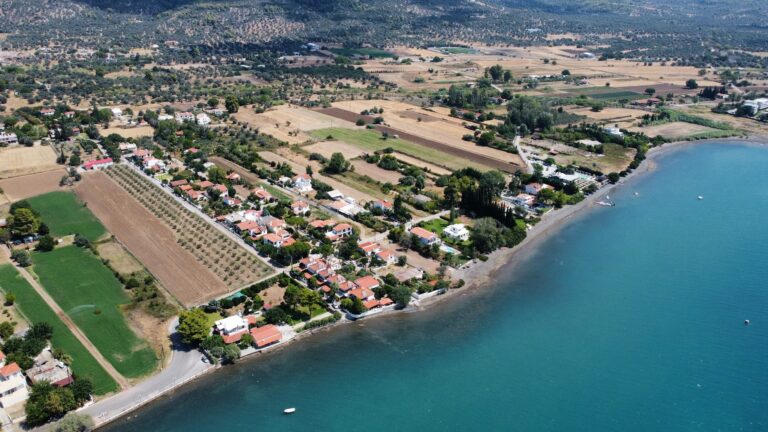
The modern town sits directly on top of this history, and the beach itself, long and easy, feels almost incidental next to what’s buried a short walk inland, though it earns its keep on its own terms too.
A Long Shoreline Sheltered by the Island of Dreams
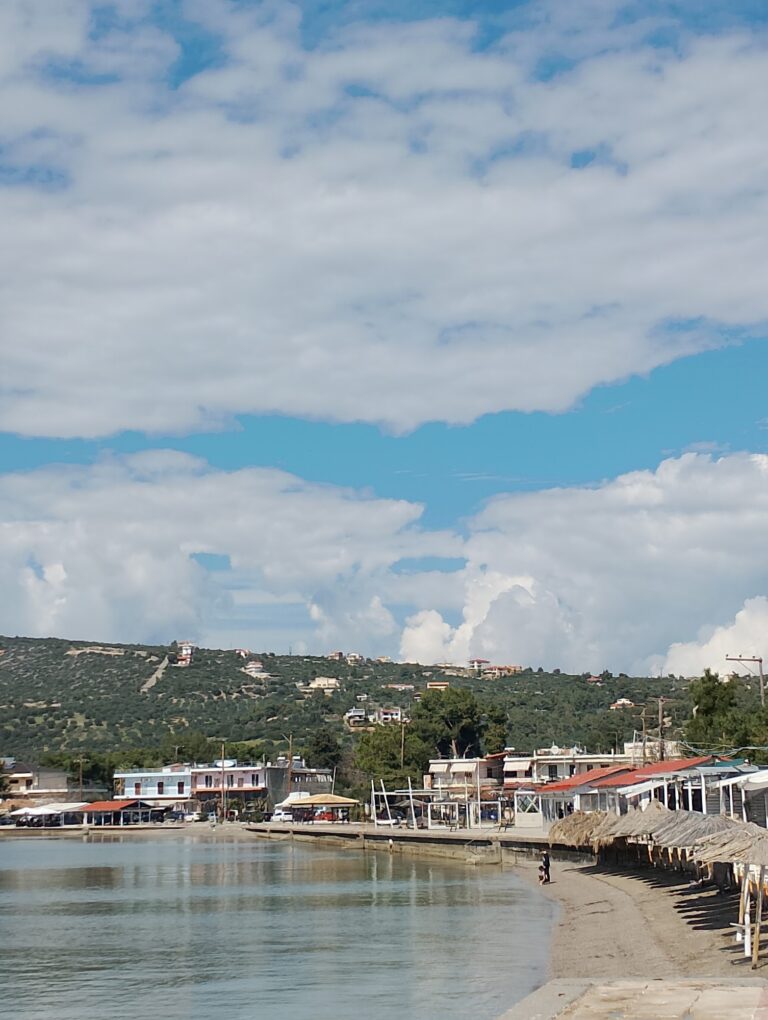
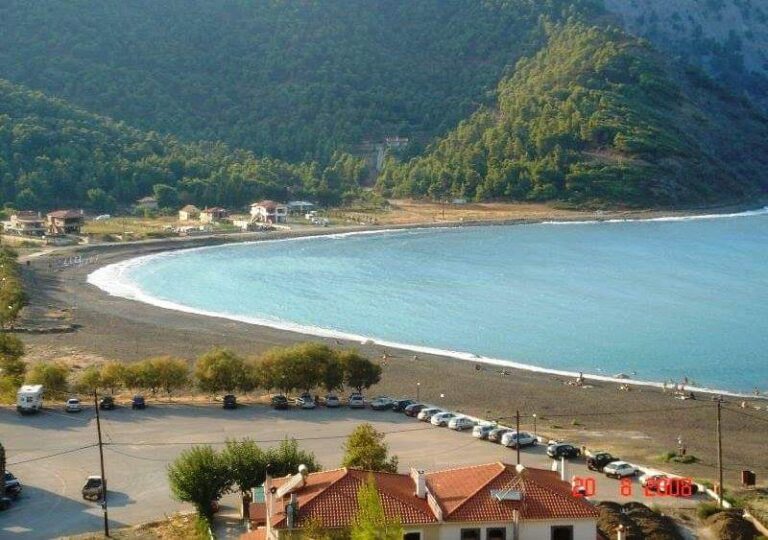
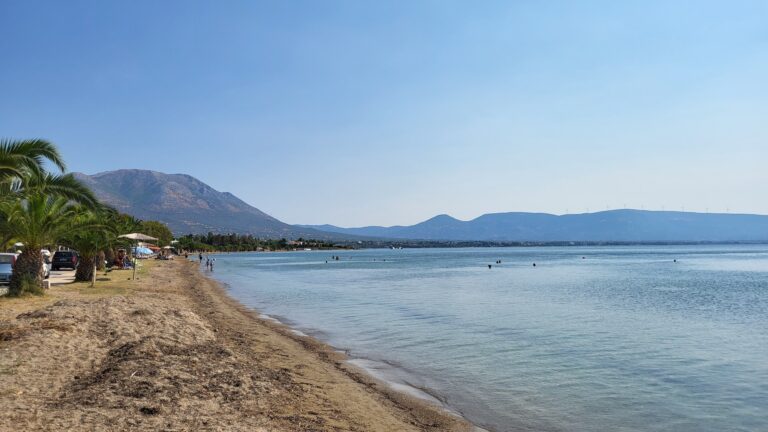
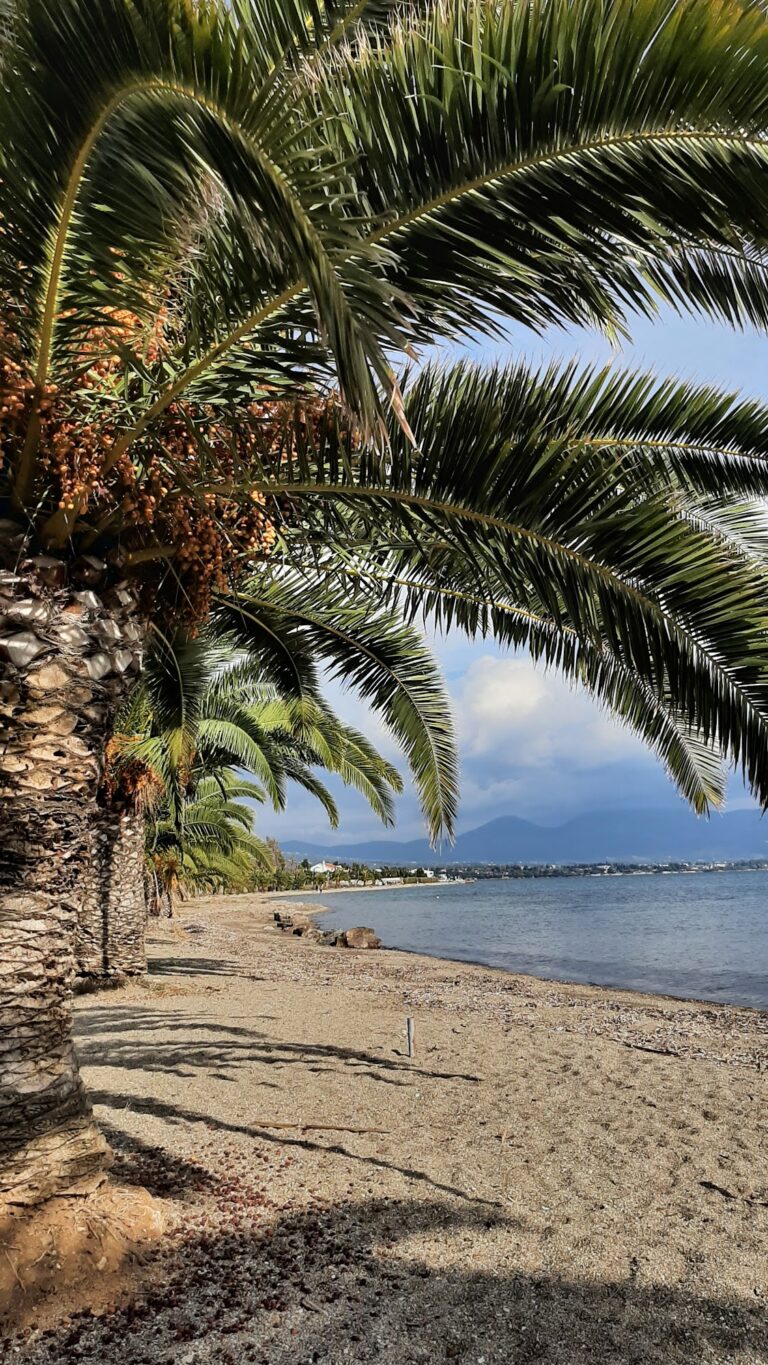
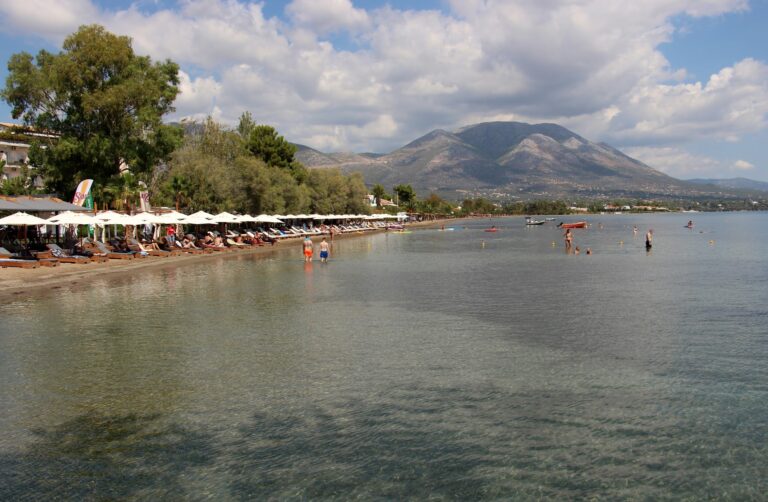
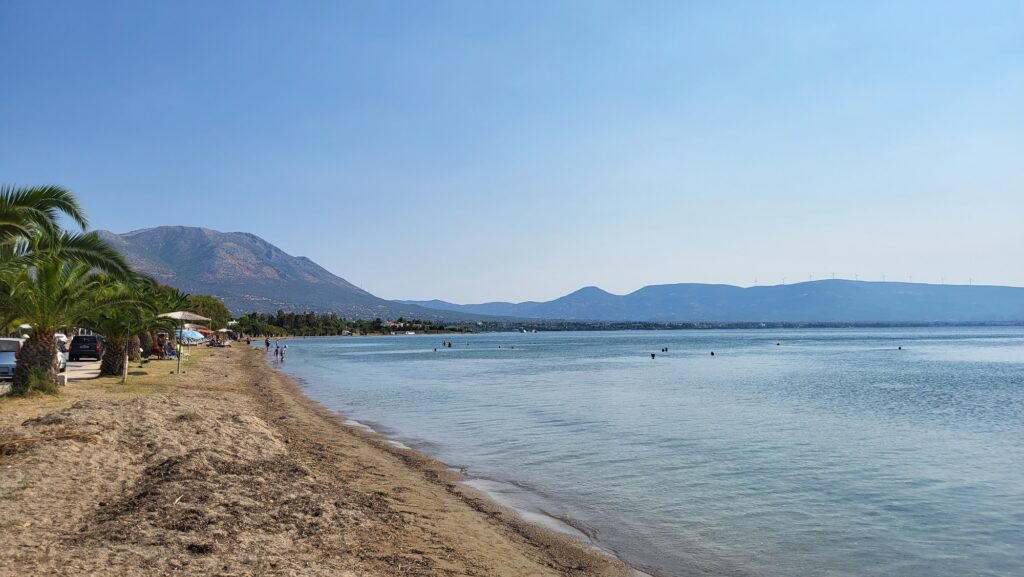
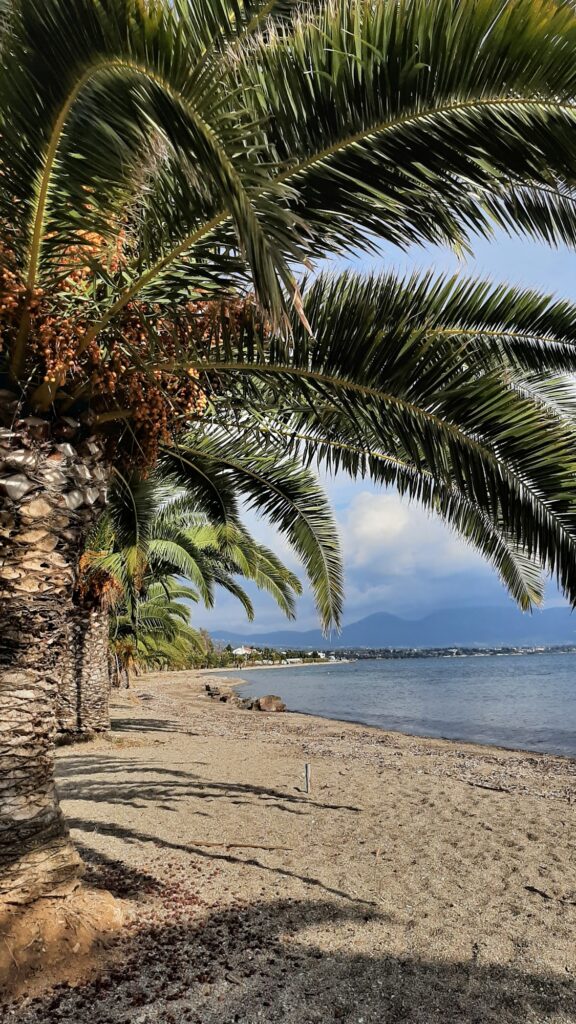
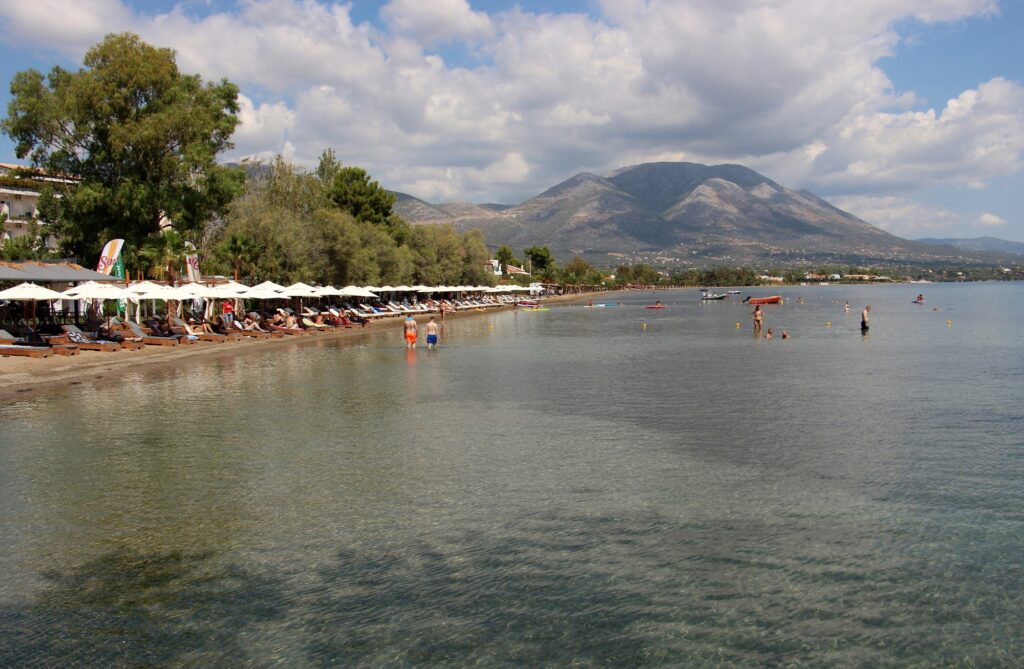
Eretria Beach runs the length of the town’s waterfront, a mix of fine sand and small, smooth pebbles that shifts underfoot as you walk from one end to the other. What struck me most was how calm the water stayed throughout my visit, even on a day when wind was clearly moving elsewhere on the island. Locals credited this to Pezonisi, the small islet just offshore known locally as the Island of Dreams, which shelters the bay enough to keep the sea close to mirror-still regardless of what’s happening beyond it.
The seabed slopes gradually enough that I could wade out a considerable distance before the water reached my waist, and I watched families spend hours in water shallow enough that supervision felt more like habit than necessity. It’s the kind of beach that rewards a slow morning rather than demanding one.
The Theater Built When Eretria Rivaled Chalkis
A short walk from the sand sits the ancient theater, constructed sometime in the late 4th or early 3rd century BC, during the period when Eretria stood as one of the more formidable maritime powers in the Greek world. I hadn’t known, before visiting, that Eretria and Chalkis, the two major cities on Evia, fought each other for control of the fertile Lelantine plain between them, a conflict serious enough to draw in allies from across the Greek mainland. Standing in the theater’s stone seating, looking down toward where performances once drew crowds from a genuinely influential city, gave the rest of my beach day an unexpected weight.
The House of Mosaics and Its Mythological Floors
Even more striking than the theater, for me, was the House of the Mosaics, a private residence built around 370 BC and in use for roughly a century before it was destroyed by fire. The pebble mosaics covering its floors depict mythological scenes with a level of detail I hadn’t anticipated from a domestic building this old, a Nereid riding a seahorse, a battle between Arimaspians and griffins, figures rendered entirely from small colored stones set by hand. Archaeologists have continued finding more of the ancient city even recently, with a fresh mosaic depicting dancing satyrs turning up in 2024 during routine work on the town’s water pipeline, a reminder that Eretria’s ancient footprint likely still extends well beyond what’s currently excavated.
Tavernas Along a Genuinely Walkable Promenade
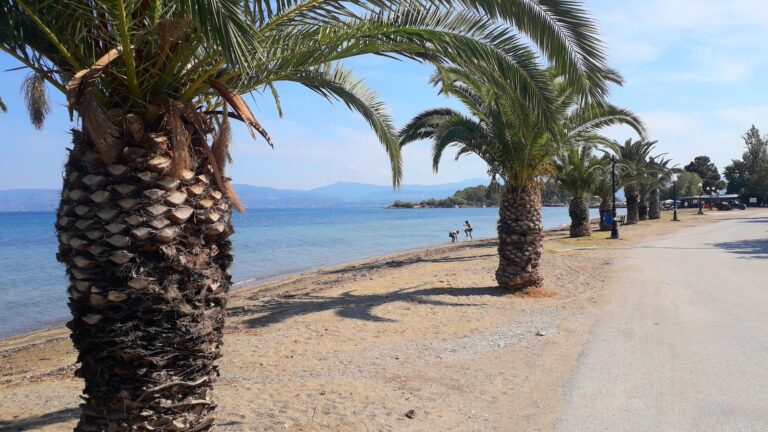
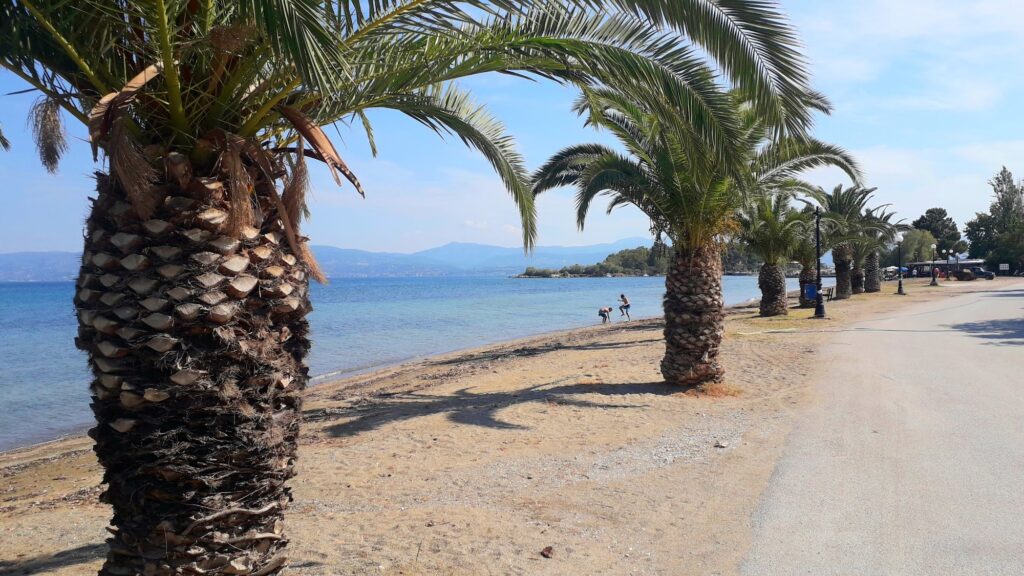
The promenade running behind Eretria Beach is properly pedestrian, and I appreciated being able to walk its full length without dodging traffic the way I’ve had to at busier mainland beach towns. Tavernas and contemporary bistros line the route, specializing in fresh Euboean seafood and locally raised organic meats, and I ate well at more than one spot without needing to seek out anything beyond what was directly in front of me. The overall pace felt distinctly weekend-oriented, closer to how Athenians treat this stretch of coast than how a typical island destination presents itself.
Small Boats, Pedalos, and the Gulf’s Nearby Islets
Eretria has a genuine boating culture, and I rented a small boat for an afternoon to explore a couple of the nearby islets scattered across the Gulf, an easy, unhurried way to see more of the coastline than the beach alone offers. Pedalos are available for anyone wanting something less involved, and I noticed a steady rotation of both throughout my stay, families and couples alike making use of the water beyond simply swimming in it.
Getting There: The Twenty-Minute Ferry From Skala Oropou
The most direct route into Eretria is by ferry from Skala Oropou on the mainland, a crossing of roughly twenty minutes that runs frequently enough that I never waited long for a departure. Arriving this way drops you straight into the heart of town, close enough to both the beach and the archaeological site that I didn’t need to arrange any further transport once I’d disembarked.
Driving via Chalkis and the High Bridge
For anyone preferring to drive, the route crosses the high bridge at Chalkis before continuing south along a scenic coastal highway for about 20 kilometers, roughly twenty minutes to Eretria itself. I made this drive once and found the bridge crossing worth the detour on its own, offering a clear view of the strait separating Evia from the mainland before the road settles into a quieter coastal stretch.
A Practical Weekend Trip From Athens
Eretria sits close enough to Athens, roughly 95 kilometers and about an hour and a half by car, that it functions as a genuine weekend option for city residents rather than a destination requiring a longer holiday to justify. I noticed this in the crowd itself, a steady mix of day-trippers and weekenders rather than the longer-stay tourists I’d encountered on islands further from the mainland.
Parking Near the Ferry Terminal
Organized parking lots sit near the ferry terminal and along the coastal road behind the beach clubs, and I never struggled to find space even arriving midday. The proximity of parking to both the beach and the archaeological site made it easy to split a single day between swimming and walking through the ruins without needing to relocate the car in between.
Comparing Eretria to Other Family-Friendly Greek Beaches
For families weighing options across Greece, Eretria’s gradual seabed and sheltered bay put it in similar territory to Kalo Livadi Beach Mykonos, though Eretria trades Mykonos’ beach-club scale for a genuine walking connection to ancient ruins most island beaches simply don’t have nearby. Damatria Beach Karpathos shares the same calm, shallow approach to swimming, albeit in a far more remote setting reachable only by a longer journey than Eretria’s short ferry hop from the mainland.
What makes Eretria distinct within that comparison is the sheer proximity of serious history to an entirely ordinary beach day, a combination I hadn’t found paired quite this closely anywhere else on this coast.
An Afternoon Spent Between the Theater and the Shore
By the time I’d finished walking the ancient theater and made my way back down to the water, the light had shifted toward late afternoon, sunbeds emptying out along the promenade while the tavernas began setting tables for the evening, Pezonisi sitting quietly offshore the way it must have sat through every summer this city has seen since long before anyone thought to build a beach bar on its shore.
Map
Sorry, no records were found. Please adjust your search criteria and try again.
Sorry, unable to load the Maps API.
Near by places: