Kryopigi Beach Kassandra: Cold Spring, Blue Flag, Pine Shade
Profile
Kryopigi Beach Kassandra Chalkidiki Greece: A Village That Spent Thirty Years Called “Little Markets”
Greece | Kryopigi | Kassandra, Chalkidiki, Central Macedonia
Until 1955, the hill above this beach was called Pazarakia — “little markets” — a name that fitted a small trading settlement rather than a coastal destination. The rename came as part of the mid-century effort to restore more explicitly Greek place names across the country, and the village became Kryopigi, cold spring, after the natural freshwater springs that had been flowing here long before the name question arose. A fountain built in the village square in 1937 still feeds on that same cold water, and it is still working, which is worth knowing because it is the most direct physical connection between the name and the place. The springs that feed the fountain also seep into the sea, and swimmers who know what to look for find the cold pockets where the freshwater meets the warmer Aegean — not dramatic enough to stop you in your stroke, but distinct enough to locate once someone has told you they are there.
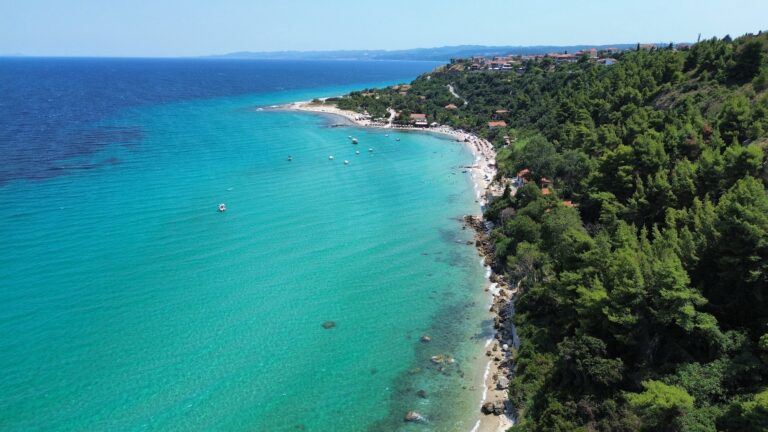
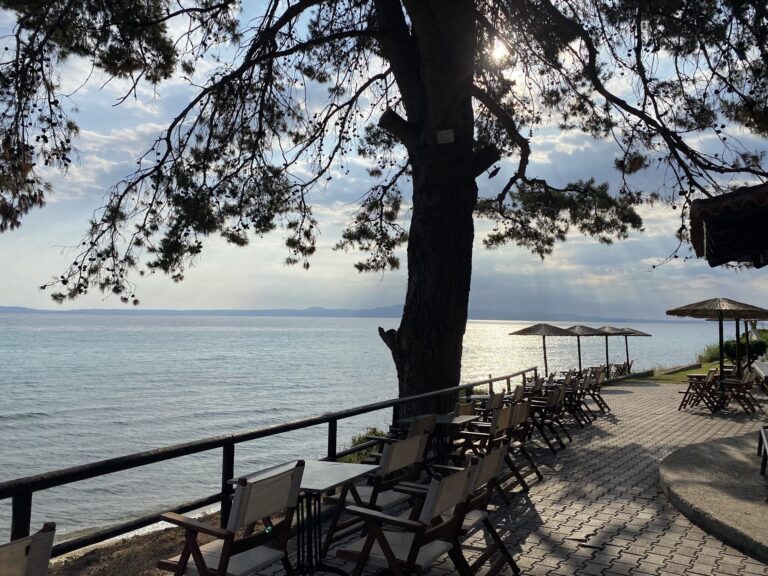
The village occupies the hillside at roughly 120 metres above the Toroneos Gulf, built amphitheatrically on pine-covered slopes, which is both the reason the view is good and the reason the beach requires a ten-minute downhill walk to reach. The elevation also keeps the village slightly cooler through the summer than the resort settlements at sea level nearby, and that specific quality of arriving at the beach warm from the descent and finding the water cooler than expected — partly from the springs, partly from the shade of the pines that extend to the sand’s edge — is particular to Kryopigi rather than being a general feature of this coast.
Getting to Kryopigi Beach Kassandra Chalkidiki Greece: 90 Kilometres From Thessaloniki on the Eastern Kassandra Coast
The drive from Thessaloniki follows the main highway southeast toward Nea Moudania, crosses onto the Kassandra peninsula, and then continues south along the eastern coast. Kryopigi sits five kilometres south of Kalithea and roughly in the middle of the peninsula’s eastern shore, between Polychrono to the south and Kalithea to the north. The journey covers 90 kilometres and takes around an hour and fifteen minutes under normal conditions. The KTEL Halkidikis bus runs from Thessaloniki’s dedicated Chalkidiki station to the village stop, and from there the walk down to the beach takes ten to fifteen minutes on the shaded path through the pines.
In high season, a small tourist train — the kind of road vehicle designed to look like a train — runs from the village centre down to the beach and back, giving the descent a more leisurely character than the walk, though the walk through the forest is more worthwhile than the alternative. Parking is available near the beach entrance, and the advice repeated consistently by those who know this beach is to arrive before eleven in the morning if a good position matters.
Kryopigi Beach Kassandra Chalkidiki Greece: Blue Flag Sand, Cold Pockets, Pine Shade
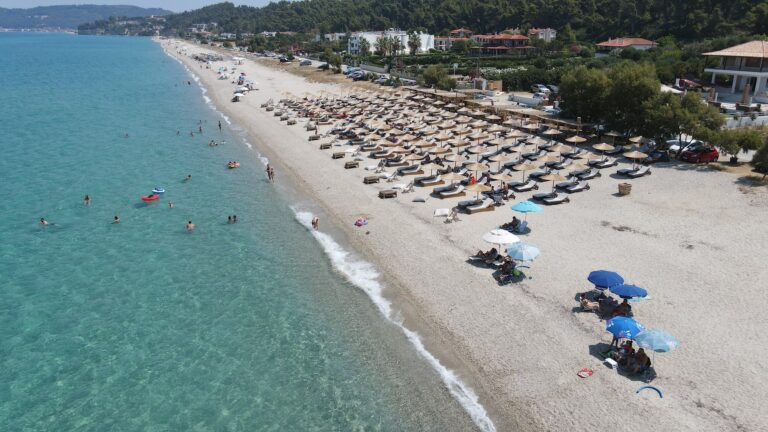
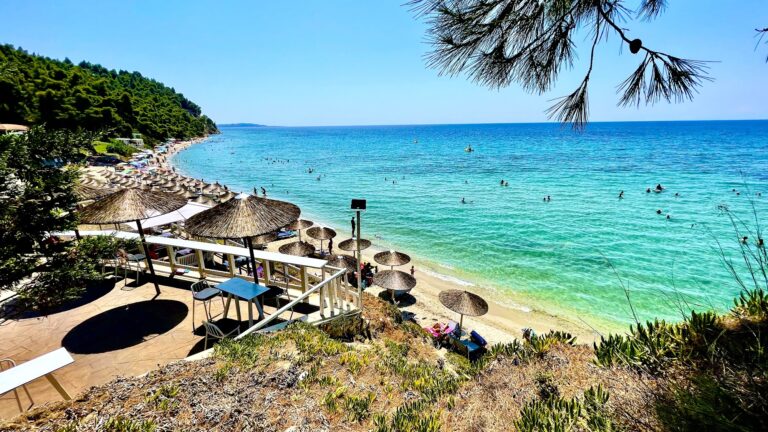
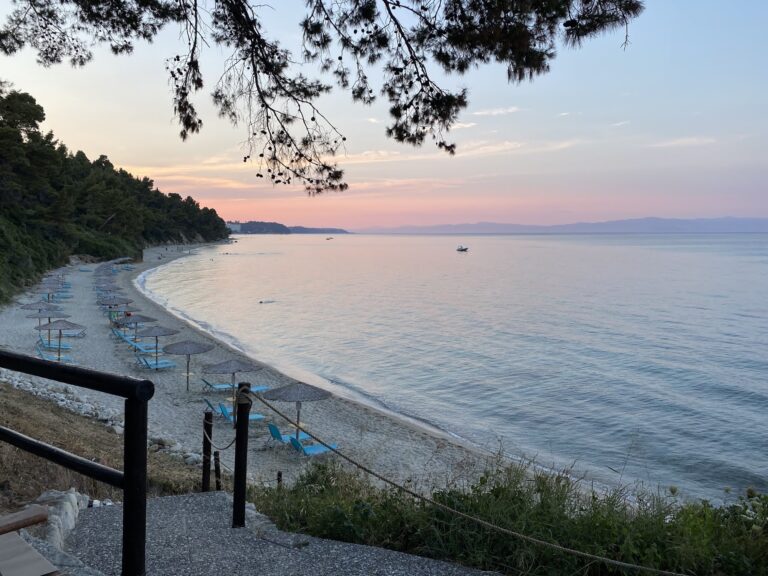
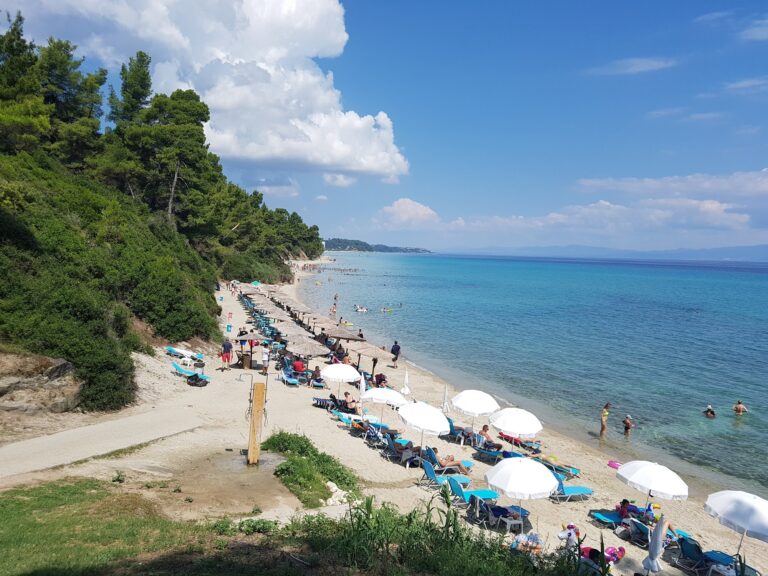
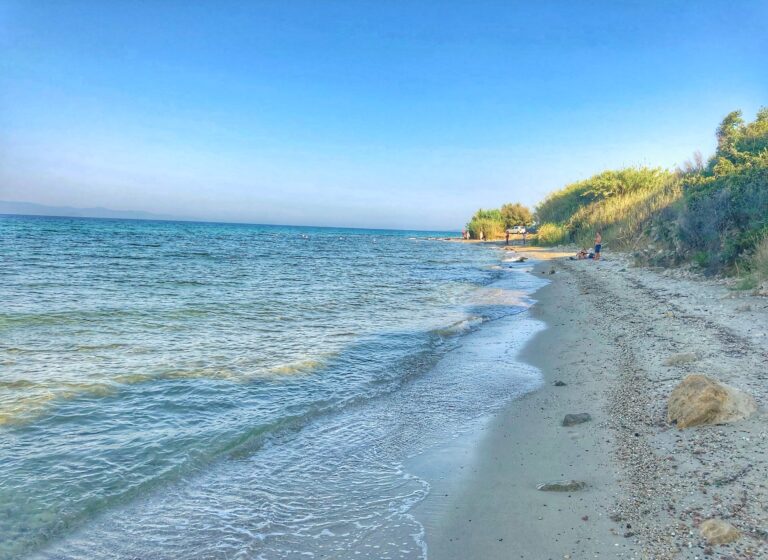
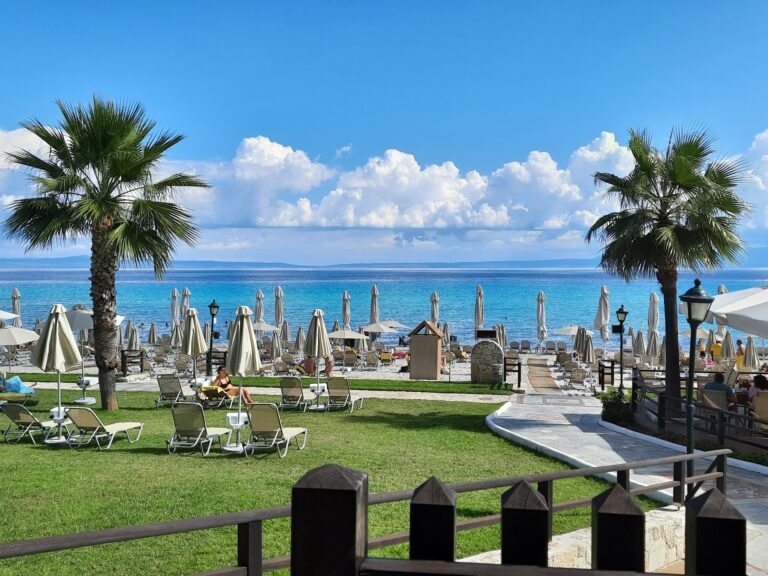
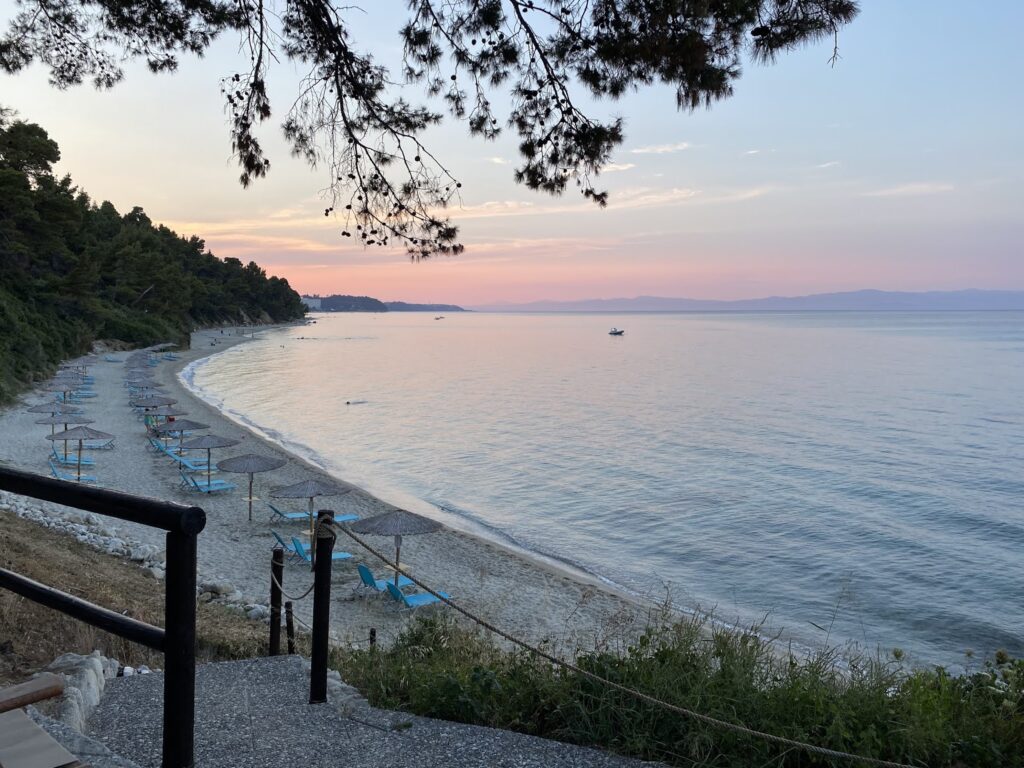
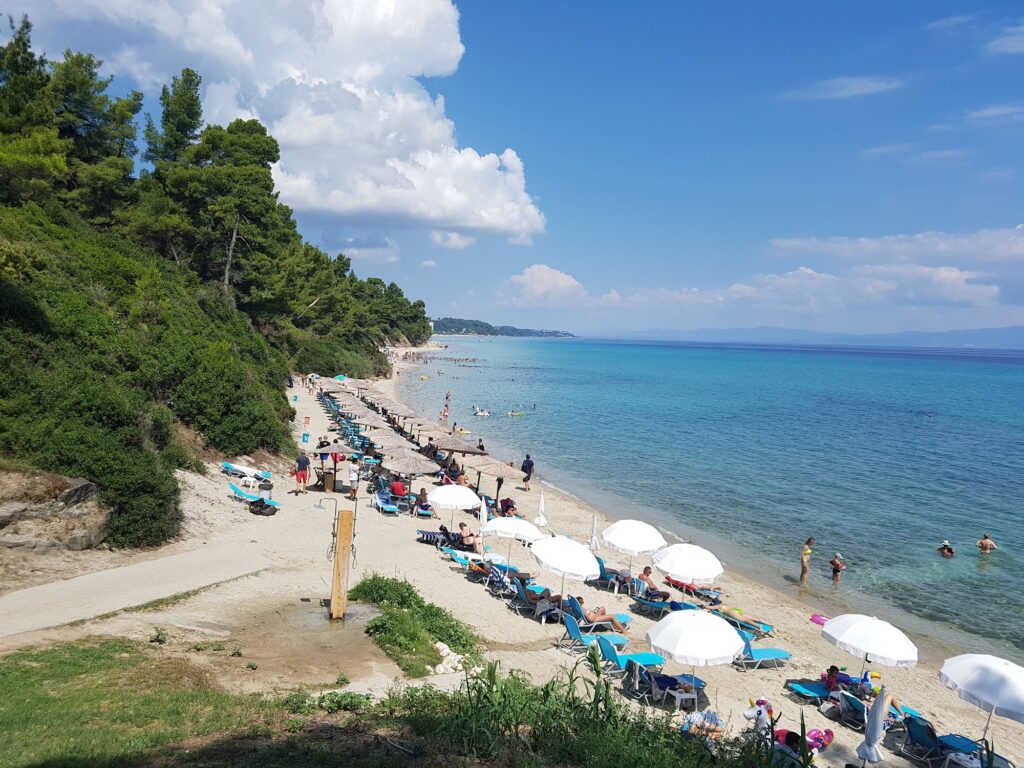
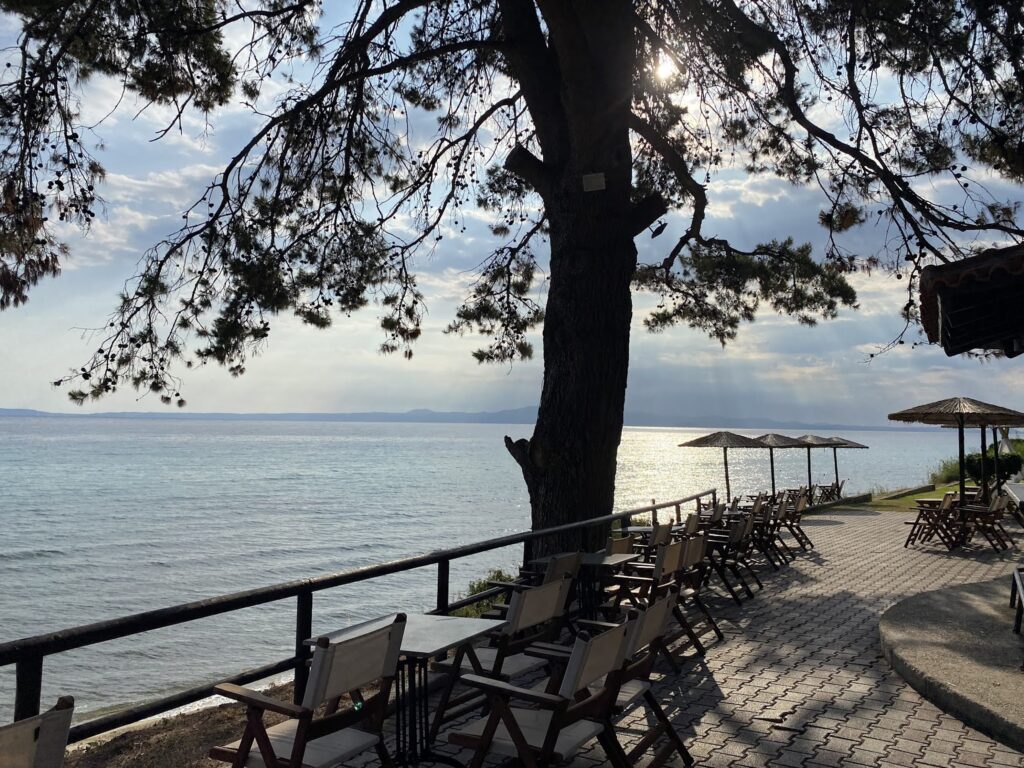
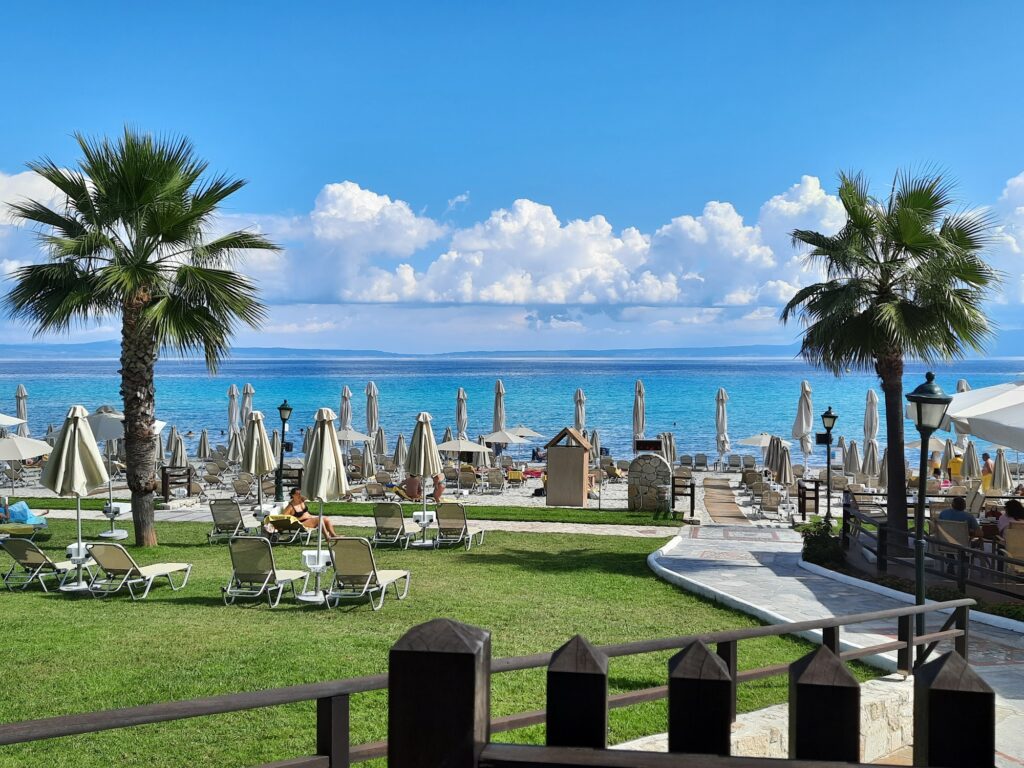
The beach holds two Blue Flag certifications, a distinction that applies specifically to water quality and environmental management rather than to the visible beauty of the place, though the two things happen to coincide here. The sand is fine and golden in the central sections, giving way to pebble and rock at the margins, and the pine trees grow close enough to the shore that the first line of natural shade begins where the beach does rather than somewhere behind it. Sunbeds and umbrellas are available to rent from the beach bars managing the organised section, while the campsite sitting in the pines behind the beach provides a different category of access — pitching a tent or parking a camper among the trees, with the unobstructed sea view that the elevated position produces at night when the accommodation at the resort hotels further along the coast sees nothing but their own lighting.
The springs remain the most physically specific thing about swimming at Kryopigi. The cold freshwater enters the sea from the seabed and from below the shoreline rather than from a visible surface flow, and the temperature difference between the spring water and the surrounding Aegean registers as a distinct sensation rather than a gradual transition. Finding the cold pockets is easier when the sea is calm enough that your own movement isn’t the main variable.
The Village Square, the Fountain, and the Church of Saint George
The village centre on the hill holds the elements that make Kryopigi function as a place rather than purely a beach approach. The 1937 fountain on the main square draws cold water from the natural springs and remains in use, the stone basin collecting water that is genuinely cold even in August when the ambient temperature makes any shade remarkable. The church of Saint George, built in 1950 on the site of an older temple, occupies a central position with a bell tower visible from the surrounding slopes. Its interior holds Byzantine-style icons, and the feast day of Saint George on April 23rd is when the church draws its most specific local celebration.
Traditional tavernas on the village square serve ouzo and fresh seafood alongside the coffee and cold drinks that make the square a practical stopping point before or after the beach. The village has a health clinic and banking facilities, which reflects the degree to which Kryopigi functions as a settlement for permanent residents rather than purely as a summer tourism infrastructure.
The Territory Between Neapolis and Flegra
The general area around Kryopigi sits between the ancient cities of Neapolis and Flegra, both of which flourished in antiquity along the Kassandra peninsula. The coast between them carried the maritime and agricultural traffic of the ancient Chalcidice, and the peninsula’s history of dense Classical settlement — Potidaea at the neck of Kassandra, Mende and Scione on the coast — gives even the less specifically identified stretches of shoreline here a historical background that the modern resort infrastructure does not quite reflect.
Nea Fokea Beach Kassandra Chalkidiki Greece, five kilometres north, represents the most historically specific point on this stretch of coast — the Byzantine tower above its harbour, the prehistoric site beneath it, the cave of Apostle Paul below the tower, all compressed into a single small village. Kalithea Beach Kassandra Chalkidiki Greece, another five kilometres further north, holds the sanctuary of Ammon Zeus discovered in 1968 during hotel construction. Between the three settlements, the eastern Kassandra coast carries more documented historical layering than its current character as a summer resort zone suggests.
The fountain in the village square is where to start rather than where to finish. Cold water at the source, the descent through the pines, the cold pockets in the sea when you find them — the name and the place are in agreement in a way that is not always true of renamed villages. Go in the morning before the sun moves past the treeline. The blue of the Toroneos Gulf from the beach at that hour, with the pines still casting shadow across the sand, is the specific view that the village’s elevation makes possible.
Map
Sorry, no records were found. Please adjust your search criteria and try again.
Sorry, unable to load the Maps API.
Near by places: