Ammoglossa Beach Lefkada: Sand Tongue at the Entrance
Profile
Ammoglossa Beach, Lefkada: The Sand Tongue at the Island Entrance, Where the Floating Bridge Opens Every Hour for the Yachts and the Agia Mavra Castle Has Been Rebuilt by Five Different Powers Since 1300
Greece | Ammoglossa | Lefkada, Ionian Islands
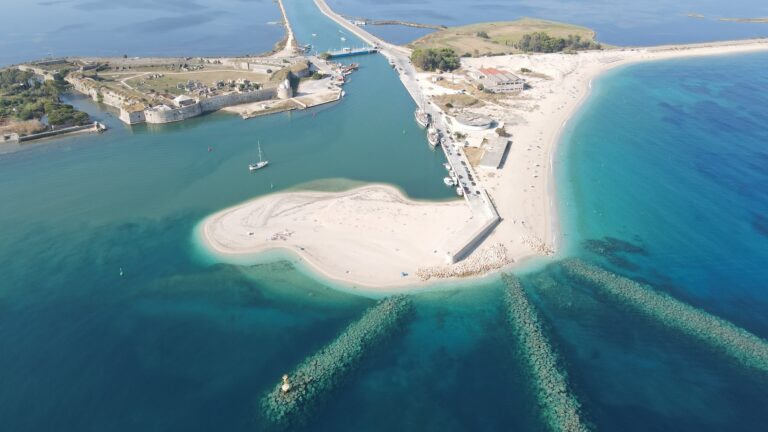
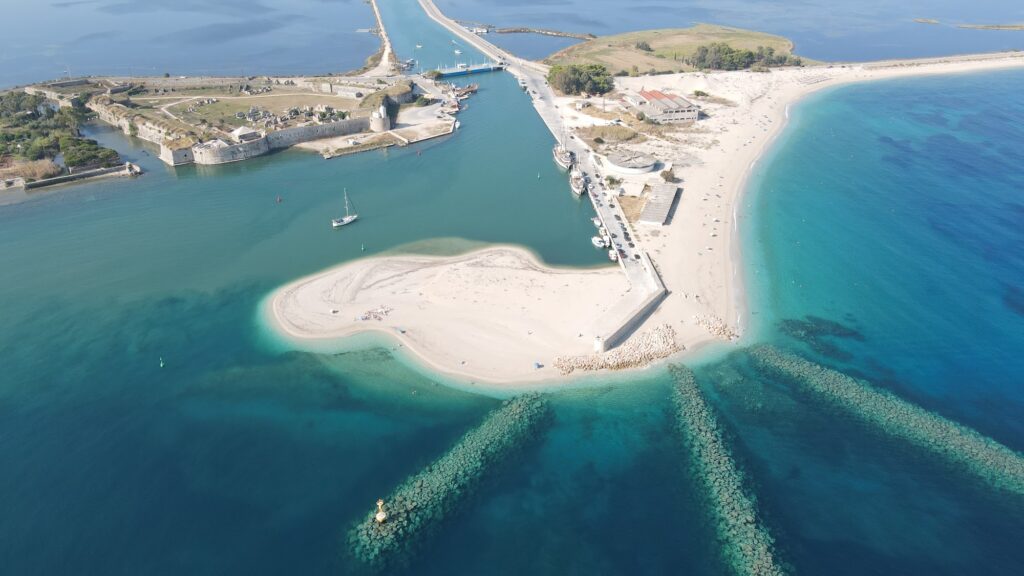
The floating bridge (FB Santa Maura) carries road traffic across the 50-metre channel between Lefkada and the Greek mainland. It is a purpose-built floating vessel that sits in position like an ordinary road until a queue of yachts appears, at which point it pivots on its axis, the traffic stops, and Lefkada briefly reasserts itself as an island. The opening happens approximately once every hour. From Ammoglossa beach, the spectacle is visible directly: the bridge swings, the boats pass, the bridge closes, the traffic resumes. Visitors who time their swimming with the openings see the full theatre of it from the water.
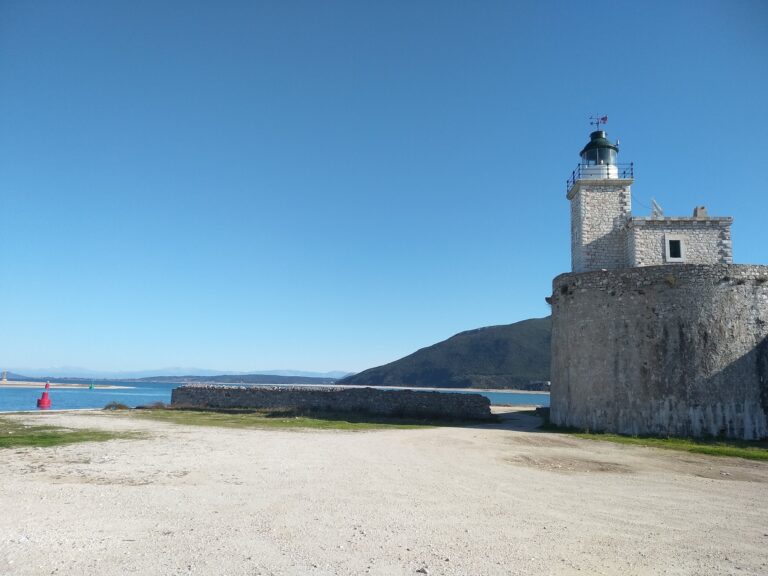
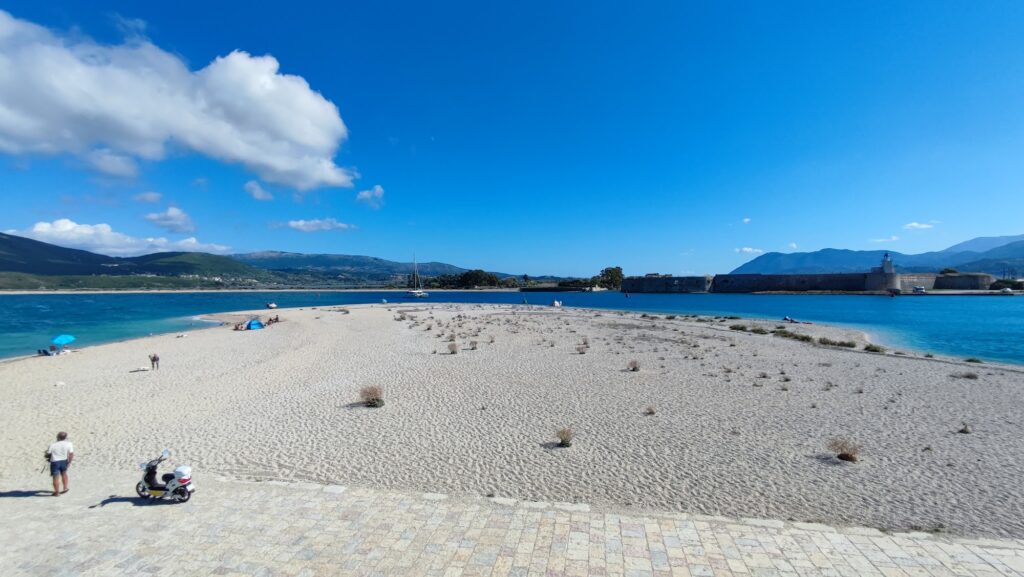
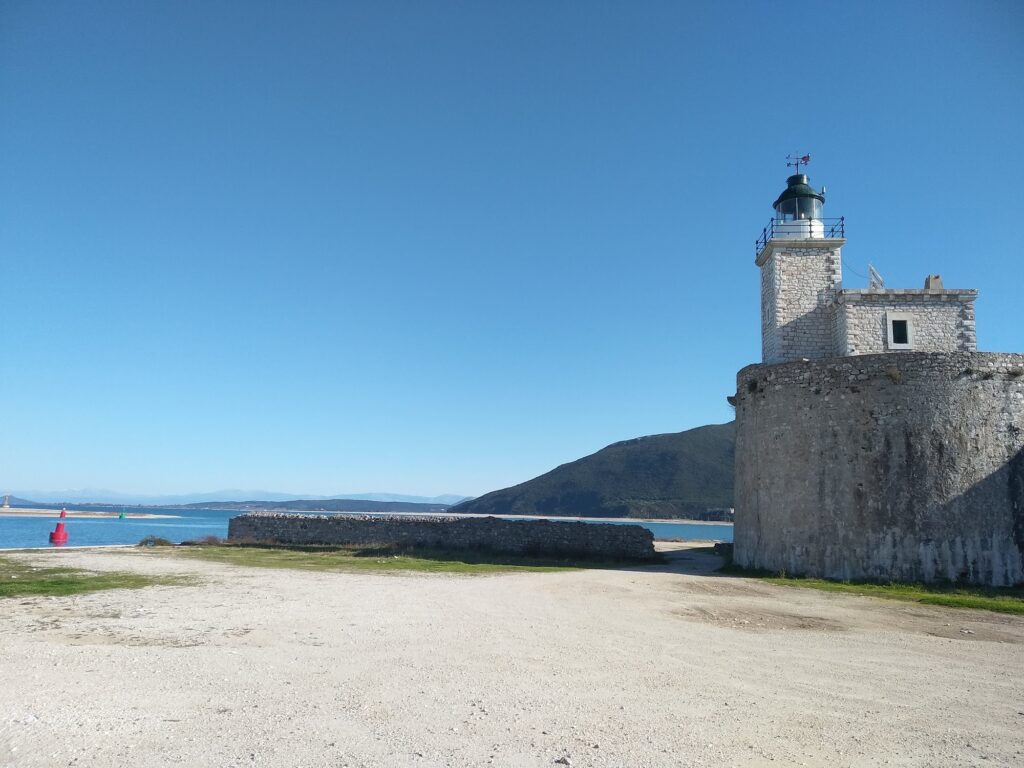
Agia Mavra Castle stands immediately beside the bridge and the beach. The first walls were built by the Sicilian governor Giovanni Orsini in approximately 1300 to protect the island from pirates. It subsequently passed to the Franks, the Venetians (who expanded it significantly and gave it the name Santa Maura — which the entire island was called under Venetian rule), the Ottomans (who held it from 1479 to 1684, then again from 1715 to 1807), back to the French under Napoleon, and finally to the British and then to Greece in 1864 when the Ionian Islands were formally unified with the Greek state. The castle is the specific physical record of five centuries of competing sovereignty over one strategic entrance channel.
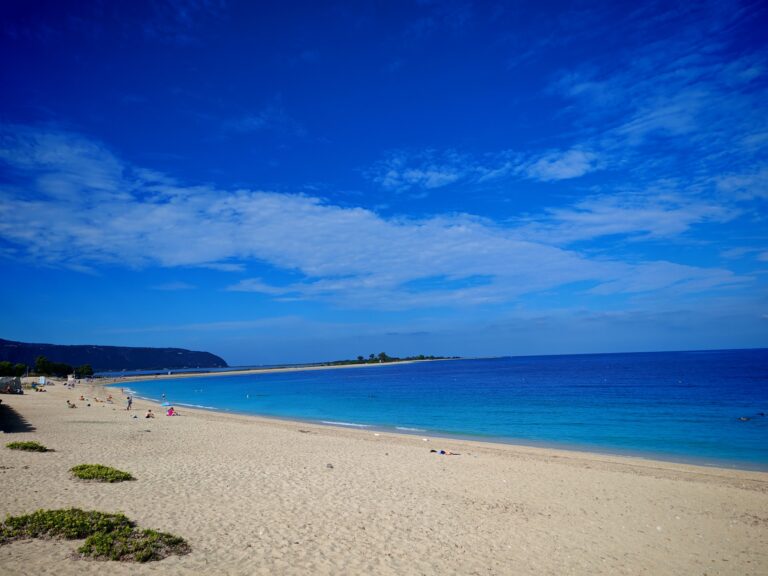
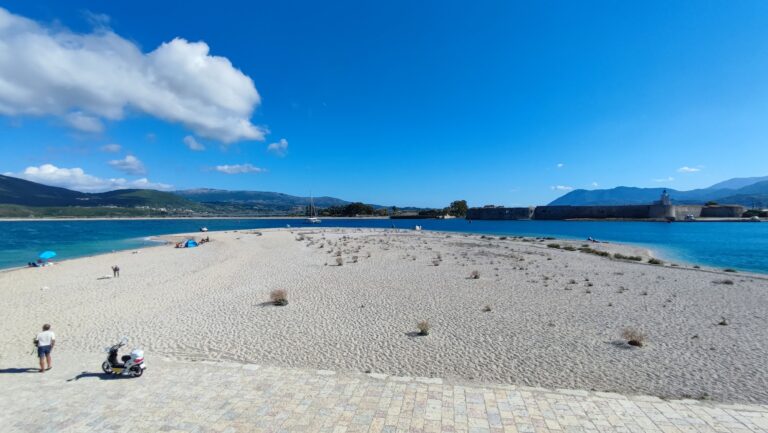
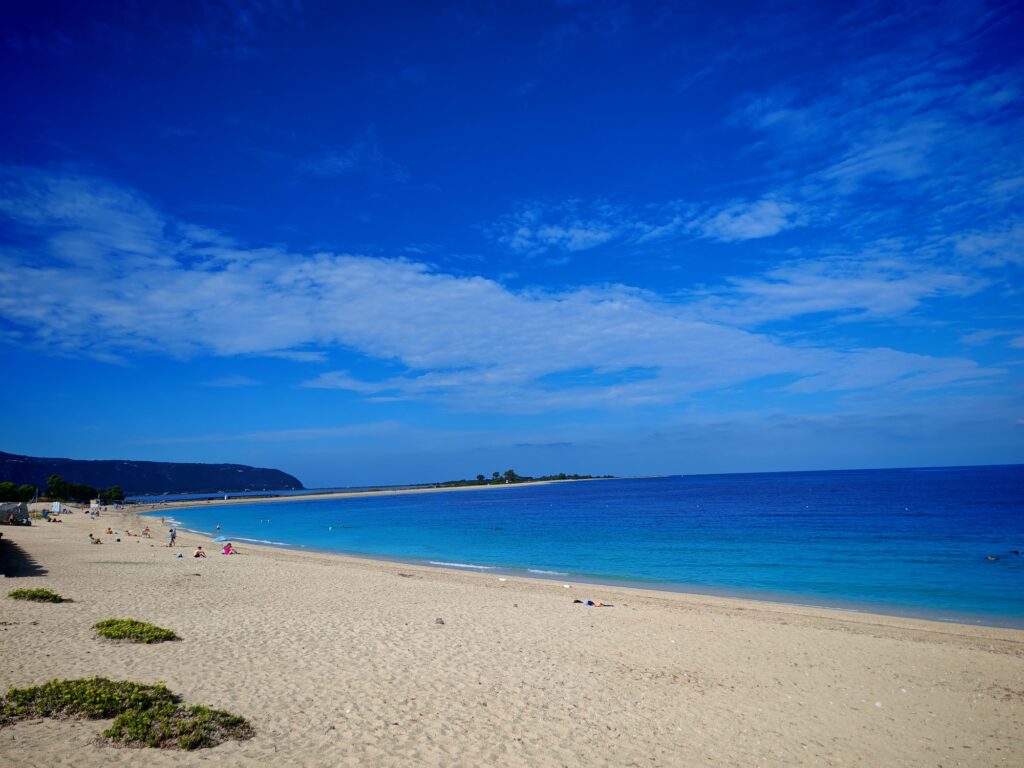
The beach takes its name from the sand tongue that extends from the mainland side of the channel — ammoglossa is literally “sand tongue” in Greek. The tongue’s shape changes from year to year as the currents and the channel flow reshape the sandy seabed. In some years it is longer; in others it is narrower. The geography is not stable.
Getting There: 1.5km From Lefkada Town, Drive Past the Bridge and Straight for 100m, Free Parking, 15-Minute Walk From the Town Harbour, Municipal Bus 4 Times Daily in Summer
From Lefkada Town, do not cross the floating bridge — drive straight past it and the road ends after approximately 100 metres at Ammoglossa. Free parking is directly beside the beach. The walk from the town harbour takes 15 minutes on flat terrain. By bicycle, the route around the lagoon is flat and scenic. Municipal buses run from Lefkada Town to the beach four times daily in summer.
For drivers arriving at Lefkada for the first time from the mainland, the approach to the floating bridge produces the first view of the island: the castle on the right, the channel ahead, the lagoon and the sandbank to the left. Ammoglossa is the first beach encountered entering the island from the mainland.
Preveza (Aktio Airport) is 19 kilometres from the floating bridge — approximately 25 minutes from the airport to the beach. This is among the shortest airport-to-beach distances in the Ionian Islands.
The Beach: Warm Lagoon Side vs Cooler Open Channel Side, Shape Changes Annually, No Facilities, Unorganised, Best on the Lagoon Side for Swimming
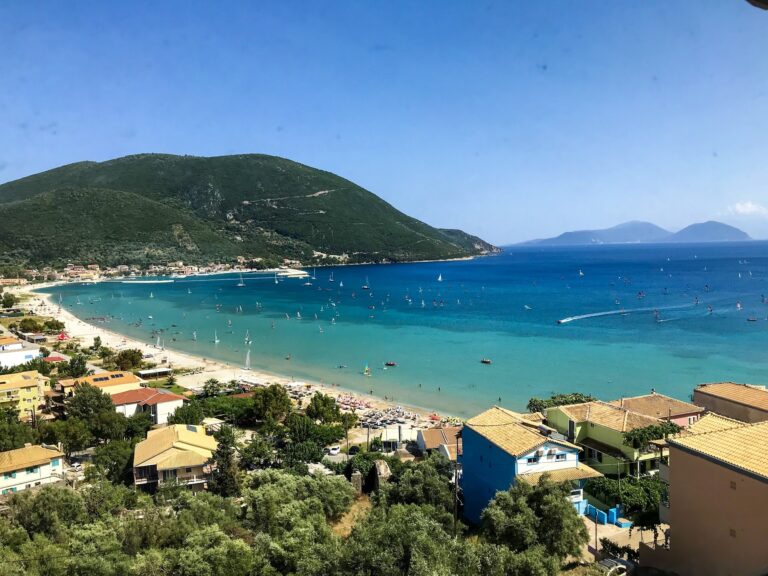
The beach has two distinct characters depending on which side of the sand tongue you stand on. The lagoon side — facing the shallow, sheltered water inside the island entrance — has warm, calm, emerald water, the warmest on Lefkada because of the shallow depth. The open channel side — facing the Ionian and the mainland — has cooler, deeper water and can be windy at the breakwaters. The source article’s description of the “duality” is accurate: the two sides of the same sandbank offer genuinely different swimming experiences.
The amazinglefkada guide is specific: “the lagoon part of Ammoglossa is much better for a swim.” The breakwaters are good for photography; the lagoon side is good for swimming.
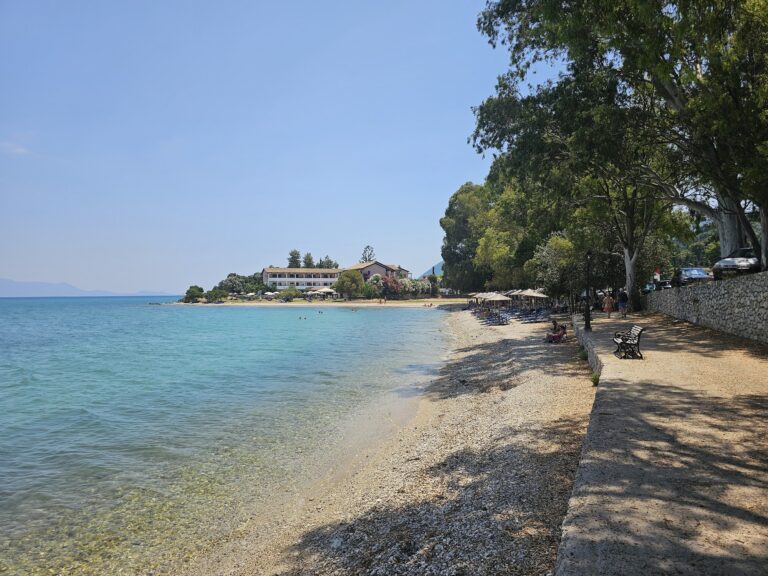
No sunbeds. No umbrellas. No facilities. No shade from trees — the source article’s note that personal umbrella is non-negotiable is accurate; the sandbank has no natural shade. No lifeguard. Bring everything including food and water.
The Agia Mavra Castle: Five Owners Since 1300, Open to Visitors, the Lagoon Setting
The castle is accessible on foot from the beach — the main entrance is a few metres from the floating bridge, accessed by crossing a small canal. The entrance fee is modest. The interior has the specific atmosphere of a fortress that was fought over for five centuries: Venetian walls, Ottoman modifications, and the Greek administrative period layering over each other.
The castle sits on a low spit of land in the lagoon — the lagoon surrounds it on three sides and the channel is on the fourth. The view from the castle walls over Ammoglossa beach, the lagoon, and the open Ionian is the elevated perspective on the geography that the beach itself cannot provide.
The Lagoon and the Avgotaraho: The Working Wetland Behind the Sand
The lagoon behind Ammoglossa is a working fishing landscape — grey mullet, sea bream, sea bass, and eel move through the brackish water between the lagoon and the sea. The mullet support a local avgotaraho production — the same cured mullet roe that Messolonghi is famous for and that the Ambracian Gulf also produces. The lagoon is not decorative; the fixed nets and trap systems that the local fishermen operate are part of its daily functioning throughout the year. The avgotaraho from Lefkada’s lagoon appears on menus in Lefkada Town.
The Gyra Lagoon further north — the large lagoon on the northern coast of Lefkada — is the larger version of the same ecology. Agios Ioannis beach and the Gyra area is the kitesurfing destination where the afternoon thermal wind from the lagoon creates the specific conditions for water sports.
Nearby: Kastro Beach, Agios Ioannis Kitesurfing, the Town Itself
Kastro beach is 300 metres from Ammoglossa — directly adjacent, past the castle — a beach popular with local residents and reachable on foot from Ammoglossa in 5 minutes. Lygia Beach Lefkada Greece on the east coast (the fishing village beach covered in this series) is 20 minutes by car. Gialos Beach Lefkada Greece on the west coast — the 4km second-longest beach on the island — is 45–55 minutes by car through the island interior.
Agios Ioannis beach and the old windmills are the kitesurfing location, adjacent to the lagoon on the northern coast — the afternoon wind funnels through the lagoon and provides the reliable conditions that attract kitesurfers from across Europe daily in summer.
Ammoglossa Beach on Lefkada is the sand tongue at the island entrance 1.5km from Lefkada Town — the floating bridge (FB Santa Maura) opens every hour for the yachts (visible from the beach), Agia Mavra Castle beside it (5 owners since 1300, open to visitors), warmest beach on Lefkada (shallow lagoon side), two-sided character (warm lagoon side for swimming, windy breakwaters for photography), shape changes annually, no facilities (bring everything including umbrella — no natural shade), free parking at the road end past the bridge, 15-minute walk from the town harbour, 4 municipal buses daily in summer, 25 minutes from Aktio Airport.
Cross onto Lefkada. Drive past the bridge. Park. Swim on the lagoon side. Watch the bridge open.
Map
Sorry, no records were found. Please adjust your search criteria and try again.
Sorry, unable to load the Maps API.
Near by places: