Panteli Beach Leros: Castle, Windmills, and Sand
Profile
Panteli Beach: Swimming Beneath a Castle and Six Windmills
Greece | Leros | Dodecanese | Aegean Coast
Most beaches ask you to look at the water. Panteli asks you to look up as often as you look out, and it took me a full afternoon here to realize that’s actually the point. Swim a few strokes out into the bay, turn back toward shore, and there’s a Byzantine castle sitting above the rooftops, six windmills lined along the ridge below it, weathered enough that you can tell at a glance they’ve been standing there since long before anyone thought to build a beach bar underneath them.
Leros gets talked about, when it gets talked about at all, mostly for its wartime history and its Italian-built architecture in Lakki. Panteli operates on a different register entirely, a working fishing harbor that happens to have one of the most striking backdrops of any beach I’ve visited in the Dodecanese, and it earned a full day of my trip almost by accident.
A Bay Shaped by the Village Around It
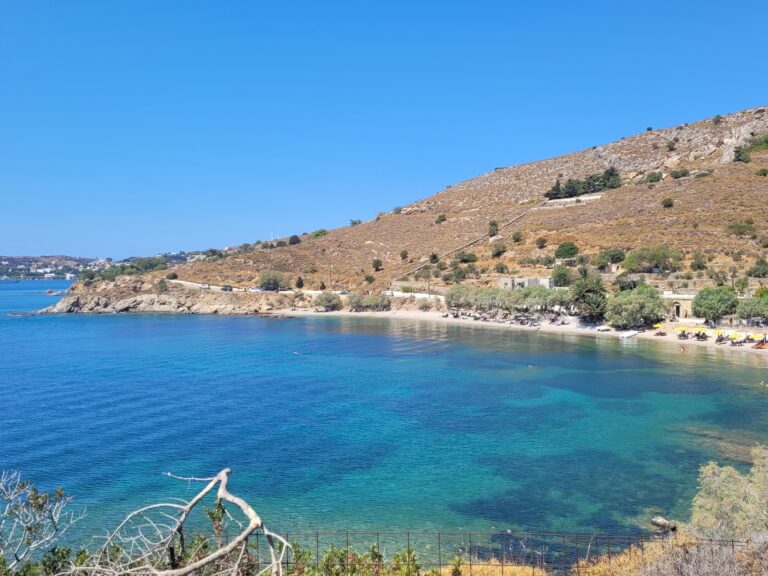
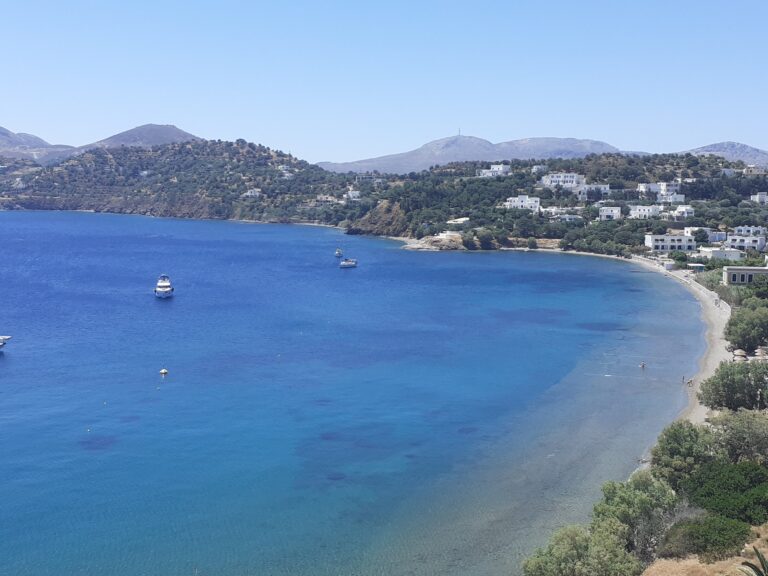
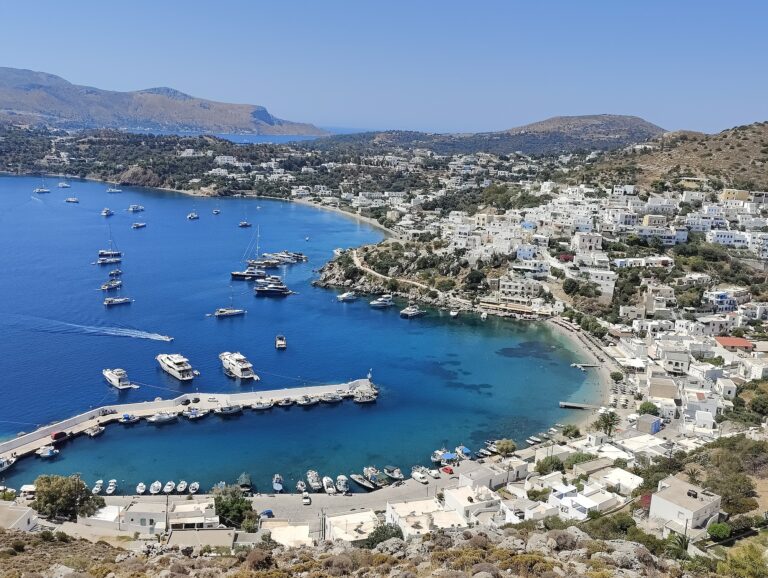
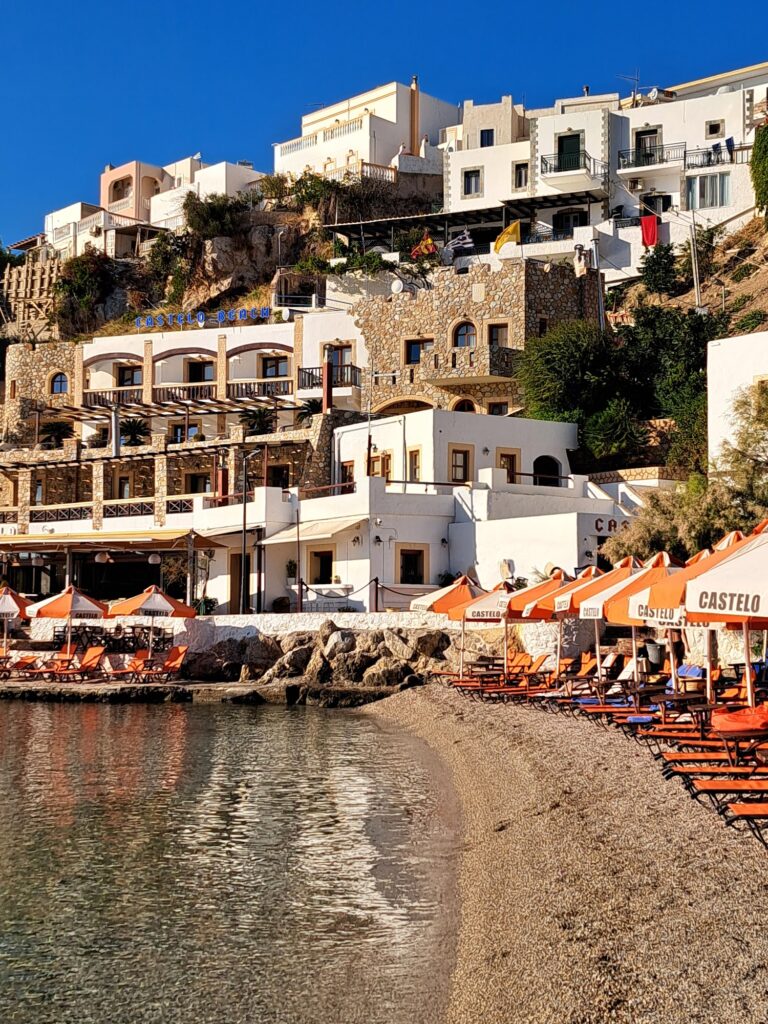
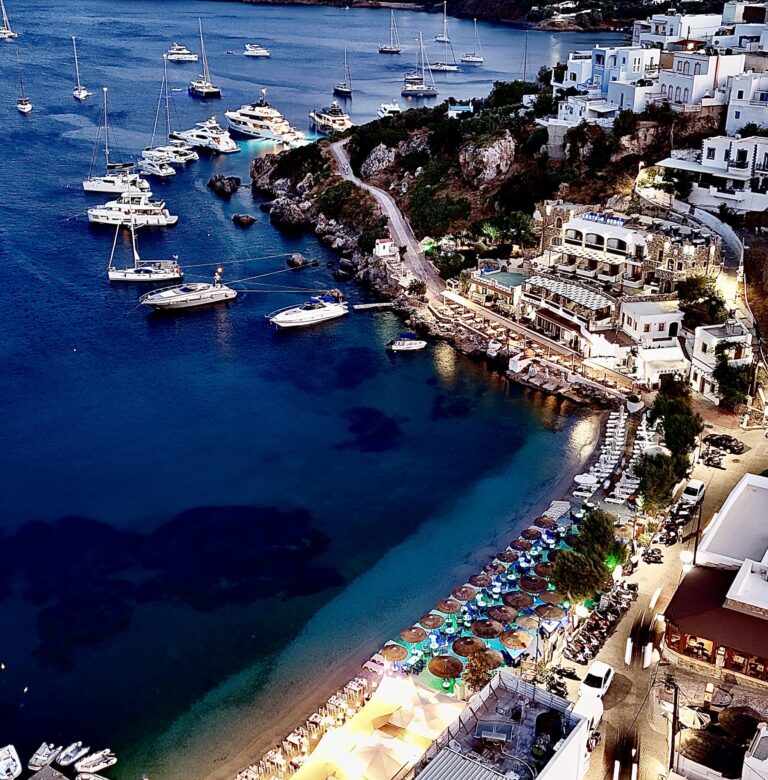
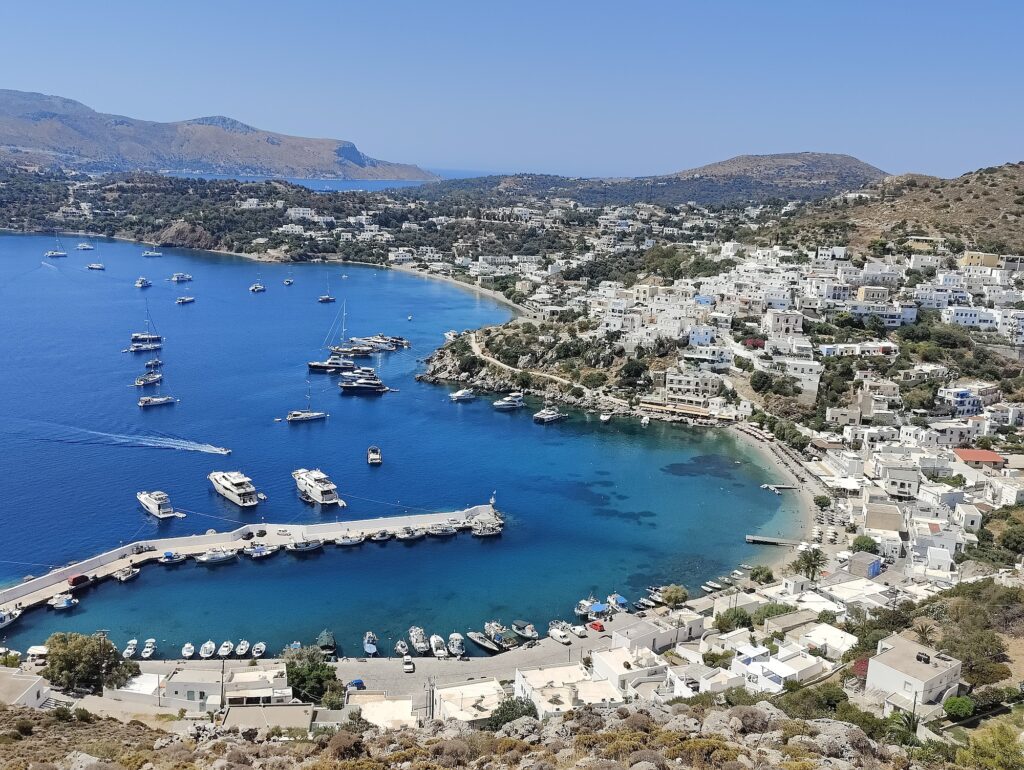
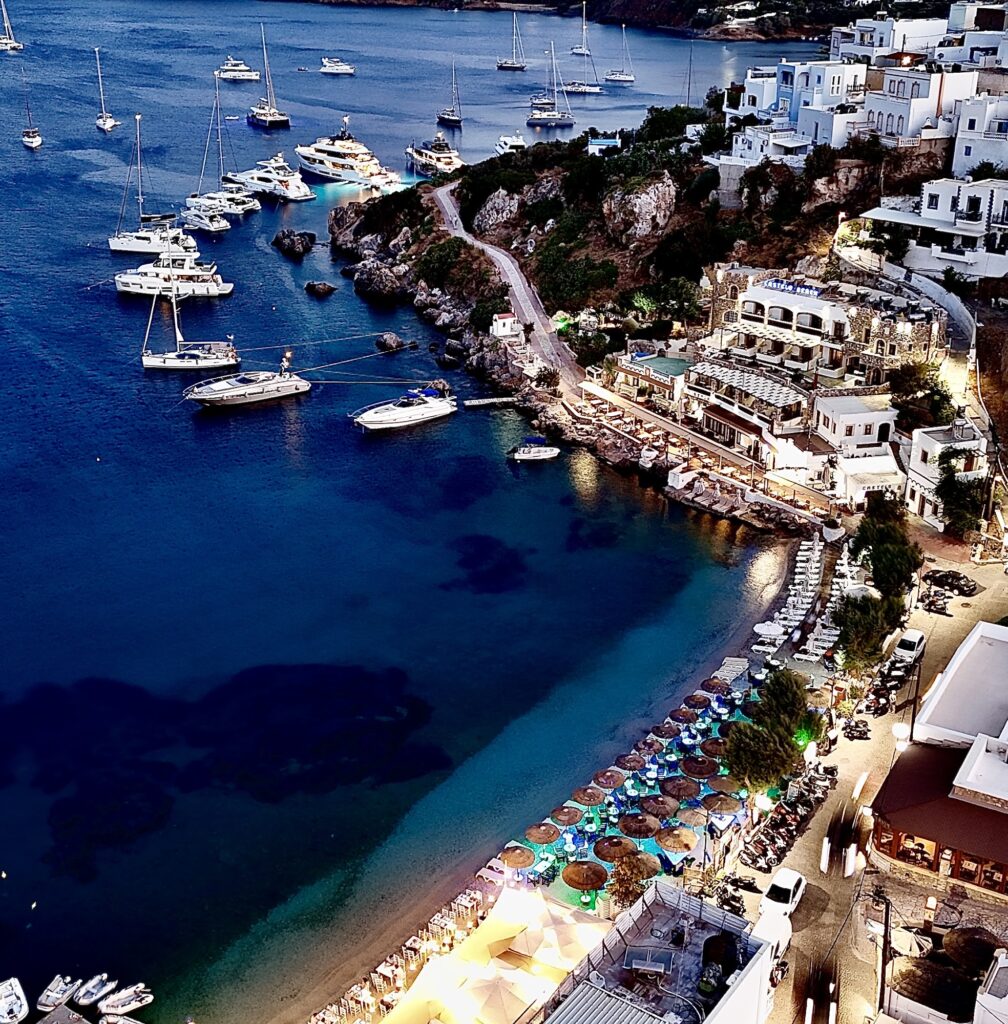
Panteli Beach sits inside a small, sheltered bay on the eastern side of Leros, directly below Platanos, the island’s historic capital. The beach itself is modest by most standards, a stretch of fine sand mixed with small pebbles running only a couple hundred meters end to end, but the scale works in its favor. I never felt like I was competing for space the way I have on longer, more heavily built-up beaches elsewhere in Greece, even with the tavernas crowding right up to the sand.
The water stays notably calm here, protected by the headlands wrapping around the bay, and I found the entry gentle enough that I could wade out a good distance before the depth became serious. It’s the kind of shallow, safe stretch that explains why I kept seeing the same families return to the same spot on the sand morning after morning during my stay.
The Windmills That Have Watched Over the Bay Since the 1700s
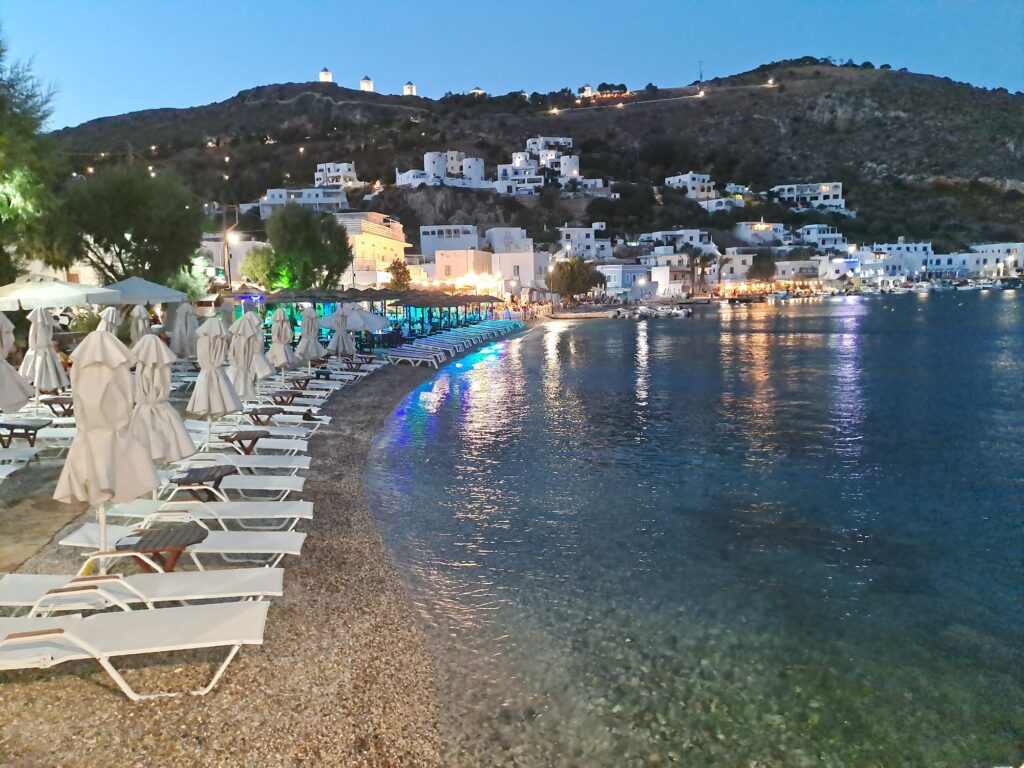
The six windmills standing along the ridge above Panteli are not a modern flourish added for the view. They date back to the 17th and 18th centuries, built when Leros still relied on wind power to process the grain grown across the island’s terraced hillsides. I hadn’t expected working agricultural history to be the thing that stayed with me longest from a beach day, but climbing up to look at them properly, after an afternoon in the water below, changed how I saw the whole bay.
One of the restored windmills now houses a small museum dedicated to traditional Lerian domestic life, filled with donated household items, embroidered linens, and old photographs tracing daily routines through past generations. I spent maybe twenty minutes inside and came out with a clearer sense of what this coastline looked like before tourism arrived, which isn’t something I can say for most museum stops squeezed into a beach itinerary.
The Castle of Panagia Above the Rooftops
Higher still, above the windmills, sits the Byzantine castle of Panagia, visible from nearly every angle of the beach and the water in front of it. I didn’t climb up to the castle itself during this visit, but its presence over the bay is constant enough that it shapes the whole experience of being at Panteli, whether or not you make the walk. Locals I spoke with treated the castle and the windmills almost as a single backdrop, inseparable from how they describe the village to visitors.
It’s worth noting that Leros as a whole carries a heavier, more complicated history than this postcard view suggests. The island spent decades under Italian administration in the first half of the twentieth century, and Lakki, the port town on the opposite side of the island, still shows the rationalist architecture built during that period. Panteli sits apart from that chapter of the island’s story, closer in spirit to the older, slower rhythms the windmills represent than to the naval history further south.
Tavernas With Tables in the Sand
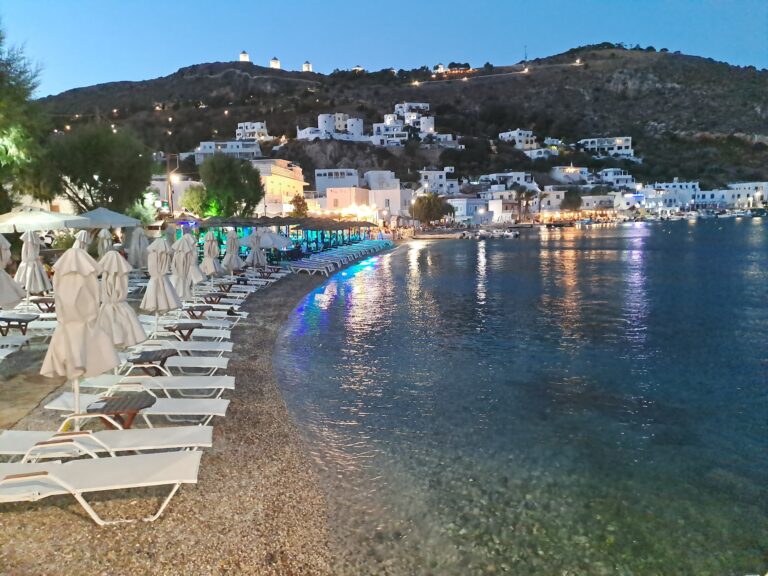
Panteli has a reputation on Leros as the island’s culinary center, and after eating at three different tavernas along the beach over consecutive evenings, I understood why. The tables sit close enough to the water that I ate more than one dinner with sand still between my toes, and the seafood leaned heavily on the day’s catch, brought in by the same fishing boats I watched come and go each morning.
Lerian pougi, a local cheese pie, showed up on more than one menu, and I’d recommend it as a starting point before moving on to whatever seafood the kitchen is pushing that evening. Compared to ###Damatria Beach Karpathos###, further south in the Dodecanese, where a single taverna serves the entire stretch of coast, Panteli offers a genuine choice of places to eat, and I found myself picking a different one each night mostly to see how they varied.
Fishing Boats, Yachts, and a Working Harbor
What keeps Panteli from feeling purely decorative is the harbor traffic that never really stops. Local fishing boats moor along the same stretch of water where visitors swim, and I watched fishermen mending nets on the sand more than once during quieter mid-morning hours, unbothered by the swimmers a few meters away. The bay also functions as a recognized anchorage for sailing yachts working their way through the Dodecanese, and I counted a handful of visiting boats taking on water and fuel supplies during my stay, a detail that gives Panteli a slightly more cosmopolitan undercurrent than its size would suggest.
Getting There: The Ten-Minute Walk Down From Platanos
If you’re staying anywhere near Platanos, Panteli is a genuinely pleasant ten-minute walk downhill from the central square, and I made this walk daily rather than bother with a car for such a short distance. The path offers a steadily unfolding view of the bay as you descend, and it’s worth taking slowly rather than rushing straight to the water.
Arriving by car or scooter from Lakki, the island’s main port, takes roughly eight minutes along a well-paved road that runs through Platanos before dropping down toward Panteli. I used a rental for trips further afield but relied on the walk for anything centered on the beach itself.
Buses, Taxis, and the Platanos-Panteli Route
Taxis from either the port or Leros’ small airport are easy to arrange and reasonably priced given the island’s modest size, and during the summer months a local bus also runs the Platanos-Panteli route with enough regularity that I used it twice without any real wait. For an island this compact, I found I didn’t need a rental car at all beyond the occasional day trip to beaches further from the capital.
Parking Before the Lunch Crowd Arrives
Parking is limited to a public lot at the entrance of the village and a scattering of smaller spaces along the coastal road, and it fills up faster than the size of Panteli might suggest, largely because of how popular the tavernas become around midday. Arriving before eleven gave me my pick of both parking and a decent spot on the sand, and by the time the lunch crowd rolled in an hour or two later, the beach had a noticeably different energy, louder and more social than the quieter version I’d had to myself that morning.
How Panteli Compares to the Rest of Leros’ Coastline
Leros has quieter, more remote beaches than Panteli, coves accessible only by boat or a longer walk that trade convenience for solitude. Panteli isn’t trying to be one of those. It functions instead as the social center of the island’s coastline, a beach built around the rhythm of a fishing village that happens to also feed and shade its visitors well. If you’re looking for the version of Leros that locals actually inhabit day to day, rather than the version built purely for tourism, Panteli gets closer to that than almost anywhere else on the island.
Elsewhere in the Dodecanese, Vlychadia Beach Kalymnos offers something structurally similar, a working harbor beach with its own historical angle, though Vlychadia’s draws on sponge-diving history rather than windmills and a castle. If you’re moving between these islands, both are worth treating as more than a quick swim stop.
Settling Into an Evening at Panteli
By the time evening arrives, the light catches the windmills first, turning them gold while the beach below sits already in shadow, and the tavernas start filling with the same mix of locals and visitors I’d see again the following night. I made a habit of ordering last and staying latest, watching the castle disappear into the dark above the rooftops while the harbor lights came on one by one, the boats settling in for the night just as the tables around me were only getting started.
Map
Sorry, no records were found. Please adjust your search criteria and try again.
Sorry, unable to load the Maps API.
Near by places: