Agia Pelagia: Where Pilgrims Once Buried Themselves
Profile
Agia Pelagia: Worshippers Once Buried Themselves in This Sand to Be Healed
Greece | Agia Pelagia | Malevizi, Heraklion, Crete
During the Venetian era, the feast day of the Monastery of Agia Pelagia was a genuine island-wide holiday, and thousands of worshippers travelled here specifically to bury their feet, or sometimes their entire bodies, in the sand of this exact beach, believing it could cure their illnesses. The monastery itself stood a short distance west of the village, and its ruins remain there today, though the healing pilgrimage stopped being practised generations ago. I find it strange and a little moving to picture a beach now lined with sunbeds and beach bars once serving as something closer to a place of medicine, crowded annually with people seeking cures rather than tans.
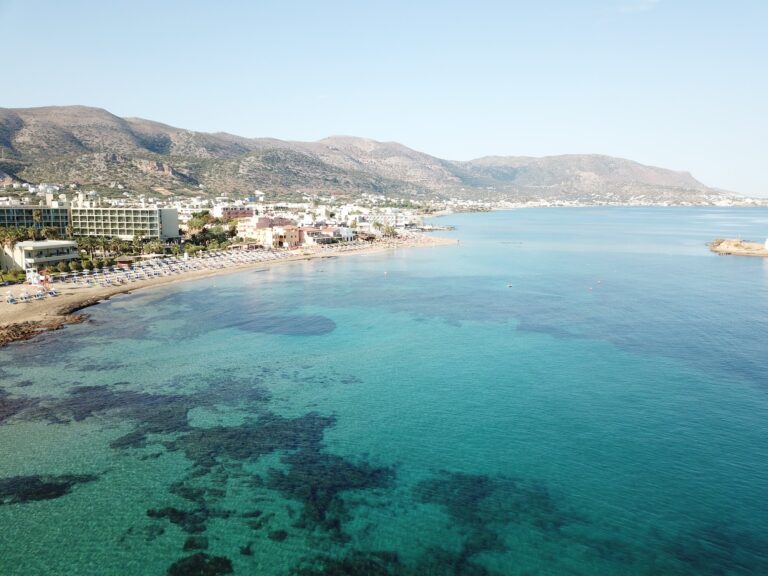
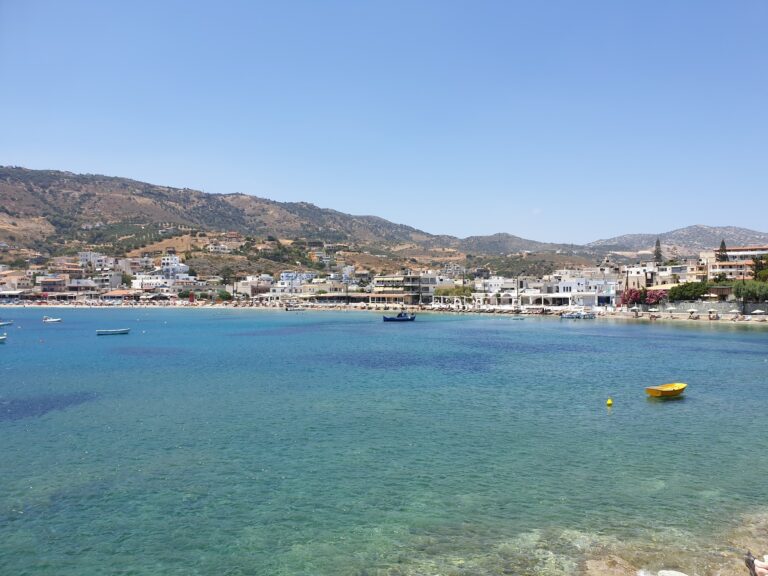
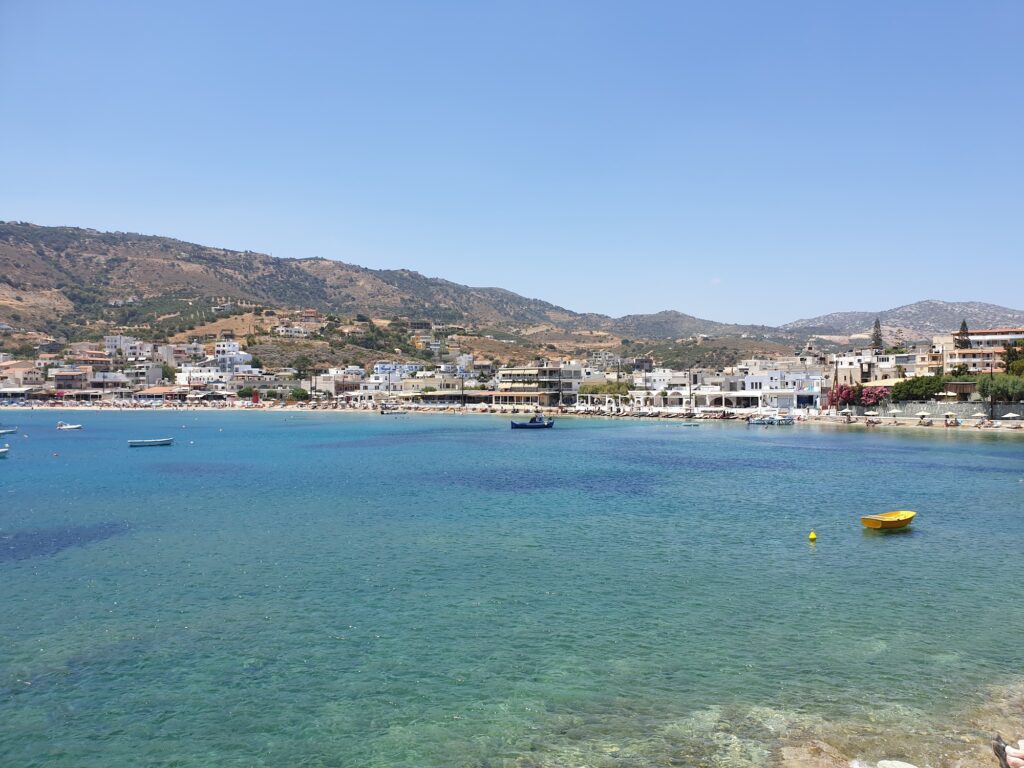
Ottoman sailors who passed through later gave the bay its own nickname, Tsanak Limani — Plate Harbour — a reference to the genuinely round, dish-like shape of the inlet, and the description still holds up: the water stays calm here almost without exception, the surrounding rock forming a natural, sheltered harbour rather than an open stretch of coast. During the Cretan Revolution, the legendary ship Arkadi is said to have anchored in this same bay to supply ammunition to rebels under siege — one more layer in a place that’s carried far more history than its current life as a relaxed weekend getaway for Heraklion locals might suggest.
That history runs older still. Cape Souda, at the northern edge of the bay, holds the remains of ancient Apollonia, also called Panormos, a settlement reaching back to the Minoan period around 2000 BC and flourishing later as a Hellenistic town until its destruction in 171 BC. Sir Arthur Evans himself recognised the site as a significant example of a preserved Minoan harbour, and archaeologist Stylianos Alexiou later uncovered a prytaneum here, the religious and political centre of the ancient community. Much of the old town now lies submerged beneath the sea, and the small cave shrine of Evresi, just below the ruins, commemorates the spot where locals are said to have found the holy icon of Saint Pelagia herself centuries ago.
Getting There: 23 Kilometres From Heraklion, a Winding Descent Into the Bay
I followed the New National Road (E75) west toward Rethymno and Chania, watching for the well-marked Agia Pelagia turn-off roughly twenty kilometres from Heraklion, then following the road as it wound down a steep, scenic descent of about four kilometres straight into the village. The full drive from Heraklion took twenty-five to thirty minutes, and from the airport, closer to thirty.
The KTEL bus departs Heraklion’s central station near the port, the journey running thirty to forty-five minutes and dropping passengers either at the top of the village or near the main hotel entrances, depending on the route. Parking inside the village centre runs tight in peak season — narrow streets built for a fishing harbour rather than tourist traffic — though organised lots exist at both ends of the beach and along the approach roads.
The Beach: Long and Narrow, Calm Almost Without Exception, Full Amenities
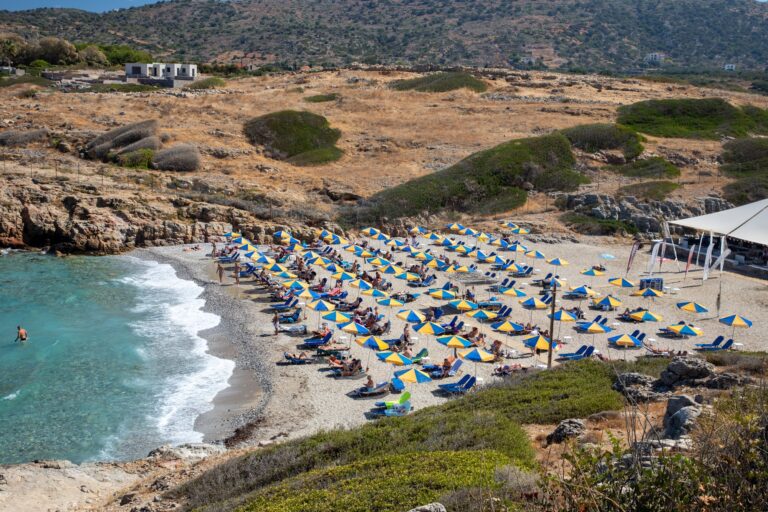
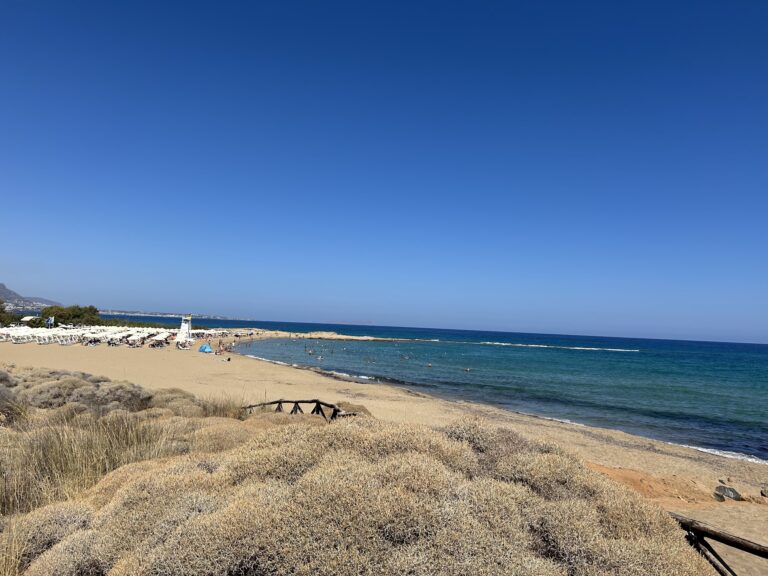
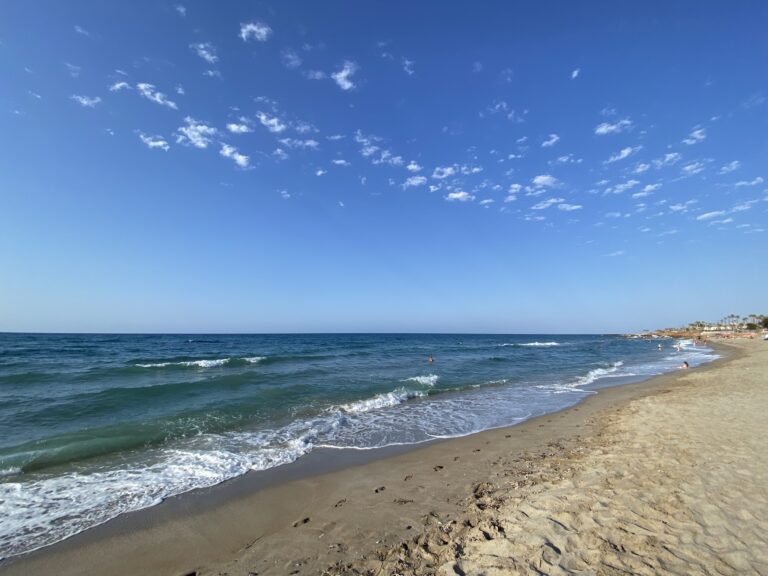
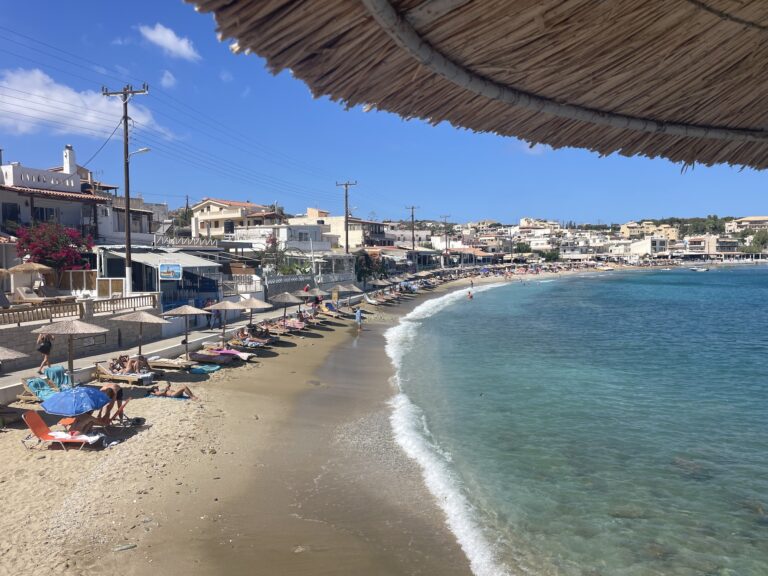
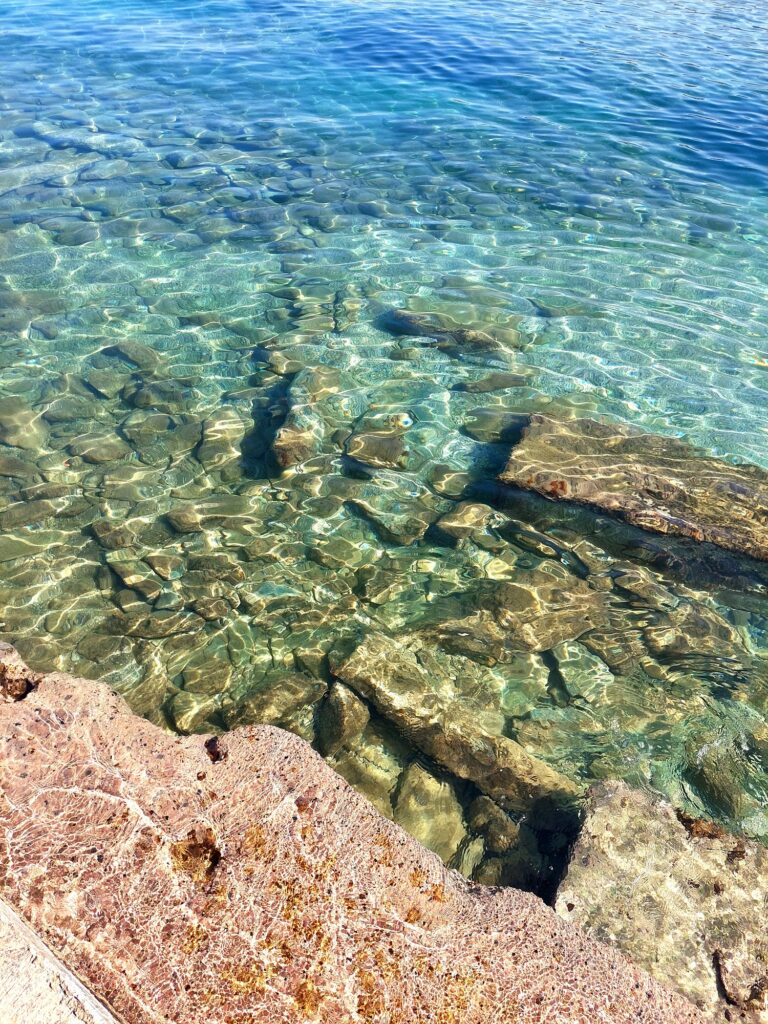
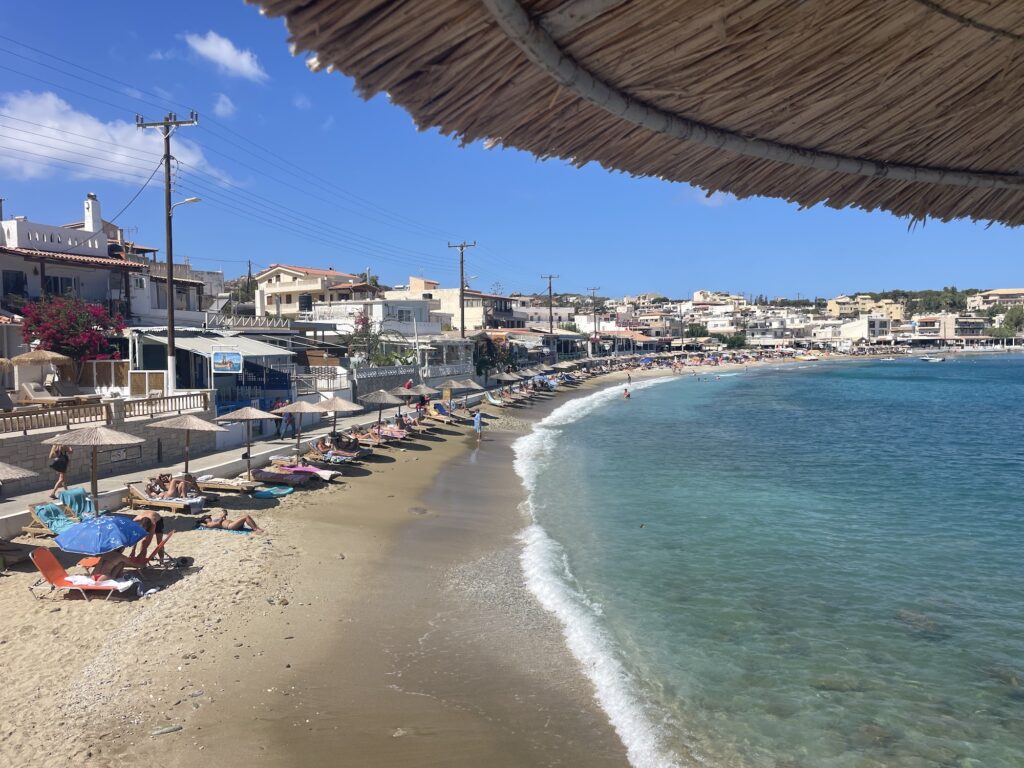
The main beach itself runs long and narrow, a mix of coarse sand and fine pebbles depending on which account you read, lined with tamarisk trees and a steady run of cafés and tavernas right at the water’s edge. The water held a greenish-turquoise colour the day I visited, calm enough that I genuinely couldn’t picture rough conditions here even with wind picking up elsewhere on the island — the bay’s natural, almost circular shelter does exactly what its old nickname suggests.
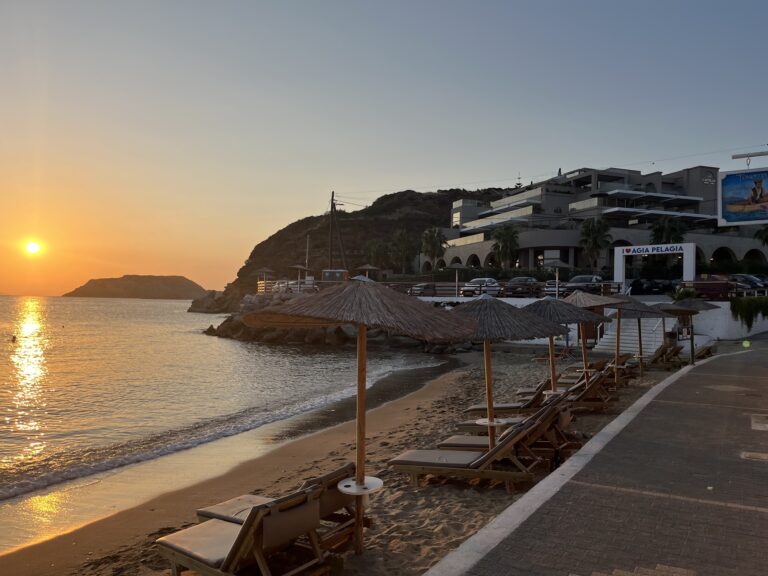
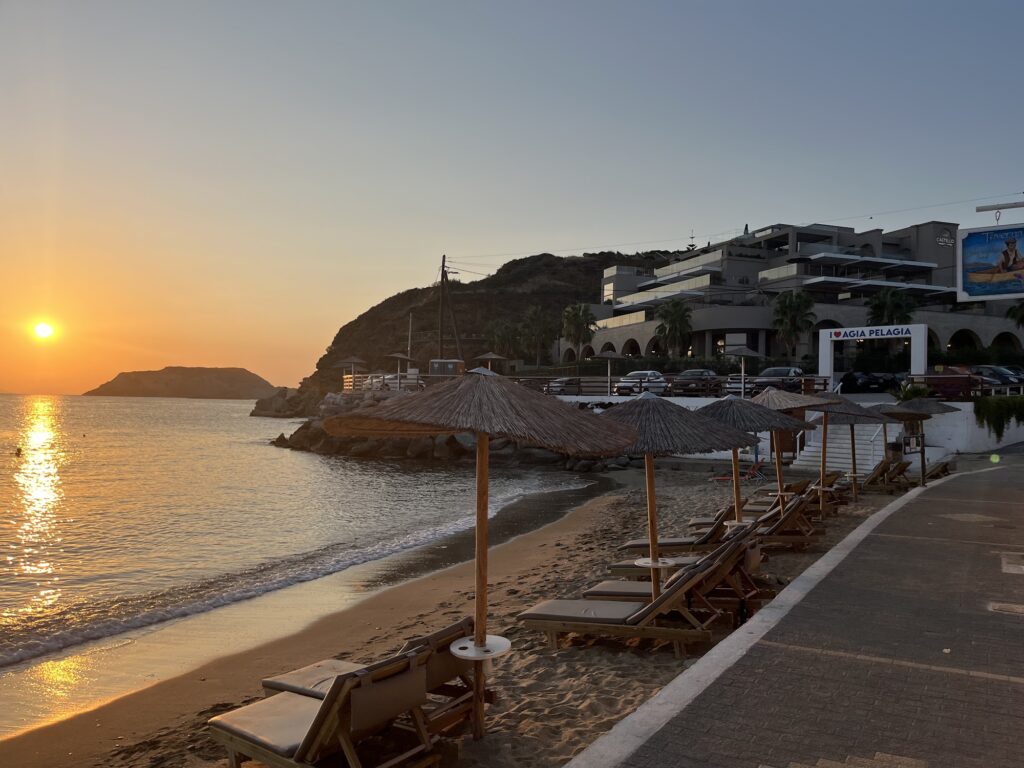
Sunbeds and umbrellas run the length of the organised stretch, alongside public toilets, showers, and a diving centre offering excursions into the rocky, marine-life-rich edges of the bay. Pedal boats and snorkelling gear are easy to rent, and the promenade behind the sand carries pharmacies, ATMs, and boutique shops close enough that I never needed to walk far for anything I’d forgotten.
The Smaller Beaches Around the Bay
Agia Pelagia’s main beach is really the hub for a whole cluster of smaller coves scattered around the same amphitheatre-shaped bay — Mades Made Beach Agia Pelagia Crete Greece, Lygaria Ligaria Beach Agia Pelagia Crete Greece, and Psaromoura Beach Agia Pelagia Crete Greece, all covered separately elsewhere in this series, each reachable by a short walk, drive, or in some cases a swim from the central beach. I’d genuinely recommend treating a stay here as a chance to sample several of these in a single trip rather than settling on just the main beach alone.
Agia Pelagia’s main beach carries a documented history as a site of annual healing pilgrimage during the Venetian era, a round shape that earned it the Ottoman nickname Plate Harbour, and a connection to the Cretan Revolution through the legendary anchoring of the ship Arkadi. Cape Souda, at the bay’s edge, holds the partly submerged remains of ancient Apollonia, a Minoan and later Hellenistic port. The beach itself is long and narrow, calm almost without exception thanks to the bay’s natural shelter, fully equipped with sunbeds, a diving centre, and a promenade of tavernas and shops. Twenty-three kilometres from Heraklion, with Mades, Lygaria, and Psaromoura all within easy reach around the same bay.
Take the well-marked Agia Pelagia exit off the E75 and follow the winding descent into the village. Walk to Cape Souda for the ancient ruins and the Evresi shrine. Use the main beach as your base and explore the smaller coves around the bay over a few days rather than just one.
Map
Sorry, no records were found. Please adjust your search criteria and try again.
Sorry, unable to load the Maps API.
Near by places: