Gournes Beach: An Air Base Became an Aquarium
Profile
Gournes: An American Air Base Sat Here Until 1994, Now a Marine Research Centre
Greece | Gournes | Hersonissos, Crete
The long, sandy stretch in front of CRETAquarium sits on ground that spent four decades as an American military installation. Iraklion Air Station operated here from 1954 until its closure in 1993 or 1994, supporting US Air Force electronic security and liaison operations tied to NATO and the US Embassy in Athens. After it shut down, the buildings sat abandoned long enough to be reported as looted and overgrown with weeds — and then, in 2005, part of the site reopened as the CRETAquarium, one of the largest in Europe, run alongside the Hellenic Centre for Marine Research. The rest of the old base now houses Hersonissos municipal services, local schools, and an international exhibition centre. As recently as 2020, reports surfaced that the United States and Greece were discussing reactivating the site for military use again, though nothing has come of that as far as I could find.
The village itself predates all of that by centuries. Gournes takes its name from gourna, the stone trough shepherds once used to water their animals, and the archaeologist Spyridon Marinatos believed the name might trace back further still, to actual Minoan-era troughs found in the area. The settlement gets its first documented mention in 1280, recorded by a notary in Chandax (old Heraklion), and a 1583 count put the population at 146. A marble monument in the churchyard of the Annunciation of the Virgin Mary lists local residents sacrificed during the German invasion of 1940 — a quiet, easily missed reminder that this stretch of coast carries twentieth-century wounds well beyond the Air Station’s own story.
Getting There: 15 Minutes East of Heraklion, 10 From the Airport
I followed the New National Road (E75) east toward Agios Nikolaos, taking the Gournes/Gouves exit and following signs toward the CRETAquarium — the beach runs directly along the coastal road from there. The drive from central Heraklion took about fifteen minutes, and from the airport, the beach sits close enough that I’d genuinely consider it a realistic first stop after landing, around ten minutes by car.
The KTEL bus toward Hersonissos or Malia departs Heraklion’s central station every twenty to thirty minutes, stopping at Gournes directly — ask for the Aquarium stop if you’re unsure, since that’s the more commonly used landmark. From the bus stop, it’s about a ten-minute walk to the sand following the signs. Free parking exists near the aquarium and along the coastal road, though spaces can run limited closer to the beach itself.
The Beach: Long and Sandy, Calmed by Breakwaters, Rockier Toward the East
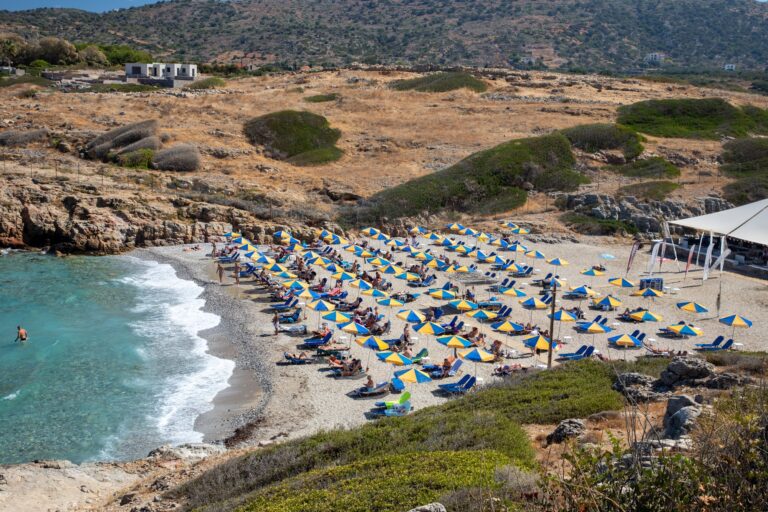
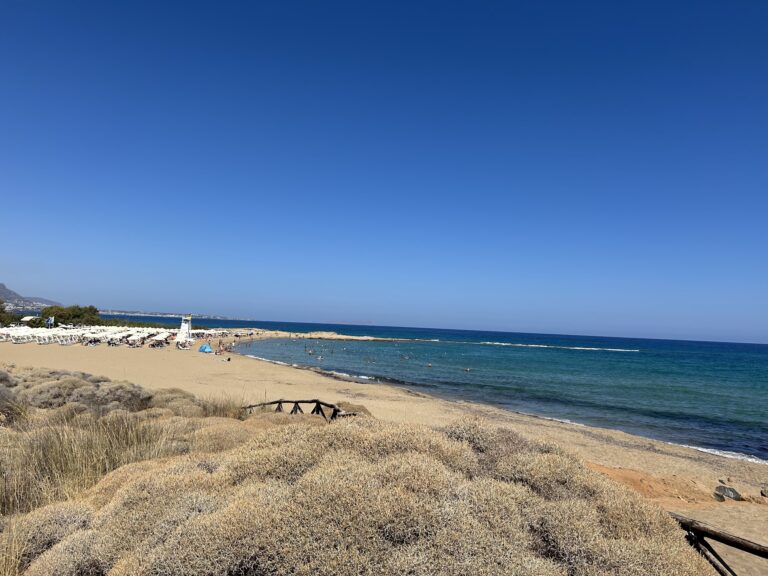
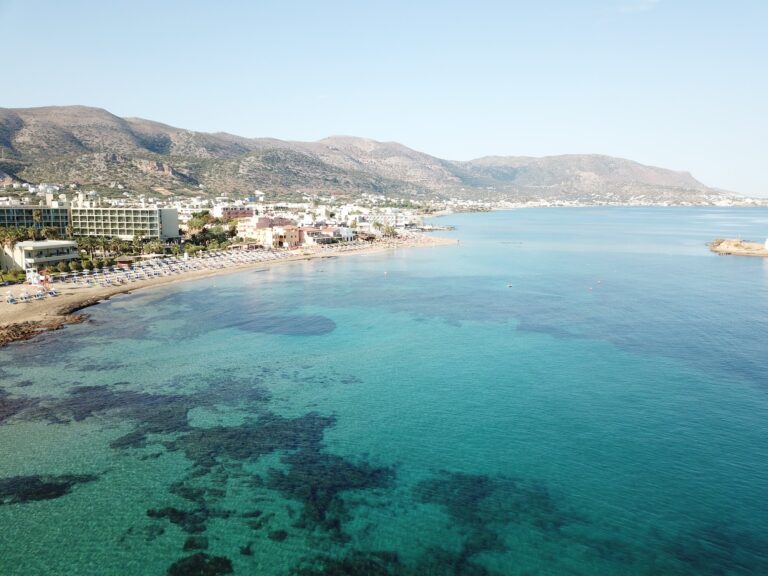
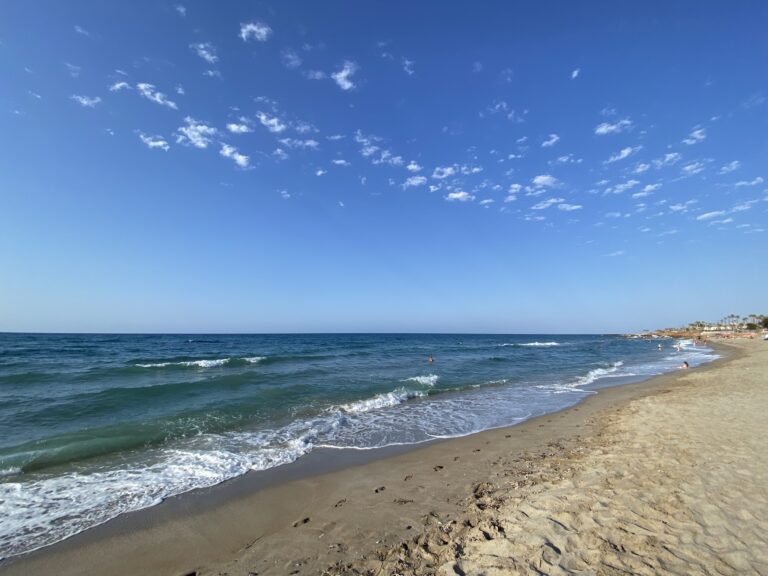
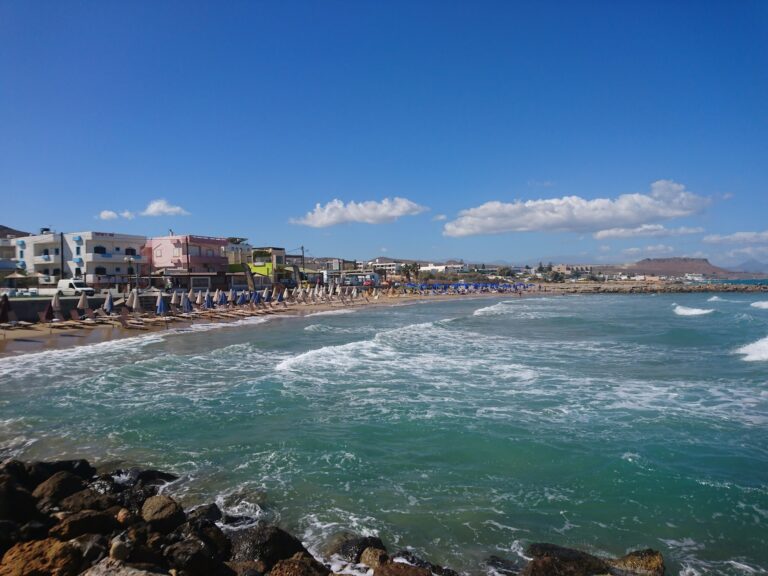
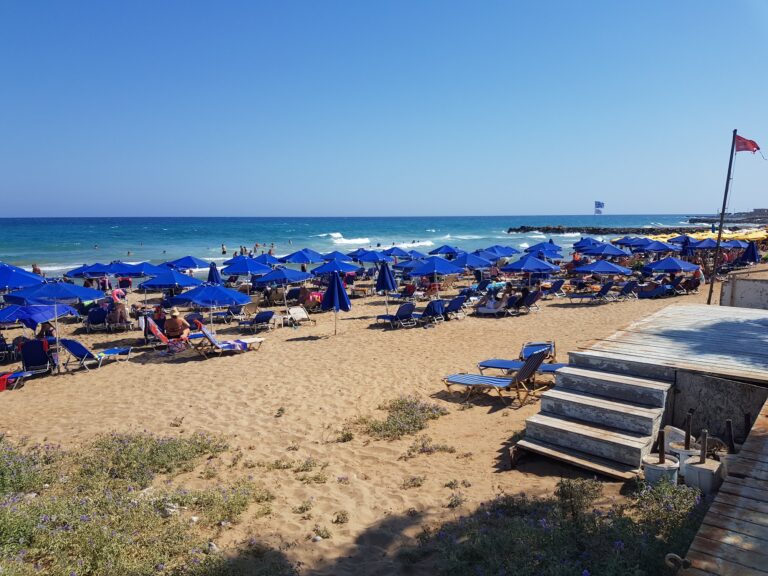
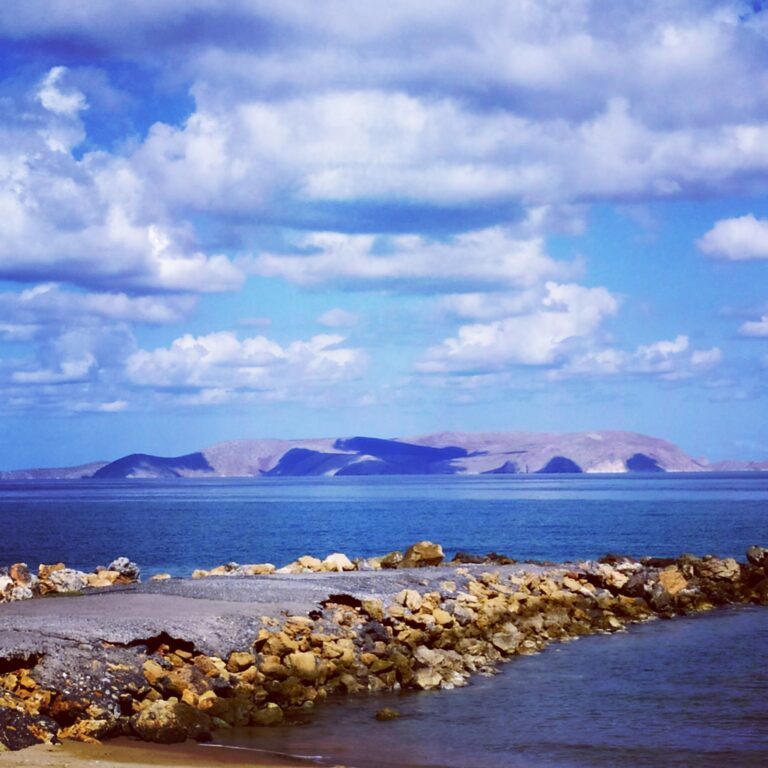
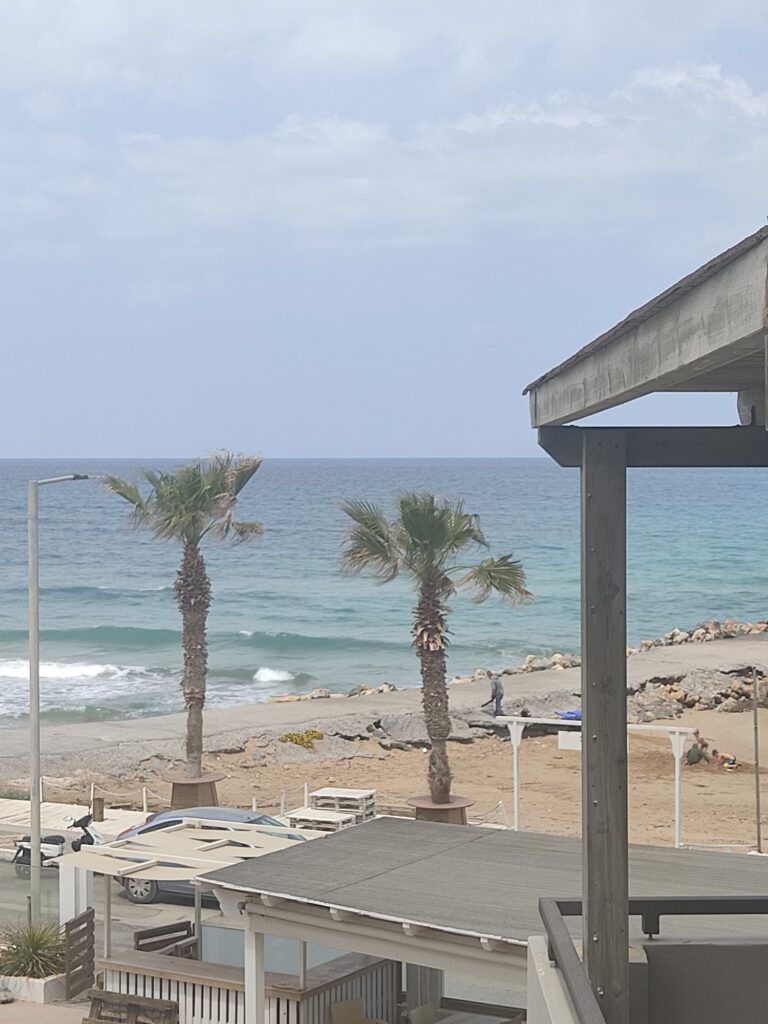
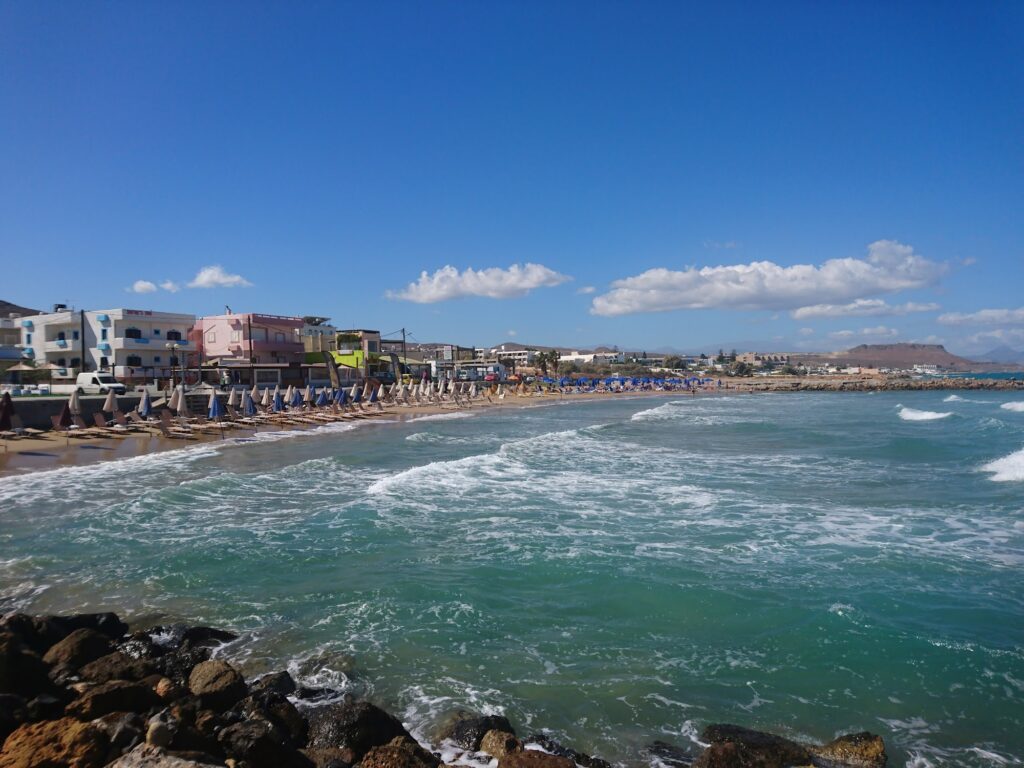
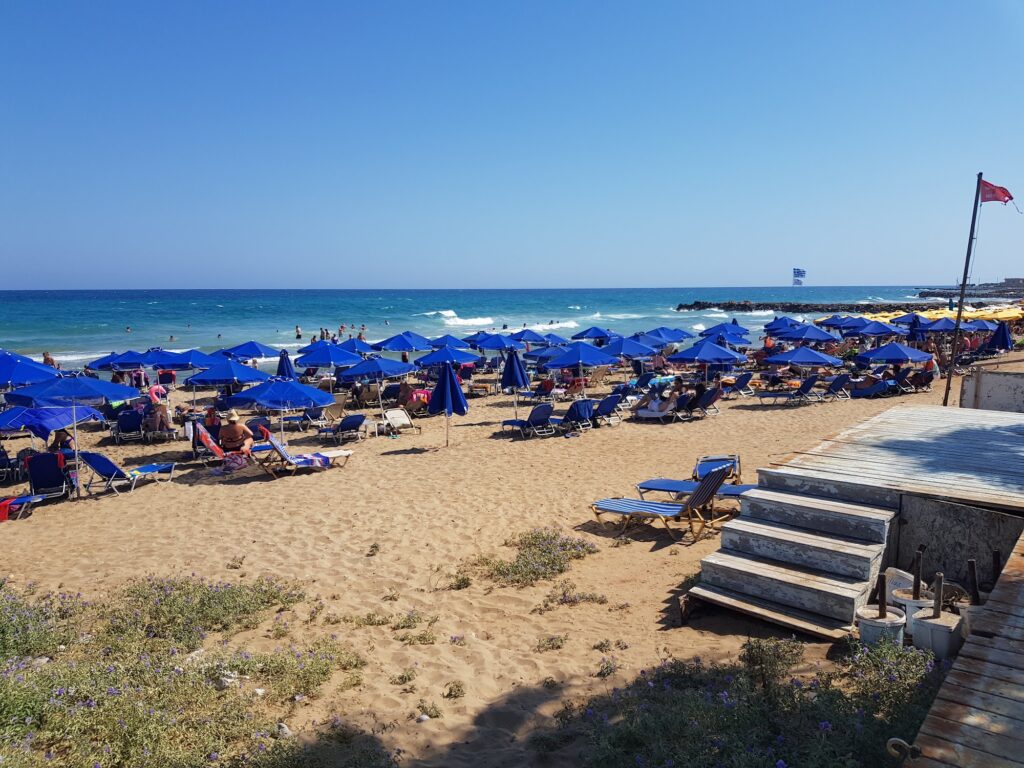
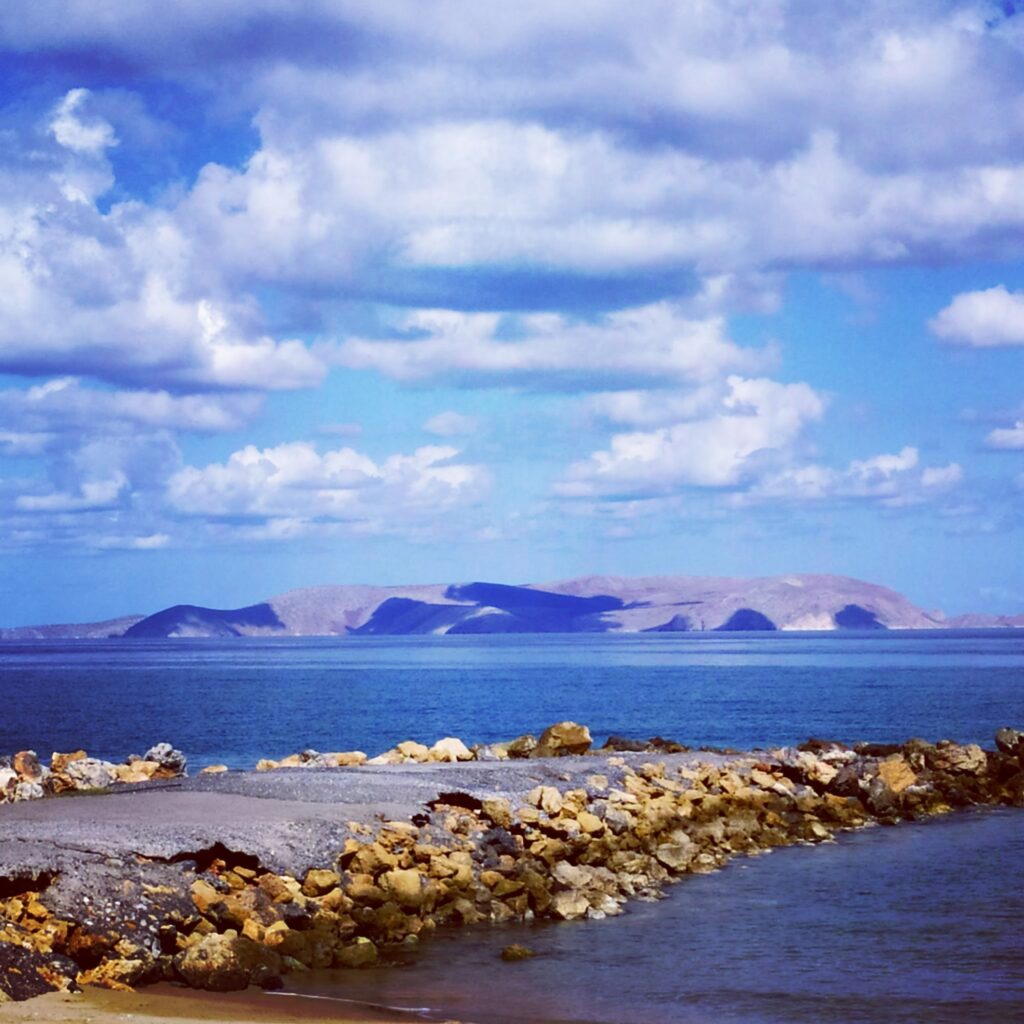
The shore is fine sand running a genuinely long stretch, part of a wider 23-kilometre beachfront extending from Vathianos Kambos to Malia. Several man-made breakwaters break the coastline into smaller, calmer coves, the water staying notably still even when wind roughens conditions elsewhere along this part of Crete’s north coast. The seabed slopes gently, and I’d recommend this stretch without hesitation for families with younger children.
Toward the eastern end, the beach turns rockier, and that’s specifically where I’d bring a mask — the rocks here hold genuinely lively marine life, and more than one account singles this section out for snorkelling over the smoother, sandier stretch further west. Water sports operators offer jet skiing and paddleboarding, sunbeds and umbrellas line organised sections, and tavernas including Ambrosia, Pella, and Knossos Greek Taverna sit close enough to the sand for a meal without much of a walk.
The Aquarium, the Old Village, and What’s Left of the Base
CRETAquarium itself is worth the entrance fee on its own merits — sixty tanks, around 2,500 species, sharks passing close enough to genuinely unsettle a few of the children I watched pressed against the glass. Entry runs roughly nine euros for adults, six for children, students, and seniors, and the full visit takes about two hours if you go through properly rather than rushing.
In the old village above the beach, the church of Agios Ioannis Pezetis holds frescoes worth the short detour, and the wider Gournes valley, fertile and still partly agricultural, produces olive oil, wine, and raisins much as it has for generations, the tourist development along the coast sitting at some remove from the quieter farming life still going on a short walk inland.
Gournes, fifteen kilometres east of Heraklion, fronts the site of a former American Air Force base that operated from the 1950s until the early 1990s, now repurposed as the CRETAquarium, a marine research centre, and municipal offices. The village itself dates back to at least 1280, its name tracing to the stone water troughs once used by local shepherds. The beach runs long and sandy, calmed by breakwaters into smaller coves, rockier and better for snorkelling toward the east. Tavernas, water sports, and the aquarium itself round out a stop that works equally well as a beach day or a half-day educational outing. Fifteen minutes from Heraklion, ten from the airport.
Take the Gournes/Gouves exit off the E75, following signs for the aquarium. Head east along the beach for the better snorkelling. Budget two hours for the CRETAquarium if you’re visiting with children.
Map
Sorry, no records were found. Please adjust your search criteria and try again.
Sorry, unable to load the Maps API.
Near by places: