Sarantari, Hersonissos: A Pilgrimage on Bare Knees
Profile
Sarantari, Hersonissos: Pilgrims Once Crawled on Their Knees to Reach a Chapel Near This Cove
Greece | Hersonissos | Anissaras, Heraklion, Crete
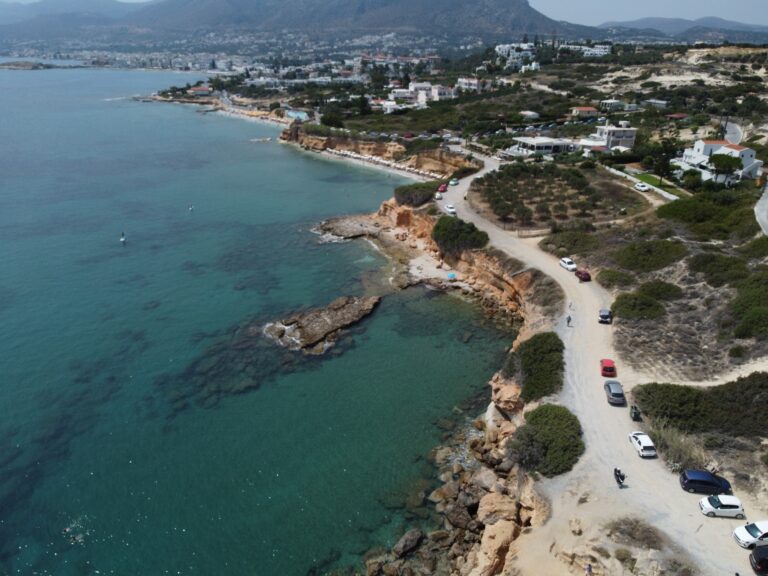
Local legend at Cape Sarandaris holds that pilgrims once crawled on their knees along the mountain ridge to reach a small, now-ruined chapel dedicated to Agios Antonios, sitting on a tiny island just off the cape. I find that image — knees scraping stone along an exposed coastal ridge for the sake of devotion — considerably more striking than anything the beach itself offers, even though the beach is genuinely lovely in its own right. Venetian records separately mention a monastery here, Agios Georgios Akrolinadiotis, and northeast of a nearby promontory called Cape Tigani, an extensive quarry, worked during both the Minoan and Venetian periods, survives as a real, documented site rather than a piece of folklore — a genuine window into how long people have been extracting value from this stretch of coast, long before anyone arrived purely to swim.
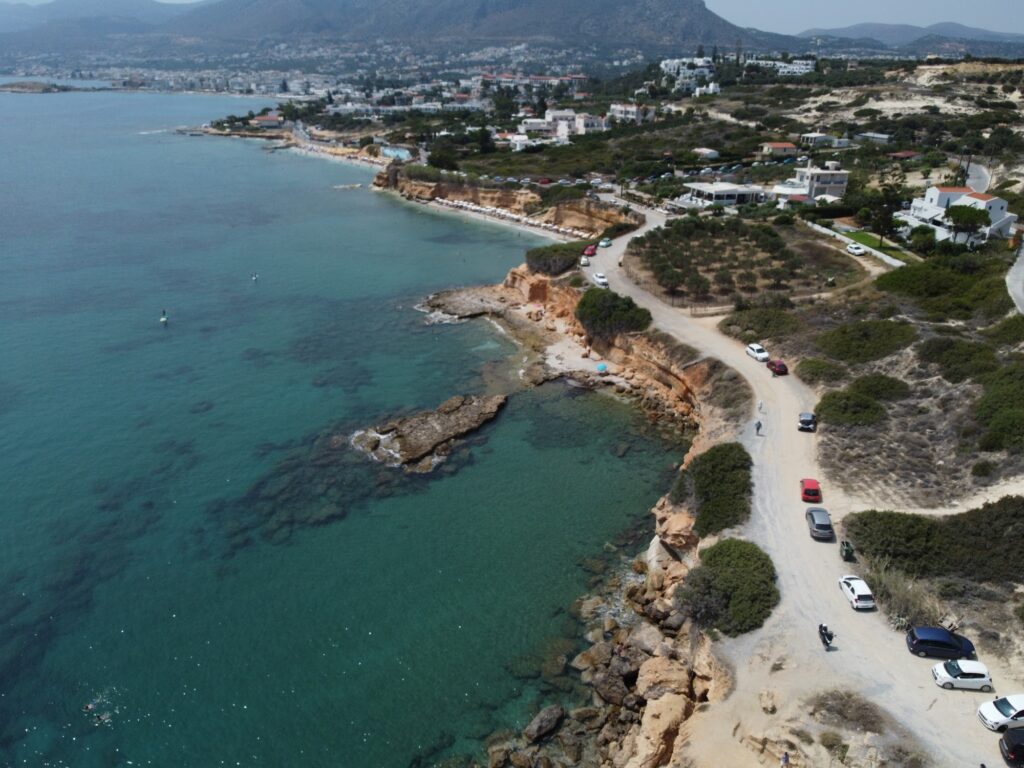
The cove itself sits roughly 400 metres south of the cape and the whitewashed chapel of St George, sheltered well enough by the headland that the water stays calm even when wind troubles more exposed beaches nearby. I want to mention the naming confusion directly, since I found it genuinely tangled researching this place: you’ll see Sarantari, Sarantaris, Sarandari, and Saradari used more or less interchangeably across different signs and sources, and even locals I’d have asked apparently don’t fully agree on which spelling is correct. I’ve used Sarantari throughout, the most commonly seen version, but don’t be surprised to find the same beach described under a slightly different name elsewhere.
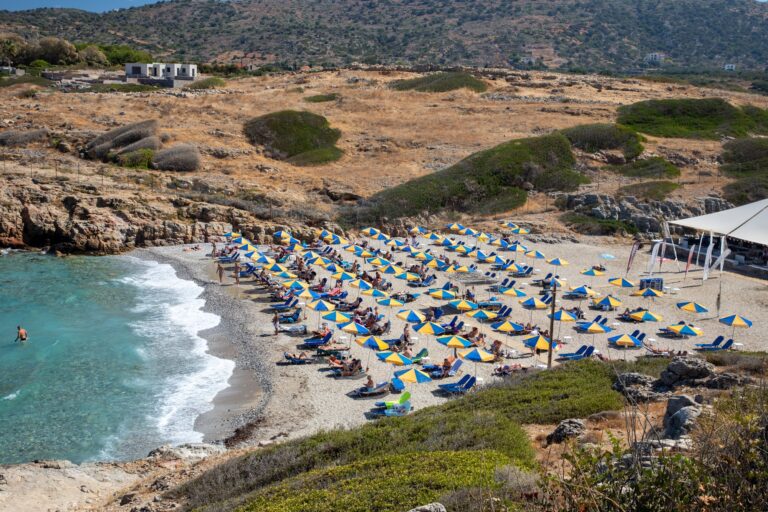
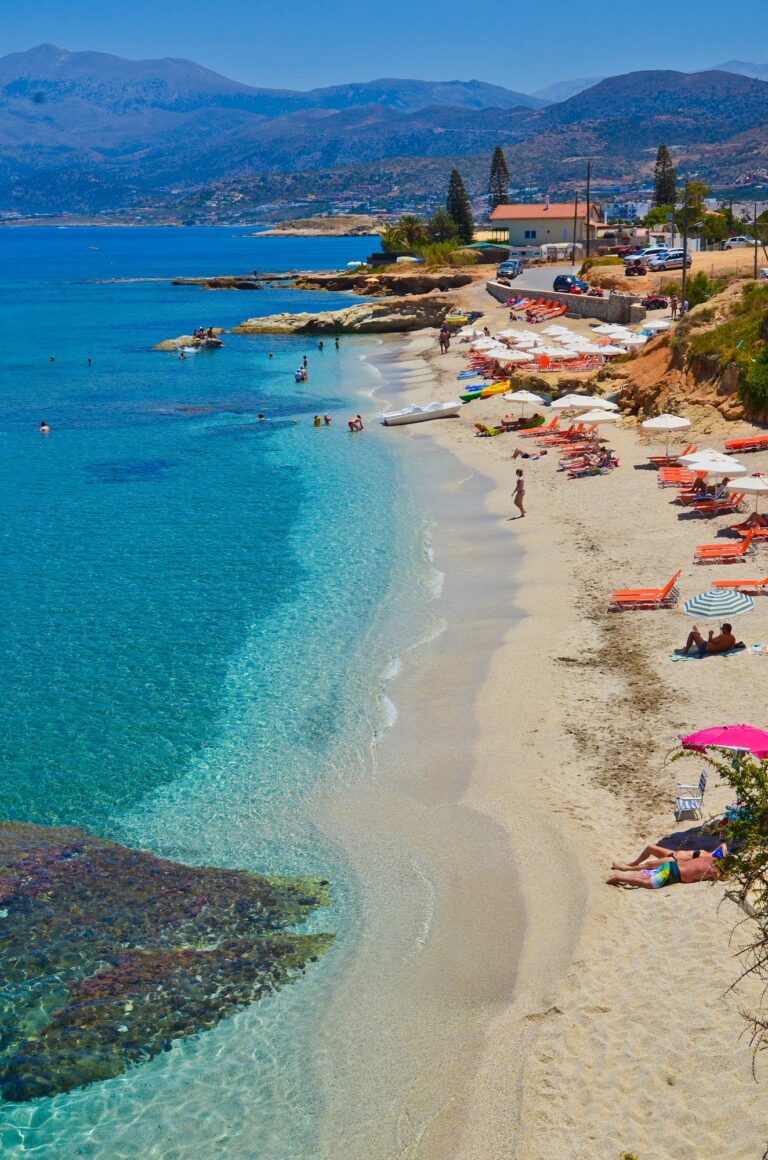
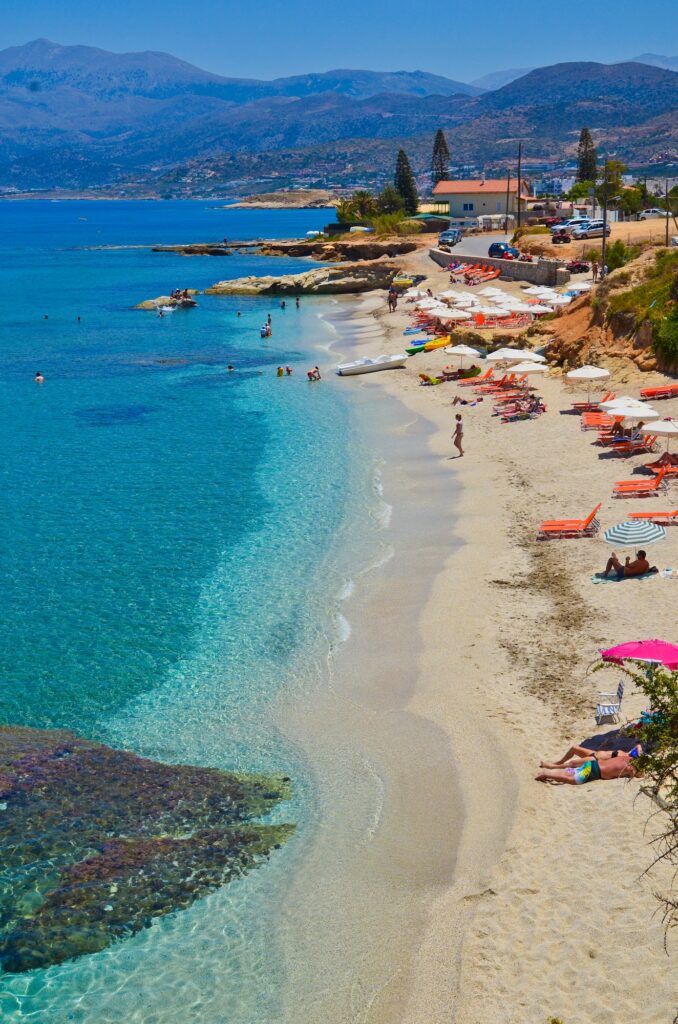
The beach as small, municipally run, genuinely crowded, with umbrellas low enough to bump a head against, sunbeds packed close together, and a day rate of twenty-four euros that the same reviewer found steep for what was on offer — though they noted private operators nearby charge less. I’d treat that as a fair warning rather than the full picture; plenty of other reviews describe a beautiful, uncrowded cliff-and-beach combination, and I suspect both accounts are accurate depending on the day and the season.
Getting There: 26 to 27 Kilometres From Heraklion, a Walk North of Hersonissos Port
I followed the New National Road (E75) east toward Agios Nikolaos, taking the Kastelli/Hersonissos exit and continuing toward the port before heading north along the coastal road toward Anissaras. The full drive from Heraklion ran about twenty-five minutes.
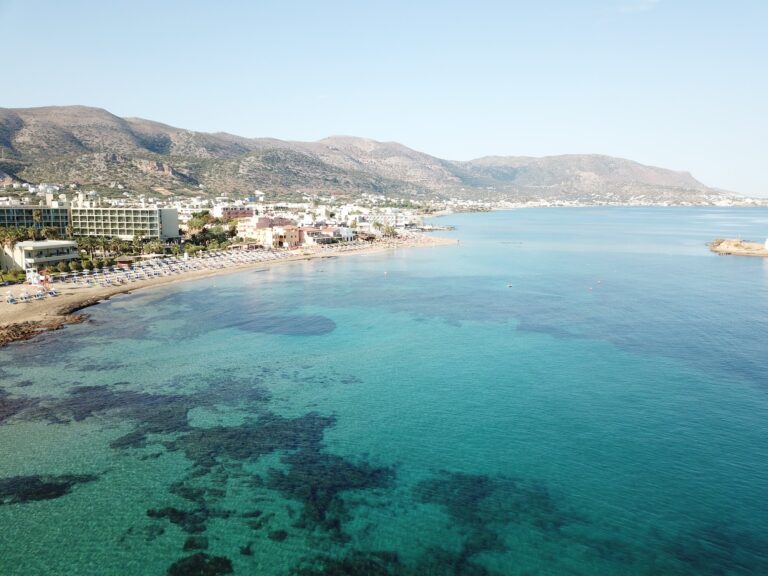
On foot from Hersonissos itself, the walk north along the coast takes fifteen to twenty minutes, passing the route around the Creta Maris Resort and the cove known as Ha Beach before reaching Sarantari itself — a genuinely pleasant stroll along a stretch with several smaller beaches worth glancing at along the way. No bus runs directly along this narrow coast road, so beyond walking, a car or taxi is the only practical option; taxis from Hersonissos carry a minimum fare around eight euros. Parking exists along the road above the cliffs and in nearby organised lots.
The Beach: Fine Sand and Pebble, Shallow and Gentle, a Naturist Cove Next Door
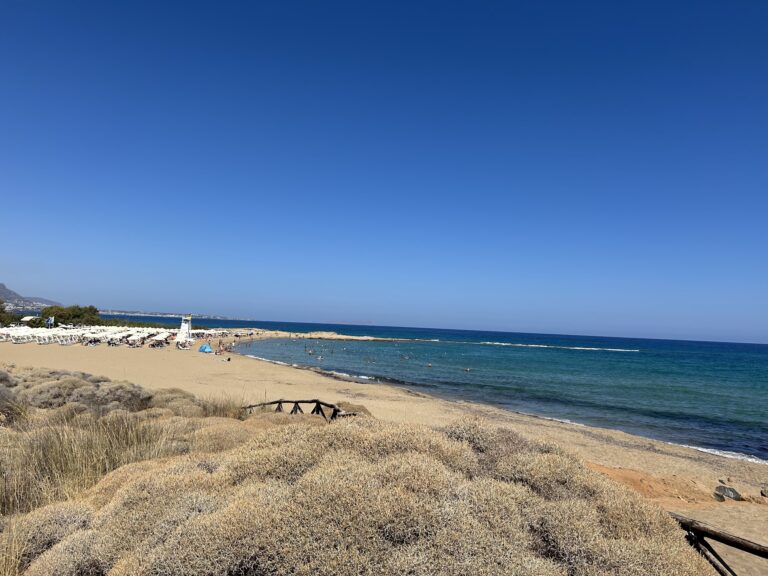
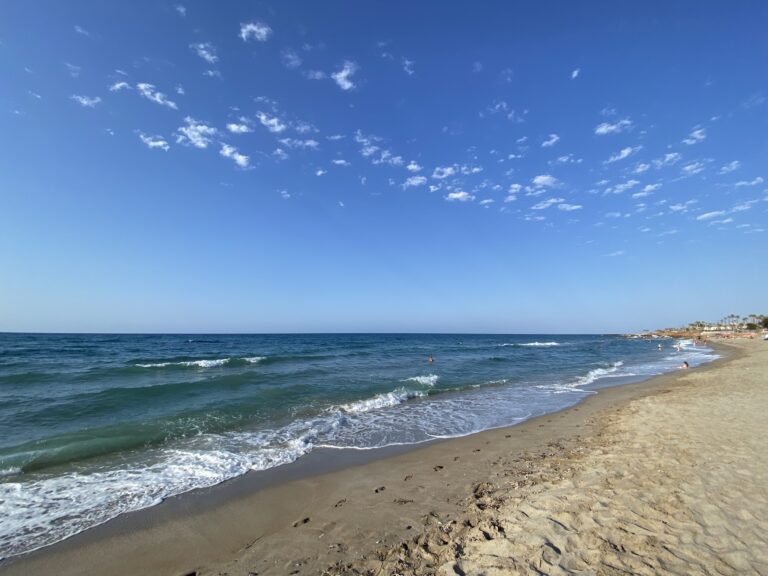
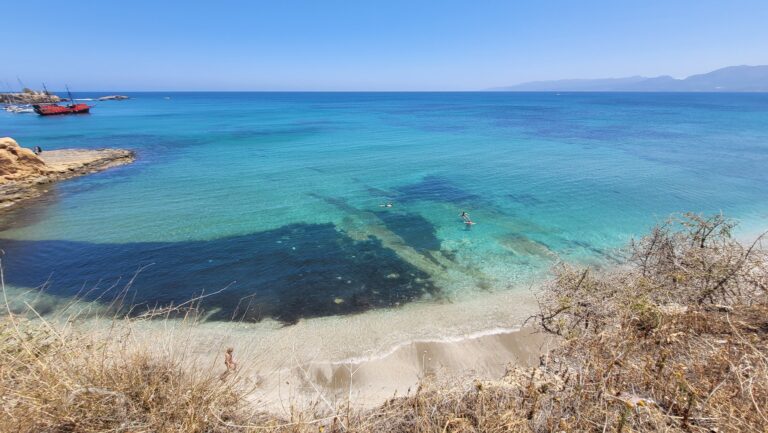
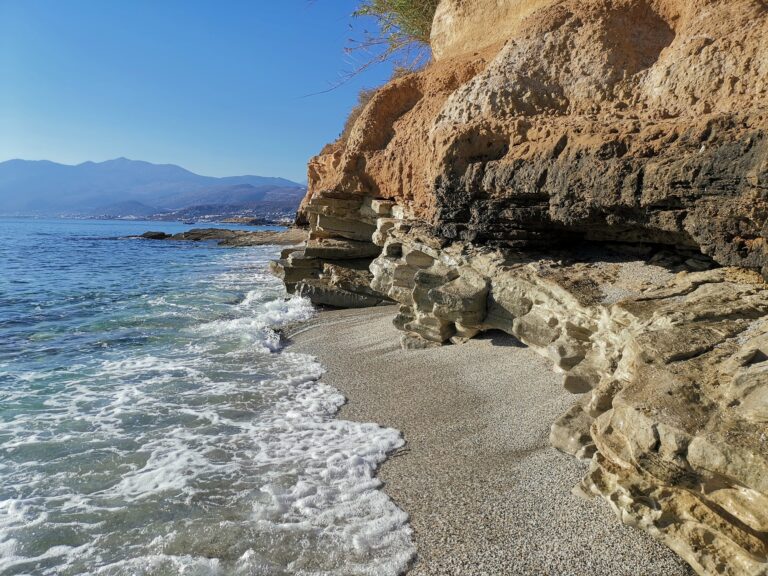
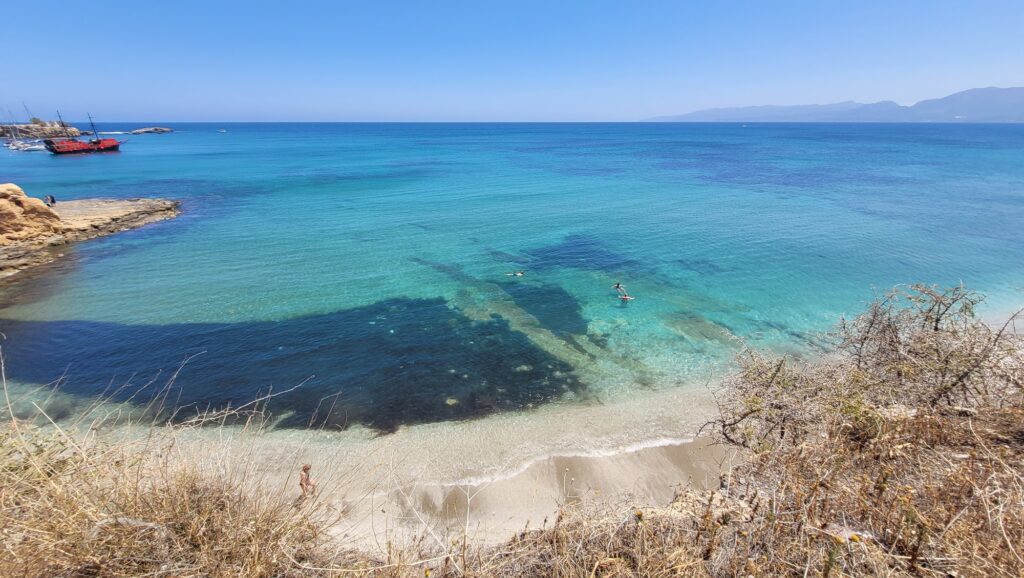
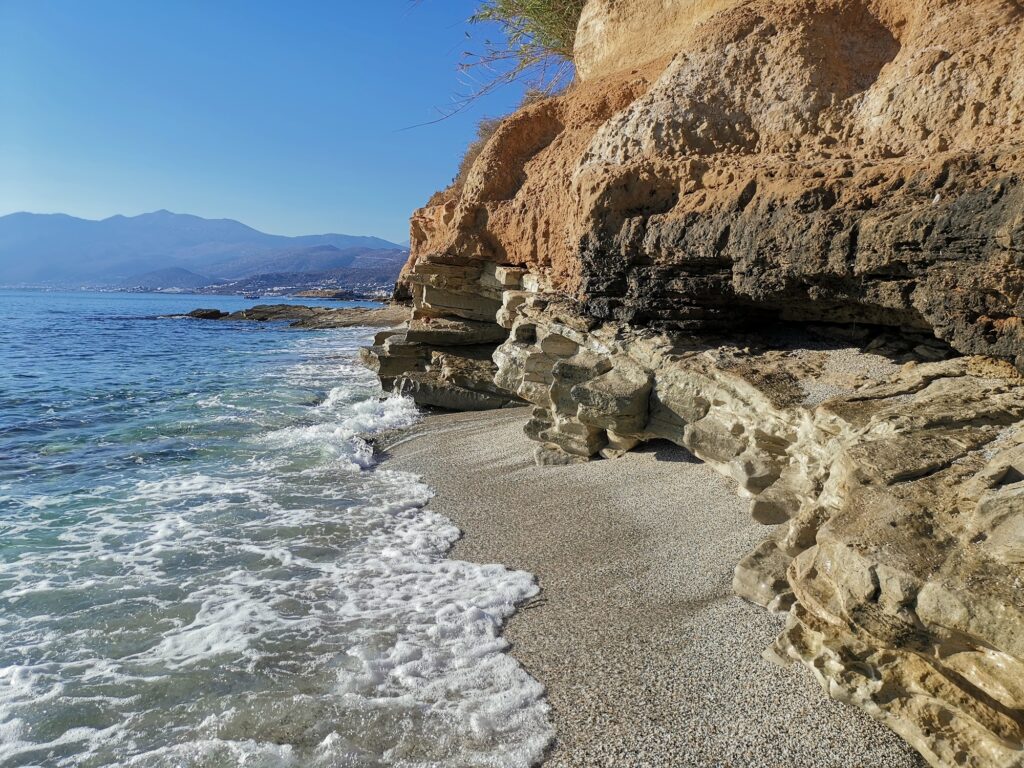
The shore mixes fine sand with small pebbles, the seabed sloping gently enough to suit families with smaller children without hesitation, and the water held a genuinely striking turquoise-to-aquamarine colour against the pale, ochre-tinted cliffs framing the cove. Sunbeds and umbrellas are available for a fee, with a restaurant overlooking the sand and refreshments close by.
Just along the same stretch of coast, past the main road’s turn toward Anissaras, a stony, well-protected naturist beach sits tucked beneath high cliffs — a genuine, established feature of this area rather than a recent or informal arrangement, and one I’d mention plainly since more than one source confirms it as a known, accepted part of the wider Sarandaris coves.
Sarantari, just north of Hersonissos port below Cape Sarandaris, carries a local legend of pilgrims crawling on their knees to reach the ruined chapel of Agios Antonios on a small offshore island, alongside the more solidly documented history of a quarry worked across both the Minoan and Venetian periods nearby. The cove itself is sheltered, shallow, and family-friendly, sand and small pebble against pale cliffs, with a naturist beach a short walk further along the same stretch. One recent, direct account describes cramped, pricier-than-expected municipal facilities — worth weighing against the many more glowing reviews this small beach also receives. Twenty-six to twenty-seven kilometres from Heraklion, a fifteen-to-twenty-minute walk north of central Hersonissos.
Walk north from Hersonissos port along the coast, or drive and park above the cliffs. Visit St George’s Chapel at the cape for the view. Arrive early if a crowded municipal beach with tight seating isn’t what you’re after.
Map
Sorry, no records were found. Please adjust your search criteria and try again.
Sorry, unable to load the Maps API.
Near by places: