Afrata Beach Crete: Pebble Cove on the Rodopou Peninsula
Profile
Afrata Beach, Crete: The Pebble Cove 28km From Chania on the Rodopou Peninsula, With an Abandoned Iron Ore Mine Loading Platform Still Standing in the Sea
Greece | Afrata | Kolymvari, Chania Prefecture, Crete
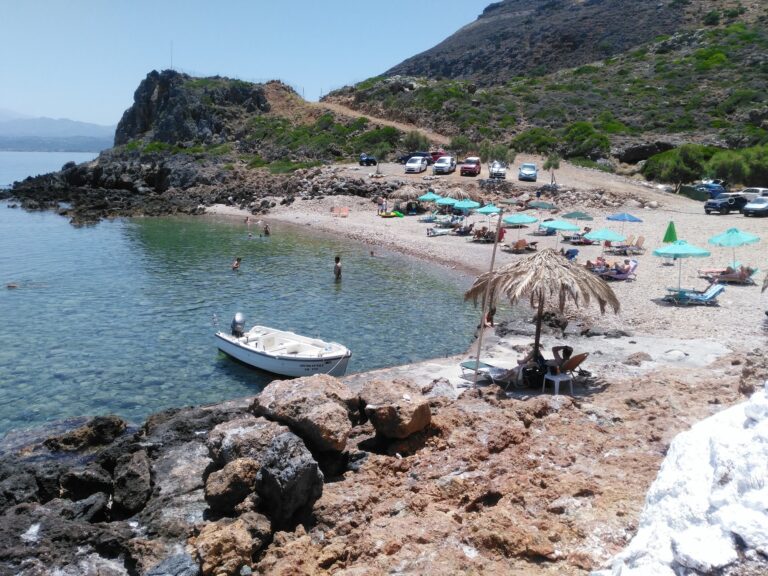
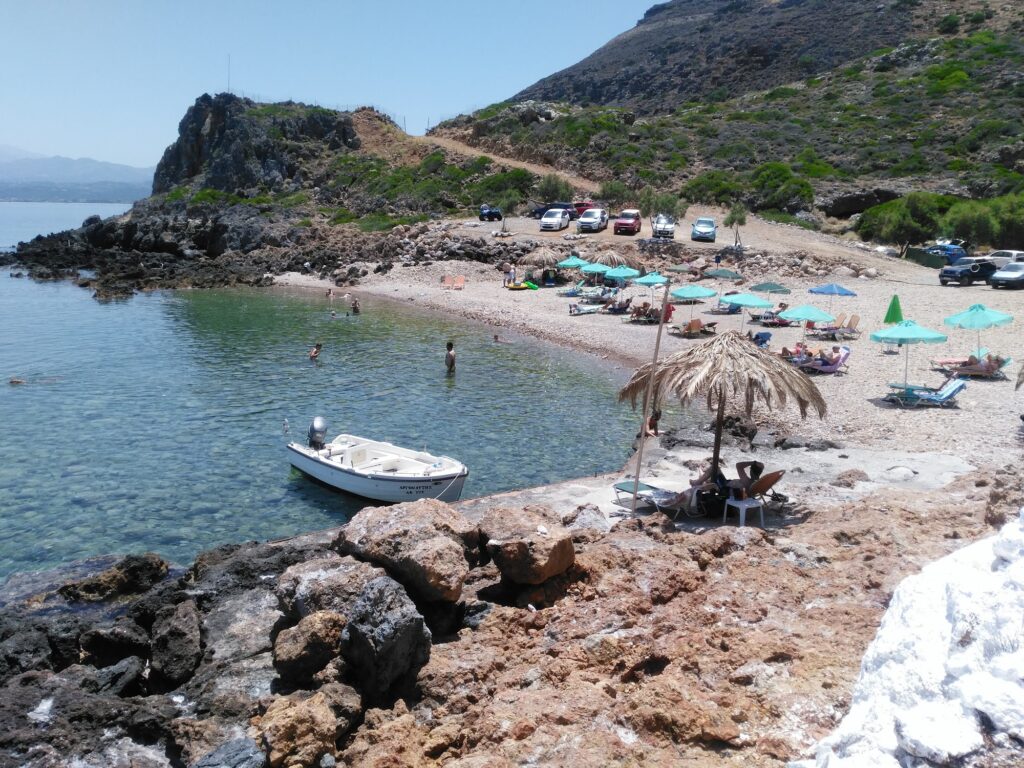
Afrata Beach is a picturesque location nestled in the Rodopos region, approximately 28 kilometres west of the city of Chania. It is situated just one kilometre away from the village of Afrata, and is reached via a narrow asphalt road that passes through a scenic gorge filled with aromatic plants. Along this route, travellers can also spot the historic Panagia Odigitria (Gonia) Monastery and the well-known Ellinospilios cave.
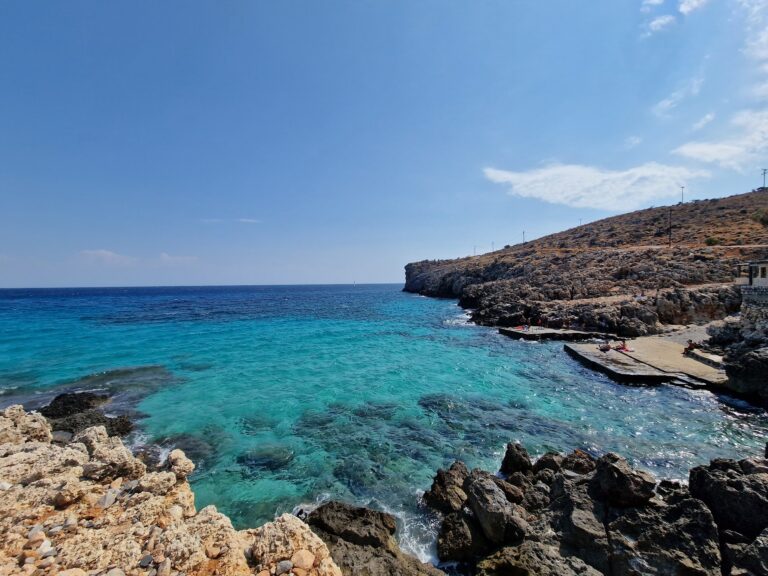
A few metres further north, at the edge of a peninsula, remnants of an early 20th-century iron ore mine can be found. The base of the loading platform still stands in the sea. The mine platform is the specific historical detail that makes Afrata different from a generic pretty cove. The platform was used to load iron ore onto ships for export — the same industrial mining activity that left ruins at Metalia Beach on Thassos and at the Serifos south coast, here appearing as a concrete structure visible just above the waterline a few hundred metres north of the beach.
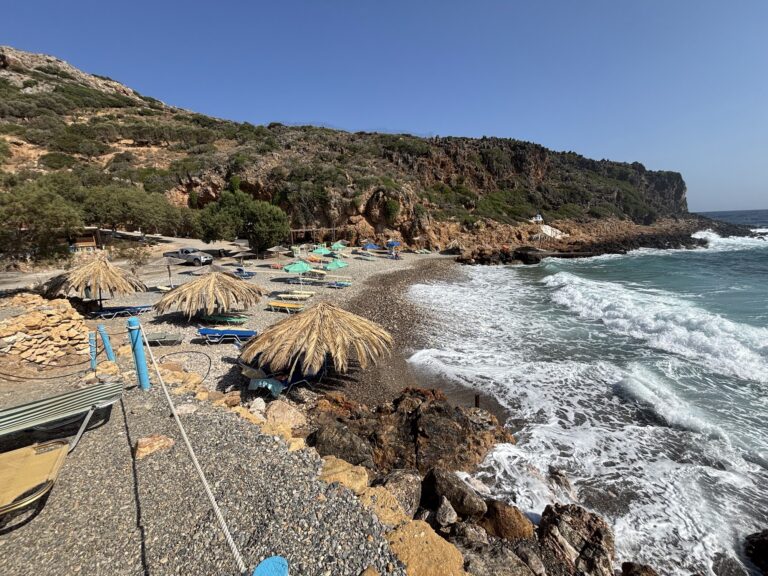
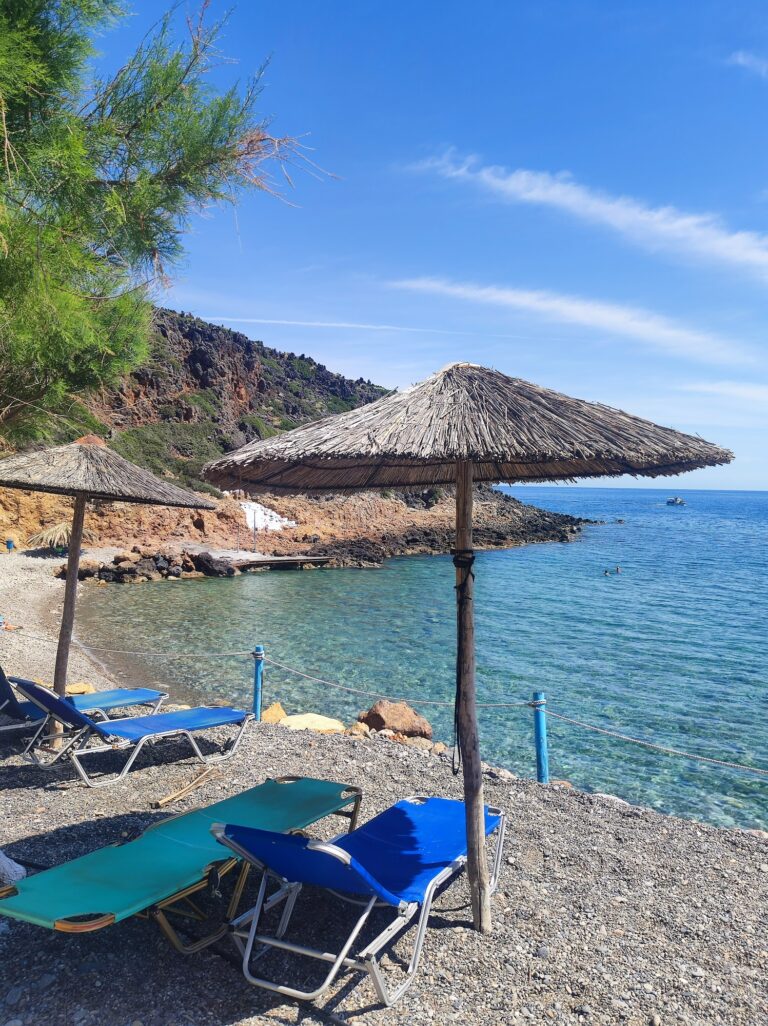
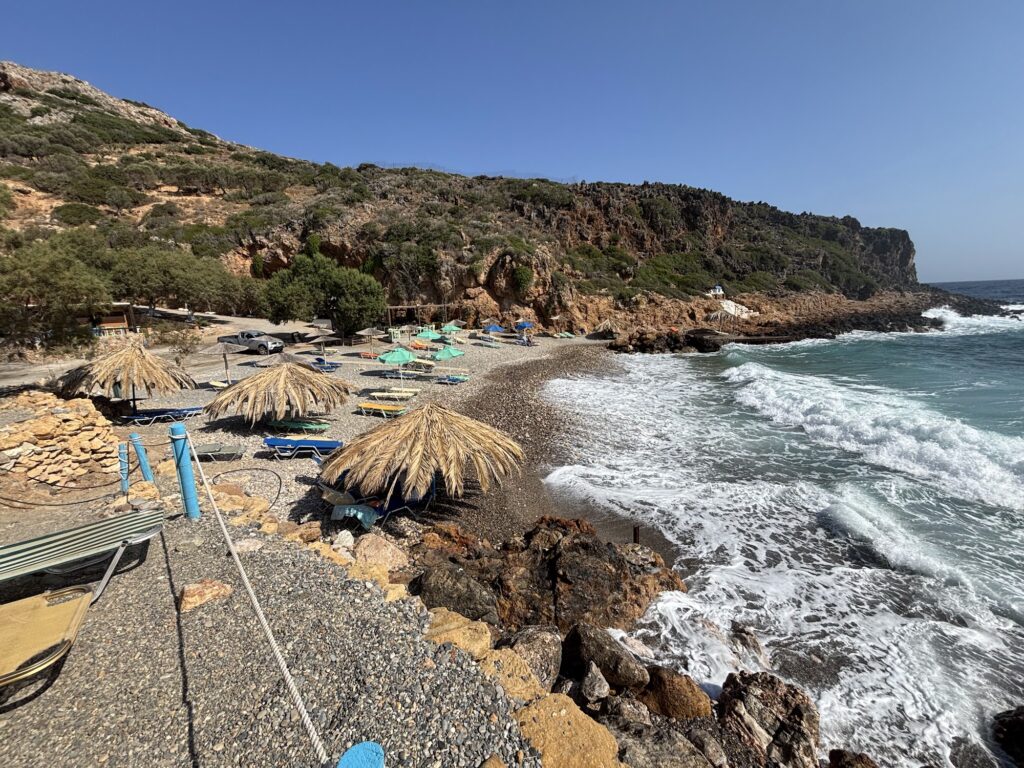
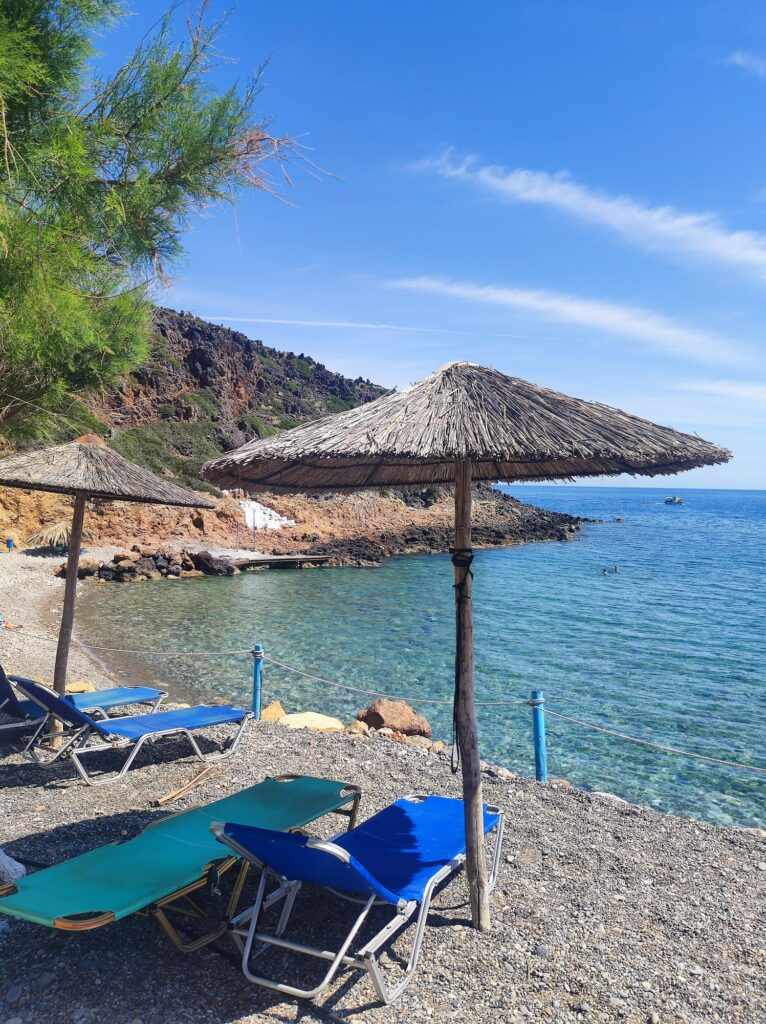
Two tavernas, tamarisk trees, chairs and umbrellas, the pebble beach and especially the crystal clear water promise carefree swimming pleasure at Afrata beach. Since the bay is really quite small, it might be better to avoid the weekends where of course many locals visit this idyllic place.
Getting There: 28km From Chania, Drive Through Kolymvari Past the Monastery, Narrow Asphalt Road to the Village, Then 1km Down the Gorge
Afrata is a small traditional village located in the northwest of Crete on the Rodopos Peninsula. It lies at 160 metres altitude approximately 4km from the larger coastal village of Kolimbari (8 minutes by car). Chania town is about 30km or 35 minutes drive. Leaving Kolimbari, you drive past the 17th-century monastery of Gonia and the Orthodox Academy. The road to Afrata is asphalted and meanders its way to the village. From there the road continues to the beach which is about 1.5km from the village square.
The road to Afrata from Kolimbari is paved with asphalt, but caution is advised due to its narrowness.
Afrata Beach is not easily accessible by public transportation. The journey takes around 45 minutes by car from Chania or around an hour and a half by bus. Car is the practical approach — the bus from Chania reaches Kolymvari, and from there you need a taxi or a hire car for the final section.
Parking is 15 metres from the sunbeds at the beach level — limited, fill early in July and August.
The Beach: Pebbles, Rocky Seabed, Clear Water, Water Shoes Essential, Small Bay
Water is crystal clear. The beach is covered with pebble and in the water the bottom is covered with rocks and boulders — not the easiest to enter water. The taverna is nice and reasonably priced.
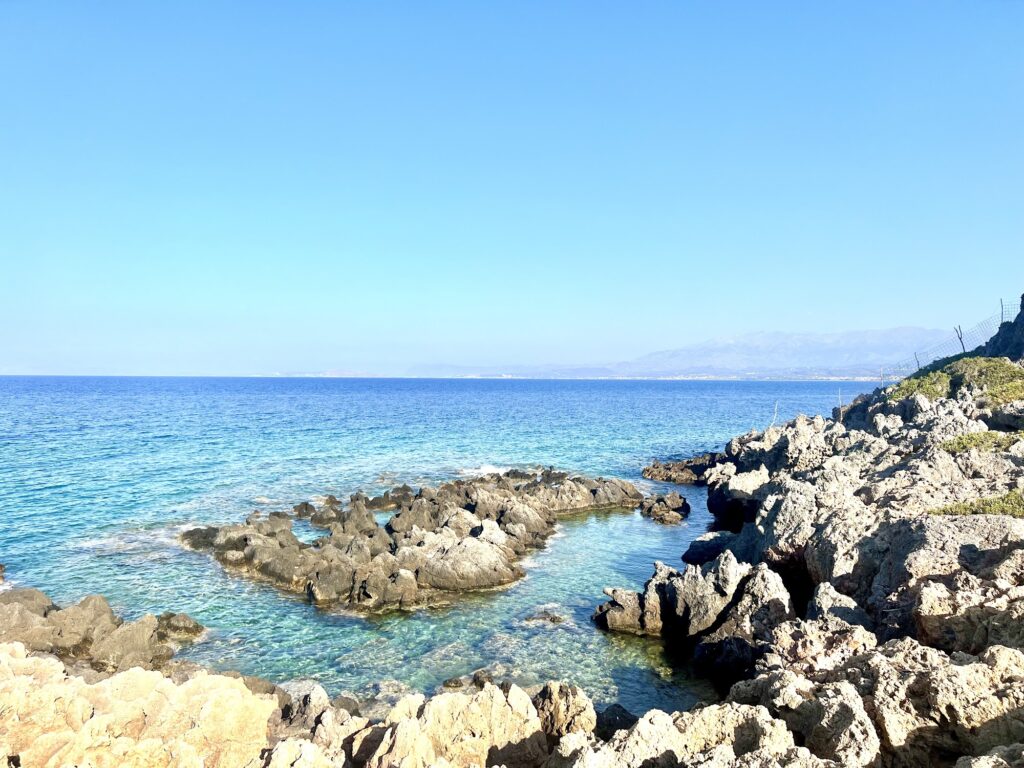
The entrance to the water is gentle, with a rocky bottom, so it is recommended to wear aqua shoes. The rocky seabed is the specific honest caveat that makes a significant difference to the experience. The water is clear precisely because pebbles and rocks don’t produce the fine sediment that sandy-bottomed beaches do. The trade-off is entry comfort. Water shoes are not optional here.
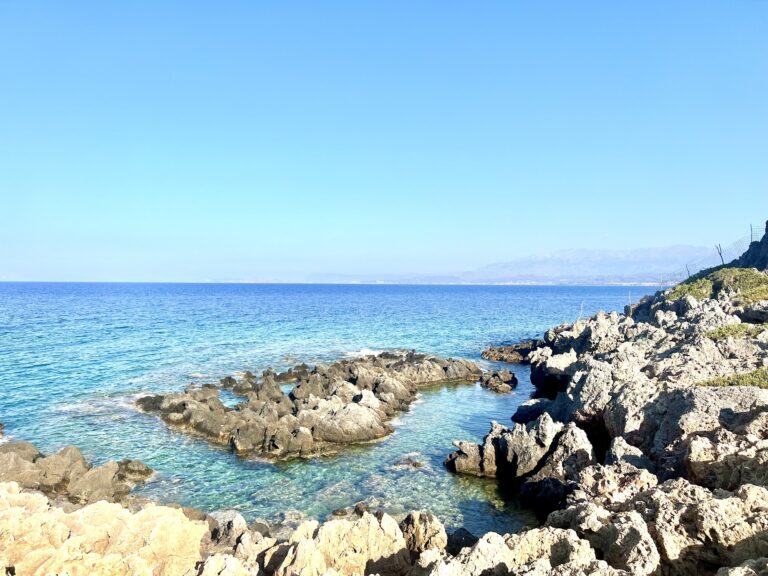
The beach is in a bay surrounded by towering rocks that offer isolation and tranquility. This secret bay’s unspoilt natural beauty creates an appealing ambience, allowing guests to unwind and reconnect with nature.
The Gonia Monastery and the Ellinospilios Cave: On the Route Down
Along the route, travellers can also spot the historic Panagia Odigitria (Gonia) Monastery and the well-known Ellinospilios cave.
The Gonia Monastery — founded in 1618, rebuilt after destruction by the Ottomans in 1645, holding significant icons and documents from the Cretan resistance — sits on the coast road between Kolymvari and the Afrata turn-off. It is 5 minutes from the turn. The Ellinospilios cave (also called the Greek Cave) is a large prehistoric cave used from the Neolithic period — bones and tools found inside now in the Chania Archaeological Museum. It is visible from the gorge road.
The Iron Ore Mine Platform: Standing in the Sea North of the Beach
In the past, a small community of mine workers resided here, but it is now abandoned. The concrete loading platform is visible from the beach looking north — a short walk along the rocky coast to reach it. The mine operated in the early 20th century. This is the same period of iron ore extraction that left the Palataki building above Metalia Beach on Thassos.
Diving at Afrata
Local diving centres also use the area for lessons but they do not impede on the people relaxing in the area. The rocky seabed and the clear water make Afrata a diving training location used by Chania dive schools — the specific active use that the bay’s clarity enables.
Afrata Beach on the Rodopou Peninsula, Crete is the pebble cove 28km from Chania — narrow asphalt gorge road 1.5km from the village, two tavernas with tamarisk shade, pebbles and rocky seabed (water shoes essential), crystal clear water, abandoned early 20th-century iron ore mine loading platform standing in the sea to the north, the Gonia Monastery and the Ellinospilios prehistoric cave on the route, avoid weekends (local visitors fill the small bay), car essential (public bus reaches Kolymvari only).
Drive from Kolymvari. Go mid-week. Bring water shoes.
Map
Sorry, no records were found. Please adjust your search criteria and try again.
Sorry, unable to load the Maps API.
Near by places: