Almirida Beach Crete: Two Blue Flag Bays and a Karga Isle
Profile
Almirida Beach, Chania, Crete: Two Blue Flag Sandy Bays Separated by a Chapel, With a Phoenician Island 300m Offshore Carrying WWII German Shelters and a 5th-Century Mosaic Basilica at the Village Entrance
Greece | Almirida | Apokoronas, Chania Prefecture, Crete
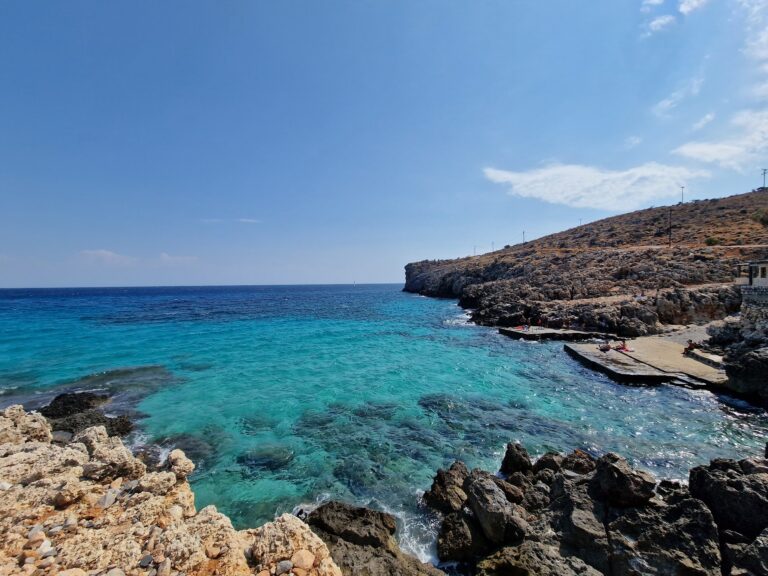
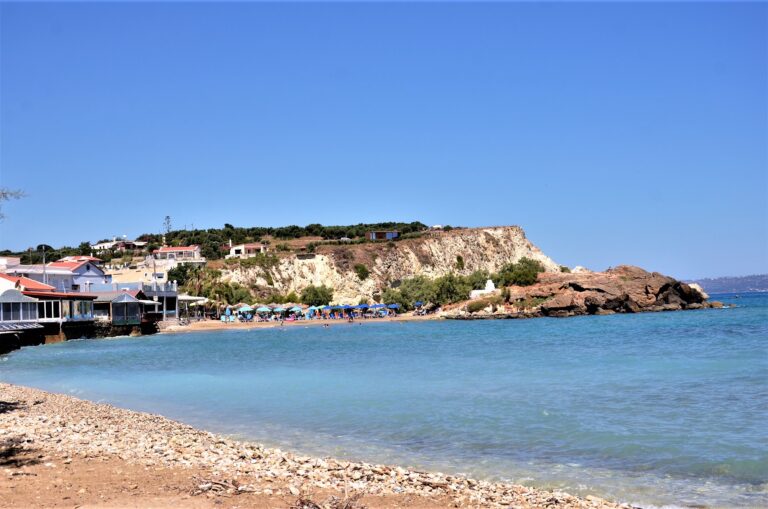
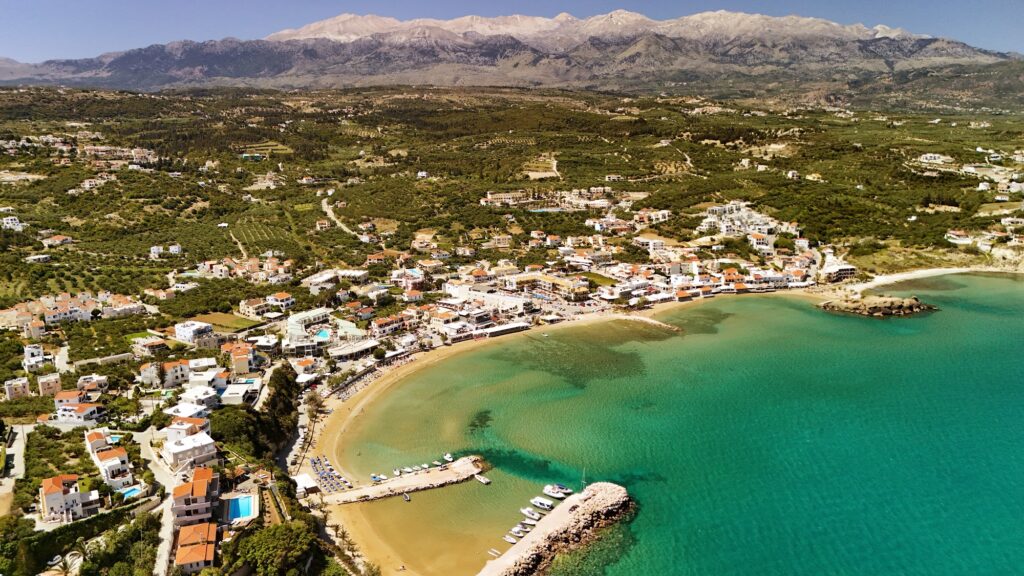
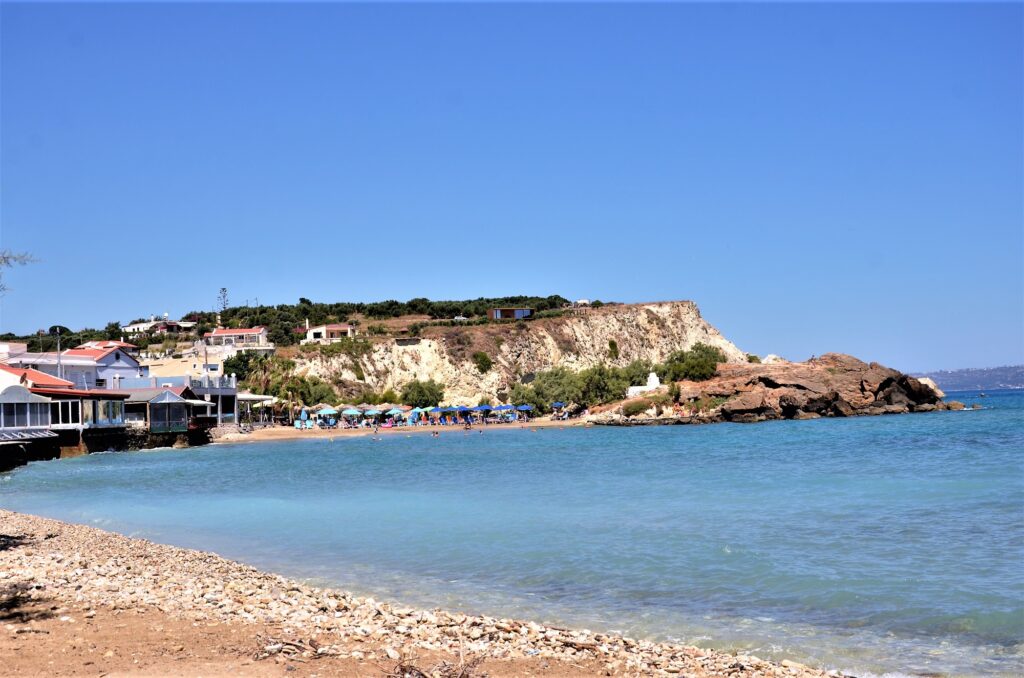
These two beaches are separated by a small rocky peninsula featuring a quaint white chapel.
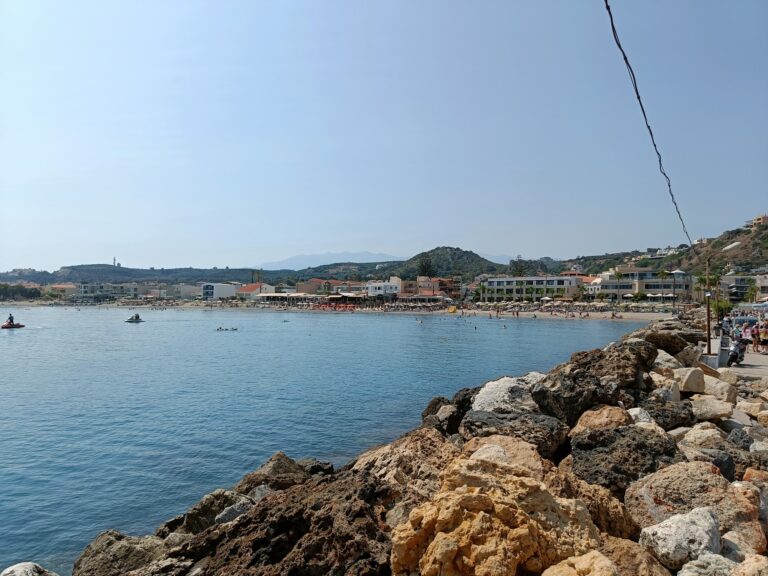
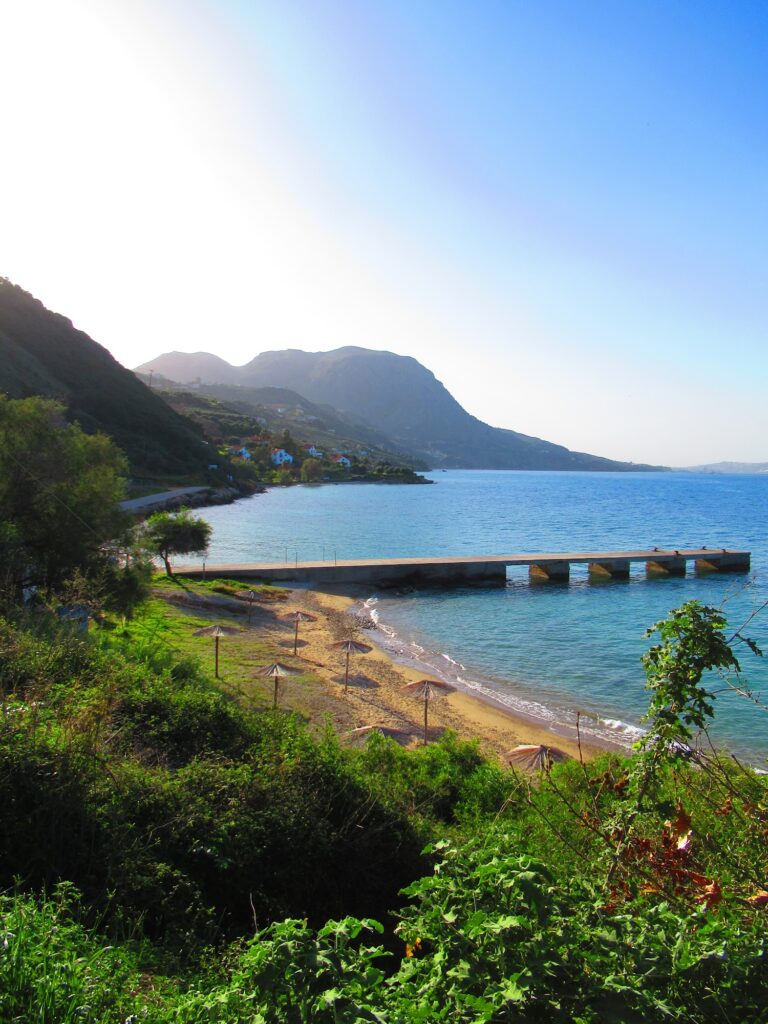
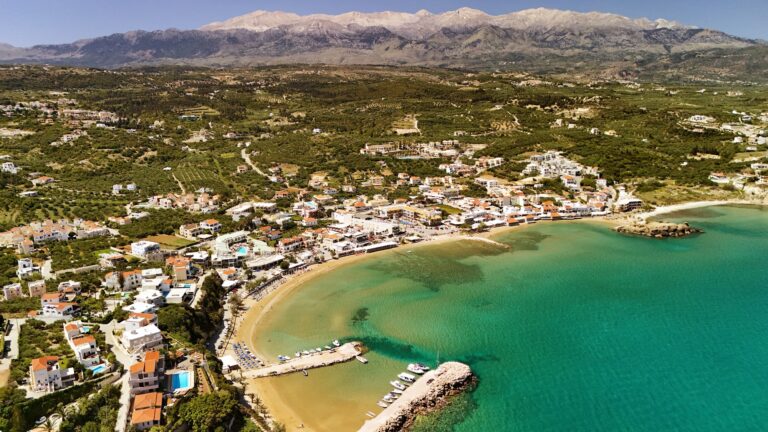
Almyrida is the most known coastal “mini-resort” in the Apokoronas Peninsula, as it features magnificent sandy beaches. The exact location of Almyrida is exceptional: built inside a small cove at the mouth of Souda Bay, it is the first coastal village on the southeast side of the bay, offering tremendous views. The sunset in Almyrida is especially beautiful, as the sun falls behind Souda Bay.
Almyrida is thought to have been a Phoenician colony, hence the nearby location Finikia. Here, you can find ancient ruins and tombs. At the entrance to the village lie the remnants of a 6th-century triple-aisle Christian basilica with well-preserved mosaics. Almirida also played a role in Crete’s history as the site of the last battle against the Turks in 1896.
The mosaic basilica is the specific surprise. A complete triple-aisle early Christian church with floor mosaics from the 5th or 6th century, excavated and now visible at the village entrance — the kind of archaeological site that would have a queuing system in another country, here sitting quietly next to the car park.
Getting There: 25km From Chania on the E75, Exit at Kalyves, Regular Bus Service, Free Parking
Almyrida Beach is located in the Apokoronas region, just 25 km east of Chania (Crete). Almyrida is in the Apokoronas area, at the entrance to Souda Bay, about 2 km after Kalyves and 22 km from Chania.
From Chania, take the National Road (E75) toward Rethymno and take the exit for Kalyves. From Kalyves, the coastal road leads directly to Almirida — 2 kilometres. Regular KTEL buses run from Chania central bus station to Almirida throughout the summer, stopping in the centre of the village metres from the sand.
Walking paths connect Almyrida with Plaka and Kalyves, giving visitors a chance to explore nearby villages and enjoy scenic views of Souda Bay. The walk to Plaka (1.4km east) and Kalyves (4.7km west) are both pleasant coastal paths.
Free parking is available at the entrance to the village.
The Beaches: Two Blue Flag Sandy Bays, Chapel Between Them, Third Unorganised Pebble Beach to the West
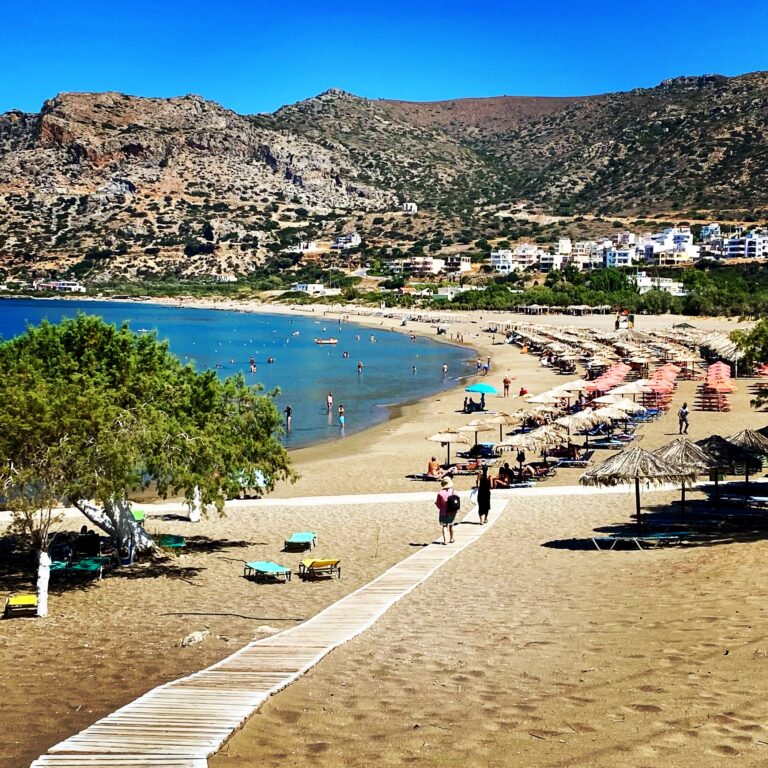
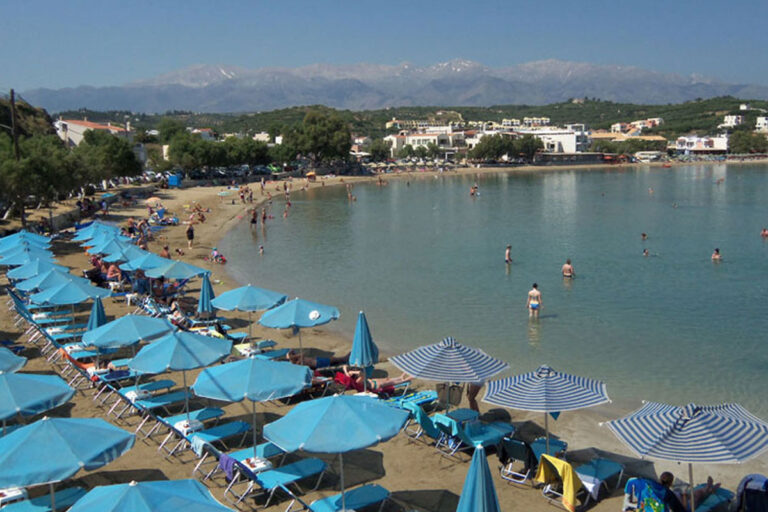
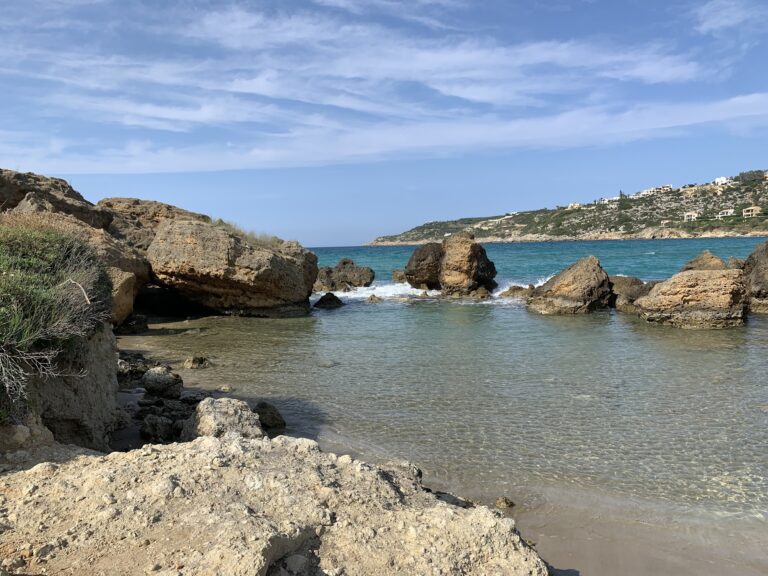
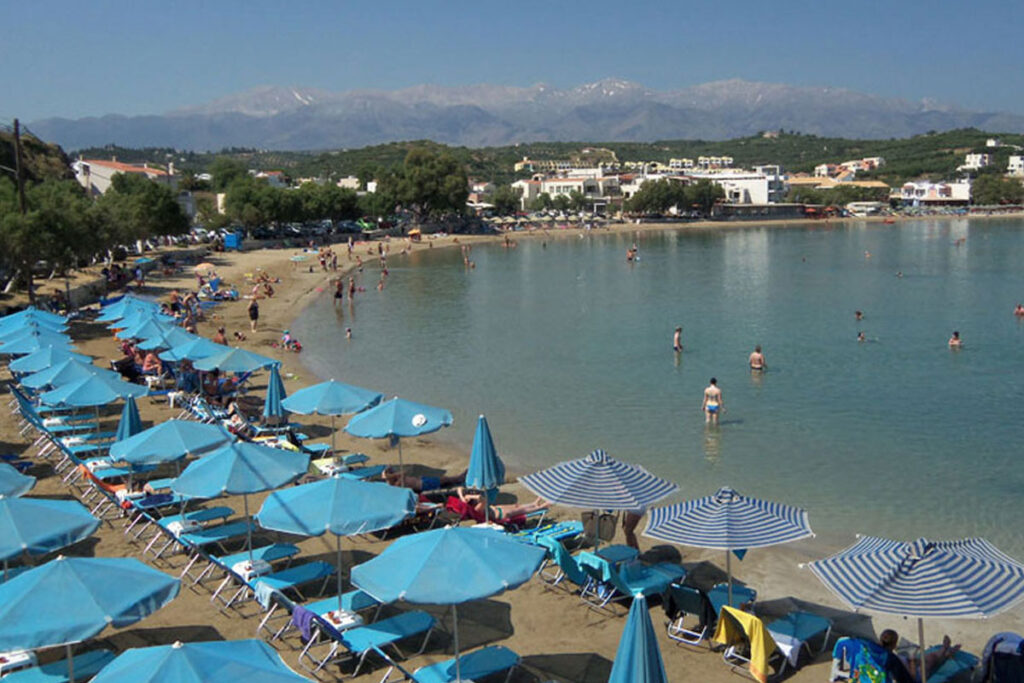
Almyrida has two sandy beaches, which are fully organised with sun beds, umbrellas, showers, toilets and a lifeguard. The water is crystal clear and ideal for swimming and snorkelling. The beaches are awarded with the prestigious Blue Flag. Almyrida also has a third beach with pebbles. This beach is situated west of the village and has no facilities.
The sea is quite shallow, especially the eastern end, making it ideal for families with small children. The eastern bay is specifically the shallower of the two — the place with the longest gradual entry and the warmest water in the afternoon sun.
Water sports include windsurfing equipment, kayaks, pedalos, and diving. A scuba diving centre operates in the village for both beginners and certified divers.
Karga Islet: 300m Offshore, Swim to It, Phoenician Walls and German WWII Shelters
The most popular feature of Almyrida is Karga, a rocky islet to which you can swim and is located 300 m off the coast. The island still bears traces of ancient Phoenician walls and shelters constructed by the Germans during World War II. Karga is a haven for birdlife and a popular spot for excursions and fishing.
The swim to Karga is straightforward from the main beach — 300 metres in calm conditions, with the rocky islet as a clear target. The Phoenician walls and WWII German shelters coexist on the same small island — two chapters of strategic occupation on the same rocks. The islet also hosts organised boat trips from the village.
The White Mountains Backdrop and the Apokoronas Villages
The Chania region around Almyrida is wonderful, with its picturesque villages like Plaka and Kokkino, and glorious views of the White Mountains (Lefka Ori).
The Lefka Ori — the White Mountains of western Crete, with peaks above 2,400 metres — form the southern horizon from Almirida beach. In early summer they still have snow. The mountain profile visible from the sand is the specific backdrop that gives the beach its dramatic scale.
The resort itself is quite small and touristy, with many hotels and apartments for rent. Apokoronas is one of the greenest and most picturesque areas of the province of Chania with attractive villages including Kokkino Chorio, Plaka, Aspro, Gavalohori and Kefalas dotted all around.
The Aptera Archaeological Site: 15 Minutes West, One of Crete’s Most Significant
Other archaeological finds have been unearthed about 10 minutes away at Aptera, between Kalives and Chania. Aptera — the ancient Cretan city active from the Minoan period to the Byzantine era, with well-preserved city walls, a Roman cistern, a Venetian monastery, and a WWII German bunker — is 15 to 20 minutes west of Almirida by car. It is one of the most accessible and least crowded significant archaeological sites on Crete.
Almirida Beach in Chania, Crete is two Blue Flag sandy bays separated by a chapel on a rocky peninsula, 25 kilometres from Chania on the south shore of Souda Bay — Karga islet 300 metres offshore with Phoenician walls and WWII shelters (swim to it), the 5th-century mosaic basilica at the village entrance, the White Mountains on the southern horizon, windsurfing, kayaks, scuba diving, the coastal path to Plaka (1.4km) and Kalyves (4.7km), and Aptera archaeological site 15 minutes west.
Take the E75 exit for Kalyves. Drive 2 kilometres. Find the chapel between the two bays.
Map
Sorry, no records were found. Please adjust your search criteria and try again.
Sorry, unable to load the Maps API.
Near by places: