Petali Beach Evia: Wild Coast Below Mount Dirfi
Profile
Petali Beach: Down the Mountain Where Hera Once Had a Temple
Greece | Evia | Central Greece | Aegean Coast
Getting to Petali Beach means driving over a mountain that ancient Greeks believed belonged to Hera. Mount Dirfi carried the epithet Dirphya specifically because of her, and a temple is said to have stood at its summit, Delfi, commemorating her marriage to Zeus. I hadn’t planned my drive around any of that, but descending the winding pass after Steni, watching the alpine forest give way gradually to the open Aegean below, it was hard not to think about how long people have been crossing this same terrain to reach the coast on the other side.
Evia has surprised me more than once with how much history sits behind its beaches, but Petali felt different from the ancient ruins and quarry towns I’d visited further south. This is a beach defined as much by the journey to reach it as by anything waiting once you arrive.
Dark Volcanic Sand Facing the Open Aegean
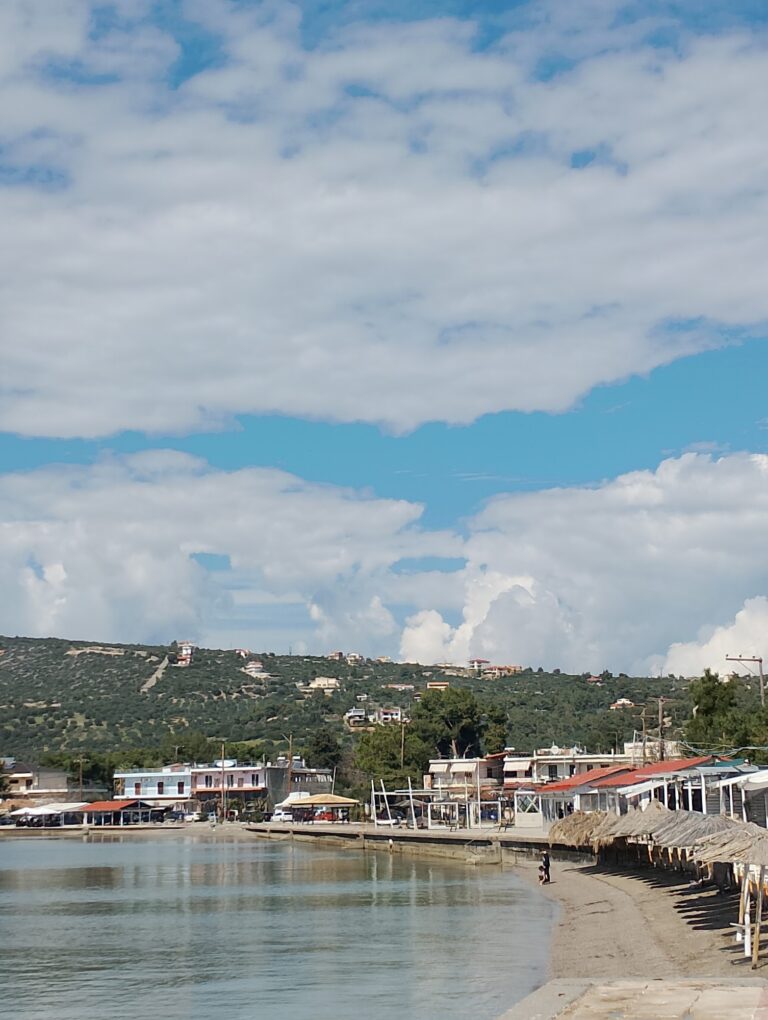
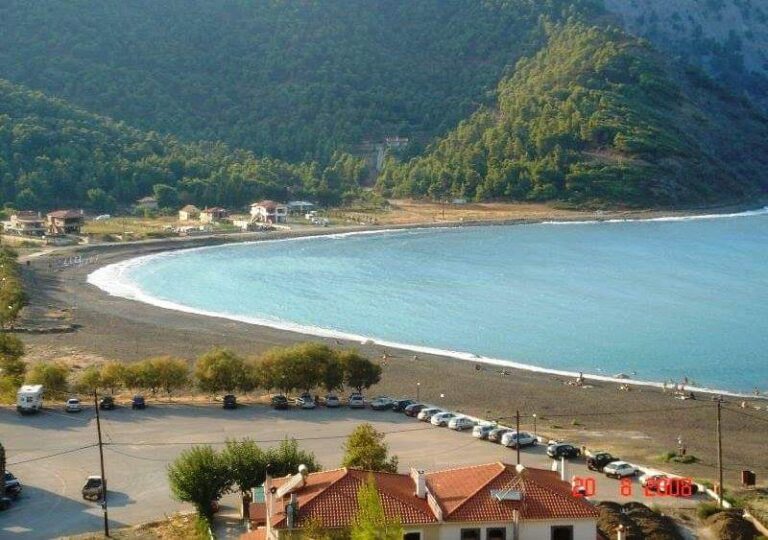
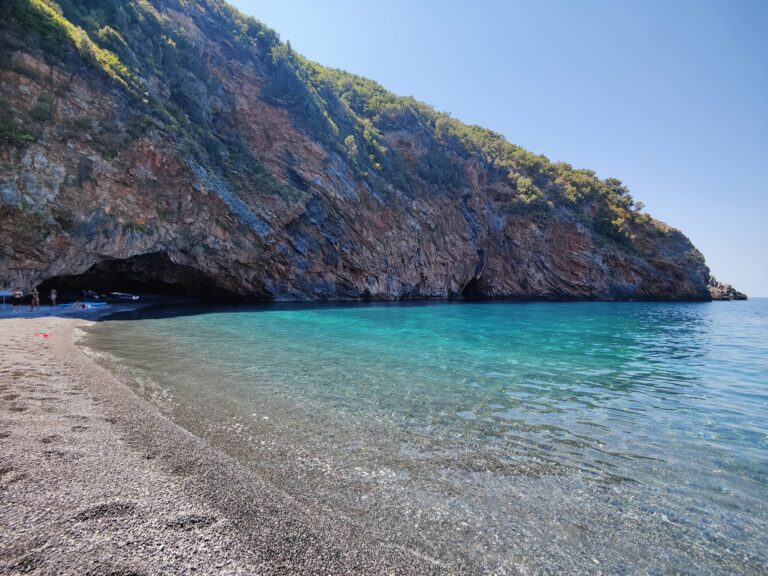
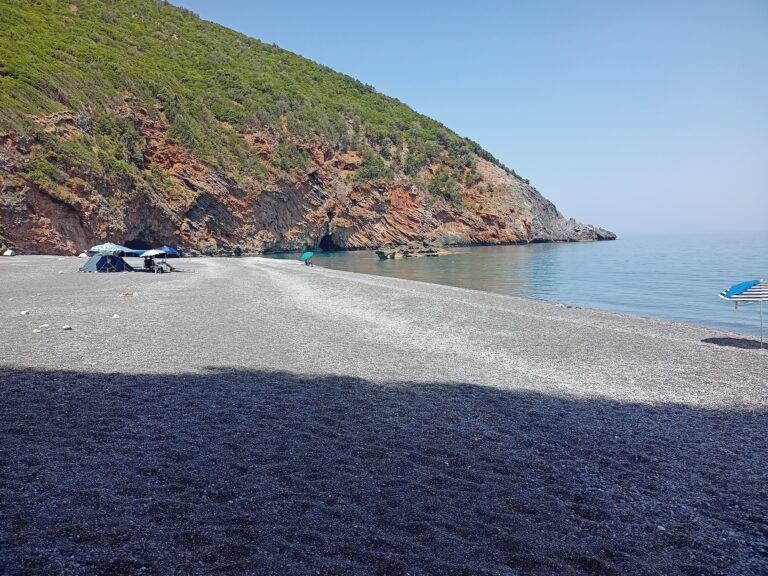
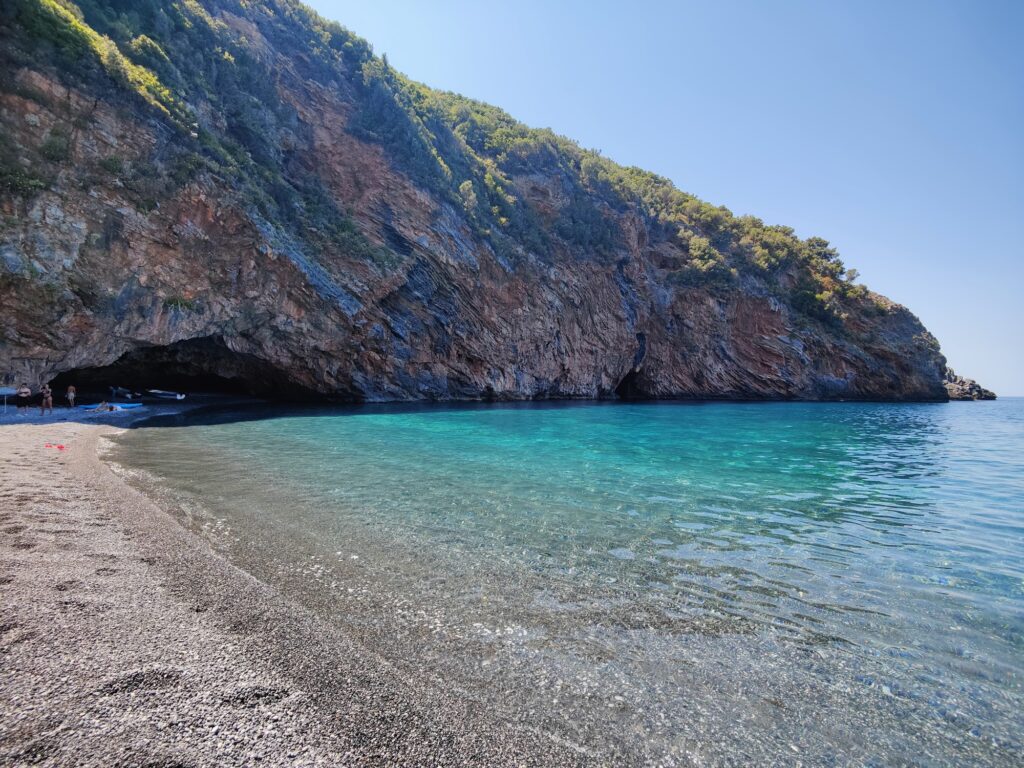
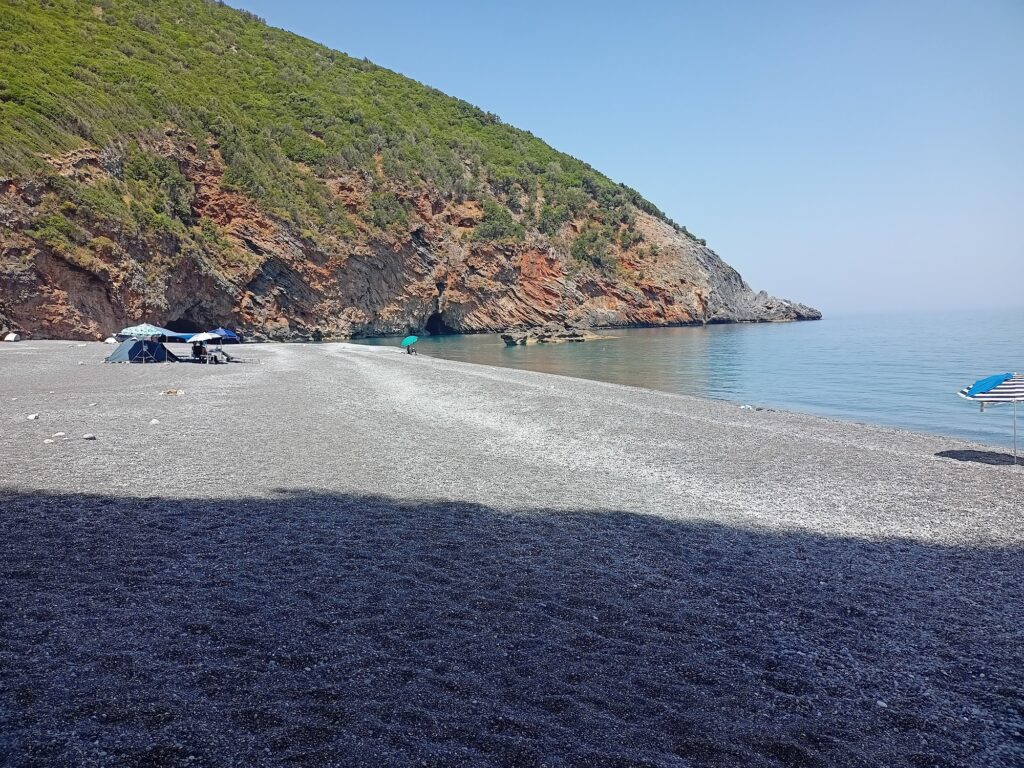
Petali sits on Evia’s rugged eastern coast, fully exposed to the open sea rather than the calmer gulf waters that shelter beaches further south on the island. The sand here runs dark, mixed with fine pebbles, a genuinely different texture from the golden stretches I’d found at Eretria and Karystos. That dark composition, combined with the beach’s open exposure, keeps the water exceptionally clear even under bright midday sun, and I found the color shifting from bright turquoise at the shoreline into a deep indigo within just a few meters of wading out.
The water stays notably cold and invigorating compared to the gulf beaches on Evia’s southern coast, a product of facing the Aegean directly rather than a sheltered bay, and I’d recommend Petali specifically to swimmers who prefer that wide-awake kind of cold over a gentler, warmer entry.
Sea Caves and Rocky Passages Flanking the Bay
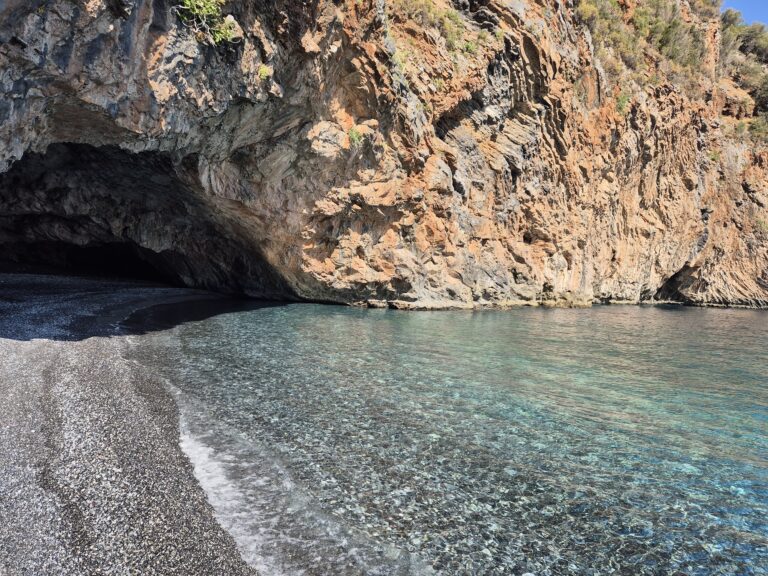
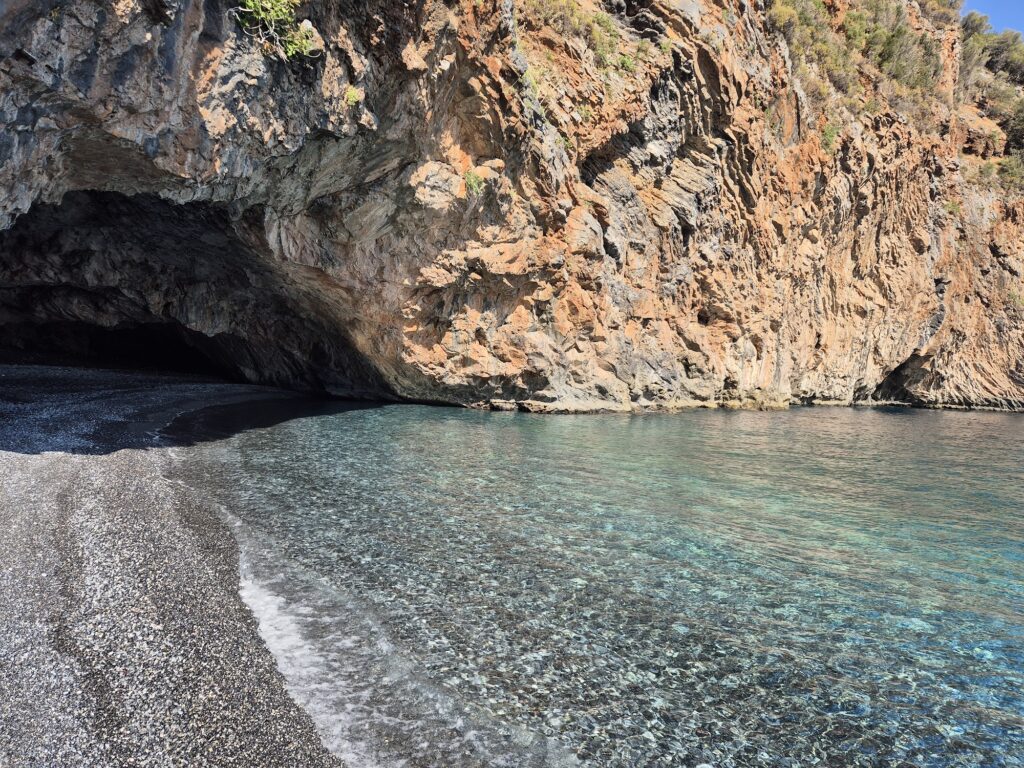
Several natural rock formations and sea caves flank Petali’s bay, and I spent a calm morning swimming into a few of the more accessible ones, the water inside noticeably cooler than the open sea just beyond the entrance. These formations make advanced snorkeling worthwhile here when conditions allow, though I’d caution against attempting the caves on a day with any real swell, since the same exposure that keeps the water clear also means Petali can turn choppy with little warning.
Crossing Mount Dirfi Through the Village of Steni
The drive to Petali from Chalkis runs through Steni, a mountain village with its own layered history worth knowing before continuing on toward the coast. During Ottoman rule, Steni was known as Kleisoura and served as a hideout for Greek resistance fighters, klephts who subsisted on goats and chestnuts in the surrounding hills, and local accounts claim Ottoman forces never managed to set foot in the village throughout that period. I stopped briefly in Steni’s central square, its stone houses and springs giving no immediate hint of that defiant history, before continuing up toward the Dirfi pass.
The ascent from Steni climbs into genuinely alpine terrain, forest thinning into rock as the road gains elevation, and the descent toward the Aegean coast on the other side demands real attention, winding sharply enough that checking brakes and tires beforehand is a reasonable precaution rather than an exaggerated warning.
A Taverna Perched Directly on the Cliffside
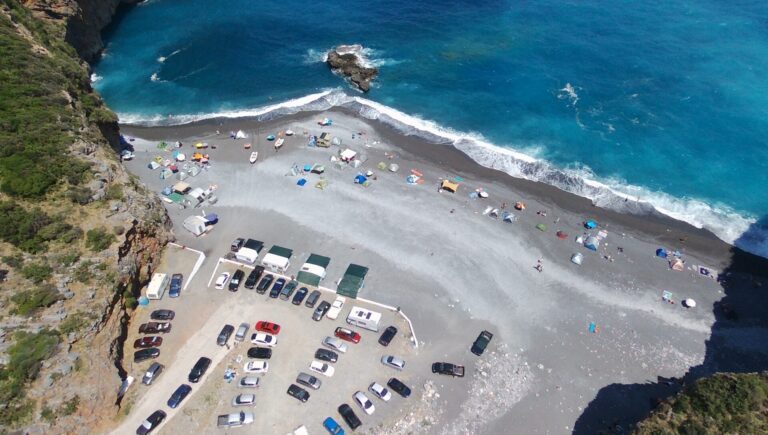
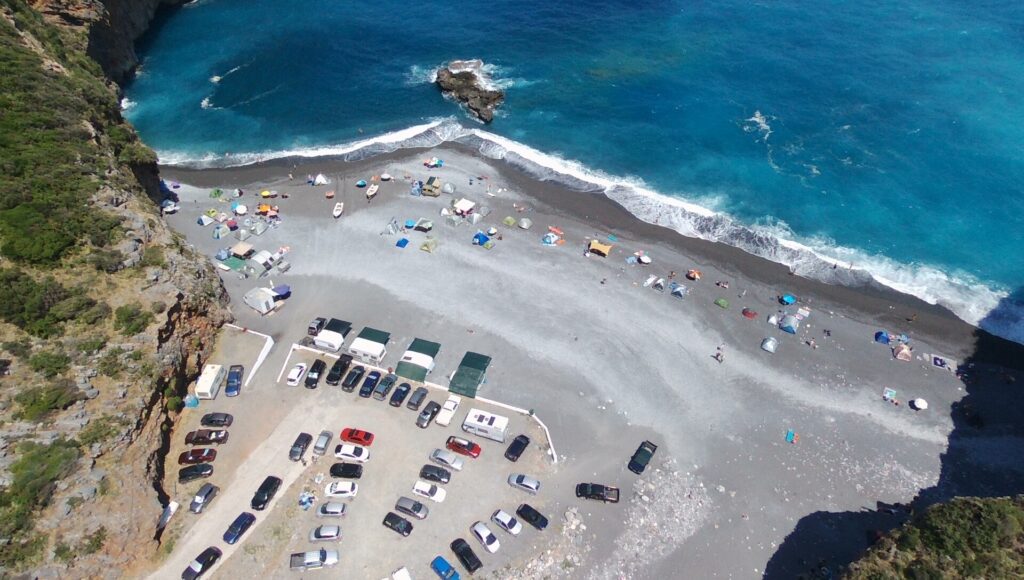
A traditional taverna sits on the cliff above Petali, and I ate there twice during my stay, drawn back by local Evian meats alongside fresh Aegean seafood and organic vegetables grown nearby. The view from the tables stretches across the full horizon of open sea, and I found the setting itself, perched high enough above the water that swimmers below looked genuinely small, added a sense of occasion to what would otherwise have been a simple meal.
Long Stretches Where Only the Wind and Waves Are Audible
Despite the organized section near the café-bar, most of Petali remains unclaimed, and I spent a good portion of my visit on a stretch of sand far enough from the sunbeds that the only sounds were wind moving through the coastal scrub and waves working against the dark sand. This kind of quiet felt distinct from the more social beaches I’d visited elsewhere on Evia, closer in spirit to genuine remoteness than to a deliberately curated escape from crowds.
Getting There: Ninety Minutes From Chalkis Over the Pass
Petali sits roughly 55 kilometers from Chalkis, a drive of about an hour and a half that follows the road toward Steni Dirfios before climbing the mountain pass. I’d allow extra time for this route beyond what the distance alone suggests, since the winding descent toward the coast is not a stretch of road to rush, regardless of how capable the car.
A Genuine Weekend Escape From Athens
For anyone based in Athens, Petali sits about 135 kilometers away, roughly a two and a half hour drive that makes it a legitimate weekend option rather than a full holiday commitment. I noticed a steady trickle of Athenian day-trippers and weekenders throughout my stay, drawn specifically by the combination of a dramatic mountain crossing and a beach that still feels considerably wilder than anything closer to the capital.
Parking Before the Afternoon Crowd Builds
Open parking lots sit directly behind the beach and near the cliffside taverna, and arriving before ten-thirty gave me an easy choice of spot, well ahead of the afternoon crowd that builds as day-trippers complete the drive from Chalkis or Athens. Given how much of the appeal here depends on quiet, I’d recommend the early arrival specifically for anyone hoping to have a stretch of the dark sand to themselves before midday.
Comparing Petali to Evia’s Gulf-Facing Beaches
Petali stands apart from the gentler, more sheltered beaches I’d found elsewhere on Evia. Eretria Beach Evia, on the island’s western gulf coast, offers calm, shallow water alongside genuine archaeological weight, an entirely different kind of day than the wilder, open-sea character Petali provides. Further south, Kokkinis Beach Karystos and Bouros Beach Karystos both sit in sheltered bays too, gentler swimming conditions paired with their own specific landmarks, a marble-quarrying mountain and a folk-art centaur respectively.
For a comparable dark, volcanic shoreline elsewhere in Greece, I’d point toward Kipos Beach Samothraki, another beach where a mountain drops close to the sea and the sand itself carries a similarly dark, mineral character, though Kipos trades Petali’s mythological weight for proximity to an actual ancient mystery cult.
Watching the Light Fade Over the Open Aegean
By the time I packed up on my last evening, the taverna above had begun filling with the day’s remaining diners, and I sat on the dark sand a while longer, watching the light drop over open water with nothing but sea between Petali and the horizon, the mountain I’d crossed to get here already fading into shadow behind me.
Map
Sorry, no records were found. Please adjust your search criteria and try again.
Sorry, unable to load the Maps API.
Near by places: