Pili Beach Evia: River, Harbor, Open Sea
Profile
Pili Beach: Where a River Meets the Open Aegean
Greece | Evia | Central Greece | Aegean Coast
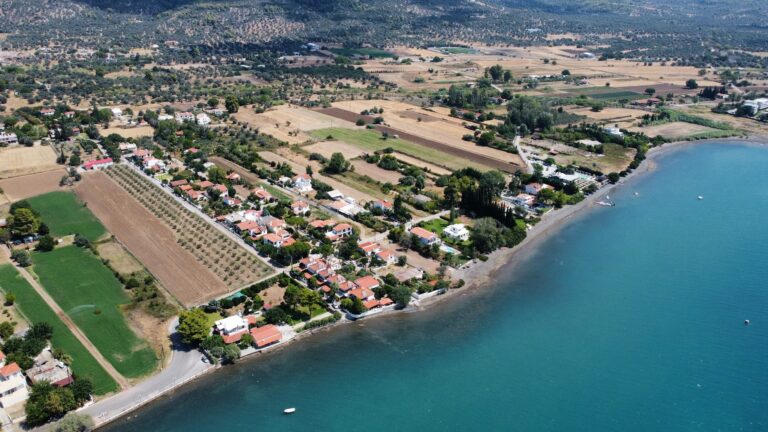
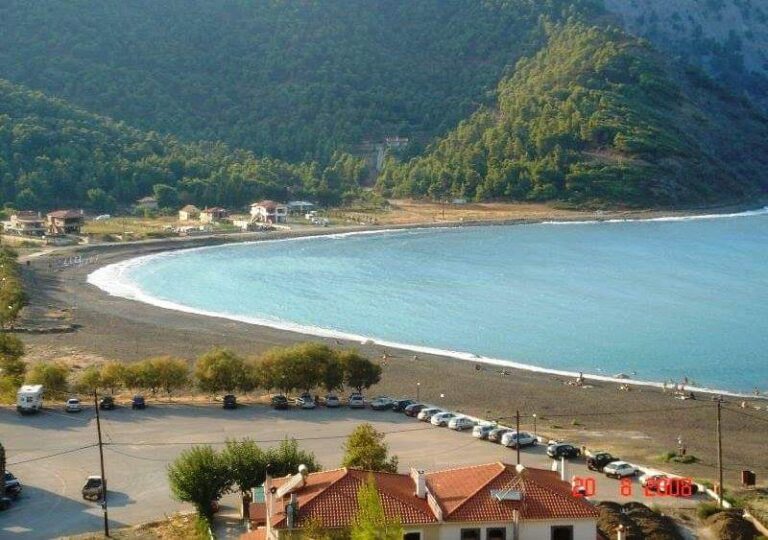
A small river empties into the sea at one end of Pili Beach, and I spent longer than expected standing at that exact point on my first afternoon, feeling the water temperature shift noticeably cooler where fresh and salt water met. Most beaches I’ve visited on Evia commit fully to one character or another, calm gulf water or open sea, sand or pebble. Pili does something more layered, a working village beach with its own small harbor at one end and a freshwater estuary creating a distinct micro-ecosystem at the other.
The drive here from Chalkis passes through Prokopi, home to the church housing the relics of Saint John the Russian, a stop that draws pilgrims from across Eastern Europe each year. I hadn’t planned to linger, but the sheer number of buses parked outside made it clear this wasn’t a minor roadside attraction, and I understood better afterward why the drive to Pili felt like it passed through two entirely different kinds of significance before reaching the coast.
Water Clarity and the Cooling Effect of the River Estuary
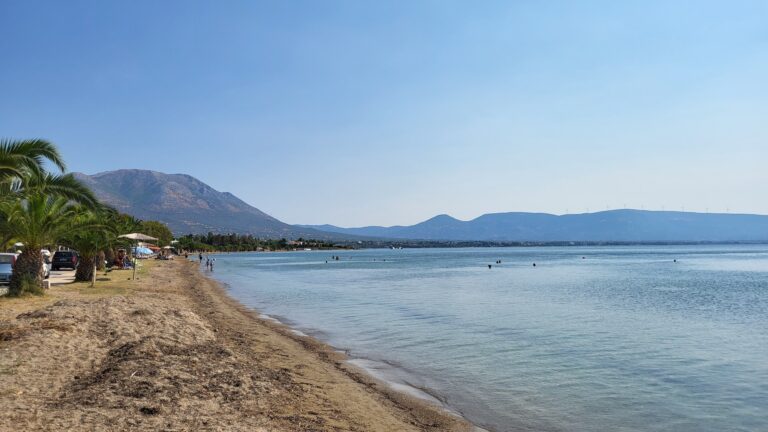
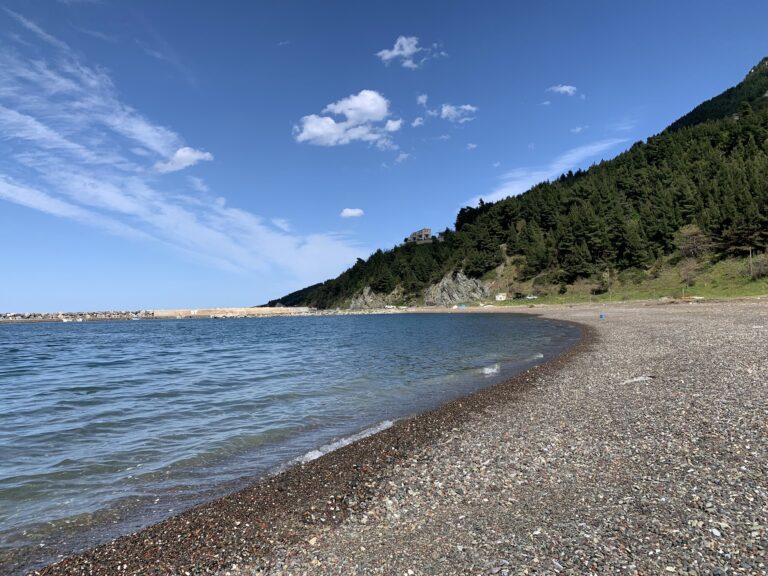
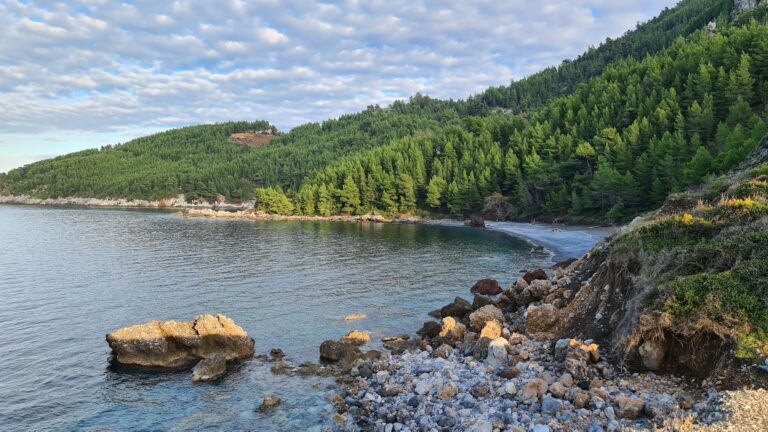
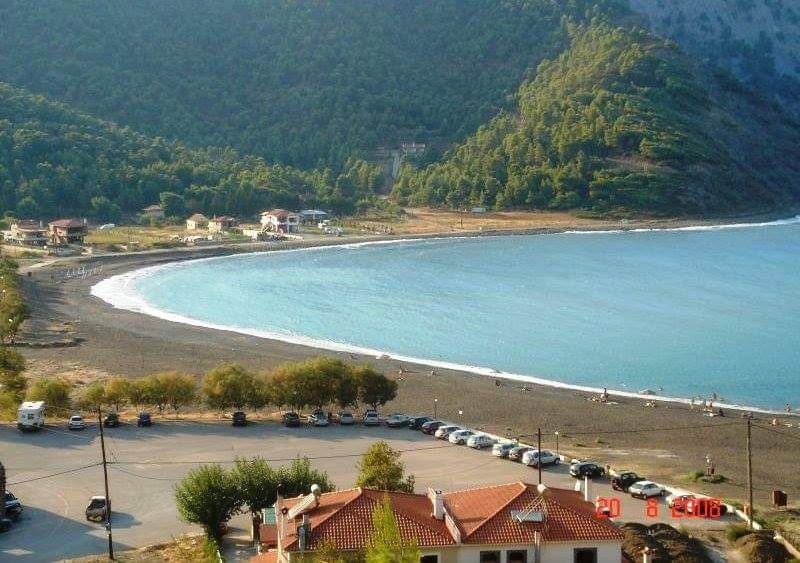
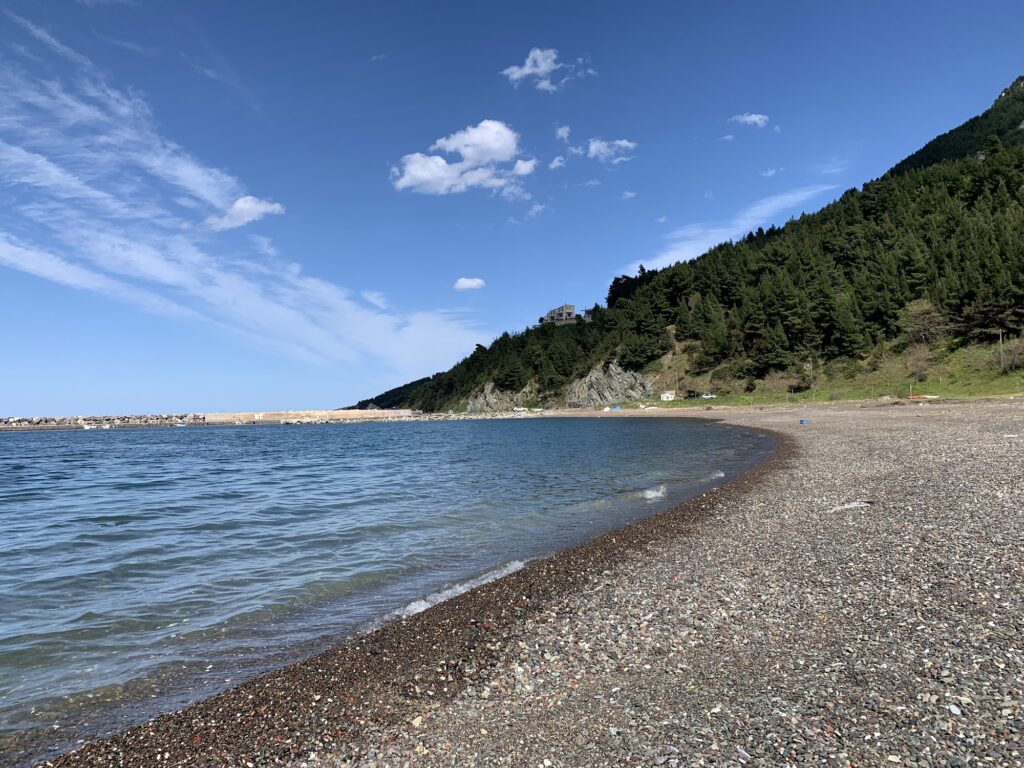
Pili’s water quality struck me immediately as some of the clearest I’d found on this stretch of Evia’s coast. Facing the open Aegean rather than a sheltered gulf, the sea here stays constantly refreshed, and visibility held up well even during the busier midday hours I visited. The color shifts from a bright turquoise near the dark sand into a deep indigo within a few meters, genuinely transparent enough that I could watch small fish moving over the pebbles well past where I’d normally lose sight of the seabed.
Where the river meets the sea at the beach’s northern end, the water runs noticeably cooler, a welcome relief on a hot afternoon, though I’d flag this section specifically for anyone with young children, since the mixing currents there can feel slightly stronger than the calmer main stretch of beach.
Infrastructure: Changing Cabins, Showers, and a Working Harbor
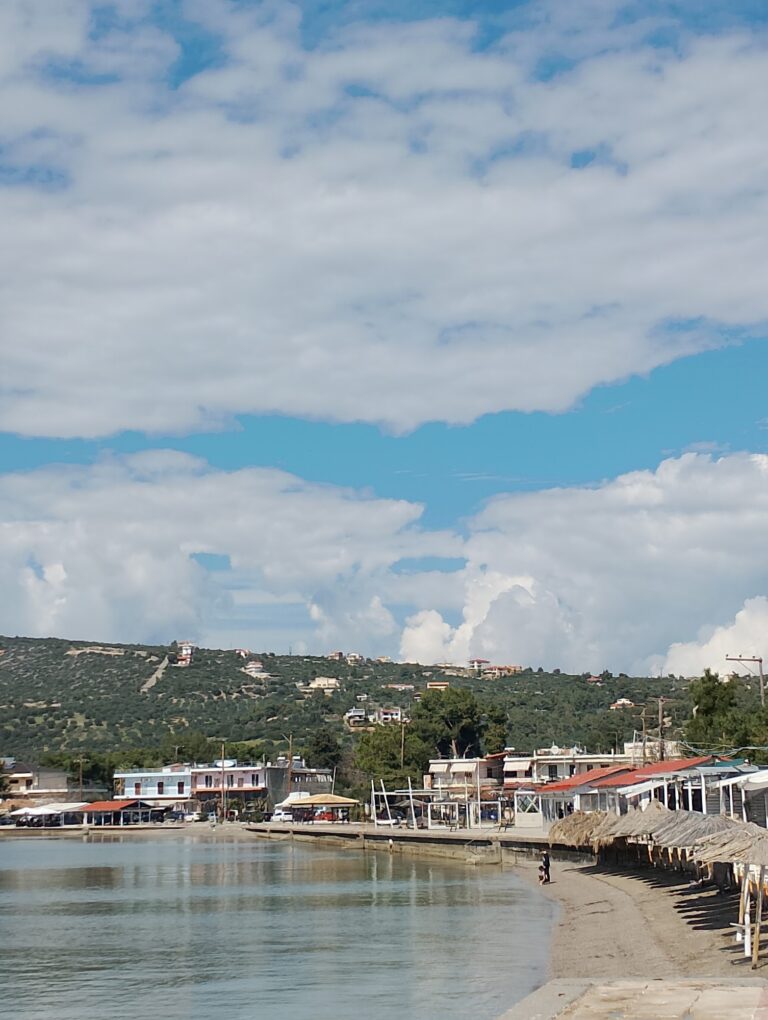
Pili is reasonably well equipped without feeling overbuilt. Clean changing cabins and outdoor showers sit along the organized section of sand, and restroom facilities are maintained to a standard I found consistent with the tidier village beaches elsewhere on this island. A small harbor anchors the beach’s northern edge, still actively used by local fishermen, and I found watching boats come and go each morning a pleasant, low-key addition to an otherwise simple beach day.
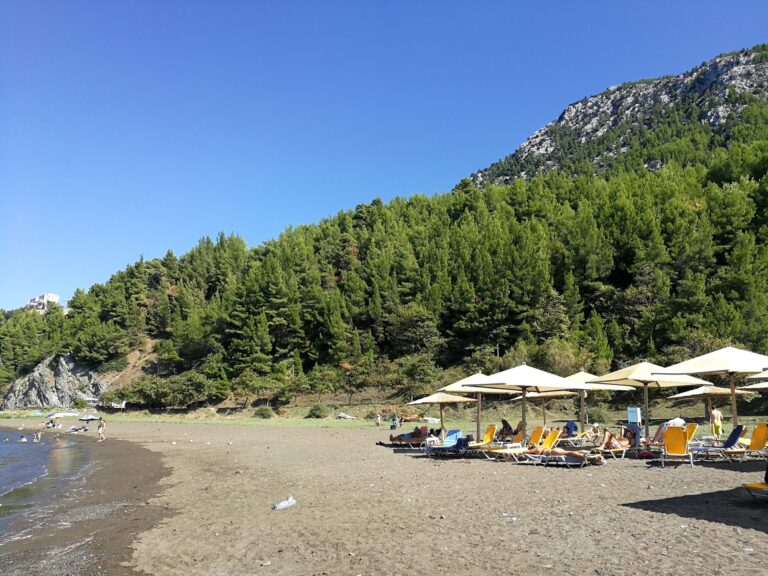
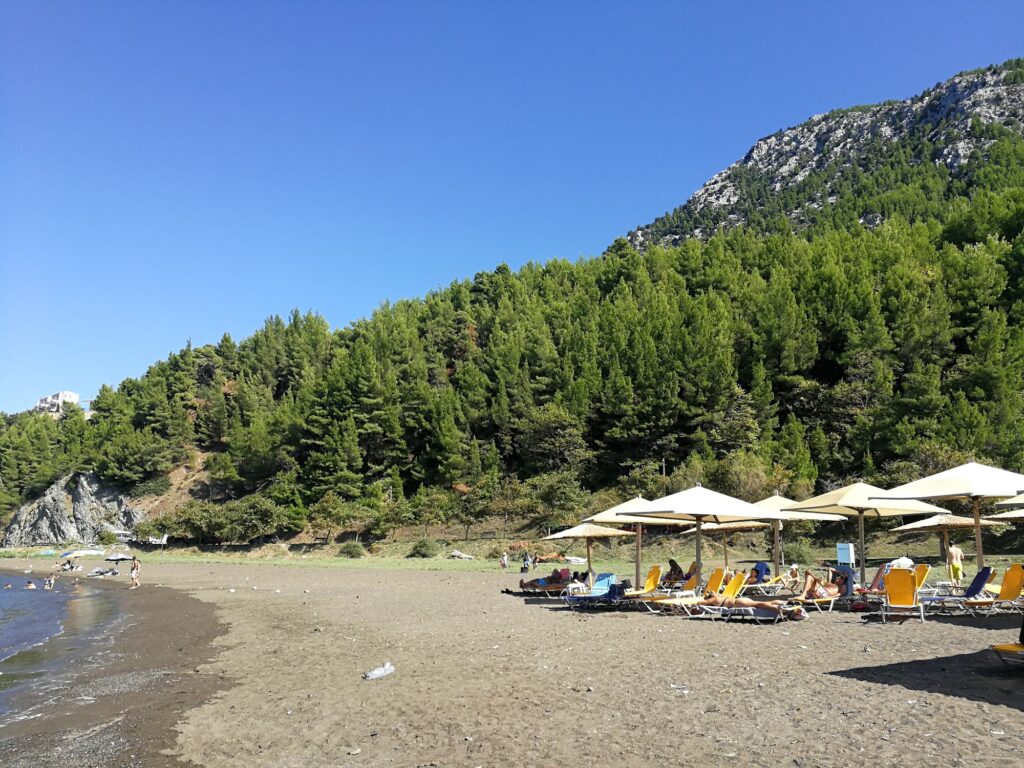
Sunbeds and umbrellas cover only part of the shoreline, managed by the cafés and tavernas in the village directly behind the sand, leaving a genuine stretch of unorganized beach for anyone preferring to bring their own setup. Given the beach’s proximity to the village, mini-markets, a pharmacy, and bakery services are all within easy walking distance, useful for anyone planning a full day here without wanting to drive back and forth.
Whether Pili Suits a Family Beach Day
I’d call Pili moderately suited to families rather than ideally so. The main stretch of sand and pebble has a gradual enough entry for supervised young children, but this is an open, Aegean-facing beach that can turn wavy when northern winds pick up, unlike the calmer gulf beaches I’ve found elsewhere on Evia. I’d recommend checking conditions before committing to a full day here with very young swimmers, and treating the river estuary section as an area to watch more closely given the mixing currents.
Dogs on the Beach: What Greek Law Actually Allows
Pili isn’t a Blue Flag beach, and its layout splits between an organized section with rented sunbeds and a genuinely unorganized stretch further along the sand. Under Greek law, dogs are permitted on unorganized beaches and in the sea, provided they’re leashed once out of the water. On the organized section, access depends entirely on whether the local café or taverna managing that stretch has posted a sign permitting pets, since Greek regulations only allow dogs on organized beaches with explicit operator permission. I didn’t see clear signage either way during my visit, so I’d suggest checking directly with the taverna managing the sunbeds if traveling with a dog, while the unorganized stretch further along should be a safe, straightforward option regardless.
The Pilgrimage Stop at Prokopi Along the Drive
The route from Chalkis to Pili passes directly through Prokopi, and the church there houses the relics of Saint John the Russian, brought to Evia by refugees from Cappadocia after the population exchange of 1924. Construction on the church began in 1930 and took over two decades to complete, and the site now draws pilgrims from across Eastern Europe throughout the year. I hadn’t expected a beach drive to intersect with a site of this religious significance, and stopping briefly, even without any particular pilgrimage of my own in mind, gave the rest of the trip toward the coast an unexpected weight.
Tavernas Serving Hand-Rolled Pasta and Evian Meat
The village of Pili sits directly behind the beach, and its tavernas lean on local Evian meat dishes alongside fresh Aegean fish and hand-rolled pasta, a combination I found consistently well prepared across the two places I tried. Eating with a view back toward the small harbor added a genuine sense of place to each meal, boats visible from the table rather than simply implied by a menu description.
Getting There: The Mountain Pass From Chalkis
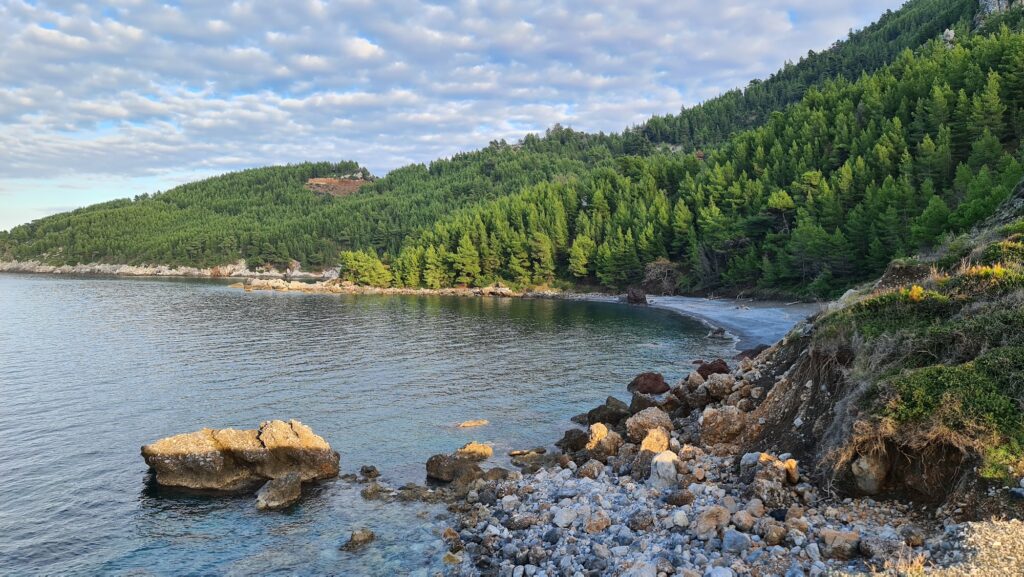
Pili sits roughly 55 kilometers from Chalkis, a drive of about an hour and fifteen minutes that follows the road north toward Prokopi before winding through the Dirfi mountain range on a well-paved, scenic route. I found the drive itself genuinely enjoyable, dense pine forest giving way gradually to views of the Aegean horizon as the road climbs and then descends toward the coast.
A Weekend Trip From Athens
For anyone based in Athens, Pili sits roughly 130 kilometers away, about a two and a half hour drive, making it a viable weekend destination rather than requiring a longer commitment. I noticed a modest but steady flow of Athenian visitors throughout my stay, drawn by the combination of an interesting drive and a quieter, more authentic beach village than some of the more built-up options closer to the capital.
Parking in the Village and Along the Beachfront
Parking is plentiful in open lots along the beachfront and within the village streets themselves, and arriving before eleven gave me an easy choice of spot closest to the organized section of sand. Given Pili’s more modest scale compared to some of Evia’s larger beach towns, I never found the parking situation genuinely difficult, even later in the day.
Comparing Pili to Other North-Central Evia Beaches
Of the beaches I’ve visited on this stretch of Evia, Petali Beach Evia offers the closest comparison, another Aegean-facing shore reached through the Dirfi mountains, though Petali trades Pili’s working harbor and river estuary for genuine remoteness and a mythological weight tied to Mount Dirfi itself. For calmer, more sheltered swimming specifically, Politika Beach Evia, on the island’s gulf coast, offers a considerably gentler entry better suited to families with very young children, without any of the open-sea wind conditions that can affect Pili.
For a different kind of family-friendly gulf beach entirely, Eretria Beach Evia pairs a gradual, safe swim with genuine archaeological weight nearby, a useful alternative for anyone traveling with children who’d rather avoid Pili’s occasional wave conditions.
An Evening by the Harbor as the Boats Come In
By early evening on my last day, the fishing boats that had gone out at dawn began drifting back into Pili’s small harbor, and I sat at a taverna table watching them unload the day’s catch, the river still running cool into the sea a short walk down the beach, the whole village settling into the unhurried rhythm that seems to define this particular stretch of Evia’s coast.
Map
Sorry, no records were found. Please adjust your search criteria and try again.
Sorry, unable to load the Maps API.
Near by places: