Plaža Žurkovo Kostrena: The Fishing Cove Near Rijeka
Profile
Plaža Žurkovo, Kostrena: The Fishing Village Cove That Helped Build the World’s First Nuclear Ship
Croatia | Kostrena | Rijeka Riviera
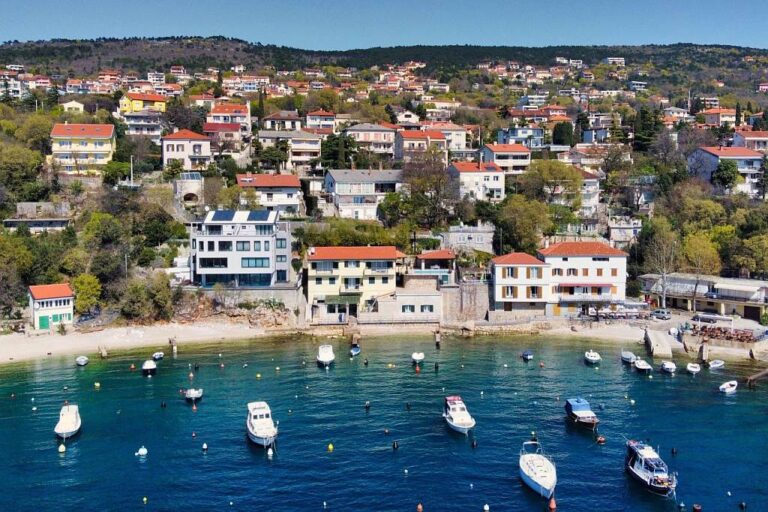
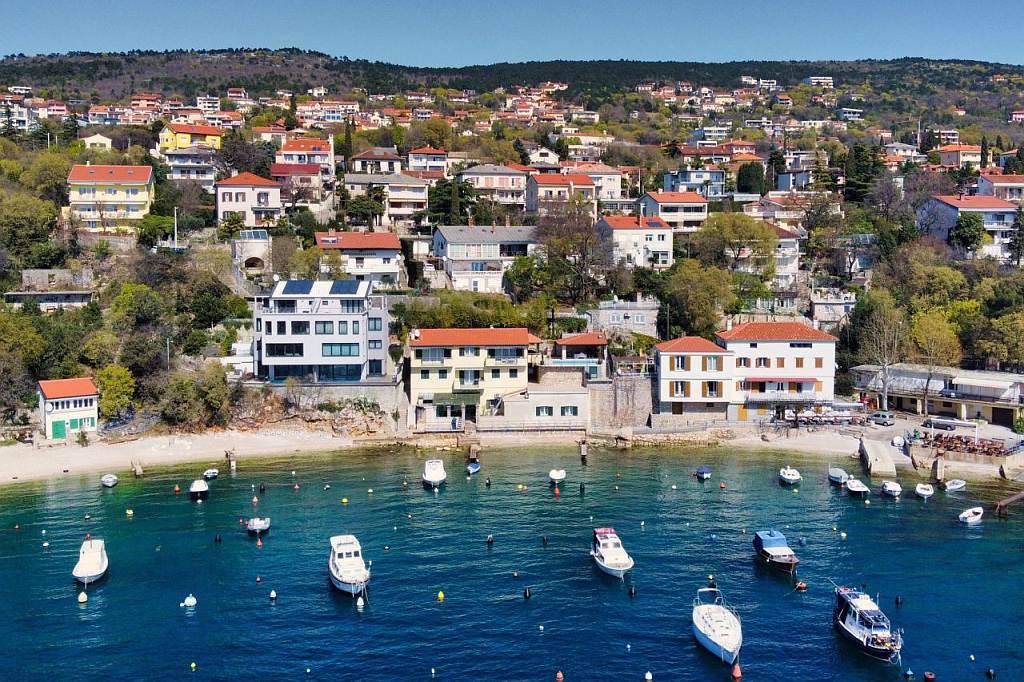
Žurkovo is the only cove on the Kostrena coast that has been permanently inhabited from the earliest settlement of the peninsula to the present day. The stone waterfront houses that line the bay were built by fishermen and seafarers over centuries, and the škver — the local shipyard — operated in the cove from the late 19th century until the second half of the 20th, with Kostrena residents still using the space to repair and maintain their boats and barks. Among the people born in Žurkovo was Erazmo Bernard Tićac, who as chief designer contributed to the construction of the Savannah — the world’s first nuclear-powered merchant ship, launched in 1959. The connection between a small Kvarner fishing cove and the first application of nuclear propulsion to commercial maritime transport is an unusual one, and it gives Plaža Žurkovo a historical dimension that few beaches on this coast or any coast can claim.
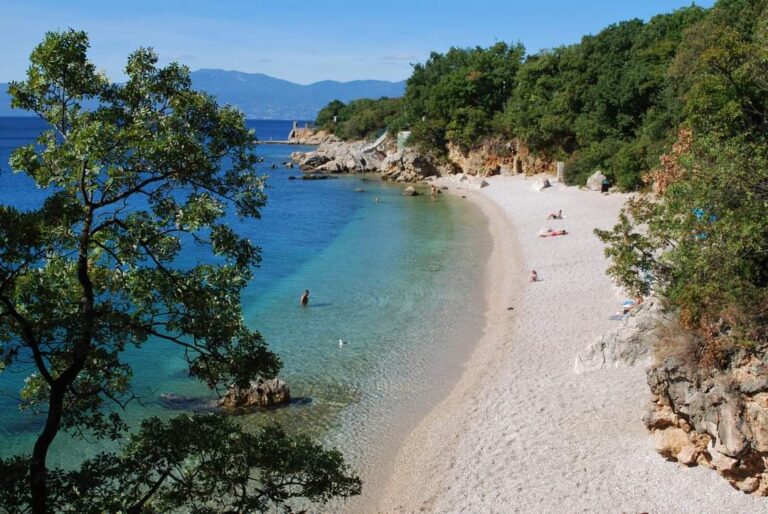
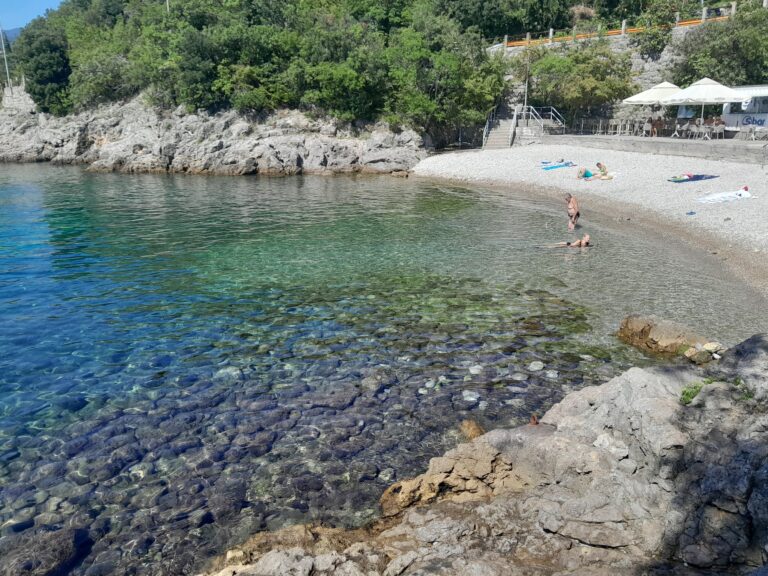
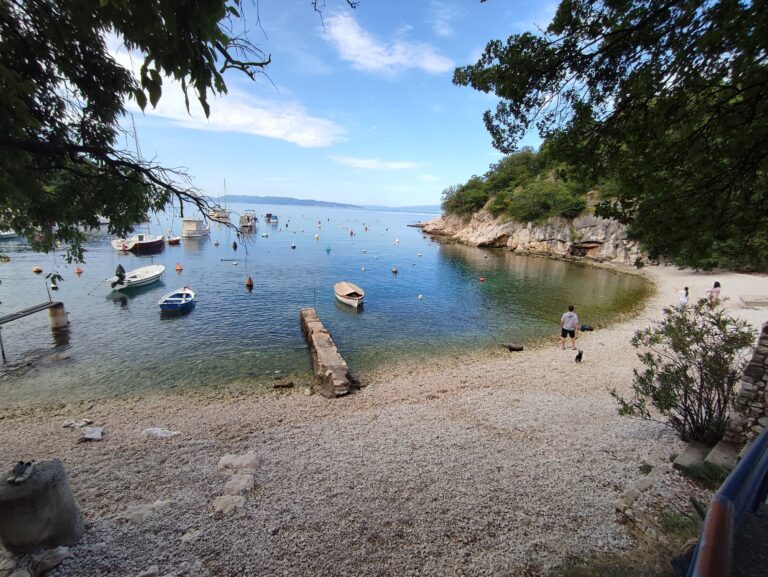
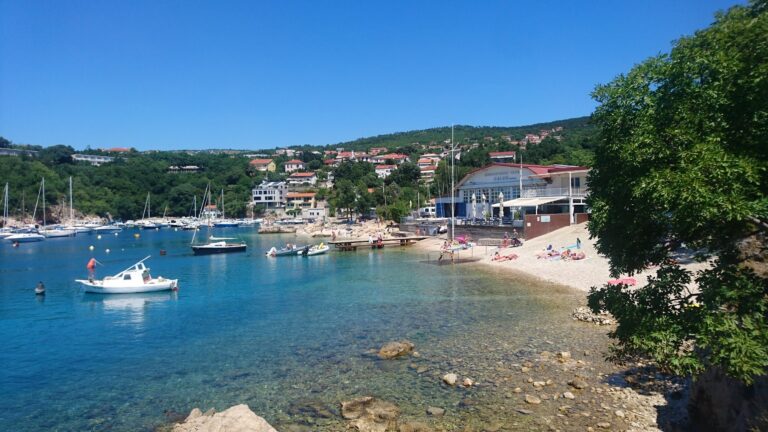
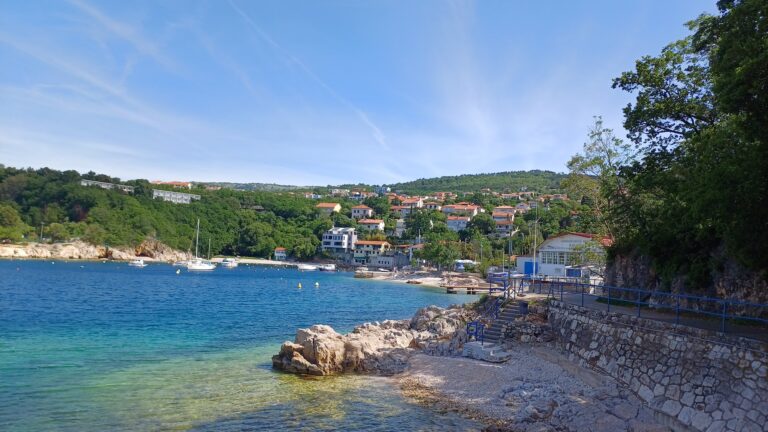
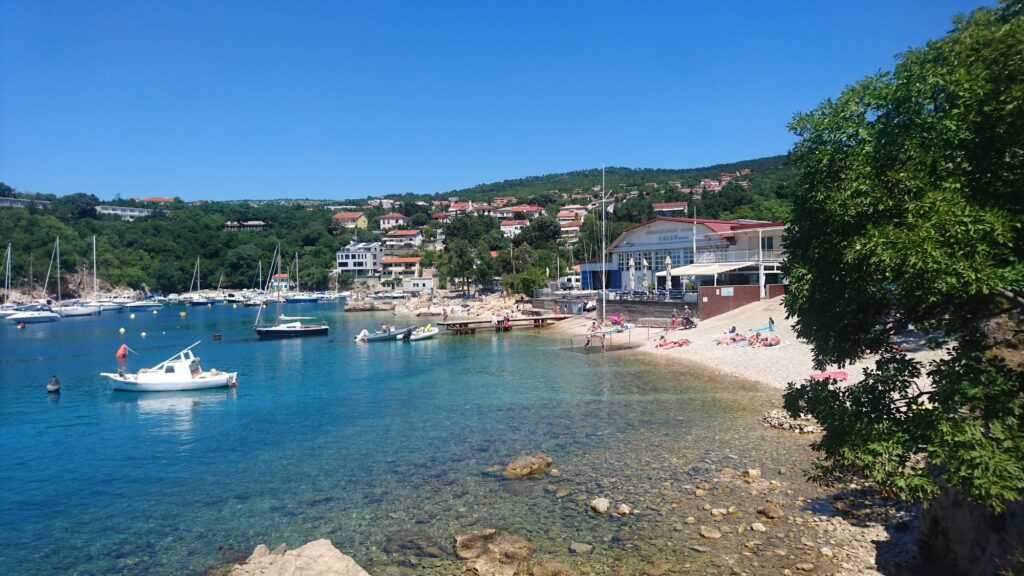
The beach itself is small — approximately 50 metres of pebble and rock in the main section, with the škver area adjacent and the stone waterfront houses directly behind the upper shore. It is an urban village beach in the most precise sense: the swimming water is immediately below the houses, the café and restaurant are steps away, and the parking area above the beach is within the village fabric rather than in a resort car park. The disability access ramp is a specific provision that the Kostrena tourist board notes specifically — the beach is reachable without stairs and the ramp allows sea entry for visitors with limited mobility, which is unusual for a small pebble cove of this scale.
Getting There: Bus Line 10 or 10A from Rijeka, by Car, or on Foot Along the Trim Staza
From Rijeka, Žurkovo and Kostrena are approximately 4 kilometres to the southeast — a ten-minute drive or a 20 to 25-minute bus ride. Bus line 10 and 10A run from the Rijeka Delta station to Kostrena, with the stop for Žurkovo a short walk from the shore. The bus is the most practical option for visitors based in Rijeka who want to avoid the parking pressure that the coastal road to Kostrena generates in the peak summer months.
By car, the drive east from Rijeka follows the coastal road through the residential zone of the Kostrena peninsula to the Žurkovo settlement, where a parking area is available above the beach. The approach is straightforward but the coastal road can be slow in the peak season.
On foot, the Trim staza — the fitness trail that connects the various coves of the Kostrena peninsula — provides the walking route along the coastal path for visitors coming from Rijeka or from other Kostrena beaches. The trail is marked and passes through the characteristic residential and marine landscape of the peninsula before reaching Žurkovo at the water.
The combination of the Trim staza walk and a swim at Žurkovo followed by coffee at the cove café is the specific resident programme of the beach that visitors who want the local character rather than the resort experience can replicate as closely as any outsider can replicate a habitually local activity.
The Shore and the Škver: What Žurkovo Actually Is
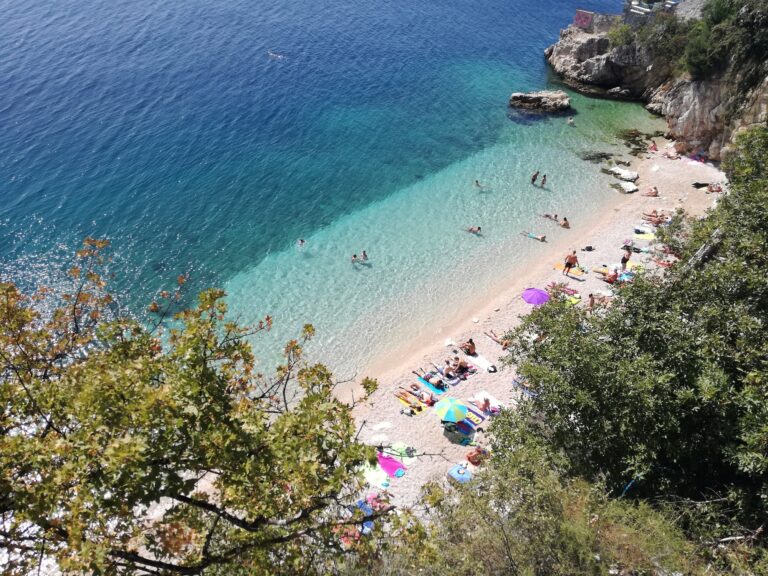
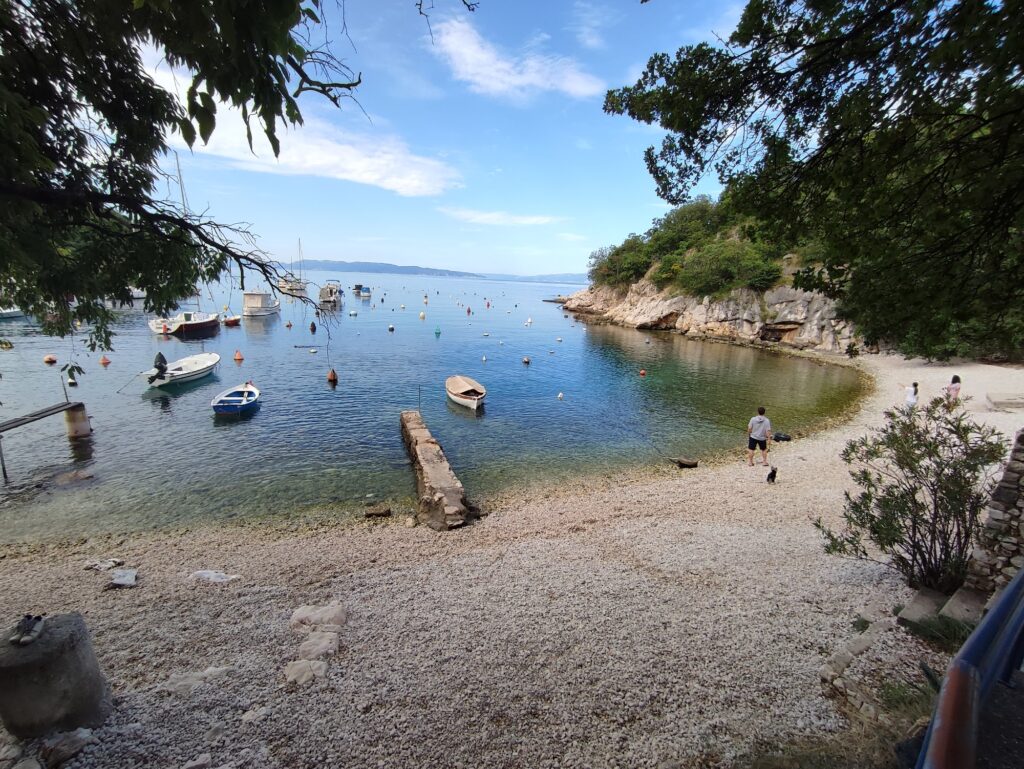
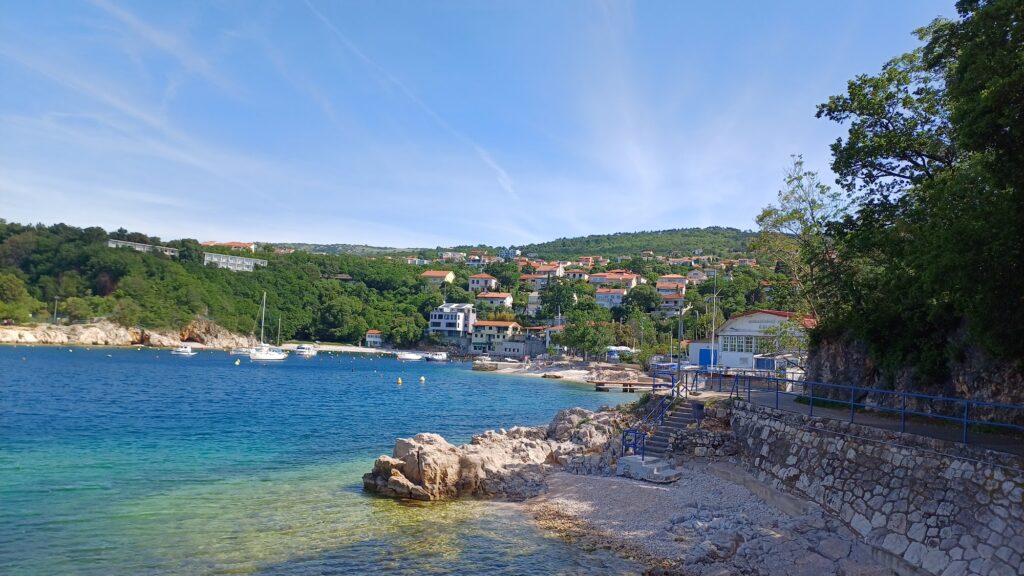
Plaža Žurkovo is 50 metres of pebble and rock in the bay between the stone waterfront houses and the sea — small enough that it is a cove rather than a beach in the resort sense, and specific enough that it functions as an extension of the village’s daily life rather than as a separate recreational facility. The pebble surface is comfortable for sitting with a towel or mat; the rocky sections at the margins provide the flat, elevated positions for direct sun exposure that the pebble section’s steeper gradient does not.
The škver — the old boatyard area adjacent to the beach — is the physical space where the maritime identity of Žurkovo is most directly visible. Boats are maintained there by local residents using the traditional skills that the cove’s fishing and seafaring history produced over generations. The presence of working boats and the boat maintenance activity gives Žurkovo a living maritime character that the purely recreational beaches of the Kvarner riviera do not have.
The disability access ramp to the sea is the practical infrastructure that distinguishes Žurkovo from comparable small village coves — sea access without stairs, which matters specifically for visitors with mobility limitations and for older swimmers who find the step-and-scramble entry of unmodified pebble beaches increasingly difficult with age. The Kostrena tourist authority notes this as a specific quality of the beach, and it is accurate.
Erazmo Bernard Tićac and the NS Savannah
Erazmo Bernard Tićac was born in Žurkovo in 1892. He became a naval architect of international distinction, contributing as chief designer to the NS Savannah — the American passenger-cargo ship launched in 1959 and operated until 1971 as the world’s first nuclear-powered merchant vessel. The Savannah was a demonstration project commissioned by the United States government under President Eisenhower’s “Atoms for Peace” programme, designed to show that nuclear propulsion could be applied to commercial maritime transport.
The ship is now a museum vessel in Baltimore, Maryland, and the connection between its chief designer and the small fishing cove of Žurkovo on the Kvarner coast is precisely the kind of historical thread that the most interesting local history produces — a specific person, from a specific place, who contributed to something genuinely significant in the wider world. The Kostrena municipality documents the connection, and the stone waterfront of Žurkovo is the place where Tićac’s maritime formation began.
Water Quality and the Kostrena Coastal Character
The water quality at Žurkovo is consistent with the Kostrena coastal zone’s clean Kvarner character. The Kostrena peninsula’s adjacent Svežanj Bay beach holds the Blue Flag — the certification that confirms the water quality of the monitored bay to international standards — and the Kostrena coastline as a whole benefits from the clean circulation of the eastern Kvarner that the closed coastal geometry of the bay maintains.
The vrulje — the underwater freshwater springs that the source article correctly identifies as characteristic of the Kostrena region — are a geological feature of the karst limestone coast throughout the Kvarner, where groundwater descends through the limestone and emerges below sea level as cold freshwater. The mixing zone of cold spring water and warm sea water is distinctly perceptible when swimming over a vrulja in summer conditions, and the thermal variety adds a specific sensory quality to swimming along this coast that the purely marine beaches do not have.
Snorkelling at the rocky margins of Žurkovo is productive for the same reasons that all undisturbed rocky coves on clean Kvarner coastlines are productive: the limestone crevices support the fish populations and marine life that the pebble and open seabed cannot.
Svežanj Bay and the Blue Flag Section of Kostrena
Svežanj Bay — a short walk along the Trim staza from Žurkovo — is the Blue Flag beach of the Kostrena coast, holding the certification for its exceptional water quality and the protected marine status of the bay. The bay is within a strictly protected underwater park zone due to the rare species discovered in its waters, and the Blue Flag above Svezanj Bay Kostrena in summer confirms the ecological standard that the protection achieves. For visitors whose beach day at Žurkovo extends into an exploration of the wider Kostrena coastline, Svežanj is the natural next point along the path — within walking distance and presenting the cleaner, more organised beach infrastructure alongside the ecological significance of the protected marine zone.
Žurkovo in the Rijeka Area Beach Context
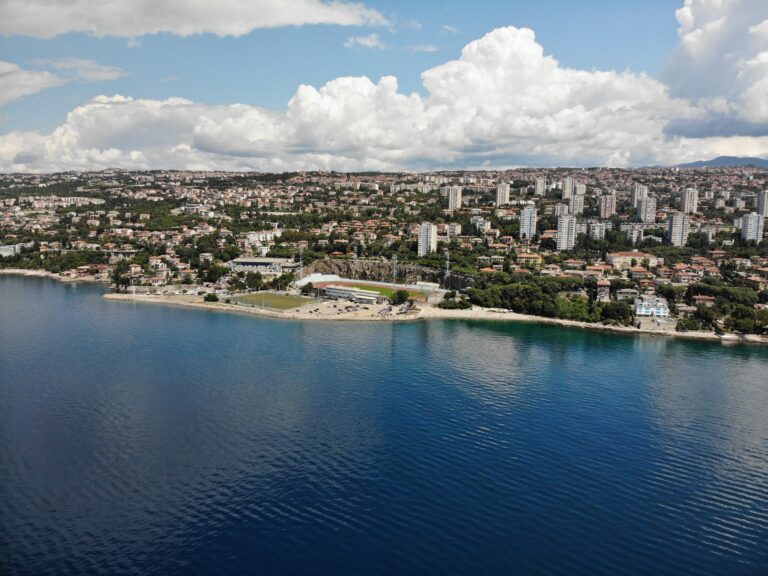
Kostrena and Žurkovo are the residential seaside settlement east of Rijeka — the direction from the city that the Opatija Riviera to the west and the Rijeka urban beaches occupy the other direction. The specific character that Žurkovo provides relative to the Opatija Riviera beaches is local, lived-in, maritime village atmosphere rather than belle époque resort elegance — the working boatyard versus the grand hotel terrace, the stone fisherman’s house versus the Habsburg villa, the swimming cove of the resident versus the promenade beach of the tourist.
For visitors who want to understand what the Kvarner coast looks like when it is not performing for tourism — when it is simply what it has been for several centuries, which is a fishing and seafaring coast with particular people and particular skills — Žurkovo is one of the places within easy reach of Rijeka where that character is still genuinely present and visible.
Plaža Žurkovo in Kostrena is a 50-metre pebble cove four kilometres east of Rijeka, below the stone waterfront houses of the only permanently inhabited bay on the Kostrena peninsula, adjacent to the škver where local boats are still maintained, and connected by a disability ramp to a sea that the chief designer of the world’s first nuclear merchant ship once swam in as a child.
Take bus 10 from Rijeka. Walk down to the water. Check whether the boats on the škver are being worked on.
That is what Žurkovo is.
Map
Sorry, no records were found. Please adjust your search criteria and try again.
Sorry, unable to load the Maps API.
Near by places: