Javna Plaža Pećine Rijeka: City Rock Beach by the Harbour
Profile
Javna Plaža Pećine, Rijeka: The Rock and Pebble City Beach by the Martinšćica Harbour
Croatia | Rijeka | Kvarner Bay
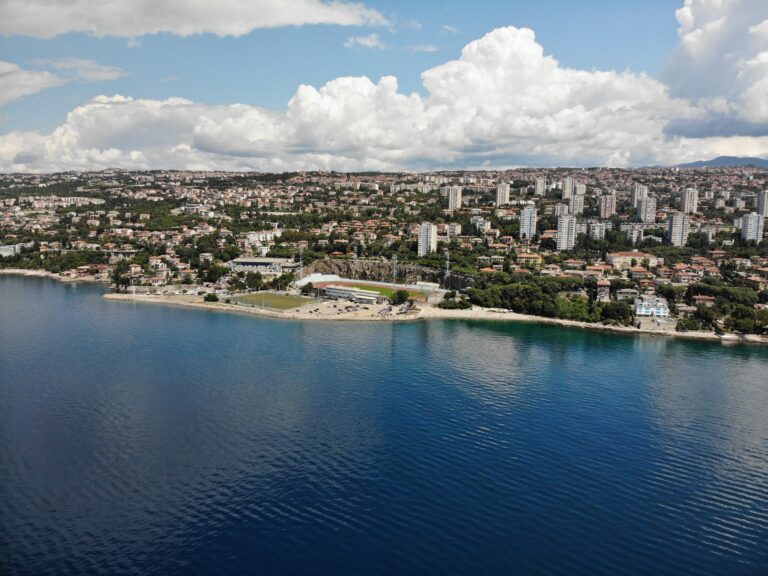
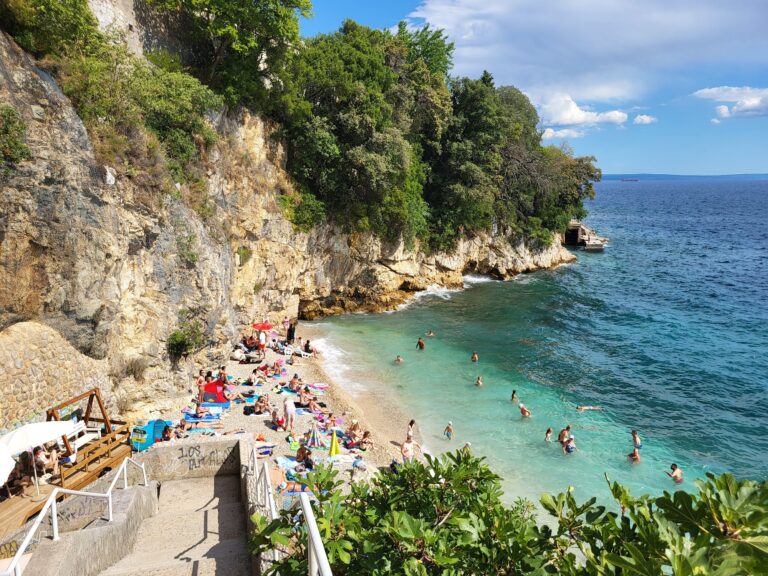
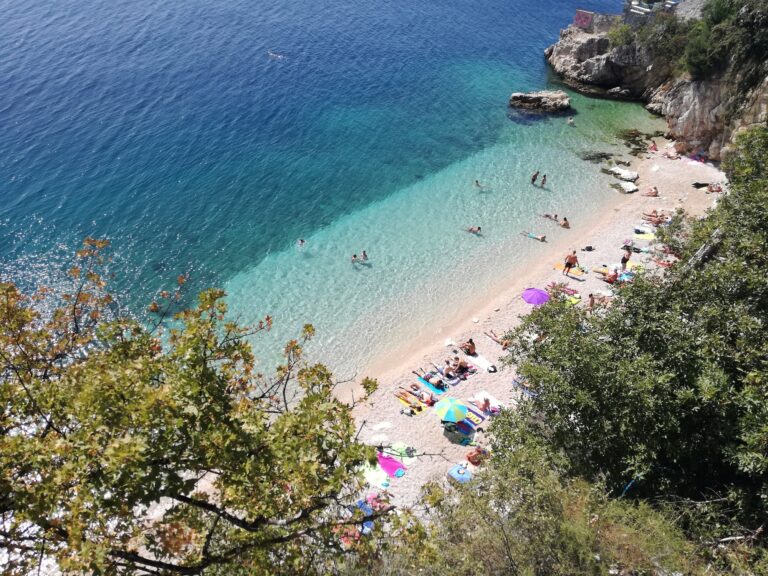
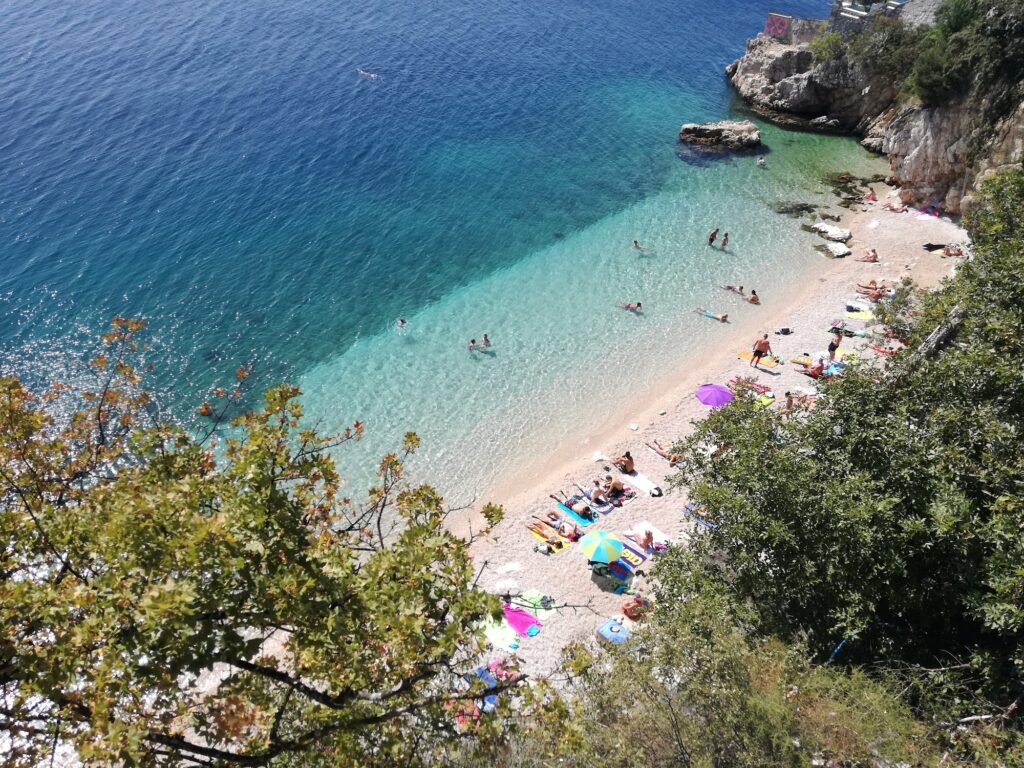
Pećine — the district whose name means caves — is the section of Rijeka’s eastern coastline that developed as the city’s beach neighbourhood during the late 19th century, when the area then known as Sušak was already recognised as a Mediterranean holiday destination. The oldest beaches of Sušak are here, already a famous Mediterranean holiday destination in the late 19th century. The Pećine coastal zone holds six officially designated beaches — Sablićevo, Vila Olga, Park hotel (former), Glavanovo, Ružićevo, and Grčevo — each reached by long steep stairs from the cliff road above. Javna Plaža Pećine is the broader public beach area near the Martinšćica harbour at the base of the district — a rock and pebble waterfront that functions as the most accessible entry point to the Pećine coastal zone for visitors who want the clear Kvarner water and the city proximity without the cliff staircase descent.
Javna Plaža Pećine is a large city bathing area with many small beaches — sunbed rental, beach bars, free freshwater showers, changing cabins, and deep-water ladder access into the sea. Visitors are advised to wear footwear on the rocks due to glass worn into the stone surface. That last detail is the most practically important and the one the source article does not mention: the rock surface at Javna Plaža Pećine has broken glass worn smooth but not entirely safe in areas, and flip flops or water shoes are the correct footwear throughout the visit.
Getting There: Bus Lines 1 or 1A from Rijeka Centre, by Car, or on Foot
From Rijeka city centre, the Pećine district is approximately 3 kilometres east — a 15 to 20-minute walk along the coastal road, a 10-minute bus ride on bus lines 1 or 1A, or a five-minute drive. The bus stop for the Pećine area is convenient for the beach, and the bus is the practical choice for visitors who want to avoid the parking limitations that affect the entire Pećine coastal zone in peak season.
By car, parking in the surrounding streets is available but fills quickly in July and August. The Tower Center Rijeka shopping mall — which sits above the Sablićevo section of the Pećine coast — provides a larger parking option within walking distance of the broader beach zone, and its air-conditioned interior is available as the midday retreat when the fully exposed rock surface becomes too hot for comfortable sunbathing.
On foot from Rijeka port, the coastal road east toward Pećine is a 15 to 20-minute walk with the Kvarner on one side and the cliff-face residential architecture of the district on the other — a scenic approach that passes the successive access points to the cliff beaches above before reaching the Martinšćica harbour and the public beach area.
The Shore: Rock, Pebble, Deep-Water Ladders, and the Martinšćica Harbour Context
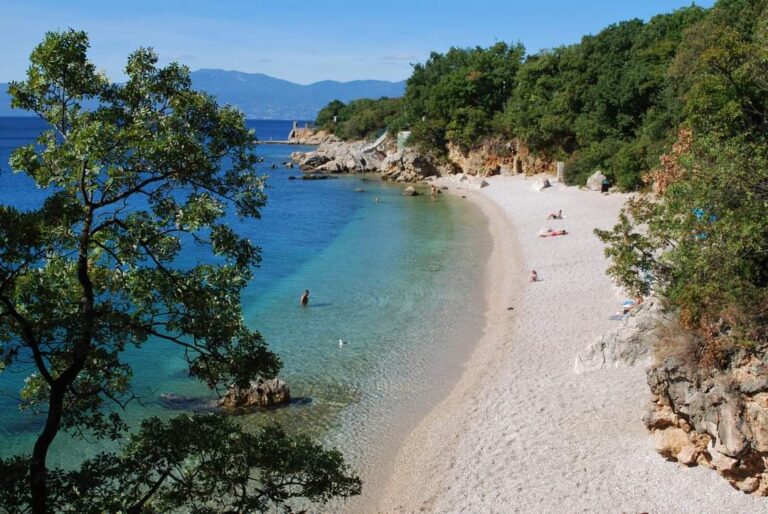
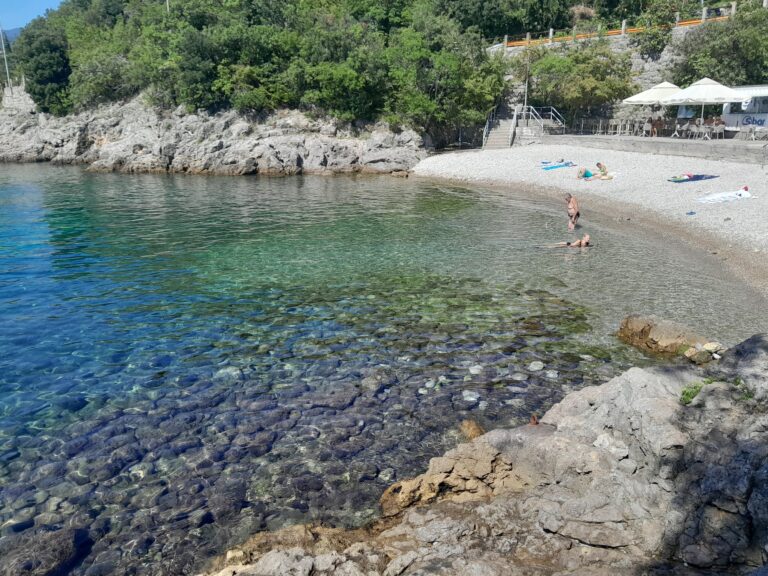
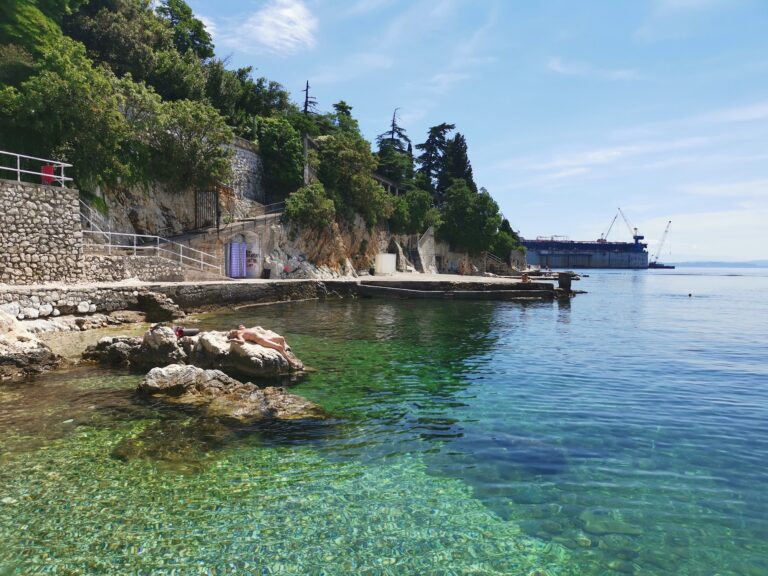
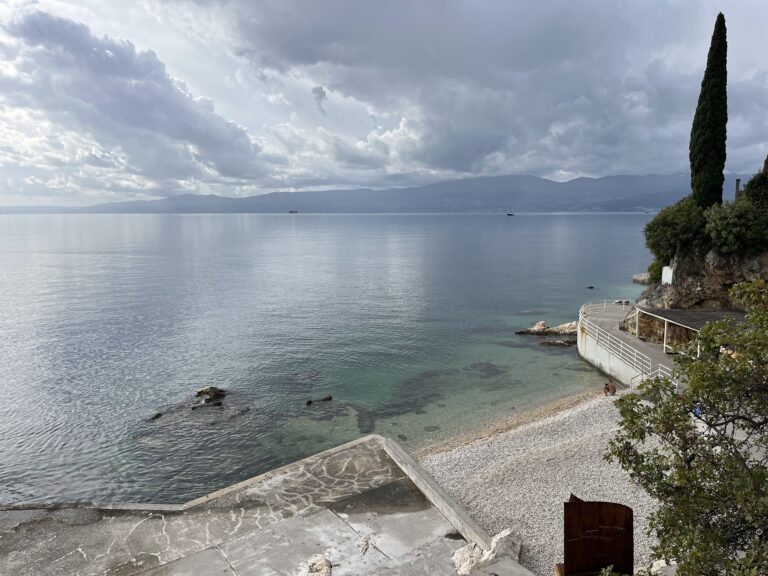
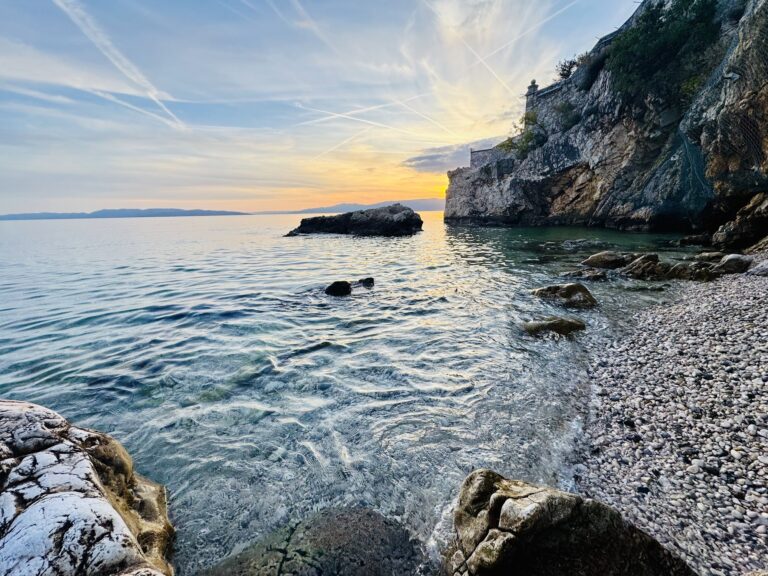
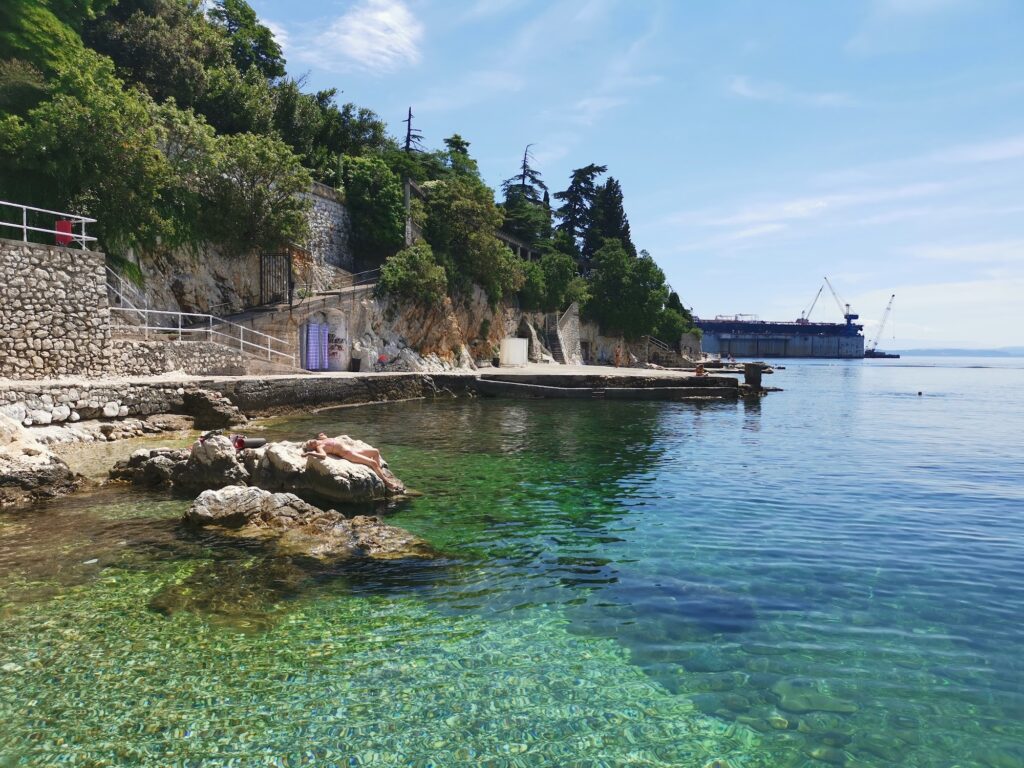
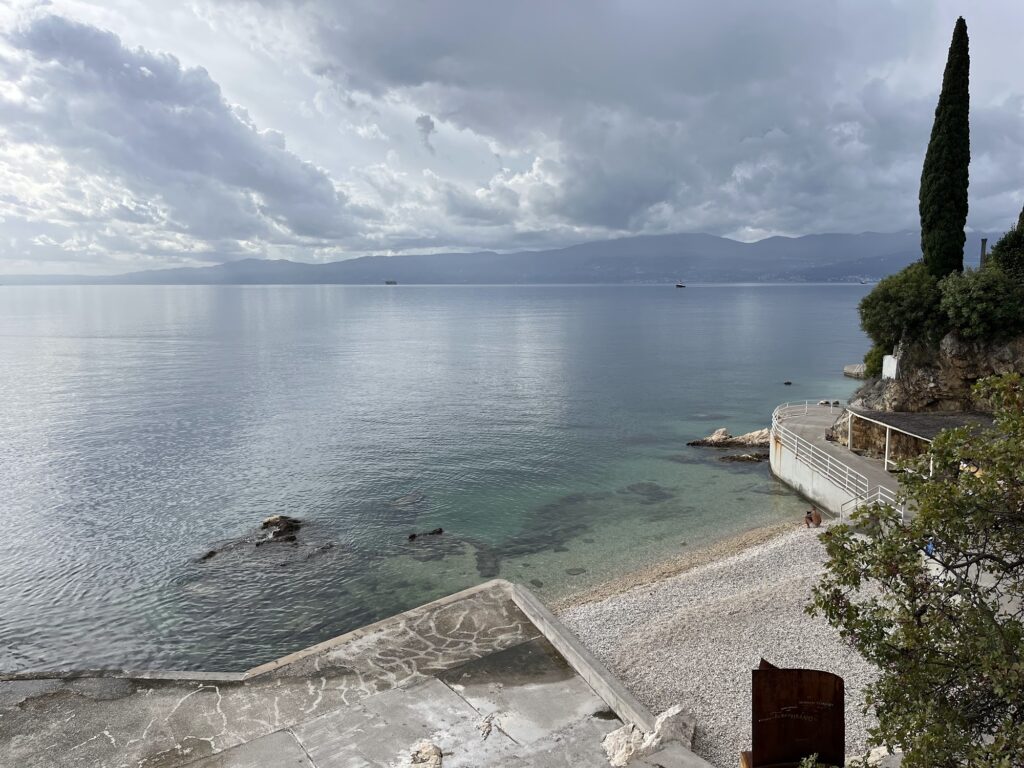
Javna Plaža Pećine is approximately 300 metres of rock and pebble waterfront at the base of the Pećine cliff zone, adjacent to the Martinšćica harbour. The surface is predominantly flat rock with pebble sections interspersed — the limestone platform characteristic of the eastern Rijeka coastline, adapted for swimming by the installation of ladders at the deep-water entry points.
The deep-water ladders are the specific access provision that distinguishes the rock platform beach from the pebble-entry beaches of the Pećine cliff coves above. Rather than a gradual pebble slope into the water, the rock platform gives direct access to depth immediately off the edge — the swimming culture of the rock platform beach, which is the Kvarner and Adriatic tradition of sitting on hot limestone and descending directly into deep, clear water. For confident swimmers, this is the preferred mode; for non-swimmers and young children, the pebble sections with gradual entry are the appropriate choice and should be sought specifically within the broader beach zone.
The glass in the rock surface — worn smooth from long exposure but present enough to justify footwear throughout the visit — is the practical reality of an urban public beach that has been in use since the 19th century. It does not make the beach unusable; it makes footwear necessary, which is true of most Kvarner rock and pebble beaches regardless. Water shoes or flip flops navigated to the water and removed for swimming is the standard practice.
The Pećine Coast: Austro-Hungarian Bathing Culture and the Six Beaches
The Pećine district’s six cliff beaches — Sablićevo and Glavanovo being the most visited and most photographed — represent the bathing infrastructure that the late Austro-Hungarian period established in this section of the coast. The cliff road above, the steep stairs descending, the long history of local families using these coves as their neighbourhood swimming spots: this is the Rijeka version of the Mediterranean city beach tradition, adapted to the specific geology of a cliff coast with no natural flat shore.
Javna Plaža Pećine at the Martinšćica harbour end of the district sits in a slightly different position within that tradition — less dramatically framed by cliff above, more directly connected to the working harbour adjacent, and more accessible on foot without the staircase descent. It is the public beach that the broader Pećine coastal zone converges around rather than the photogenic cliff-backed cove that draws visitors from outside the neighbourhood.
For visitors who want the cliff-backed turquoise cove experience, Sablićevo Beach Rijeka and Glavanovo Beach Rijeka are the correct destinations — reached by bus from the city centre and the staircase descent. For visitors who want a rock and pebble platform with clear Kvarner water, ladder access, a beach bar, and no staircase, Javna Plaža Pećine is the more accessible option.
Water Quality and the Kvarner City Beach Tradition
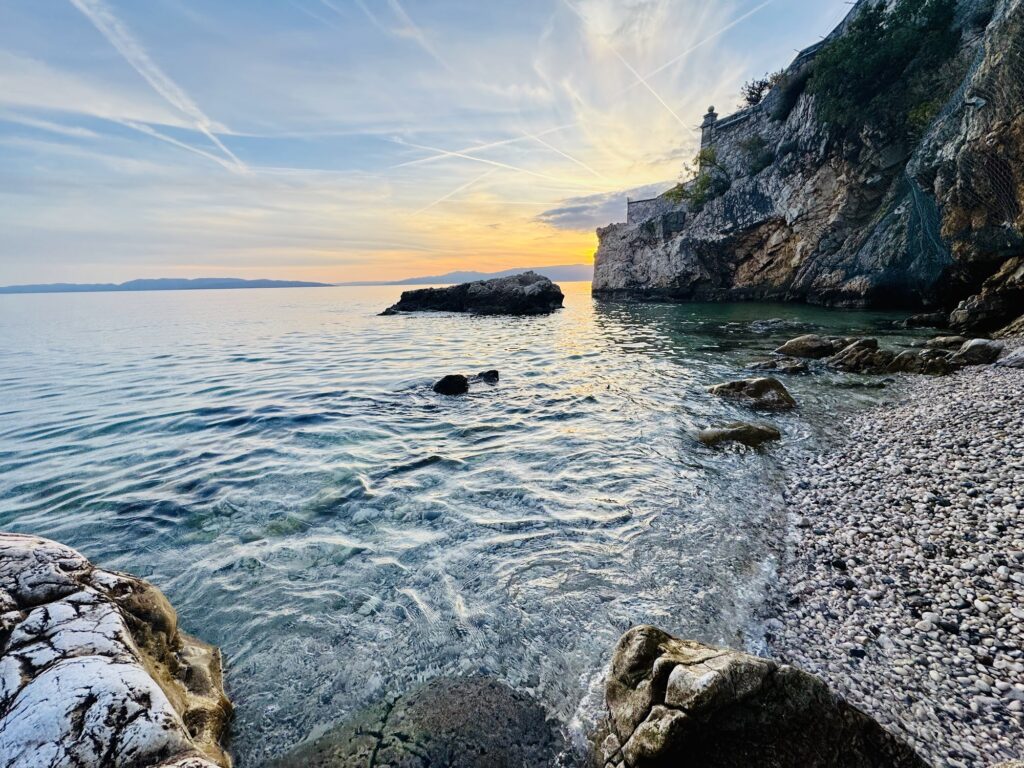
The water quality at Javna Plaža Pećine is consistent with the clean eastern Rijeka coastal zone — clear, well-circulated by the open Kvarner bay, and free from the harbour traffic that affects the city’s western port shoreline. The Kvarner water in this zone is the same water that the cliff coves above benefit from: the specific deep blue to turquoise palette that the limestone seabed and the Kvarner circulation produce in direct sun, visible from the rock platform before entry and fully clear once in the water.
The underwater springs — the vrulje — that are characteristic of the Kvarner limestone karst appear along this section of coast as they do throughout the eastern Rijeka bay, and the cold freshwater mixing with the warm surface sea is perceptible when swimming near spring outlets in the summer months.
The Beach Bar and Evening Atmosphere
The beach bar at Javna Plaža Pećine — and the bar at Sablićevo Beach Rijeka (Beach Bar Kamov) one section to the east — provide the food and drink provision and the evening atmosphere that transforms the rock platform beach from a swimming spot into a social destination after the swimming hours. Visitor accounts of the Pećine public beach area consistently mention the beach bar, the music in the evenings, and the atmosphere generated by the local crowd that uses the Pećine coastal zone as its neighbourhood beach and social space.
Rijeka has a specific local beach culture built on familiarity with the city’s coastal geology — the knowledge of which rock is cleanest, which ladder is shallowest, which bar serves until late, which morning is quietest. The Pećine public beach is the accessible point of contact with that culture for visitors, and arriving on a weekday morning or a summer evening to use the beach as the local population uses it is the most direct experience of what Rijeka’s relationship with the sea actually looks like.
Rijeka’s Torpedo Factory and the Industrial Coastline Context
Rijeka is the city that housed the world’s first torpedo factory — the Whitehead Torpedo Factory, established in 1875 by Robert Whitehead, which produced the self-propelled underwater weapon that transformed naval warfare. The factory operated on the western side of the city, and the industrial heritage of Rijeka as a manufacturing and port city is part of the specific urban character that makes the eastern Pećine bathing culture feel like a contrast rather than a continuation of the city’s identity — the workers’ and residents’ beach zone on the eastern cliff coast, accessible from the urban centre that the factories, the port, and the administrative buildings defined.
Javna Plaža Pećine in Rijeka is the public rock and pebble beach at the base of the Pećine cliff district — 300 metres of flat limestone and pebble with ladder access to clear Kvarner water, free showers, a beach bar, and the urban character of a neighbourhood that has been swimming from these rocks since the late 19th century.
Wear footwear on the rocks. The water off the ladders will be cold and clear.
The bar will be open when you come back up.
Map
Sorry, no records were found. Please adjust your search criteria and try again.
Sorry, unable to load the Maps API.
Near by places: