Kostrena Beach Rijeka: The Cool Spring-Fed Peninsula Shore
Profile
Kostrena Beach, Rijeka: The Cooler Sea and the Laundry Spring Coast
Croatia | Kostrena | Rijeka Riviera
The sea along the Kostrena peninsula coast is one or two degrees cooler than the surrounding Adriatic on any given summer day. This is due to the many freshwater springs along the coast, the biggest of which are Perilo in Žurkovo Bay, Stara voda, Perilo below Paveki, and Perilo in the Podurinj Bay. Until the mid-20th century those four springs were used for clothes washing — women from nearby villages would come with baskets filled with clothes and washed them there, singing and chatting. The name for these springs is perila — from prati, to wash — and the tradition of the perila as communal meeting places for the women of the settlement gives the Kostrena coast a specific cultural memory that the beach industry has not entirely absorbed. The cooler temperature is the geological legacy of those springs, perceptible in the water even now.
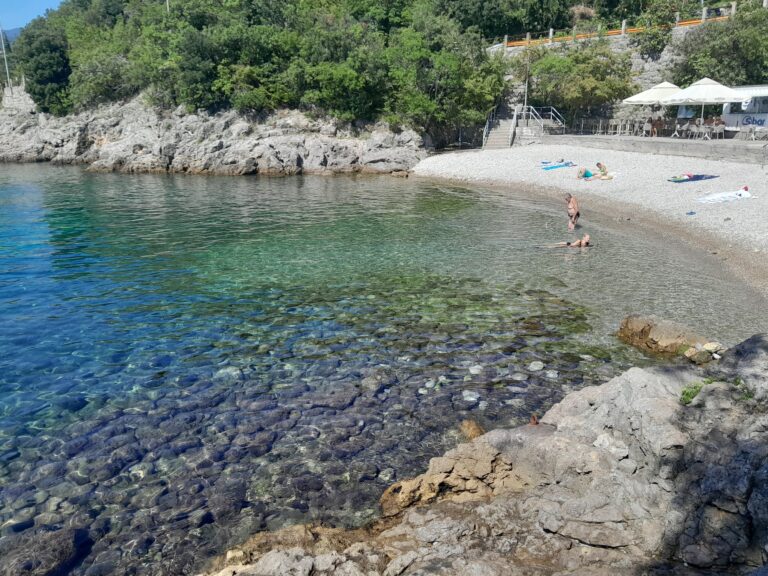
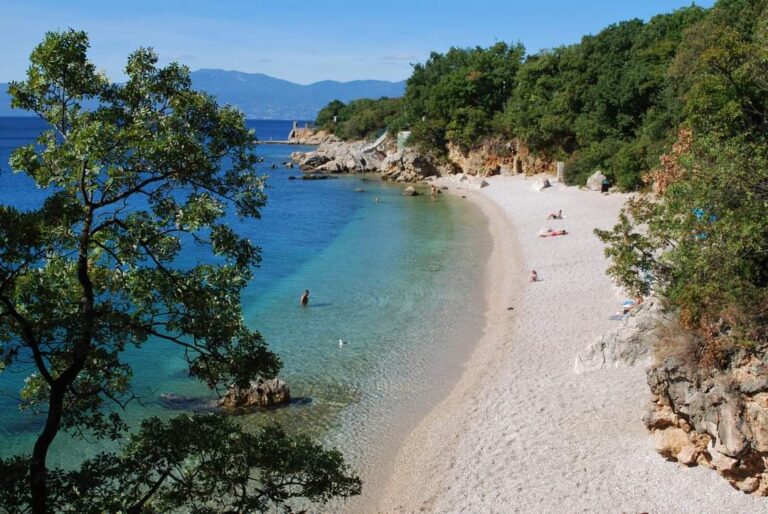
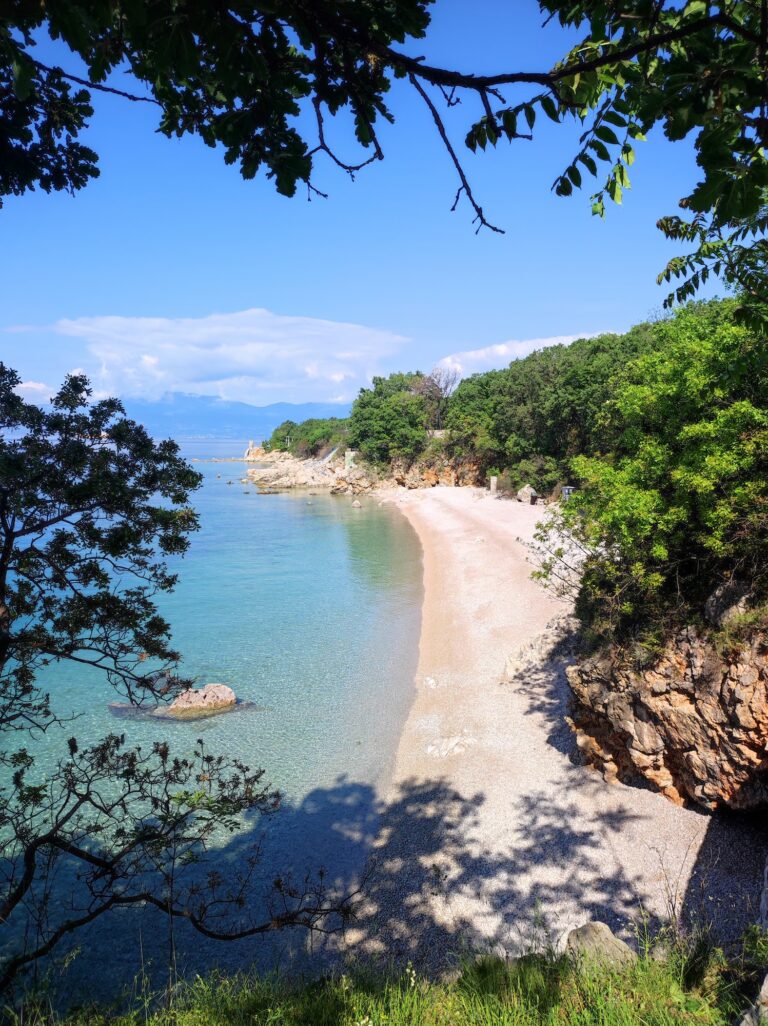
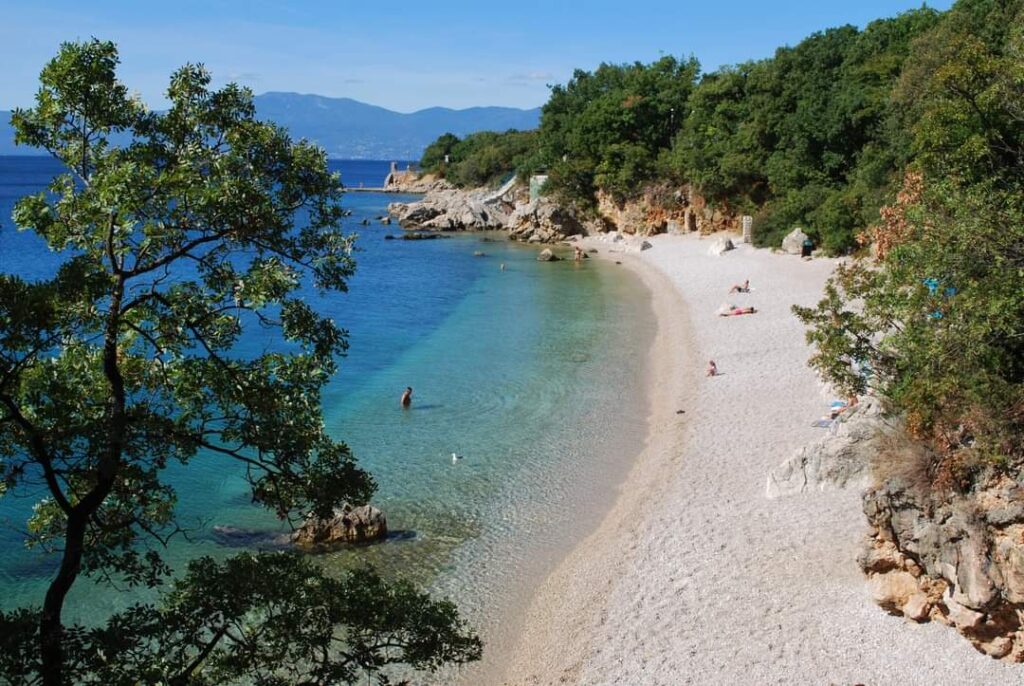
Kostrena Beach — the named beach near the Paveki settlement that the official beach listings identify separately from the better-known Žurkovo and Svežanj coves — is approximately 110 metres of fine gravel on the eastern side of the Kostrena peninsula, 6 kilometres from Rijeka city centre. The beach has beach bars, toilets, a dog beach section nearby, and the crystalline water that the freshwater spring influence maintains throughout the summer. The Trim staza — the marked fitness trail and coastal walking path that runs along the Kostrena peninsula — passes through or near the beach, making it accessible from the peninsula’s trail network as well as by road.
Getting There: Bus Line 29 from Rijeka, by Car, or the Trim Staza Walk
From Rijeka city centre, Kostrena is approximately 6 kilometres east — accessible by bus line 29 from the Rijeka Delta station in approximately 15 minutes, or by car in under 10 minutes. The coastal road runs along or above the peninsula, with parking available at several points. The beach near Paveki has parking within short walking distance on the road above it.
The Trim staza — the fitness trail that follows the Kostrena coastline and connects the peninsula’s beaches and coves — is the specific walking route that gives the beach its active context. The trail passes through the Kostrena residential landscape of dry stone walls, Mediterranean vegetation, and the succession of small coves that make the peninsula the most beach-dense stretch of the Rijeka eastern coast. Walking the Trim staza from the Martinšćica area south through Žurkovo and then continuing east to the Paveki and Kostrena beach section covers the full range of what the peninsula offers in a half-day coastal walk.
From the Pećine district of Rijeka, following the coastal road east into Kostrena and then the Trim staza southward provides the longer walking connection between the cliff beaches of the city’s eastern zone and the peninsula beaches, taking approximately 45 to 60 minutes.
The Beach: 110 Metres of Fine Gravel, Dog Beach, and the Kvarner Islands View
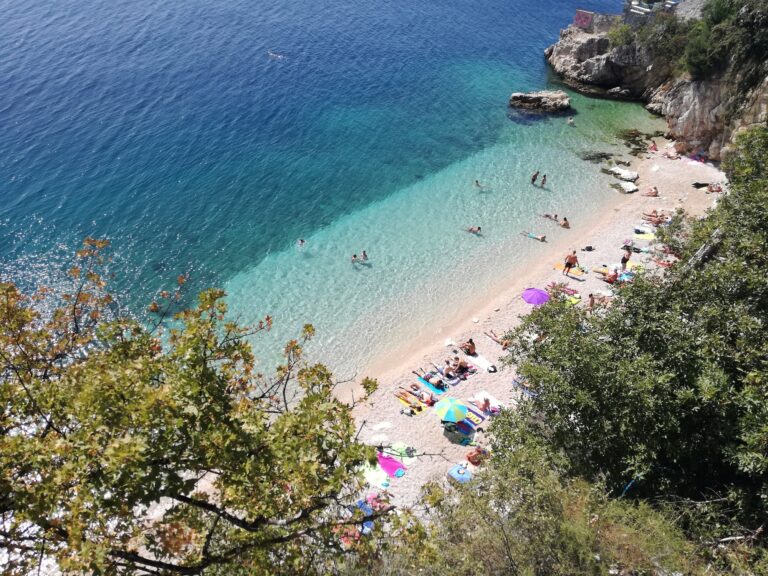
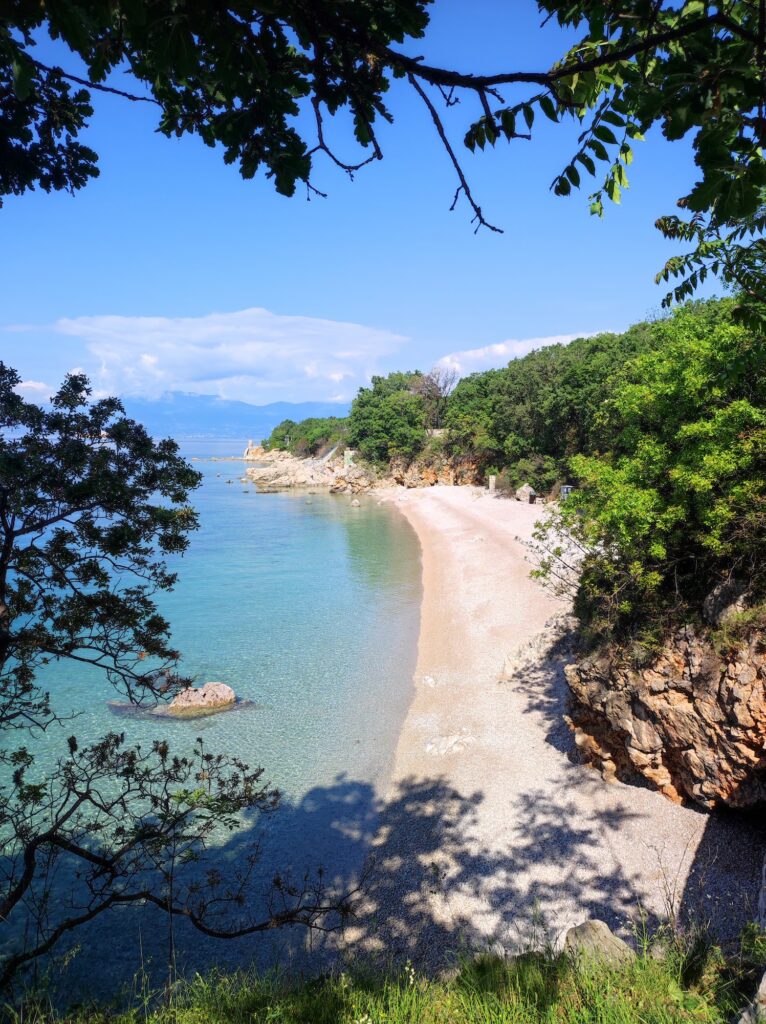
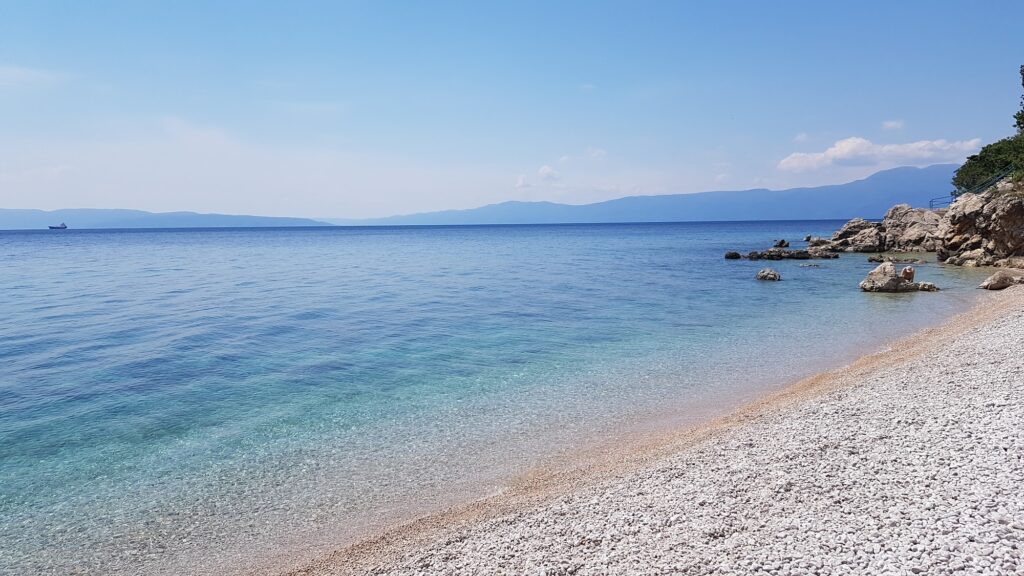
Kostrena Beach near Paveki is 110 metres of fine gravel — a small beach by the scale of the Opatija Riviera resort beaches, but a comfortable and well-used local beach within the peninsula’s sequence of swimming spots. The fine gravel surface is one of the more comfortable in the Kostrena area — visitor accounts note that water shoes are less necessary here than at the rockier sections further along the peninsula. The entry is gradual, and the beach is accessible directly from the road without a staircase descent.
The dog beach section near the main beach is a specific provision that makes Kostrena beach accessible for visitors travelling with pets — a fenced area with a shower that designates the beach as pet-friendly in this section while maintaining a separate swimming zone for other visitors. Visitor accounts confirm the dog beach is a practical and well-maintained facility for those who want to bring their pets to the water.
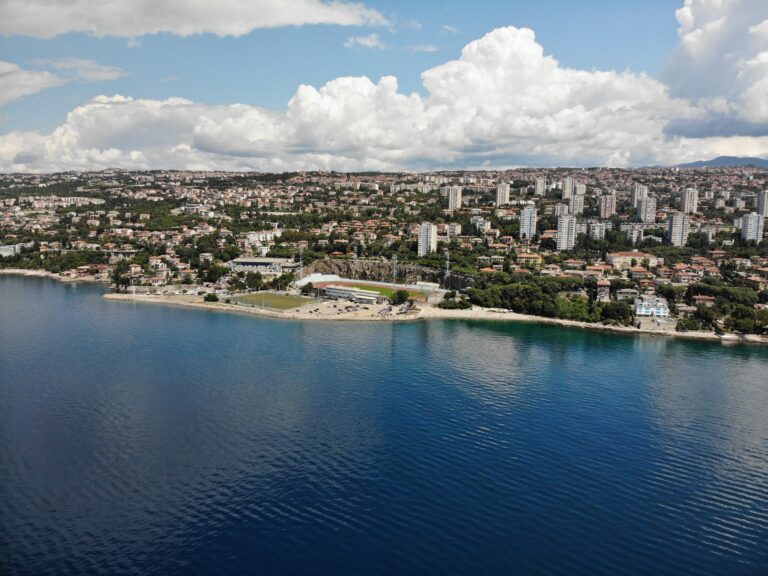
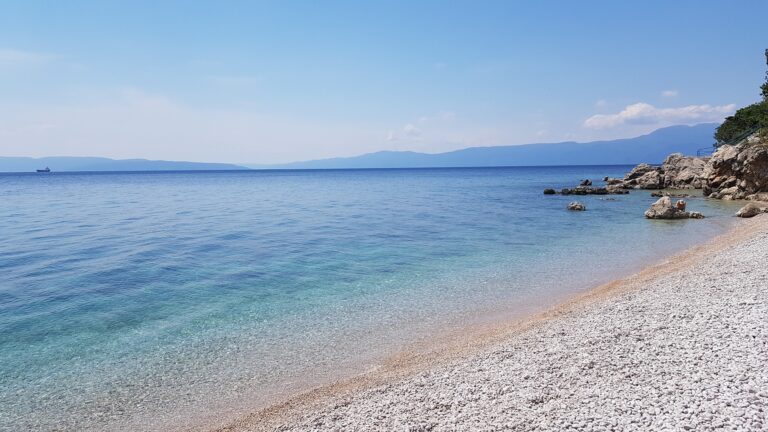
The view from the water at Kostrena is the Kvarner bay opening westward toward Rijeka and the Krk Bridge — the concrete cable-stayed bridge that connects Krk island to the mainland, visible from the beach as the landmark of the eastern Kvarner coastline. The industrial facilities of the Urinj oil refinery and the Viktor Lenac shipyard are part of the same panorama — the specific Kostrena view that combines the clear Adriatic water immediately in front with the working maritime and industrial infrastructure of the bay beyond.
The Perila Springs and the Cooler Sea
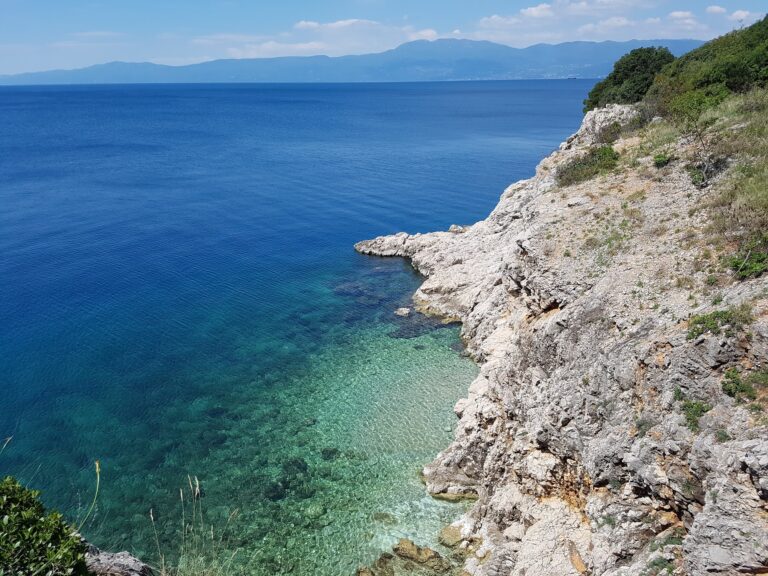
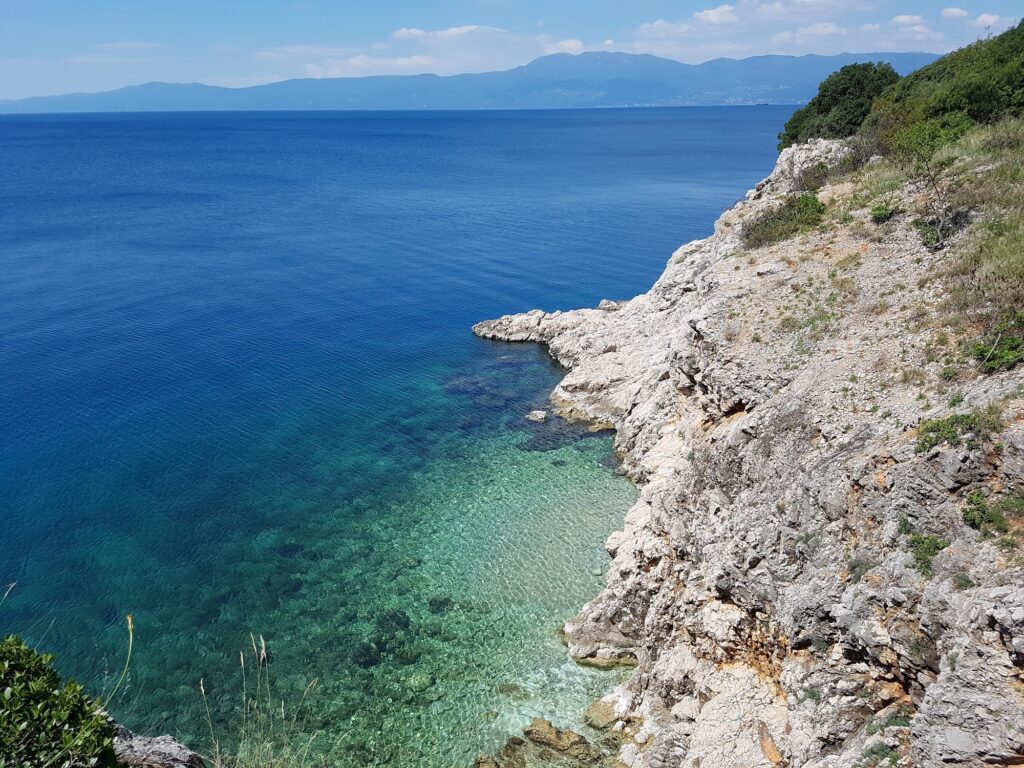
The freshwater springs that cool the Kostrena sea are the most geologically interesting specific quality of this stretch of coast. The karst limestone that underlies the Kostrena peninsula collects and channels the rainwater and snowmelt of the Gorski Kotar hinterland, and the groundwater emerges below sea level as cold freshwater in multiple locations along the coast. The mixing zone between the cold spring water and the warm sea surface is the thermal differential that gives the Kostrena water its slightly cooler character — a quality that is perceptible to a swimmer and that provides a specific refreshing quality on the hottest summer days.
The Perilo in Žurkovo Bay — the largest of the peninsula’s springs — was the most used of the communal laundry points, and the social history of the perila as the gathering place for the women of the surrounding settlements is the human dimension of the same geology that cools the swimming water. The Kostrena tourist authority preserves the documentation of that tradition, and the spring names are still used by residents who know the specific points on the coast where the groundwater reaches the sea.
The Kostrena Peninsula: 10 Kilometres, 11 Named Beaches, Scuba Diving
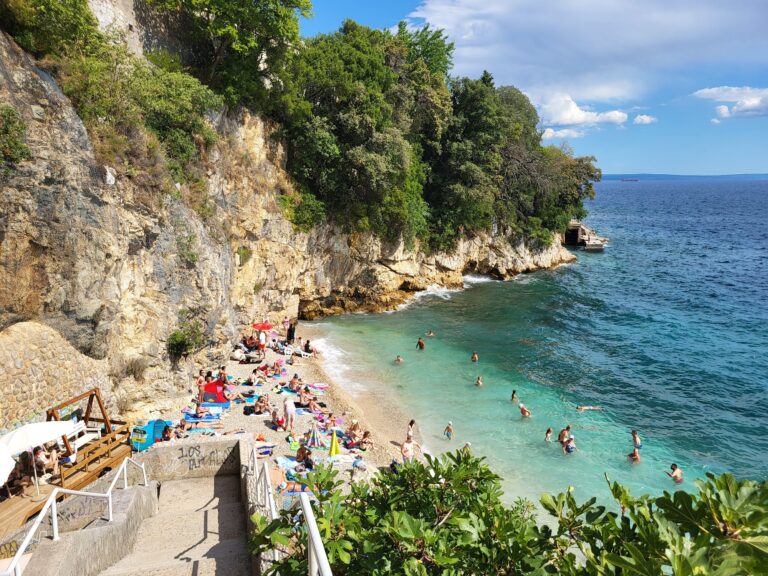
The Kostrena peninsula is about 10 kilometres long, with a mild slope toward the sea coast. The most famous beaches are in Žurkovo Bay, then Smokvino, Svežanj, Spužvina, Podražica, Nova voda, and Perilo. The named Kostrena Beach at Paveki is one section within that sequence — not the largest or most celebrated, but the one that the beach listing infrastructure has identified as the main accessible public beach at that point on the peninsula.
Kostrena is a popular place for scuba diving, offering a number of dive centres for shore dives as well as close shipwrecks in the Kvarner Bay. The combination of clear water, shipwrecks, and the spring geology that maintains water quality makes the Kostrena coast a legitimate scuba diving destination rather than merely a beach swimming area. The dive centres serve both recreational divers who want organised shore dives and visitors who want to explore the shipwrecks in the deeper sections of the bay.
The Svežanj Bay section of the Kostrena coast — a short walk south from Kostrena Beach along the Trim staza — holds the Blue Flag certification and is within a protected marine zone due to rare species in its waters. Svezanj Bay Kostrena is the most formally recognised beach on the peninsula, and the connection between the main accessible Kostrena Beach and the protected Svežanj bay along the coastal path is the specific programme for visitors who want to swim at both within the same half-day.
Scuba Diving and the Kvarner Shipwrecks
The Kvarner bay’s shipwrecks are among the more accessible in the northern Adriatic — within recreational diving depth in most cases, in the clear water that the Kostrena spring influence helps maintain, and reachable from the shore dives that the Kostrena dive centres organise. The specific wrecks and their depths are within the dive centre knowledge base rather than publicly documented in detail, but the Kostrena area’s reputation as a serious shore diving destination is consistent across multiple sources.
For visitors who are not scuba divers, snorkelling at the rocky margins of the Kostrena beaches — where the limestone crevices and the fresh-saltwater mixing zone create the productive marine habitat that undisturbed clean-water coasts generate — is productive in the way that the better Kvarner coastal coves consistently are.
Kostrena Beach near Rijeka is the fine gravel cove on the peninsula that the freshwater springs cool by one or two degrees — a small local beach with bars, toilets, a dog section, and the Trim staza behind it, on a coast where women carried baskets of clothes to the perila springs within living memory and the water temperature still records the geological reason why.
Take bus 29 from Rijeka. Walk the Trim staza as far as the view of the Krk Bridge allows.
The cooler water will remind you the springs are there.
Map
Sorry, no records were found. Please adjust your search criteria and try again.
Sorry, unable to load the Maps API.
Near by places: