Beach Njive Premantura: Pebble Cove in Cape Kamenjak
Profile
Beach Njive, Premantura: Pebble Cove and Beach Bar in the Heart of Cape Kamenjak
Croatia | Premantura | Istrian Peninsula
Cape Kamenjak is the southernmost point of Istria — a peninsula that extends into the Adriatic from the village of Premantura like a continuation of the limestone geography that defines the rest of the region, but wilder, less built on, and protected as a nature park since 1996. The coastline runs for over 30 kilometres around the cape, cut into bays, coves, and rocky shelves by the sea and the bura wind, with more than 20 beaches distributed across the terrain and accessible by the network of dusty gravel roads that cross the peninsula. Beach Njive sits on the western side of that coastline, roughly halfway between the park entrance and the extreme southern tip, and it is among the most consistently recommended beaches on the cape — not for dramatic cliff formations or extreme water sports, though those are available elsewhere in the park, but for the combination of shallow pebble entry, clear water, flat rocky sides for sunbathing, and a beach bar under the pine trees that makes it function as a complete day rather than just a swimming stop.
The park itself requires an entry fee for vehicles — approximately €15 to €20 per day in peak season — which applies once per entry at the gate. Pedestrians and cyclists enter free. That fee funds the maintenance of the gravel road network, the waste management, and the park administration that keeps the Kamenjak coastline in the condition it is in. It is worth paying without hesitation.
Getting There: Pula to Premantura, Then Through the Park to Njive
Premantura is approximately 12 kilometres south of Pula — a drive of around 20 minutes from the city centre that follows the coastal road south past Medulin and then continues to the village at the cape’s entrance. From Pula, bus line 28 runs to Premantura Centar with the journey taking approximately 35 to 40 minutes. From the bus stop in Premantura, the park entrance is a further 3 to 4 kilometres — walkable but hot in summer, better covered by bicycle. Bicycle rental is available in Premantura and in Medulin, and cycling through the park is one of the more practical and enjoyable ways to reach Njive and the other western coast beaches.
By car, the approach from the Premantura village follows signs to Cape Kamenjak to the park gate, where the vehicle entry fee is paid. The gravel roads inside the park are dusty and bumpy in sections — the source article’s description of them as off-road is accurate — and the drive to Njive from the entrance takes a further 10 to 15 minutes at the cautious speed the road surfaces require. Parking areas near the beach are included in the vehicle entry fee. Arriving early — before nine in the morning during July and August — secures both a parking space and a sunbed position at the beach before the midday crowd builds.
From Medulin, organised tours — boat, kayak, and cycling excursions — reach the western Kamenjak coast including the Njive area without requiring a car. The boat approach to Njive from the sea delivers the beach in the context of the limestone cliff coastline that surrounds it and that is only fully visible from the water.
The Beach: Pebble Centre, Flat Rocky Sides, and Pine Shade Above
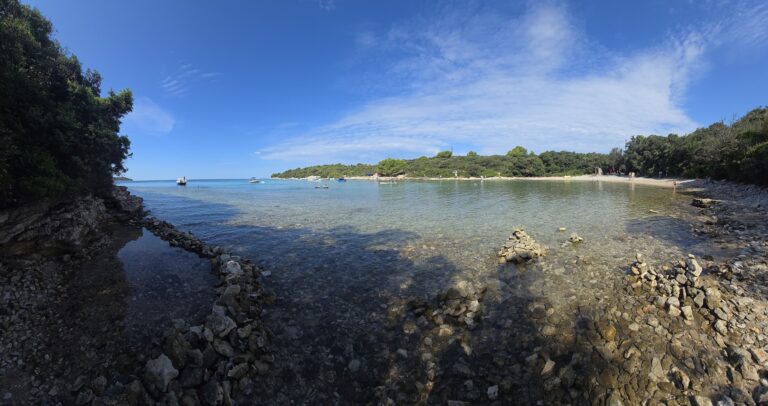
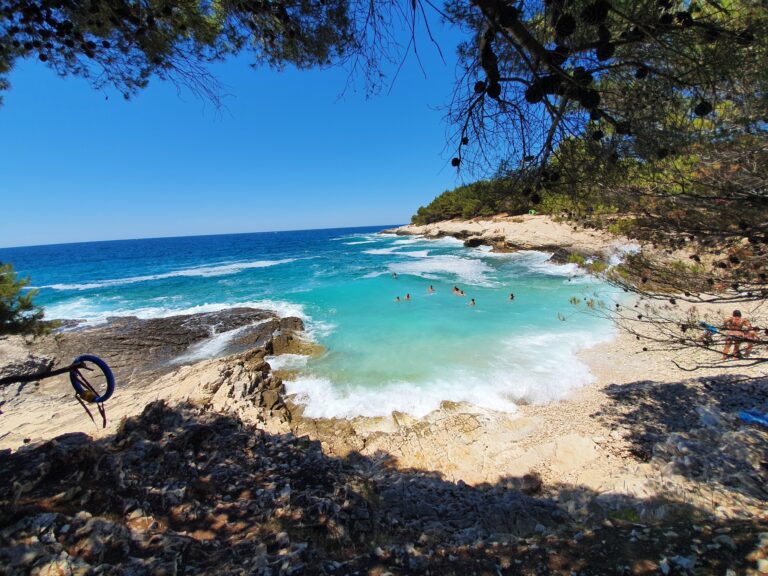
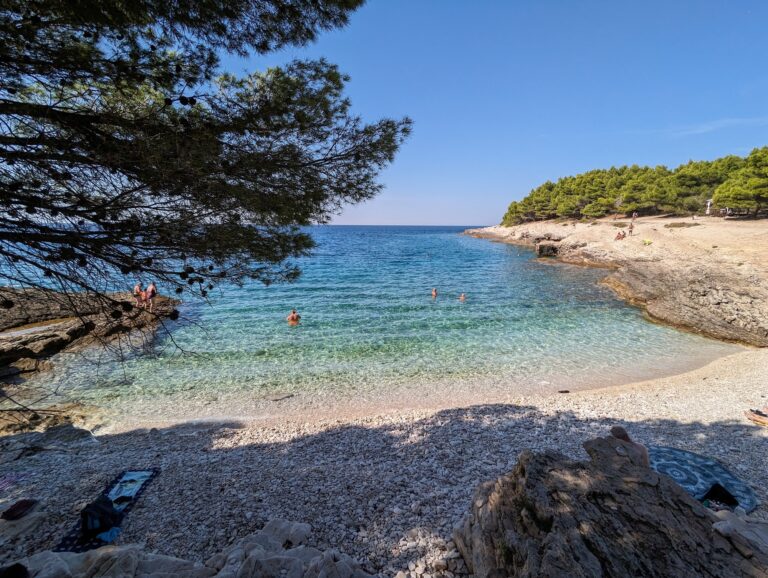
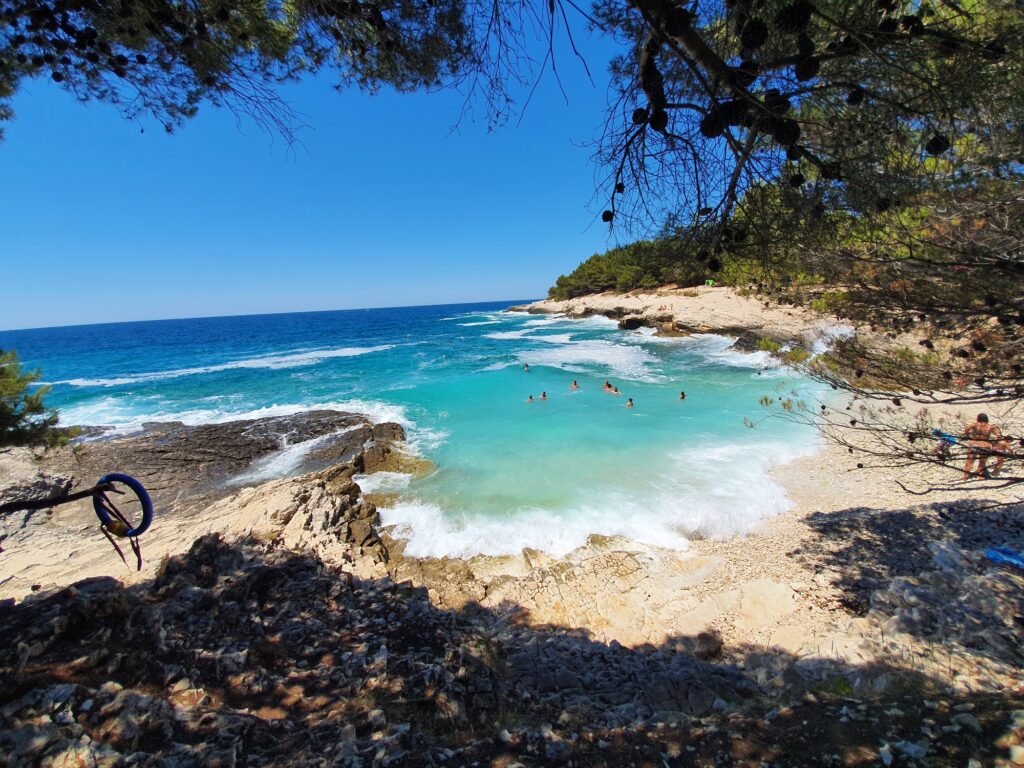
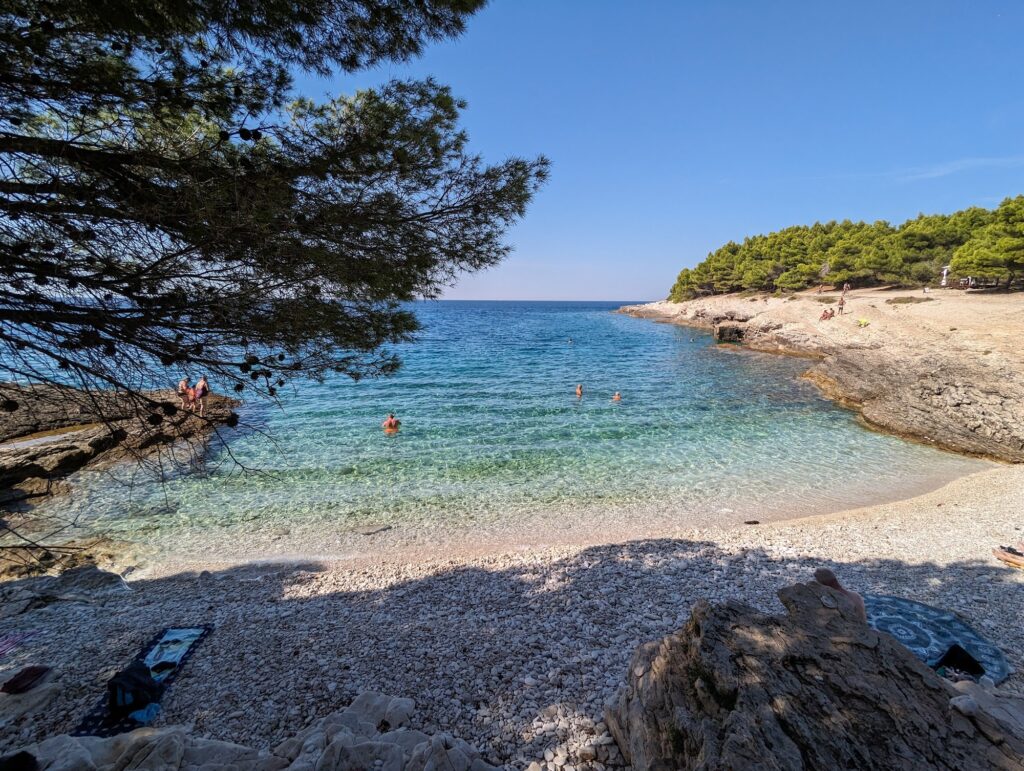
Beach Njive is a horseshoe-shaped cove with smooth pebbles in the central section — the accessible, gradual-entry part of the beach that makes it suitable for families and for swimmers who prefer a clear path to the water without the sharp rock navigation that many Kamenjak beaches require. The sides of the cove are flat limestone rock, warm in the afternoon sun, providing the horizontal surface for sunbathing that the central pebble section does not. The geological variety within a single small cove — soft pebble at the centre, flat rock at the margins — gives visitors the choice of surface based on preference rather than circumstance.
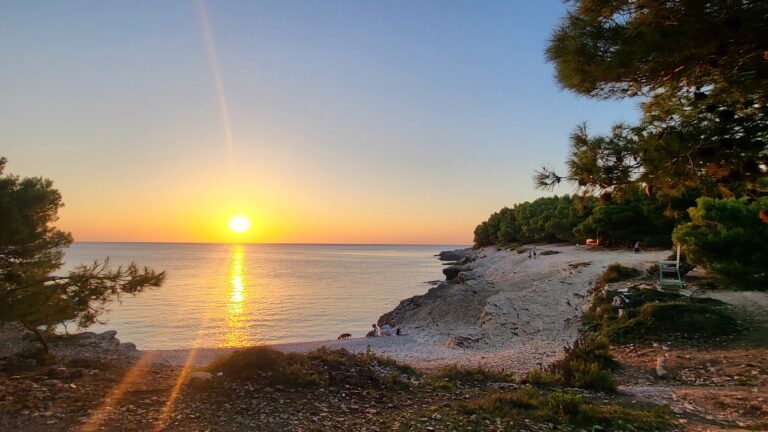
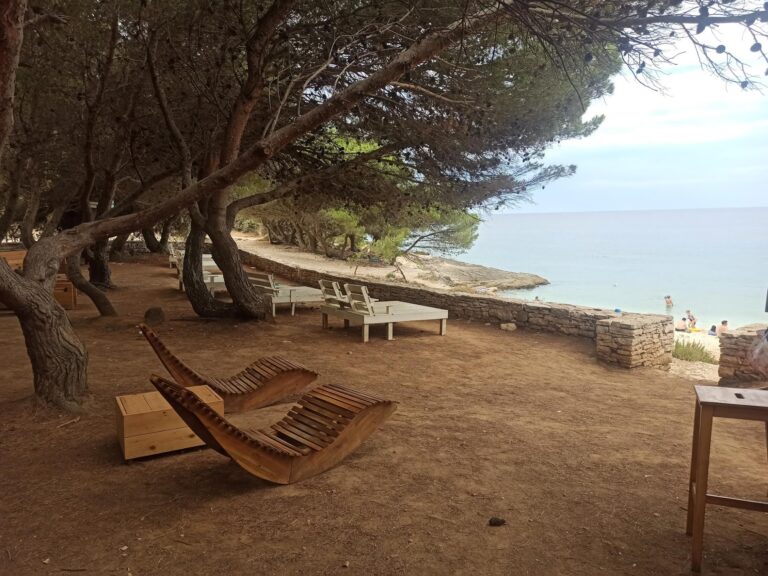
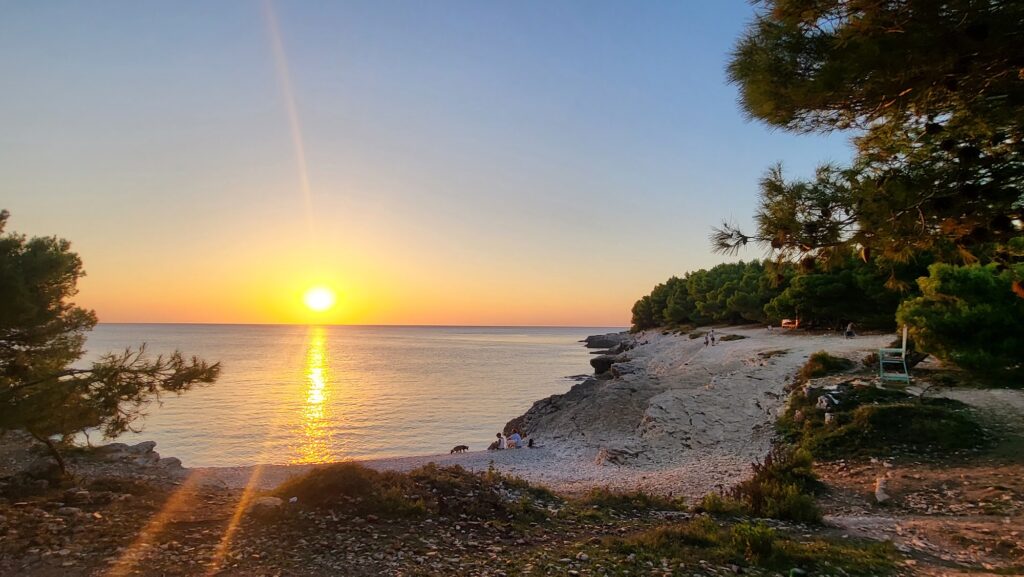
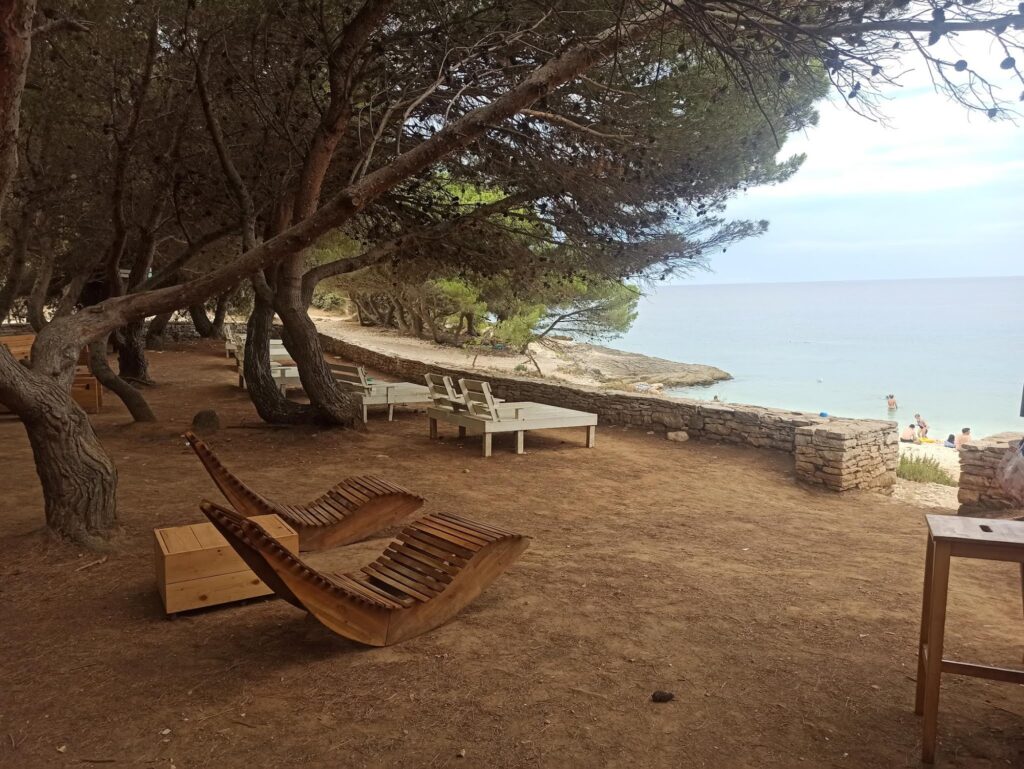
The pine forest above the beach provides natural shade over the upper shore and the beach bar that sits within it, which is the specific feature that makes Njive different from the more fully exposed Kamenjak beaches to the south. In the middle hours of the Istrian summer day, when the limestone amplifies the heat and the sun sits directly overhead, the pine shade at Njive is the practical difference between a comfortable afternoon and an uncomfortable one. The beach’s western orientation also means it receives the evening light directly — the sun moving toward the open Adriatic in front of the cove — which gives the late afternoon at Njive a particular quality that the more enclosed bays of the park do not have.
Water shoes are recommended for the rocky sections of the cove and for navigating the approach to the flat rocks on either side — the Kamenjak limestone at the waterline is sharp in places, and bare feet on that surface are an unnecessary discomfort.
Water Quality and Swimming at Beach Njive
Cape Kamenjak’s water quality is the result of its protected status, the absence of boat traffic through most of the cove areas, and the strong tidal and wind-driven circulation that the cape’s exposed position produces. The water at Njive is consistently clear — the pebble and rock seabed visible from the surface, the colour the vivid turquoise-to-sapphire progression characteristic of clean, deep-bottom Adriatic water in direct sun. The marine life density that the protected park environment maintains is higher than at the more exposed and more trafficked beaches of the wider Pula area, and snorkelling at Njive — particularly in the rocky sections at the cove’s margins — is productive for fish observation and underwater topography exploration.
The entry from the pebble centre is shallow and gradual — easier than most Kamenjak beaches, which tend toward the rocky-and-abrupt entry that characterises limestone coastline — and the depth increases gradually enough to give the beach its family-appropriate character. The flat rocks on the cove’s sides provide deeper, cleaner entry for swimmers who prefer to enter from a height rather than wading through shallows.
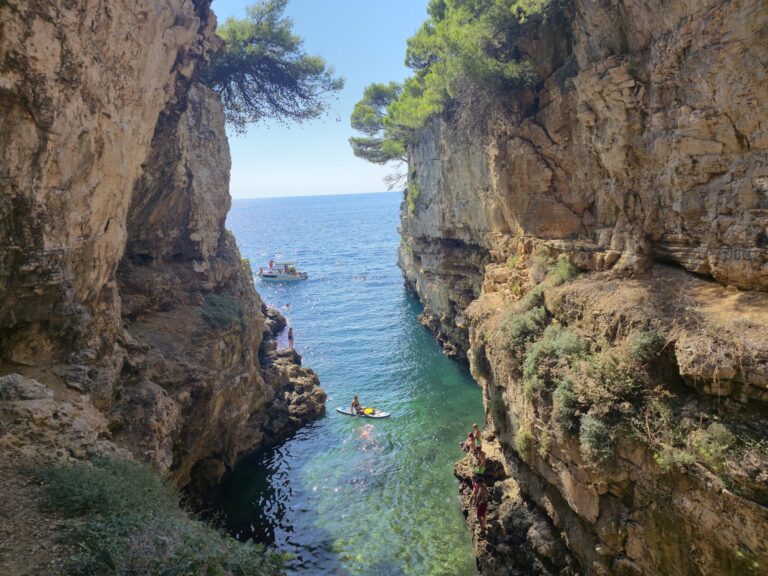
The cliff sections surrounding the cove offer cliff jumping at various heights for those who want it — the rock formations creating the natural springboard positions that visitor accounts describe as accessible even for less bold swimmers given the depth of the water below the lower jumps. The relevant caution applies: the rock is irregular and should be inspected before any jump, and the depth at specific points should be confirmed before use.
The Njive Beach Bar and the Massage House
The beach bar above the shore beneath the pine trees is the practical provision that makes Njive a full-day beach rather than a swimming stop on a cycling or hiking circuit. It serves drinks, coffee, and food through the summer season — the combination of cold drinks and shade that the exposed Kamenjak terrain makes valuable. The atmosphere the source article describes as built from natural materials is accurate to the general character of the Kamenjak beach bars, which tend toward the rustic and relaxed rather than the branded and commercial.
The massage house near the beach is the specific provision that sets Njive apart from most other beaches on the cape — a wellness service embedded in a nature park, which is the kind of combination that Istria’s tourism development has been building toward across the broader peninsula. Spending a morning in the sea and an hour on the massage table in the pine shade while the afternoon light shifts across the cove is a particular and specific use of a Njive day that the beach’s combination of natural and service provision makes available.
Sunbed and parasol rental is available at the beach — the specific detail that distinguishes Njive from the fully unmanaged beaches of the park’s more remote sections. The sunbed option matters at a beach where the pebble surface on the central section and the bare rock on the sides are the only natural alternatives to equipment.
Cape Kamenjak as Context: What Surrounds Beach Njive
Beach Njive sits within a park that has over 20 beaches, more than 400 plant species including several endemic orchids, documented dinosaur footprints on the Dinosaur Path near the southern tip, and the possibility of Mediterranean monk seal sightings in the winter months when boat traffic is absent. The Safari Bar near the southern end of the park is the most famous single feature of Kamenjak — a beach bar built into the cliff above a cliff-jumping bay that has become one of the most photographed locations in Istria. Njive is the calmer alternative to that bay’s energy: similar water quality and park character, smaller crowd, beach bar, and a beach surface that families can use without the constant attention to where children are relative to the cliff edge.
The western coastal path that connects Njive to the adjacent beaches — Plovanije to the north, the Kolombarica coves to the south — is walkable in sections and gives a sense of the full western coast character at a pace the gravel road driving does not. The cliff views from the path, with the open Adriatic visible directly west and the Porer Lighthouse island visible to the southwest, are among the better views the western Istrian coast provides.
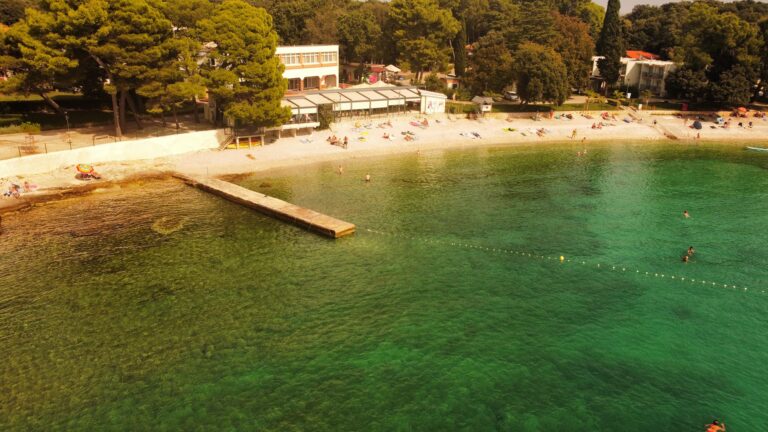
For visitors based at Sandstrand Medulin Bijeca Beach in Medulin — 20 minutes north of Premantura — combining a morning at Bijeca’s sandy shallows with an afternoon at Njive’s clear rocky cove covers the full range of what the southern Istrian tip offers in a single day.
Practical Notes: Park Rules and Seasonal Timing
Cape Kamenjak is open year-round but managed actively through the peak season. All visitors must leave the park by 10pm. Camping within the park is strictly forbidden. The vehicle entry fee applies at the gate during the operating season; outside peak months the fee may not be charged but the roads and facilities operate at reduced capacity. Bringing sufficient water, food, cash, and sun protection before entering the park is essential — there are no shops inside and the beach bar at Njive is the only food provision in that section of the park.
The gravel roads are dusty in dry weather and can become difficult in heavy rain — the park’s off-season visitor accounts note that the surface conditions vary considerably. In peak summer the roads are at their driest and most passable but also carry the most traffic. Driving at low speed, avoiding the unmarked trails that branch from the main roads, and checking current entry fee and opening hour information on the park’s official website before visiting are the standard practical preparations.
June and September are the ideal months for Njive as they are for the rest of Kamenjak — the sea temperature is sufficient for comfortable swimming, the beach bar operates, and the visitor density is a fraction of the July-August peak.
Beach Njive on Cape Kamenjak is the beach in the park that balances accessibility with the wild character the cape is known for — shallow pebble entry for families, flat rock sides for swimmers who prefer depth, beach bar and sunbeds for those who want comfort, and the full Kamenjak water quality and marine life in a cove sheltered enough to make a full day there straightforward rather than demanding.
Pay the park fee at the gate. Drive slowly on the gravel. Arrive early for the sunbeds.
The pine shade and the clear water will be there when you do.
Map
Sorry, no records were found. Please adjust your search criteria and try again.
Sorry, unable to load the Maps API.
Near by places: