Hawaii Beach Pula: Electric Blue Cove on Verudela
Profile
Hawaii Beach, Pula: The Procipina Cove Beneath the Verudela Cliffs
Croatia | Pula | Istrian Peninsula
The beach is called Hawaii — Havajka in Croatian — and the name comes from the waves. When the jugo, the warm southerly wind, drives across the Adriatic toward the Istrian coast, the cove at Procipina on the western side of the Verudela peninsula catches the swell in a way that the surrounding cliff geometry amplifies, and the waves that build on the pebble shore in those conditions are unlike anything the calm-water beaches of the peninsula produce. The name is an exaggeration, as the Adriatic does not produce anything close to Pacific surf in normal conditions, but the comparison has stuck precisely because the contrast between the calm electric-blue water on still summer days and the white-crested energy of the cove in a southerly blow is genuinely striking. Most visitors experience the former. The name comes from the latter.
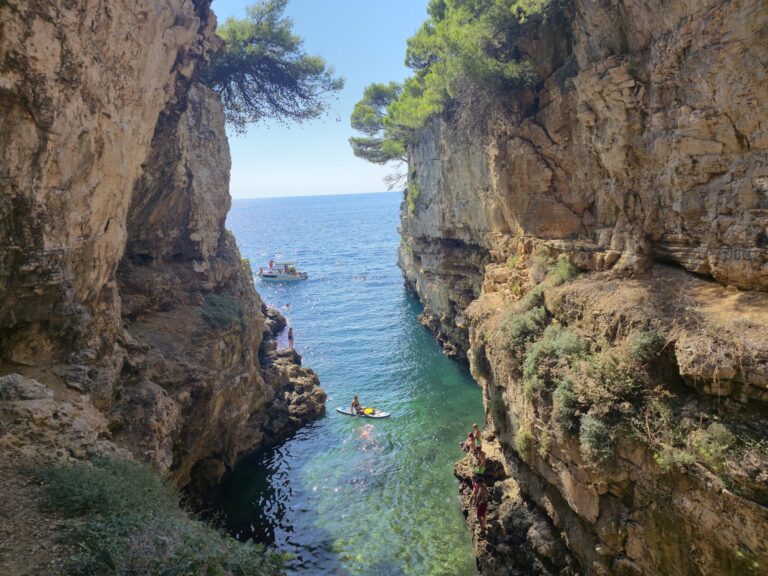
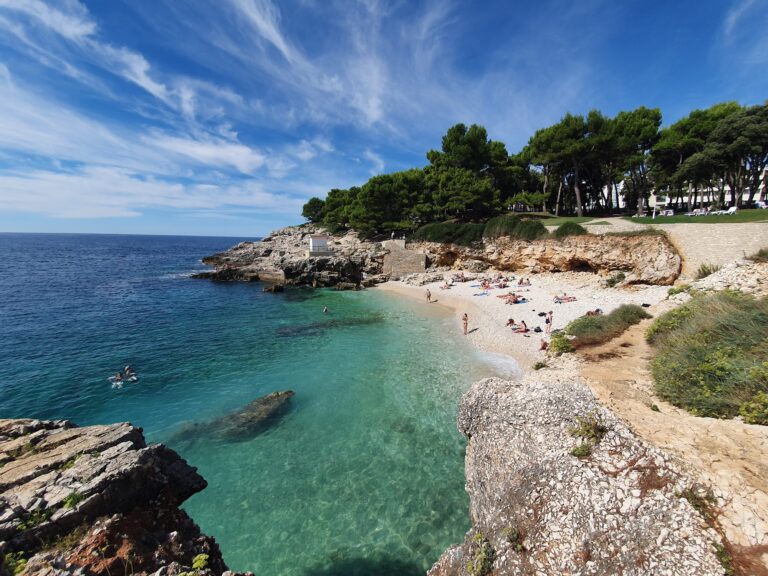
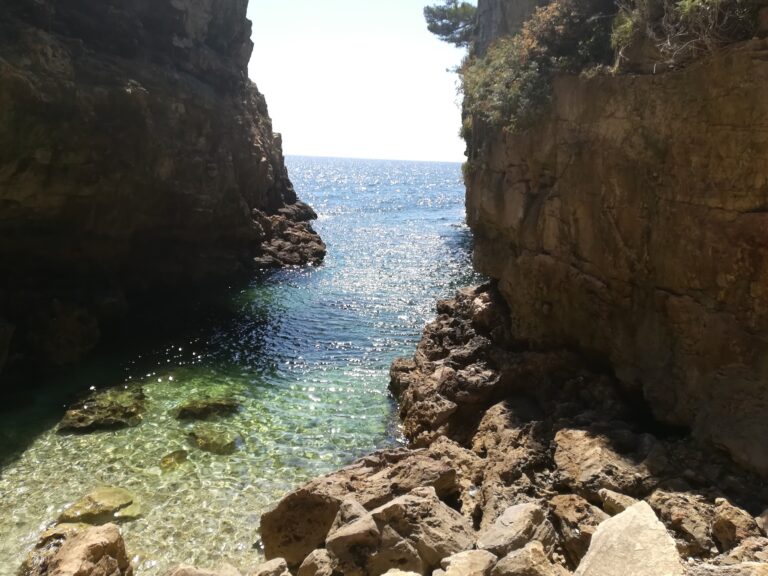
Hawaii Beach — formally the Procipina cove — sits below the Park Plaza Arena and Radisson Grand Hotel Brioni complex on the western Verudela peninsula, approximately 4.7 kilometres south of Pula city centre. A carved stone staircase descends through the pine trees to the pebble shore below. The cliff line that forms the cove’s sides rises to medium height and provides the jumping positions that make the beach popular with teenagers and younger visitors. The water below those cliffs is clear enough that the snorkelling itinerary westward toward the Verudela Canyon — a deep cut in the cliff where the underwater wall drops into the deep and false coral gardens have formed on the shaded rock — is one of the more productive underwater routes in the immediate Pula area.
Getting There: Bus Lines 2 or 3 to Verudela, by Car, or on Foot Through the Resort
From Pula city centre, Pulapromet bus lines 2 and 3 run to the Verudela terminus — a journey of approximately 20 minutes — from which the beach is a ten-minute walk through the resort path network. The walk passes through the Verudela pine forest and follows the cliff-top path before descending to the cove, and the approach through the trees is pleasant in the morning when the light comes through the canopy from the east.
By car, the drive south from Pula to the Verudela peninsula takes around 10 minutes, with free parking available in organised lots approximately a ten-minute walk from the beach. Those parking areas are shared with the hotel complex guests and fill through the morning during July and August — arriving before nine is the reliable way to secure a space without the midday pressure. The hotel parking is accessible separately for guests with the corresponding card.
For visitors based at any of the four hotels on the Verudela peninsula — Park Plaza Arena, Park Plaza Histria, Radisson Grand Hotel Brioni, and Hotel Pula — the beach is a short walk through the pine forest from the hotel grounds, and the resort infrastructure of restaurants, bars, and sports facilities is accessible both en route and above the cove.
The Cove: Procipina Bay, White Pebbles, and the Cliff Staircase
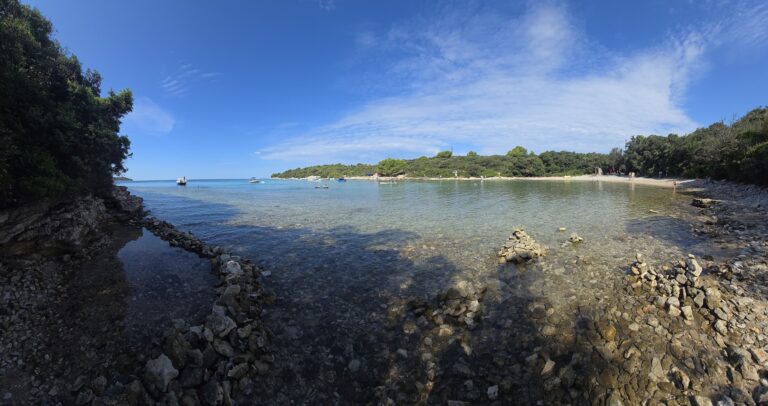
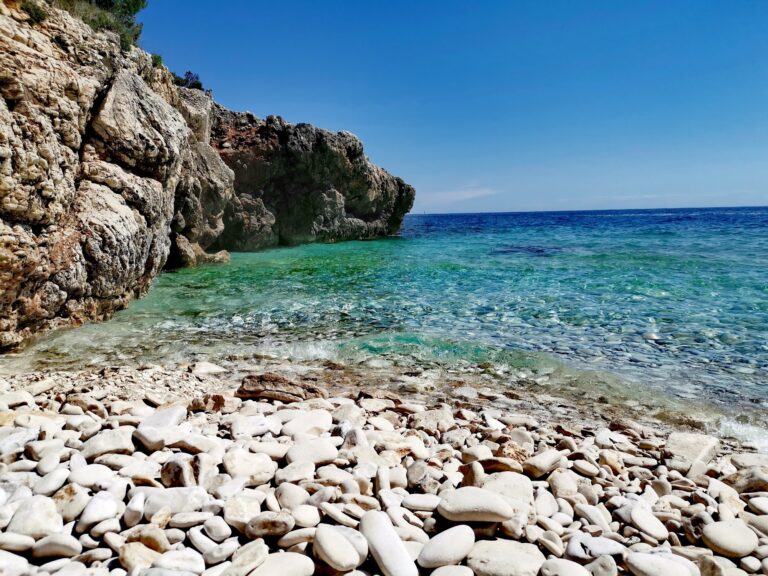
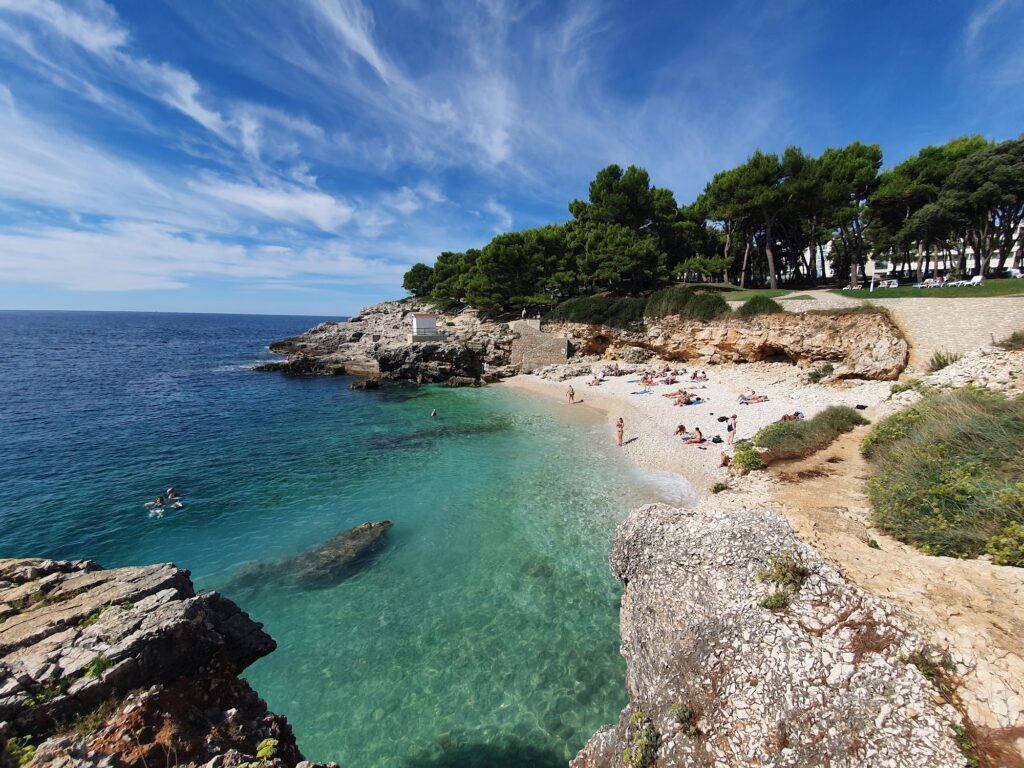
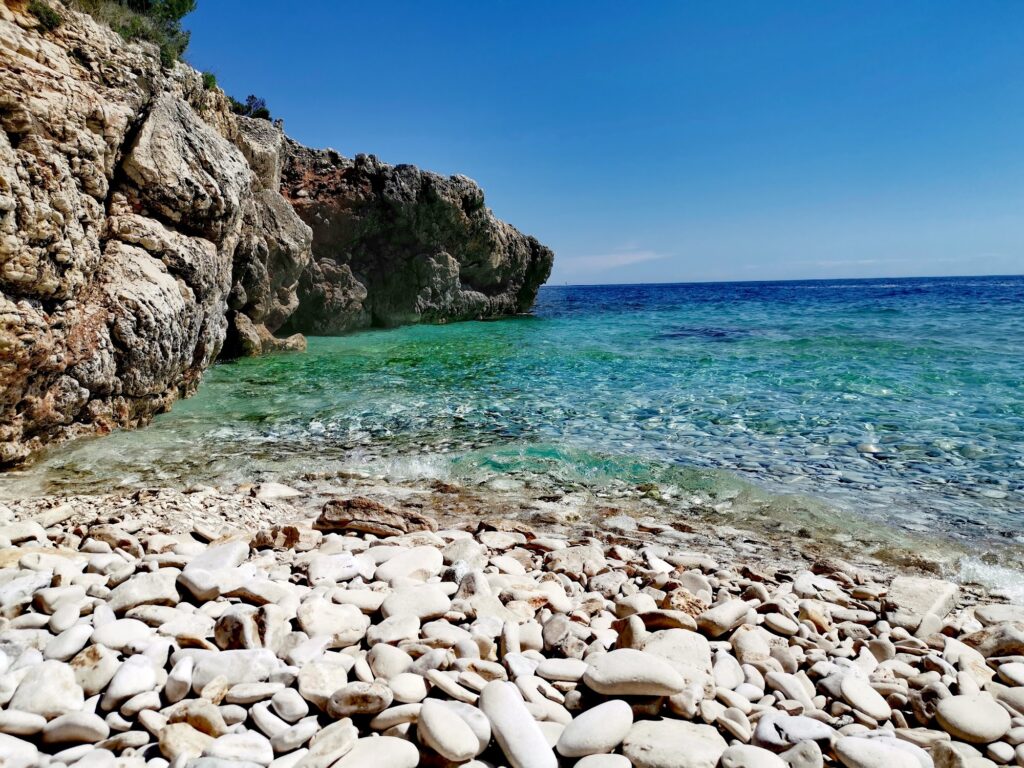
The Procipina cove is small and enclosed — a horseshoe of white pebbles in the central section, flat rocky shelves on the cliff-side margins, and a cliff line of medium height forming the bay’s arms. The carved stone staircase that provides the standard approach descends from the cliff-top path above the cove through the pine trees, revealing the bay below in stages as the stairs wind down through the rock and vegetation. The first sight of the water from halfway down the stairs — the specific electric blue that the clear water over the white pebble bottom and the rocky walls of the cove produce in direct sunlight — is the visual that has made Hawaii Beach one of the most photographed beach locations on the Pula coast.
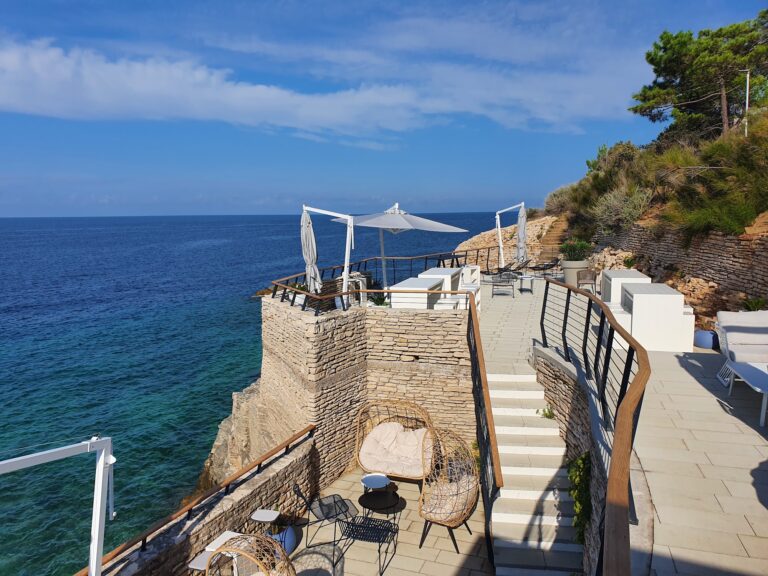
The boardwalk that passes above the beach allows the full colour range of the water to be seen from above — the palette from pale turquoise in the shallows through deep sapphire where the depth drops away from the cliff base — before the descent to the pebble shore. That elevated view is worth pausing on before descending, as the geometry of the cove and the scale of the cliff line are more readable from above than from the beach itself.
The pebble entry is gradual at the central section of the cove — softer than the abrupt rocky entries of some Pula beaches — though water shoes are recommended for the rocky sections on the sides and for the approach to the cliff-base jumping positions. The water deepens quickly from the central shore, which distinguishes Hawaii Beach from the shallow family beaches of the Pula area and makes it better suited to confident swimmers than to young children or non-swimmers.
Water Quality and the Verudela Snorkelling Route
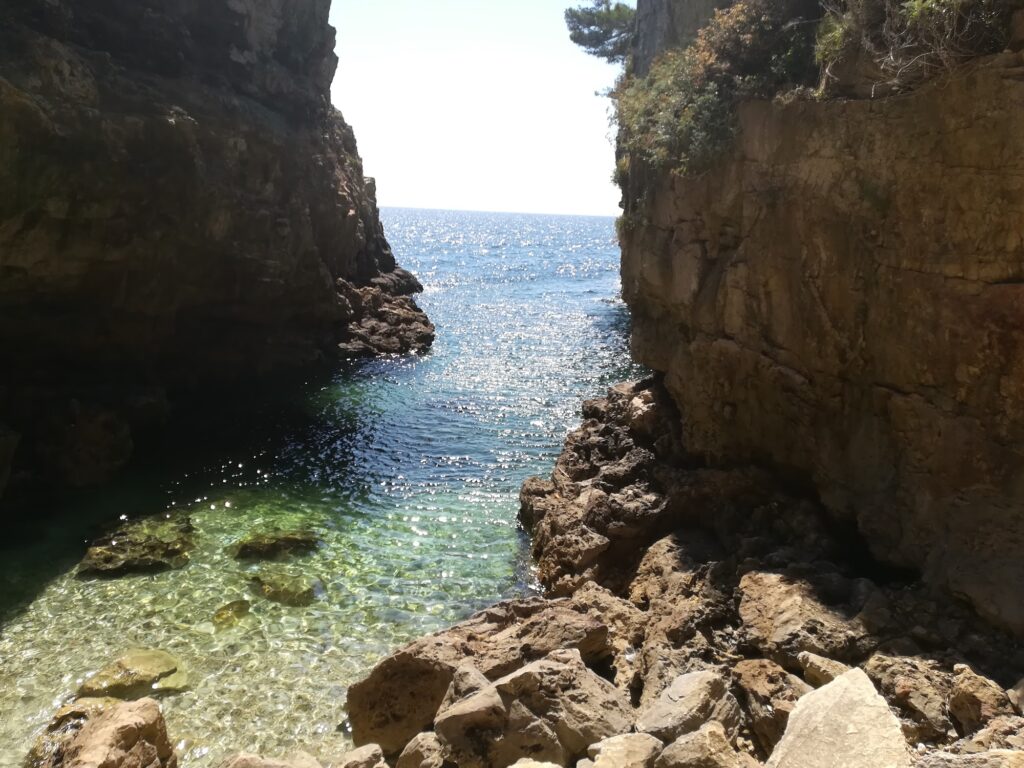
The water quality at Hawaii Beach reflects the Verudela peninsula’s exposed western position, which maintains the open-sea circulation that keeps the water clear. The visibility in calm conditions is sufficient to see the bottom at significant depth — the Istria tourist board’s snorkelling guide documents visibility to 20 metres in good conditions along the western Hawaii coast. The snorkelling itinerary leads west toward the Verudela Canyon — a deep cut in the cliff where the underwater wall cascades to depth — and the rocky coastal margin between Hawaii Beach and the Canyon carries false coral gardens, the protected cowry snail, sea bass, sea bream, and nudibranchs among the shaded rock formations.
The snorkelling along the right-hand cliff face of the cove — heading west toward the Canyon at surface level — requires comfort in open water next to vertical rock, as the route runs along the cliff base rather than across open water. The underwater walls that drop from that cliff base provide the specific habitat that the marine life concentrations depend on, and following them westward from the cove is the productive direction for extended snorkelling beyond the immediate beach area.
The jugo wind condition that gave the beach its name also produces the water clarity limitation that some visitor accounts describe — when the southerly drives foam and surface disturbance into the cove, the visibility drops and the character of the beach shifts from the calm-day electric blue to the white-crested energy that generates the Hawaiian comparison. This is a periodic rather than daily condition, but it is worth checking wind forecasts before a visit specifically planned for snorkelling.
Cliff Jumping at Hawaii Beach
The cliff sides of Procipina cove provide jumping positions at various heights — the rocky shelves on the bay’s arms offering the lower options accessible to most swimmers, the higher cliff edges reserved for those with specific experience and confidence. The deep, clear water below the main jumping positions makes the activity practical for those who are comfortable with the entry, and the medium cliff heights at Hawaii are more accessible than the higher positions at Galebove Stijene Pula to the northwest, which is the comparison most Pula visitors with cliff jumping interest will make.
The standard cautions apply: no lifeguard is present directly on the beach, the water depth at specific points should be confirmed before jumping, and swimmers below the jump landing zone need to clear before any jump. Jellyfish appear in the Pula coastal waters at certain times during summer, particularly late August — checking conditions before swimming on any given day is the standard local practice.
Facilities: What the Verudela Context Provides
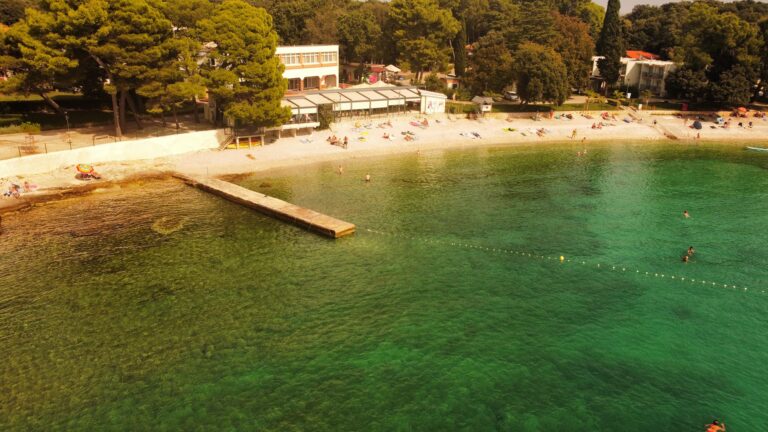
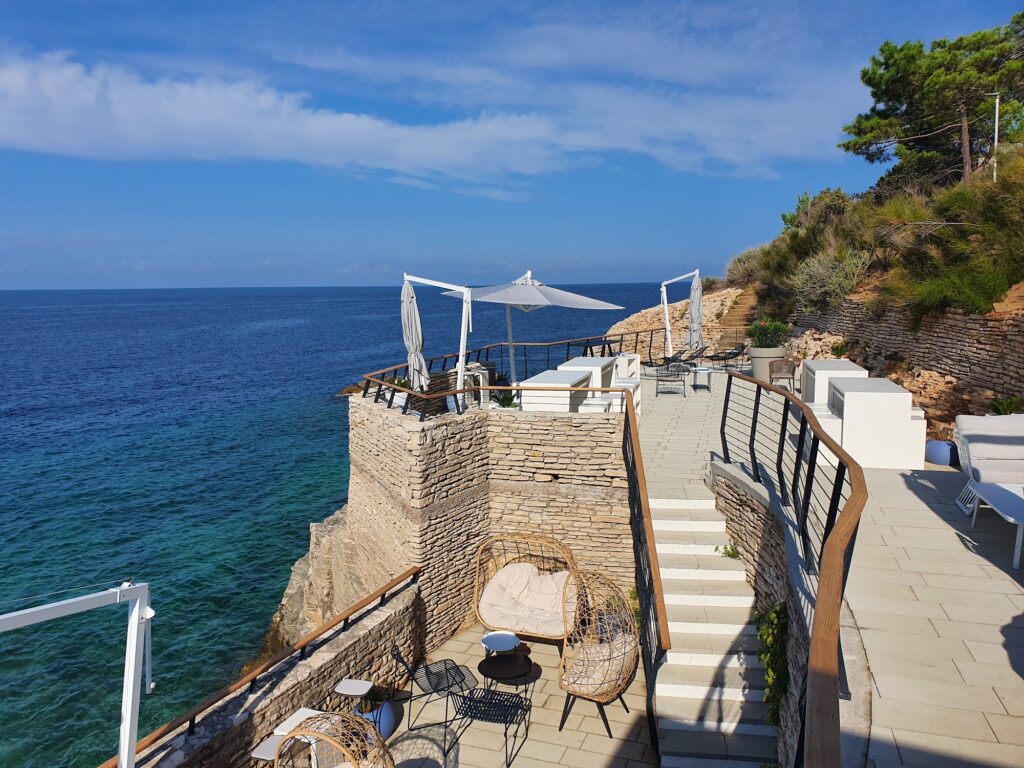
Hawaii Beach itself has no restrooms, no showers, and no bar directly on the cove. Sunbeds and umbrellas are available for hire at the beach entrance level, and refreshments can be obtained from the hotel and resort infrastructure above the cliff staircase. The nearest food provision in full form — restaurants, cafés, and full dining — is within the Verudela resort a few minutes’ walk back up through the pine forest.
That proximity to resort infrastructure is what distinguishes Hawaii Beach from the fully wild sites like Galebove stijene — the absence of on-site facilities is mitigated by the five-minute walk to the Park Plaza and Radisson hotel facilities above the cove. For visitors not staying at those hotels, the facilities are accessible without hotel-guest status, and the Verudela resort restaurants are open to day visitors throughout the summer season.
The Verudela Canyon — the rocky inlet to the west of Hawaii Beach accessible by kayak along the cliff line — is offered as an extension destination by local kayak tour operators. The transparent kayak rental available near the beach allows the underwater colour quality of the Verudela waters to be seen from the boat surface as well as from below, which is the specific feature that the transparent hull provides in water this clear.
Hawaii Beach with Families and Older Children
The central pebble section of Procipina cove has a gradual entry that makes it accessible to families with older children who can manage the pebble shore and the deepening water beyond the shallows. The water depth increasing quickly from the pebble edge is the key consideration for parents — this is not a wading beach with an extended shallow zone, and young children who are not confident swimmers require constant supervision from the moment they enter the water.
For families with toddlers or very young children, the calmer and shallower beaches of the Verudela peninsula — Histria Beach and Ambrela Beach on the eastern side of the peninsula, where the enclosed Verudela bay produces the flatter, warmer water conditions — are the more practical choices. Hawaii Beach is where older children and teenagers who want cliff access, cliff jumping, and the dramatic cove character come; the peninsula’s eastern beaches are where families with young children come. Both are within a few minutes’ walk of each other through the resort paths.
The Verudela Peninsula Context
The Verudela peninsula is Pula’s primary resort zone — a pine-covered headland south of the city with four hotels, multiple beaches, and the path network that connects them along the cliff-top Lungomare trail. Hawaii Beach is one of four beaches on the peninsula, each with a distinct character: Ambrela and Histria on the eastern sheltered side, calmer and more family-oriented; Hawaii on the western exposed side, dramatic and clear. The Lungomare trail that runs around the peninsula’s edge connects all four and provides the context for understanding how the cliff geometry of the western coast produces both the colour and the wave conditions that define Hawaii Beach’s character.
The Brijuni national park islands are visible on the northwestern horizon from the western Verudela cliffs — the same archipelago that the Park Plaza Verudela hotel complex faces. Evening from the cliff path above Hawaii Beach, with the Brijuni silhouettes against the sunset, is the specific Pula coastal view that the peninsula’s western orientation produces each clear day.
Final Thoughts
Hawaii Beach in Pula earns its name not from daily waves but from the specific combination of electric blue water, enclosing cliffs, carved stone staircase descent, and the memory of what the cove looks like when the jugo is blowing hard from the south. On the calm summer days that constitute most visits, it is the clearest-watered and most visually dramatic cove beach on the Verudela peninsula — small, compact, crowded by midday, and at its best before ten in the morning when the light is still eastern and the water is still.
Take the bus to Verudela. Descend the stone stairs through the pines.
The colour will explain the name.
Map
Sorry, no records were found. Please adjust your search criteria and try again.
Sorry, unable to load the Maps API.
Near by places: