Gortan Cove Pula: Pebble Shore on the Lungomare
Profile
Gortan Cove, Pula: Pebble Shore and Pine Shade on the Lungomare Promenade
Croatia | Pula | Istrian Peninsula
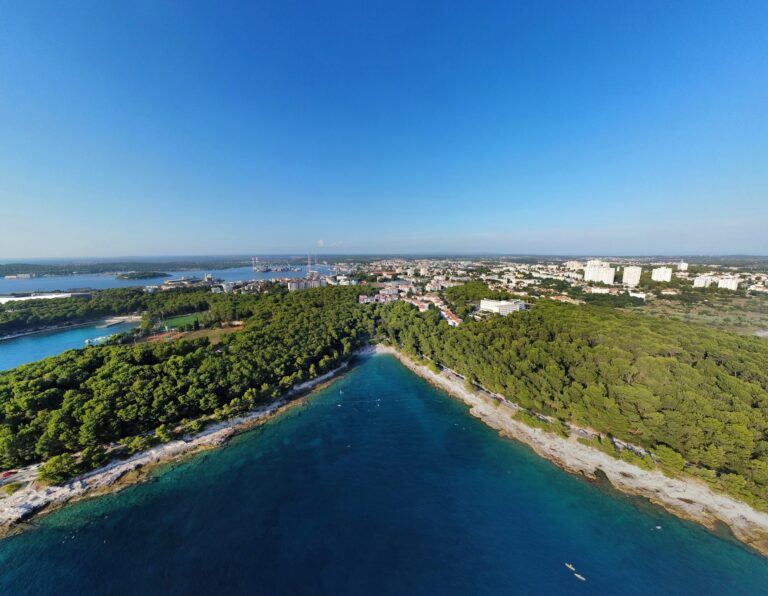
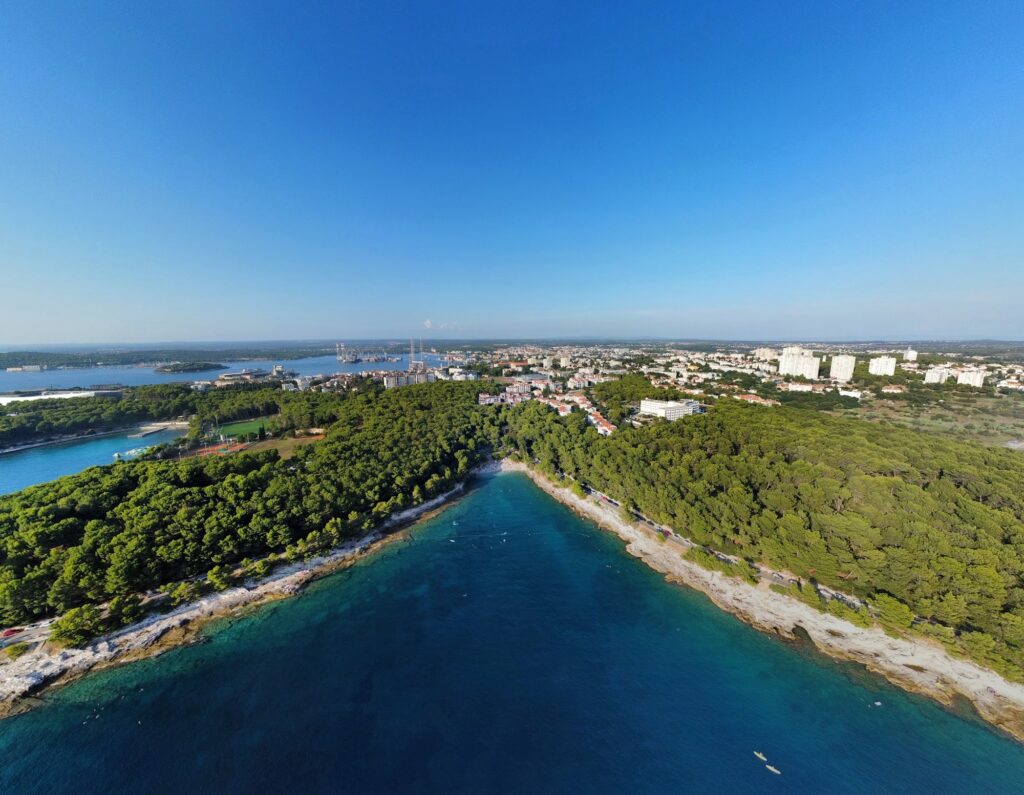
The Lungomare is one of the defining walks of Pula — a four-kilometre coastal promenade that runs from the Valkane bathing area along the rocky shoreline southward to Gortanova Cove and continues to Valsaline. Along its full length the path is essentially a beach: rocky shelves, pebble coves, and pine forest above, the Adriatic directly below. Of the several coves it passes through, Gortan Cove — Gortanova uvala — is the most formally defined, the one most consistently identified as the destination rather than a stopping point on the walk.
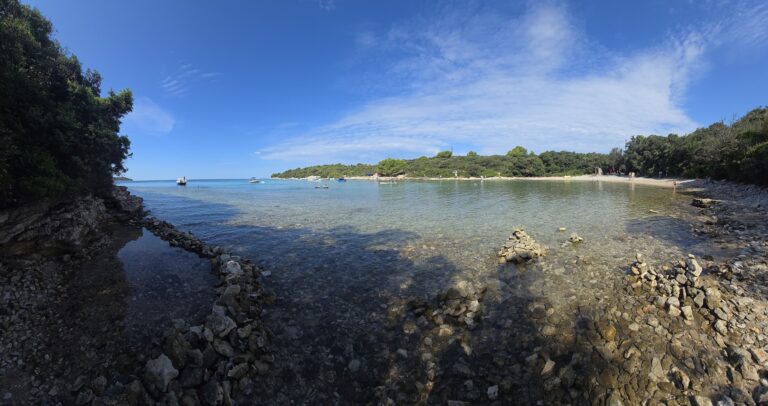
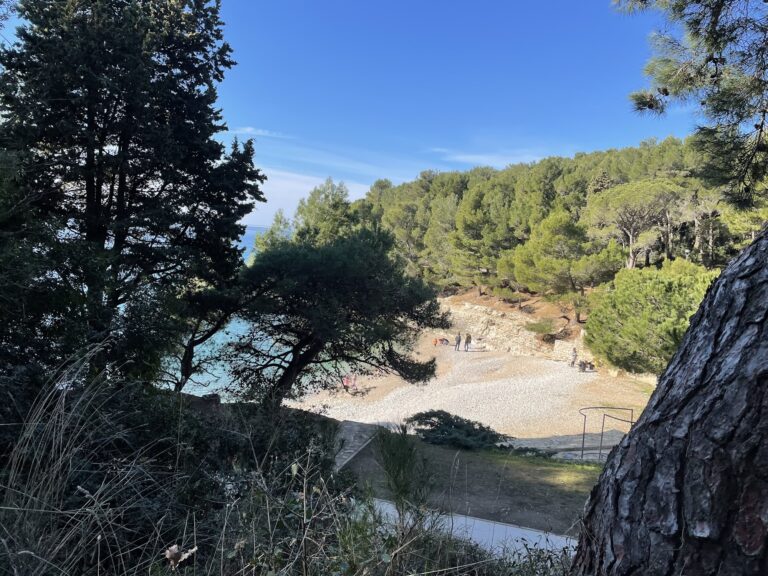
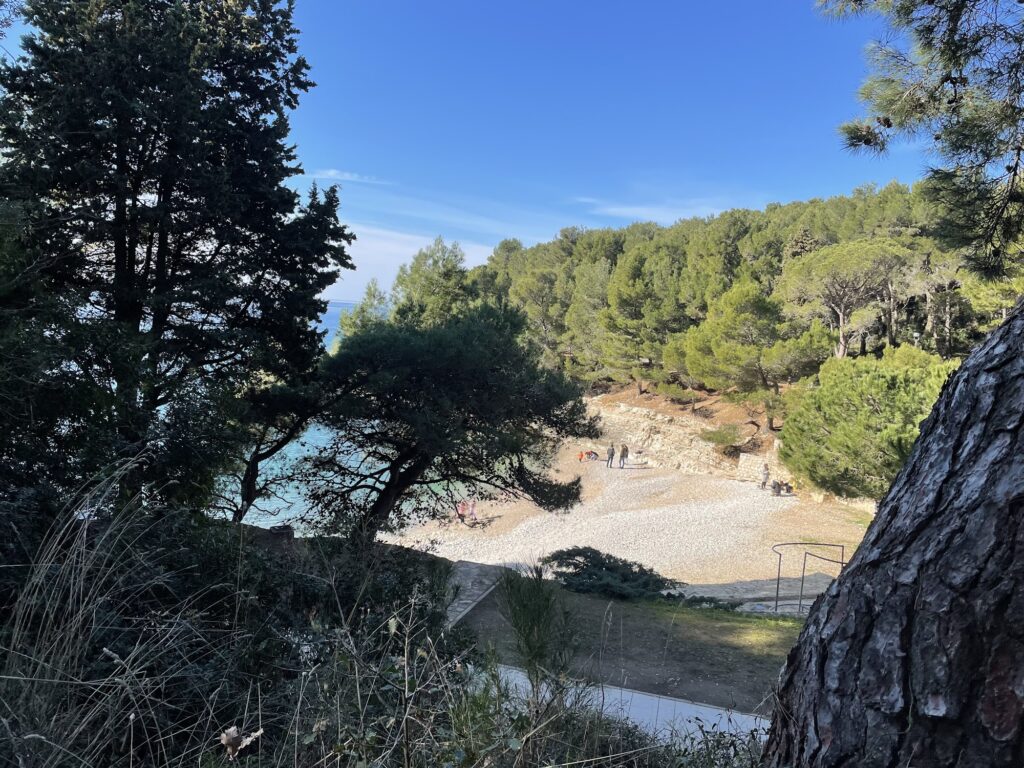
The cove is small. That is the fact to know before arriving, and it is the fact that shapes the experience most directly. Gortan Cove is a narrow inlet with a pebble centre, stair-like rocky plateaus on the sides, and pine trees above providing shade across the upper shore. The beach bar Pomidor sits directly above the cove with a terrace overlooking the water, and the monument to Vladimir Gortan — the Croatian politician and anti-fascist executed in 1929 for opposing the Italianisation of Istria — stands nearby as the historical anchor that gives the cove its name and its specific character among Pula’s beaches. In summer afternoons the cove is crowded, the size making that density more noticeable than at longer beaches. In the morning before ten and in the late afternoon after five, it is the kind of place that the Lungomare’s designers and the pine-planting that preceded them by decades were clearly trying to create: a cove with shade, clear water, and a bar.
Getting There: The Lungomare Walk from Pula Centre, by Bus, or by Car
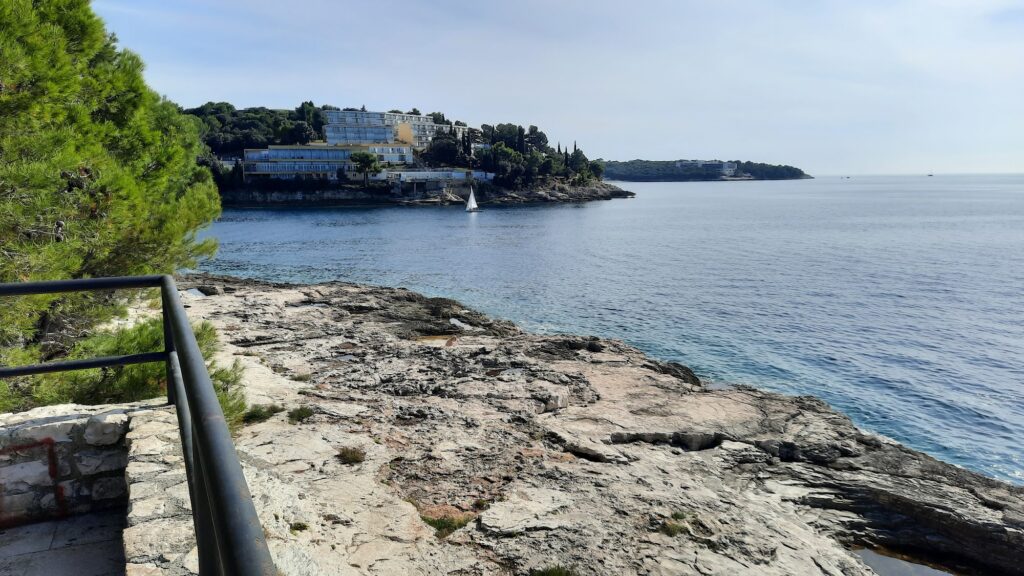
The Lungomare promenade is the most pleasant route to Gortan Cove from Pula city centre — a 30-minute walk from the old town along the waterfront that follows the rocky shore south through Valkane and continues to the cove. The path is shaded for much of its length by the pine trees that border it, and the walk itself — past the Roman-era shoreline, the rocky swimming areas at Valkane, and the sequence of small coves — is worth the full duration rather than just the arrival.
By bus, Pulapromet lines 4 and 6 reach the Lungomare area, with the stop within a five to fifteen-minute walk of the cove depending on the exact stop. The bus journey from the city centre takes around ten minutes. For visitors using public transport, the bus to the Lungomare and the walk back to the city centre along the promenade in the evening is the natural combination.
By car, the coastal road along the Lungomare has free street parking available at various points. Spaces fill through the morning during July and August — the proximity to the city centre and the absence of a paid parking structure means demand is high and spaces are informal. Arriving before nine in the morning or after five in the afternoon gives the best chance of roadside parking close to the cove.
The Cove: Pebbles, Rocky Plateaus, Staircase Entry, and Pine Shade
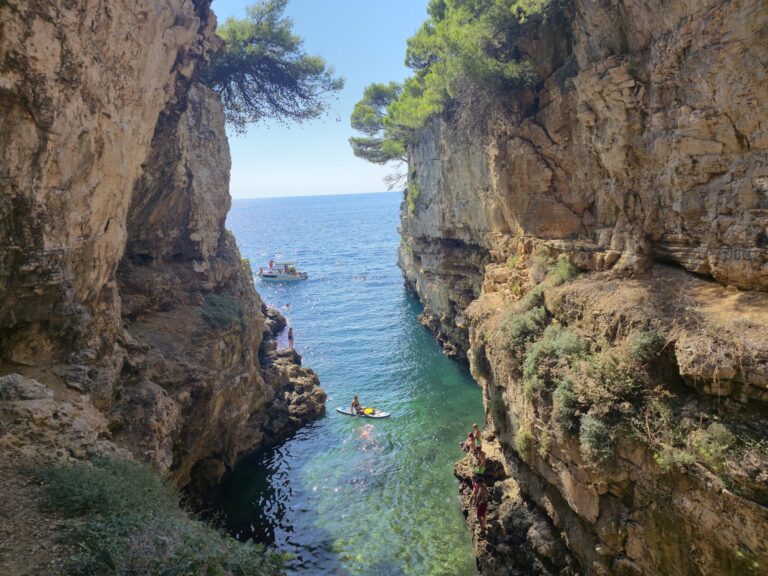
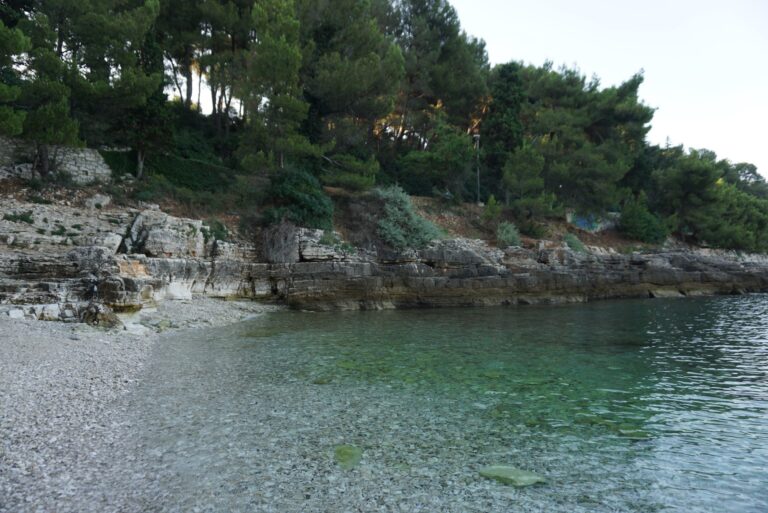
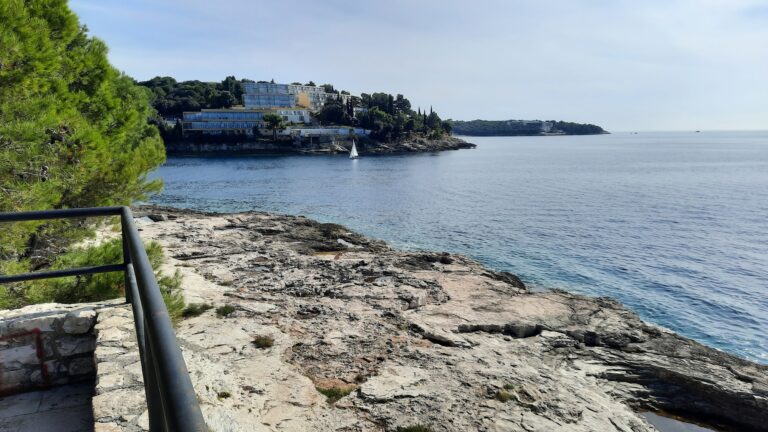
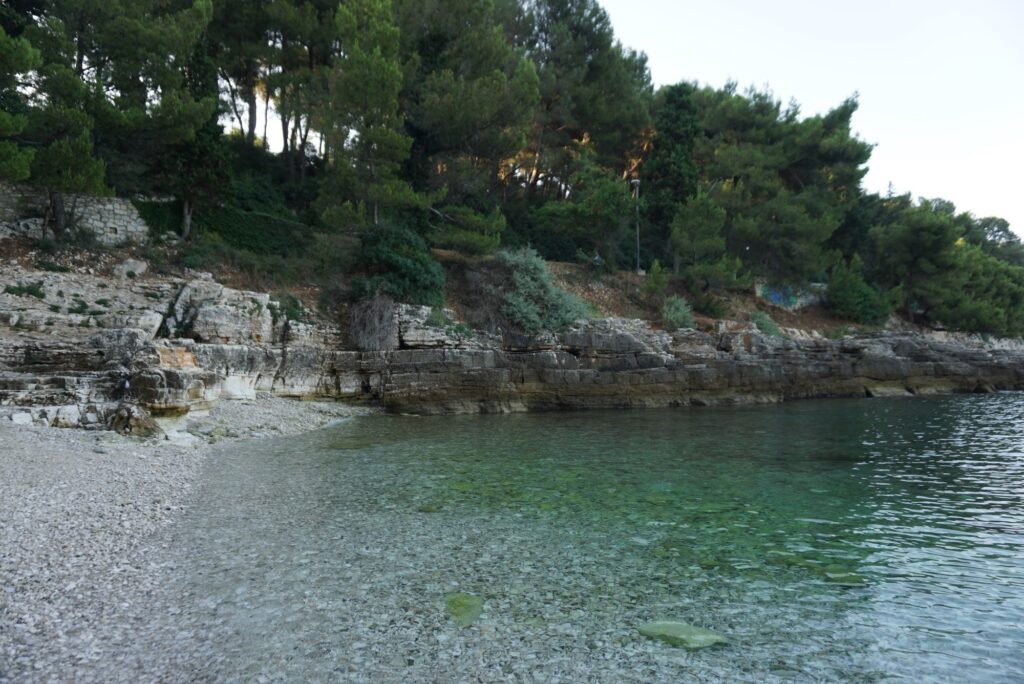
Gortan Cove is entered from the Lungomare path by a stone staircase that descends from the promenade level to the pebble shore below. The central section of the cove is pebble — smooth and accessible — with a shallow sea entry that makes the beach practical for families with young children. The sides of the cove are the stair-like limestone rock plateaus that characterise the Pula coastal geology: flat, warm surfaces at various heights above the water that provide sunbathing space for those who prefer rock to pebble and a degree of separation from the more crowded central section.
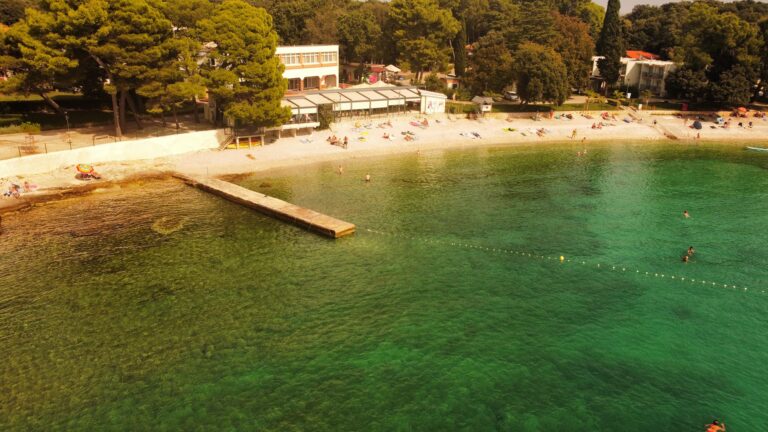
The shallowness of the sea entry is the family characteristic that multiple sources identify — the gradual slope from pebble shore into the water keeps depth manageable close to shore, and the safety net buoys that mark the swimming zone within the cove add a physical boundary that makes supervision of young children more straightforward. There is no lifeguard on duty — the source article’s claim of certified lifeguard presence is not supported by the verified information — but the calm water conditions and the safety net structure provide the practical swimming security that the cove is known for.
The pine trees above the upper shore and the promenade path provide genuine shade across the back of the cove through the middle of the day, which matters at a beach this size where the shaded zone is the difference between a comfortable afternoon and an overcrowded one. Water shoes are recommended — sea urchins have been reported in the rocky sections of the cove, and the plateau rock surfaces at the sides are not smooth underfoot.
The Lungomare Promenade: Four Kilometres of Rocky Shore
Gortan Cove is the named destination on the Lungomare, but the promenade itself is the broader context that gives the cove its significance. The four kilometres from Valkane to Gortanova Cove and continuing to Valsaline constitute one of the better waterfront walking routes in Istria — shaded, varied in its rocky cove and limestone shelf composition, and connecting the city’s residential western neighbourhood to the water in a way that has made it a daily route for Pula residents across multiple generations.
The Valkane bathing area at the promenade’s northern end is the larger, more organised alternative to Gortan Cove at the southern end — a broader facility with more capacity, partly sandy in sections, and with the Pula Hotel and the Valkane sports centre adjacent. The walk between the two covers the full character of the Lungomare in both directions, and visitors who use the promenade as a walking route with Gortan Cove as the turning point get the most complete version of what the waterfront offers.
The evening use of the Lungomare — the passeggiata quality of the walk in the hour before sunset when the promenade fills with locals — reflects the Istrian coast’s Italian cultural inheritance in its most direct and pleasant form. The bar Pomidor above Gortan Cove has a terrace positioned to catch the evening light across the water, and it is a consistently mentioned destination in visitor accounts specifically for the sunset hour.
Vladimir Gortan and the Historical Dimension of the Cove
The monument to Vladimir Gortan above the beach is not incidental decoration. Gortan was a Croatian farmer from the Istrian village of Pazin area who became a central figure in the anti-fascist resistance to Italian rule over Istria in the 1920s. He was executed on 17 October 1929 for his participation in a deadly incident during a protest against the Italianisation policies being imposed on the Croatian population of Istria under Mussolini’s government. His name on the cove connects the beach to the specifically Istrian history of the twentieth century — a history that the Lungomare itself embodies, having been developed as a public amenity during the period of Italian administration and carried its current Croatian name through the postwar return of Istria to Yugoslav and later Croatian governance.
That historical layer is present in the monument, visible to everyone who descends the stairs from the Lungomare to the pebble shore. It adds a dimension to the cove that the beach’s physical character alone would not have, and it makes the Gortan name something more than a location label.
Facilities at Gortan Cove
The facilities at Gortan Cove are modest and consistent with a small urban beach on a public promenade. Public toilets are available. Sunbed and umbrella rental is provided. The Pomidor beach bar operates year-round — a specific distinction among Pula’s beach bars, most of which close outside the summer season — serving drinks, coffee, and light food from a terrace positioned directly above the water. The bar’s year-round operation makes Gortan Cove a destination across the seasons rather than purely in summer, and the off-season visit — the Lungomare in autumn light with the water clear and the bar open and the crowds absent — is described favourably in visitor accounts.
There is no lifeguard on permanent duty, no freshwater shower directly on the beach, and no changing room facility. The Pomidor bar’s toilet provision is the primary sanitary facility for beach visitors. Free parking along the Lungomare road is the parking provision — limited, informal, and requiring early arrival in peak season.
Gortan Cove with Families and Children
The shallow entry, the safety net buoys marking the swimming boundary, the pine shade above the shore, and the pebble surface in the central cove make Gortanova uvala one of the more family-suited city beaches in Pula. The compactness of the cove means young children are visible at all times from the promenade above or from the pebble shore, which reduces the supervision effort that a larger, more spread-out beach requires.
The evening character of the cove — the young crowd that arrives after the family beach hours, the Pomidor bar terrace filling through the late afternoon and into the evening — means the beach transitions in atmosphere across the day in a way that larger organised beaches do not. Families with young children are well served in the morning and early afternoon. The evening at Gortan Cove belongs to the Lungomare walkers, the bar terrace crowd, and the teenagers using the rocky plateaus until the light fails.
For families who want a larger pebble beach with full resort infrastructure nearby, Hawaii Beach Pula on the Verudela peninsula is a short drive away and offers similar water quality with the hotel zone facilities above the cove. For families who want the city beach character of Gortan Cove with more capacity, the Valkane area at the northern end of the Lungomare provides the alternative on the same promenade.
Seasonal Timing and the Lungomare in Context
The peak season crowd compression at Gortan Cove is the most significant practical consideration — the small cove size means that the afternoon of a hot July day produces conditions that the source article’s description of serene tranquillity does not match. The early morning before ten, the late afternoon after five, and the shoulder months of June and September are when the cove delivers the character it is capable of. The Pomidor bar’s year-round operation means autumn and spring visits are fully supported.
The Lungomare itself is worth planning as a walk rather than purely as access to the cove — the four kilometres of coastal path, the rocky shore swimming at Valkane, the progression of pine-shaded coves, and the arrival at Gortan as the endpoint constitute one of the better half-day activities available in Pula at any time of year.
Gortan Cove on Pula’s Lungomare is a city beach of modest size and considerable character — the pebble shore, the stair-like rock plateaus, the pine shade, the Pomidor bar open every day of the year, and the Gortan monument above connecting the swimming cove to the specific and difficult history of Istria in the twentieth century.
Walk the Lungomare south from Valkane. The stairs down to the pebbles are on the left.
The bar opens early. The monument is there regardless.
Map
Sorry, no records were found. Please adjust your search criteria and try again.
Sorry, unable to load the Maps API.
Near by places: