Galebove Stijene Pula: Seagull's Rocks and the Cave
Profile
Galebove Stijene, Pula: Seagull’s Rocks, the Galebijana Cave, and the Muzil Peninsula Coastline
Croatia | Pula | Istrian Peninsula
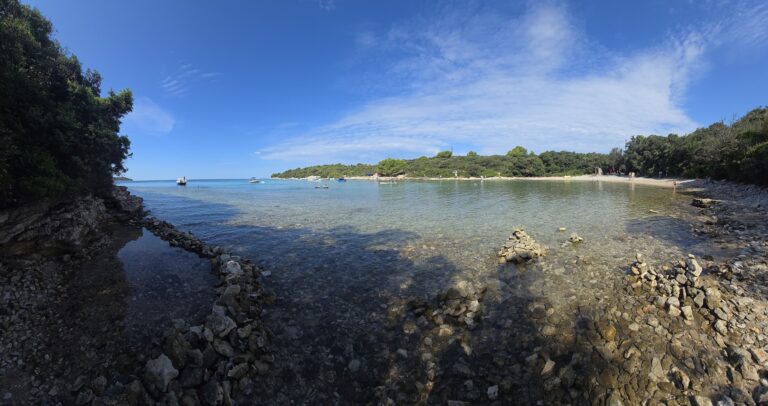
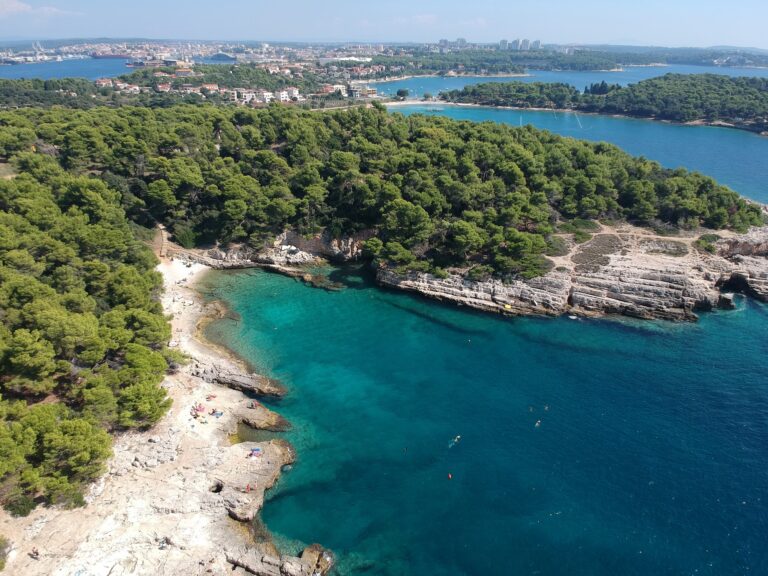
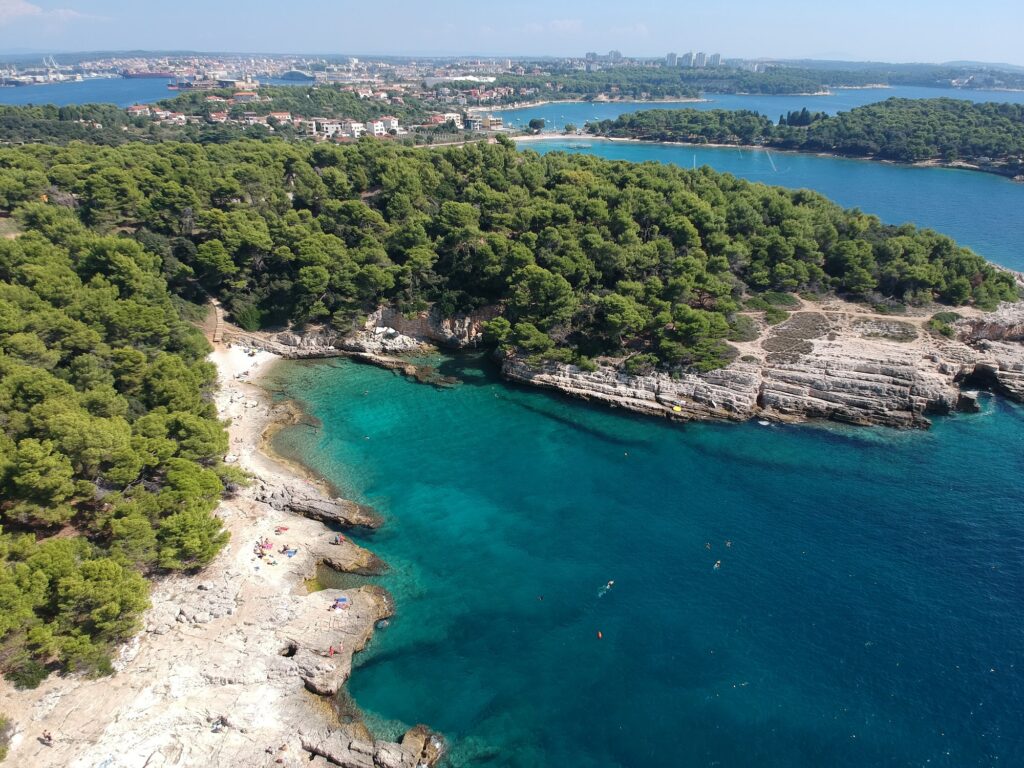
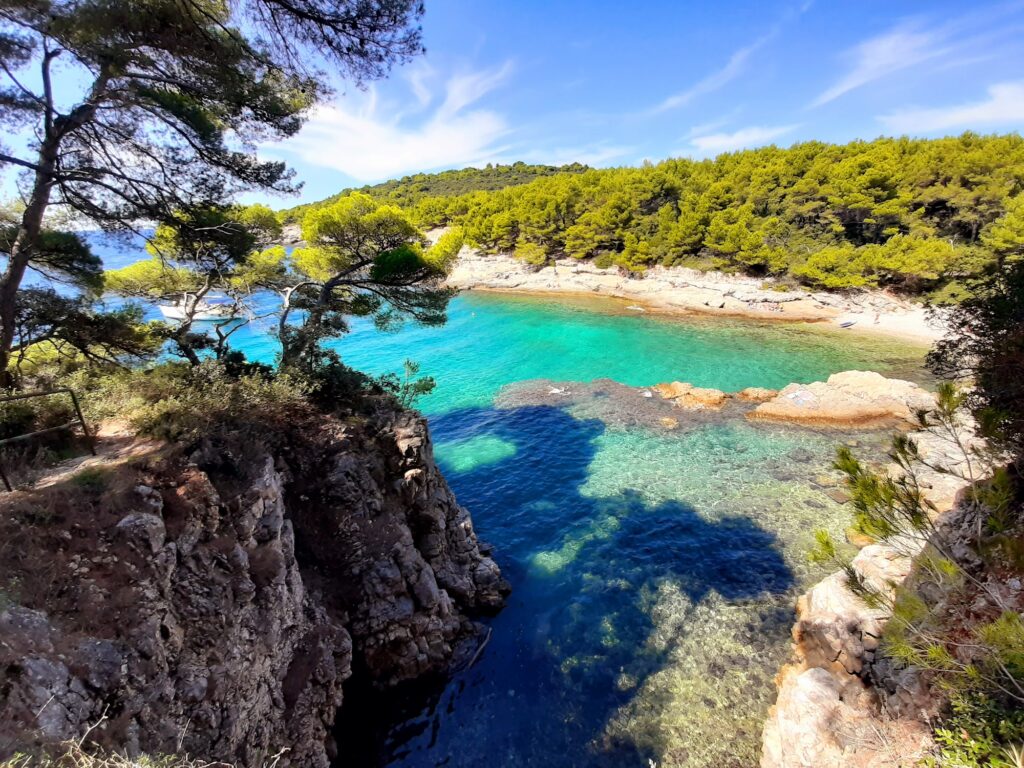
The name comes from the seagulls. Galebove stijene — Seagull’s Rocks — is the most westerly beach in Pula, sitting on the southern end of the Muzil peninsula in the Stoja neighbourhood, its cliff line facing the open Adriatic and the island coastline of the Brijuni archipelago to the northwest. The seagulls are still there, as they have always been on limestone cliffs above deep water, and the rocks that give the beach its name are the defining physical feature: terrace-like limestone shelves dropping abruptly into clear, deep sea, with the Galebijana cave cut into the cliff face at water level, its interior accessible by swimming or canoe.
Galebove stijene ranks first among 246 beaches in the Istria region by one beach database’s classification — a ranking that reflects the quality of the site and the clarity of its water rather than the comfort of the experience. There are no facilities here. No bar, no toilets, no showers, no lifeguard, no sunbed rental, no infrastructure of any kind. The pine forest above the rocks provides shade and the possibility of hanging a hammock between the trees; everything else must arrive with the visitor. That condition is the same condition that makes the site what it is, and understanding it before arrival is the difference between a day that works and one that does not.
Getting There: Bus Line 4 to Stoja, by Car, or by Kayak from Valovine
From Pula city centre, Galebove stijene is approximately 3.3 kilometres to the southwest — a distance that the Pulapromet bus line 4 covers to the Stoja terminus, from which a ten-minute walk through the pine forest reaches the rocks. The bus is the practical option for visitors without a car and removes the parking problem that high-season mornings at the site produce.
By car, the approach follows the Stoja road to parking areas near the forest edge. Those parking spaces fill before ten in the morning during July and August — visitor accounts across multiple sources are consistent on this point. Street parking along the access roads provides additional capacity but requires a longer walk. Cars with low ground clearance should note that the final approach road is rough in sections.
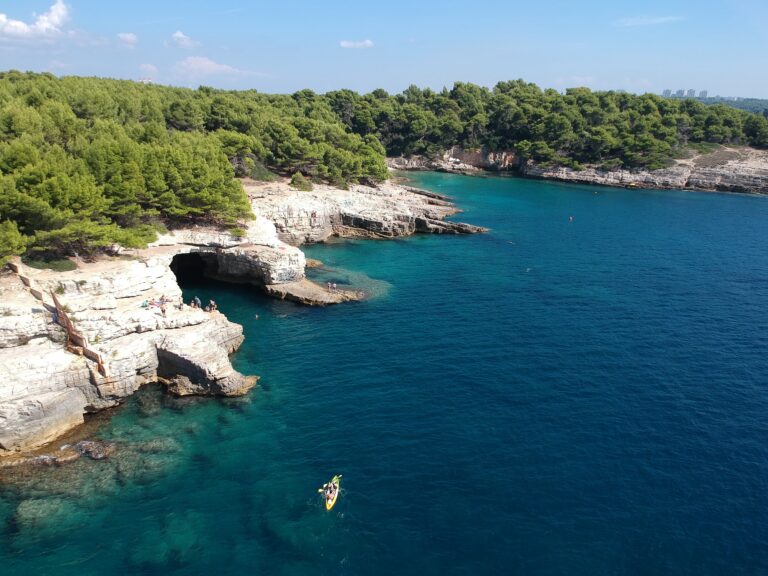
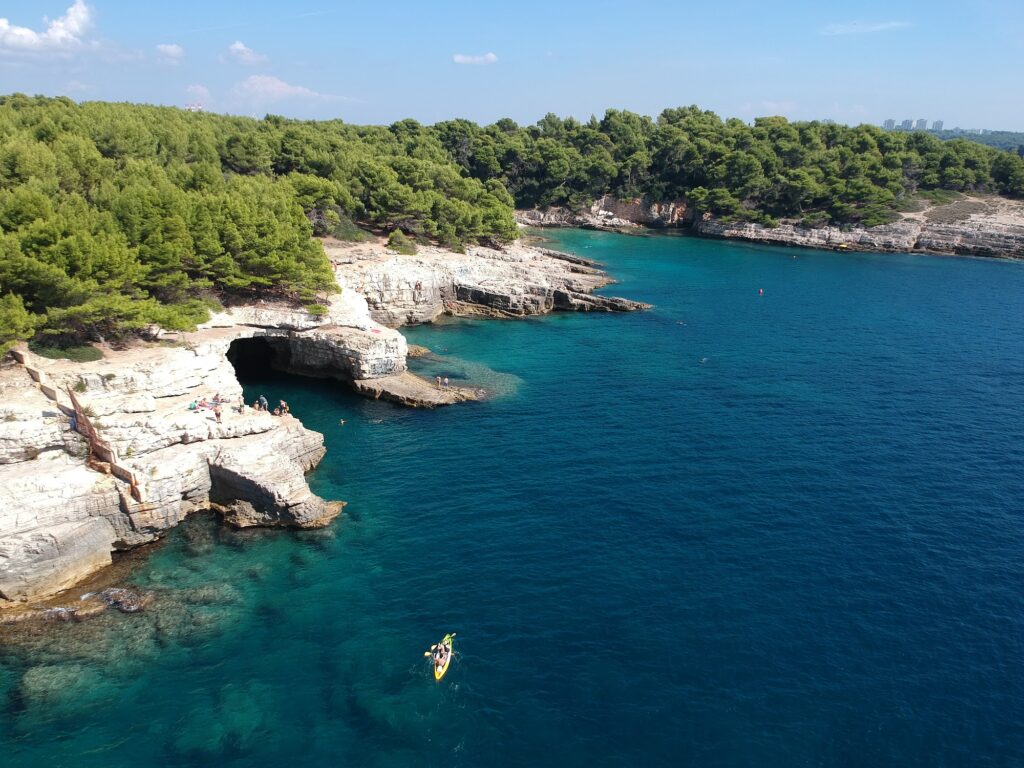
The kayak approach is the third option and, for understanding the site properly, the most revealing. Organised kayak tours from Valovine bay on the Pula waterfront reach the Galebove stijene coastline by paddling around the Muzil peninsula, entering the Galebijana cave from the water and stopping at the rocks for swimming and cliff jumping. These tours — run by operators based in the Pula harbour area — provide the context of the full Muzil cliff coastline that the land approach through the forest does not show. Booking in advance is advisable in peak season when tour capacity fills.
The Rocks: Limestone Terraces, Pine Forest, and the Muzil Peninsula
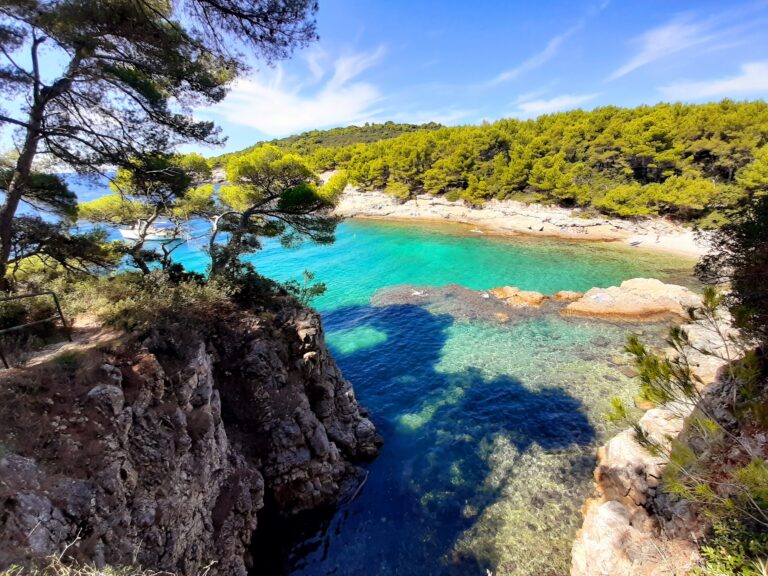
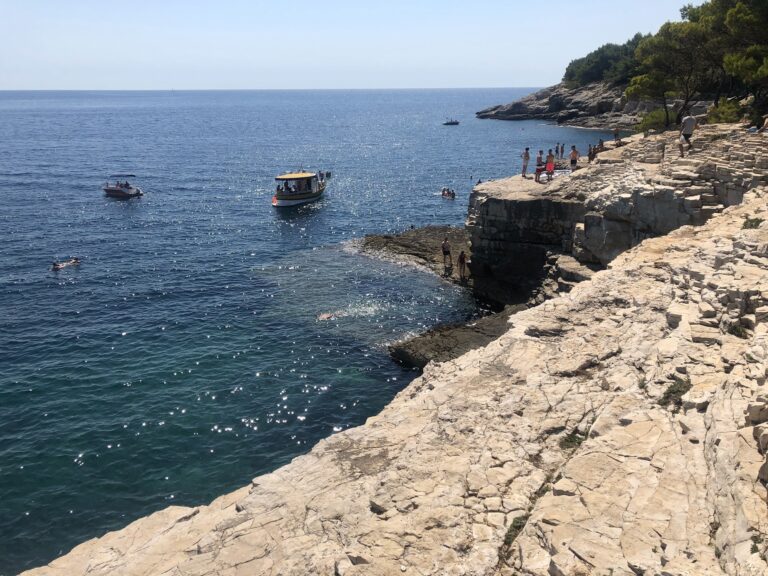
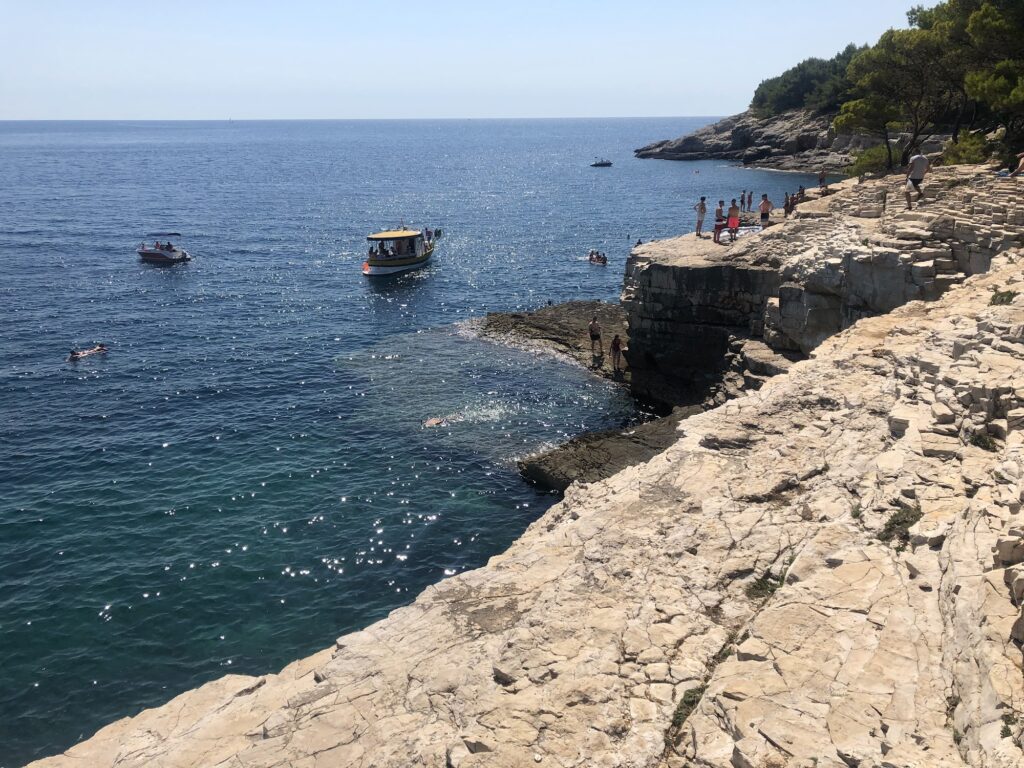
Galebove stijene is not a beach in the conventional sense of a shoreline with gradual entry into the sea. It is a series of flat limestone terraces — natural rock shelves at various heights above the water — that form the platform from which swimmers enter the sea and on which people sunbathe, eat, read, and spend the day. The sea is deep immediately at the rock edge, which makes the entry a jump or a careful descent from the lower shelves rather than a wade. Water shoes are not optional here — the limestone at the waterline is sharp, and bare feet on that surface are consistently identified as the most common cause of cuts and discomfort in visitor accounts.
The pine forest begins immediately behind the upper rocks and extends back to the parking area. The trees are close enough to the shore to provide usable shade across sections of the upper terrace levels, and the hammock option that visitor accounts mention is real and widely practiced — the trees are old enough and well-spaced enough to support it. That forest shade is the site’s functional equivalent of an umbrella rental and is the reason the absence of commercial provision matters less here than it would at a pebble beach on flat terrain.
The Muzil peninsula borders the site on the eastern side — the former military base whose fence is the physical limit of the beach area and whose decommissioning over the past decades has allowed the surrounding coastline to develop the natural character it now has. The cliff views from the upper rock terraces, looking north and west across the water toward the Brijuni islands, are among the better coastal panoramas within the immediate Pula area.
The Galebijana Cave: Protected Natural Feature Under Natura Histrica
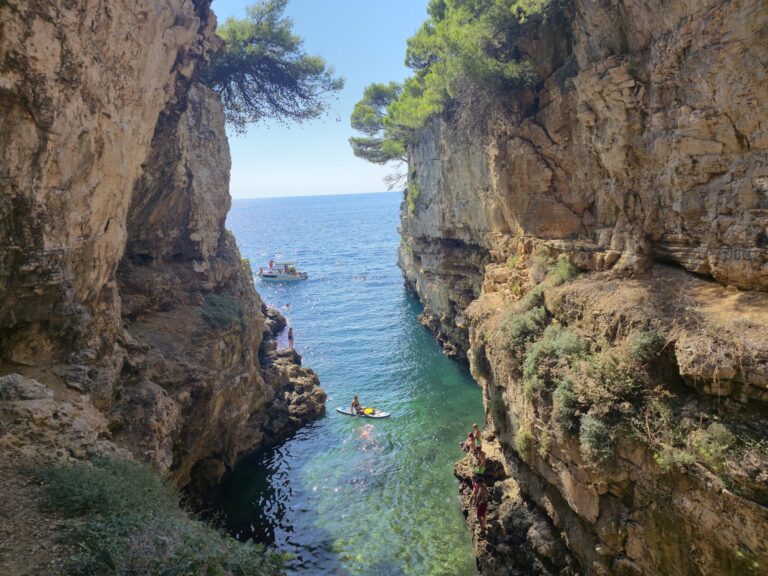
The Galebijana cave is approximately 50 metres long, cut into the cliff at water level, and accessible by swimming directly into the entrance from the open sea or by canoe. The interior is partially submerged — a hidden pebble beach inside the cave is accessible only by swimming — and the light quality within the cave, where the water’s colour is refracted from the entrance into the dark interior, is the specific visual feature that has made the cave one of the most photographed and most visited sites on the Pula coastline.
The cave is a protected natural feature under Natura Histrica — the body that manages Istria’s protected natural phenomena — which means its ecological status is formally recognised and active management is in development. The influx of tour kayaks, swimmers, and paddleboarders at peak season has prompted the Pula Harbour Master to introduce measures, with further visitor management planned by Natura Histrica to address the overcrowding that social media visibility has generated. The practical implication for independent visitors is that entry to the cave during peak July and August hours may require waiting while organised tour groups clear the space. The cave in the early morning, before tours begin operating, is a different and quieter experience.
A waterproof flashlight or head torch significantly improves the cave interior experience — the natural light from the entrance reaches only part of the interior, and the sections deeper inside are dark without additional illumination.
Cliff Jumping at Galebove Stijene
The cliff jumping at Galebove stijene is the activity that drives the site’s peak-season visitor numbers. The limestone terraces provide jumping positions at multiple heights — from the lower shelves where the entry into the water is straightforward for confident swimmers, to the higher cliff edges that are reserved for those with specific experience. The cliffs range from 9 to 14 metres at the higher positions, with deep, clear water below.
The relevant cautions apply without softening: there is no lifeguard, no organised safety provision, and no supervision. The water depth beneath jumping positions should be confirmed before any jump — the underwater topography varies, and what looks uniform from above is not always consistent. Jumpers should confirm that no swimmers are in the water below the intended landing zone before any jump. The sharp limestone at the water’s approach means entering the water cleanly matters, and landing off-axis on the rock edge is a serious injury risk.
Late August brings jellyfish to this section of the Pula coast — a seasonal presence that multiple visitor accounts flag as worth checking before swimming. The jellyfish presence is not predictable year to year but is frequent enough to constitute a genuine seasonal consideration.
No Facilities: What This Actually Means
Galebove stijene has no toilets, no showers, no bar, no restaurant, and no first aid provision on site. The nearest food and drink is in the Stoja neighbourhood a ten-minute walk back through the forest. The nearest medical provision is in Pula city centre. For a beach that ranks first in the Istria region and draws the visitor numbers that social media visibility has generated, the absence of any infrastructure is more significant than it would be at a remote beach that visitors plan for in advance.
The practical preparation list: water, food, first aid kit, waterproof flashlight for the cave, water shoes for the rocks (non-negotiable), sun protection, and a charged phone — noting that mobile coverage at the site is weak to absent, which is simultaneously the feature visitors cite as a reason to go and the reason a charged battery before arrival matters for safety.
The litter situation that visitor accounts describe — cigarette ends, plastic, and general debris — is worth acknowledging. The site’s popularity has outpaced the voluntary leave-no-trace culture that its wild character depends on, and the gap between what the site should be and what peak-season crowds make it is visible in the honest visitor reviews. Early morning and shoulder season visits largely avoid this problem.
Galebove Stijene in the Pula Beach Context
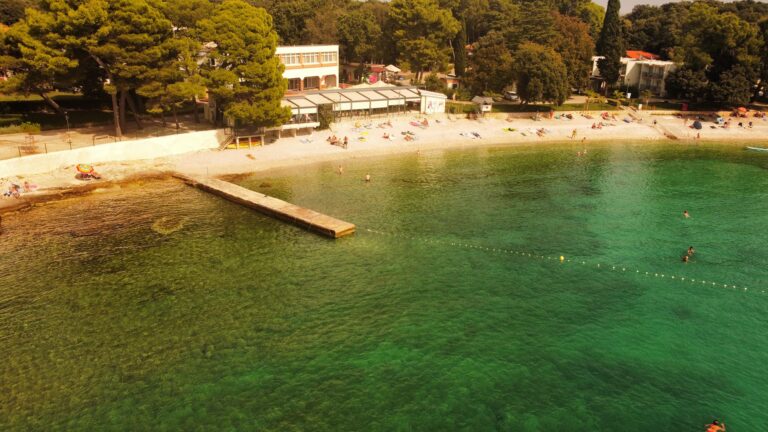
Pula has a range of beach options along its coastline — from the organised pebble and concrete beaches of the Verudela peninsula with their resort infrastructure, to the wild rocks of Galebove stijene on the Muzil coast. The contrast between those two ends of the spectrum is useful for visitors choosing between them: Verudela for facilities, shade, food, and safe supervised swimming; Galebove stijene for deep clear water, cave access, cliff jumping, and the specific atmosphere of a site that has remained physically unchanged while becoming one of the most visited beaches in the region.
For visitors combining a Pula beach day with the Kamenjak peninsula further south, Beach Njive Premantura provides a more organised alternative to Galebove stijene’s fully wild character — sunbeds, a beach bar, a managed park entry system — with comparable water quality in a protected nature park setting.
Galebove stijene in Pula is a site that rewards preparation and punishes assumption in the same way that all genuinely wild coastal locations do — but the proximity to a major city and the social media visibility mean the assumption problem is more common here than it should be.
Take bus 4 to Stoja. Walk through the pines. Bring everything you need.
The cave will be worth it. Go before the tours arrive.
Map
Sorry, no records were found. Please adjust your search criteria and try again.
Sorry, unable to load the Maps API.
Near by places: