Kolovare Beach Zadar: Oldest City Shore Beneath the Pines
Profile
Kolovare Beach, Zadar: The City’s Oldest Shore Beneath the Pines on the Zadar Channel
Croatia | Zadar | Northern Dalmatia
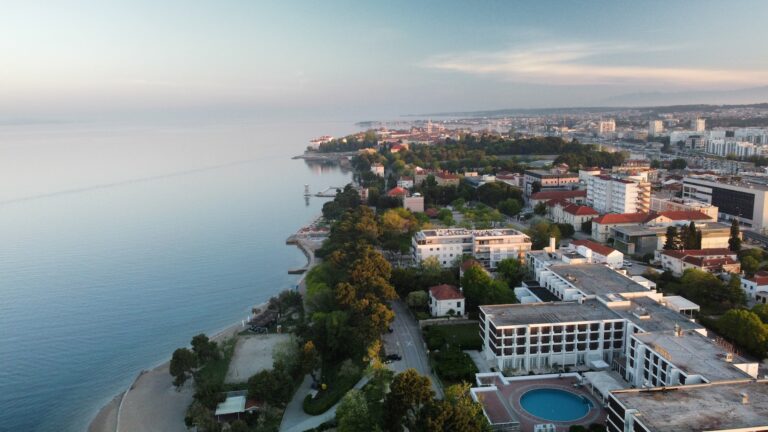
Zadar is a city whose relationship with the sea is woven into everything about it. The Roman forum stands three hundred metres from the waterfront. The Sea Organ — the architectural instrument built into the stone quay of the old town promenade where the waves play through underwater pipes and produce a continuous harmonic sound — is a monument to the fact that in Zadar, the Adriatic is not a backdrop to the city but a constituent part of it. Kolovare Beach sits ten minutes’ walk south of that promenade, and its character is consistent with that relationship: a city beach in the most direct sense, accessible on foot from the old town, backed by a pine grove that has been there as long as the beach itself, and holding the Blue Flag certification that confirms the water quality the Zadar Channel maintains despite the urban location.
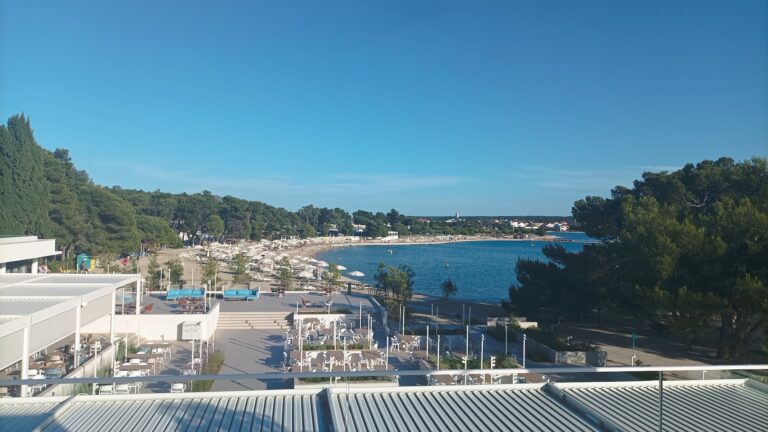
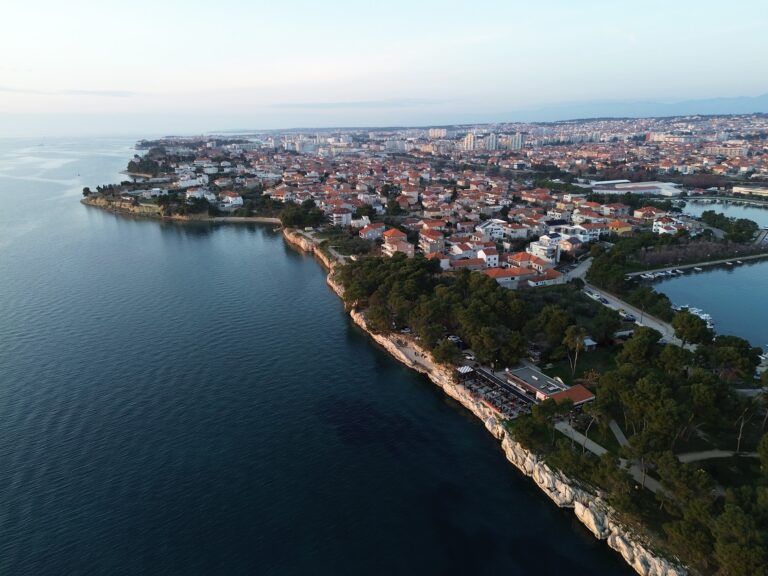
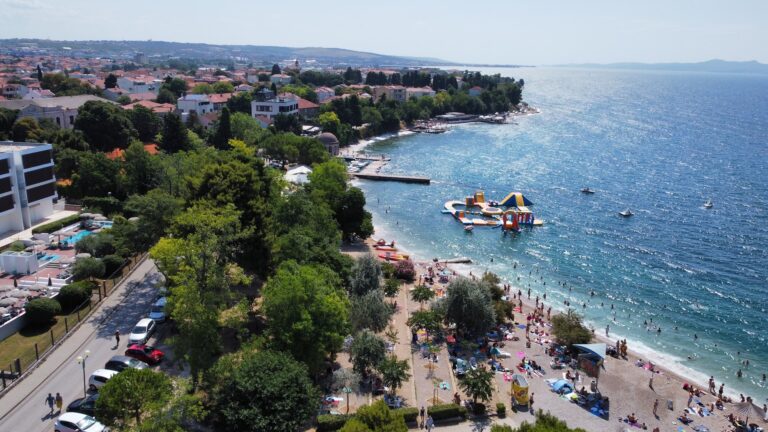
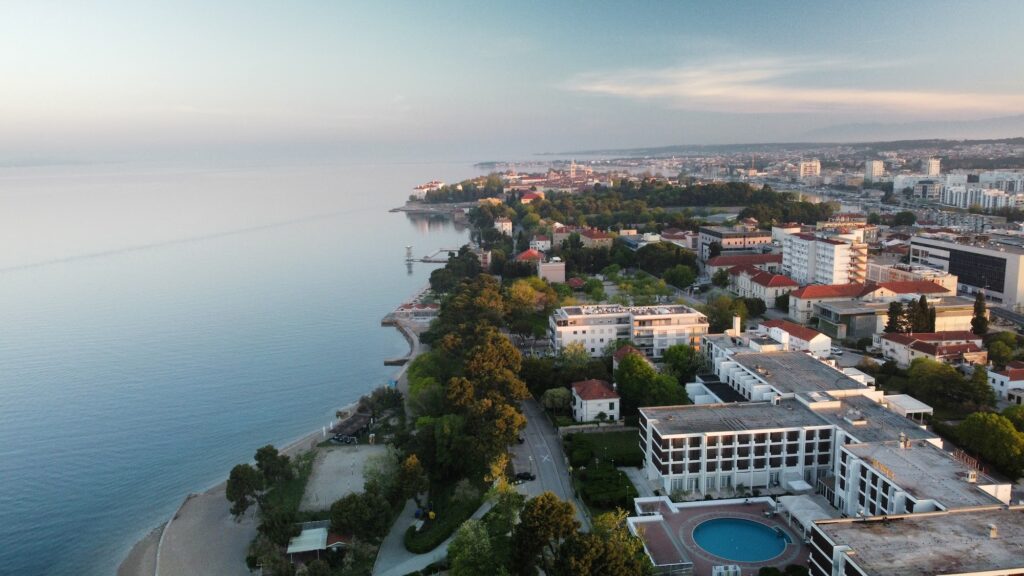
Kolovare is the oldest and longest beach in Zadar — 350 metres of pebble and concrete sunbathing platforms backed by the pine forest that borders the shore along its full length. That combination of age, length, and pine cover gives it a character that more recently developed beaches in the Zadar region do not have: the trees are established, the infrastructure is proven, and the beach functions as a genuine extension of the city’s daily life rather than a seasonal tourist facility that activates in summer and shuts in September.
Getting There: On Foot from the Old Town Along the Kralja Držislava Promenade
The most direct approach to Kolovare Beach from Zadar’s old town is the ten-minute walk south along the Kralja Držislava promenade — a paved coastal path that follows the shoreline from the old town peninsula, passes the city park, and arrives at the beach without requiring any navigation or transport. The walk is flat, the sea is visible throughout, and the transition from the old town’s stone streets and historic monuments to the pine-backed shore of Kolovare is one of the more satisfying urban-to-beach transitions on the Dalmatian coast.
By car, the Kolovare district is accessible from the main road network with paid parking immediately behind the beach zone. Spaces fill early during peak season — arriving before ten in the morning secures a parking spot without the pressure that midday brings. The central bus station is a five-minute walk from the shore, which makes Kolovare accessible to visitors arriving by bus from Split, Šibenik, or Rijeka without the need for a taxi or onward transport.
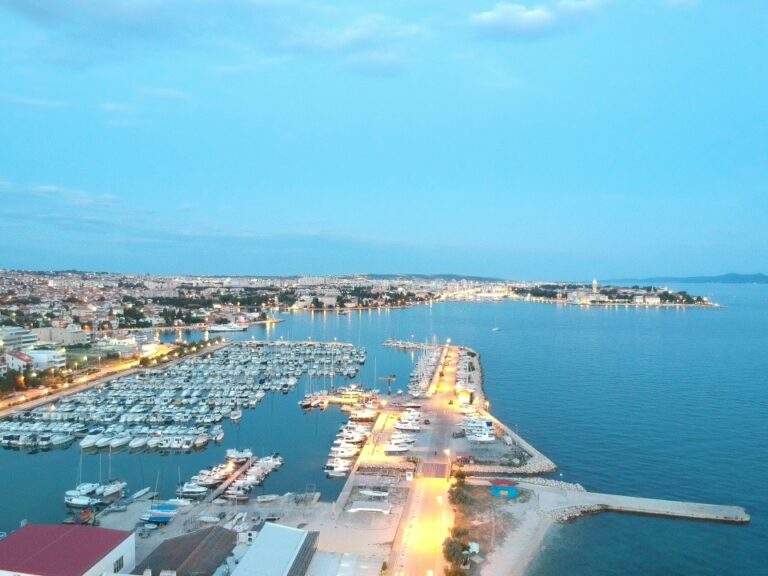
For visitors combining a beach day with exploration of the old town, the walk from Kolovare back to the Sea Organ and Greeting to the Sun installation — Nikola Bašić’s solar-powered light artwork embedded in the stone quay — takes the same ten minutes in the opposite direction and constitutes a complete afternoon circuit: beach, promenade, old town, sunset over the Zadar Channel toward the island of Ugljan.
The Shore: Pebble, Concrete Platforms, and a Pine Forest at the Back
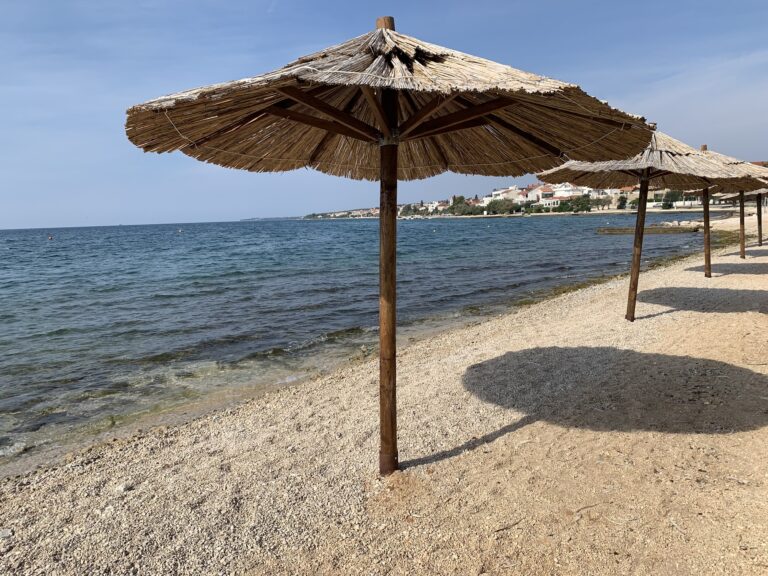
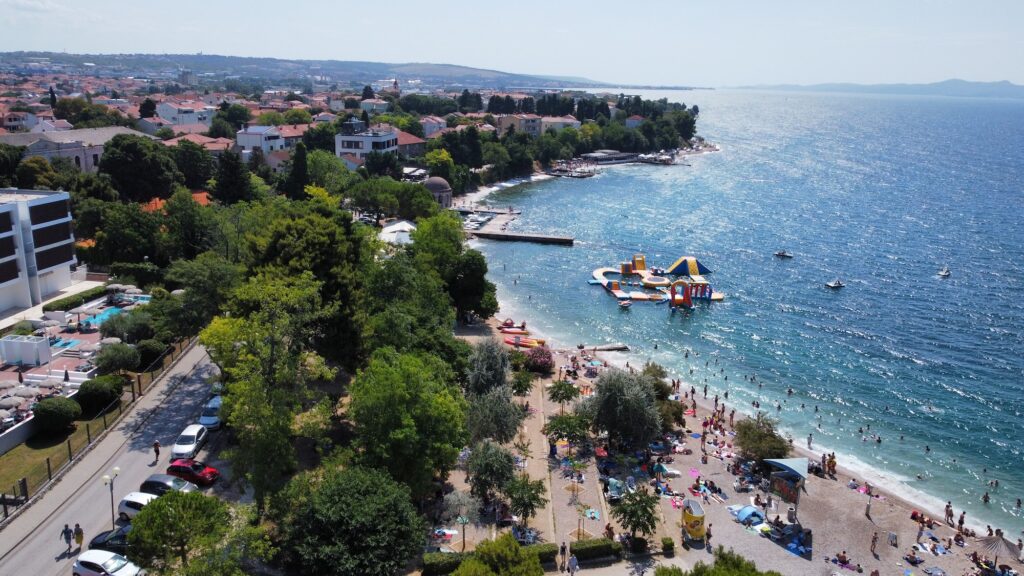
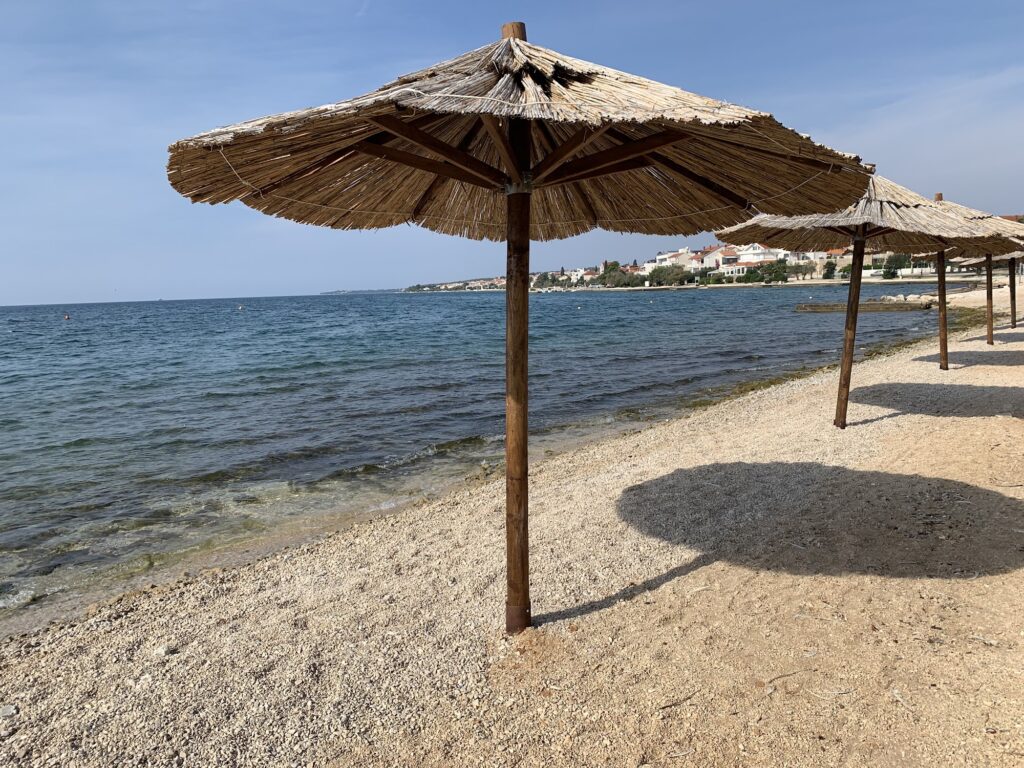
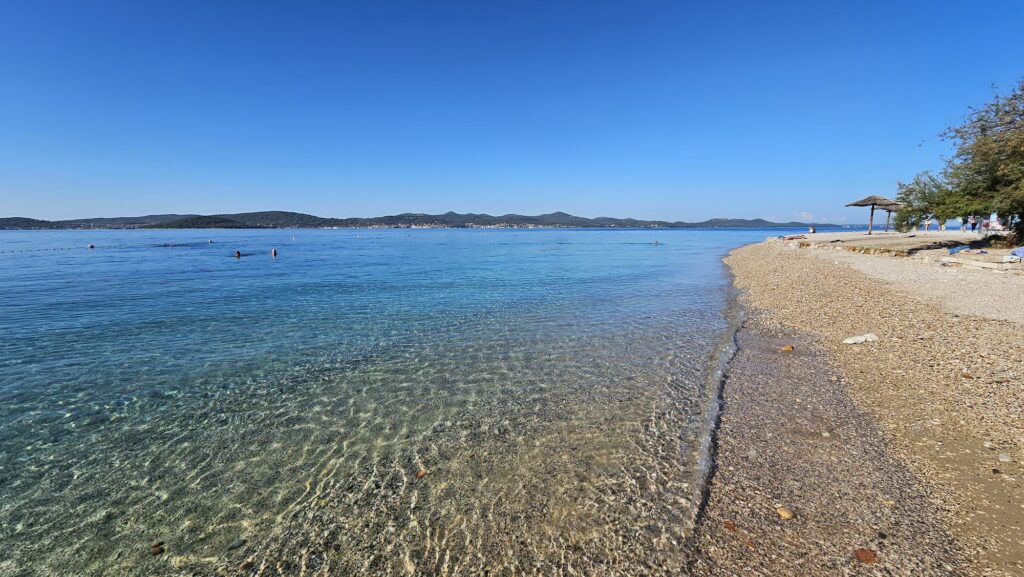
The shore at Kolovare is a combination of fine pebble in the sections closest to the waterline, concrete sunbathing platforms set into the upper shore, and the pine forest that backs the full length of the beach and provides the natural shade that makes a long day here comfortable without requiring a hired umbrella. That three-layer composition — pebble, platform, pine — gives the beach a variety of surface options that a single-material shore does not offer, and allows visitors to choose between the natural texture of the pebble, the flat stability of the concrete for loungers, and the shade of the forest for the middle hours of the day.
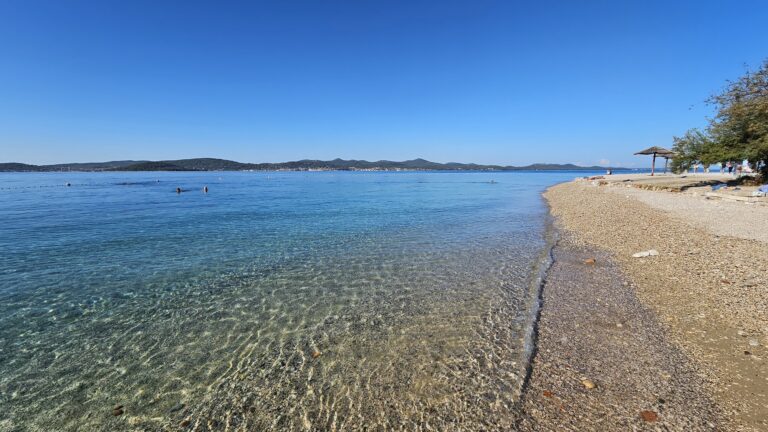
Water shoes are recommended for the pebble entry — the stones are smooth but the gradient is gradual rather than sandy, and footwear makes the transition from shore to water more comfortable, particularly for children. The seabed decreases gradually from the waterline, which keeps the shallow zone accessible and the swimming conditions predictable through most weather. The beach faces the Zadar Channel, the enclosed stretch of water between the city and the island of Ugljan directly opposite — close enough that the island’s pine-covered hills are clearly visible from the shore, and that the channel water maintains the calm, clear quality of an enclosed seaway rather than the open Adriatic.
Water Quality and the Blue Flag at Kolovare Beach
Kolovare Beach holds the Blue Flag certification — the most formally recognised marker of bathing water quality and beach management standard in Europe — and ranks first among the 300-plus beaches of the Zadar region in terms of documented quality. That ranking reflects both the natural advantage of the Zadar Channel position and the consistent management of the site over the decades it has been the city’s primary public beach.
The water is clear enough for productive snorkelling along the stone piers and in the shallower sections of the bay, where small fish populations gather around the submerged structures. The visibility through the water column is the specific quality that the channel’s enclosed circulation and the absence of significant boat traffic through the swimming zone maintains. The Zadar Channel is not a maritime transit route in the same sense as the open Adriatic, and the relatively limited boat movement in the immediate bay keeps the water undisturbed and clear through most of the summer season.
The beach is supervised by lifeguards during the peak season, and medical staff are accessible on site — a level of provision that reflects both the beach’s urban location adjacent to Zadar’s hospital infrastructure and the family-oriented character that Kolovare has maintained throughout its history as the city’s primary bathing shore.
Facilities at Kolovare Beach
The facilities at Kolovare are comprehensive in a way consistent with a city beach that has been the primary public shore for Zadar’s residents for generations. Freshwater showers and changing cabins are distributed along the promenade. Public restrooms with wheelchair-accessible provision are available. Sunbed and umbrella rental covers both the concrete platform sections and the pebble areas, with the pine forest providing a natural alternative for visitors who prefer shade without cost.
Kayak and pedal boat rental provides the water-based activity option — practical on the calm channel water and suited to exploring the immediate Zadar coastline in both directions from the beach. Beach volleyball courts are on site. A diving trampoline positioned in the water is a feature that the beach is locally known for, drawing the age group for whom jumping into the Adriatic from a height is the preferred method of entry.
The beach has adapted access infrastructure for visitors with disabilities — a concrete surface with gentle slope and adapted restrooms — making it one of the more thoroughly accessible beaches in the Zadar region. Parking directly behind the beach zone includes reserved spaces.
Kolovare Beach with Families and Children
The gradual pebble entry, calm channel water, pine shade, lifeguard supervision, children’s playground on site, and ten-minute proximity to the full urban infrastructure of Zadar city centre make Kolovare the primary family beach choice for the city and its visitors. The combination of those factors is not easily replicated at more remote beaches in the region, where the water quality and setting may be comparable but the safety provision, shade, and access to food and services require a car journey rather than a ten-minute walk.
The playground and trampoline provisions add structured activity for children beyond the swimming and the shore itself. The paved promenade that borders the beach is stroller-friendly throughout its length. The proximity of Zadar’s pharmacy and hospital infrastructure — relevant in the way that any parent considers when choosing a beach with young children — is a practical advantage of the city beach over more isolated locations that the beach’s urban position provides without effort.
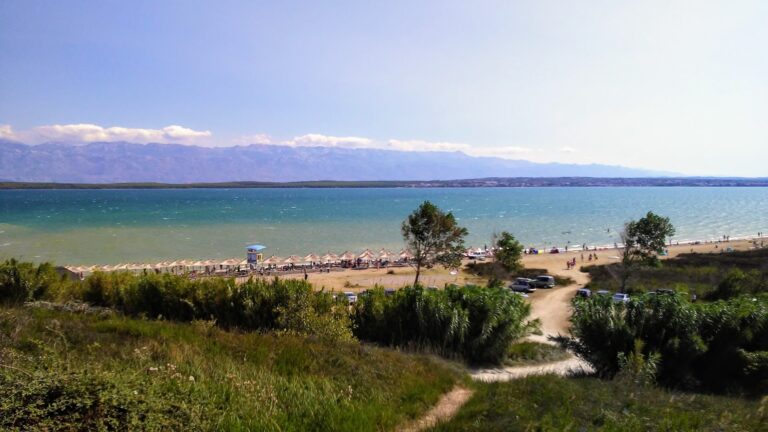
For families wanting a different Zadar area beach experience — more pebble, less urban, further from the city — the Banj Beach Šibenik approach of combining a city waterfront with a new beach investment has its northern equivalent in the broader Zadar Riviera stretching toward Petrcane and Privlaka to the northwest, where the beaches take on a sandier, shallower character suited to very young children.
Food, Drink, and the Evening Promenade
The beach bars and café provision along the Kolovare promenade serve the standard requirements of a city beach through the summer day — coffee, cold drinks, snacks. For a full meal, the restaurants within a short walk of the shore cover the range of Dalmatian coastal cooking: fresh Adriatic fish, calamari, Pag cheese from the island visible across the channel, and the lamb and meat preparations of the Zadar hinterland.
The specific pleasure of the Kolovare location becomes most apparent in the evening. The walk back to the old town along the promenade as the sun sets over the Zadar Channel and the island of Ugljan — the same view that Alfred Hitchcock famously described as the most beautiful sunset in the world, a claim the Zadar tourist board has been deploying ever since — passes the Sea Organ and the Greeting to the Sun in the hour when both are at their most active and most visited. The combination of the beach day at Kolovare and that evening promenade through the old town is the complete and specific Zadar summer day.
Kolovare in the Context of Zadar’s Beaches
Zadar has nineteen beaches within or immediately adjacent to the city, ranging from the small coves of the immediate urban shoreline to the longer beaches of the Borik resort area to the northwest. Kolovare occupies the position of the primary public city beach — closest to the old town on foot, longest established, and most fully provisioned for the range of visitor types that a city beach serves simultaneously: residents, day-tripping families, tourists combining the beach with the old town, and swimmers who want Blue Flag water within walking distance of a UNESCO-listed peninsula.
The Zadar archipelago — the chain of islands that includes Ugljan, Pašman, and Dugi Otok — is accessible by ferry from the city harbour, and day trips to island beaches are a standard part of the Zadar beach offer for visitors with more time. Kolovare is where you go when you want the Adriatic without the ferry crossing, which is most days for most visitors.
Kolovare Beach in Zadar is defined by its position at the intersection of city and sea — old enough to be the city’s original bathing shore, established enough that the pine forest above it has become as much a part of the beach as the pebble below, and close enough to the old town that the day can move between the Roman forum, the Sea Organ, and the Adriatic water in the space of an afternoon without transport or planning.
Walk south from the old town along the promenade. The pines are visible before the beach is.
The rest of the day arranges itself from there.
Map
Sorry, no records were found. Please adjust your search criteria and try again.
Sorry, unable to load the Maps API.
Near by places: